
How PSEi member stocks performed — March 25, 2026
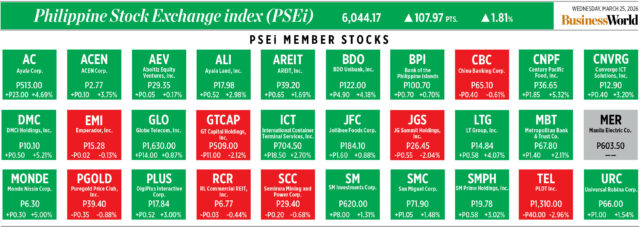
Here’s a quick glance at how PSEi stocks fared on Wednesday, March 25, 2026.


Here’s a quick glance at how PSEi stocks fared on Wednesday, March 25, 2026.
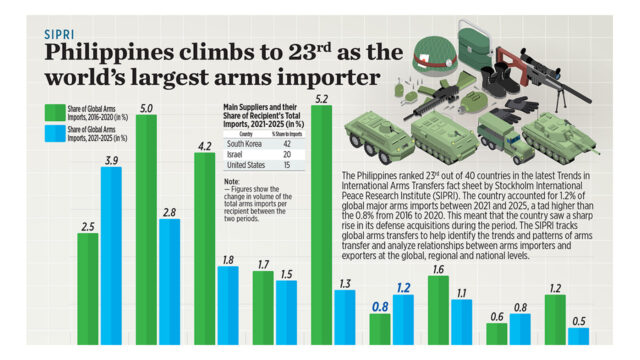
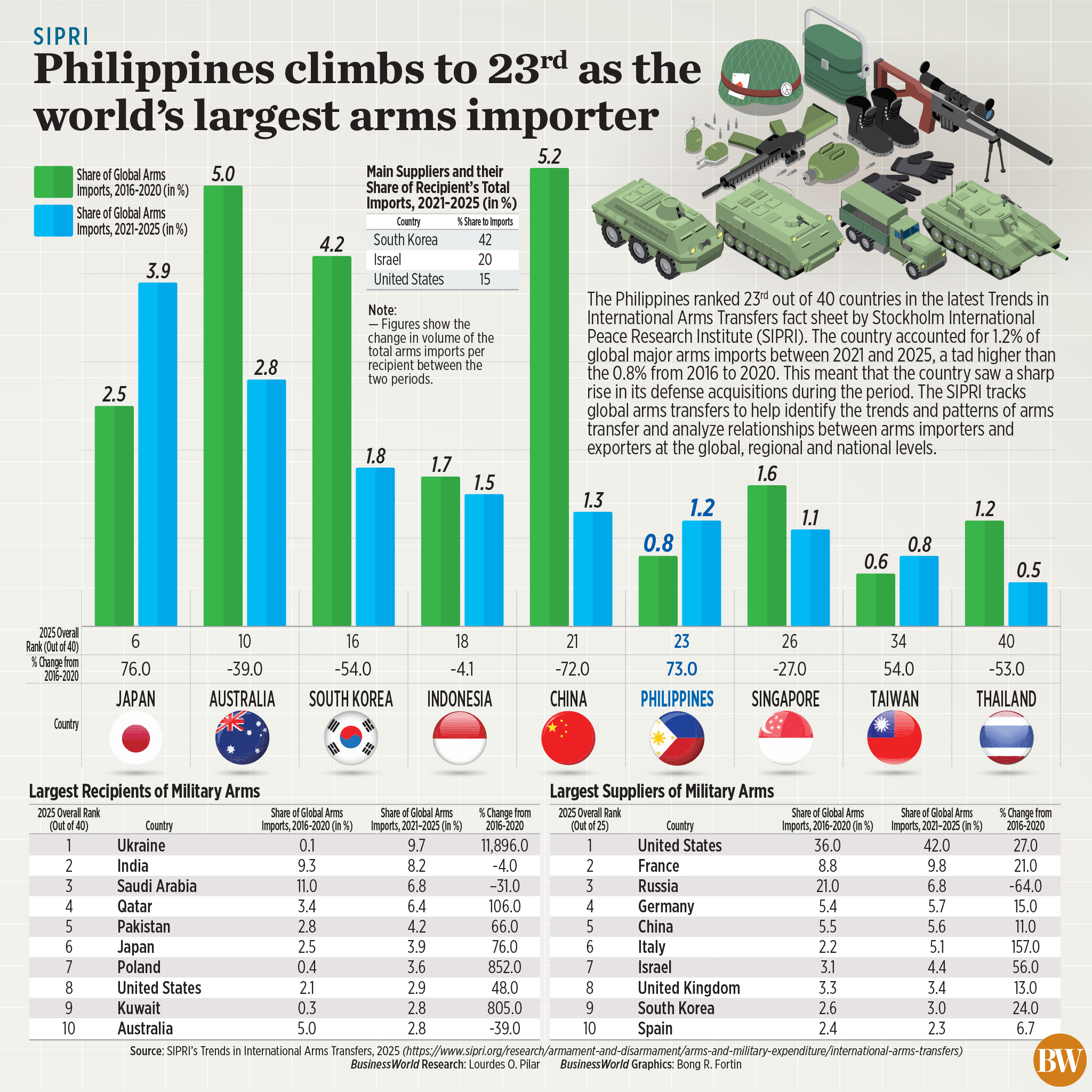
The Philippines ranked 23rd out of 40 countries in the latest Trends in International Arms Transfers fact sheet by Stockholm International Peace Research Institute (SIPRI). The country accounted for 1.2% of global major arms imports between 2021 and 2025, a tad higher than the 0.8% from 2016 to 2020. This meant that the country saw a sharp rise in its defense acquisitions during the period. The SIPRI tracks global arms transfers to help identify the trends and patterns of arms transfer and analyze relationships between arms importers and exporters at the global, regional and national levels.

By Adrian H. Halili, Reporter
A POTENTIAL joint oil exploration between the Philippines and China might be revived, Manila’s top diplomat said on Wednesday, as the conflict involving Iran threatens global oil supplies and prompts the Southeast Asian nation to widen its energy options.
Foreign Affairs Secretary Maria Theresa P. Lazaro said discussions with Beijing have not yet begun, but could follow as the government reassesses supply risks stemming from the Middle East.
“Not at this point in time, but I think it may be forthcoming,” she told reporters when asked whether talks have started.
President Ferdinand R. Marcos, Jr. said earlier that he is open to resuming negotiations with China on a possible joint oil and gas exploration at Reed Bank, a resource-rich area in the South China Sea also claimed by Beijing.
In an interview with Bloomberg, Mr. Marcos said the war in the Middle East could provide “impetus” for renewed talks.
He and Chinese President Xi Jinping agreed in 2023 to restart discussions on joint energy development in the disputed waters after previous attempts collapsed over legal and sovereignty concerns.
“It is not new,” Ms. Lazaro said. “There have been discussions on oil and gas exploration many times in the past. However, there were misunderstandings on the finer points.”
In 2005, the Philippine Supreme Court voided a joint seismic survey deal involving China and Vietnam, ruling it unconstitutional for allowing foreign entities access to the country’s natural resources.
Talks resurfaced again in 2018 under the Duterte administration through a memorandum of understanding with China, but the agreement was later terminated due to constitutional and sovereignty issues.
“If ever it comes to the point that there will be discussions, we will see how it unravels,” Ms. Lazaro said, adding that negotiators are aware of the flaws that derailed past talks.
Relations between Manila and Beijing have deteriorated in recent years amid repeated confrontations in the South China Sea, where China continues to assert expansive maritime claims.
The Philippines has consistently rejected those claims, citing a 2016 ruling by the Permanent Court of Arbitration in The Hague that voided China’s position under international law.
Beyond China, Ms. Lazaro said Manila is also exploring other avenues to secure fuel supply, including efforts to ease restrictions on Russian oil.
The Philippine Embassy in Washington has been coordinating with the US State Department to seek relief from sanctions imposed on Russian energy exports, she said.
“We are asking the US State Department to lift the sanctions against Russia so that we can buy oil and meet our other energy needs,” Ms. Lazaro said, adding that no response has yet been conveyed.
The Department of Foreign Affairs is helping other agencies, particularly the Department of Energy, in identifying alternative sources of oil and relaying requests through diplomatic channels.
The Philippines has been scrambling to ensure fuel supply as the war involving Iran disrupts global oil trade. The country has about 45 days’ worth of oil inventory, according to the Energy department.
The Strait of Hormuz, which carries roughly a fifth of the world’s oil shipments, has been shut due to an Iranian blockade, compounding supply pressures.
Ms. Lazaro said the Iran war is expected to dominate discussions at the upcoming Association of Southeast Asian Nations (ASEAN) Summit, even as the bloc pushes to finalize a long-delayed code of conduct in the South China Sea.
“The war will be a dominant issue, but the South China Sea will always be part of the agenda,” she said. Meetings are scheduled later this year in Cebu and Manila.
She added that ASEAN remains hopeful the conflict would not derail progress on the code of conduct, which aims to manage disputes in the strategically vital waterway that handles trillions of dollars in annual trade.
“The bright side is that the code of conduct is being worked on, hopefully to be completed by the end of the year,” Ms. Lazaro said.
‘DWINDLING’ AID
Meanwhile, Senator Maria Imelda “Imee” R. Marcos urged the government to broaden talks with other countries to secure alternative sources of petroleum, following the declaration of a state of national energy emergency.
She called on the administration to engage more aggressively with both regional and global partners to ensure stable fuel imports.
“The Philippines should be negotiating with ASEAN neighbors such as Malaysia, Brunei, Vietnam and Thailand to secure crude oil imports,” she said in a statement.
She added that the government should also reach out to Indonesia, Australia, China and India to bolster domestic petroleum supply.
Ms. Marcos urged authorities to mobilize the Philippine National Oil Co. to pursue longer-term strategies that could cushion the impact of future energy shocks. She also called on the administration to disclose the country’s actual fuel inventory levels.
The President earlier declared a state of national energy emergency, citing the threat posed by the conflict in the Middle East to the Philippines’ oil supply.
Ms. Marcos cited measures taken by other countries, saying Myanmar has implemented fuel rationing, vehicle coding and expanded work from home arrangements, while Vietnam has reinstated its Oil Price Stabilization Fund.
“Does the government actually have a plan, or will it simply carry on distributing dwindling amounts of [aid] to select sectors?” Ms. Marcos asked, warning that subsidies might not be enough as fuel prices rise.
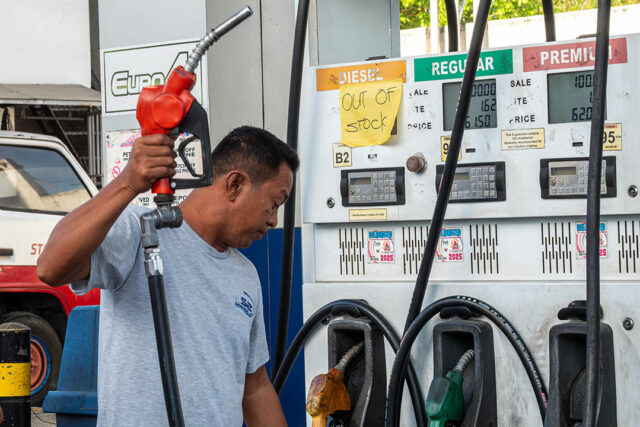
PRESIDENT Ferdinand R. Marcos, Jr. signed into law on Wednesday a measure granting the Executive branch temporary authority to suspend or reduce excise taxes on petroleum products when global oil prices hit critical levels, as the government seeks to cushion consumers and the economy from volatility in crude markets.
Republic Act No. 12316 amends Section 148 of the National Internal Revenue Code of 1997, which governs excise taxes on manufactured oils and other fuels.
The measure was approved with the concurrence of Senate President Vicente C. Sotto III and Speaker Faustino “Bojie” G. Dy III, and will take effect 15 days after its publication in the Official Gazette.
Under the law, the President may suspend or reduce fuel excise taxes upon the recommendation of the Development Budget Coordination Committee, in coordination with the Energy secretary, when the average Dubai crude oil price — based on the Mean of Platts Singapore benchmark — reaches or exceeds $80 per barrel for one month.
The authority allows flexibility, enabling tax relief to be applied selectively to certain petroleum products and either fully or partially. Any suspension or reduction may last for up to three months, with total relief capped at one year within any given period. — Erika Mae P. Sinaking

By Kenneth Christiane L. Basilio, Reporter
A HOUSE of Representatives committee on Wednesday moved to compel government agencies to submit documents and ordered several witnesses to appear as impeachment proceedings against Vice-President Sara Duterte-Carpio entered the evidence-gathering stage.
The House Justice Committee issued subpoenas for Ms. Duterte’s statements of assets, liabilities and net worth (SALN) from 2007 to the present, as well as her tax records, corporate documents related to her business interests and a video recording in which she allegedly threatened President Ferdinand R. Marcos, Jr.
The panel said the materials were needed to determine whether accusations against the Vice-President have sufficient basis to be elevated to the Senate.
Lawmakers also ordered the appearance of several witnesses, including a person alleged to have distributed cash for corrupt activities on Ms. Duterte’s behalf and an official from the Commission on Audit responsible for overseeing the use of confidential and intelligence funds.
Ms. Duterte did not attend the opening day of the proceedings. In a letter submitted to the committee and shared with reporters, her legal team argued that the House lacks jurisdiction to conduct what it described as “any form of trial” on impeachment complaints, insisting that such authority rests solely with the Senate.
Committee Chairman and Batangas Rep. Gerville R. Luistro rejected that argument, saying the process is a preliminary investigation meant to help lawmakers determine probable cause.
The impeachment proceedings come amid mounting political tension between Ms. Duterte and Mr. Marcos, her running mate in the 2022 elections.
The Vice-President, widely viewed as a potential contender for the 2028 presidential election, has been locked in a bitter feud with the President, raising the political stakes for both camps.
An earlier attempt by lawmakers allied with Mr. Marcos to impeach Ms. Duterte last year failed. With Mr. Marcos constitutionally barred from seeking reelection and yet to designate a successor, the renewed push against the Vice-President underscores intensifying maneuvering ahead of the next election cycle.
Ms. Duterte faces allegations consolidated in two impeachment complaints. If endorsed by at least 106 members of the House, the cases would move to the Senate for trial, where a conviction could remove her from office and permanently bar her from public service.
The charges advanced by the Justice committee last week include accusations that Ms. Duterte misused hundreds of millions of pesos in confidential and intelligence funds during her tenure as head of the Office of the Vice-President and earlier as secretary of Education.
She has also been accused of plotting to destabilize the Marcos administration and conspiring to assassinate the President, First Lady Liza Araneta-Marcos and a former Speaker — claims that Ms. Duterte has flatly denied.
Additional allegations include amassing wealth disproportionate to her declared income over more than a decade in public service.
“These are not trivial matters,” Ms. Luistro said at the hearing. “They go to the very heart of public trust.”
Ahead of the proceedings, Ms. Duterte called on the committee to dismiss the complaints, labeling them a “fishing expedition” aimed at politicizing the impeachment process.
“The committee has nothing left to do but dismiss the complaints due to the obvious lack of evidence,” she said in a statement in Filipino.
Party-list Rep. Terry L. Ridon pushed back against that characterization, arguing that the complaints were supported by documentary evidence, including discrepancies in Ms. Duterte’s SALNs.
“This would just be a fishing expedition if we don’t start the proceedings with any documents,” he told the same briefing with Ms. Luistro in Filipino, alleging Ms. Duterte’s total net worth in 2024 did not match her income since 2007.
Ms. Duterte’s legal team reiterated that they would not participate in proceedings they consider unconstitutional. Lawyer Sheila C. Sison said the Vice President would not appear before the committee, arguing that impeachment trials are the Senate’s exclusive domain.
Ms. Luistro said the panel has clear constitutional authority to conduct the inquiry, adding that lawmakers would examine allegations individually and allow evidence and witnesses to be tested in the coming hearings.
The justice committee is set to resume proceedings on April 14, when it expects subpoenaed documents and witnesses to be presented.

By Erika Mae P. Sinaking, Reporter
TWO TAXPAYERS have asked the Supreme Court to stop higher fees at the country’s main gateway, arguing that the privatization of the Ninoy Aquino International Airport (NAIA) is worsening the economic burden on travelers amid global instability.
In a second reiterative motion filed on Wednesday, Rico V. Domingo and Caesar G. Oracion urged the high court to stop both the concession agreement for NAIA and the fee increases imposed by management.
The plaintiffs said war in the Middle East and its knock-on effects on fuel prices make the suspension of the higher fees a matter of urgent public necessity.
“The petitioners are constrained to submit this second motion reiterating the prayer for the issuance of a temporary restraining order or other injunctive remedies by reason of the ongoing war in the Middle East,” according to a copy of the filing, arguing that continued implementation of the agreement would deepen the financial strain on Filipinos.
The petitioners said the revised administrative order has sharply raised operating costs at NAIA, citing a more than threefold increase in landing and takeoff fees. Aircraft parking fees for the first 30 minutes for planes weighing up to 50,000 kilos rose by more than 15 times for both domestic and international operations.
They also pointed to soaring fuel prices, noting that diesel prices climbed by about P40 per liter within two weeks and that the Civil Aeronautics Board has approved level 8 fuel surcharges, which could raise international airfares by as much as P6,208.98.
The motion alleged that the airport’s privatization was marred by legal irregularities and asked the court to immediately restrain the Department of Transportation, Manila International Airport Authority and New NAIA Infra Corp. from enforcing the higher charges.
In a statement, New NAIA Infra Corp. maintained that exemptions and discounts already provide relief to travelers, noting that overseas Filipino workers are exempt from travel tax and international terminal fees while airlines get a 65% discount on domestic charges.
“For many years, NAIA’s fees remained unchanged even as the airport grew busier and more strained,” it said. “This contributed to congestion, aging facilities and service limitations that travelers experienced firsthand.”
“Improving NAIA and making it safer, more modern and more efficient requires sustained investment. That, in turn, requires a stable and fair funding structure,” it added.

By Erika Mae P. Sinaking, Reporter
THE PHILIPPINE construction sector must speed up its transition toward digitalization and environmental sustainability to remain competitive and avoid leaving workers behind, labor advocates said on Wednesday.
At a forum in Quezon City, the International Labour Organization (ILO) and its partners said the industry faces an urgent need to modernize its workforce through a “twin transition” that combines digital technology with green building practices.
Central to this shift is the adoption of building information modeling, a digital design and project management tool that is already mandatory in major construction markets such as Singapore and Dubai.
“As you know, transition is taking place,” Khalid Hassan, director of the ILO Country Office for the Philippines, told BusinessWorld in an interview. “The future of work is coming. There will be digital, environmental and population transitions taking place at various places.”
“This project is designed to support that process,” he added.
Mr. Hassan warned that without improvements in education and training systems, workers — particularly young people — risk being excluded from emerging opportunities.
“The risk is that if education systems are not improved, workers will be left behind,” he said. “This would require a higher level of education and training in information technology, which is what we are supporting the government with.”
Hochul Shin, chief technical adviser of the ILO–Korea Partnership Programme, said building information modeling and green construction skills are critical entry points for improving youth employment in the sector.
“Building information modeling and green construction skills are among the most important starting points for leveraging the digital and green transitions to improve youth employment in this sector,” he said.
The construction industry remains one of the country’s biggest employers, accounting for 9.6% of total employment, according to the January 2026 labor force survey. However, employment in the sector fell by about 199,000 from December 2025, one of the steepest declines among industries.
Beyond domestic employment, advocates said upgrading skills could help attract foreign investment in areas such as offshore wind and position Filipino workers for global opportunities.
As part of the initiative, training modules were turned over to government agencies and industry groups, including the Department of Labor and Employment, Technical Education and Skills Development Authority and Construction Manpower Development Foundation, to better align training with industry needs.
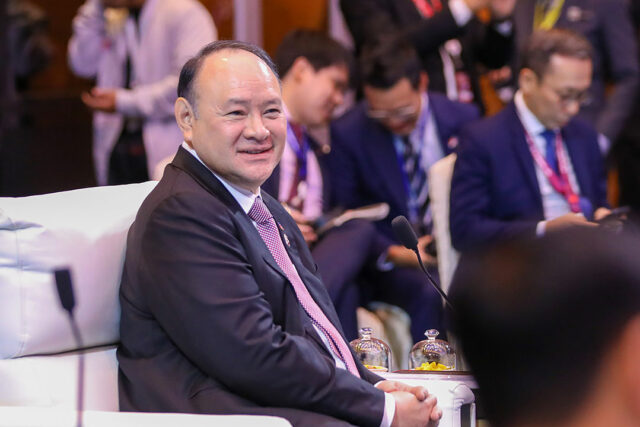
THE Philippines is seeking security cooperation with a transatlantic military bloc as it looks to broaden alliances and boost its ability to maintain peace amid regional tensions, according to its Defense department.
Philippine Defense Secretary Gilberto C. Teodoro, Jr. and North Atlantic Treaty Organization (NATO) Military Commission Chairman Admiral Giuseppe Cavo Dragone met on the sidelines of a security forum in France, where they discussed ways to align their forces to mitigate threats against the “international order,” the Department of National Defense (DND) said.
Mr. Dragone affirmed NATO’s willingness to pursue security cooperation with the Southeast Asian nation, it added, as Mr. Teodoro pitched that the Philippines is “laying the groundwork” for interoperability among their forces.
“Both officials acknowledged the importance of sharing of information and best practices as inter-regional partners converge to mitigate the threats to the prevailing international order,” the DND said.
In a separate statement, the Philippine Army said a senior executive from the missile division of American aerospace and defense firm Lockheed Martin visited its headquarters to present its missile technologies.
Army Vice-Commander Major General Efren F. Morados met Tim Cahill, who pitched Lockheed Martin’s “cutting-edge systems” and “advanced missile and sensor technologies,” weapons that may enhance the effectiveness of assets used in the annual Balikatan (shoulder-to-shoulder) drills, it said.
“The Philippine Army is steadfast in its stakeholder engagement, fostering collaboration and strengthening the country’s defense capabilities,” it said. — Kenneth Christiane L. Basilio

A SENATOR on Wednesday called for the review of the Electric Power Industry Reform Act (EPIRA) and the Oil Deregulation law following President Ferdinand R. Marcos, Jr.’s declaration of a state of national energy emergency.
In a press briefing, Senator Joseph Victor G. Ejercito cited Thailand’s Oil Fuel Fund which allows their government to tax oil products and provide subsidies in times of crisis, measures the Philippines could explore when revisiting Republic Act No. 8479 or the Downstream Oil Industry Deregulation Act, and Republic Act No. 9136, EPIRA.
The oil deregulation law allows the adjustment of oil prices without the approval of the government, while EPIRA liberalized the country’s energy industry by opening it to private sectors.
“First, they [Thailand] have a refinery. They also have a subsidy that they get from taxing their fuel during normal times but they subsidize their fuel prices during lean times. Maybe that’s what we should do in the long term,” Mr. Ejercito said.
According to the Economic Research Institute for ASEAN and East Asia, Thailand has six active refineries.
The Philippines only has one active refinery in Limay, Bataan operated by Petron.
Several bills seeking to address the oil supply in the country have been filed since the US-Israel and Iran war, including measures setting up a petroleum reserve, amending the Biofuels Act, and repealing the oil deregulation law.
Meanwhile, the House of Representatives will set its legislative agenda in line with what the Philippines needs and grant its authorities the power to respond to the oil crisis, Speaker Faustino “Bojie” Dy III said on Wednesday.
“In moments like this, unity in government is not optional. It is essential to protect our people and keep the nation moving forward.” he said in a statement, without elaborating on the measures the chamber will take up.
“The House will move with the same urgency, through targeted interventions, close oversight, and real relief for our people,” he added.
President Ferdinand R. Marcos, Jr. declared a national state of energy emergency on Tuesday, giving the government authority to secure fuel supplies and shield the economy from surging oil prices triggered by the war involving Iran, Israel and the US.
Some congressmen are urging Mr. Marcos to call a special session to allow lawmakers to pass bills aimed at mitigating the impact of the Iran war on the local economy.
In a separate joint statement, Caloocan Rep. Edgar R. Erice and Navotas Rep. Tobias Reynald M. Tiangco said Congress must reconvene after the Holy Week to allow legislative work to continue.
“It is imperative for Congress to remain in session and act decisively,” they said. Congress is currently in a six-week break, which will resume on May 4. — Kaela Patricia B. Gabriel and Kenneth Christiane L. Basilio

JEHOVAH’S WITNESSES (JWs) worldwide are inviting the public to attend two religious events in March and April aimed at highlighting themes of hope and the Bible’s teachings on the future, according to a statement issued this week.
More than 9 million members of the faith are participating in a global campaign centered on the annual observance of the Lord’s Evening Meal, set for the evening of April 2. The event commemorates what Witnesses believe was when Jesus Christ instituted the memorial of his death almost 2,000 years ago.
The observance will feature a talk focusing on Jesus’ teachings about mankind’s future and is open to the public at local congregations.
“While many today feel uncertain about the future, the Bible offers something rare — real hope,” Normito Zapata, Jr., spokesman for Jehovah’s Witnesses in Metro Manila, said in the statement.
As part of the campaign, the group is also extending invitations to a public talk titled “Who Will Restore the Earth?” which will be delivered this month in more than 118,000 congregations worldwide. The 30‑minute presentation will address biblical views on humanity’s relationship with the environment and the promise of a restored earth.
Jehovah’s Witnesses said more than 21 million people attended the Lord’s Evening Meal globally last year. Both events are free and open to all who wish to attend, with additional details available through the group’s official website. — Norman P. Aquino
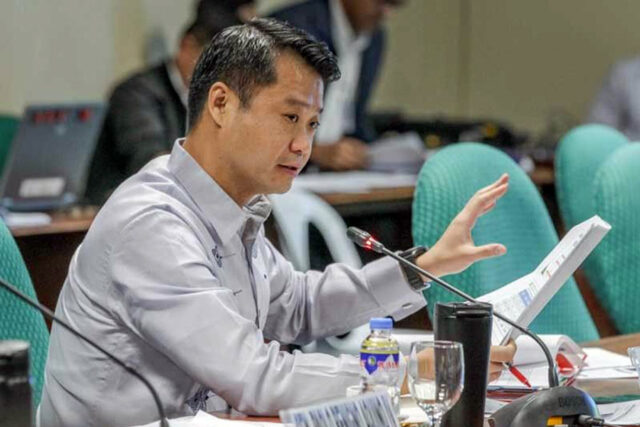
SENATE Finance Committee Chairman Sherwin T. Gatchalian said about P160 billion to P170 billion could be saved by the government which could fund measures in mitigating the impact of the conflict in the Middle East.
In a press briefing on Wednesday, Mr. Gatchalian, who also heads of the Proactive Response and Oversight for Timely and Effective Crisis Strategy (PROTECT) committee, said cutting down on maintenance and other operating expenses (MOOE), personnel services, and capital outlay may help the country’s respond to the crisis.
Mr. Gatchalian said they have identified nonessential activities such as travel, on-site seminars, and training that may be set aside during the crisis.
If the government reduced its MOOEs by 10%, P80 billion could be saved, while at 20%, the senator estimated up to P170 billion, the senator noted.
“We should reexamine our expenses on infrastructure that might not be needed. But the PROTECT committee will make recommendations,” Mr. Gatchalian said during the Kapihan sa Senado press conference.
On Tuesday, President Ferdinand R. Marcos, Jr. declared a state of national energy emergency 24 days after the US and Israel launched strikes on Iran to attack its nuclear assets on Feb. 28.
The conflict has caused oil shocks in the region, prompting the Senate to establish the ad hoc committee PROTECT and the formation of the Unified Package for Livelihoods, Industry, Food, and Transport (UPLIFT) committee, under the Executive Order No. 110.
Mr. Gatchalian is expecting a national contingency plan following the state of emergency declaration and creation of the UPLIFT committee. — Kaela Patricia B. Gabriel

THE Anti-Money Laundering Council (AMLC) has moved to recover certain assets linked to the controversial flood control corruption scandal over half a year since investigations started.
In a statement on Wednesday, the AMLC said it filed three petitions for civil forfeiture before a regional trial court in Manila after it obtained multiple freeze orders last year for multi-billion pesos worth of assets tied to the government’s anomalous flood control projects.
“Following the extensive investigation and finding of probable cause, the AMLC filed three petitions for civil forfeiture before the Regional Trial Court in Manila,” the council said. “The petitions cover the properties of individuals and entities subject to several freeze orders issued by the Court of Appeals.”
It did not disclose the value or volume of the assets subject to the petitions.
According to the AMLC, it now has two provisional asset preservation orders set to protect the monetary instruments and properties while it awaits the court’s final decision.
In a separate statement, the financial intelligence unit said it has so far secured freeze orders for assets amounting to P27.8 billion, including 7,970 bank accounts, 219 real properties, 253 motor vehicles and 11 aircraft owned by 862 individuals and 648 entities.
“Given the scale and intricacy of the data, the AMLC is proceeding with deliberate care to ensure that all evidence is complete and accurate,” it noted. “This is essential not only to uphold the integrity of the investigation but also to ensure that the cases, once filed, are supported by robust and admissible evidence capable of withstanding judicial scrutiny.”
The AMLC said it will file more petitions to recover the funds involved in the flood mess. — Katherine K. Chan
