Home Blog Page 1060

Study finds Gen Zs want transparent, effective leaders
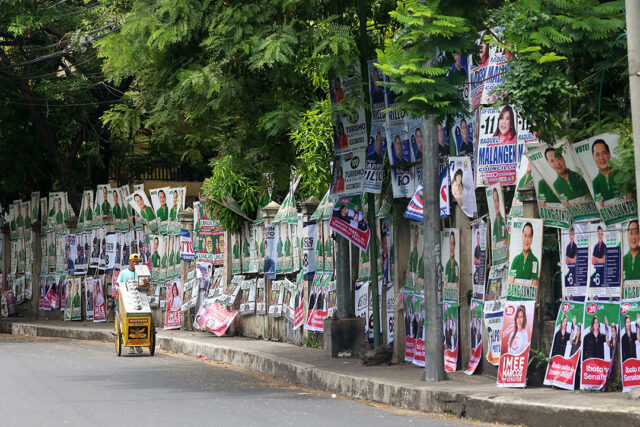
AN ICE CREAM VENDOR passes by a wall covered in campaign posters in Quezon City. — PHILIPPINE STAR/MIGUEL DE GUZMAN

GEN Z Filipinos want leaders who are transparent, effective, and free from “trapo” politics, according to the WR Numero’s inaugural Filipino Perspectives Digest.

“For Filipino Gen Zs, good leadership isn’t about charisma or popularity. It’s about allocating resources honestly and effectively, putting the public’s welfare above personal gain,” WR Numero said in a statement.

The Digest is a companion to the firm’s Philippine Public Opinion Monitor, which draws insights from six focus group discussions with 46 participants aged 18 to 25 across different regions.

Participants said corruption, inefficiency, and political infighting directly block access to quality education, healthcare, and social services.

They stressed the need to fix schools, pay teachers fairly, and fund hospitals properly.

Views on political dynasties were split, with some rejecting them outright and others saying continuity can benefit communities if families have proven service.

“We need people… other than political dynasties. It really needs to be erased,” said a 21-year-old male participant from Camarines Sur.

Respondents agreed almost universally that celebrities and influencers have no place in government, saying popularity cannot replace competence or genuine commitment.

Many also called for unity in leadership, pointing to the rift between President Ferdinand R. Marcos, Jr. and Vice-President Sara Duterte-Carpio as a symbol of dysfunction.

“They [should not be] fighting with each other. My ideal vice-president and president give more focus and give importance to youth issues and teachers as well,” a female participant from Metro Manila said.

Inclusion also mattered, with calls for LGBTQIA+ rights and, in the Bangsamoro region, for stronger interfaith understanding between Muslims and Christians.

Some in the Bangsamoro added that clearer separation of communities may be needed to ensure freedom of religion and practice.

“Across regions and perspectives, one thread was clear: Filipino Gen Zs are ready to imagine a new kind of politics — one built on service, unity and inclusion, not power and privilege,” WR Numero said. — Erika Mae P. Sinaking


Experts link poor health literacy, costs to low cancer care confidence 

VECTEEZY/ STELLA E

POOR HEALTH literacy and expensive healthcare costs lead to low confidence in cancer care in the Philippines, according to health experts.

“I think there’s really a lot of misconceptions in our culture,” Emmeline Elaine L. Cua-De Los Santos, surgical oncologist & breast surgeon, told BusinessWorld in a Zoom interview.

“I hope more doctors in my generation will be more open to sharing more about literacy because people are craving for it,” she added.

A survey conducted by YouGov revealed that the country has the lowest levels of confidence in cancer care across Southeast Asia, with only 34% respondents believing cancer care in the country is well-coordinated.

It added that although cancer awareness is relatively high, only 13% of respondents had undergone cancer screening, the second lowest in the region. Of the 13%, just 4% had taken specific cancer screening tests.

“In our culture, a lot don’t want to be diagnosed because they have misconceptions like cancer,” Ms. De Los Santos said.

“You’ll notice that, since we’re Asians, the pull of herbal remedies on our population is often stronger than that of evidence-based medicine and practices,” she added.

Health reform advocate Anthony C. Leachon added that low confidence in cancer care is also caused by accessibility and “financially burdensome” costs.

“While PhilHealth (Philippine Health Insurance Corp.) may cover some procedures, access is uneven and often requires a doctor’s referral. For many, the cost alone is a deterrent to early detection,” he said.

The survey showed that 24% of respondents refused to get screened because it is too costly, and 23% said they do not have any medical coverage to afford the test.

In the Philippines, lung cancer is the most common type of cancer. Ms. De Los Santos said the average cost for a chest CT (Computed Tomography) scan to detect such illness ranges from P30,000 to P70,000, depending on the hospital or laboratory.

In the early stages of lung cancer, she noted that surgery in a private hospital would cost around P200,000 to P500,000 on top of the P40,000 to P50,000 chemotherapy.

“For other types of cancer, depending on which one, some stage 4 cases require treatment for a lifetime — until the cancer grows again, worsens, or returns,” she said. “That makes it really expensive.”

In August, PhilHealth began outpatient cancer screening tests under its new Yaman ng Kalusugan Program (YAKAP).

Under the YAKAP, PhilHealth will cover mammogram (P2,610), breast ultrasound (P1,350), low-dose chest CT scan (P7,220), Alpha Fetoprotein (P1,230), liver ultrasound (P960), and colonoscopy (P23,640). — Almira Louise S. Martinez

Younger Umali takes over Nueva Ecija’s top post

BAGUIO CITY — Vice-Governor Gil Raymond Umali, younger brother of suspended Governor Aurelio Umali, has taken over as Nueva Ecija Governor after the Interior department enforced the one-year suspension of the older Umali on Wednesday.

The suspension order was signed by Department of Interior and Local Government Undersecretary Hubert V. Gervacio as directed by Secretary Juanito Victor C. Remulla.

Sangguniang Panlalawigan Member Eduardo Joson, as the highest-ranking board member, assumed as acting vice governor.

The older Umali’s suspension stemmed from a June 19 decision by the Office of the Ombudsman, which imposed a one-year suspension without pay.

Private citizen Roberto Duldulao in March 2024 complained against the Governor’s issuance of 205 quarry permits without securing the required Environmental Compliance Certificates from the Department of Environment and Natural Resources.

The Ombudsman’s Field Investigation Office found the Nueva Ecija governor’s issuances of quarry permits violated environmental regulations.

Mr. Umali earlier belied allegations and tagged his complaint as part of dirty politics. — Artemio A. Dumlao

FPI sees ‘positive outcomes’ from gov’t corruption fight

PRESIDENTIAL COMMUNICATIONS OFFICE

THE Federation of Philippine Industries (FPI) said it expects “positive outcomes” from the government’s handling of the corruption scandals engulfing two key agencies.

“We remain optimistic in light of the actions taken by the heads of both the Department of Public Works and Highways (DPWH) and the Bureau of Customs (BoC),” FPI Chair Elizabeth H. Lee said in a pre-summit briefing on Thursday.

“We look forward to the positive outcomes these initiatives are expected to yield,” she added.

She said the FPI views favorably President Ferdinand R. Marcos, Jr.’s call to action and the action taken by the new leaders of the two agencies.

“It is also positive that the Senate and the House of Representatives are looking into it,” she said.

“We are banking on that political will to actually push this forward. That’s why the level of confidence is there. But we will need to see results,” she added.

She called for “robust” measures to limit the number of bad actors within the BoC and the DPWH.

“This involves embedding transparent, standardized workflows and accountability mechanisms into daily operations to reduce opportunities for corruption or inefficiency,” she added.

She called for end-to-end digital tracking of transactions and approvals to minimize human intervention.

She also recommended independent routine audits to address irregularities within the agencies.

She supported whistleblower programs to encourage early detection of irregular transactions.

“These measures can foster a culture of accountability and transparency, reducing the influence of bad actors,” she added.

The FPI is set to hold its Business Summit 2025 on Oct. 8 at the Manila Polo Club in Makati City. — Justine Irish D. Tabile

PSEi inches up as market waits for more catalysts

REUTERS

PHILIPPINE STOCKS inched up on Thursday amid weak trading volume as investors preferred to stay on the sidelines while waiting for more leads, including the US consumer inflation report due for release overnight.

The Philippine Stock Exchange index (PSEi) climbed by 0.11% or 6.80 points to close at 6,126.89, while the broader all shares index rose by 0.01% or 0.38 point to 3,691.73.

“The market stayed flat but edged slightly higher as investors await key catalysts for a decisive move,” Regina Capital Development Corp. Head of Sales Luis A. Limlingan said in a Viber message. “Lower bond yields provided some support, though weak trading volumes suggest sentiment remains cautious.”

“Wall Street closed mixed last Wednesday as the broader market was propelled by a surprisingly encouraging report on wholesale inflation. The news bolstered expectations that the central bank may find more room to act to stimulate the economy,” he added.

Value turnover declined to P5.81 billion on Thursday with 3.09 billion shares traded from the P7.28 billion with 5.96 billion stocks exchanged on Wednesday.

“The local market managed to post gains on the back of bargain hunting. Investors also cheered the 0.1% deflation in the US August producer price index (PPI) as it strengthens the case for a Fed rate cut in their upcoming meeting,” Philstocks Financial Inc. Research Manager Japhet Louis O. Tantiangco said in a market report.

The US Labor Department’s Bureau of Labor Statistics said the producer price index for final demand dipped 0.1% after a downwardly revised 0.7% jump in July, Reuters reported.

The benign reading on US producer prices led markets to price in more chance of three interest rate cuts from the US Federal Reserve this year. Investors have fully priced in a quarter-point move from the Fed at next week’s meeting, with an 8% chance of a 50 basis-point cut.

With PPI out of the way, investors are now focused on the consumer price index (CPI) for August due out later in the day. A Reuters poll showed the headline CPI likely rose 2.9% from a year earlier, the biggest increase since January, while the core measure likely held at 3.1%.

At home, the majority of sectoral indices closed lower on Thursday. Mining and oil slumped by 1.28% or 145.28 points to 11,161.94; property decreased by 0.6% or 15.21 points to 2,516.89; holding firms went down by 0.23% or 11.62 points to 5,033.83; and industrials retreated by 0.03% or 3.14 points to 8,968.82.

Meanwhile, financials increased by 0.81% or 16.69 points to 2,064.22, and services climbed by 0.56% or 12.10 points to 2,169.65.

Decliners narrowly beat advancers, 101 to 100, while 46 names were unchanged.

Net foreign buying was at P150.61 million on Thursday versus the P41.35 million in net selling recorded on Wednesday. — Alexandria Grace C. Magno with Reuters

CPTPP expected to expand PHL presence in global supply chains

REUTERS/RODRIGO GARRIDO/FILE PHOTO

THE Philippine Chamber of Commerce and Industry (PCCI) said accession to the Comprehensive and Progressive Agreement for Trans-Pacific Partnership (CPTPP) will further embed the Philippines into some of the world’s more dynamic and open economies, which it said was necessary to counter ongoing disruptions to world trade.

In a statement on Thursday, the PCCI endorsed the government’s formal application to accede to the CPTPP.

“This strategic move is critical for securing the nation’s economic future at a time of increasing global trade fragmentation and protective measures from traditional partners,” it said.

“This accession is not merely an opportunity but a strategic necessity. With key trading partners becoming more cautious towards imports to reinforce their own domestic industries, the Philippines must proactively diversify its export markets and reduce its vulnerability,” it added.

The CPTPP comprises Australia, Brunei Darussalam, Canada, Chile, Japan, Malaysia, Mexico, New Zealand, Peru, Singapore, Vietnam, and the UK, which represent a combined population of over 500 million and $13.5 trillion in gross domestic product.

“By joining, the Philippines will gain preferential access to critical markets where it currently lacks bilateral trade agreements, notably Canada, Mexico, Peru, and the UK,” the PCCI said.

The CPTPP will also lower tariffs for large corporations and micro, small, and medium enterprises (MSMEs), while improving the predictability of trade rules and improving the prospects for investment.

“It will empower our businesses to expand their reach, integrate into regional value chains, and strengthen their competitiveness on a global scale,” it said.

“It will attract high-quality investments, create jobs, and provide our businesses with the platform they need to thrive in an increasingly competitive and protectionist global environment,” the PCCI said.

“We urge the government to pursue this accession with urgency and look forward to supporting the process,” it added. — Justine Irish D. Tabile

PHL seeks ‘balance’ between energy security, affordability

BW FILE PHOTO

THE Philippine Energy Plan in the runup to 2050 will seek to achieve a balance between incorporating affordable renewable energy (RE) while ensuring energy security, the Department of Energy (DoE) said.

“The blueprint for the energy sector… was designed to strike a balance between energy security, affordability, and sustainability,” Undersecretary Mylene C. Capongcol said at an energy forum on Thursday organized by the Economic Journalists Association of the Philippines.

Ms. Capongcol said the DoE has put in place policies that will encourage entry of private-sector investment, while ensuring fair and equal access to the transmission and distribution system.

(The energy transition) will not be cheap… because it involves new and innovative technology like battery energy storage, but eventually, the cost will go down,” Ms. Capongcol said.

The Philippines is targeting a 35% share of RE in the power mix by 2030 and 50% by 2040. The share is currently 22%.

The RE industry’s potential capacity is currently 151.53 gigawatts (GW) after 1,392 project awards.

The transition to cleaner energy faces the so-called “energy trilemma,” requiring it to resolve potential conflicts in achieving energy security, energy equity, and environmental sustainability.

“Our policy is… preparing so that we have this balance (in the power generation mix) to assure our consumers that there is a steady supply,” said Francis Saturnino C. Juan, chairman and chief executive officer of the Energy Regulatory Commission (ERC).

Republic Act No. 9136 or the Electric Power Industry Reform Act of 2001 tasks the ERC with promoting competition, encouraging market development, and ensuring greater consumer choice in the electric power industry.

“Conversely, aggressively pursuing renewable energy supports sustainability but may increase costs if not carefully managed. This encapsulates the essence of the trilemma, a challenge we must all confront collectively,” Mr. Juan said.

He said that the “new ERC” aims to be “more responsive, forward-thinking, and decisive” in fulfilling its mandate.

Allan Barcena, assistant vice-president of Energy Development Corp. (EDC), said the company is pushing to boost the capacity of its power plants, particularly those running on geothermal energy.

“We are trying to improve our power plants to not only ensure adequate capacity but a highly reliable capacity at any given time,” Mr. Barcena said.

Geothermal energy, a form of baseload power supply, stands out as “the most reliable renewable resource in addressing all three dimensions simultaneously,” he said.

EDC, a subsidiary of First Gen Corp., operates 1,480.19 megawatts of capacity, equivalent to around 20% of the Philippines’ installed RE capacity.

“The energy trilemma requires solutions that do not compromise one goal for another. Geothermal energy uniquely satisfies this challenge by providing secure, affordable, and sustainable power,” Mr. Barcena said. — Sheldeen Joy Talavera

SMEs seen playing key role in achieving SDGs

THE Philippines needs to incorporate small and medium enterprises (SMEs) in the effort to achieve the Sustainable Development Goals (SDGs) to meet the 2030 timeline set by the United Nations (UN), the Philippine Chamber of Commerce and Industry (PCCI) said.

“At the halfway point to 2030 — the target year set by the UN for the achievement of the SDGs — the challenge before us is how to accelerate,” PCCI President Enunina V. Mangio said in a speech delivered by PCCI Vice-President Jude Aguilar at the PCCI SDG Effectiveness Summit on Thursday.

She called for translating commitments “to concrete, scalable, and effective action and deliver on the promise of the SDGs of a better quality of life for all, in the five years we have left.”

“While small businesses generally recognize that the SDGs are important, for many, these goals remain theoretical,” she added. 

“Nevertheless, a growing number are already incorporating the SDGs in their business practices, and momentum is clearly building,” she said.

About 70% of the PCCI membership consists of SMEs.

“This is where PCCI comes in — to strengthen that momentum by providing support systems such as training, reporting tools, and other forms of assistance that will help institutionalize the SDGs among our SMEs,” she added.

Economy Undersecretary Rosemarie G. Edillon pointed to four systemic challenges that need to be addressed before 2030.

These are financing to accelerate progress on the SDGs, impacts of climate shocks and limited adaptive capacity to natural disasters, risks that hamper economic stability and growth, and political challenges.

She expects the private sector to play a catalyst role in the sustainable development effort.

“The first thing we ask from the private sector is to pioneer technologies, business models, and solutions that accelerate sustainable and inclusive development,” she said.

She also said that the private sector can help bridge financing and capacity gaps by leveraging private capital and infrastructure, generate quality jobs by investing in green industries, and empower smaller enterprises, among others. — Justine Irish D. Tabile

Camarines Sur declared free of bird flu

PHILSTAR FILE PHOTO

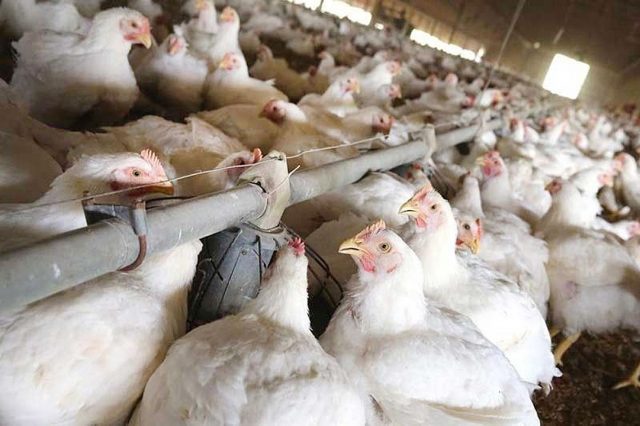
CAMARINES SUR has been declared free of avian influenza after five months of surveillance with no new cases detected, the Department of Agriculture (DA) said. 

The declaration follows disease-control guidelines set by the World Organization for Animal Health (WOAH).

Agriculture Secretary Francisco P. Tiu Laurel, Jr. issued Memorandum Circular No. 27 declaring the province clear of the H5N9 bird flu virus.

Local government units (LGUs), the DA, and the Bureau of Animal Industry (BAI) collaborated to contain the outbreak, carrying out culls and disinfections, and enforcing movement restrictions. — Andre Christopher H. Alampay

Blockchain backed as tool for improving budget transparency

BW FILE PHOTO

THE Department of Information and Communications Technology (DICT) said it supports proposals to deploy blockchain technology in preparing the budget to make the compilation of the spending plan more transparent.

“I think it’s a good move for both the Senate and the House to push for the adoption of blockchain in government… I think it’s a step forward in ensuring better governance,” Information and Communications Technology Secretary Henry Rhoel R. Aguda told the House appropriations panel on Thursday.

According to Mr. Aguda, blockchain serves as a ledger “where all transactions are written and are forever kept. It’s a technology that (deters attempts to) modify, subvert or delete information.”

He noted that blockchain experts are readily available, currently engaged in banking and regulatory compliance jobs.

The DICT is currently providing technical assistance to the Department of Budget and Management (DBM) in setting up a blockchain platform for budget documents.

Asked how much is needed to implement blockchain, he said: “It might range from a couple of hundred million to maybe a billion or so, depending on the scope.”

Measures have been filed in Congress seeking to establish a government-managed blockchain ledger that records all transactions in the budget cycle.

These include Senate Bill No. 1330, filed by Senator Paolo Benigno A. Aquino IV, and House Bills No. 4075 and 4489,by Ilocos Norte Rep. Angelo Marcos Barba and Party-list Rep. Brian Daniel Poe Llamanzares, respectively.

Next year, the DICT is seeking a P18.9-billion budget, including P675.88 million for the National Telecommunications Commission (NTC), P463.09 million for the Cybercrime Investigation and Coordinating Center, and P440.54 million for the National Privacy Commission.

Separately, the NTC reported that about 193 million subscriber identity module (SIM) cards have been registered as of July.

Of the total, Globe Telecom, Inc. accounted for 86.55 million, followed Smart Communications, Inc. 83.8 million, and DITO Telecommunity Corp. 23.63 million, NTC Commissioner Ella Blanca B. Lopez told the committee. — Beatriz Marie D. Cruz

90 e-commerce ‘trustmarks’ issued

DTI.GOV.PH

THE Department of Trade and Industry (DTI) said it has issued 90 e-commerce “trustmarks” as of Sept. 10, to improve public confidence in electronic transactions.

“The DTI is giving online merchants, e-retailers, e-marketplaces, and digital platforms until September 30 to register for the E-Commerce Philippine Trustmark,” DTI said on Thursday.

Department Administrative Order No. 25-12 requires online merchants, e-retailers, e-marketplaces, or digital platforms to register for a trustmark.

According to the DTI, mandatory registration of online merchants and platforms follows a surge in consumer complaints about online transactions.

In the eight months to August, the DTI fielded 13,000 such complaints.

“The DTI has issued the digital badge to several major companies, signaling early industry compliance,” it said.

These include Shopee Philippines, Inc. (Shopee), Bytedance Philippines, Inc. (Tiktok Shop), Lalamove Philippines, Inc. (Lalamove), and LG Electronics Philippines, Inc. (LG).

Other companies registered for the trustmark were Asahi Electrical Manufacturing Corp. (Asahi), Cherenz Global Mfg., Inc. (TOUGHMAMA), Concepcion Midea, Inc. (Midea), Concepcion Carrier Air Conditioning Co. (Carrier), and First Digital Finance Corp. (Billease).

It also issued digital badges to Mailtag Ortigas Corp. (DHL Express), Pan-Eurasia Sales Marketing Corp. (Dowell, Edamama, and Tefal), QuadX Inc. (Gogo Xpress and ShippingCart), and Tosot Philippines Corp. (Tosot).

Eryl Royce R. Nagtalon, officer-in-charge of the DTI E-Commerce Bureau, said the trustmark will help consumers identify legitimate and accountable online businesses.

“It serves as a mark of compliance with legal and regulatory standards, providing consumers with greater assurance that they are engaging with trustworthy businesses,” he said.

“As more businesses apply for a Trustmark, consumers will recognize it as a mark of safety and trust,” he added. — Justine Irish D. Tabile

India given center stage at Agri-Food Summit

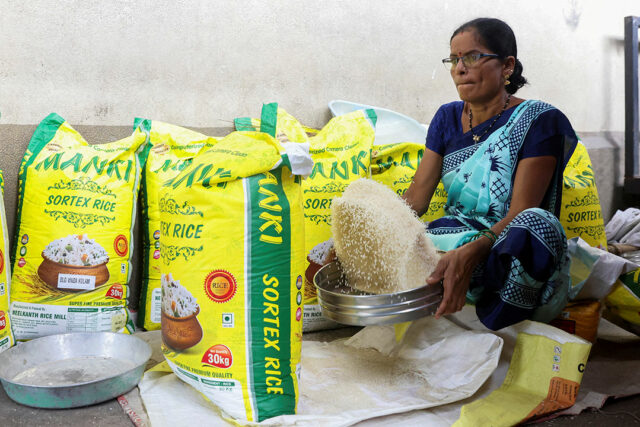
A WOMAN cleans rice grains at a wholesale market in Navi Mumbai, India, Aug. 4, 2023. — REUTERS

INDIA was accorded the spotlight at the 2025 Agri-Food Summit, with the Department of Agriculture (DA) calling India a key partner in achieving food security for the Philippines.

Indian Ambassador Harsh Kumar Jain opened the summit by calling for closer collaboration between the two countries, which he characterized as “friends by choice” and natural partners in the region.

Agriculture Undersecretary Roger V. Navarro said India is a promising source of expertise in food safety, quality standards and sustainable farming.

“We see promising opportunities. in rice and livestock… where India’s expertise can support our food security priorities. Food processing and value adding open up opportunities for our farmers and enterprises to reduce losses and ensure quality,” Mr. Navarro said.

The summit follows a state visit to India by President Ferdinand R. Marcos, Jr. a month prior, with both sides broadly agreeing to increase trade and investment.

Mr. Navarro said agrifisheries trade between the two countries was $554.27 million in 2024, up from $455.8 million a year earlier.

India’s top exports to the Philippines include buffalo meat, processed potatoes, soy bean products, and ground nuts.

Global exports of Indian agricultural products were valued at $51.4 billion in 2024-2025, with exports to the Philippines worth $420 million.

India is the leading exporter of rice and became the top producer of the grain in the 2024-2025 season with output topping 149 million metric tons, surpassing China — Andre Christopher H. Alampay