Home Blog Page 1033

Meralco bags top honor as ‘Company of the Year’ at the 21st Philippine Quill Awards

Manuel V. Pangilinan-led Manila Electric Company (Meralco) has once again displayed excellence in business communications after amassing 36 awards and earning the highly coveted recognition as “Company of the Year” at the prestigious 21st Philippine Quill Awards.

Meralco took home 10 Awards of Excellence and 26 Awards of Merit for its exemplary communications programs centered on customer service, sustainability, corporate social responsibility, public safety, and digital transformation.

“This honor affirms the vital role of strategic communication in advancing Meralco’s mission to keep the lights on. Being named Company of the Year inspires us to continue raising the bar in using clear, timely, and relevant communication as a driver of positive change that empowers the communities we serve, and builds trust with our stakeholders,” Meralco Vice-President and Head of Corporate Communications Joe R. Zaldarriaga said.

Meralco’s latest recognition as Company of the Year cements its position as an industry leader — not just in energy, but also in communications — as the sole company to have earned the prestigious distinction five times.

The distribution utility’s award-winning communications programs spanned a wide range of advocacies and initiatives. These included effective use of data for communication campaigns; creative and impactful executions to communicate the company’s monthly rate adjustments, sustainability initiatives that promote diversity and inclusion, renewable energy, and urban farming; customer service efforts like the Lifeline Rate Program and the Interruptible Load Program; cybersecurity awareness; digitalization projects including the Meralco Newsroom and Manong Joe digital channels; public safety campaigns such as the Anti-Urban Blight program and year-round electrical safety communications; corporate social responsibility programs such as electrification for marginalized households and livelihood platforms; and stakeholder management and events.

These recognitions highlight Meralco’s ability to deliver messages that resonate with stakeholders, drive organizational performance, and contribute to nation-building.

Now in its 21st year, the Philippine Quill Awards — organized by the International Association of Business Communicators (IABC) Philippines — stands as the country’s premier recognition program in the field of business communication, honoring organizations that exemplify excellence in using communication to achieve goals and make a difference in society.


Spotlight is BusinessWorld’s sponsored section that allows advertisers to amplify their brand and connect with BusinessWorld’s audience by publishing their stories on the BusinessWorld Web site. For more information, send an email to online@bworldonline.com.

Join us on Viber at https://bit.ly/3hv6bLA to get more updates and subscribe to BusinessWorld’s titles and get exclusive content through www.bworld-x.com.

Volvo Cars Philippines’ ‘Grace Beyond the Wheel’ Forum champions inclusive safety and empowerment

Hariphil Asia Resources, Inc. (HARI), the official distributor of Volvo cars in the Philippines, successfully gathered a new generation of leaders and trailblazing Filipinas for the second installment of its ‘Voice of Volvo’ thought leadership series, titled “Grace Beyond the Wheel.” The event, held on Sept. 3, 2025, at the Maria Fe Perez-Agudo Center for Leadership Excellence in St. Scholastica’s College, Manila, inspired student leaders to spearhead conversations on how personal and road safety are the essential foundation for empowerment and success.

The forum featured an all-female panel of distinguished leaders, moderated by esteemed broadcast journalist Rico Hizon. The panel Maria Fe Perez-Agudo, Vice-Chair, President, and CEO of HARI; Pinky Pe Tobiano, a renowned chemist, philanthropist, and CEO; Jacque Manabat, a pioneering multimedia creator, road safety advocate; and Angela Lagunzad-Castro, a trusted broadcast personality and advocate for women and persons with disabilities.

The discussion focused on how advancements in mobility and safety can empower women in leadership. The panelists shared moving insights from their respective fields, weaving a compelling narrative that underscored a central theme: a secure environment, both physically and emotionally, is not a luxury but a prerequisite for individuals to innovate, lead, and realize their full potential. The dialogue moved beyond road safety to encompass the broader spectrum of professional and personal well-being.

“The Voice of Volvo is our platform to champion conversations that matter. With ‘Grace Beyond the Wheel,’ we explored the profound truth that safety is at the core of progress,” stated Maria Fe Perez-Agudo, HARI Vice-Chair, President and CEO. “When individuals feel secure, they are empowered to lead, innovate, and shape the future. This is the human-centric principle that guides us, from the communities that we build, to the very engineering of our cars.”

True to Volvo’s DNA, the All-New XC60 Plug-in Hybrid carries the brand’s unmatched safety pedigree. It combines advanced driver-assistance features like Pilot Assist with an efficient powertrain capable of zero-emission daily commutes, all delivered within the clean, functional comfort of its cabin and an advanced air purifier system. This thoughtful design extends a circle of protection not only to the vehicle’s occupants but also to all road users. It is the synthesis of purposeful performance, delivered with unwavering peace of mind.

To bring this uncompromised experience within your reach, Volvo Cars Philippines extends an Exclusive Ownership Privilege a distinguished benefit designed to support the acquisition of the All-New XC60 Plug-in Hybrid. We invite you to our Volvo Makati Showroom for a personalized consultation, where you may discover how this rare opportunity makes the beginning of your Volvo journey not only attainable, but defined by elegance and distinction.

Hariphil Asia Resources, Inc. (HARI), formerly known as Hyundai Asia Resources, Inc., is the official distributor of Hyundai commercial vehicles, Chevrolet passenger cars, and Volvo passenger cars in the Philippines. Ably supported by its strong nationwide network HARI is poised to tap into the huge potential of the highly diverse Filipino market, from the country’s power brokers to families and communities, from SMEs to large-scale commercial, industrial, and B2B establishments.


Spotlight is BusinessWorld’s sponsored section that allows advertisers to amplify their brand and connect with BusinessWorld’s audience by publishing their stories on the BusinessWorld Web site. For more information, send an email to online@bworldonline.com.

Join us on Viber at https://bit.ly/3hv6bLA to get more updates and subscribe to BusinessWorld’s titles and get exclusive content through www.bworld-x.com.

MPIC, Mitsui, and SteelAsia join forces to create a sustainable steel recycling system in the Philippines

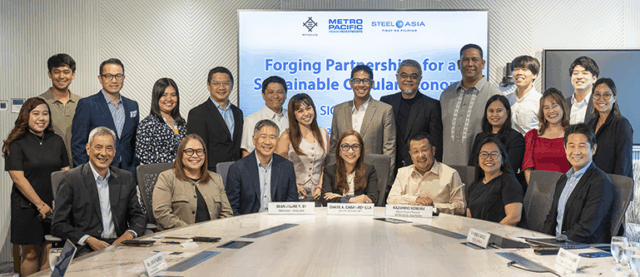
Key executives from MPIC, SteelAsia, and Mitsui, together with sustainability champions, gather for the signing of a memorandum of understanding on closed-loop steel recycling.

Metro Pacific Investments Corp. (MPIC), the Philippines’ leading infrastructure investments company, has entered a Memorandum of Understanding (MoU) with Mitsui & Co. (Asia Pacific) Pte. Ltd. Manila Branch (Mitsui) and SteelAsia Manufacturing Corp. to explore the creation of a closed-loop steel recycling system that supports a circular economy.

Building a Closed-Loop for Steel in Construction

The partnership will assess the feasibility of a model where steel scraps from MPIC Group supply chain are purchased by Mitsui and recycled by SteelAsia, then sold back in the market for reuse in infrastructure projects. This initiative will maximize the value of steel, reduce the reliance on newly mined materials, cut carbon emissions, and keep resources in continuous productive use.

“This initiative goes beyond just recycling, it represents a fundamental shift on how we approach sustainable growth,” said June Cheryl A. Cabal-Revilla, MPIC Chief Finance, Risk, and Sustainability Officer. A closed-loop system for steel means less extraction, fewer emissions, and stronger local supply chains. This model delivers lasting value for the economy, the environment and our communities.”

Driving Sustainability Across the MPIC Group

Under the proposed model, MPIC will work closely with its operating companies to identify the volume and types of steel scrap generated within the Group. Mitsui will integrate and manage the flow of recovered scrap to SteelAsia, which will manufacture high-quality “green steel” products for potential use in future infrastructure projects.

This effort is in alignment with MPIC’s sustainability framework, which integrates economic, environmental, social, and governance (EESG) principles into both strategic planning and daily operations. The company continues to prioritize innovation, responsible growth, and long-term resilience, advancing its mission to build a greener, more resilient Philippines.

L-R: Sean Andre Sy, SteelAsia president; Chaye Cabal-Revilla, MPIC Chief Finance, Risk, and Sustainability officer; and Kazuhiro Nomura, Mitsui Branch general manager

A Shared Vision

SteelAsia President Sean Andre Y. Sy expressed a positive outlook about the collaboration: “SteelAsia proudly drives the circular economy in construction using our green steel technology. We find ourselves in good company with MPIC and Mitsui who share our commitment to adopt sustainability as one of their core values. By recycling domestic waste, together we advance the country’s economic development in the best way possible.”

“What makes this steel recycling system even more sustainable is that it produces green steel through SteelAsia’s low carbon emission technology good for business and good for the environment,” he added.

Mitsui Branch General Manager Kazuhiro Nomura added, “We are pleased to announce the signing of a MOU with MPIC and SteelAsia for the joint study on closed-loop steel recycling. By leveraging Mitsui’s extensive experience in scrap and steel trading, we aim to realize this initiative and contribute to the creation of a more sustainable society.”

By rethinking how steel is sourced, used, and reused, MPIC, Mitsui, and SteelAsia are helping ensure that the country’s infrastructure growth is efficient, responsible, and supportive of stronger local supply chains for the future.


Spotlight is BusinessWorld’s sponsored section that allows advertisers to amplify their brand and connect with BusinessWorld’s audience by publishing their stories on the BusinessWorld Web site. For more information, send an email to online@bworldonline.com.

Join us on Viber at https://bit.ly/3hv6bLA to get more updates and subscribe to BusinessWorld’s titles and get exclusive content through www.bworld-x.com.

China’s August exports growth slowest in 6 months

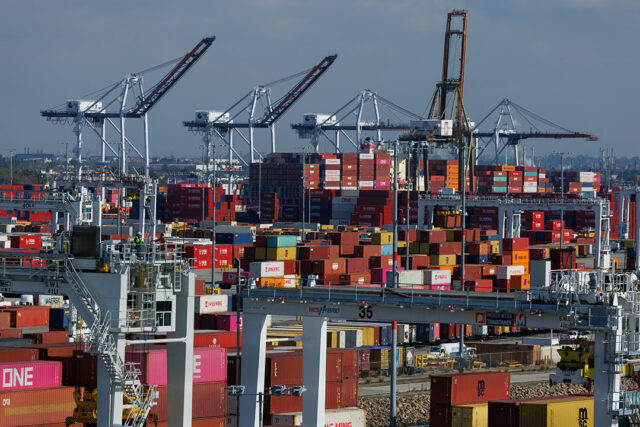
A drone view shows shipping containers from China at the Port of Los Angeles in Wilmington, California, Feb. 4, 2025. — REUTERS

BEIJING — China’s exports growth slowed to a six-month low in August, as a brief boost from a tariff truce with the US faded, but demand elsewhere provided officials some relief as they try to underpin an economy facing low domestic demand and external risks.

Policymakers are counting on manufacturers to diversify into other markets in the wake of US President Donald Trump’s erratic trade policy, enabling them to delay from rolling out additional fiscal support in the fourth quarter.

Outbound shipments from China rose 4.4% year-on-year in August, customs data showed on Monday, missing a forecast 5% increase in a Reuters poll and marking the slowest growth in six months. They compared with July’s better-than-expected 7.2% increase.

Imports grew 1.3%, following 4.1% growth a month earlier. Economists had predicted a 3.0% rise.

“I would say the number is still decent, and the resilience of exports has certainly lasted longer than we had expected,” said Xu Tianchen, senior economist at the Economist Intelligence Unit.

Trump’s tariff threats pose a stern test to China’s export-oriented economy, but policymakers are loathe to implement difficult but much-needed economic reforms under external pressure, analysts say.

The world’s two largest economies agreed on August 11 to extend their tariff truce for another 90 days, locking in place US levies of 30% on Chinese imports and 10% Chinese duties on US goods, but they appear to be struggling to chart a path beyond the current pause.

Once Trump’s tariffs top 35%, they become prohibitively high for Chinese exporters, economists warn.

A visit by senior Chinese trade negotiator Li Chenggang to Washington late last month yielded little of substance.

“Exports are holding up well so far,” said Dan Wang, director for China at Eurasia Group. “Shipments to the US are down, but other routes are even better than last year. Lots of exports are also tied to Chinese factories going overseas and importing raw materials and other inputs from China,” she added.

China’s exports to the US fell 33.12% year-on-year in August, the customs data showed, while its shipments to Southeast Asian nations rose 22.5% in the same period.

Chinese producers are trying to export more to markets in Asia, Africa and Latin America to offset the impact of Trump’s tariffs, but no other country comes even close to US consumption power, which once absorbed over $400 billion of Chinese goods annually.

And with Trump in July threatening a 40% penalty tariff on goods deemed to be transshipped from China to the US to evade his earlier levies, how long Chinese factory owners can continue to find buyers that way remains to be seen.

China’s August trade surplus came in at $102.3 billion, from $98.24 billion in June, but still well below June’s $114.7 billion.

Analysts are watching to see whether officials will roll out additional fiscal support in the fourth quarter to spur domestic demand.

But policymakers seem to be exercising tighter control over their flagship ‘cash-for-clunkers’ programme and did not rush replenish funds after several local governments recently ran through the allocation set aside for the scheme. — Reuters

Immigrant faithful turn to virtual sermons, home communion amid Trump crackdown

PIXABAY

CHICAGO – Sitting alone at her dining room table this past Sunday, Doris Aguirre took a bite of a soda cracker and a sip of the orange juice she had prepared to represent the body and blood of Jesus Christ. Eyes closed, she then made the sign of the cross.

It is an act of faith performed every week by millions of Christians who consume a wafer and a sip of wine blessed by a minister in churches around the world, in one of the holiest moments of the Sunday service. But for Aguirre it is a lonely ritual.

Aguirre’s church in Chicago moved its Spanish-language service online in late December in anticipation of President Donald Trump launching the biggest crackdown on illegal immigration in US history.

Honduran-born Aguirre is married to a naturalized US. citizen but lacks legal status herself despite having lived in the country for 25 years. She has a standing deportation order after inadvertently missing an initial court date, and a later attempt to reopen her case was denied, her lawyer said.

For Aguirre, attending weekly service at Chicago’s Lincoln United Methodist Church was an important part of life. She said she misses taking communion with other congregants and gathering after service over coffee to talk through common problems in her native tongue.

“Ever since I joined the church, I have come to see the other members as family,” Aguirre, a 59-year-old housecleaner and mother of two, told Reuters at her home in Cicero, a suburb of Chicago. “This has been a very sad time for me.”

Aguirre’s solitary communion is an example of how Trump’s immigration sweep is disrupting the religious lives of thousands of immigrants in the country illegally.

On his first day in office, the Trump administration scrapped former President Joe Biden’s policy of designating places of worship, along with schools and hospitals, as sensitive locations off limits to immigration enforcement.

“Criminals will no longer be able to hide in America’s schools and churches to avoid arrest,” the Department of Homeland Security said in a statement on January 21.

That policy change, along with moves by federal agents to detain a growing number of people charged only with immigration violations, has led many immigrants to stay away from church because they no longer view it as a safe space, according to interviews with more than two dozen pastors and church leaders across the U.S. They said that the growing fear of deportation had driven down attendance and made it more difficult to retain ties with their congregants, hindering services from food to legal advice that immigrants count on the church to provide.

While Immigration and Customs Enforcement agents have yet to raid a church, they detained a pastor in Maryland for allegedly overstaying his visa and have arrested people in church parking lots.

Any rise in ICE arrests inside churches or directly targeting congregants could be politically toxic, even among Trumpís conservative base, five former ICE officials told Reuters, though the decision to ease restrictions on churches has made it easier to pick up someone nearby.

In a statement to Reuters, a DHS spokesperson said ICE was not raiding churches, adding that agents would need supervisory approval and that any action inside a church would be rare. “If a dangerous illegal alien felon like a gang member, murderer, or pedophile were to flee into a church, there may be a situation where an arrest is made to protect public safety,” the spokesperson said.

Some churches with large immigrant congregations have marked certain areas as private, raising the bar for ICE entry as warrants are required for them to enter private spaces. Other steps include placing U.S. citizen congregants outside as lookouts and organizing “know your rights” training, eight of the pastors told Reuters.

In July, the Roman Catholic Archdiocese of Los Angeles said it would begin taking hot meals and medicine to immigrants afraid to leave their homes, expanding a service originally designed for the elderly and other homebound congregants. The diocese in Orange County, California, recently said it would offer communion in homes.

Gabriel Salguero, president of the National Latino Evangelical Coalition, said he has been talking with pastors who are struggling to meet requests for help from their parishioners dealing with growing anxiety about being detained.

“It’s really requiring the church to do more work. It’s much more labor intensive. It’s much more emotionally and spiritually exhausting,” Salguero said. “This second administration has been much more aggressive and indiscriminate.”

White House spokeswoman Abigail Jackson said the Trump administration’s efforts to arrest and deport “dangerous criminal illegal aliens” had made the country safer “including churches and other religious community spaces.”

FAITH GROUPS SUE
In July, a coalition of Protestant denominations sued the government, arguing that Trump’s decision to strip churches’ protection from ICE raids violated the constitutional right to the free exercise of religion because the constant threat of arrest made immigrants fear going to church.

The government argues that the plaintiffs have not proven that the change in policy for sensitive locations, rather than heightened immigration enforcement overall, triggered the fall in attendance. The DHS spokesperson said any fear was being caused by “sanctuary politicians and the media” spreading falsehoods about ICE.

The case is pending in a Massachusetts federal court.

According to the lawsuit, attendance at an Episcopal church in Oregon’s Spanish service dropped to just 12 in June from the normal 40-50 after ICE detained a local business owner. In another example, the lawsuit said one Lutheran church in Texas saw attendance at its Vacation Bible School dwindle to just four children, from the usual 20 to 25.

Trump’s decision to make houses of worship a potential target has posed a challenge for the hundreds of churches that for years had offered their buildings as a safe haven for migrants fearing deportation.

Some churches that offered sanctuary in the past have stopped doing so publicly out of fear of drawing ICE’s attention, according to Alexia Salvatierra, a professor at Fuller Theological Seminary and a longtime leader in the sanctuary movement.

“Nobody can guarantee the church is a safe space,” she said, adding that a network of individuals were offering their homes to help fill the gaps left by the church. “It’s much safer to live with someone else.”

Progressive churches and those with large Hispanic congregations are taking the lead in advocating for migrants.

A coalition of churches and synagogues in Philadelphia has expanded a system for accompanying migrants to court, hoping the presence of religious leaders and volunteers will deter federal agents from detaining them. “It is an important piece of non-cooperation, of saying ‘this is not okay'” said Peter Pedemonti, co-director of the New Sanctuary Movement of Philadelphia.

A Lutheran pastor in southern California who asked not to be identified said he is taking communion home to home, after Sunday attendance fell by two thirds.

The leaders of white evangelical churches, in contrast, have largely remained silent, afraid to stir up tensions among their members who form a critical part of Trump’s political base, said Matthew Soerens, vice president of advocacy and policy at an evangelical humanitarian organization called World Relief.

Ken Peters, pastor of Patriot Church in Lenoir City, Tennessee, is one of the outspoken ones. He said all the evangelical leaders he knows are 100% behind Trump’s immigration agenda, citing concerns about an influx of drugs and child trafficking which he blames on loose regulation of the border.

“If you’re sneaking around here in our country illegally, technically that’s against the law, and we would consider that sin,” Peters said.

LOS ANGELES
Nowhere has the impact on churches been as profound as in Los Angeles, the target of aggressive immigration sweeps in recent months. Trump deployed National Guard troops to the city in June in response to street protests against ICE’s raids.

Reverend Samuel Rodriguez, president of the National Hispanic Christian Leadership Conference, said the Los Angeles churches in his network have experienced a 35% drop in attendance on average. When ICE carries out a raid close to a church, the following Sunday drop has been as high as 70%, he said.

Before Trump’s second term, the Spanish-language Sunday service at Lincoln United Methodist on Chicago’s west side used to draw up to 80 participants, according to Emma Lozano, a longtime immigrant activist and a pastor at the church.

This past Sunday the second floor sanctuary of Lozano’s church was empty as she oversaw the weekly Spanish service for her online congregation of 18 parishioners. She stood on a darkened stage, with the church’s stained glass windows covered in black curtains to represent the wall along the U.S. border with Mexico, letting just cracks of light into the room.

Sitting at her dining room table, Aguirre watched solemnly on her cellphone, which was propped up on a paper towel holder. She lamented the fear she said Trump had spawned with his immigration crackdown, and said it was important to speak publicly in support of immigrants, despite her own status.

“I never imagined it would be so intense,” she said. “I never imagined he (Trump) would come so strongly, sweeping everything away.” — Reuters


Fortis Residences: Where the next chapter of your success story begins

At the Sky Deck Pool, relax or reconnect with loved ones as the cityscape of Makati and Manila Bay unfolds before you. (Artist’s Illustration)

Success is not merely about reaching the top. It’s about the journey, the vision, the discipline, and the refined standards that shape a life of meaning and distinction.

It’s about the choices that reflect who you are and the legacy you are building every day. Because when a life is crafted with purpose and excellence, it doesn’t pause.

It evolves. It moves forward toward greater experiences, broader horizons, and deeper fulfillment. And it deserves a home that mirrors that momentum.

This vision takes shape in Fortis Residences — rising in Makati’s evolving mixed-use district. Here, success is not just celebrated; it is sustained.

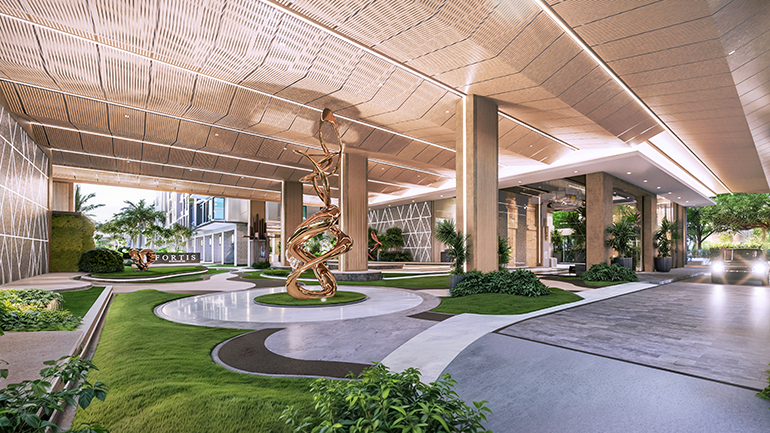
The Drop-off and Promenade sets the tone for stylish and upscale city living. (Artist’s Illustration)

Developed by the premium brand of Quadruple A developer DMCI Homes — DMCI Homes Exclusive — Fortis Residences is a modern landmark of ambition and accomplishment. This 7,200-square-meter property is the second signature project under the brand’s upscale portfolio. It is designed for individuals who seek not just sophistication, but a lasting investment in the city’s future.

Set along Chino Roces Avenue, Fortis Residences stands at the forefront of progress. From global corporate headquarters to premier institutions and embassies, its location is as prestigious as it is strategic. With direct access to EDSA, SLEX, Skyway, NAIA, and major business hubs like BGC, Ayala Center, and Aseana City, it empowers today’s leaders to move seamlessly between aspirations and achievements.

Even more, Fortis Residences rises within the Makati Southwest Gateway, a globally envisioned urban district that prioritizes walkability, connectivity, and lifestyle elevation. Integrated into a transit-oriented development and complemented by its own commercial hub, One Fortis Plaza, this upscale residence provides an unmatched level of ease and access. Whether for work, wellness, or leisure, everything you need is just a few steps away.

Expansive open lounge at Fortis Residences with stylish seating areas and warm lighting, set amid lush greenery for a relaxing blend of indoor comfort and nature. (Artist’s Illustration)

Inside, refined living takes center stage.

Each unit — whether a well-planned one-bedroom, a two-bedroom unit with balcony or an expansive three-bedroom suite, is designed with intention. Optimized layouts, premium finishes, branded fixtures, and thoughtful details such as air-conditioning in all units, water heaters, digital locksets, and smart building systems redefine what it means to live in comfort and style.

As with all DMCI Homes developments, resort-inspired amenities anchor the lifestyle experience. A generous 3,000 square meters of ground-level open space hosts a leisure pool, lounge areas, and a children’s play area.

On the roof deck, a basketball court, fitness gym, Sky Promenade, and Sky Lounge offer more ways to stay active or unwind — whether you’re chasing a goal or a moment of quiet reflection.

Crowning it all is the Sky Deck Pool — an elevated retreat with stunning views of the Makati skyline and Manila Bay.

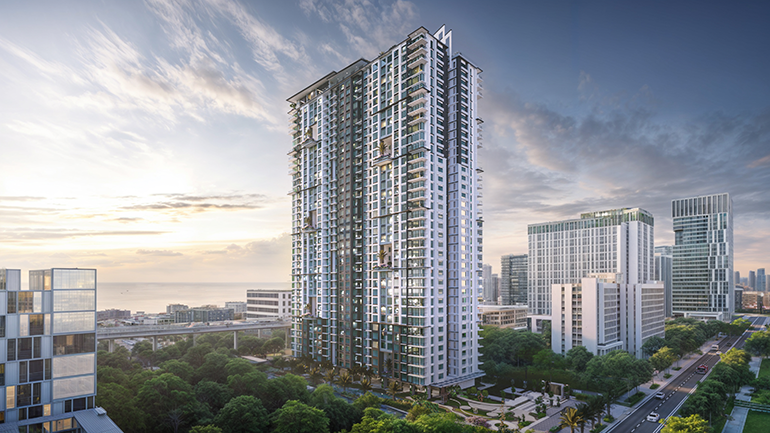
When completed, Fortis Residences will stand in a prime Makati location with seamless links to BGC and other key areas in Metro Manila. (Artist’s Illustration)

Sustainability, too, is an integral part of Fortis Residences’ vision. With EV charging stations, energy-efficient lighting, and water recycling systems, the development is built not only for today’s needs but for a mindful, responsible future.

At Fortis Residences, peace of mind comes standard. Here, everyday living is made easier through professional management, concierge assistance, a user-friendly mobile app, and the dependable expertise of DMCI Homes Leasing Services — all working to nurture and grow your investment.

This is where ambition meets elegance. Where generous space meets refined living and every detail affirms a life well-built.

Fortis Residences is the next chapter in your success story. It is distinguished, shaped by aspiration, and entirely your own.

Underpinned by exceptional quality that DMCI Homes has long been known for, each DMCI Homes Exclusive property is designed to possess an inherent rarity, be it in location, master plan or development features.

To learn more about DMCI Homes Exclusive, visit exclusive.dmcihomes.com or call (632) 5324-8888. For news and updates, follow DMCI Homes Exclusive’s official Facebook page or log on to www.dmcihomes.com.


Spotlight is BusinessWorld’s sponsored section that allows advertisers to amplify their brand and connect with BusinessWorld’s audience by publishing their stories on the BusinessWorld Web site. For more information, send an email to online@bworldonline.com.

Join us on Viber at https://bit.ly/3hv6bLA to get more updates and subscribe to BusinessWorld’s titles and get exclusive content through www.bworld-x.com.

More than 25,000 sign up for socialized housing units under Expanded 4PH

Over 25,000 Filipino workers have signed up to express interest in purchasing socialized housing units through the Pag-IBIG Housing Loan under the Expanded Pambansang Pabahay para sa Pilipino (4PH) Program, just three months after Pag-IBIG Fund rolled out its 4PH Online Registration system in June 2025, officials announced Friday, Sept. 5.

This early success reflects strong demand and high interest among Filipino workers in securing affordable homeownership through the Marcos administration’s flagship housing initiative.

The Expanded 4PH Program, which now includes house-and-lot units in subdivision developments in addition to previously available vertical condominium projects, currently features socialized housing developments in key areas such as Caloocan City, Cavite, Bulacan, Nueva Ecija, Rizal, Pampanga, Ilocos Norte, Bacolod, Zamboanga, and Davao. With more projects under way, even more Filipino workers are expected to benefit in the coming months.

“The high number of registrants in such a short span of time clearly reflects the need of Filipino workers and their families for affordable homeownership,” said Department of Human Settlements and Urban Development Secretary Jose Ramon P. Aliling, who also chairs the Pag-IBIG Fund Board of Trustees.

“This user-friendly, transparent, and corruption-free digital solution under the Expanded 4PH Program allows us to bring homeownership within reach. The tool also helps us match the growing demand with the available housing inventory, and eventually with the more than 251,000 socialized housing units committed by the private sector. This forms part of our many efforts to move us closer in fulfilling President Marcos’ vision of providing Filipino families with safe, decent, and secure homes under a Bagong Pilipinas,” Mr. Aliling said.

Pag-IBIG Fund’s Expanded 4PH Online Sign-Up Facility is a mobile-optimized platform that allows members to browse available socialized housing projects, view unit photos, compute estimated monthly payments, and monitor their registration status in real time. Once a member registers through the system, Pag-IBIG Fund conducts a preliminary assessment based on membership status, income, and other eligibility criteria. The registrant’s information is then transmitted to the National Housing Authority (NHA) and the Social Housing Finance Corporation (SHFC) for further validation. After completing eligibility checks, the potential homebuyer’s details are endorsed to the partner developer of the selected project to facilitate the housing loan and home purchase process.

“We developed this online registration system with our members’ convenience in mind. It now allows them to easily explore housing options and indicate their interest, so we can reach out and assist them in completing their application. This further supports Secretary Aliling’s push for full digitalization in the housing sector, a key component of his 8-Point Agenda,” said Pag-IBIG Fund Chief Executive Officer Marilene C. Acosta. “At Pag-IBIG Fund, we have always embraced digital transformation as a means of making our services better and more responsive to our members’ needs. Through this facility, first-time homebuyers can now begin their journey to homeownership with just a few clicks.”

Ms. Acosta also urged eligible members to take advantage of Pag-IBIG Fund’s ongoing Early Bird Promo, which offers a special 3% subsidized housing loan rate fixed for 10 years for the first 30,000 qualified borrowers under the Pag-IBIG Housing Loan for the Expanded 4PH.

Under the Pag-IBIG Housing Loan for the Expanded 4PH, qualified members may avail of loans with a subsidized interest rate to finance the purchase of house-and-lot units priced up to P850,000, or condominium units up to P1.8 million. Pag-IBIG Acquired Assets that fall within the same price ceilings may also be purchased through the loan.

Interested members may register through the Expanded 4PH Online Sign-Up Facility at https://www.pagibigfundservices.com/MagpalistaSa4PH/.


Spotlight is BusinessWorld’s sponsored section that allows advertisers to amplify their brand and connect with BusinessWorld’s audience by publishing their stories on the BusinessWorld Web site. For more information, send an email to online@bworldonline.com.

Join us on Viber at https://bit.ly/3hv6bLA to get more updates and subscribe to BusinessWorld’s titles and get exclusive content through www.bworld-x.com.

Japan revises Q2 GDP higher on upbeat consumer spending

A MAN takes photo of cherry blossoms on the first day of the Japanese government’s relaxation of official guidance on masks as it emerges from the COVID-19 pandemic, in Tokyo, Japan, March 13, 2023. — REUTERS

TOKYO – Japan’s economy expanded much faster than initially estimated in the second quarter, driven by upward revisions in private consumption and inventories, giving policymakers some assurance as they navigate political and trade uncertainty.

Gross domestic product grew an annualised 2.2% from the previous quarter in the three months through June 30, revised data from the Cabinet Office showed on Monday, up from the 1.0% announced on August 15 and economists’ median forecast.

While the figures show brisk growth in the world’s fourth-largest economy, US tariffs and growing political uncertainty could complicate policymaking in the months ahead after Prime Minister Shigeru Ishiba resigned on Sunday.

On a quarter-on-quarter basis, GDP grew 0.5%, compared with a median forecast and the initial estimate of a 0.3% rise.

The Cabinet Office said the upgraded estimates reflected restaurant, game sales and corporate spending, which was not available at the time of the initial reading’s release.

Private consumption, which accounts for more than half of the Japanese economy, inched up 0.4%, versus a 0.2% uptick in the preliminary reading.

However, analysts warn US President Donald Trump’s tariffs could trigger a sharp slowdown in exports in the current quarter and undermine the economy’s current momentum.

“It’s difficult to expect consumer spending to be sufficiently robust in the July-September quarter to offset the decline in exports,” said Shinichiro Kobayashi, principal economist at Mitsubishi UFJ Research and Consulting.

While Monday’s data is unlikely to influence the Bank of Japan’s immediate policy deliberations, tariff concerns and political uncertainty could delay any imminent interest rate hikes, said economist Uichiro Nozaki at Nomura Securities.

The focus will now turn to July-September GDP figures to gauge how far U.S. tariffs have weighed on the economy.

Tokyo and Washington last week formalised a trade deal, implementing lower tariffs on Japanese automobile imports and other products that were announced in July, providing some relief for the export-heavy economy.

The capital expenditure component of GDP, a barometer of private demand, rose 0.6% in the second quarter, revised down from 1.3% in the initial estimate. Economists had estimated a 1.2% rise.

External demand, or exports minus imports, contributed 0.3 percentage point to growth, in line with the preliminary reading. Domestic demand contributed 0.2 percentage point, reversing a 0.1 percentage point drag in the initial figure. — Reuters

EastWest Ageas launches protection and payout insurance

What is the “Filipino Dream”? In a place that is the 13th most populous in the world, the Filipino Dream cannot be defined under a singular lens. Instead, it is shared from generation to generation, shaped by the environment, and ultimately, chosen by the self. From ensuring they live comfortably with a sure income, living a healthy life with their loved ones, or simply preparing their kids’ future or for their golden years, these are the dreams that Filipinos share.

Securing safety and source of income

A common dream Filipinos share is achieving a stable source of income, which also feeds into their sense of security. This aspiration and prioritization is reflected in a recent study commissioned by EastWest Ageas Insurance where 82% of Filipinos chose income security as a top focus. Whether its income that can cover for their daily needs or funds for emergencies, when Filipinos are secure about how to fund their tomorrows, they can make more confident choices about their future.

Honing into health and wellness

In a post-pandemic world, the importance of health and wellness has climbed higher in the public consciousness. In fact, 81% of Filipinos say that making sure they are healthy so they are free of the worries health-based concerns bring them is a personal goal. This focus on the commitment to a healthy lifestyle is a sign that most Filipinos truly believe in the saying that prevention is indeed better than the cure.

Empowering through education

Though there has been a shift to preparing for retirement, 33% of Filipinos are focused on ensuring their children get the education they deserve. This long-standing belief in education as an untouchable legacy for their children that ultimately decides their future remains strong.

Designing solutions for the Filipino Dream

With a myriad of variants for the Filipino Dream, how does one come up with a solution that can encompass these needs? And for fast-rising insurance provider, EastWest Ageas the answer is simple.

“Filipinos deserve a solution that empowers them to pursue their life goals while still staying protected,” shares Sjoerd Smeets, President and CEO of EastWest Ageas.

“We designed an insurance solution that gives you the confidence to plan ahead. Whether you’re preparation for retirement, saving for your children’s college education, or you’re the breadwinner seeking for financial security, we created a product that provides the protection and guaranteed benefits you need to confidently pursue your dreams, worry-free.”

All of this is in Dream Builder.

Dream Builder is the newest addition to EastWest Ageas’ growing roster of PURPLE Solutions insurance offerings that can help Filipinos pursue their purpose for their people their PURPLE. It is designed to help Filipinos enjoy the present with guaranteed cash payouts at the end of the 6th policy year, plan for their next chapter with the maturity benefit at end of the 20th year, and be ready for whatever life brings, with protection coverage for 20 pivotal years.

Best of all, it has a simplified issue offer which makes the application process convenient and faster with minimal health requirements.

“We are proud to add Dream Builder into our suite of products,” shares Greg Martin, Chief Distribution and Marketing Officer. “With it, we hope to help more Filipinos build their dreams with the knowledge that they are secured as they pursue it. Life may be uncertain, but Dream Builder offers the security and peace of mind that every Filipino deserves.”

Dream Builder is now available through EastWest Ageas’ financial consultants and financial advisors in all EastWest Bank stores nationwide.

Visit www.ewageas.com.ph to help build your dreams today!


Spotlight is BusinessWorld’s sponsored section that allows advertisers to amplify their brand and connect with BusinessWorld’s audience by publishing their stories on the BusinessWorld Web site. For more information, send an email to online@bworldonline.com.

Join us on Viber at https://bit.ly/3hv6bLA to get more updates and subscribe to BusinessWorld’s titles and get exclusive content through www.bworld-x.com.

US to target more businesses after Hyundai raid, top official says

Masked law enforcement officers, including Immigration and Customs Enforcement agents, walk into an immigration court in Phoenix, Arizona, US, May 21, 2025. — REUTERS/CAITLIN O’HARA

WASHINGTON – President Donald Trump’s administration plans to target more businesses for immigration enforcement after a raid on a Hyundai facility in Georgia led to hundreds of arrests, a top White House official said on Sunday.

Speaking on CNN’s ‘State of the Union,’ White House border czar Tom Homan said the administration would intensify the focus on workplaces.

“We’re going to do more worksite enforcement operations,” Homan said. “No one hires an illegal alien out of the goodness of their heart. They hire them because they can work them harder, pay them less, undercut the competition that hires US citizen employees.”

Opponents of Trump’s crackdown and some business groups say major US industries – including agriculture, hospitality and meatpacking – depend on immigrants without legal status.

US immigration authorities arrested 475 people on immigration violations during the raid of the Hyundai facility on Thursday, most of whom were South Korean nationals. The South Korean government said on Sunday that the workers would be returned once administrative procedures were completed.

The US Department of Homeland Security did not immediately respond to a request for comment.

A US Immigration and Customs Enforcement official said during a press conference on Friday that some of the people arrested at the facility had crossed the border illegally and overstayed visas. A separate ICE official told Reuters that many had visas for tourists and business travelers that do not include a work permit.

The arrests in Georgia followed tougher rhetoric by Trump on illegal immigration. For weeks, Trump and his top officials have suggested the administration could send National Guard troops and federal officers to Chicago to target crime and immigration.

In a Truth Social post on Saturday, Trump posted a meme based on the 1979 Vietnam war movie “Apocalypse Now” that showed an image of the Chicago skyline with flames and helicopters, reminiscent of the deadly helicopter attack on a Vietnamese village in the film.

On CNN, Homan defended the meme, which has been heavily criticized by Chicago residents and others for its warlike imagery and suggestion that the city is a military target. He said it was being taken out of context and that the Trump administration was only going to war with criminals and those violating immigration laws. — Reuters

US probes malware email targeting trade talks with China, WSJ reports

STOCK PHOTO | Image by geralt from Pixabay

WASHINGTON – US authorities are investigating a bogus email purportedly from a Republican lawmaker that contained malware apparently aimed at giving China insights into the Trump administration’s trade talks with Beijing, the Wall Street Journal reported on Sunday.

The malware in the email that appeared to be sent by Representative John Moolenaar in July to US trade groups, law firms and government agencies was traced by cyber analysts to a hacker group – APT41 – believed to be working for Chinese intelligence, the newspaper said.

Moolenaar, a harsh critic of Beijing, is the chairman of a congressional committee focused on strategic competition between China and the United States, including threats to US national security.
The email was the latest alleged Beijing-linked hacking operation aimed at giving China insight into recommendations to the White House for contentious trade talks with China, said the Journal, quoting people familiar with the matter.

The Chinese embassy in Washington said it was not familiar with the details of the reported attack and that all countries face cyberattacks that are difficult to trace.

“China firmly opposes and combats all forms of cyber attacks and cyber crime,” it said in an emailed statement. “We also firmly oppose smearing others without solid evidence.”

The Journal said the first malware email was sent just before US-China trade talks in Sweden that led to an extension of a truce on tariffs until early November, when US President Donald Trump and Chinese leader Xi Jinping could meet at an Asian economic summit.

“Your insights are essential,” said the email that asked recipients to review proposed legislation attached to it.

Opening the draft legislation would have allowed the malware to give the hackers extensive access to the targeted groups, the newspaper said, adding that it could not be determined if the attacks had succeeded.

The newspaper said that the FBI and the US Capitol Police were investigating the email.

It quoted an FBI spokeswoman as saying that the bureau was aware of the email and was “working with our partners to identify and pursue those responsible.” The Capitol Police declined to comment, it said.

In a statement to the Journal, Moolenaar called the attack another example of Chinese cyber operations aimed at stealing US strategy. “We will not be intimidated,” he said.

The fake email came to light when staffers of Moolenaar’s committee started receiving puzzling inquiries about it, said the Journal, quoting people familiar with the matter. — Reuters

Aboitiz Equity Ventures strengthens role in driving Philippine economy

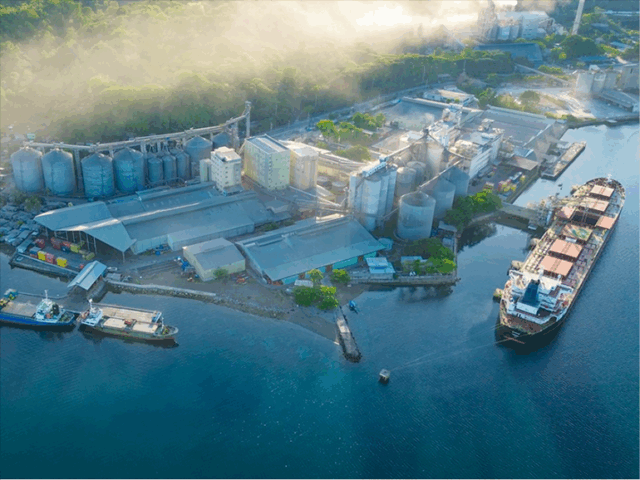
Aboitiz Foods, one of the leading food and agribusiness players in Asia, made significant strides in enhancing its operations this year, further reinforcing its contribution to Aboitiz Equity Ventures’ growth journey.

Aboitiz Equity Ventures, Inc. (AEV), the public holding company of the Aboitiz Group, continues to demonstrate resilience and adaptability as it strengthens its role in supporting the country’s economic progress. As the Philippines’ first techglomerate, AEV manages a diversified portfolio of businesses in power, banking, food and beverage, infrastructure, land development and cement—essential sectors that power communities, enable industries, and create opportunities. This diversity not only allows the group to withstand challenges but also reinforces its commitment to innovation and sustainability as drivers of long-term growth and national development.

“Our performance reflects the strength of a well-diversified portfolio,” said Sabin M. Aboitiz, AEV President and CEO. “We are managing our businesses with discipline, resilience, and innovation—not only to deliver value to our shareholders, but also to help drive the Philippine economy forward.”

AboitizPower continues to ensure reliable energy supply to households and industries nationwide, supporting inclusive growth and competitiveness. In food and agribusiness, Aboitiz Foods delivered stronger performance, while Coca-Cola Europacific Aboitiz Philippines, Inc. (CCEAP) added further diversity to the group’s consumer market portfolio.

UnionBank sustained its leadership in digital banking, expanding financial access through innovative solutions and a healthier funding mix. Its role in advancing financial inclusion aligns with AEV’s purpose of uplifting communities. Aboitiz InfraCapital pushed forward with projects in airports, water, and economic estates, laying foundations for long-term development. Aboitiz Land reaffirmed its mission to provide affordable housing for Filipino families, while Republic Cement worked with stakeholders to strengthen the domestic cement industry, critical to infrastructure growth.

The group is also deep into its Great Transformation journey, reimagining itself as the country’s first techglomerate. By embedding data science, artificial intelligence, and emerging technologies into traditional industries, AEV is creating smarter, more efficient, and future-ready businesses. UnionBank’s pioneering digital banking initiatives, AboitizPower’s renewable and smart energy systems, and InfraCapital’s smart city and airport solutions are just some examples of how technology is reshaping its operations. The Aboitiz Foundation is likewise harnessing innovation to uplift communities through programs like AuroraPH, which energizes last-mile schools and upskills teachers in remote areas by equipping them with digital tools and training to enhance education delivery.

Despite headwinds, AEV remains steadfast in its mission to uplift lives and advance business and communities. Its diversified portfolio allows it to balance risks while seizing opportunities for inclusive growth across multiple sectors. “There will always be challenges, so we try to keep our businesses in a position to capture opportunities and sustain growth,” Aboitiz emphasized.

From powering homes and industries, to building sustainable communities, to enhancing access to financial services, AEV’s role in nation-building is deeply embedded in its operations. Strategic investments and forward-looking transformation ensure that it remains a key driver of Philippine economic growth in the years ahead.

With more than a century of business history, AEV is recognized as one of the Philippines’ most respected conglomerates. Guided by strong corporate governance and sustainability principles, it continues its purpose of advancing business and communities. As it transforms into a techglomerate, AEV is shaping the future by integrating innovation and sustainability into every aspect of its operations—helping build a stronger, more inclusive, and more resilient economy.


Spotlight is BusinessWorld’s sponsored section that allows advertisers to amplify their brand and connect with BusinessWorld’s audience by publishing their stories on the BusinessWorld Web site. For more information, send an email to online@bworldonline.com.

Join us on Viber at https://bit.ly/3hv6bLA to get more updates and subscribe to BusinessWorld’s titles and get exclusive content through www.bworld-x.com.

ADVERTISEMENT
ADVERTISEMENT