Home Blog Page 1020

Death of Charlie Kirk lays bare deep US political divisions

A person takes a picture of the White House with a US flag that files at half mast in Washington, D.C., US Sept. 10, 2025. — REUTERS/NATHAN HOWARD

WASHINGTON — What was meant to be a moment of silence in the US House of Representatives on Wednesday for the slain conservative activist Charlie Kirk erupted in shouting and finger-pointing, an episode that provided a bitter illustration of a nation divided by political acrimony.

As news of Kirk’s fatal shooting at a Utah university spread, lawmakers began to argue how to best honor him. US Representative Lauren Boebert, a Colorado Republican, raised her hand and asked for someone to lead a prayer, adding, “Silent prayers get silent results.”

Some Democrats then questioned why other killings that involved less prominent figures were not getting the same attention, according to one lawmaker present, which resulted in swearing and accusations about politicizing tragedies.

Republican House Speaker Mike Johnson pounded the gavel for order, while an unidentified person shouted, “Pass a gun law!”

Kirk, 31, co-founder of the conservative advocacy group Turning Point USA and a staunch supporter of President Donald Trump, was shot while speaking at an event in Orem, Utah, on Wednesday. The motive is unknown and it was not clear whether a suspect had been arrested.

His death left many of his fellow conservatives seething and blaming liberals for the assault, while Democrats largely kept to a more reserved tone, decrying political violence generally and again calling for stronger gun laws.

It was a debate far too familiar – and personal – for lawmakers.

“There’s no excuse for political violence in our country, it’s got to end,” said Steve Scalise, the No. 2 Republican in the House of Representatives, who survived being shot in 2017 at a congressional baseball practice.

“It’s a problem that we’ve seen grow and it’s got to be addressed. It’s got to stop.”

According to the most recent data compiled by the Centers for Disease Control and Prevention, 46,728 people died from gun violence in the US in 2023, the third-highest figure ever recorded.

Two years ago, Congress passed the first sweeping gun-control measure in 30 years, a bipartisan bill that tightened loopholes and increased background checks but has done little to stem shootings.

YAWNING POLITICAL DIVIDE
The differing reactions suggested that Kirk’s death likely will only deepen America’s yawning political divide – as two assassination attempts on Trump did last year. Almost a quarter century has passed since the nation was last unified by tragedy, following the September 11, 2001, attacks on New York and Washington.

Before the identity of the shooter was known, prominent right-wing figures were framing the incident as a part of a broader assault by the left against conservatism.

“America has lost one of its greatest champions,” White House Deputy Chief of Staff Stephen Miller wrote on X. “All of us must now dedicate ourselves to defeating the evil that stole Charlie from this world.”

Laura Loomer, a MAGA loyalist who has Trump’s ear, called for “cracking down on the Left with the full force of the government. Every single Left wing group that funds violent protests needs to be shut down and prosecuted. No mercy.”

Elon Musk, the X platform’s billionaire owner, was even more blunt. “The Left is the party of murder,” he wrote.

Trump – who routinely refers to his political rivals as “radical left lunatics” who he warns represent an existential threat to America – called the shooting an outgrowth of overheated rhetoric.

“Violence and murder are the tragic consequence of demonizing those with whom you disagree – day after day, year after year – in the most hateful and despicable way possible,” Trump said in a video posted to his Truth Social platform.

The reaction from Democrats was more muted. “We don’t yet know what motivated the person who shot and killed Charlie Kirk, but this kind of despicable violence has no place in our democracy,” former President Barack Obama said in a statement.

Democratic former US Representative Gabby Giffords, who was critically wounded by a gunman in 2012, said, “Democratic societies will always have political disagreements, but we must never allow America to become a country that confronts those disagreements with violence.”

One exception was Illinois Governor JB Pritzker, a potential 2028 presidential candidate who placed his finger squarely on Trump for encouraging political violence.

“It’s gotta stop,” Pritzker told reporters. “I think there are people who are fomenting it in this country. I think the president’s rhetoric often foments it.”

PUBLIC REJECTS POLITICAL VIOLENCE
Americans overwhelmingly reject political violence.

A Reuters/Ipsos poll conducted in October of last year asked if Americans agreed with a statement that it was “acceptable for a member of my political party to threaten and/or intimidate others to achieve a political goal.” Just 6% of respondents – a trivially small share in terms of an opinion survey – said they agreed.

Ruth Braunstein, a professor of sociology at Johns Hopkins University who has studied Kirk and the right, said the shooting had the potential to spike already heated political tensions in the country.

“It is obviously a tragedy on a personal level, but it also does have the capacity to further inflame a political environment where the temperature is already way too high. That’s a real possibility, and a real risk,” Braunstein said.

Christian Heyne, chief policy officer at Brady – a gun violence protection group named for James Brady, a former White House press secretary shot and seriously wounded during a 1981 assassination attempt against Republican President Ronald Reagan – urged the parties to find common ground on guns.

“Gun violence doesn’t check party ID. It is indiscriminate. And the American people always lose,” Heyne posted on the social media site BlueSky. “We know change is possible. We must stop pretending there are ‘sides’ and fight together to build a safer future.”

Kirk’s shooting came as the conservative media ecosystem had been convulsing for several days over the political significance of violence.

In recent days, its prominent voices including Trump have been spotlighting the August 22 killing of a Ukrainian refugee in North Carolina, claiming it was a product of liberal criminal-justice policies.

Kirk, no stranger to fanning the flames of controversy, had taken a deep interest in the case. In an interview on Fox News on Tuesday, Kirk said the “narrative” advanced by liberals “in the past 10 years (is) that there is a relentless assault against Black people on behalf of white people.”

Kirk said that was not true. “White individuals are more likely to be attacked, especially per capita, by black individuals in this country.”

One Republican who was trying to lower the temperature was Senator Thom Tillis of North Carolina, who said Kirk’s death should not serve as an excuse for further strife.

“Every single person who encourages aggressive responses to it rather than civil discourse owns a certain amount of responsibility for his death and anyone else’s,” Tillis said in an interview.

Few on either side are likely to listen to Tillis, however. He is retiring from politics. — Reuters

Pre-packaged foods: The overlooked ally in the Philippines’ fight for food security

Dr. Mario Capanzana, executive director of the Philippine Chamber of Food Manufacturers, Inc. (in blue), spoke about the important role of pre-packaged products to the food supply chain in the Philippines during a learning session at the American Chamber of Commerce of the Philippines office in August 2025.

By Adriana Sayson, American Chamber of Commerce of the Philippines

In the Philippines, where climate disruptions, price volatility, and malnutrition continue to threaten food stability, pre-packaged food (PPF) is stepping into an unexpected role: from a convenience item to a critical part of the national food security strategy. Far from being mere “instant” options, well-designed PPF products are becoming vehicles for fortified nutrition, supply chain resilience, and disaster preparedness.

PPF, defined by Codex and WHO as food sealed in packaging before sale and ready to consume without further preparation, brings a lot to the table. It minimizes contamination through reduced handling, provides transparency through labeling and traceability, extends shelf life during storage and distribution, and reduces food waste through portion control. In urban centers, it offers affordable access to nutrition; in remote or disaster-hit areas, it can be the difference between hunger and sustenance.

Experts such as Dr. Mario V. Capanzana of the Philippine Chamber of Food Manufacturers, Inc. (PCFMI) emphasize the need for a “dual framing” of PPF, balancing strict regulatory compliance with a focus on health outcomes. This integration, he argues, is essential for food policy that supports innovation without compromising public health.

The Department of Science and Technology-Food and Nutrition Research Institute is already demonstrating what that looks like in practice. Fortified staples such as Iron Fortified Rice, iodine-rich “Tubig Talino,” and the vegetable-supplemented New Enhanced Nutribun are not only improving nutritional access for children and vulnerable communities but also showcasing how local innovation can address deep-seated health challenges.

However, there are policy pitfalls to avoid. The NOVA classification system, which categorizes foods by degree of processing, risks unfairly labeling nutrient-rich PPF products as unhealthy if applied without local context. This could restrict their use in school-feeding programs or disaster relief, despite their proven role in combating malnutrition. Reformulation to lower sugar, sodium, and preservatives also remains a complex task in a market where taste, affordability, and accessibility heavily influence choices.

The opportunity is here: scale up fortified PPF production, localize tools like NOVA to Philippine realities, incentivize reformulation, and invest in consumer education. Industry, government, and public health stakeholders must align to move pre-packaged food beyond its “instant” image and position it as a strategic lever for ensuring safe, nutritious, and affordable food for all Filipinos, especially in the face of climate disruptions, natural disasters, and persistent malnutrition.


Spotlight is BusinessWorld’s sponsored section that allows advertisers to amplify their brand and connect with BusinessWorld’s audience by publishing their stories on the BusinessWorld Web site. For more information, send an email to online@bworldonline.com.

Join us on Viber at https://bit.ly/3hv6bLA to get more updates and subscribe to BusinessWorld’s titles and get exclusive content through www.bworld-x.com.

Philippines to protest China’s Scarborough Shoal reserve plan

A LANDSAT 7 image of Scarborough Shoal in the South China Sea. — WIKIPEDIA

THE Philippines will file a formal diplomatic protest against China’s plan to set up a national nature reserve at Scarborough Shoal, the Department of Foreign Affairs (DFA) said on Thursday.

“The Philippines will be issuing a formal diplomatic protest against this illegitimate and unlawful action by China as it clearly infringes upon the rights and interests of the Philippines in accordance with international law,” the agency said in a statement.

Beijing recently approved the creation of the reserve at Scarborough Shoal — which Manila calls Bajo de Masinloc — one of the most contested areas in the South China Sea.

The DFA said it “strongly protests” the move, stressing that the shoal is “a longstanding and integral part of the Philippines over which it has sovereignty and jurisdiction.”

It added that only the Philippines has the authority to designate environmental protection zones in its territory and maritime areas.

Scarborough Shoal, located about 120 nautical miles (222 kilometers off Zambales province, has been under de facto Chinese control since 2012.

In 2016, a Hague-based arbitral tribunal voided China’s sweeping South China Sea claims, but Beijing has ignored the ruling. — Adrian H. Halili

Captivate your drive with exclusive deals from Chevrolet and BPI

Get up to P140,000 in savings or drive home a Chevrolet Captiva with a low P46,000 all-in down payment

Chevrolet Philippines, in partnership with BPI Auto Loan, invites families to Captivate Their Drive with exclusive offers on the Chevrolet Captiva.

From Aug. 22 to Oct. 31, 2025, enjoy up to P140,000 of cash discounts or a P46,000 all-in down payment, based on 20% DP, when you purchase a brand-new Captiva from authorized Chevrolet dealerships nationwide.

Built for Families, Designed for Everyday Journeys

The Chevrolet Captiva isn’t just a car, it’s a trusted family partner that’s made efficient for everyday use and ready for long drives on weekends. Engineered for durability, the Captiva has undergone rigorous endurance testing that simulates five years of use in just 85 days, proving its value and reliability in handling the demands of modern family life.

Safety that Protects What Matters Most

Every journey with your loved ones is safeguarded by the Captiva’s advanced safety features, including six air bags, an elevated ride height, MacPherson suspension, and 18-inch alloy wheels. You stay in control no matter the road conditions.

Comfort and Connection in Every Drive

Inside, the Captiva creates an inviting space for everyone. A panoramic sunroof brightens the cabin, while a 10.4-inch vertical touch screen with Bluetooth, Android Auto, and Apple CarPlay keeps families connected and entertained throughout the ride.

Space for Every Family Adventure

With 7-seat capacity and flexible cargo configurations, the Captiva adapts to whatever the day demands, whether you are planning for a road trip, grocery run, or school drop-off. Fold the seats for up to 1,709 liters of space, and you’ll have room for everything that matters.

Make Every Drive Captivating

With these flexible options, owning a versatile family vehicle has never been easier. Whether you choose the savings of a huge cash discount or the convenience of a low all-in down payment, Chevrolet and BPI Auto Loan make sure you can drive home a Captiva with confidence with the security, comfort, and versatility of a true MPV.

For more information visit the official Chevrolet Philippines website at chevrolet.com.ph, follow us on social media, or visit the nearest Chevrolet dealership.

Per DTI Fair Trade Permit No. FTEB-234850 Series of 2025.


Spotlight is BusinessWorld’s sponsored section that allows advertisers to amplify their brand and connect with BusinessWorld’s audience by publishing their stories on the BusinessWorld Web site. For more information, send an email to online@bworldonline.com.

Join us on Viber at https://bit.ly/3hv6bLA to get more updates and subscribe to BusinessWorld’s titles and get exclusive content through www.bworld-x.com.

Conservative influencer Charlie Kirk shot dead in ‘political assassination’

Charlie Kirk, Turning Point USA founder, puts on a MAGA hat during the AmericaFest 2024 conference sponsored by conservative group Turning Point in Phoenix, Arizona, US Dec.US 19, 2024. — REUTERS/CHENEY ORR/FILE PHOTO

WASHINGTON – US right-wing activist and commentator Charlie Kirk, an influential ally of President Donald Trump, was fatally shot in the neck on Wednesday during an event at a Utah university that the governor described as a political assassination.

Authorities had yet to publicly identify a suspect some six hours after the shooting. No suspect was in custody, US media reported, citing law enforcement sources.

FBI Director Kash Patel said an unnamed person had been detained for questioning, then released.

“Our investigation continues,” he wrote on social media.

Governor Spencer Cox had said at an earlier press conference that police were interviewing a “person of interest” but gave no details about the person’s identity or how the individual was believed to be connected with the shooting. At the same press conference, Beau Mason, the Utah Department of Public Safety commissioner, said the perpetrator suspected of firing the single shot that killed Kirk, 31, remained “at large.”

In a video message taped in the Oval Office and posted to his Truth Social online platform, Trump vowed that his administration would locate the suspect.

“My administration will find each and every one of those who contributed to this atrocity and to other political violence, including the organizations that fund it and support it,” Trump said.

Cellphone video clips of the killing posted online showed Kirk addressing a large outdoor crowd at Utah Valley University in Orem, Utah, around 12:20 p.m. MT (1620 GMT), when a gunshot rang out. Kirk moved his hand toward his neck as he fell off his chair, sending the attendees running.

In another clip, blood could be seen gushing from Kirk’s neck immediately after the shot.

The suspect likely fired from a rooftop at a significant distance, authorities said, adding that there were about 3,000 people attending the event. Jeff Long, chief of the university police department, said that he had six officers working the event, and that he coordinated with the head of Kirk’s private security team, which was also on site.

Trump ordered all government US flags flown at half-staff until Sunday in Kirk’s honor.

The killing was the latest in a series of attacks on US political figures, including two assassination attempts of Trump last year, that have underscored a sharp rise in political violence.

“This is a dark day for our state, it’s a tragic day for our nation,” Cox said at the press conference. “I want to be very clear that this is a political assassination.”

Trump, who routinely describes political rivals, judges and others who stand in his way as “radical left lunatics” and warns that they pose an existential threat to the nation, decried violent political rhetoric.

“For years, those on the radical left have compared wonderful Americans like Charlie to Nazis and the world’s worst mass murderers and criminals,” Trump said in the video. “This kind of rhetoric is directly responsible for the terrorism that we’re seeing in our country today, and it must stop right now.”

An attempt at a moment of silence for Kirk in the US House of Representatives degenerated into shouting and finger-pointing.

Kirk’s appearance on Wednesday was the first in a planned 15-event “American Comeback Tour” at universities around the country. He often used such events, which typically drew large crowds of students, to invite attendees to debate him live.

ASKED ABOUT SHOOTINGS, THEN SHOT
Seconds before he was shot, Kirk was being questioned by an audience member about gun violence, according to multiple videos of the event posted online.

“Do you know how many mass shooters there have been in America in the last 10 years?” Kirk was asked.
He responded, “Counting or not counting gang violence?” He was shot moments later.

Kirk and the group he co-founded, Turning Point USA, the largest conservative youth organization in the country, played a key role in driving young voter support for Trump in November.

After winning his second presidential term, Trump credited Kirk for mobilizing younger voters and voters of color in support of his campaign.

“You had Turning Point’s grassroots armies,” Trump said at a rally in Phoenix in December. “It’s not my victory, it’s your victory.”

Kirk had 5.3 million followers on X and hosted a popular podcast and radio program, “The Charlie Kirk Show.” He had also recently appeared as a guest co-host on Fox News’ “Fox & Friends.”

He was part of an ecosystem of pro-Trump conservative influencers – including Jack Posobiec, Laura Loomer, Candace Owens and others – who helped to amplify the president’s agenda. Kirk frequently attacked mainstream media and engaged in culture war issues around race, gender and immigration, often in a provocative style.

At the White House, staff members, many of them young and admirers of Kirk, were ashen-faced as news of the shooting spread. Kirk was married and had two young children.

POLITICAL VIOLENCE ON THE RISE
While the motive for the shooting is unknown, the United States is undergoing its most sustained period of political violence since the 1970s. Reuters has documented more than 300 cases of politically motivated violent acts since supporters of Trump attacked the US Capitol on January 6, 2021.

In July 2024, Republican Trump was grazed by a gunman’s bullet during a campaign event in Butler, Pennsylvania. A second assassination attempt two months later was foiled by federal agents.

In April, an arsonist broke into Democratic Pennsylvania Governor Josh Shapiro’s residence and set it on fire while the family was inside.

Earlier this year, a gunman posing as a police officer in Minnesota murdered Democratic state lawmaker Melissa Hortman and her husband and shot Democratic Senator John Hoffman and his wife. And in Boulder, Colorado, a man used a makeshift flamethrower and Molotov cocktails to attack a solidarity event for Israeli hostages, killing one woman and injuring at least six more.

In 2022, a man broke into Democratic then-House Speaker Nancy Pelosi’s home and bludgeoned her husband with a hammer, leaving him with skull fractures and other injuries. In 2020, a group of right-wing militia members plotted unsuccessfully to kidnap Michigan Governor Gretchen Whitmer, a Democrat.

Republican and Democratic politicians alike expressed dismay over the shooting.

“Eternal rest grant unto him, O Lord,” Vice President JD Vance, who was close to Kirk, wrote on X.

“I am shocked by the murder of Charlie Kirk at Utah Valley University,” Democratic House Minority Leader Hakeem Jeffries said in a statement. “Political violence of any kind and against any individual is unacceptable and completely incompatible with American values. We pray for his family during this tragedy.” — Reuters

Brand USA unwraps America’s must-experience holiday events & destinations this season

Leavenworth, Washington

It’s the most wonderful time of the year across America — and from coast to coast, countless cities are shining bright with yuletide joy to celebrate an unforgettable holiday season. From the legendary Rockettes’ milestone 100th anniversary show in New York City, to Fairbanks, Alaska ringing in a return to “light” for the upcoming season with a sparkling fireworks show, and countless Christmas Markets and Menorah Lightings — ‘tis the season to be merry.

“The holiday season in the United States is celebrated in countless ways, shaped by the traditions of communities across the country,” said Fred Dixon, president and CEO of Brand USA. “From cold, snowy celebrations in the north to festive gatherings on warm southern shores, the range of experiences available — often just a short journey apart — is something few destinations can offer. We invite visitors to experience it for themselves and discover how the holidays come to life in meaningful and unexpected ways, wherever they choose to explore.”

East Coast Holiday Happenings 

In Valley Forge, Pennsylvania, see one (or both) of the two menorah lightings taking place to celebrate Hanukkah. The Menorah Lighting at Station Plaza (Suburban Square) invites the community to gather for the traditional menorah lighting on the Lawn, along with hot apple cider, dreidel making, crafts, and more. The Lansdale Menorah Lighting at Railroad Plaza takes place on Dec. 26 as a joyful kick-off to the last night of Hanukkah with festive music, crafts, doughnuts, and hot chocolate for all ages.

Hanukkah in Washington, DC kicks off with a lighting ceremony of the world’s largest menorah on the White House Ellipse. Enjoy latkes, doughnuts, menorah kits and dreidels, as a new candle is illuminated on each of the eight days of Hanukkah.

Alexandria, Virginia’s beloved 54th Annual Alexandria Scottish Christmas Walk Parade takes place the first Saturday of December — a cherished tradition that honors the city’s Scottish roots with tartan-clad marchers and bagpipes echoing through Old Town. The celebration continues with the 25th Annual Alexandria Holiday Boat Parade of Lights, where illuminated vessels light up the Potomac in a breathtaking riverfront spectacle.

In Massachusetts, the nostalgic Christmas Stroll on Nantucket takes place Dec. 5-7, transforming the historic downtown into a winter wonderland of elaborately designed storefronts on quaint cobblestone streets, outfitted with twinkling lights and hundreds of seven-foot lit trees decorated by locals.

America’s most beloved holiday show, the Christmas Spectacular Starring the Radio City Rockettes® in New York City, will return to the Great Stage at Radio City Music Hall® from Nov. 6, 2025, through Jan. 4, 2026. Tickets for the 2025 Christmas Spectacular, taking place during the Rockettes’ milestone 100th anniversary, are on sale now.

From Nov. 23-Dec. 28, Perelman Performing Arts Center (PAC NYC) will host a magic, intimate showing of the holiday classic, A Christmas Carol.

The 2025 National Gingerbread House Competition at The Omni Grove Park Inn & Spa in Asheville, North Carolina, is back beginning Nov. 17, when gingerbread artists from across the country compete for the sweetest showdown of the season. This year’s event is extra special, marking a heartwarming return after the challenges of Hurricane Helene — transforming The Omni Grove Park Inn & Spa into a whimsical wonderland where creatives from professional pastry chefs to cookie-loving hobbyists are invited to let their creativity shine in a showcase of sugary creations, on display starting Nov. 18 through Jan. 4.

On Saturday, Dec. 6, Elves, Jack Frost and a Snowball Fight await in Frostburg, Maryland, in Allegany County, the Mountain Side of Maryland — home to the nationally recognized annual Storybook Holiday event. This event is complete with the ever-popular Elf Olympics, kids’ activities, a Christmas market, shops, a featured children’s author and a parade led by none other than Jack Frost himself. Fitting for a town named “Frost”-burg, Mr. Frost also closes out the day’s activities with a townwide snowball fight.

Midwestern Magic

The charming town of Frankenmuth, Michigan, which is affectionately known as “Michigan’s Little Bavaria” (and home to Bronner’s Christmas Wonderland — the world’s largest Christmas store, open year-round), transforms each holiday season into a living snow globe of nostalgic cheer, festive activities, and immersive cultural experiences. From magical light displays to Santa sightings, and more — Christmas cheer is always around the corner.

Santa’s gone wild in Wisconsin during the annual Santa Cycle Rampage — a fun event for participants and spectators where cyclists dressed in festive attire tour the streets of Milwaukee and Madison for a joyous holiday ride, spreading cheer as they go.

Colcord Hotel in Oklahoma City invites guests to uncover a hidden gem in the heart of downtown OKC this holiday season: Dasher’s Den, a storage room transformed into a festive pop-up speakeasy tucked away on the hotel’s third floor. Guests check in at the front desk, receive a keychain, and are guided upstairs to this magical retreat, where seasonal cocktails, sweet treats, and cozy ambiance await.

Kansas City, Missouri, is the only place where that movie magic will come to life with the second annual Hallmark Christmas Experience, taking place from Nov. 28 to Dec. 21, 2025. Designed by Hallmark’s creative team, the event will bring to life the charm of a Hallmark movie town square, complete with a magical Christmas market, festive foods, an idyllic ice-skating rink, nightly lightings of the Mayor’s 100-foot Christmas trees, card sending and gift-wrapping stations, interactive light walks, photo ops and much more — with movie marathons across each weekend, as well as the premiere of the all-new movies, and appearances by some of Hallmark’s biggest stars.

Southeastern Holiday Season Sparkles (With or Without Snow)

Established in 2013, Deck the Chairs at Seawalk Pavilion in Jacksonville Beach, Florida, is a holiday tradition that incorporates the influence of the coast along with traditional holiday decor. This family-friendly, free yearly event features more than 40 American Red Cross lifeguard chairs, uniquely decorated in traditional holiday décor, such as Christmas trees, red bows, Santa and Mrs. Claus, lights and presents, by community members and local sponsoring organizations and the Jacksonville community.

Who says Christkindlmarkts need to be in Europe? South Carolina’s Pendleton Christkindlmarkt in historic Pendleton is a hidden holiday gem modeled after traditional German markets dating back to the 13th century. Feel a sense of festive European flair on the charming Village Green every Friday and Saturday evening from late November through the second weekend of December, free and welcoming for all ages.

Sarasota, Florida’s annual New Year’s Eve Pineapple Drop welcomes in the New Year by dropping a bright, decorative pineapple at midnight backed by a colorful firework display. The celebration also includes amusement rides, multiple live music stages, beer, and food vendors within walking distance of Main Street.

Celebrate New Year’s Eve in Nashville with fireworks and the signature Music Note Drop at Jack Daniel’s New Year’s Eve Live: Nashville’s Big Bash. Taking place at Bicentennial Capitol Mall State Park in Tennessee, this vibrant celebration draws hundreds of thousands of locals and visitors alike for a festive night filled with unforgettable entertainment and citywide holiday spirit.

The Reindeer Farm in Bowling Green, Kentucky, transforms the holidays into a truly magical experience. Visitors can meet and feed real reindeer, sip hot cocoa, write letters to Santa and explore festive activities that feel straight out of the North Pole. Those who are lucky may even catch a glimpse of Santa and Mrs. Claus. This family-owned farm has become a beloved seasonal tradition for many, offering hands-on holiday fun with a touch of that Southern charm that so many know and love.

Pacific Northwest Holiday Cheer

In Seattle, Washington, the 48th annual Julefest: A Nordic Christmas Celebration in Ballard (a traditionally Nordic neighborhood) brings the area alive as a Nordic marketplace, bustling with artisanal goods, Scandinavian apparel, and traditional cuisine. There’s also the Seattle Christmas Market, a five-week celebration that transforms Seattle Center into a festive village marketplace from Nov. 20-Dec. 24 under the iconic Seattle landmark, the Space Needle.

In Portland, Oregon, watching The Portland Christmas Ships, a holiday tradition since 1954, sailing on both the Columbia River and Willamette River for 15 nights each December, is an annual favorite activity for families, couples, and friends. It’s free to do — and regardless of the weather forecast, thousands of local residents and visitors line the banks of both rivers to watch the festive parade of illuminated ships.

Southwest Celebrations and Spirit

For millions of people around the world, watching the legendary Tournament of Roses Parade on Jan. 1 in Pasadena, California, is an iconic New Year’s Day tradition. The Rose Parade travels 5.5 miles along Colorado Blvd., featuring an array of colorful, handmade floats. The parade is immediately followed by one of America’s biggest and most popular college football bowl games, the Rose Bowl.

In Chandler, Arizona, the Tumbleweed Tree Lighting Ceremony and festival, a longstanding tradition since 1957, takes place on Dec. 6. This one-of-a-kind “holiday tree” is adorned with more than 1,200 LED Christmas lights, created using a Christmas tree-shaped wire frame that is 35 feet tall and 20 feet wide, made of nearly 1,200 tumbleweeds, 25 gallons of paint, 20 gallons of fire retardant and 65 pounds of glitter.

The Las Cruces New Year’s Eve Chile Drop, which takes place on New Year’s Eve in southern New Mexico, means a countdown to the new year with a spicy twist: as the clock strikes midnight, a 19-foot glowing chile pepper descends above downtown Las Cruces. Before midnight, locals and visitors alike are invited to vote on whether the chile will glow red or green, a playful nod to New Mexico’s state question: “red or green?” referring to the type of chili you want with your meal. It’s more than just an event — it’s an experiential showcase of New Mexican culinary tradition.

In Breckendridge, Colorado, a Legendary Winter Celebration called Ullr Fest calls on folks to don their Viking helmets and raise a toast to the snow gods in its 62nd year from Dec. 18-20, 2025! This quirky, beloved tradition honors Ullr, the Norse god of snow, and brings locals and visitors together for a Viking-clad parade and the world’s longest unofficial Shotski® (a tradition as bold as the mountain town itself), among other snow-celebrating festivities to usher in a great ski season.

Great Tidings of Joy, Off The Mainland

In Puerto Rico, “La Navidad” isn’t just Christmas Day — the holiday season is a celebration that lasts around 45 days, from November into mid-January. Noche Buena kicks off the season with a family feast on Christmas Eve, followed by the lively celebration of Noche Vieja on New Year’s Eve, and Three Kings Day, or Día de Reyes, on Jan. 6 — a cherished holiday, especially for children. The season extends through Octavitas, a two-week period of continued celebrations after the official end of Christmas, making the holiday season in Puerto Rico one of the longest and most joyful celebrations in the world.

And just because it’s a tropical island doesn’t mean Santa doesn’t still pay a visit. This jolly old fellow is known in Hawaii as Kanakaloka, and while he’s on island time, he trades his heavy red suit for a Hawaiian shirt, red swim trunks, and slippers (or even goes barefoot). Island Santa is traditionally known to trade the sleigh for a bright-red outrigger canoe, and is set to bid well-behaved children a friendly “Mele Kalikimaka” at local resort property, Grand Wailea on Maui, at 9 a.m. on Christmas Day.

In Fairbanks, Alaska, don’t miss the holiday Winter Solstice Celebration on the week of Dec. 21, when Downtown Fairbanks comes alive to commemorate the day that signifies a return of the light. Watch fireworks that can’t be seen in the summertime (both Mother Nature’s, in the form of Northern Lights, and man-made sparklers) with music, artistic events and shopping for handmade Alaskan items.

To learn more and start planning your trip, visit AmericaTheBeautiful.com.


Spotlight is BusinessWorld’s sponsored section that allows advertisers to amplify their brand and connect with BusinessWorld’s audience by publishing their stories on the BusinessWorld Web site. For more information, send an email to online@bworldonline.com.

Join us on Viber at https://bit.ly/3hv6bLA to get more updates and subscribe to BusinessWorld’s titles and get exclusive content through www.bworld-x.com.

US democratic backsliding under Trump encourages autocrats globally, democracy watchdog says

REUTERS

STOCKHOLM – Executive overreach and foreign aid funding cuts during US President Donald Trump’s first six months in office have hurt international democratization efforts and encouraged populist leaders around the world, an intergovernmental democracy watchdog said on Thursday.

The International Institute for Democracy and Electoral Assistance (IDEA) said it issued 20 alerts between January and April 2025 – twice as many as in any of the previous two full years – documenting instances in which the US government eroded rules, institutions and norms that shape the country’s democracy.

It named efforts to restrict academic freedom, criminalize protest activity, question the legitimacy of certified elections, selectively restrict media access to the executive and circumvent normal due process.

“In less than six months, US domestic political institutions have also lost much of their symbolic sheen, increasingly serving as a reference point for executive overreach and offering more encouragement to populist strongman leaders than to pro-democracy hopefuls,” IDEA said in its annual Global State of Democracy report.

The Trump administration has frozen and then cut back billions of dollars of foreign aid since taking office, saying it wants to ensure US taxpayer money goes only to programs that are aligned with Trump’s “America First” policies.

The cutbacks have effectively shut down the US Agency for International Development, a move that could result in more than 14 million additional deaths by 2030, according to research published in The Lancet medical journal.

IDEA’s report also showed its global democracy index declined for a ninth consecutive year in 2024. Some 54% of countries went backwards in 2024 versus five years earlier in at least one of the IDEA’s key indicators, which range from credible elections to freedom of expression.

Last year’s electoral “super-cycle” – when around 1.6 billion people globally cast ballots – saw the indicator for credible votes fall to its worst in 30 years, with declines in a fifth of the 173 nations surveyed.

“To fight back, democracies need to protect key elements of democracy, like elections and the rule of law, but also profoundly reform government so that it delivers fairness, inclusion and shared prosperity,” the IDEA said. — Reuters

China to establish nature reserve in disputed Scarborough Shoal in South China Sea

PHILIPPINE STAR/MICHAEL VARCAS

BEIJING – China has approved the creation of a national nature reserve at the disputed Scarborough Shoal in the South China Sea, the government said on Wednesday, as Beijing moves to reinforce its territorial claims and maritime rights in the contested region.

Scarborough Shoal, which Beijing calls Huangyan Island and which is known in the Philippines as the Panatag Shoal, has long been a flashpoint in the dispute between Beijing and Manila over sovereignty over and fishing access to a conduit for more than $3 trillion of annual ship-borne commerce.

The Philippine embassy in Beijing did not immediately respond to an emailed request for comment.

China claims almost the entire South China Sea, overlapping the exclusive economic zones of Brunei, Indonesia, Malaysia, the Philippines and Vietnam. Unresolved disputes have festered for years over ownership of various islands and features.

In 2016, the Permanent Court of Arbitration in the Hague ruled that China’s sweeping claims in the region were not supported by international law, a decision that Beijing rejects.

Tensions have simmered in recent years in the strategic waterway. Last month, Manila and Beijing traded accusations over an encounter at the Scarborough Shoal that resulted in the first known collision between Chinese vessels in the area.

The designation of the nature reserve is “an important guarantee for maintaining the diversity, stability, and sustainability of the atoll’s natural ecosystem,” China’s State Council said.

The specific boundaries and zoning of the reserve will be announced separately by the National Forestry and Grassland Administration, it added. — Reuters

Jobless rate hits 3-year high in July

PHILIPPINE STAR/ MICHAEL VARCAS

By Chloe Mari A. Hufana, Reporter

THE PHILIPPINES’ unemployment rate rose to a three-year high of 5.3% in July as a series of typhoons and monsoon rains dented hiring activity, the statistics agency said on Wednesday.

The number of jobless Filipinos increased to 2.59 million in July from 2.38 million a year prior and 1.95 million in June, preliminary data from the Philippine Statistics Authority’s (PSA) labor force survey showed.

The 5.3% unemployment rate was the highest in three years or since the 6% in June 2022, which had reflected the impact of the pandemic lockdowns. It also matched the jobless rate seen in August 2022.

Unemployment rate rises to 3-year high in July

The July rate was also higher than the 4.7% recorded in the same month in 2024 and the 3.7% in June 2025.

On average, the jobless rate for 2025 thus far is at 4.1%, a tad higher compared to the 4% in the comparable year-ago period.

National Statistician Claire Dennis S. Mapa said the jobless rate went up in July due to the impact of four typhoons and the southwest monsoon on the agricultural sector.

The Philippines experiences more tropical cyclones than any other region in the world, averaging about 20 each year. Typhoon activity is most intense from July to October, when nearly 70% of all cyclones develop, according to the country’s official weather bureau.

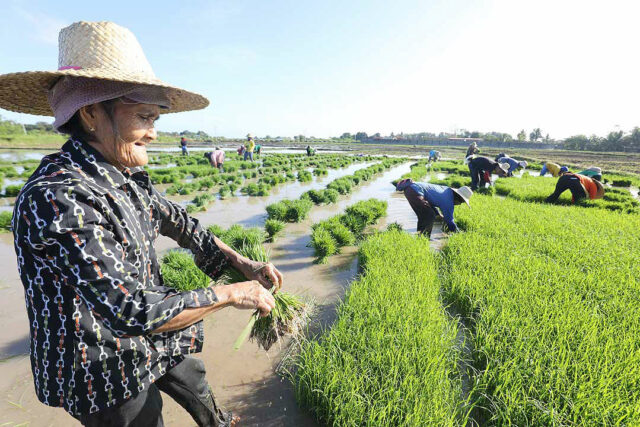
The agricultural sector (skilled agricultural, forestry, and fishery workers) lost 974,000 jobs year on year. In terms of major industries, the agriculture and forestry sectors lost 1.38 million.

“The agriculture sector is the contributor to the spike in unemployment due to the adverse weather conditions and multiple tropical depressions last July. I cannot predict if this is just a one-time occurrence as there are still projections of weather disturbances this year,” Labor Secretary Bienvenido E. Laguesma told BusinessWorld via Viber.

The agriculture subsectors that mainly contributed to the year-on-year decline in jobs were the cultivation of paddy rice (-750,000) and corn (-456,000), Mr. Mapa said.

“We’ve already seen this since January — that there has really been a decline in employment in rice. So, maybe there are several factors affecting this [like] the weather, and some are saying it’s also because of the low farmgate price of palay,” he said in Filipino during a press briefing. “For corn growing, there was also a decrease of 456,000. In hog farming, there was a decrease of 133,000, again because some provinces were affected by the ASF (African Swine Fever).”

“We are seeing that there are subsectors that are significantly affected by the weather. In the month of July, we were hit by four typhoons, which affected a substantial number of provinces and had an impact on our labor market,” Mr. Mapa added.

In a separate statement, the Department of Economy, Planning, and Development (DEPDev) urged stronger efforts to boost climate resilience and workforce agility.

DEPDev Secretary Arsenio M. Balisacan called for modernized agricultural practices, climate-smart strategies, rural infrastructure, and digital connectivity to help cushion the impact of extreme weather events on jobs.

Average Daily Basic Pay by Major Occupation

“The latest employment figures underscore the urgency of modernizing our economic sectors to withstand disruptions, whether from climate change or technological shifts. We are also fully committed to enhancing employability, expanding labor market programs, and collaborating with key stakeholders to future-proof the Filipino workforce,” Mr. Balisacan said.

University of the Philippines School of Labor and Industrial Relations Assistant Professor Benjamin B. Velasco said job losses in the agriculture sector due to climate hazards could continue in the coming months.

“Definitely, the job hemorrhage in agriculture was a climate change effect, which unfortunately will not be a one-off phenomenon, but [will] even worsen until the end of [the] rainy season, which now extends to November,” he said via Facebook Messenger.

“The long-run trend is for agriculture employment to decrease and waged jobs in rural areas to increase due to [the] impact of trade liberalization as well as commercialization and industrialization, though limited and erratic,” he added.

Meanwhile, the wholesale and retail trade, repair of motor vehicles and motorcycles sector shed 897,000 workers in July from the same month last year, while fishing and aquaculture lost 173,000.

Mr. Mapa said agricultural workers who lost jobs due to bad weather transferred to the construction industry.

Despite the increase in the jobless rate in July, he expressed optimism that employment will increase as the holiday season approaches, as seen in historical trends.

Mr. Laguesma likewise said, “the coming holiday season will result in [a] higher employment rate.”

UNDEREMPLOYMENT RATE UP
Meanwhile, PSA data also showed that the underemployment rate rose to 14.8% in July from 12.1% in the same month a year ago and 11.4% in June.

The ranks of underemployed Filipinos — those who want longer work hours or an additional job — reached 6.8 million in July, higher than the 5.77 million a year ago.

For the first seven months, the average underemployment rate stood at 12.9%, higher than 12.2% in the same period last year.

The labor force participation rate also fell to 60.7% in July from 63.5% a year prior. Mr. Mapa likewise attributed this to the bad weather during the month, identifying the agriculture, construction and manufacturing sectors as the areas with the largest drops.

Some 94.7% or 46.05 million Filipinos had jobs in July, lower than the 95.3% or 47.68 million recorded a year prior.

For the seven months ended July, the employment rate stood averaged 95.9%, lower than 96% last year.

Meanwhile, by worker classification, wage and salary earners made up the majority of employed persons at 68.7% in July. They were followed by the self-employed without paid employees at 24.7%, unpaid family workers at 3.9%, and employers in their own family-run farms or businesses at 2.6%.

Within the group of wage and salary workers, those in private establishments continued to represent the largest share at 78.5%, equivalent to 53.9% of the total employed population. Those working in government or government-controlled corporations accounted for 14.4% of wage and salary workers, or 9.9% of the overall employed persons.

By region, the Cordillera Administrative Region posted the highest employment rate in July at 96.6%, while the Bicol Region (Region V) recorded the lowest at 92.3%.

Eight regions registered unemployment rates above the national average of 5.3%, led by the Bicol Region at 7.7%, followed by Region IV-A (Calabarzon) with 6.6% and Region VII (Central Visayas) with 6.1%.

Labor groups said the rise in unemployment highlights the need for a legislated wage hike to strengthen the purchasing power of workers.

“The spike in unemployment is alarming, and the rise in underemployment tells us that even those who have jobs are not earning enough to live decently,” Federation of Free Workers President Jose Sonny G. Matula told BusinessWorld via Viber.

He said the latest figures mirror the worsening jobs and wages crisis in the country, aggravated by inflation, the persistence of precarious work, and the lack of sustainable and quality employment opportunities.

The Sentro ng Mga Nagkakaisa at Progresibong Manggagawa said in a separate statement that the data show that the government’s job creation efforts are lacking.

“The truth is out: millions of Filipinos remain stuck in insecure, low-quality, and low-paying work,” it said.

“While other countries are advancing in manufacturing, industry, and innovation, the Philippines is trapped in informality and precarity — a failure in part of our administration… Every month these employment figures stay the same means another month when millions of Filipinos are condemned to poverty and indignity.”

June FDI net inflows sink to six-month low

US dollar notes are seen in this picture illustration. — REUTERS

By Katherine K. Chan

NET INFLOWS of foreign direct investments (FDI) sank to a six-month low in June, with the first-half tally also posting a double-digit drop, as global trade risks continued to weigh on market sentiment, resulting in a net outflow of equity capital.

FDI net inflows decreased by 17.8% to $376 million in June from $457 million in the same month last year, preliminary data from the Bangko Sentral ng Pilipinas (BSP) released on Wednesday showed.

This was the lowest net inflow in six months or since the $356 million recorded in December.

Net Foreign Direct Investment

Month on month, FDIs plunged by 37.1% from the $598-million inflow in May.

“Net foreign direct investments into the Philippines remained positive in June, with inflows from Japan and into manufacturing taking the lead,” the BSP said.

“The slowdown in FDI net inflows during the month reflected the shift in nonresidents’ net investments in equity capital (other than reinvestment of earnings), from $85 million inflows to $57-million outflows,” it said.

June marked the first time that the country saw a net outflow in equity capital excluding reinvestments in one-and-a-half years or since the $11-million outflow in January 2024.

This came as equity placements rose by 31.3% year on year to $130 million in the month from $99 million, while withdrawals ballooned to $187 million from $15 million.

Equity capital placements in June mostly came from Japan (62%), the United States (16%), and South Korea (9%). Most of these flowed into the manufacturing sector (64%), followed by real estate activities (14%), and wholesale and retail trade and repair of motor vehicles and motorcycles (10%).

Meanwhile, reinvestment of earnings jumped by 36.7% to $128 million from $94 million.

Nonresidents’ net investments in debt instruments also went up by 9.3% to $305 million in June from $279 million in the same month a year ago.

“June’s FDI slowdown reflects a mix of global and domestic headwinds,” Union Bank of the Philippines, Inc. Chief Economist Ruben Carlo O. Asuncion said in a Viber message. “Heightened global uncertainty, trade tensions, and cautious investor sentiment weighed on cross-border investments, while structural challenges at home — such as infrastructure gaps and policy unpredictability — added to the drag.”

“The US tariffs hurt — especially our manufacturing sector — but it’s also about weak global trade and our own policy gaps,” Jonathan L. Ravelas, senior adviser at Reyes Tacandong & Co., said in a Viber message.

In June, global markets were hit by volatility as the sudden escalation of the conflict between Iran and Israel due to an exchange of attacks drove up oil prices. The two countries eventually reached a ceasefire.

Investors were also awaiting the finalization of trade deals between the United States and its trading partners ahead of an initial July deadline, which was eventually extended.

The US is now imposing a 19% import tariff on Philippine goods under the deal secured by the government.

However, US President Donald J. Trump has also threatened to impose additional duties on semiconductors as well as countries with digital taxes, which could affect the country.

FIRST SIX MONTHS
For the first half of the year, net FDI inflows into the Philippines dropped by 23.8% to $3.418 billion from $4.486 billion.

Investments in equity capital, other than the reinvestment of earnings, plummeted by 74.6% to $307 million in the period from $1.207 billion a year ago.

Broken down, gross equity placements plunged by 49.3% year on year to $746 million, while withdrawals jumped 67.2% to $439 million.

Japan accounted for the bulk of the equity investments in the period at 43%, followed by the US (20%), Singapore (12%), and South Korea (8%). Half (50%) went to manufacturing, while 19% went to real estate activities and 10% went to financial and insurance activities.

Meanwhile, foreigners’ reinvestment of earnings climbed by 11.6% to $573 million from $514 million.

Net investment in debt instruments decreased by 8.2% to $2.538 billion in the six-month period from $2.765 billion a year ago.

The BSP expects net FDI inflows to reach $7.5 billion this year.

Mr. Asuncion said reaching this could be “challenging” as the six-month tally remains low.

“A significant rebound in the second half is needed, supported by stronger project implementation and improved investor confidence. Without these, inflows could fall short of the forecast,” he said.

“We expect FDI inflows to remain subdued in the near term as global risks persist and competition for capital intensifies across the region. Any upside will hinge on accelerated infrastructure rollout and policy clarity to boost investor confidence. While opportunities remain in manufacturing and real estate, downside risks dominate the outlook.”

Mr. Ravelas said the sharp drop in FDIs is a “wake-up call.”

“Investors are watching how we respond. If we don’t fix logistics, clarify rules, and build confidence, this could turn into a trend. But there’s still time to turn things around.”

Meralco rates decline in September on lower generation charge

PHILIPPINE STAR/ MICHAEL VARCAS

By Sheldeen Joy Talavera, Reporter

RESIDENTIAL HOUSEHOLDS in areas served by Manila Electric Co. (Meralco) will get some relief as the distributor cut its September electricity rates after two straight months of increases amid the lower cost of power purchased from suppliers.

The overall electricity rate will go down by P0.1852 per kilowatt-hour (kWh) to P13.0851 per kWh this month from P13.2703 per kWh in August, Meralco said in a statement on Wednesday.

Households consuming 200 kWh will see their monthly electricity bills drop by P37. Those consuming 300 kWh, 400 kWh, and 500 kWh will see reductions of P56, P74, and P93, respectively.

Meralco Vice-President and Head of Corporate Communications Joe R. Zaldarriaga attributed the decline in the power rates to lower generation charge of independent power producers (IPPs) and power supply agreements (PSAs) amid a stronger peso, as their costs are mostly in US dollars.

“Charges from IPPs and PSAs went down by P1.3459 and P0.3660 per kWh, respectively, due to the appreciation of the local currency against the US dollar and decrease in international fuel prices. The stronger peso affected around 99% of IPP costs and 57% of PSA costs that were dollar-denominated,” the power distributor said.

The peso closed at P57.13 per dollar on Aug. 29, strengthening by P1.19 from its July 31 finish of P58.32.

These decreases offset the higher charges from the Wholesale Electricity Spot Market (WESM), which rose by P0.3785 per kWh as average demand in Luzon and plant outages increased, as well as the increase seen from the start of the collection of the cost recovery of Sual Power, Inc. (SPI) and South Premiere Power Corp. (SPPC) under San Miguel Global Power Holdings Corp.

The Energy Regulatory Commission (ERC) earlier allowed the two companies to collect P5.1 billion to be implemented over a six-month period beginning this month. The case stemmed from the 2022 joint petitions by SPPC and SPI with Meralco, seeking temporary price adjustments under their 2019 power supply agreements to recover higher fuel costs due to Russia’s invasion of Ukraine.

PSAs, IPPs, and WESM accounted for 65%, 29%, and 6%, respectively, of Meralco’s total energy requirement for the period.

Meanwhile, the transmission charge went up by P0.1130 per kWh mainly due to higher ancillary service charges from the reserve market.

Other charges, including taxes, posted a net decrease of P0.0379 per kWh.

“Pass-through charges for generation and transmission are paid by Meralco to the power suppliers and the grid operator, respectively, while taxes, universal charges, and Feed-in Tariff Allowance are all remitted to the government,” it said.

Meralco’s distribution charge has remained unchanged since the P0.0360 per kWh in August 2022, it added.

POTENTIAL INCREASE IN OCTOBER
Meanwhile, following the ERC’s approval to extend the power purchase agreement of Meralco with First Gen Corp.’s First Gas Power Corp. (FGPC), the power distributor expects an additional increase of P0.32 per kWh in rates next month.

Lawrence S. Fernandez, Meralco vice-president and head of utility economics, said the contract extension resulted to an increase as it is more than what the company currently needs.

“Actually, this contract extension exceeds the current power requirements of Meralco. As of now, Meralco’s contracts — those that went through proper bidding — are already complete. And because this extension is on top of the existing contracts, it will result in an add-on to the generation charge,” he said.

The contract between Meralco and FGPC was supposed to expire on Aug. 28, but the ERC allowed Meralco to continue procuring power supply from FGPC’s 1,000-megawatt gas-fired power plant in Batangas until Jan. 31, 2026.

While there is a potential decline of P0.17 per kWh due to the conclusion of the deferred fuel cost being collected by FGPC, Mr. Fernandez said this would not be enough to offset the expected rate increase.

“While this is welcome news, unfortunately, it cannot offset the 32-centavo add-on from the First Gas Sta. Rita contract extension. So now, there will be a net add-on that we will feel in the October generation charge,” Mr. Fernandez said.

Meralco’s controlling stakeholder, Beacon Electric Asset Holdings, Inc., is partly owned by PLDT Inc. Hastings Holdings, Inc., a unit of PLDT Beneficial Trust Fund subsidiary MediaQuest Holdings, Inc., has an interest in BusinessWorld through the Philippine Star Group, which it controls.

France now being eyed to fund P28-B bridge project following failed talks with South Korea

DOF.GOV.PH

By Aubrey Rose A. Inosante, Reporter

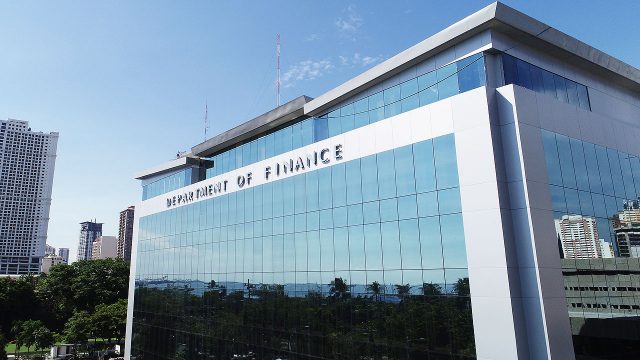
THE FINANCE DEPARTMENT is now seeking France’s help to fund a P28-billion project to build hundreds of rural bridges in the Philippines that was initially proposed to South Korea.

“The Department of Finance (DoF) has clarified that the P28-billion Rural Modular Bridge Project is currently being proposed for financing by the Government of France, not South Korea,” it said in a statement on Wednesday.

“In this case, the project was initially considered for funding through South Korea, but the Department of Agrarian Reform (DAR) decided to halt previous discussions last year due to non-alignment on scope and other key technical specifications.”

The clarification came after South Korea’s President Lee Jae Myung on Tuesday said in a Facebook post that he ordered the suspension of the proposed 700-billion Korean won loan to the Philippines due to concerns over corruption.

“Most fortunately, because the project had not yet commenced, no funds, including support from the Economic Development Cooperation Fund (EDCF), were spent. This is significant in that it prevented the unnecessary waste of a staggering 700 billion won in taxpayer money and preemptively prevented the risk of corruption and mismanagement,” Mr. Lee said.

He made the statement after the South Korean news publication Hankyoreh reported that the proposed Philippine loan was being revived despite earlier concerns of corruption.

Hankyoreh said that the DoF in November 2023 requested a loan from the EDCF to build modular bridges around the country. Its report said that South Korea’s Ministry of Finance officially notified the Philippine government in April 2024 that it will not support the project due to possible corruption and mismanagement, but the project was revived recently after lobbying by certain officials.

“The government, as early as the last quarter of 2024, decided to look for other bilateral partners who can implement the full scope of the project. Hence, there is no existing loan for the said project with South Korea,” the DoF said.

“As part of standard practice, the Philippine government explores financing options with multiple development partners for key projects… The government is now in advanced negotiations with the French government to finalize the project’s technical and financial terms.”

The Rural Modular Bridge Project aims to build 350 bridges around the country for farmers and their agricultural products.

The DAR, the implementing agency of the project, said the negotiations with South Korea fell through as it only offered to fund 100 bridges.

“The Korean EximBank cannot be our funder simply because they will only fund one big project as against our bridge program which will be spread in agrarian reform communities. Probably, the risk of corruption they are talking about is on their side of the fence,” Agrarian Reform Secretary Conrado M. Estrella III said in a Viber message.

Many government projects are financed through official development assistance (ODA). The Philippines’ ODA portfolio rose 6% to $39.6 billion in 2024.

The Japanese government was the country’s top development partner last year with $13.23 billion in active commitments across 82 loans and grants. It was followed by the Asian Development Bank ($11.05 billion), the World Bank ($8.64 billion), other sources ($2.96 billion), the Asian Infrastructure Investment Bank ($2.38 billion), and South Korea ($1.34 billion).

Corruption in government projects has been a key issue in the Philippines, with public officials and legislators now in the middle of investigations into alleged anomalous flood control projects.

Ateneo Center for Economic Research and Development Director Ser Percival K. Peña-Reyes said the news of the scrapped South Korea loan proposal “goes to show how seriously the government should take these [corruption] allegations, as they do have an impact on broader investor confidence.”

“Internal issues like this, which are pretty much self-inflicted, ought to be addressed more meaningfully and forcefully.”

Mr. Peña-Reyes said the three main deterrents to foreign investment are bureaucratic red tape and corruption, inadequate and poor infrastructure, and policy uncertainty.

“Corruption, by itself, adds to transaction costs, and because of corruption, we see the sorry state of our infrastructure projects,” he said.

Diwa C. Guinigundo, country analyst at GlobalSource Partners and a former central bank deputy governor, said this particular instance shows “the corrosive and confidence-eroding impact of corruption in government.”

“That is traceable to bad governance and therefore from the perspective of creditors and donors, any assistance could be subject of misappropriation and plunder.”

ADVERTISEMENT
ADVERTISEMENT