Home Blog Page 1018

Wise launches business account for Filipino MSMEs

FACEBOOK.COM/DTI.GOLOKAL

GLOBAL cross-border payment platform Wise has introduced a business account in the Philippines to help freelancers, micro, small and medium enterprises (MSME) and entrepreneurs expand internationally through faster and cheaper fund transfers.

“Now, businesses in the Philippines are inherently global,” Wise Product Manager Numair Fazili said at the launch on Wednesday. “You’re receiving money from the US, Europe, you’re spending in Japan, paying suppliers in China. But bank accounts are not.”

“You have problems with hidden fees, lack of transparency and payments just take days or even weeks to process.”

A study by Edgar Dunn & Co. for Wise estimated that Filipino MSMEs lost about P39.5 billion in 2024 due to exchange rate markups.

The Wise Business Account aims to address these costs by providing transparent international transactions. Censuswide, in a survey of 200 middle managers at Philippine firms with fewer than 50 employees conducted from Aug. 4 to 8, found that 66% expect their cross-border transactions to increase in the next six months.

The account is free to open, requires no minimum balance or subscription fees, and can be set up fully online. Filipino businesses can receive payments in 24 currencies and get paid via local bank transfers in 10 major currencies — including the US dollar, euro, British pound and Singapore dollar — for a one-time fee of P1,400. Clients can send funds directly using details such as a US routing number or a European IBAN without additional charges.

Payments in 14 other currencies, including the Japanese yen and Chinese yuan, are supported through the Swift network with upfront disclosure of fees. Outbound payments to overseas suppliers and staff are processed at the mid-market exchange rate without hidden markups.

Wise is also offering a business debit card that enables purchases in more than 150 countries with no foreign transaction fees. Business owners can set spending limits, track expenses in real time and provide cards to employees.

The account integrates with accounting software such as Xero and QuickBooks, allows businesses to issue invoices, and supports bulk payments to as many as 1,000 recipients.

“So whether you’re an up-and-coming freelancer, an entrepreneur or a corporation, you can log in and open a Wise account instantly, from anywhere in the world,” Fazili said. —AMCS


Sweden launches AI music license to protect songwriters

STOCK PHOTO | Image by Pvproductions from Freepik

SWEDEN’S music rights organization has introduced a license that allows artificial intelligence (AI) companies to legally use copyrighted songs for training their models, while ensuring that songwriters and composers are paid.

The move announced by rights group STIM on Tuesday responds to a surge in generative AI usage across creative industries that has prompted lawsuits from artists, authors, and rights holders. The creators allege that AI firms use copyrighted material without consent or compensation to train their models.

The license developed by STIM, which represents more than 100,000 songwriters, composers, and music publishers, allows AI systems to train on copyrighted works while paying royalties to creators.

According to the International Confederation of Societies of Authors and Composers (CISAC), AI could reduce music creators’ income by up to 24% by 2028.

“We show that it is possible to embrace disruption without undermining human creativity. This is not just a commercial initiative but a blueprint for fair compensation and legal certainty for AI firms,” Lina Heyman, STIM’s acting chief executive officer, said in a statement.

By 2028, generative AI outputs in music could approach $17 billion annually, according to CISAC.

Sweden has previously set industry standards for platforms such as Spotify and TikTok, and the new license includes mandatory technology to track AI-generated outputs, ensuring transparency and payments for creators.

Songfox, a Stockholm-based startup, is the first company to operate under the license, allowing users to create legal AI-generated songs and covers. — Reuters

Regulator sets Sept. 30 deadline for SEC RENT securities registration

SEC.GOV.PH

THE Securities and Exchange Commission (SEC) has set a Sept. 30 deadline for real estate developers and companies engaged in rental pool agreements to complete the registration of their securities.

In a notice dated Sept. 8, the corporate regulator reminded firms to comply with the requirements under SEC Memorandum Circular No. 12, Series of 2024, or the Securing and Expanding Capital in Real Estate Non-Traditional Securities (SEC RENT).

The rules, issued in July, aim to streamline capital raising for developers offering investment returns through rental properties.

Rental pool agreements are investment contracts in which a developer sells or offers units in projects such as condominiums, hotels, resorts, or dormitories, with the condition that these units are placed in a rental pool managed by the developer or a third-party operator.

Under SEC RENT, the developer or manager must secure approvals from the SEC’s Company Registration and Monitoring Department, Corporate Governance and Finance Department, Enforcement and Investor Protection Department, Office of the General Counsel, and Office of the General Accountant before filing its registration statement with the Markets and Securities Regulation Department (MSRD).

After pre-filing, the company submits the required documents to the MSRD for pre-processing. Once accepted and fees are paid, a 45-day review begins.

If the commission approves and all requirements are met, the MSRD will issue the registration order and permit to sell securities.

The SEC said the regulation simplifies and expedites the registration and review process, allowing real estate companies — including small developers — better access to capital markets for funding growth through these investment schemes.

“All corporations whose operations or business model fall under the coverage of SEC RENT are hereby advised and reminded that they have less than a month within which to comply with the memorandum circular and have their pertinent securities registered,” the commission said in its notice.

The regulator warned that companies failing to meet the deadline will face penalties and possible enforcement actions. — Alexandria Grace C. Magno

How PSEi member stocks performed — September 10, 2025

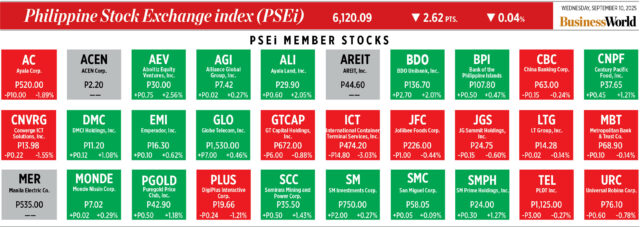
Here’s a quick glance at how PSEi stocks fared on Wednesday, September 10, 2025.


PSEi slips as investors await fresh catalysts

BW FILE PHOTO

By Alexandria Grace C. Magno

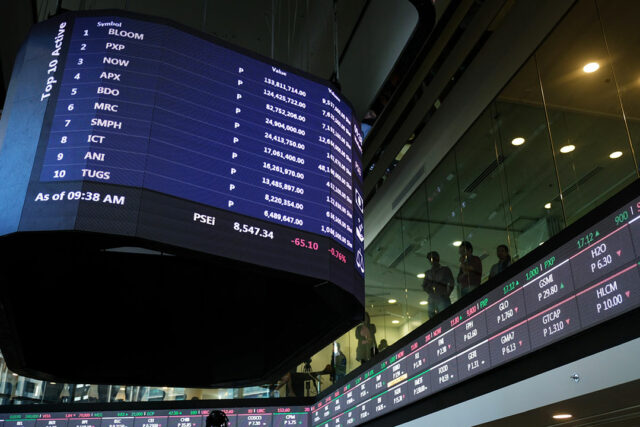
PHILIPPINE STOCKS edged lower on Wednesday as investors stayed cautious amid weak manufacturing data and concerns over rising unemployment.

The benchmark Philippine Stock Exchange index (PSEi) slipped 0.04% or 2.62 points to close at 6,120.09. The broader all-share index was almost unchanged, down 0.24 points to 3,691.35.

“The decline in manufacturing output likely weighed on sentiment, adding to caution,” Luis A. Limlingan, head of sales at Regina Capital Development Corp., said in a Viber message. “Participants now look to upcoming economic data and earnings to guide their next moves.”

He noted that Wall Street extended its gains overnight, with US benchmarks hitting fresh records after upbeat job data reinforced expectations of policy adjustments by the US Federal Reserve.

Locally, market sentiment weakened further after the Philippine Statistics Authority (PSA) reported that the country’s unemployment rate rose to 5.3% in July, the highest since June 2022, due to hiring disruptions caused by typhoons and monsoon rains.

This translated to 2.59 million jobless Filipinos, up from 2.38 million a year earlier and 1.95 million in June.

Early gains were surrendered as investors digested the unemployment report, which reflected the impact of recent weather disturbances, AP Securities, Inc. said in a market note.

Net foreign selling narrowed to P41.35 million from P215.89 million the previous day.

Sectoral indices were mixed. Services posted the steepest decline, dropping 1.76% or 38.73 points to 2,157.55. Mining and oil fell 0.67% or 77.12 points to 11,307.22, industrials slipped 0.28% or 25.88 points to 8,971.96 and holding firms inched down 0.08% or 4.27 points to 5,045.45.

On the other hand, property rose 1.26% or 31.73 points to 2,532.1, while financials gained 0.88% or 17.93 points to 2,047.53.

Value turnover improved to P7.28 billion with 5.96 billion shares changing hands, higher than Tuesday’s P6.23 billion involving 1.99 billion shares.

Market breadth was positive, with 97 winners beating 91 losers, while 69 stocks were unchanged.

Geothermal de-risking facility expected to launch late 2026

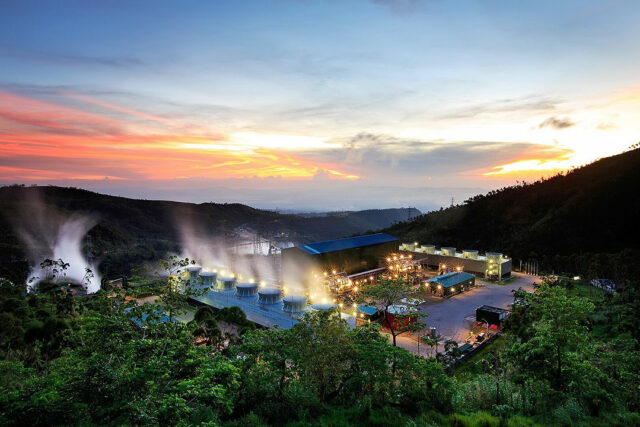
Geothermal - Unified Leyte Power Plants

POTENTIAL geothermal developers could tap a $250-million loan facility to mitigate their exploration risk by the second half of 2026, the Department of Energy (DoE) said.

“This facility… is about accelerating geothermal development, strengthening energy security, and driving inclusive growth,” Energy Undersecretary Rowena Cristina L. Guevara said during the 6th Philippine International Geothermal Conference organized by the National Geothermal Association of the Philippines (NGAP) on Wednesday.

Ms. Guevara said the DoE filed its proposal with the Department of Economy, Planning, and Development Investment Coordination Committee for approval.

The government will begin soliciting proposals from developers by the fourth quarter of 2025.

Geothermal energy can serve as a source of baseload power, but exploration carries risks like large upfront investments before a resource is confirmed as viable.

The facility aims to share the cost of exploration and drilling, which is “the riskiest part” of the process. It can cover up to 50% of the drilling cost through loans convertible to grants if drilling fails.

“This approach reduces financial risk for developers and encourages investment in greenfield sites,” Ms. Guevara said.

Philippine geothermal energy capacity is 1,952 megawatts (MW), making it the third-biggest geothermal producer.

As of July, the government has awarded 31 geothermal service contracts with a combined potential capacity of 1,077.22 MW.

Ms. Guevara said geothermal developers also face other hurdles like the complex permit process.

“By addressing these barriers through policy reforms, investment incentives, and innovative programs, we can unlock the full potential of geothermal energy, powering our economy, creating jobs, and advancing our clean energy transition,” she said.

NGAP President Jaime Austria said that the group is looking forward to tapping the facility to reduce risk in drilling the initial exploration wells.

“That provides incentives for companies going into new areas to find more resources,” Mr. Austria said. “This is very much aligned with the Philippines’ goal to increase its geothermal generating capacity, by de-risking the development process.” — Sheldeen Joy Talavera

Funding for SDG projects estimated at nearly P25B

UN.ORG

NEARLY P25 billion in excise taxes have initially been allocated in the 2026 budget to support the effort to achieve the Philippines’ sustainable development goals (SDGs), the Department of Economy, Planning, and Development (DEPDev) said.

“Ideally, earmarked funds for 2026 will be around P24.8 billion,” DEPDev Director Reverie Pure G. Sapaen said at a House briefing on Wednesday.

Republic Act 11467 requires that excise taxes generated by alcohol, heated, tobacco, and vapor products fund the SDG effort.

The allocation will be carved out from the expected P359.65 billion raised from excise taxes in 2026, which would be 9.35% higher than this year’s total, according to the Budget of Expenditures and Sources of Financing.

“There were about 42 projects that DEPDev endorsed to (the Department of Budget and Management) for proposals under the Program Convergence Budgeting on the SDGs, and the total of those 42 proposals is about P5.2 billion,” Ms. Sapaen said.

The P5.26 billion will mostly go to social priority programs and projects (PAPs) estimated to cost P2.63 billion, followed by environment (P1.55 billion), economic (P863 million) and peace, security, and governance (P179.40 million) projects.

The total cost of PAPs included in the National Expenditure Program amounted to P917.37 million, the DEPDev said.

Ms. Sapaen did not explain what the rest of the P24.8 billion will be spent on.

The Philippines remains behind the pace in achieving the 17 SDG targets by 2030.

“Based on our pace of progress, we surpassed our targets for SDGs 12 and 14. We are regressing for SDGs 3, 11, and 13,” Mr. Sapaen said.

SDGs 3 deals with good health and well-being, 11 sustainable cities and communities, and 13 climate action. SDG 12 concerns responsible consumption and production and 14 life below water. The rest need accelerated efforts to meet the 2030 target.

In 2023, the Philippines fell three spots in the global SDG achievement ranking to 98th out of 166 countries.

Ms. Sapaen said one of the biggest challenges in climate action is the fragmentation of and siloed approaches to disaster risk reduction efforts.

“As UNDP (United Nations Development Programme) mentioned earlier, at the current pace of progress, at the current state that we are in, it will take about 32 years,” she said.

“That’s why it’s important to recalibrate our strategies, revisit our initiatives, and really accelerate our action so that we can meet our 2030 targets.” — Aubrey Rose A. Inosante

Building materials used in infrastructure must comply with standards, FPI says

PHILIPPINE STAR/MICHAEL VARCAS

THE Federation of Philippine Industries (FPI) said the government must enforce the Philippine National Standards (PNS) on building materials used in public infrastructure projects.

In a statement on Wednesday, the federation asked the Department of Public Works and Highways (DPWH) to monitor whether the cement and steel used in public works are PNS-compliant.

“Adherence to the Philippine National Standards is non-negotiable. Only by strictly following these standards — especially in cement and steel — can we ensure safe, durable, and resilient public infrastructure for our people,” FPI Chair Elizabeth H. Lee said.

The Philippine standards are based on global standards and customized to the unique environmental and geological conditions of the Philippines.

“At its core, PNS is about safety and resilience — ensuring that structures, especially those built with cement and steel, can withstand the country’s harsh climate conditions,” the FPI said.

“In a nation prone to earthquakes, typhoons, and floods, it is vital that DPWH engineers and contractors consistently comply with PNS standards to protect lives and safeguard communities,” it added.

According to the group, the use of substandard materials for critical construction applications compromises public safety, wastes resources, and undermines confidence in national development efforts.

“The FPI works closely with the Department of Trade and Industry’s Bureau of Product Standards and reaffirms its commitment to collaborate with all government agencies in upholding these standards,” it said.

“Together, we must guarantee that our public infrastructure projects are built on quality, integrity, and accountability — laying the foundation for sustainable nation-building and long-term growth,” it added. — Justine Irish D. Tabile

ARTA seeks additional funding for regions, complaint system

THE Anti-Red Tape Authority (ARTA) is seeking an additional P80 million next year to support its regional operations and its newly launched electronic complaint management system (eCMS).

On the sidelines of the launch of the eCMS on Wednesday, ARTA Secretary Ernesto V. Perez said the additional funding comes on top of the P480-million budget it was allocated under the National Expenditure Program for 2026.

“We will request an additional P80 million to support our regional field offices and to add lawyers. That will be enough to sustain us next year. But of course, the bigger the budget, the better,” Mr. Perez said.

He said that the funding will also support the eCMS, which will increase ARTA’s capacity for processing complaints.

“We anticipate that there will be a surge in complaints. That is why we requested additional resources,” he said. “This is not just about receiving complaints, we will see all of them through resolution.”

As of July, ARTA has received almost 4,500 complaints via phone or e-mail, bringing the number of complaints it has fielded since 2018 to over 32,000.

The platform launched by ARTA and the Department of Information and Communications Technology will streamline and standardize the handling of public complaints about inefficient or corrupt bureaucratic practices.

The artificial intelligence (AI)-supported platform will be accessible 24/7 and will offer real-time tracking and automated case assignment.

Separately, Mr. Perez said ARTA is seeking to amend the Ease of Doing Business Act to give the agency more subpoena power and the authority to initiate court proceedings.

“All of this will depend on the Office of the President (OP). We are proposing this, subject to the clearance of the OP, to give this priority status in the 28th Congress,” he said.

Information and Communications Technology Secretary Henry Rhoel R. Aguda said that he will recommend that telecommunications companies launch their own eCMS platforms to improve their services.

“I will propose that all telcos develop something like an AI service assistant,” Mr. Aguda said.

He said AI platforms will help customers get immediate answers on questions related to bills, overcharges, and service disruptions, among others.

“I think they will positively receive this. If not, I think they are already doing it, but I am proposing this so that we will make it a standard because the government has started,” he added. — Justine Irish D. Tabile

Chipmakers see some export growth upside

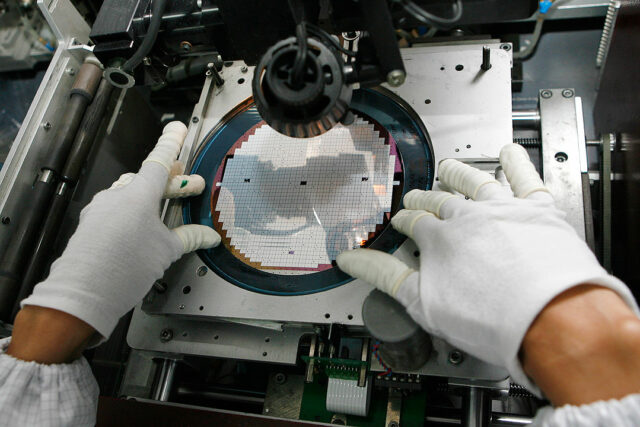
A worker operates the die attach machine at a semiconductor manufacturing plant in Manila, Dec. 10, 2008. — REUTERS

By Justine Irish D. Tabile, Reporter

THE Semiconductor and Electronics Industries in the Philippines Foundation, Inc. (SEIPI) said it is maintaining its forecast of flat to modest growth for exports this year, with increasing demand possibly offsetting the impact of US tariffs.

SEIPI President Danilo C. Lachica said exports of semiconductors and electronics are being driven by artificial intelligence (AI) and data centers.

“It’s just a matter of navigating the economic and geopolitical considerations, specifically for semiconductors, the US tariff,” he told reporters on Tuesday.

“In fact, while we projected flat growth this year, we’re not predicting doom and gloom, so we’re still maintaining our forecast. And maybe, optimistically, some modest growth, notwithstanding the US tariffs,” he added.

He said that if export growth for the first seven months is annualized, exports could top $42 billion.

“Then again, a lot of things can happen with all the geopolitical uncertainty; it would be prudent to just say exports will be flat with some optimism for modest growth,” he added.

The Philippine Statistics Authority (PSA) reported that exports of electronic products totaled $25.61 billion at the end of July, up 7.2%.

Ines Lam, associate director for Asia economics at HSBC, said the sector-specific tariffs that are yet to be imposed by the US remain a worry, especially for Asian economies.

“Tariffs on semiconductors and pharmaceuticals have not been announced yet. They are in a different basket, and pretty soon, I think Trump will announce what final tariffs he will put on these industries,” she said.

“For Asia, it’s especially important, and that’s because a lot of Asian economies export quite a lot of semiconductors, electronics, and pharmaceutical products to the US. And for the Philippines, electronics are more than half of its exports to the US. The impact of that will be significant,” she added.

She said electronics have been doing well mainly because they are still exempt from tariffs, because of frontloading of exports before the tariffs came into force, and because of AI.

“Exports so far are doing okay, but I’m afraid that we may not be able to say the same in the next few months, when the tariff effects really kick in,” she added.

Mr. Lachica said that even if tariffs are imposed, the demand for electronics and semiconductors will continue to be there.

“The price points will decrease, somebody has to shoulder the higher cost, but the demand will still be there,” he said.

“I don’t think it’ll happen this year. So, we’ll just continue doing what we do, producing the chips based on demand,” he added.

He said it usually takes three to six months before any impact is felt in the Philippines.

“We’re just going by the conditions today and it is business as usual … From a business perspective, you shouldn’t be skittish and act like a scaredy-cat. You just respond to what you know today and not have to fret about what could happen,” he added.

He said that the electronics industry is looking at diversifying markets, particularly in the European Union (EU) and the Association of Southeast Asian Nations.

“But we’re still holding on to maintaining our (share), if not growing the share of the Philippines. Because the semiconductors in the Philippines (account for) about 5% of global demand. And we haven’t really seen a drop,” he said.

“Of course, manufacturers will go to countries or sites where there’s lower cost. But I think we’ll maintain our US share and hopefully increase it and grow the demand from Europe,” he added, noting the need for more export promotion to the EU.

Runway extensions planned for Siargao, Busuanga airports

CAAP.GOV.PH

THE Civil Aviation Authority of the Philippines (CAAP) said Siargao and Busuanga airports will be first in line for runway extensions to allow those destinations to accommodate larger aircraft.

CAAP Director General Raul L. del Rosario said:

“The design and feasibility studies for Siargao and Busuanga are ongoing.”

He was speaking to reporters on the sidelines of Asia Pacific Aviation Safety Seminar 2025 on Wednesday. 

The detailed engineering design and feasibility studies for these expansions are ongoing, Mr. Del Rosario said.

CAAP said right-of-way challenges are among the obstacles being encountered in further pursuing these runway extensions, but environmental considerations are also at play.

“In Siargao, there are mangroves that will be affected,” Mr. Del Rosario said, noting that the CAAP is addressing these problems with the Department of Environment and Natural Resources.

Mr. Del Rosario said CAAP is working on workarounds to move plans forward to allow takeoffs and landings by aircraft like the Airbus A320, one of the most widely used single-aisle jets in global airline fleets.

“If we can use larger jets, then we can carry more passengers and help lower airfares,” he said, noting that domestic airfares tend to be more expensive when routes are serviced by smaller turboprop planes.

“For Busuanga, there is just not enough space if you follow the original runway orientation. It needs to be reoriented. This will cause some delays but we want to prioritize it because of expected tourist arrivals,” he said.

Busuanga Airport, also known as the Francisco B. Reyes airport, is the gateway to Coron, Palawan.

The Department of Transportation has allotted P308.62 million for the extension and improvement of the Busuanga Airport runway. — Ashley Erika O. Jose

Building code updates, AI rules top DICT legislative priorities

STOCK PHOTO | Image from Freepik

THE Department of Information and Communications Technology (DICT) said updates to the building code and artificial intelligence (AI) regulation top its list of priority measures for Congress to consider.

At a House Committee on Information and Communications Technology hearing, Undersecretary Sarah Maria Q. Sison said the National Building Code must require all buildings to be fiber-ready.

“Outdated policies in the Philippines continue to treat telecom as an optional service and not as an essential utility,” Ms. Sison said. “This mindset has created a ripple effect leading to poor service coverage, slow development of modern fiber networks, and the persistent digital divide.”

She noted that many structures are currently built without internal cabling, risers, and other features that support fiber networks.

“We need to close the gap through a more aggressive approach to infrastructure development, she said.

Ms. Sison also called for the approval of the proposed Artificial Intelligence Development and Regulation Act.

The DICT also supports a measure that will make government cybersecurity jobs more attractive.

Ms. Sison noted that the Philippines struggles to retain its cybersecurity experts, with many opting to pursue opportunities overseas.

“Government cybersecurity positions offer an average of around P50,000 monthly, a figure that is dwarfed by the private sector, where experts earn up to P200,000 per month,” Ms. Sison said. “This makes it very difficult for the government to attract and retain top talent to secure our critical national infrastructure.” — Beatriz Marie D. Cruz

ADVERTISEMENT
ADVERTISEMENT