





A nexus approach to foreign security policy: Imperatives for the next Philippine president
By Alma Maria O. Salvador
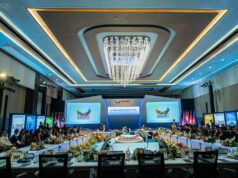
An infinite set of foreign and security policy challenges will confront the next presidential administration of the Philippines. This is particularly evident in view of the US and China geopolitical transition as well as the emerging challenges from an altered geophysical milieu, where threats (pandemics, climate change, disasters), non-traditional in nature, have had a devastating impact for the Southeast Asian region.

For two years, I pined for travel. Getting home was a relief
By Daniel Moss
PERSONAL DETAILS scrawled on Post-it notes, an unmasked security guard, and an hours-long wait in a US rental car. My family was two days from departure for Singapore and the window for getting a negative COVID-19 verdict was closing fast.

Uncertainty and polarization
By Filomeno S. Sta. Ana III
Before the spread of the Omicron variant, the world expressed optimism that the pandemic would wane. The rollout of safe and effective vaccines — fast in advanced countries but slow in developing ones — offered a way out of the pandemic. The pandemic would fade and turn into an endemic disease in places lagging in vaccination.

Why the National Competitiveness Council needs to be reconvened
By Andrew J. Masigan
The decision of the Duterte government to dissolve the once successful National Competitiveness Council (NCC) and integrate its functions into the Anti-Red Tape Authority (ARTA) proved to be a mistake. The NCC should have been allowed to continue operating.
What for, is the Budget?
By Amelia H. C. Ylagan
“A national highway? No signs at all of any steel bars to reinforce the gravel-and-sand-and-concrete mix. No wonder Typhoon Odette (international name: Rai) could easily crush it and leave it looking like soda biscuits cracked into pieces,” Bishop Ambo said on Facebook.
Nomura: Why Leni is market-friendly
By Diwa C. Guinigundo
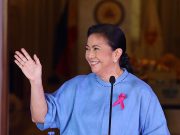
BusinessWorld bannered a very interesting news story that a Robredo win is “more market-friendly.” Based on the study by Nomura Global Research entitled “Philippines: No Holiday Cheer,” an incoming administration of Vice-President Leni Robredo is deemed more positive to the market than that of former Senator Ferdinand Marcos, Jr.
Feudal individualism
By Luis V. Teodoro
It’s an oxymoron, a contradiction in terms. The feudal mindset values conformity with, and loyalty to, one’s collective, while individualism prizes the interests of the individual above everything else. But that paradox was evident in at least two instances as 2021 ended and a new year began.

Grace and guts
By Maria Victoria Rufino
The world is rushing and spinning at a dizzying speed. Upheavals and natural disasters are happening almost simultaneously. People are overwhelmed by multiple issues such as health, food, income, housing. Survival in the prolonged pandemic is a priority. The political and economic scene is like a stormy sea. Unpredictable, tossing us off balance.

Discriminating against the unvaccinated is illegal and wrong
By Jemy Gatdula
Remember when the medical experts said two years ago that it would only take “two weeks to flatten the curve”? And when that didn’t happen, they told us that things will be back to normal when the vaccines arrive? Well, now with nearly 95% of the National Capital Region’s target population vaccinated (MMDA Chairman Benhur Abalos declared it at 100%; see GMA News, Dec. 9, 2021), we’re still nowhere back to normal.

Bad news, London and New York: Finance hubs are becoming obsolete
By Paul J. Davies
STAND on the steps of The Royal Exchange in the heart of the City of London and you can picture the churn of people 200 years ago or more in what was becoming the world’s preeminent financial hub. Stock jobbers, traders and financiers would stream between its great limestone columns with the Bank of England to one side and all surrounded by offices of bankers or trading houses and alleyways to the ever-busy coffee shops.1

Capsule offices
By Marvin Tort
Capsule hotels are nothing new in densely populated urban areas like Tokyo. Low-cost but efficient capsule hotels offered sufficient lodging particularly for on-the-go customers who required no more than a bed for the night and a bath the next day. And with real estate costs high, capsule hotels were economical and practical travel solutions.

And the spinning goes on
By Philip Ella Juico
In 1933, Adolf Hitler became Chancellor of Germany. A few years later, he had become an absolute dictator of extraordinary brutality. Consumed by and obsessed with his belief in Aryan supremacy, he led his country into the second World War in 1939 by invading neighboring territories. His occupation of other countries signaled the start of World War II in Europe.