Medical doctors urge PHL FDA to release decision on new dengue vaccine
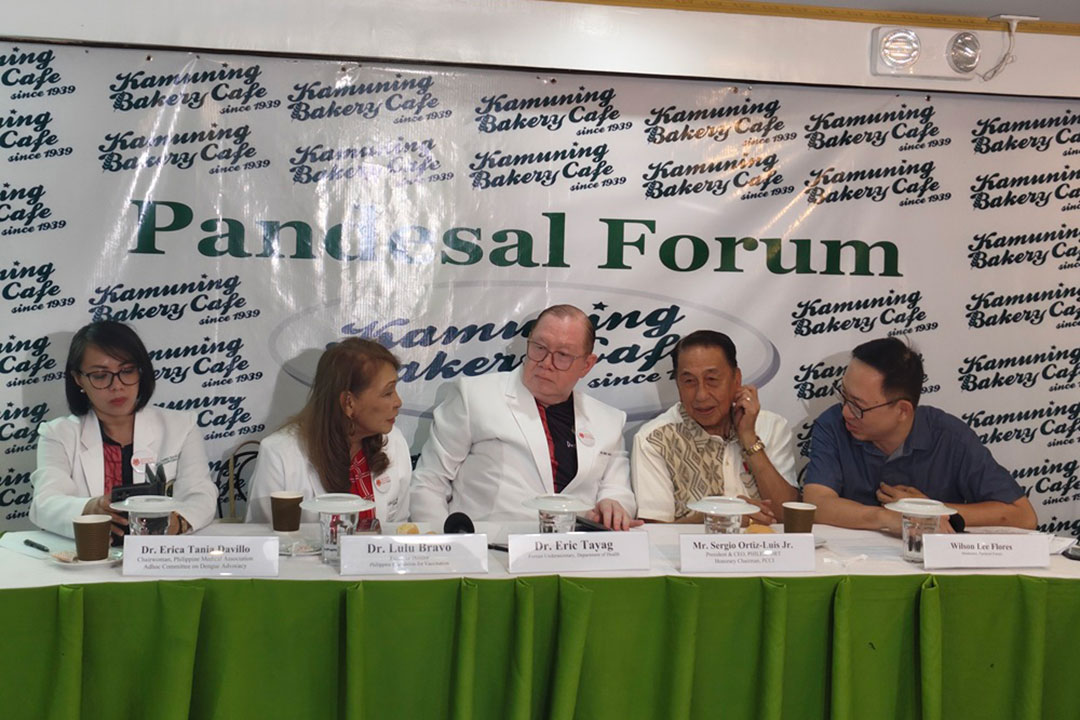
Medical doctors on Tuesday urged the Philippine Food and Drug Administration (FDA) to release the results of the approval of a new-generation dengue vaccine, noting that, if approved, it could help curb the country’s high number of cases and mortality from the disease.
“Is it a yes or no from the FDA on the vaccine? We hope the results will be released soon,” Dr. Enrique A. Tayag, former undersecretary of the Department of Health (DoH), said in Filipino during a dengue forum led by the Philippine Medical Association (PMA) and the Empowering Networks to Defeat Dengue (E.N.D. Dengue) coalition.
“Let us not wait as if we are still gauging whether this will be favorable to many mothers or whether it will result in backlash,” Mr. Tayag said.
He also said that he is not pressuring the agency to release its assessment, but is encouraging it not to wait for the “right timing” and instead release the results—whether favorable or not—once available.
The vaccine referred to is Qdenga, developed by Japan-based pharmaceutical company Takeda, with its application for approval in the Philippine FDA filed in 2023
According to the World Health Organization (WHO), Qdenga is a live-attenuated vaccine that contains weakened versions of dengue virus serotypes 1, 2, 3, and 4.
The vaccine was shown to be effective in preventing dengue fever in children and adolescents within 12 months after the second dose, reducing confirmed cases by about 80% compared with those given a placebo in a large study across eight countries in Latin America and the Asia-Pacific region, the European Medicines Agency (EMA) said.
It also reduced hospitalizations due to dengue by around 90% within 18 months after the second injection.
However, its common side effects include pain and redness at the injection site, headache, muscle pain, malaise, weakness, and fever in up to 1 in 10 people, which are usually mild and resolve within a few days, the EMA said.
The vaccine is not recommended for individuals with a history of allergic reactions to Qdenga, immunocompromised individuals, and pregnant or breastfeeding women.
The new vaccine is already being used in more than 40 countries and is currently in the World Health Organization (WHO) prequalification stage, indicating that it has undergone evaluation for quality, effectiveness, and safety, Dr. Erica Tania Davillo, chairwoman of the PMA ad hoc committee on dengue advocacy, said.
“When a product is prequalified, it means it has undergone evaluation in terms of quality, efficacy, and most importantly, safety,” Ms. Davillo said during the forum in Filipino.
BusinessWorld has sought the comment of the FDA spokesperson regarding the appeal of medical doctors, but no response has been received as of press time.
Mr. Tayag clarified that if the new-generation dengue vaccine is approved, its rollout would not be implemented nationwide immediately, but could instead begin in regions with high dengue cases such as Metro Manila, Region III, and Region IV-A to assess its effectiveness and potential side effects.
He added that the vaccine would serve as a complement to the DoH’s existing dengue prevention efforts, such as the 4S strategy.
Dengue cases in the country were reported at 7,471 from January 4 to 24, a significant decline from 25,652 cases in the same period in 2025. — Edg Adrian A. Eva