Stung by Iran war, Trump heads to China in need of wins
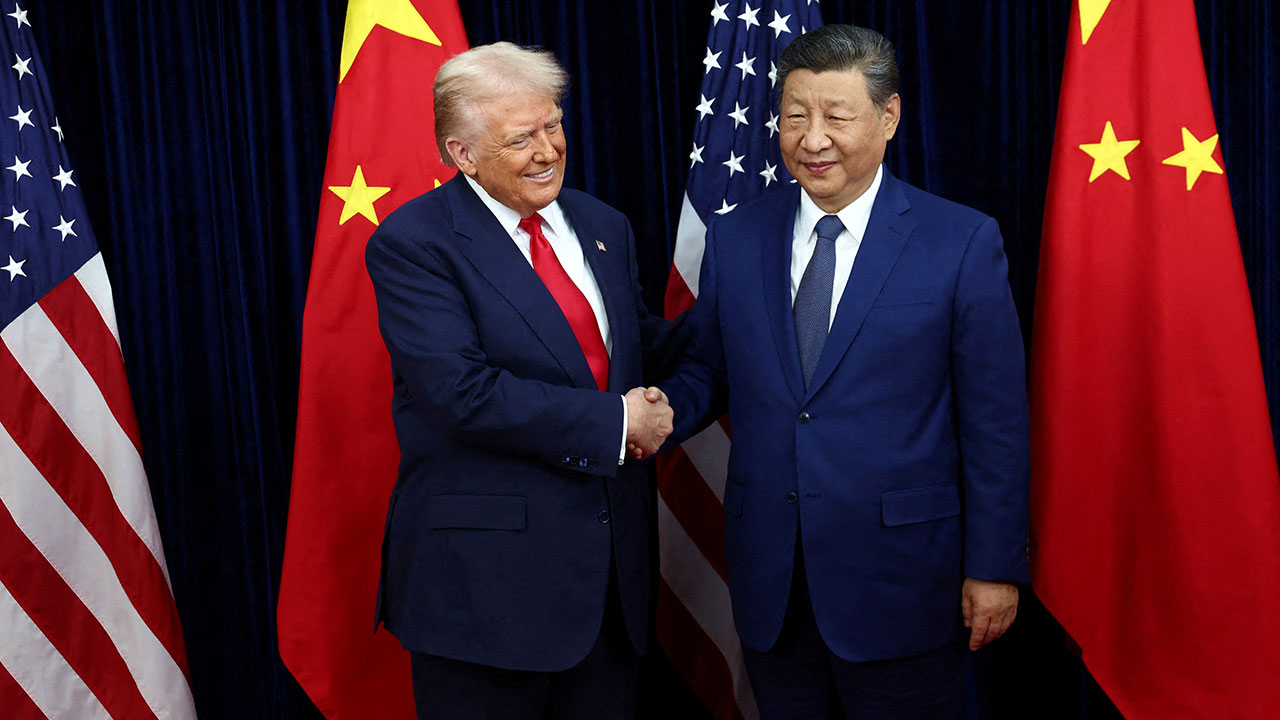
BEIJING — A year ago, US President Donald J. Trump predicted that towering trade tariffs would bring America’s main economic rival to heel.
He heads to China this week with that ambition blunted by court rulings, narrowing his goals to a few deals on beans, beef and Boeing jets, and enlisting China’s help to resolve his unpopular Iran war, political analysts say.
The modest expectations for Mr. Trump’s May 14-15 meetings with Xi Jinping — the first since they paused a bruising trade war in October — underscore how Mr. Trump’s bombastic approach has failed to deliver an advantage ahead of the talks, according to analysts.
Mr. Trump “kind of needs China more than China needs him,” said Alejandro Reyes, a professor specializing in Chinese foreign policy at the University of Hong Kong.
“He needs a kind of foreign policy victory: a victory that shows that he is looking to ensure stability in the world and that he’s not just disrupting global politics,” Mr. Reyes added.
Since their last brief meeting at an airbase in South Korea where Mr. Trump suspended triple-digit tariffs on Chinese goods and Mr. Xi backed away from choking global supplies of rare earths, China has quietly sharpened its economic pressure toolkit aimed at Washington.
Mr. Trump, meanwhile, has been preoccupied fighting US court rulings against his tariffs and a war with Iran that has sapped his approval ratings ahead of November’s midterm elections.
This week’s meeting in the Chinese capital will be a grander occasion, with the leaders set to hold a summit at the Great Hall of the People, tour UNESCO-heritage site Temple of Heaven, dine at a state banquet and take tea and lunch together.
But the anticipated economic deliverables amount to a handful of deals and mechanisms to manage future trade, while it remains unclear whether the leaders will even agree to extend their trade truce, officials involved in the planning said.
Mr. Trump will be joined by chief executive officers including Tesla’s Elon Musk and Apple’s Tim Cook, though the business delegation is smaller than when he last visited Beijing in 2017.
Aside from trade, Mr. Trump said on Monday he will discuss arms sales to Taiwan and the case of jailed media tycoon Jimmy Lai with Mr. Xi. Families of two Americans imprisoned in China for more than a decade are also urging Mr. Trump to seek their release.
“We used to be taken advantage of for years with our previous presidents, and now we’re doing great with China,” Mr. Trump said. “I respect him (Xi) a lot, and hopefully he respects me.”
ONE BATTLE AFTER ANOTHER
The mood music has changed dramatically since Mr. Trump declared in a Truth Social post in April 2025 that his tariffs would make China realize that the “days of ripping off” the United States were over.
Those levies prompted Beijing to restrict exports of rare earths, brutally exposing the West’s dependency on elements vital to the manufacturing of everything from electric cars to weapons, and eventually led to Mr. Trump and Mr. Xi’s fragile truce.
Since then, Mr. Trump has faced countless other battles: capturing Venezuela’s leader, threatening to annex fellow NATO member Greenland and waging a war on Iran that has plunged the Middle East into chaos and stoked a global energy crisis.
More than 60% of Americans disapprove of his Iran war, according to a Reuters/Ipsos survey last month.
Now, Mr. Trump wants China to convince Tehran to make a deal with Washington to end the conflict. China maintains ties with Iran and remains a major consumer of its oil exports.
Matt Pottinger, who served as deputy national security advisor during Mr. Trump’s first term, told a forum in Taipei last week that while China would like to see an outcome that weakens American power, it is not immune to the economic cost of a protracted conflict.
But Beijing will want something in return, and top of Mr. Xi’s agenda is Taiwan, the democratically governed island claimed by China.
While some fear a bargain that could embolden China to take Taiwan by force, even a nuanced change in Washington’s wording would raise anxiety about the commitment of Taipei’s most important backer that would reverberate across other US allies in Asia.
Wu Xinbo, a professor at Fudan University in Shanghai who serves on the policy advisory board of China’s foreign ministry, said Mr. Trump should make clear that he “won’t support independence or take actions that encourage a separatist political agenda.”
‘SUPERFICIAL CEASEFIRE’
China also wants the Trump administration to commit to not taking future retaliatory trade action such as technology export controls, and to roll back existing controls on chipmaking equipment and advanced memory chips, people briefed on the talks said.
And since last October, Beijing has been expanding its own economic leverage, such as enacting laws to punish foreign entities that shift supply chains away from China and tightening its rare earth licensing regime.
A majority of Americans (53%) now say the United States should undertake friendly cooperation and engagement with China, up from 40% in 2024, according to a survey by the Chicago Council on Global Affairs published in October.
So just keeping relations on an even keel and extending the trade war truce could be enough for Mr. Trump to claim a win.
That leaves the main outcome likely to be “a superficial ceasefire that is largely to China’s advantage,” said Scott Kennedy of the Center for Strategic and International Studies think tank in Washington. — Reuters