Peso sinks back to P60:$1 level as US-Iran peace talks collapse
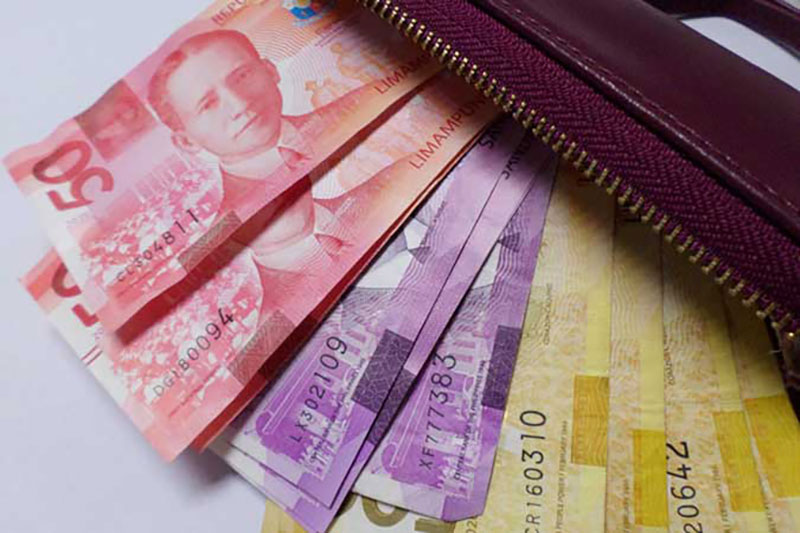
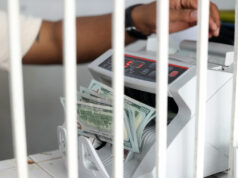
THE PESO slid back to the P60-per-dollar level on Monday as global crude oil prices climbed again after peace talks between the United States and Iran ended without a deal.
The local unit sank by 16.5 centavos to close at P60.135 against the greenback from its P59.97 finish on Friday, data from the Bankers Association of the Philippines showed.
The currency opened Monday’s session sharply weaker at P60.25 per dollar. It traded at the P60 level the entire day, with its intraday best at P60.13 and its weakest showing at P60.50 against the greenback.
Dollars traded went up to $1.89 billion from $1.49 billion on Friday.
“The dollar-peso closed higher and reached an intraday high of P60.50 on renewed demand for safe-haven assets following the collapse of US-Iran talks and Trump’s blockage of the Strait of Hormuz,” a trader said in a phone interview.
The peso was also dragged down by dollar demand driven by hedging activities as entities rushed to purchase fuel supplies following the decline in global crude oil prices following the announcement of a two-week ceasefire between the US and Iran, Rizal Commercial Banking Corp. Chief Economist Michael L. Ricafort said in a Viber message.
“The gauge of the US dollar versus major global currencies corrected slightly higher and global crude oil prices corrected higher… after the US and Iran did not reach an agreement during the talks in Islamabad, Pakistan.”
For Tuesday, the trader sees the peso to range from P60 to P60.50 per dollar, while Mr. Ricafort expects it to move between P60 and P60.25.
The safe-haven dollar firmed on Monday after peace talks between the US and Iran broke down and as the American Navy prepared a blockade of Iranian ports, Reuters reported.
The euro was down 0.3% at $1.1694, while the British pound fell 0.2% to $1.3429, although both were above earlier lows. The risk-sensitive Australian dollar was 0.3% lower at $0.7052 and the New Zealand dollar was off 0.1% at $0.5834.
President Donald J. Trump on Sunday said the US Navy would start blockading the Strait of Hormuz after talks with Iran failed to reach a deal to end the war, jeopardizing a fragile two-week ceasefire. The US Central Command said US forces would begin implementing the blockade of all maritime traffic entering and exiting Iranian ports from 10 a.m. ET (1400 GMT) on Monday.
The dollar has tended to benefit when tensions between Iran and the US have flared, given its status as a safe-haven and the limited exposure of the US to imported energy-price inflation.
Crude prices jumped on Monday, with Brent crude futures back above $101 per barrel.
The latest data from the Commodity Futures Trading Commission (CFTC) showed that speculators raised their net long positions in the US dollar in the latest week. Positioning in the euro flipped to a net short for the first time since March last year, the CFTC said on Friday.
Against the yen, the US dollar was up 0.3% at ¥159.68 as yields on Japan’s benchmark 10-year government bonds jumped 5.5 basis points to 2.49%, the highest in almost three decades.
Bank of Japan Governor Kazuo Ueda said on Monday that economic and price developments were moving roughly in line with the bank’s forecasts, but called for vigilance to the impact of the escalating conflict in the Middle East. — A.M.C. Sy with Reuters