Balikatan drills underscore US commitment
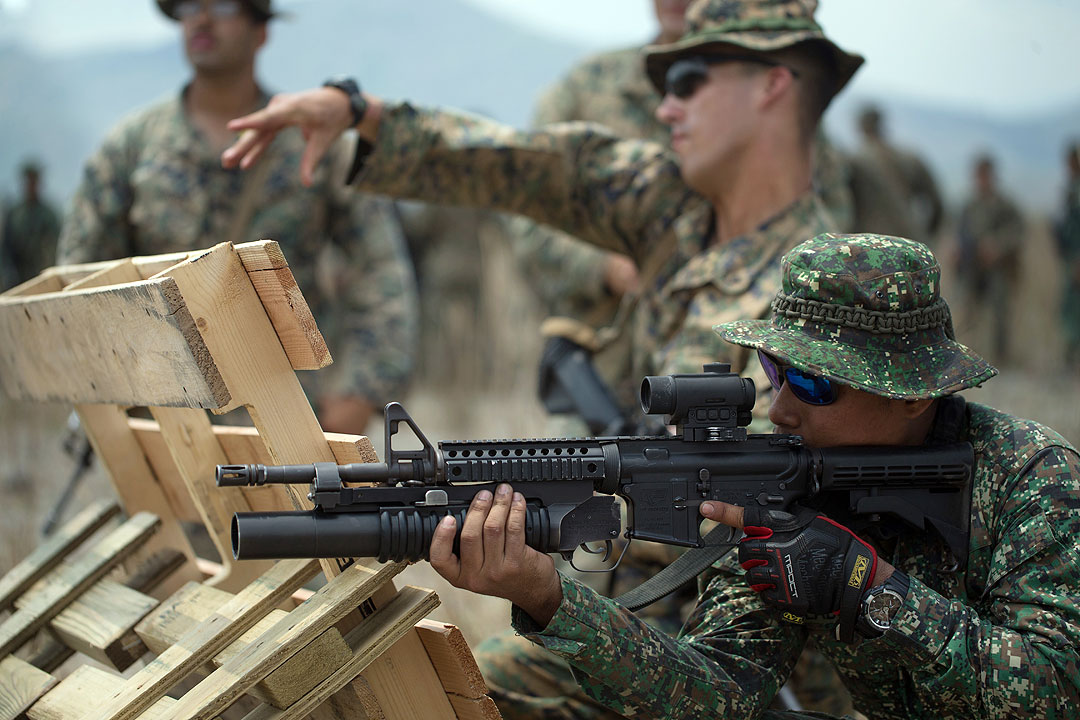
THE latest round of military drills involving the Philippines, the US and several partner nations will underscore Washington’s “ironclad” commitment to its treaty ally and to the region, even as global attention remains fixed on the Middle East, a US military official said on Tuesday.
Running from April 20 to May 8 across multiple locations in the Philippine archipelago, the annual Balikatan or “shoulder-to-shoulder” drills will see more than 17,000 troops participate in one of the biggest and most complex training programs yet, expanding beyond bilateral exercises into a broader multinational effort.
“Balikatan represents an opportunity to showcase our ironclad alliance with the Philippines and demonstrate our commitment to a free and open Indo-Pacific,” Colonel Robert S. Bunn, US spokesman for the exercises, said at a press briefing in Manila.
Japan’s participation in the drills is set to expand this year, with members of its Self-Defense Force taking part in live-fire exercises for the first time, using its Type 88 surface-to-ship missile to help sink a decommissioned vessel during a maritime strike exercise.
Tokyo has been strengthening its defense engagement with Manila after they signed a reciprocal access agreement in 2024, allowing them to deploy their militaries in each other’s territory.
The exercises are also set to highlight the Philippines’ widening network of security partnerships with Canada, France, New Zealand and Australia, with the countries contributing naval vessels, aircraft and troops.
Mr. Bunn said the scale and scope of this year’s Balikatan demonstrate the country’s sustained commitment to the Indo-Pacific, despite competing global demands.
Thousands of US personnel will be deployed to the Philippines for the drills, reinforcing alliance readiness, regional stability and the shared goal of maintaining a free and open region, US and Philippine military officials said.
The expanded drills come amid rising tensions between the Philippines and China in the South China Sea, where Manila has accused Beijing of increasingly aggressive actions, an accusation China rejects.
Activities will span air, land, sea and cyber domains, including maritime operations, integrated air and missile defense, counter-landing live-fire exercises and humanitarian missions.
Colonel Dennis Hernandez, Philippine spokesman for the exercises, said the country has the right to bolster its defense capabilities, adding that the drills were not directed at any country. — Reuters