Philippines seeks lift on financing cap, 15-year limit for AFP modernization
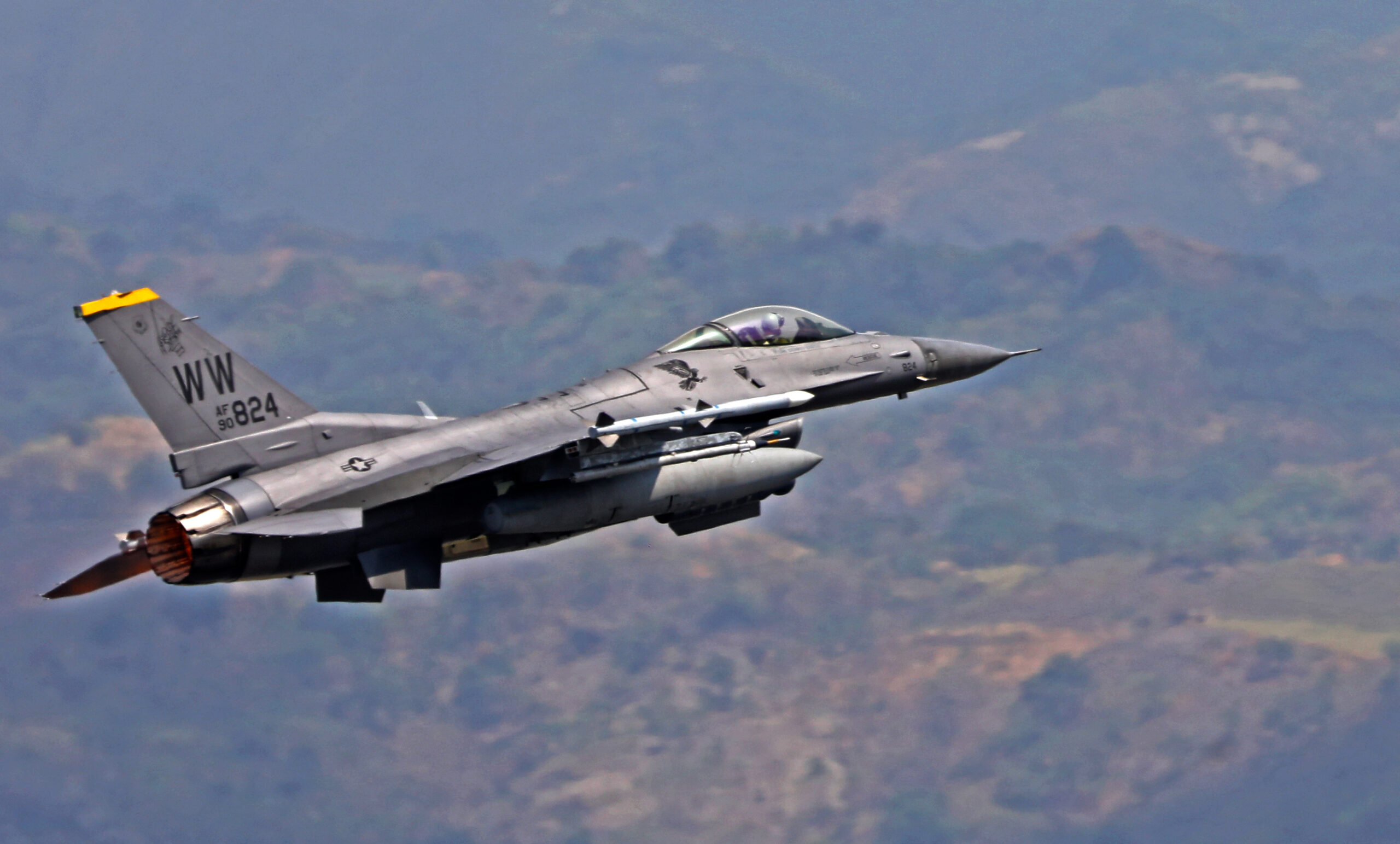
THE Philippines’ Department of National Defense (DND) is pushing to remove restrictions on both foreign and local financing for defense acquisitions and to scrap the 15-year timeline governing the Armed Forces of the Philippines’ (AFP) modernization program.
At a Senate hearing on Tuesday, Defense Assistant Secretary Erik Lawrence S. Dy said the agency wants to lift the $300-million ceiling on foreign loans under Presidential Decree No. 415, signed in 1974, while securing authorization for local financing options to fund defense equipment.
“As it is, defense equipment acquisitions are not covered by local loans, and foreign loans have a cap, so we want to have the ceiling removed,” he told senators, noting that it limits the government’s ability to acquire high-cost systems.
Major General Ivan Dr. Papera, chief of the AFP Systems Engineering and Modernization Office, said most defense acquisitions rely on annual funding through the General Appropriations Act and Multi-Year Contractual Authority, which typically covers five to seven years. Foreign financing, in contrast, can extend 10 to 15 years, offering more flexibility for larger purchases.
“We will not be able to capitalize on foreign financing for bigger platforms and capabilities as planned in our capability development documents,” he told the hearing. “Multi-role fighters and satellites require hundreds of billions [of pesos], and we only appropriate P35 billion to P50 billion a year.”
The DND is also advocating for the removal of the 15-year modernization timeline, arguing that acquisitions should be driven by operational needs rather than fixed schedules. “We feel like it’s already obsolete and acquisitions should be needs-based, not on specific timelines due to our evolving needs,” Mr. Dy said.
Senator Lorna Regina “Loren” B. Legarda, who heads the National Defense and Security committee, backed the proposals, noting the importance of agility in defense planning.
“We need a DND that can respond to the future, with the professional civilian capability, legal authority, and funding tools to do its job well,” she said. “We also need an AFP that is not burdened by outdated planning cycles and bureaucratic constraints but is able to adapt swiftly to rapidly evolving technologies.”
The Philippines is concluding its military modernization program under the Horizon plan, launched in 2012 after tensions with China escalated following the Scarborough Shoal standoff.
Manila has earmarked roughly $35 billion for upgrades over the next decade, which has enabled the AFP to acquire advanced warships, missile systems and other platforms aimed at countering China’s growing presence in the South China Sea.
NO CHINESE RECLAMATION
Meanwhile, the Philippine military has not observed any Chinese island-building activities in the disputed Scarborough Shoal, navy spokesman Rear Admiral Roy Vincent T. Trinidad told a news briefing, but noted the continuing “illegal presence” of Chinese ships in the area.
He said the AFP has not monitored any land reclamation activities in Scarborough, adding that authorities have “appropriate security measures” in place to prevent it in the contested feature. He did not elaborate.
“What we have monitored is the continued illegal presence and their buoys that have been established and put up… and the barrier,” he said. “Apart from that, no construction has been monitored on Bajo de Masinloc.”
The Chinese Embassy in Manila did not immediately reply to a Viber message seeking comment.
Scarborough Shoal, known in the Philippines as Panatag and Bajo de Masinloc, and called Huangyan Dao by China, has long been at the center of maritime tensions between the nations that have competing claims over the resource-rich South China Sea.
A vast fishing lagoon near key shipping lanes, the shoal lies within Manila’s 200-nautical mile exclusive economic zone. China has since asserted control over the feature after its maritime forces seized it in 2012 following a standoff with Philippine forces.
Mr. Trinidad said Chinese maritime forces now have a “semi-permanent” presence in the South China Sea and near disputed atolls due to the scale of their naval deployment aimed at asserting maritime control over swaths of contested waters.
Scarborough lies about 222 kilometers (km) west of Luzon island and is almost 900 km away from Hainan, the nearest major Chinese landmass.
In September, China approved the creation of a 3,500-hectare nature reserve at the northeast rim of the shoal, which it said is intended to preserve the ecological diversity of one of the most contested areas in the waterway.
Anxiety over land reclamation in Scarborough jolted Philippine authorities last year amid concerns that it could let China militarize the area and expand its presence near the mainland.
China has built man-made islands on numerous submerged features in the strategic waterway despite protests from neighboring countries, outfitting them with runways, hangars, radar systems and ports that could bolster its naval presence.
Chinese forces have built about 3,200 acres of new land in the heavily contested Spratly Islands since 2013, according to the Asia Maritime Transparency Initiative (AMTI).
In a separate report on Monday, AMTI said China’s maritime militia deployed “record-high” deployment of its fleet to the South China Sea last year. It monitored a daily average of 241 militia ships in the contested waters in 2025 from 232 vessels a year earlier.
“Most of these vessels are members of the Spratly Backbone Fishing Fleet, which is numerically larger than the professional component of the militia,” it said in a statement, noting that such ships could be as small as 35 meters in length.
AMTI said it only counted militia vessels 45 to 65 meters long for its analysis of satellite imagery. — A.H. Halili and Kenneth Christiane L. Basilio