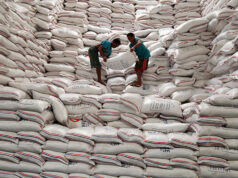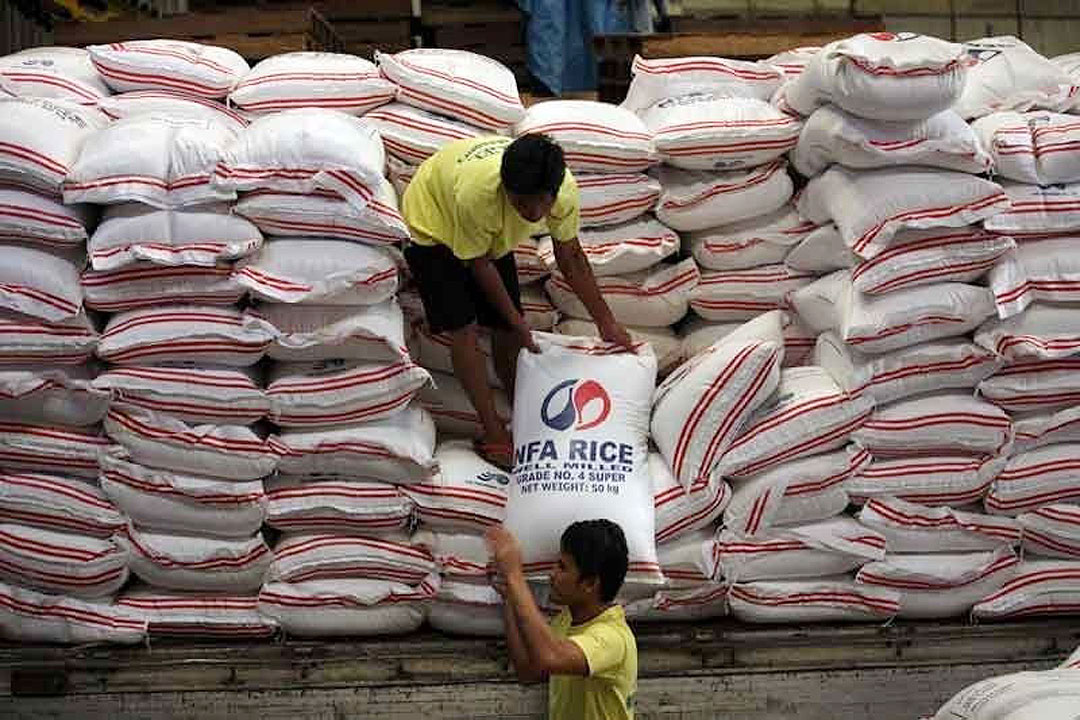
THE NATIONAL Food Authority (NFA) blamed the Rice Tariffication law for its inability to compete with private traders in procuring buffer stocks.
“When our government enacted Republic Act 11203 or the Rice Tariffication Law, NFA was not capacitated to compete with private traders in buying wet palay harvests of our local farmers,” Carolina Manzano, NFA acting public relations officer V, said in an e-mail.
In a 2022 report, the Commission on Audit (CoA) said the NFA had failed to build up sufficient rice reserves despite receiving P7 billion in subsidy from the government.
It said the optimum level of rice buffer stocks to be maintained by NFA was fixed at 300,000 metric tons (MT), equivalent to nine days of nationwide consumption.
But Ms. Manzano said farmers had sold their expected produce before harvest to private traders “due to financial needs.”
The Rice Tariffication Law deregulated rice imports, allowing private parties to import with fewer restrictions at a tariff of 35% on grain brought in from Southeast Asia.
The law removed the NFA monopoly on rice imports, restricting it to buying domestically harvested rice. Its purchases are then held in reserve for calamities and local shortages.
“Efforts have been exerted to undertake various strategies to procure palay to reach the set procurement target for calendar year 2022,” Ms. Manzano said. — Beatriz Marie D. Cruz