Ascott Ortigas Manila set to open this year
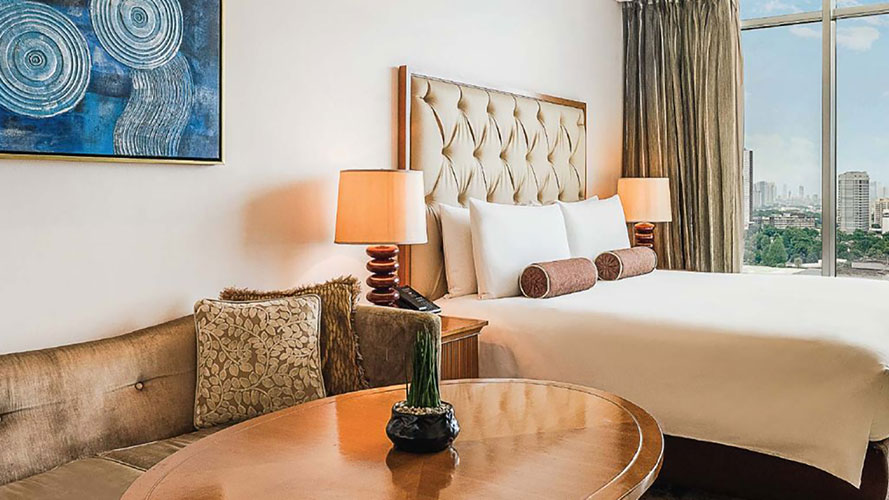
THE ASCOTT Ltd. is set to open its flagship Ascott brand in the Ortigas central business district this year, as the Singapore-based lodging operator builds on its expansion across Southeast Asia following a record year of signings.
Ascott Ortigas Manila, a 229-unit serviced residence, will be redeveloped from the former Joy-Nostalg Hotel & Suites Manila, which closed in January 2026 for a comprehensive renovation covering guest rooms, public areas and food and beverage facilities.
Located directly across from the Asian Development Bank headquarters, the property is positioned to serve corporate, long-stay and leisure travelers, the company said in a statement on Monday. It will offer dining outlets, a spa, a fitness center, and event spaces upon reopening.
The project marks the debut of the flagship Ascott brand in the Ortigas central business district and is part of the company’s broader expansion in Southeast Asia.
Ascott said it recorded its strongest-ever signing performance in the region in 2025, adding more than 7,300 units, up 55% from 4,700 units in 2024, placing it among the top three hospitality companies in Southeast Asia by new signings, according to Horwath HTL.
The company has more than 200 operational properties in the region and a pipeline of about 150 properties across Southeast Asia, spanning multiple typologies and markets. More than 25 of these properties are expected to open within the next 12 months.
Its pipeline includes projects across Vietnam, Thailand, Indonesia, Malaysia, Singapore and the Philippines, reflecting strong owner confidence in its brands and its ability to convert signings into operational properties at scale.
In the Philippines, expansion includes new cities such as Davao and Biñan, as part of efforts to extend its footprint beyond established gateway markets.
Ascott said about 30% of its Southeast Asia pipeline will be delivered through property conversions, allowing it to reposition existing assets and accelerate market entry. The Ortigas project is part of this strategy.
The company said its regional growth is supported by improving tourism fundamentals, including rising intra-ASEAN travel demand, higher visitor spending and improving regional connectivity following the near-complete recovery of the travel sector in 2025.
At the same time, Ascott noted that Southeast Asia’s hotel market remains highly fragmented, with independent and unbranded properties accounting for most supply, creating opportunities for international operators to expand through branding, distribution and management capabilities.
“Southeast Asia continues to be one of the most dynamic hospitality markets in the world and Ascott is well positioned to capture the opportunity,” Serena Lim, chief growth officer at Ascott, said, citing the firm’s multi-typology strategy spanning serviced residences, hotels, resorts, social living properties and branded residences.
The company said its expansion is anchored on long-term partnerships with property owners and a “flex-hybrid” model that allows it to scale across different asset types.
Wong Kar Ling, chief strategy officer and managing director for Southeast Asia, said the upcoming wave of openings reinforces the region’s role as both a core growth engine and a showcase for Ascott’s multi-typology brand strategy.
“The upcoming wave of openings reinforces Southeast Asia’s role as both a core growth engine and a showcase for Ascott’s multi-typology brand strategy,” she said.
Ascott’s pipeline includes developments such as mixed-use and meetings-focused properties, beachfront resorts in emerging leisure destinations and heritage conversions, as well as social living concepts across the region.
Resort developments are expected to be a major growth driver, with projects planned across Vietnam, Indonesia, the Philippines, Malaysia and Thailand. — Juliana Chloe A. Gonzales