PARIS — Giambattista Valli paid homage to the innate style and apparently effortless chic of the emblematic Parisian woman at his fashion show in the French capital, as the Italian designer celebrated his 15 years in the business.
Valli, who lives in the city, said he was inspired by every day looks around him. He also turned to references such as the black and white pictures of 20th century photographer Henri Cartier-Bresson and the late French actress known as Arletty.
The collection included little black dresses, black and white suits, pink chiffon nightgown-style dresses decorated with flowers and ostrich feathers — staples of “la Parisienne’s” wardrobe.
“I wanted to share the vision of the girl that I’ve seen these last 20 years that I’ve been living in Paris,” Valli told Reuters after the show. “This boyish attitude, independent, unique and at the same time very seductive, very free.”
“La Parisienne can go out without make-up, without tights, wearing her boyfriend’s loafers — she’s very free,” Valli added saying every look in the show was meant to embody different Parisian personalities.
Italian model Bianca Brandolini, American designer Rick Owens and François-Henri Pinault, head of the Kering conglomerate as well as the Artemis group that owns the Valli brand, were among the guests at the Paris decorative arts museum.
French model Ines de la Fressange, who long walked the runway for Chanel and is known as a reference for French style, said slouchy evening trousers, embroidered with flowers motifs and sequins, were among her favorite looks.
“It’s elegant, there’s a link to the past that I really like,” she said of the show.
Born in Rome 53 years ago, Giambattista Valli worked for Ungaro from 1998 to 2004, then launched his own label in 2005.
Last autumn, he became one of the latest designers to create a collection in collaboration with high street chain H&M, which featured takes on the puffy, tulle dresses that have made him a red carpet hit. — Reuters
There is no doubt that, as far as the future of mobility is concerned, electrification is where automotive companies — and auto buyers — are heading. You wouldn’t know it, though, if we go back to when Toyota first launched its hybrid electric Prius in 1997. Despite the forward-looking goals of Toyota to help reduce dependency on fossil fuels and reduce greenhouse gases, many were skeptical. Conventional wisdom was that hybrid electric vehicles (HEV) were not fun to drive, were funky looking, and just plain boring.
Twelve million Toyota HEVs later and it seems that every automaker has embraced hybrid electric technology as the gateway to electrification. Considering that the primary components of HEV — the battery, motor, and inverter — are common to full battery electric vehicles, it just makes sense.
In my mind, there are two factors that accelerated the rush to electrified vehicles. One was the decision by the Chinese government to bet (and bet big) on electric cars as the technology of choice for the country’s rapidly growing automotive industry. While the USA and Europe began their evolution to vehicle electrification in the last century, China started its journey only in 2001.
Boosted by government incentives, however, development of and demand for electric vehicles grew rapidly. By 2015, total sales of new energy vehicles or NEVs as alternative fuel vehicles are called in China, grew from zero to 497,000 units, more than anywhere in the world. In 2017, the NEV sales reached 1.621 million vehicles. This represents 50.4% of global NEV sales, far ahead of the USA that, in second place, accounts for only 17.3% of sales.
When a market that at its peak reached over 28 million vehicles decides that it will go electric, the universe of automakers pays attention. There was no sales growth trajectory anywhere that did not include a slice of the China market. So, any forecast by any automobile maker had to include sales of electric vehicles. In the last few years, this was compounded even more by the announcement of strict Corporate Average Fuel Efficiency (CAFE) regulations that would make it almost impossible to comply without a robust electrification plan. By sheer numbers, any automotive company who dreams of even a one-percent share of the Chinese auto market needs electric vehicles of some sort in its lineup.
The other factor in the rise in popularity of electric vehicles was Tesla. The company found the magic formula that transformed battery electric vehicles (BEVs) from boring to sexy in design, performance, and appeal.
Even if, to this day, Tesla struggles to meet production targets, profit goals, and promised launch dates, the market is enthralled with the brand and its models. They continue to queue for a chance to own their cars and their shares. Perplexing but real. Since the launch of the Tesla Roadster back in 2008, electric vehicles have become infinitely more attractive — albeit with the same quiet engine that used to turn car owners off in a major way.
Suddenly, vehicle electrification is the order of the day. It has become a crusade. Automakers the world over have decided to charge down the path towards sustainable mobility for all.
The question, though, is why the sudden surge in interest in electric cars or EVs? They aren’t any more fun to drive as they could have been when the Prius first came onto the market. There was a resistance then that is seemingly gone now. Any full-blooded car-guy or gal will swear that petrol and diesel-run cars still provide the ultimate rush.
Next, EVs are more expensive to produce and, therefore, sticker prices are higher than combustion-engine automobiles. This is mainly due to the cost of batteries that, by varying measures, account for 20% to 30% of the cost of an EV. New technologies in battery production are needed to drive the cost down.
Finally, EV usership brings with it “range anxiety” because of the lack of charging stations and the length of time needed to top up the car battery. Until a robust network is built by government or the private sector, car buyers will remain wary about being stuck on the highway or in traffic because their battery ran out on them.
Yet, the clamor and lust for EVs continue to rise. Discounting the drawbacks I just enumerated above, EVs are touted as the essential lifeline to a greener tomorrow. Government lawmakers, policy institutions, and NGOs have all lined up to call for the electrification of vehicles. Well and good. This is a very welcome movement, indeed. I hope that more and more sign up.
Clearly, the call to electrification has its sights set on the need to reduce harmful emissions that will, in turn, help realize commitments to the Conference of the Parties (COP) on climate change. The need for drastic measures to mitigate the deterioration of the environment and our climate is real. We cannot procrastinate any longer than we already have.
There is one glaring flaw in this move towards electrification, though. While the call to cut tailpipe or wheel-well emissions to zero has been incessant, there has been no major undertaking to reform or transform oil-well emissions. This refers to migrating electricity generation away from dirty, coal-fired technology to more sustainable alternatives such as hydro, solar, or nuclear.
Unless the entire carbon footprint is managed from oil well to wheel well, then we might, in the end, just be increasing our total harmful emissions and, thus, defeat the very reason we are moving towards electrified vehicles.
The need for sustainable mobility is a clear and present challenge. We should not kick the can down the road again and again. Every effort taken today is something less that future generations have to worry about. While the shift to full-electric vehicles, for example, should be pushed, we should also embrace HEVs that are solutions for the here and now. One Prius saves one ton of CO2 emissions a year. Why not make that difference today even while waiting for the zero-emission EVs to become more affordable and the proper recharging infrastructure put in place?
Yes, we can make our electric dreams come true today — one step at a time.
The author is an automotive executive with extensive experience in the field of marketing and sales. Mr. Socco was significantly involved in the start-up of business operations for Toyota in the Philippines — a brand with which he has some 36 years of involvement. He also has a broad executive experience in distributor operations as well as regional and global headquarter responsibilities. He is currently Chairman of GT Capital Auto Dealership Holdings, Inc.
CHEN YI Agventures calls said better farming practices are needed to maximize the impact of high-yielding hybrid seed, the use of which is poised to raise the rice industry’s competitivenes under a government-funded program.
In an interview, Chen Yi co-founder Patrick Francois Renucci said: “There is no positive impact of hybrid seed because the yield is the same. Imagine if farmers were equipped with the latest farming machinery, and practice good farming techniques, there’s a huge potential for farming in the country,” Mr. Renucci added.
His observation has been that farmers who use hybrid seed have the same yields as those using inbred seeds.
“Prices of palay (unmilled rice) can be lowered further by changing the bad farming habits that Filipino farmers still practice,” he said, adding that they and their farms have to be ready for the new seed.
Providing high-yield seed is one of the government’s strategies for boosting yields. The Rice Competitiveness Enhancement Fund (RCEF), funded from rice import tariffs, hopes to deploy its P10 billion a year funding by supporting mechanization, credit, know-how, and fertilizer, as well as seed.
Chen Yi President Rachel Renucci-Tan said the company assists farmers in improving productivity and incomes via the Renucci Partnership Program and Renucci Palay Procurement Program, which when combined make up a partner grower arrangement under which Chen Yi buys their harvest.
Chen Yi has 700 farmers in the Renucci Partnership program in Alang Alang, Leyte.
The partnership program provides low-interest loans, fertilizer, pesticides, inbred seed, and planting and harvesting equipment.
Ms. Renucci-Tan said: “We hope that others follow our program so that the need to import rice declines.”
Chen Yi Agventures operates its own fully-automated Rice Processing Center (RPC) using Japanese technology. It claims the center is the most advanced in Southeast Asia.
The center stores palay in temperature-controlled wet bins before and after drying to maintain reshness. It is then stored in temperature-controlled silos.
Chen Yi Agventures invested P1.7 billion in the rice processing center.
The company’s Dalisay Rice won the 3rd place at the World Rice Conference competition last year. — Revin Mikhael D. Ochave
LONDON — Britain is expected to announce this week a new levy on banks and other firms regulated for anti-money laundering to raise up to 100 million pounds ($130 million) to tackle dirty money, the government said on Saturday.
London has long attracted corrupt foreign money, especially from Russia, Nigeria, Pakistan, former Soviet states and Asia, and the police estimate that around 100 billion pounds of dirty money is moved through or into Britain each year.
In his first budget on Wednesday, finance minister Rishi Sunak is expected to unveil plans for an Economic Crime Levy to generate cash for new technology for law enforcement and to hire more financial investigators.
The levy is likely to come into force in 2022/23 and the Treasury will consult in the Spring about which firms will be asked to contribute.
“Criminals will have nowhere left to hide their illicit earnings,” Mr. Sunak said in a statement. “We’re going to put more financial investigators and better technology on the frontline to fight against money laundering.”
Last year the government and business leaders agreed an Economic Crime Plan to try to better tackle dirty money with more cash for police to tackle fraudsters and money launderers, and improved information sharing. — Reuters
LOCAL SILK yarn production is not enough to meet the needs of weavers around the country, especially with the renewed appreciation for indigenous designs. “Right now, the silk yarn that we are producing cannot meet the demand of the weavers, that is why we are encouraging more farmers to venture in this production,” Philippine Fiber Industry Development Authority (PhilFIDA)-Western Visayas Regional Director Evelyn B. Cagasan said in a recent interview as they announced a pioneering project in Lambunao.
Members of the Champion Farmers Program (CFP) of Lambunao are the first in Iloilo province to have been trained and assisted for the establishment of mulberry production sites for sericulture or silk farming.
The farmers were supported by the Japanese Organization for Industrial, Spiritual, Cultural Advancement (OISCA), a non-government group, and PhilFIDA.
“We expressed our interest for the project so OISCA tapped us to be one of the beneficiaries,” CFP Executive Director Ariel Lastica said.
The project was formalized through a memorandum of agreement in June 2019 involving the Lambunao local government, CFP, OISCA and PhilFIDA.
Five CFP members have since gone to Bago City in Negros Occidental, where OISCA’s filature plant is located, to undergo an orientation on sericulture as well as training on silk cocoon production.
They have already started trial production with thousands of silkworms, and have so far harvested seven kilograms of Class A cocoons.
“The production of cocoons is dependent on the mulberry leaves. Without the mulberry, we cannot produce high quality cocoons,” Mr. Lastica said.
Mulberry leaves are fed to the silkworms whose cocoons are made of silk.
Ms. Cagasan said one of the factors for choosing Lambunao was the soil quality, which is suitable for growing mulberry.
“We provided planting materials for the mulberry and technical assistance to increase their production for the rearing of silkworms in collaboration with OISCA,” she said.
The biggest production center for mulberry and silk cocoon production in Western Visayas is in Bago City and, together with Ibajay town in Aklan, the region’s total silk yarn production is about 89 kilograms annually.
Ms. Cagasan said the demand of local weavers is at least 150 kilograms per year.
“The filature plant in Negros Occidental reels the harvested cocoon produced by the farmers into silk yarn. We then supply it to local weavers in Manila and Mindanao,” she said.
The PhilFIDA official also said there is an untapped export market, particularly Japan, which the Philippines could take advantage of if it produced more silk. — Emme Rose S. Santiagudo
POOR FARMING practices have denied Filipino farmers the chance to improve their yield and increase their income, an official of a company promoting sustainable agriculture said.
“Farmers in the Philippines practice poor farming. There is no positive impact of hybrid seeds because the yield is the same,” Patrick Francois Renucci, co-founder of Chen Yi Agventures, Inc., said in an interview last week.
He said improved farming techniques and a change in mentality could vastly improve yield for Filipino farmers.
“Imagine if farmers are equipped with the latest farming machinery, and practice good farming techniques, there’s a huge potential for farming in the country,” he said.
According to Mr. Renucci, Filipino farmers practice bad habits such as using uncertified seeds, putting wrong fertilizer, and bad work ethic, which affect yield and income significantly.
Additionally, he said farmers who use hybrid seeds versus those who use inbred seeds come up with the same yield.
Prices of palay can be lowered further by changing the bad farming habits that Filipino farmers still practice, he said.
“First, they have to do very good farming. When they are able to have a good farm, then we can switch the seeds from inbred to hybrid seeds,” he said.
Chen Yi Agventures President Rachel Renucci-Tan said the company is assisting farmers on how they can improve their productivity and income via Renucci’s partnership program and palay procurement program.
The company has 700 farmers who are under the partnership program, which is based in Alang Alang, Leyte. The program provides low interest loans to farmers. The company also provides the farmers with fertilizer, pesticides, inbred seeds, and planting and harvesting equipment.
Ms. Renucci-Tan said that the company is inviting other farmers and companies to go to Chen Yi Agventures’s facility and learn its techniques.
“We hope that others follow our program so that importation of rice will be lowered,” she said.
The rice comes from the two-hectare Chen Yi Agventures rice processing center (RPC), which is equipped with end-to-end Japanese technology. The company claims that the fully automated center is the most technologically advanced rice processing center in Southeast Asia and is both earthquake- and typhoon-proof.
Palay is stored in several wet bins with temperature control before and after drying by several biomass dryers to keep its freshness. It is then stored in temperature controlled silos.
Chen Yi Agventures invested P1.7 billion in the rice processing center.
“Dalisay Rice” by Renucci won the third best rice in the world during the World Rice Conference last year. It was the first time that the Philippines has received an award as a world-class producer of rice. — Revin Mikhael Ochave
FOR SEVERAL MONTHS, Australia has been burning. The country-continent’s most recent fire season was completely devastating, and it was only last Feb. 13 that the New South Wales (NSW) Rural Fire Service declared that, after more than 240 days of active fire in NSW, now all of the fires in the state had been contained.
So many casualties haunted the nation as old-growth woodlands, endangered species, and even human beings perished from the catastrophe. This piece is dedicated to remembering some of the beautiful natural sites I was able to visit during a previous trip to Australia — the scenic Blue Mountains National Park and the eerie Jenolan Caves.
The Jenolan Caves are probably Australia’s most celebrated caves. They have just recently been identified as the oldest discovered open caves in the world. It is believed they came to be around the Carboniferous Period (290 to 354 million years ago). To put things in perspective, the Blue Mountains only began to form some 100 million years ago; dinosaurs only became extinct some 65 million years in the past.
The Jenolan Karst Conservation Reserve lies within the Central Tablelands Region of NSW, Australia. It is approximately 175 kilometers west of Sydney, and just 30 kms west of Katoomba — the closest train stop en route to the caves. Driving from Sydney only takes about three hours. Obviously, I was happy to drive, and my vehicle for this trip was the iconic Toyota Corolla Ascent hatch.
The road to the Jenolan Caves is long, winding, and properly paved all the way. During my research, I’ve come across online forums that described the roads as narrow and scary. But to be honest, that’s quite an overstatement. It was a singular route that was designed with first-world safety standards, and certainly not even close to some of the most challenging terrains I’ve ever driven on. Believe me, with a trusty car, it is an enjoyable drive.
In my case, I drove a 1.8-liter, seven-speed Corolla, and it was more than enough to get us there, hassle-free. The car has a nice-looking low, wide stance — and being low wasn’t a problem at all, as the roads were in great shape and free of nasty potholes. The cabin is spacious and the boot is of a very decent size. The car offers fairly good handling and steering as I took on the twisties, and it even has Sport Mode if you wanted a little more driving fun.
This Corolla also has front bucket seats as standard. It drives generally quiet on the highway and, in legendary Corolla style, registered very low fuel consumption. Should there have been any threat of a collision (perhaps with crazy tourists confused with right-hand drive), I was aware that we had seven SRS air bags at the ready. After all, the Corolla did get a five-star Australasian New Car Assessment Program (ANCAP) safety rating.
Characteristic to the Jenolan Caves National Park is a dramatic entrance with a grand arch that is 24m high, 55m wide, and 127m long. Passing the arch will lead you into a part of a cave — the largest open cave in Australia — before you arrive at the visitor center, where you can buy tickets for scheduled cave walks. Advance reservations are highly recommended!
Stalactites, stalagmites, helictites, antediluvian columns, and curious cave pearls riddled our surroundings as we stood within a labyrinth that was over 340 million years in the making. It was just another day for our cave guides at the United Nations Educational, Scientific and Cultural Organization (UNESCO) World Heritage Site, the Jenolan Karst Conservation Reserve.
But for us first-timers, the journey to behold the footprints of the passing of geologic time was undeniably exciting. Each grouping of cave chasms had its own name, its own highlights, and its own special tour. Some standard walks are easy, others classified moderate, and the rest considered “adventurous” (involving climbing, squeezing yourself through tight cave openings, and sometimes even crossing through water). You take your pick based on your own level of fitness, willingness, and degree of claustrophobia, if any.
The Jenolan Caves were discovered by Europeans circa 1835 to 1840. And shortly after, the Caves House Victorian Era hotel was erected (this is where we chose to stay the night). The said hotel is Australian heritage-listed, and within it is the popular Chisolm’s Restaurant, named after a certain Miss Chisolm — whose ghost allegedly still haunts the halls to this day.
MADRID — Spain’s Ebro Foods has ramped up production of pasta and rice in Western Europe and the United States in the past couple of weeks to meet growing demand by consumers worried by the coronavirus crisis, a company spokeswoman said on Friday.
Consumers around the world have been stockpiling non-perishable food and household items as the coronavirus spreads on fears they may end up in quarantine at home.
“To follow the peak in demand, we have increased our overall production in Italy, France, United States, Germany, Britain and Spain by 15% to 25%,” the spokeswoman said.
Ebro Foods owns brands such as Garofalo in Italy, Panzani in France and Minute Rice in the United States.
It has not had trouble sourcing raw materials on the market or noticed price volatility, the spokeswoman said, adding: “We have our own stocks of raw materials and future contracts.”
The company expects the market will adjust at some point as fears ease.
With sales worth 2.81 billion euros ($3.19 billion) in 2019, Ebro Foods says it is the world’s second-largest rice seller and the world’s second-largest dry and fresh pasta maker.
The company invested 149 million euros in 2019 to increase capacity on both sides of the Atlantic. — Reuters
Discounts for early reservers of Suzuki XL7 and S-Presso
AHEAD of the launch of its two new vehicles here, Suzuki Philippines is offering promos for the XL7 and the S-Presso. The XL7, powered by a 1.5-liter K15B engine, has enough room for seven passengers. Suzuki says even third-row passengers will have adequate space. The SUV also boasts flexible seating arrangements; cargo capacity is 153 liters. Customers reserving from March 1 to 18, 2020 will get a discount of P30,000 off the P1.068-million tag.
Meanwhile, the S-Presso is said to “champion the perfect fusion of a bold and practical design,” reflecting a classic SUV look of Suzuki. Powered by a 1.0-liter engine, the mini SUV boasts a tall stance, high seat position, and ample luggage space. Customers who reserve from March 1 to 18, 2020 get a P15,000 discount off the vehicle’s price of P518,000. For more information, visit any of the 77 Suzuki dealerships or check out www.suzuki.com.ph.
‘Predictive active suspension’ promises comfort, agility in new Audi A8 L
FITTED to its flagship Audi A8 L luxury sedan, Audi’s proprietary intelligent predictive active suspension allows the car to deliver, depending on the chosen settings, “the supreme ride comfort of a chauffeur-driven limousine, or the firm handling of a sports car.”
It works in tandem with a camera placed at the front of the car. With this, the system identifies uneven surfaces before the car reaches them and “predictively regulates the active suspension system.” The system thus signals the correct positioning travel to the actuators and actively adjusts the suspension. The effect is the reduction of body movement and compensation for undulations or similar unevenness on roads. The complex process is said to take just a few milliseconds as the camera generates information about road surface properties 18 times a second. The electronic chassis platform processes the road surface data and precisely actuates all suspension components almost in real time.
Completely dynamic, the predictive active suspension uses electromechanical actuators to adjust its settings. These actuators can lift up or force down each of the vehicle’s wheels individually to actively manage ride height in any situation — raising or lowering the car’s body by up to 85 millimeters from its central position at all four corners within five-tenths of a second.
Allowing this are compact electric motors located close to each of the Audi A8 L’s wheels. These motors are operated by the car’s 48-volt primary electrical system and governed by power electronics. A belt drive and a compact harmonic drive step up the electric motor’s torque almost 200 times, or to 1,100Nm, and apply this to a steel rotary tube. The latter is permanently attached to a preloaded titanium rod located inside it and capable of turning through more than 20 degrees. From the end of the rotary tube, the force is transmitted to the suspension via a lever and coupling rod. At the front it acts on the spring strut while at the rear it works on a transverse link.
Dynamic and Comfort Plus settings work in conjunction with the car’s air suspension and the Audi drive select dynamic handling system. In Dynamic, the Audi A8 L becomes a sports car as it turns in firmly, its body leaning over by only two degrees, instead of more than five degrees in standard setting, when cornering fast. The car’s front end rises or dives minimally during acceleration or braking, respectively.
Comfort Plus lets the luxury sedan glide more smoothly over any bumps. The setting also offers transverse force reduction. Upon entering a bend, this raises the body on the outer side of the bend while lowering it on the other side. The result is that the driver and passengers barely notice the Audi A8 L is cornering. The Stuttgart-headquartered brand says that “even drinks in the cup holder will not spill.” Straight-line travel in this mode also reduces pitching motions.
Even when at a standstill, predictive active suspension can work. As the Audi A8 L’s door handle is pulled, the body quickly raises by up to 50 millimeters to make entry and exit into the car easier.
When combined with Audi’s “pre sense 360°” system, the predictive active suspension also increases the Audi A8’s passive safety function. In an impending side impact at speeds exceeding 25kph, the active suspension raises the body by up to 80mm on the side of the impact. This brings the car’s sill into a better position to absorb the impact energy.
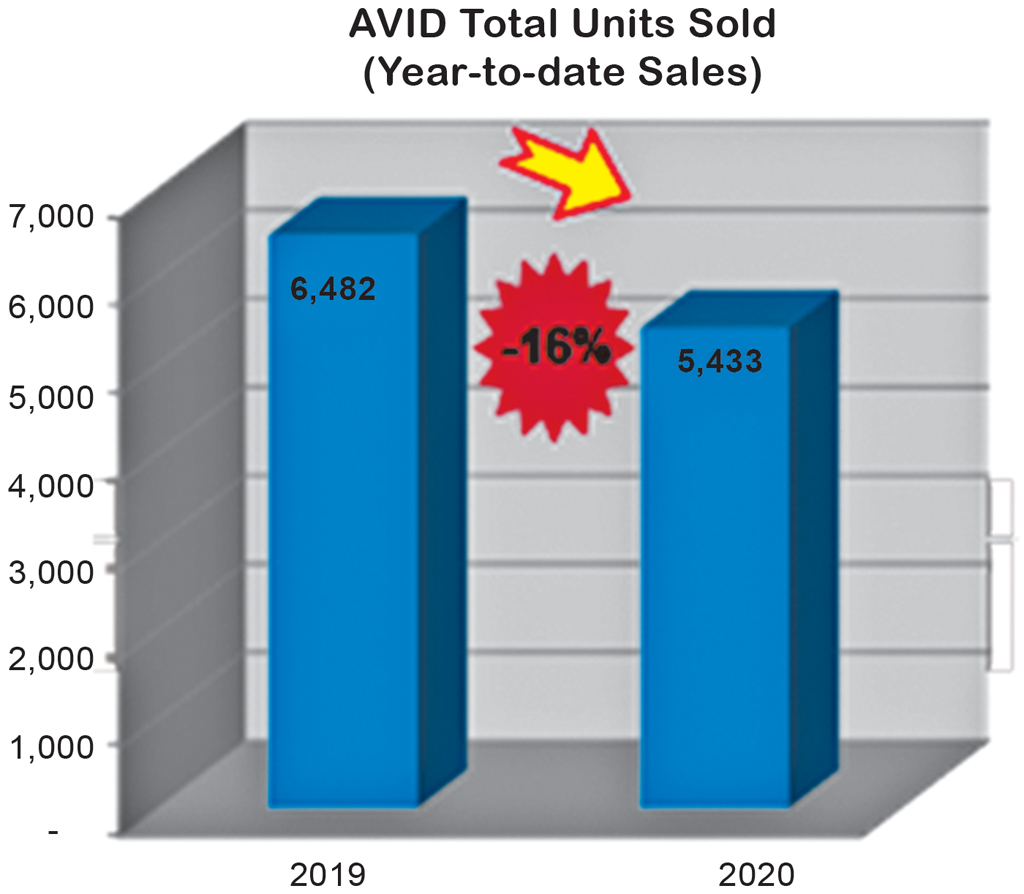
THE 25-member companies of the Association of Vehicle Importers and Distributors, Inc. (AVID) collectively sold 5,433 units in January — 16% lower compared to the same month in 2019. The dip was attributed to the “challenges posed by the Taal Ash Fall followed by the COVID-19 situation which is beginning to affect many local industries, including the automotive sector.”
AVID President Ma. Fe Perez-Agudo said in a release, “(Year) 2020 will be very challenging for the industry given the slowdown in automotive demand, supply chain disruptions, and dampened consumer confidence caused by these twin events. Fortunately, the Philippine economy remains strong, backed by robust public spending, private consumption, and lower interest rates… I am confident that AVID members will adapt to, and hurdle, these challenges and bounce back even stronger in the coming months.”
The passenger car (PC) segment was down by 31% in the first month of 2020 with 1,553 units sold in January versus 2,258 units sold in the same period last year. Hyundai sold a total of 967 units in January, followed by Suzuki with 353, and Ford with 117.
AVID members also reported lower sales in the light commercial vehicle (LCV) segment, recording a 7.3% dip for the month with 3,855 units sold versus the 4,157 units sold in the same period last year. Ford paces the LCV segment with a total of 1,375 units sold. Suzuki is second with 1,122 units, and Hyundai is third with 1,053. The commercial vehicles (CV) segment saw a decline of 63% in January.
Still, Ms. Agudo remains bullish. “We are no strangers to adversity and disruptions. As we have done in the past 10 years of AVID’s existence, our members remain resolute to provide better vehicles, better services, and better customer experiences to Filipinos everywhere,” she stressed.
From left are Seaoil Business Development Supervisor Lemuel Co, Seaoil VP for Corporate and Consumer Marketing Jayvee Dela Fuente, Owto Chief Executive Officer Joel Gayod, and Owto Chief Operating Officer Samuel Acuna.
Seaoil partners with Owto for VIP card
SEAOIL PHILIPPINES, INC., the country’s leading independent fuel player, has signed an exclusive partnership with transport network vehicle service (TNVS) company Owto for the co-branded Seaoil Boosted VIP card to be given to the latter’s drivers.
Said Seaoil Philippines VP for Corporate and Consumer Marketing Jayvee Dela Fuente, “Seaoil continues to form new partnerships so more consumers, especially those in the TNVS industry, can enjoy more benefits when they purchase (our) products.”
Owto is a 100% Filipino-owned TNVS company owned and operated by Ipara Technologies and Solutions, Inc. The service is available in the Greater Metro Manila (GMA) area, Caloocan, Malabon, Navotas, Valenzuela City and in some parts of Rizal, Cavite and Bulacan.
The Boosted VIP cards issued to Owto drivers will have the highest level in the VIP card tier or Auto-Gold status. One VIP point is equivalent to one point. The cards will have an exclusive point conversion wherein P100 in gasoline purchase earns four points, or a P4.00 rebate. A diesel purchase of P100 earns two points or a P2.00 rebate. Earned points can be used to purchase fuel and lubricants from Seaoil and may be redeemed as cash.
The exclusive point conversion is available at select Seaoil outlets, while other stations not included in the list will offer the regular Seaoil VIP point system.
Spongecola
‘MG Live!’ rocks Cebu
THE “MG LIVE!” free concert series powered by Phoenix Pulse Technology made its first stop in 2020 in Cebu this weekend, as MG Philippines continues its drive to showcase the best OPM talents.
This year, MG Philippines is going national with “MG Live!” as it brings the series to key locations around the country. Said company President and CEO Atty. Alberto Arcilla: “MG Philippines had a breakout year in 2019 and we want to make sure that we give the public bigger and better offerings in 2020… After just over a year in the market, MG has humbly and gratefully earned a place in the minds and hearts of the Filipino motoring market, in no small part because of the positive public response to these modern, attainable, British heritage cars. On MG’s second year in the Philippines we bring MG Live! around the country, specifically to regional locations where we can interact even more closely with those who have shown such genuine interest and support for the MG brand.”
Aside from the concert at the SM City Cebu North Wing, MG Philippines displayed the full lineup of vehicles currently available. These include the MG ZS Crossover SUV; the spacious and versatile RX5 SUV; the sporty MG 6 Fastback sedan; and the brand’s latest offering, the MG 5 sedan — a class leader in its segment that is big in both features and comfort.
The MG Live! 2020 stage was graced by Spongecola, the four-piece OPM alternative rock band behind crowd favorites such as “Jeepney,” “KLSP,” “Bitiw,” “Puso,” “Tambay,” and many more.
THE MAIN INDEX is seen to keep moving with uncertainty this week due to the coronavirus disease 2019 (COVID-19) outbreak, but a possible catalyst will be the release of earnings of index heavyweights.
Despite seeing three consecutive days of increase last week, the 30-member Philippine Stock Exchange index (PSEi) slumped 114.39 points or 1.66% on Friday to close at 6,770.38.
This is equivalent to a 0.26% reduction on a week-on-week basis and was the second straight week the PSEi posted a decline.
Value turnover decreased 16% to an average of P6.5 billion. Offshore investors remained sellers, but net foreign selling was trimmed to P500 million from P2.5 billion the week prior.
“Persistent coronavirus fears continued to pall sentiment, as funds assess the fallout to the global economy, even as the widely-followed Fed rate was trimmed by 50 basis points,” online brokerage 2TradeAsia.com said in a market note.
The US Federal Reserve announced an emergency rate cut last week to help cushion the economic impact of COVID-19. This resulted to a rally at Wall Street, which affected other global equities, including the PSEi.
However, the main index retreated on Friday as the Department of Health (DoH) announced two new cases of COVID-19 infections in the Philippines — one of which has no record of overseas travel.
Over the weekend, the DoH said this case is the first case of local transmission of the virus. It also announced the country’s sixth case of COVID-19: the wife of the fifth patient.
“Anxiety is thus not unwarranted at this point, but consideration should be put on whether fundamentals have weakened to irreversibility,” 2TradeAsia.com said.
It added four PSEi members are set to announce their 2019 earnings this week, which may help influence investor sentiment, aside from COVID-19 news. These are Ayala Corp.; San Miguel Corp.; Aboitiz Equity Ventures, Inc.; and Aboitiz Power Corp.
“So far, 16/30 blue chips (66.5% PSEi weight) have fared well (weighted average EPS growth of 12% for 2019), albeit citing cloudy 2020 operating environment, courtesy of COVID-19,” the brokerage said. EPS, or earnings per share, is the measure of earnings per outstanding share of a company’s stock.
2TradeAsia.com is also expecting the central bank’s Monetary Board meeting on March 19 to result to new measures that will help the market following the Fed’s move.
“The (Bangko Sentral ng Pilipinas) may likely hop in on the easing bandwagon, with more wood to burn for the winter, at least in terms of monetary armament relative to counterparts,” it added.
For the immediate week, the brokerage is putting immediate support for the PSEi at 6,500-6,600 and resistance at 6,850-6,950. “Accumulate gradually on lows, particularly stocks with attractive yields, to hedge holdings amid the rout,” it said.
MALACAÑANG will not allow at least P95 billion in debts owed to the government by energy companies to remain uncollected, its spokesman said ahead of this week’s hearing on the matter at the House of Representatives.
“Basta may utang sa gobyerno, sisingilin natin — kahit sinong may utang, malaking tao o hindi malaking tao, malapit or hindi,” Presidential Spokesperson Salvador S. Panelo said in a radio interview on Sunday.
(We will collect whatever is owed to the government — whoever owes it, whether a prominent person, or close to the administration.)
He was referring to the billions of pesos owed by various entities in the energy sector to the Power Sector Assets and Liabilities Management Corp. (PSALM). He said how President Rodrigo R. Duterte deals with these matters is common knowledge.
“Apat na taon na ang Presidente… dapat kilalang kilala niyo ugali niya (The President has been in office for four years.. you should know his personality by now),” he said.
Last month, the House Committee on Public Accounts and the House Committee Good Governance and Public Accountability revealed that various power firms still owe PSALM P95.3 billion. Both committees want the debts to be settled before PSALM’s corporate life ends by 2026.
According to Republic Act No. 9136 or the “Electric Power Industry Reform Act”, the residual debts of PSALM will be transferred to the national government if the agency does not liquidate them before 2026.
Both House committees probing the unsettled debts said the uncollected amount would be a burden to consumers as it might be reflected in their electricity bill to pay off the obligations.
Last week, the committees issued a subpoena to Solicitor General Jose C. Calida to appear before them in a March 11 hearing on the matter.
Mr. Calida did not show up in the earlier hearings and had filed a motion for leave to intervene in dealing with the cases involving the debts of Manila Electric Co. and First Gen Hydro Power Corp. at P14.90 billion and P315.42 million, respectively. — Gillian Cortez
NEW YORK — US renewable fuel credits fell more than 15% on Friday, traders said, after news the Trump administration plans to appeal a federal court decision that cast doubt on a program exempting small oil refineries from biofuel blending laws.
The administration had previously intended to respond to the court decision by scaling back the waiver program. But a conversation between President Donald Trump and Senator Ted Cruz of Texas helped push the administration to shift course, two sources familiar with the matter said.
Renewable fuel blending credits, or RINs, which refineries must earn or purchase to show compliance with the US Renewable Fuel Standard (RFS), traded at 34 cents each on Friday morning, down from 40.5 cents each the previous session, traders said.
The RFS requires refineries to blend billions of gallons of biofuels into the country’s fuel pool each year, or buy the credits from those that do, a requirement that has created a valuable market for corn but which refiners say is too costly.
Since the adoption of the RFS, the Environmental Protection Agency has granted waivers to small refiners exempting them from their obligations if they prove compliance would cause them financial distress. The Trump administration has roughly quadrupled the number of exemptions since it took office in January 2017.
In January, the 10th US Circuit Court of Appeals challenged the program, saying the EPA overstepped its authority by granting those waivers because the RFS requires them to take the form of “extensions” after the year 2010, and none of the refineries had received them in the previous year.
The bulk of waivers granted to refineries by the EPA in recent years do not meet that standard.
After the court decision, prices for renewable fuel credits skyrocketed, at one point gaining around 250%.
White House economic adviser Larry Kudlow recently informed Senator Chuck Grassley of Iowa, a vocal supporter of biofuels interests, that the administration had decided to appeal the ruling instead of curtailing the waiver program, two sources told Reuters on Thursday.
Senators representing oil states had previously engaged in a major drive this week to steer the administration to appeal the decision ahead of a March 9 deadline. The senators claim the program is essential for keeping refineries that provide tens of thousands of jobs afloat.
The news is a blow to farmers and biofuels advocates, who claim the exemptions hurt demand for corn-based ethanol. The oil industry rebuts that claim.
“The evidence is clear, the RFS will not be protected by the Trump administration no matter how many times he looks my friends and neighbors in the eye and makes a promise,” US Representative Abby Finkenauer, an Iowa Democrat, said in a statement on Friday.
US biofuel laws for years have been a major point of contention between the oil industry and Big Corn, two pivotal political constituencies for Trump as he seeks re-election this November. During his time in office, Trump has tried and often failed to appease both sides. — Reuters