Home Blog Page 9790

Dashboard (03/02/20)

Discounts for early reservers of Suzuki XL7 and S-Presso

AHEAD of the launch of its two new vehicles here, Suzuki Philippines is offering promos for the XL7 and the S-Presso. The XL7, powered by a 1.5-liter K15B engine, has enough room for seven passengers. Suzuki says even third-row passengers will have adequate space. The SUV also boasts flexible seating arrangements; cargo capacity is 153 liters. Customers reserving from March 1 to 18, 2020 will get a discount of P30,000 off the P1.068-million tag.

Meanwhile, the S-Presso is said to “champion the perfect fusion of a bold and practical design,” reflecting a classic SUV look of Suzuki. Powered by a 1.0-liter engine, the mini SUV boasts a tall stance, high seat position, and ample luggage space. Customers who reserve from March 1 to 18, 2020 get a P15,000 discount off the vehicle’s price of P518,000. For more information, visit any of the 77 Suzuki dealerships or check out www.suzuki.com.ph.


‘Predictive active suspension’ promises comfort, agility in new Audi A8 L

FITTED to its flagship Audi A8 L luxury sedan, Audi’s proprietary intelligent predictive active suspension allows the car to deliver, depending on the chosen settings, “the supreme ride comfort of a chauffeur-driven limousine, or the firm handling of a sports car.”

It works in tandem with a camera placed at the front of the car. With this, the system identifies uneven surfaces before the car reaches them and “predictively regulates the active suspension system.” The system thus signals the correct positioning travel to the actuators and actively adjusts the suspension. The effect is the reduction of body movement and compensation for undulations or similar unevenness on roads. The complex process is said to take just a few milliseconds as the camera generates information about road surface properties 18 times a second. The electronic chassis platform processes the road surface data and precisely actuates all suspension components almost in real time.

Completely dynamic, the predictive active suspension uses electromechanical actuators to adjust its settings. These actuators can lift up or force down each of the vehicle’s wheels individually to actively manage ride height in any situation — raising or lowering the car’s body by up to 85 millimeters from its central position at all four corners within five-tenths of a second.

Allowing this are compact electric motors located close to each of the Audi A8 L’s wheels. These motors are operated by the car’s 48-volt primary electrical system and governed by power electronics. A belt drive and a compact harmonic drive step up the electric motor’s torque almost 200 times, or to 1,100Nm, and apply this to a steel rotary tube. The latter is permanently attached to a preloaded titanium rod located inside it and capable of turning through more than 20 degrees. From the end of the rotary tube, the force is transmitted to the suspension via a lever and coupling rod. At the front it acts on the spring strut while at the rear it works on a transverse link.

Dynamic and Comfort Plus settings work in conjunction with the car’s air suspension and the Audi drive select dynamic handling system. In Dynamic, the Audi A8 L becomes a sports car as it turns in firmly, its body leaning over by only two degrees, instead of more than five degrees in standard setting, when cornering fast. The car’s front end rises or dives minimally during acceleration or braking, respectively.

Comfort Plus lets the luxury sedan glide more smoothly over any bumps. The setting also offers transverse force reduction. Upon entering a bend, this raises the body on the outer side of the bend while lowering it on the other side. The result is that the driver and passengers barely notice the Audi A8 L is cornering. The Stuttgart-headquartered brand says that “even drinks in the cup holder will not spill.” Straight-line travel in this mode also reduces pitching motions.

Even when at a standstill, predictive active suspension can work. As the Audi A8 L’s door handle is pulled, the body quickly raises by up to 50 millimeters to make entry and exit into the car easier.

When combined with Audi’s “pre sense 360°” system, the predictive active suspension also increases the Audi A8’s passive safety function. In an impending side impact at speeds exceeding 25kph, the active suspension raises the body by up to 80mm on the side of the impact. This brings the car’s sill into a better position to absorb the impact energy.

For more information, visit www.audi.ph, facebook.com/audiphofficial and Instagram: instagram.com/audiphilippines, or call +63 917-813-9064.
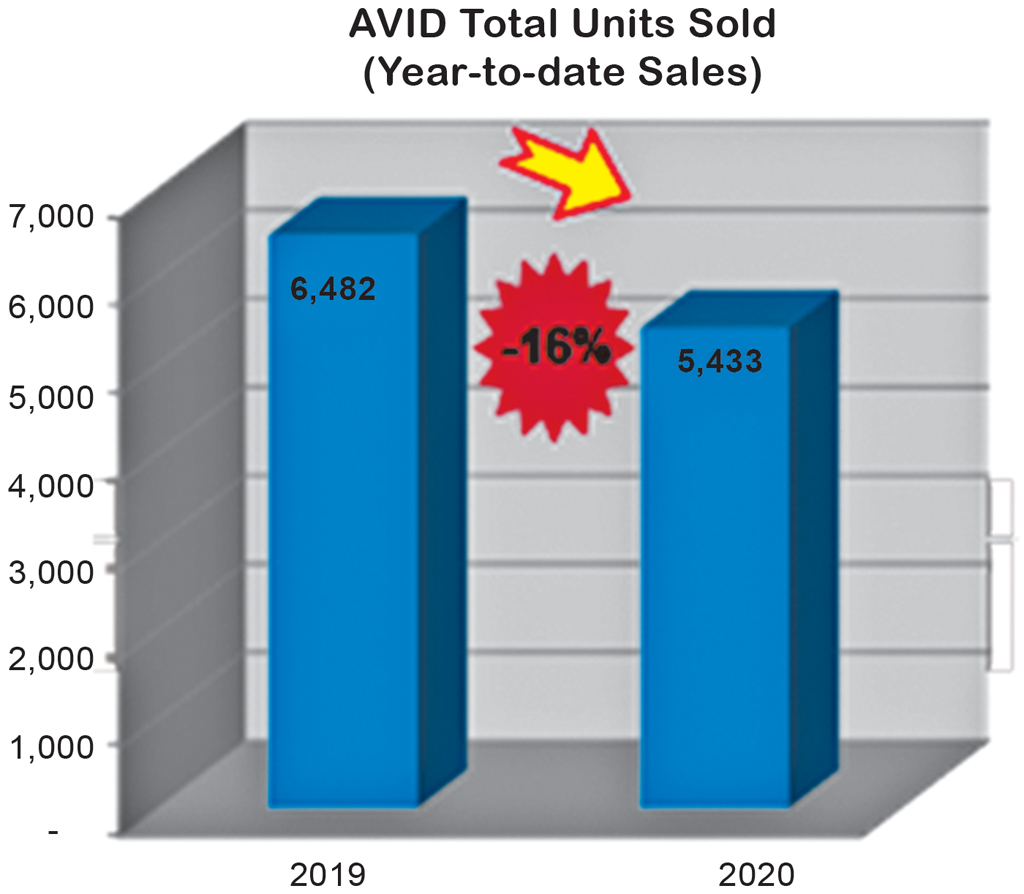

AVID year-on-year sales dip in January

THE 25-member companies of the Association of Vehicle Importers and Distributors, Inc. (AVID) collectively sold 5,433 units in January — 16% lower compared to the same month in 2019. The dip was attributed to the “challenges posed by the Taal Ash Fall followed by the COVID-19 situation which is beginning to affect many local industries, including the automotive sector.”

AVID President Ma. Fe Perez-Agudo said in a release, “(Year) 2020 will be very challenging for the industry given the slowdown in automotive demand, supply chain disruptions, and dampened consumer confidence caused by these twin events. Fortunately, the Philippine economy remains strong, backed by robust public spending, private consumption, and lower interest rates… I am confident that AVID members will adapt to, and hurdle, these challenges and bounce back even stronger in the coming months.”

The passenger car (PC) segment was down by 31% in the first month of 2020 with 1,553 units sold in January versus 2,258 units sold in the same period last year. Hyundai sold a total of 967 units in January, followed by Suzuki with 353, and Ford with 117.

AVID members also reported lower sales in the light commercial vehicle (LCV) segment, recording a 7.3% dip for the month with 3,855 units sold versus the 4,157 units sold in the same period last year. Ford paces the LCV segment with a total of 1,375 units sold. Suzuki is second with 1,122 units, and Hyundai is third with 1,053. The commercial vehicles (CV) segment saw a decline of 63% in January.

Still, Ms. Agudo remains bullish. “We are no strangers to adversity and disruptions. As we have done in the past 10 years of AVID’s existence, our members remain resolute to provide better vehicles, better services, and better customer experiences to Filipinos everywhere,” she stressed.


From left are Seaoil Business Development Supervisor Lemuel Co, Seaoil VP for Corporate and Consumer Marketing Jayvee Dela Fuente, Owto Chief Executive Officer Joel Gayod, and Owto Chief Operating Officer Samuel Acuna.

Seaoil partners with Owto for VIP card

SEAOIL PHILIPPINES, INC., the country’s leading independent fuel player, has signed an exclusive partnership with transport network vehicle service (TNVS) company Owto for the co-branded Seaoil Boosted VIP card to be given to the latter’s drivers.

Said Seaoil Philippines VP for Corporate and Consumer Marketing Jayvee Dela Fuente, “Seaoil continues to form new partnerships so more consumers, especially those in the TNVS industry, can enjoy more benefits when they purchase (our) products.”

Owto is a 100% Filipino-owned TNVS company owned and operated by Ipara Technologies and Solutions, Inc. The service is available in the Greater Metro Manila (GMA) area, Caloocan, Malabon, Navotas, Valenzuela City and in some parts of Rizal, Cavite and Bulacan.

The Boosted VIP cards issued to Owto drivers will have the highest level in the VIP card tier or Auto-Gold status. One VIP point is equivalent to one point. The cards will have an exclusive point conversion wherein P100 in gasoline purchase earns four points, or a P4.00 rebate. A diesel purchase of P100 earns two points or a P2.00 rebate. Earned points can be used to purchase fuel and lubricants from Seaoil and may be redeemed as cash.

The exclusive point conversion is available at select Seaoil outlets, while other stations not included in the list will offer the regular Seaoil VIP point system.


Spongecola

‘MG Live!’ rocks Cebu

THE “MG LIVE!” free concert series powered by Phoenix Pulse Technology made its first stop in 2020 in Cebu this weekend, as MG Philippines continues its drive to showcase the best OPM talents.

This year, MG Philippines is going national with “MG Live!” as it brings the series to key locations around the country. Said company President and CEO Atty. Alberto Arcilla: “MG Philippines had a breakout year in 2019 and we want to make sure that we give the public bigger and better offerings in 2020… After just over a year in the market, MG has humbly and gratefully earned a place in the minds and hearts of the Filipino motoring market, in no small part because of the positive public response to these modern, attainable, British heritage cars. On MG’s second year in the Philippines we bring MG Live! around the country, specifically to regional locations where we can interact even more closely with those who have shown such genuine interest and support for the MG brand.”

Aside from the concert at the SM City Cebu North Wing, MG Philippines displayed the full lineup of vehicles currently available. These include the MG ZS Crossover SUV; the spacious and versatile RX5 SUV; the sporty MG 6 Fastback sedan; and the brand’s latest offering, the MG 5 sedan — a class leader in its segment that is big in both features and comfort.

The MG Live! 2020 stage was graced by Spongecola, the four-piece OPM alternative rock band behind crowd favorites such as “Jeepney,” “KLSP,” “Bitiw,” “Puso,” “Tambay,” and many more.

PSEi to move sideways ahead of earnings reports

By Denise A. Valdez
Reporter

THE MAIN INDEX is seen to keep moving with uncertainty this week due to the coronavirus disease 2019 (COVID-19) outbreak, but a possible catalyst will be the release of earnings of index heavyweights.

Despite seeing three consecutive days of increase last week, the 30-member Philippine Stock Exchange index (PSEi) slumped 114.39 points or 1.66% on Friday to close at 6,770.38.

This is equivalent to a 0.26% reduction on a week-on-week basis and was the second straight week the PSEi posted a decline.

Value turnover decreased 16% to an average of P6.5 billion. Offshore investors remained sellers, but net foreign selling was trimmed to P500 million from P2.5 billion the week prior.

“Persistent coronavirus fears continued to pall sentiment, as funds assess the fallout to the global economy, even as the widely-followed Fed rate was trimmed by 50 basis points,” online brokerage 2TradeAsia.com said in a market note.

The US Federal Reserve announced an emergency rate cut last week to help cushion the economic impact of COVID-19. This resulted to a rally at Wall Street, which affected other global equities, including the PSEi.

However, the main index retreated on Friday as the Department of Health (DoH) announced two new cases of COVID-19 infections in the Philippines — one of which has no record of overseas travel.

Over the weekend, the DoH said this case is the first case of local transmission of the virus. It also announced the country’s sixth case of COVID-19: the wife of the fifth patient.

“Anxiety is thus not unwarranted at this point, but consideration should be put on whether fundamentals have weakened to irreversibility,” 2TradeAsia.com said.

It added four PSEi members are set to announce their 2019 earnings this week, which may help influence investor sentiment, aside from COVID-19 news. These are Ayala Corp.; San Miguel Corp.; Aboitiz Equity Ventures, Inc.; and Aboitiz Power Corp.

“So far, 16/30 blue chips (66.5% PSEi weight) have fared well (weighted average EPS growth of 12% for 2019), albeit citing cloudy 2020 operating environment, courtesy of COVID-19,” the brokerage said. EPS, or earnings per share, is the measure of earnings per outstanding share of a company’s stock.

2TradeAsia.com is also expecting the central bank’s Monetary Board meeting on March 19 to result to new measures that will help the market following the Fed’s move.

“The (Bangko Sentral ng Pilipinas) may likely hop in on the easing bandwagon, with more wood to burn for the winter, at least in terms of monetary armament relative to counterparts,” it added.

For the immediate week, the brokerage is putting immediate support for the PSEi at 6,500-6,600 and resistance at 6,850-6,950. “Accumulate gradually on lows, particularly stocks with attractive yields, to hedge holdings amid the rout,” it said.

Palace vows to make PSALM debtors pay

MALACAÑANG will not allow at least P95 billion in debts owed to the government by energy companies to remain uncollected, its spokesman said ahead of this week’s hearing on the matter at the House of Representatives.

Basta may utang sa gobyerno, sisingilin natin — kahit sinong may utang, malaking tao o hindi malaking tao, malapit or hindi,” Presidential Spokesperson Salvador S. Panelo said in a radio interview on Sunday.

(We will collect whatever is owed to the government — whoever owes it, whether a prominent person, or close to the administration.)

He was referring to the billions of pesos owed by various entities in the energy sector to the Power Sector Assets and Liabilities Management Corp. (PSALM). He said how President Rodrigo R. Duterte deals with these matters is common knowledge.

Apat na taon na ang Presidente… dapat kilalang kilala niyo ugali niya (The President has been in office for four years.. you should know his personality by now),” he said.

Last month, the House Committee on Public Accounts and the House Committee Good Governance and Public Accountability revealed that various power firms still owe PSALM P95.3 billion. Both committees want the debts to be settled before PSALM’s corporate life ends by 2026.

According to Republic Act No. 9136 or the “Electric Power Industry Reform Act”, the residual debts of PSALM will be transferred to the national government if the agency does not liquidate them before 2026.

Both House committees probing the unsettled debts said the uncollected amount would be a burden to consumers as it might be reflected in their electricity bill to pay off the obligations.

Last week, the committees issued a subpoena to Solicitor General Jose C. Calida to appear before them in a March 11 hearing on the matter.

Mr. Calida did not show up in the earlier hearings and had filed a motion for leave to intervene in dealing with the cases involving the debts of Manila Electric Co. and First Gen Hydro Power Corp. at P14.90 billion and P315.42 million, respectively. — Gillian Cortez

US biofuel credits slump on expectation of EPA appeal

NEW YORK — US renewable fuel credits fell more than 15% on Friday, traders said, after news the Trump administration plans to appeal a federal court decision that cast doubt on a program exempting small oil refineries from biofuel blending laws.

The administration had previously intended to respond to the court decision by scaling back the waiver program. But a conversation between President Donald Trump and Senator Ted Cruz of Texas helped push the administration to shift course, two sources familiar with the matter said.

Renewable fuel blending credits, or RINs, which refineries must earn or purchase to show compliance with the US Renewable Fuel Standard (RFS), traded at 34 cents each on Friday morning, down from 40.5 cents each the previous session, traders said.

The RFS requires refineries to blend billions of gallons of biofuels into the country’s fuel pool each year, or buy the credits from those that do, a requirement that has created a valuable market for corn but which refiners say is too costly.

Since the adoption of the RFS, the Environmental Protection Agency has granted waivers to small refiners exempting them from their obligations if they prove compliance would cause them financial distress. The Trump administration has roughly quadrupled the number of exemptions since it took office in January 2017.

In January, the 10th US Circuit Court of Appeals challenged the program, saying the EPA overstepped its authority by granting those waivers because the RFS requires them to take the form of “extensions” after the year 2010, and none of the refineries had received them in the previous year.

The bulk of waivers granted to refineries by the EPA in recent years do not meet that standard.

After the court decision, prices for renewable fuel credits skyrocketed, at one point gaining around 250%.

White House economic adviser Larry Kudlow recently informed Senator Chuck Grassley of Iowa, a vocal supporter of biofuels interests, that the administration had decided to appeal the ruling instead of curtailing the waiver program, two sources told Reuters on Thursday.

Senators representing oil states had previously engaged in a major drive this week to steer the administration to appeal the decision ahead of a March 9 deadline. The senators claim the program is essential for keeping refineries that provide tens of thousands of jobs afloat.

The news is a blow to farmers and biofuels advocates, who claim the exemptions hurt demand for corn-based ethanol. The oil industry rebuts that claim.

“The evidence is clear, the RFS will not be protected by the Trump administration no matter how many times he looks my friends and neighbors in the eye and makes a promise,” US Representative Abby Finkenauer, an Iowa Democrat, said in a statement on Friday.

US biofuel laws for years have been a major point of contention between the oil industry and Big Corn, two pivotal political constituencies for Trump as he seeks re-election this November. During his time in office, Trump has tried and often failed to appease both sides. — Reuters

SS20 Athletics collection: functionality and style

RECOGNIZING the demand for sportswear that is both functional and stylish, adidas collaborated with local creators and launched a new athletics collection.

The Spring/Summer SS20 Athletics capsule collection offers contemporary apparel fusing sport and style.

Its range stems and takes cue from the sports culture from around the world and features a mix of silhouettes for men and women that can be mixed and matched to create multiple looks. adidas touts the collection as something to be worn before and after performance, with its silhouettes designed for stylized layering available in sports utility fabrics that offer unrivaled comfort and freedom of movement.

Functional detailing features throughout the collection, including discrete woven pockets, customizable patches, and reversible apparel.

Here in the Philippines, to celebrate the SS20 collection, adidas Philippines brought together a diverse collective of next-generation athletes to promote the brand, including blogger and vlogger David Guison, actress Gabby Padilla, host and fitness coach Vince Velasco, professional basketball Player Renzo Subido, University of the Philippines women’s volleyball player Kathy Bersola, and content creator and singer Nami Onuma.

The first drop of the SS20 collection is now available at adidas.com.ph with additional pieces to be launched later in the season. — Michael Angelo S. Murillo

Dimon health emergency may blight China plans

JPMORGAN CHASE & Co. Chief Executive Officer (CEO) Jamie Dimon’s emergency heart surgery has put the spotlight on succession, and in Asia, on how much of the lender’s push into China hinges on his commitment.

Mr. Dimon, who underwent surgery after suffering acute aortic dissection, has temporarily handed control of the largest US bank to his lieutenants. His plan to bring JPMorgan’s “full force” to China and his relationships on the ground are seen as pivotal in a year when global banks are being allowed to take ownership of ventures in the world’s second-largest economy. A spokesman wasn’t immediately available to comment.

“Jamie is a symbolic figure of Wall Street in China and you probably couldn’t find anyone with similar commitment and popularity in China’s financial circles in recent years,” said Bei Duoguang, who worked with Mr. Dimon as the former CEO of a securities venture in China JPMorgan exited years ago.

With Mr. Dimon at the helm, JPMorgan last year became the first US bank to take majority ownership of a securities joint venture and it’s now in the process of seeking full control of its futures and fund management units in China. The nation’s opening of its $45-trillion financial industry gives global banks the opportunity to vie for an estimated $9 billion in annual commercial and investment banking profits in the years ahead, according to Bloomberg Intelligence.

JPMorgan’s competitors, including Goldman Sachs Group, Inc. and Nomura Holdings, Inc., are also seeking to push into China at full speed.

JPMorgan just reshuffled its senior leadership in Asia in charge of the expansion, appointing a new regional CEO, and the US bank recently boosted its space in Shanghai Tower, China’s tallest skyscraper, by a third.

“We’re building here for a hundred years,” Mr. Dimon said on China, in a Bloomberg Television interview in May 2018. “One day you’ll probably have a tower here that looks like the tower we have in New York.”

For any firm to succeed in China, it needs a leader willing to take a long-term bet on the market and for JP Morgan, that person has been Mr. Dimon, said Nick Xiao, chief executive officer of Hywin International, the Hong Kong arm of Hywin Wealth that services 100,000 high net worth clients mostly in China.

According to Bei, Mr. Dimon is realistic about the prospects in China and has a long-term strategy in mind.

“It’s hard to predict how his successor would cope with China,” he said. “It’s hard to make money in China and they can easily switch focus to other countries over time.”

Even so, the US bank has laid the groundwork in China for years, which will mitigate the impact of any absence, Brett McGonegal, chairman and CEO of Capital Link International in Hong Kong, said by phone.

Co-Presidents Daniel Pinto and Gordon Smith have taken temporary charge at JPMorgan during Mr. Dimon’s recuperation, which typically takes at least a month, including a week in hospital, according to Johns Hopkins Medicine. The bank said his condition was caught early and the surgery was successful, with Dimon “awake, alert and recovering well.” — Bloomberg

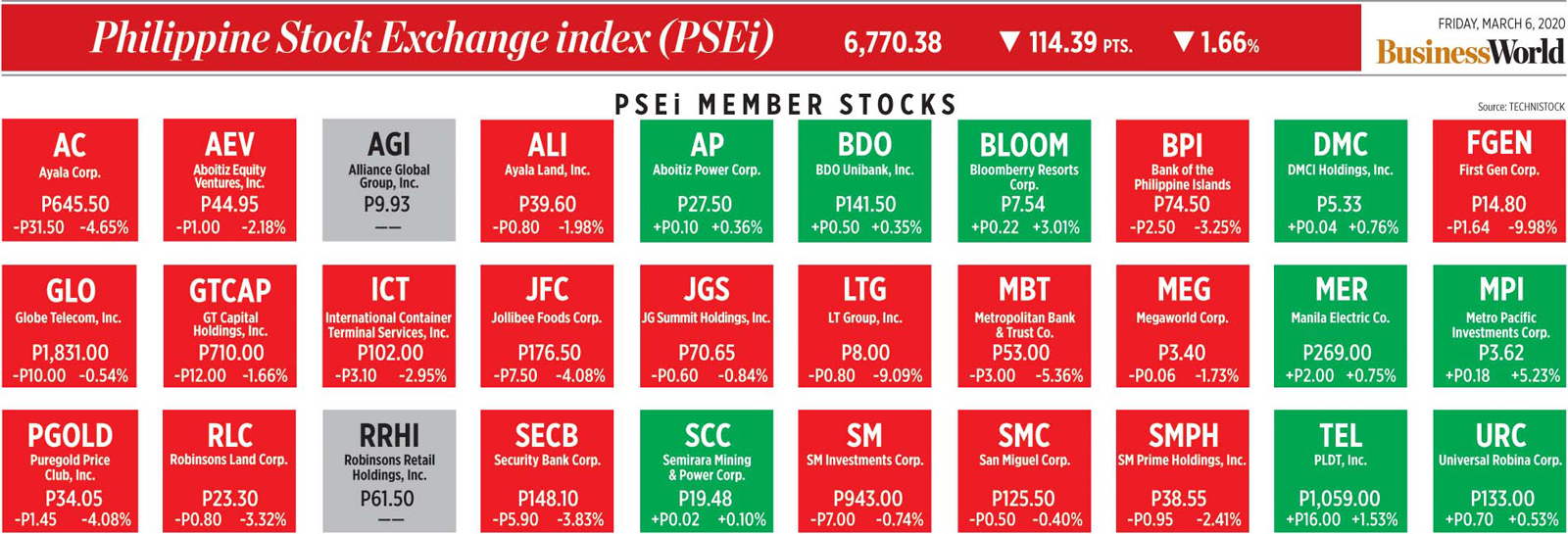
How PSEi member stocks performed — March 6, 2020

Here’s a quick glance at how PSEi stocks fared on Friday, March 6, 2020.


DTI to decide soon on need for vehicle safeguard measures

THE Department of Trade and Industry (DTI) expects to determine this month the need for safeguard measures against automotive imports.

Trade Secretary Ramon M. Lopez said the department had notified the World Trade Organization (WTO) about its intention to investigate safeguard measures on Feb. 18.

Dapat ‘yun, pumapasok na ‘yung mga data, consultation, hearing (The data, consultations, and hearings should have come in),” he said.

The DTI launched a preliminary safeguard investigation on automotive imports in February, after being petitioned by a labor group.

The Philippine Metalworkers Alliance (PMA) last year asked the department last year to rule on whether a surge in automotive imports is causing injury to the domestic industry.

The WTO notification noted that the PMA claims “increased imports of motor vehicles are the substantial cause of serious injury to the domestic industry in terms of declining market share, production sales, capacity utilization, incurred losses, employment, price depression and price undercutting.”

PMA, after filing its petition in November, said workers fear job losses as companies downsize.

Mr. Lopez recently highlighted the ongoing safeguard measures probe after Honda Cars Philippines, Inc. (HCPI) decided it would stop operating.

Mr. Lopez has said that the decision was made by Honda headquarters, following a global automotive industry slowdown. The company will continue selling cars in the Philippines through its regional network.

The DTI has not yet decided on possible tariff rates or restrictions on import quantities. — Jenina P. Ibañez

PSE backs CITIRA, urges Senate to prioritize passage

THE Philippine Stock Exchange, Inc. (PSE) said it backs the passage of a tax reform bill gradually lowering corporate income tax and urged the Senate, where the legislation is pending, to give it top priority.

The PSE issued the statement over the weekend to express its “strong support” for the tax reforms under the Corporate Income Tax and Incentives Rationalization Act (CITIRA) bill, saying the bill if passed will help attracting new investment from overseas and domestic investors.

“The PSE respectfully urges (the Senate Committee on Ways and Means) to prioritize the immediate passage of the CITIRA bill as we all look forward to jump-start its short- and long-term benefits to Filipinos,” it said.

The bill proposes to gradually lower the corporate income tax to 25% by 2024 and to 20% by 2029 from 30% at present. The PSE said passing CITIRA would make the Philippines competitive in the ASEAN region where corporate tax rates range between 17 and 25%, according to 2019 data from consultancy Deloitte.

“This will make the Philippines an attractive investment destination for new foreign and domestic businesses and encourage existing companies to expand their operations,” it said.

“All these will redound to job creation, higher income, increased spending and more money in circulation, a cycle that can continue indefinitely as a result of the multiplier effect,” it added.

The benchmark Philippine Stock Exchange index has been volatile in recent weeks due to the coronavirus outbreak, closing 6,770.38 last, as against 7,742.53 when the year started.

The PSE joined 10 business groups last week in backing CITIRA. Those groups were the Anvil Business Club, Bankers Association of the Philippines, Federation of Filipino Chinese Chambers of Commerce and Industry, Financial Executives Institute of the Philippines, Foundation for Economic Freedom, Management Association of the Philippines, Makati Business Club, Organization of Socialized Housing Developers of the Philippines, Subdivision and Housing Developers Association and University of the Philippines School of Economics Alumni Association.

The Senate, through its President Vicente C. Sotto III, has been unable to respond to questions for comment on the recent statements in support of CITIRA. But he said last weekend that the Senate may set the bill aside to prioritize measures that will address the outbreak of coronavirus, formally known as Covid-19.

The Philippines has reported six confirmed cases of Covid-19 as of Sunday.

The House passed its CITIRA legislation last year.

Representative Jose Ma. Clemente S. Salceda of the chamber’s Ways and Means Committee considers passage to be necessary as an “economic vaccine” against the outbreak, and warned that delay could worsen the economy.

The Department of Finance has also requested that the Senate pass CITIRA before it goes on a seven-week break.

In a text message Sunday, Senate President Vicente C. Sotto III said senators will “try our best to pass either CITIRA or PIFITA (Passive Income and Financial Intermediary Taxation Act).”

PIFITA is the fourth package of the government’s Comprehensive Tax Reform Program, which seeks to streamline the number of tax rates on financial instruments to 26 from 80, among others.

Congress will be in recess between March 14 and May 3. — Denise A. Valdez

Labor dep’t, PMAP sign online seminar agreement

THE Department of Labor and Employment (DoLE) said it signed an agreement with the People Management Association of the Philippines (PMAP) to provide labor information through online seminars.

In a statement Saturday, the DoLE said it signed a Memorandum of Understanding (MoU) with PMAP to offer DoLE lectures to PMAP members. Labor Secretary Silvestre H. Bello III called this partnership “long overdue” and added: “I hope this collaboration would be for life.”

PMAP President Louisa Mila V. Echevarria said that PMAP “is very thankful for this cooperation.”

Prior to the MoU, PMAP had been offering so-called “webinars” on human resources, industrial relations, and people management.

“Under the deal, PMAP’s webinar sessions will feature DoLE lectures on general labor standards, occupational safety and health standards, contracting arrangements and other issuances of the department,” DoLE said. Also included the MoU are texts and e-mails on DoLE orders, advisories, explanatory bulletins and others.

PMAP has over 2,000 member companies and individual executives. — Gillian M. Cortez

How to make digital taxation click

Digital technology has undoubtedly revolutionized the world economy. With the growing popularity of online shopping in particular, businesses can reach consumers without needing a physical location. The increasing digitization of the world economy has not only made the sale of goods and services instantaneous and efficient — it has also provided a convenient way for consumers to purchase goods without having to waste time being stuck in heavy traffic.

According to research pioneered by Google, the internet economy in Southeast Asia hit the $100 billion mark in 2019. By 2025, the internet economy is projected to grow to $300 billion. These numbers indicate a significant opportunity for tax authorities to not only regulate appropriately, but to also tap this source for additional government revenue.

CROSS-BORDER ONLINE TRANSACTIONS
In 2013, the BIR issued Revenue Memorandum Circular (RMC) No. 55-2013 to set the tone for companies operating in the digital market. By reiterating the obligations of parties in online transactions, the Circular sought to enforce our tax laws in the digital economy. However, the Circular has yet to address cross-border online transactions, or how taxes will be imposed on non-residents for online sales to local consumers. One apparent reason for this may be the inadequacy of our present tax laws as basis for taxing this type of transactions.

Like most jurisdictions, the Philippines relies on physical presence or locus of activity within the country as a condition for the imposition of taxes. Tax treaties are likewise framed this way. However, cross-border online sales do away with physical presence since most online servers are located outside the country. Sales activities conducted through these portals are deemed to occur outside Philippine territory, as it can be argued that since an online transaction’s server is located outside the Philippines, the business itself isn’t considered to be held within the country. Such transactions can therefore be said to be outside the country’s taxing jurisdiction. Regardless, it is difficult to determine where the locus of the sales activity truly lies, only making it more difficult to enforce tax rules.

THE NEED TO INNOVATE PRESENT TAX LAWS
Tax authorities will need to come up with innovations to our present tax laws to address tax profits earned by non-residents from consumers here, as well as the enforcement or collection of taxes, the visibility over tax reporting data, and the addressing of the controversy surrounding the issue of capturing lost profits for our country. However, doing so without disrupting how bricks-and-mortar businesses are taxed can be daunting. In this light, perhaps our tax authorities can revisit the recent proposals of the Organization for Economic Cooperation and Development (OECD).

Last year, the OECD released the Programme of Work to Develop a Consensus Solution to the Tax Challenges Arising from the Digitization of the Economy. While the Philippines is not a member of the OECD, the issues tackled by the organization are felt worldwide, and our tax treaties are patterned after the publication. The tax authority has also cited OECD commentaries in several rulings, giving the commentaries a more persuasive effect. The Philippines can benefit from the suggestions raised by the organizations in addressing base erosion issues for tax purposes.

The proposals contained in the publication were grouped into two pillars:

Pillar One, which focuses on the allocation of taxing rights and seeks to undertake a coherent and concurrent review of the profit allocation and nexus rules; and Pillar Two, which seeks to develop rules that provide jurisdictions with a right to tax back where other jurisdictions have not exercised their primary taxing right, or where the payment is otherwise subject to low levels of effective taxation. It calls for the development of a coordinated set of rules such as the income inclusion rule, switch-over rule, undertaxed payment rule, and the subject to tax rule. Their development addresses the ongoing risks from structures that allow multinational companies to shift profit to jurisdictions with very low or no taxation.

There are three proposals under Pillar One that tackle how taxing income generated from cross-border activities in the digital age could be allocated among countries. These are composed of the “user participation” proposal, the “marketing intangibles” proposal and the “significant economic presence” proposal. All are supposed to allocate more taxing rights to the jurisdiction of the customer and/or user.

Of special interest is the “user participation” proposal, which focuses on digitized business models such as search engines, social media platforms and online marketplaces. This proposal suggests that profits should be allocated to market jurisdictions based on the value-creating activities of the active user base.

THE DIGITAL ECONOMY AS AN ADDED SOURCE OF REVENUE
As a burgeoning digital economy, we may wish to explore how value-creating activities can be a source of taxing rights over income from digital cross-border sales.

Granted, tax authorities will need to carefully weigh the nature of digital taxing rights vis-à-vis the importance of negotiations. One only needs to ask about the fate of the digital tax passed by France last year, which had to be postponed amid US retaliatory tariffs.

However, once the statutory foundation for a set of tax rules that apply to the digital economy is drafted, bilateral as well as region-wide discussions in matters of implementation will surely follow. The key here is to find the right balance between creating a consistent and globally accepted set of digital tax rules that can benefit tax authorities in all jurisdictions while also being fair and supportive of digital enterprises that face new and rapidly evolving challenges to remain competitive in an increasingly crowded online market.

This article is for general information only and is not a substitute for professional advice where the facts and circumstances warrant. The views and opinion expressed above are those of the author and do not necessarily represent the views of SGV & Co.


Ma. Theresa M. Abarientos-Amor is a Senior Manager from the Tax Advisory Services Group of SGV & Co.

Duterte to declare emergency after local transfer

PRESIDENT Rodrigo R. Duterte will sign an order today declaring a public health emergency after the Health department confirmed at the weekend the first case of human coronavirus transmission in the country, his spokesman said on Sunday.

Mr. Duterte considered “all critical factors with the aim of safeguarding the health of the Filipino public,” presidential spokesman Salvador S. Panelo said in a statement at the weekend.

The Philippines has had six coronavirus disease 2019 (COVID-19) infections, half of which were confirmed last week. Before that, it had not reported any new cases for weeks.

One of the new cases includes a 62-year-old man who has no travel history overseas. The man’s wife also tested positive for the virus, making her the country’s sixth case. Aside from the couple, a 48-year-old man had also been infected after traveling to Tokyo.

Earlier, three Chinese visitors were infected with the virus — one of them died, and the other two have since recovered and left the country.

The Department of Health on Saturday raised the country’s alert level to Code Red sublevel 1, as health authorities “prepare for a possible increase in suspected and confirmed cases,” according to Health Secretary Francisco T. Duque III.

Health officials will intensify contact tracing, surveillance and its testing capacity, in preparation for a possible community transmission.

Mr. Duque had urged the presidential palace to declare a state of public health emergency as early as Feb. 21, when the Philippines only had three confirmed COVID-19 cases.

The move will “be crucial to facilitate the sufficient and immediate access to funding, particularly for local government units, and ease processes on procurement, mandatory reporting, mandatory quarantine, and travel restrictions,” Mr. Duque said in a letter to Executive Secretary Salvador C. Medialdea.

“It would also put to rest questions on whether an automatic price freeze on medicines and medical supplies may be made by the DoH and the Department of Trade and Industry,” he wrote.

The virus has killed more than 3,500 people and sickened about 105,000 more globally, mostly in China, according to the World Health Organization.

“There is no need for alarm and worry because from the very start, we’ve been ready,” Mr. Panelo said on Friday.

Meanwhile, the Senate is ready to tap this year’s national budget to help DoH fight the spread of COVID-19, Senator Juan Edgardo M. Angara said in a statement.

The senator, who heads the finance committee, asked DoH and other agencies to inform the committee of their budget needs so lawmakers could adjust the numbers if needed.

“There can be funds contained in the 2020 General Appropriations Act that can be tapped for this purpose and if these are not enough then DoH should say so,” Mr. Angara said.

The senator said DoH should not be complacent and should be “very transparent” in reporting new cases.

“There is too much false information going around on social media so the government should constantly come out with its reports in all forms of media,” he said.

Senator Juan Miguel F. Zubiri on Saturday also asked for stronger and more proactive government response, including setting an earlier summer vacation for students and providing test kits to all hospitals. — Gillian M. Cortez and Charmaine A. Tadalan

ADVERTISEMENT
ADVERTISEMENT