

Home Blog Page 9357

Time to get picky as emerging-market traders question rally

Emerging-market investors are getting selective even after bonds, stocks and currencies kicked off the second half of the year on a high note.

Money managers are questioning whether the developing world’s economic troubles will be short-lived as massive central-bank stimulus bolsters demand for risky assets. Emerging-market dollar bonds posted their longest weekly winning streak since February in the five days through Friday, while stocks and currencies had their best performance in a month.

Inflation data in at least 10 developing economies, including Russia and Mexico, will provide clues on how much more room there is for policymakers to reduce interest rates, with many already at record lows. Malaysia’s central bank will likely cut borrowing costs this week, while Peru and Israel will probably remain on hold.

“We are mainly focused on tracking mobility data to gather how different the pace of recovery is from country to country as we believe this will influence the level of attractiveness of the individual currencies,” said Anders Faergemann, a London-based portfolio manager at PineBridge, which manages about $96 billion. “We expect some central banks will continue to cut interest rates, but the bulk of rate cuts are behind us.”

The majority of developing-nation central banks will maintain “an exceptionally easy monetary policy” for some time, Goldman Sachs Group Inc. analysts, including Andrew Tilton and Kamakshya Trivedi, wrote in a report. While growth will bounce back relatively sharply toward the end of this year and into 2021 as developing economies emerge from lockdowns, the crisis will leave a lasting effect on the level of their gross domestic product, they said.

While BNP Paribas Asset Management continues to favor emerging-market credit and is increasingly positive on currencies, it isn’t as optimistic on local rates.

“The shape of the recovery could be problematic as markets are increasingly pricing in a V-shaped recovery, with still accommodative policies,” said Jean-Charles Sambor, the London-based head of emerging-market debt at the firm, which oversees the equivalent of about $460 billion. Emerging-market “gains will not be as strong as in the second quarter.”

Here’s what investors will be watching this week:

Rate Decisions

  • Bank Negara Malaysia will probably cut its overnight policy rate by 25 basis points on Tuesday, according to economists’ median estimate
    • The nation’s benchmark 10-year government bond yield traded around 2.8% last week after briefly spiking above 3% in mid-June
    • On Friday, Malaysia is expected to report a smaller decline in industrial production in May compared with April. It will also release manufacturing sales data
    • Read: Mahathir Risk Looms for Malaysian Bonds After Outlook Cut
  • Peruvian policymakers will probably hold interest rates steady on Thursday and reiterate plans to keep them low, according to Bloomberg Economics. The sol was one of the worst-performing currencies in emerging markets last week
  • All of the economists surveyed by Bloomberg expect Israel to keep its benchmark rate at 0.1%
    • The Bank of Israel wants a primarily fiscal response to the Covid-19 crisis, and will provide support including expanding a record bond-purchasing commitment if needed to keep borrowing costs low, Governor Amir Yaron said in June
  • Sri Lanka, Serbia and Mauritius will also decide on interest rates this week

Croatia Votes

  • Croatia’s ruling party scored a surprise victory in Sunday’s general election, defying predictions for a tight race and putting it within touching distance of a majority in parliament
  • The yield on the nation’s EUR2 billion 11-year bond, which it sold in June, reached an all-time low on Friday

Economic Data

  • Continued signs of recovery in China may help support risk assets as the largest developing economy is forecast to see continued credit growth in June
    • The nation will announce inflation data for June on Thursday that is forecast to show an uptick in consumer prices for the first time in four months. The pace of declines in factory prices is seen slowing due to a rebound in commodity prices, according to Bloomberg Economics
    • China will also release credit data between Friday and next Wednesday that’s expected to show continued growth amid supportive measures by the People’s Bank of China. PBOC Governor Yi Gang said in June that he expects 20 trillion yuan ($2.8 billion) of new yuan loans this year
    • Better-than-expected numbers could help propel Chinese stocks higher, after the CSI 300 Index surged to a five-year high last week
  • India will announce May industrial production on Friday. While economists forecast another substantial slump, signs of a rebound in demand are emerging in June data. A falling jobless rate and improving factory outlook has helped the S&P BSE Sensex Index rally for the third consecutive week in the five days through Friday
  • Taiwan will release foreign reserves on Monday followed by trade and inflation data on Tuesday. Exports are seen falling more than the previous month, narrowing the country’s trade balance. The pace in decline in consumer inflation is expected to ease
    • The benchmark Taiex Index erased year-to-date losses Monday after rallying for the past three weeks
  • Foreign reserves and inflation data for the Philippines are due Tuesday while the country will announce its trade balance on Friday
  • Inflation in Russia likely accelerated in June, while remaining well below the central bank’s 4% target
    • “That may reflect one-time markups relating to the reopening of the economy, rather than the start of a trend,” Bloomberg Economics said in a report. “Further ahead, soft demand is likely to weigh on inflation, which creates space for a bit more monetary easing”
  • While Brazilian inflation probably ticked up in June, Bloomberg Economics expects it to remain well below the target when figures are released on Wednesday
    • Retail sales data for May due to be released on the same day will show the impact of the rapidly-spreading coronavirus on consumer behavior
  • Mexico will post June inflation figures on Thursday and May industrial production data on Friday, which will also flag the effects of the virus and measures to contain it
    • Minutes from the central bank’s June meeting, expected on Thursday, will provide context for the decision to cut the interest rate by 50 basis points — Bloomberg
Fe Del Mundo Medical Center opens its new PCR laboratory

In the heart of Banawe, Quezon City,is all set to do PCR testing in its Molecular Diagnostic Laboratory. The said PCR laboratory is DOH, WHO and RITM certified, run by highly-trained and experienced doctors and staff. It is a collaboration project of Mount Grace Hospitals, Inc. and UNILAB, Inc., the country’s leading pharmaceutical and health care company, to help the country expand its testing capacity for COVID-19. FDMMC is the designated COVID-Accepting Hospital (COVAH) of Mt. Grace Hospitals, Inc., which is a member of the United Laboratories Group.

Closing a business in the Philippines in the middle of a pandemic

By Patricia B. Mirasol

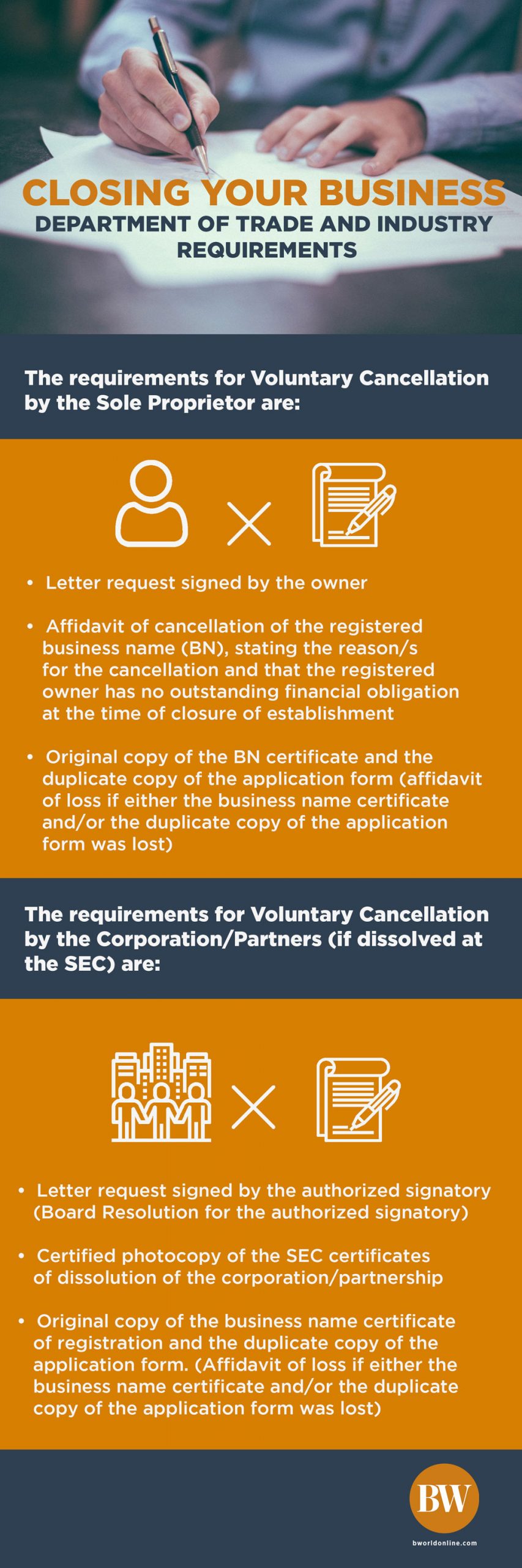
Closing a business may prove to be more expensive than opening one. That was what Andrew Pasaporte, co-founder of on-demand spa mobile app Sparadic, found out last month when he and his partner, Cha Rapadas, decided to close shop. Spararadic and the spa services in its roster are in the same boat as the 200 permanent business closures tallied by the Department of Labor and Employment during the COVID-19 pandemic.

‘THE FOODPANDA OF SPAS’
“There were several things that we didn’t anticipate,” Mr. Pasaporte shared. “As first-time app creators, we had a high burn rate. By the middle of 2019, we had to slow down our operations and turned our focus on development. Impacted by the pandemic, many of our partner providers have closed due to the lack of business. Spa services are not essential at this time, and our company relies only on these providers.”

Sparadic was founded in 2017 to meet the need for on-demand spa services. Officially launched the following year, its main goal was to become the “Foodpanda of spas” and give users a choice of spa providers to service them on-demand.

“In hindsight, if it weren’t necessary, we would’ve chosen not to register the business immediately. We were excited about the new company that we didn’t think of the eventuality of closing,” Mr. Pasaporte added. “From the start, we should’ve done some research on business closure, a rookie mistake.”

LIKE BEING KICKED WHILE YOU’RE DOWN
Negative cash flow was the reason for permanently closing Sparadic, a non-essential business. “The core of our business is wellness—and physical interaction is required. It is our responsibility to make sure we do not put our users and providers at risk. To put it bluntly, we do not want to promote virus transmission.”

Continued Mr. Pasaporte: “Closing the business has been challenging. It’s like being kicked while you’re down. You suffer twice. First, from your business closing, that’s a given. Then you have to go through all the unnecessary stress of dealing with different offices. The process is similar to registering a business but more tedious. Factor in the pandemic, government offices are not working at full capacity. Also, penalties that you’re not aware of may suddenly appear.”

An additional challenge is the fact that while Sparadic is registered in Metro Manila, the founders are currently in other parts of the country and are thus unable to fix things in the barangay and city where the business is registered.

A CONSIDERABLE AMOUNT OF LEGWORK AND RESOURCES
Closing a business requires a considerable amount of legwork and consumes a lot of resources.

“We spoke to two companies who offer legwork for business registrations, and asked if they also do closures,” Mr. Pasaporte said. “One was a virtual office, and the other one’s main business was just to assist people with government offices. The quoted fees were between P25,000 and P30,000: too expensive for a business that’s closing. Ideally (if this was pre-pandemic and we were in Metro Manila), we should be able to bring the costs down to maybe a quarter by doing the government queues ourselves.”

“There’s also the BIR, and you might be slapped with penalties you were not expecting. You can appeal your case, but it still can be a stressful ordeal. We can only dream that one day our government offices go fully online, and we don’t have to go through all the bureaucracy. It’s a unique time and everything seems more difficult.”

ADVICE FOR THOSE IN THE SAME BOAT
Among the pieces of advice Sparadic’s founders gave included saving up for closure and a lot of patience with the process, as closing a company officially may take years.

Mentioned too was the wisdom of seeking advice from peers and mentors: “We’ve received a lot of support from members of the Startup PH Facebook group. LegalTree, one of the startups in the group, reached out and gave us great advice. If anyone else wants to extend a hand, we’d really appreciate it.”

As Mr. Pasaporte reflected, “While we had to close, the business journey has been a great learning experience overall. It has inspired us to adapt and venture out to other businesses.”

Hundreds of scientists say coronavirus is airborne, ask WHO to revise recommendations — NYT

Hundreds of scientists say there is evidence that novel coronavirus in smaller particles in the air can infect people and are calling for the World Health Organization to revise recommendations, the New York Times (NYT) reported on Saturday.

The WHO has said the coronavirus disease spreads primarily from person to person through small droplets from the nose or mouth, which are expelled when a person with COVID-19 coughs, sneezes, or speaks.

In an open letter to the agency, which the researchers plan to publish in a scientific journal next week, 239 scientists in 32 countries outlined the evidence showing smaller particles can infect people, the NYT said.

The WHO did not immediately respond to a request for comment from Reuters.

Whether carried by large droplets that zoom through the air after a sneeze, or by much smaller exhaled droplets that may glide the length of a room, the coronavirus is borne through air and can infect people when inhaled, the scientists said, according to the NYT.

However, the health agency said the evidence for the virus being airborne was not convincing, according to the NYT.

“Especially in the last couple of months, we have been stating several times that we consider airborne transmission as possible but certainly not supported by solid or even clear evidence,” Dr. Benedetta Allegranzi, the WHO’s technical lead of infection prevention and control, was quoted as saying by the NYT. — Reuters

Back to work? Not without a check-in app, immunity passport

BANGKOK — To go anywhere in Singapore these days, Joni Sng needs mobile phone apps and other technologies: a QR code to enter shops, a digital map to see how crowded a mall or park is, and a tracker to show if she was near someone infected with the coronavirus.

For the roughly 5.6 million people in Singapore, these actions are routine as the government eases restrictions placed to contain the spread of the disease.

“The apps are quite convenient and easy to use, and I feel a little safer knowing that everyone else is also using them,” Ms. Sng, a videographer, told the Thomson Reuters Foundation.

“It has become very natural to click on the apps while going somewhere, just like wearing a mask,” she said.

Singapore, along with Taiwan, South Korea and China, was quick to embrace technology to map the coronavirus outbreak early on with contact tracing, robots and drones.

Now, countries and businesses are mandating technologies as people return to work and begin to travel, with apps, scanners, check-in systems, and so-called immunity passports.

These are particularly needed in big cities that tend to be more densely populated, with more points of contact for the population, ranging from public transit to bars and restaurants.

“As Singapore restarts its economy, data-driven tech solutions will play a crucial role in helping the nation safely and successfully get back on its feet,” Singapore’s Government Technology Agency said in a statement last week.

HARM’S WAY

COVID-19, the illness caused by the new coronavirus, has infected more than 10 million people worldwide and killed over 500,000, pushing governments and companies to innovate quickly on everything from quarantines to ventilators.

Many have turned to technologies based on big data, such as facial recognition software, that have raised fears of surveillance and privacy risks, but which authorities say are needed to track the disease and keep people safe.

China’s health code app was among the first off the block, showing whether a user is symptom-free in order to take the subway or check into a hotel.

In India, authorities have made the contact-tracing mobile app Aarogya Setu mandatory for everything from taking public transit and boarding flights to going to work.

But these tools exclude vulnerable and marginalized populations, including those without smartphones, said Malavika Jayaram, executive director of the Digital Asia Hub think tank.

“When tools that are supposedly enabling exclude those without the right devices, the same technology that opens doors for some, closes them for others, and can serve as a barrier, not a leveller,” she said.

“This raises the risk of the digital divide turning into a new sort of ‘privacy divide’,” she said.

“Those with new smartphones can stay safe, remain social and return to a semblance of normal life. Those with feature phones will be barred from spaces and activities, or be unduly surveilled in order to participate in society.”

In some cases, lives are at stake.

Dozens of people are stranded between warring groups in eastern Ukraine because the government requires them to download a coronavirus tracking app, and is denying entry to anyone who doesn’t have a smartphone, according to Human Rights Watch.

“People have had to camp out, in some cases overnight, in the middle of an active military conflict, just because they didn’t have a smartphone to download an app,” said Laura Mills, a researcher at the advocacy group.

“This highly invasive app is clearly putting people … further in harm’s way,” she said.

NOT FAIR

The debate around fairness and equity is set to intensify, with growing concerns that as workplaces open and international travel resumes, workers and travellers may be required to provide proof of immunity as a condition of entry.

One of the options being considered is an immunity passport, which collects testing data and enables people to share their immunity status with an employer or airline.

Estonia has started to test one of the world’s first digital immunity passports, with countries including Chile, Germany, Italy, Britain, and the United States also said to be exploring the option.

The World Health Organization (WHO) has been quick to discredit immunity passports and the notion that the presence of antibodies in a previously infected person makes them immune.

“There is not enough evidence about the effectiveness of antibody-mediated immunity to guarantee the accuracy of an immunity passport or risk-free certificate,” it said in April.

But that has not stopped firms from diving in: UK-based tech firm VST Enterprises said it has started shipping its digital health passport, Covi-Pass, to companies and governments in more than 15 countries including France, Canada and India.

IDnow, a German technology firm, has said it is in talks with the UK government for immunity passports.

Firms are also developing their own systems including Bluetooth-enabled devices, and using artificial intelligence to track employees’ movements and social distancing.

Indonesia is considering an immunity or vaccination certificate, said Djarot Andaru, a researcher at the University of Indonesia who is advising the government on air transport protocol as travel restrictions are lifted.

“The worry is that the tests are expensive and not widely available, so not everyone can access or afford them. That may lead to greater hardship and also fake certificates,” he said.

“When there is a vaccine, and if it is widely available and accessible to all, then a vaccination certificate can be an option. Otherwise, it would not be fair to everyone,” he said.

Meanwhile, Singapore has started handing out Bluetooth-enabled contact tracing devices, starting with elderly people who are vulnerable to infection and may not own smartphones.

A remote-controlled robot dog, fitted with sensors and cameras, and a recorded message to remind visitors in Bishan-Ang Mo Kio park to keep a safe distance, may be deployed in other parks and for other COVID-19 uses, authorities have said.

“The Bluetooth devices are good — they won’t drain the phone battery, and are easier for older people to use,” Ms. Sng said. “But the robot dog – some people thought it a bit extreme, some were worried about what else it can do.” — Thomson Reuters Foundation

Related: [B-SIDE Podcast] Flying blind: Making the case for a surveillance and monitoring system

Nickel Asia, among first responders to COVID challenge with a tab of more than P50M

Nickel Asia Corp. (NAC) acknowledges the threats of any possible crisis in the communities by immediately activating the company’s built-in system of methodically responding to any emergency.

So when President Rodrigo Duterte declared the Enhanced Community Quarantine (ECQ) on March 15 as response to the threat of COVID-19, NAC through its subsidiaries – Cagdianao Mining (CMC), Dinapigue Mining (DMC), Hinatuan Mining (HMC), Rio Tuba Nickel Mining (RTN) and Taganito Mining (TMC) with Emerging Power, Inc. (EPI) and Cordillera Exploration Inc. (CExCI) – started expending more than P50 Million pesos from these companies’ realigned Social Development Management Program (SDMP) and Corporate Social Responsibility funds.

Mining companies regularly assume the role of ‘first-responders’ during natural calamities such as typhoons and/or earthquakes, ensuring that the people in the mining communities get the necessary assistance they need. And the threat of COVID-19 was no difference.

Mining companies are mandated by law to be responsible for the communities where they operate – designing and funding programs that provide jobs and boost the local economy in a sustainable manner.

The SDMP is a five-year plan budgeted to use as tool for the implementation of development programs in the mining communities, which the Mines and Geosciences Bureau (MGB) has allowed to be realigned to assist the mining companies’ host communities during the pandemic.

The accumulated P50M were used in part to buy sacks of rice, food packs, vitamins, and medical supplies such as alcohol and hand sanitizers that were distributed to thousands of families and frontliners. Some of the funds were used to build isolation and disinfecting facilities and to fund the extensive information campaign necessary to educate the communities about the pandemic and how they can be protected from the virus.

The Emergency Response Teams (ERTs) and Community Organizers (COs), whose members are regular employees of these mining companies, were immediately deployed to help the people cope with the health crisis as soon as movements in the mining communities were restricted and the residents compelled to stay home.

Food is the first requirement during a crisis, then medicine and first-aid kits, you have to have a steady supply of these to make the people feel protected, then everyone needed guidance and information so we provided those too,” says Engr. Arnilo C. Milaor,Resident Mine Manager for CMC.

A separate budget of P18M was turned over to the Philippine Red Cross (PRC) to build a molecular testing laboratory in Surigao City to support the province’s efforts for early detection of COVID-19 cases.

“The lab will be built with the P18M funding from Taganito HPAL Nickel Corp. and from NAC subsidiaries – TMC and CMC. The host province of Surigao del Norte will provide the location while PRC will be the lead in the overall operations of the facility,” explains Engr. Artemio E. Valeroso, Resident Mine Manager for TMC.

As ‘first responders’, the mining companies also took care of the challenge of the face masks – the first supply to run out in the early days of the ECQ. The COs rallied the residents and employees to make washable masks and face shields that the companies bought and provided to families, employees and frontliners. NAC companies contributed more than 50,000 washable face masks and face shields allowing residents and frontliners in far-flung areas to have protection against the virus.

It is in our DNA as responsible miners, to be present at every opportunity to protect the people in the mining communities, we are mandated by law yes, but our support go above and beyond,” says Engr. Francis J. Arañes, Jr., Resident Mine Manager for HMC.

[B-SIDE Podcast] Flying blind: Making the case for a surveillance and monitoring system

Follow us on Spotify BusinessWorld B-Side

Without a sentinel surveillance system, tech entrepreneurs Paul Rivera and Danny Castonguay believe that the country is flying blind when it comes to the coronavirus outbreak. “We’re just guessing. And guessing is a dangerous game when people’s lives are at stake,” said Mr. Castonguay.

Those who are tasked with protecting us need reliable numbers and a way to process those numbers in order to identify trends and get ahead of the virus. According to the World Health Organization, a sentinel surveillance system is used when high-quality data are needed about a particular disease. It can be used to monitor and detect when and where an outbreak starts, and, in the context of COVID-19, provide information that can be used as the basis for targeted lockdowns.

Mr. Rivera and Mr. Castonguay are behind COVID Sentinel AI, a platform that can help policymakers and business leaders make informed decisions using self-reported data.

In 2012, Mr. Rivera and Mr. Castonguay co-founded of Kalibrr, an IT company providing hiring solutions in Southeast Asia. In 2013, Mr. Castonguay left Kalibrr to pursue other projects, among them bld.ai, which teaches people how to build human-centered AI products.

The two men teamed up once more for COVID Sentinel AI, which has doctors from the University of Montreal and the University of Chicago providing medical expertise.

In this episode, the founders of COVID Sentinel AI explain the advantages of using a surveillance and monitoring system to BusinessWorld reporter Gillian M. Cortez.

TAKEAWAYS

To prevent another national lockdown, we must have a system that uses all of the data being captured. 

Compared to e-mail and spreadsheets (the tools that many companies are relying on to monitor the health of their employees), COVID Sentinel AI is more secure and robust. “It’s the easiest and most critical way to get population data on how our employees are doing, how they are feeling, and whether or not we need to isolate individual populations in individual groups and individual teams that may be showing symptoms of COVID,” said Mr. Rivera, who added that the sentinel platform gives companies the means to process data they are already collecting (think of temperature checks — where does that information go and how is it aggregated?).

“Businesses are essentially flying blind” without a sentinel system.

Without reliable mass testing and/or a vaccine, the founders of COVID Sentinel AI believe that businesses are “flying blind.” They say that a sentinel system is critical so that cities such as Metro Manila don’t revert to another enhanced community quarantine. If users get into the mode of self-reporting and entering their data into the platform, policymakers and business leaders can then make informed decisions at a more granular level.

Developers should consider user experience: ease of use improves compliance.

Available in Tagalog, with several other dialects on the way, COVID Sentinel AI is mobile-friendly and can be accessed on any device; it also provides an easy way for system administrators to follow up. Having the system available in local languages was important for the founders, as they wanted to develop a system that anyone could understand and use. “If you can access Facebook, if you can access Messenger, you can access COVID Sentinel,” Mr. Castonguay said.

Recorded remotely on April 28. Produced by Nina M. Diaz, Paolo L. Lopez, and Sam L. Marcelo

Follow us on Spotify BusinessWorld B-Side

Analysts’ June inflation rate estimates (2020)

INFLATION may have slightly picked up in June with upward pressure mainly from rising prices of oil and rice, according to analysts. Read the full story.

Analysts’ June inflation rate estimates (2020)

Inflation uptick seen in June — poll

An uptick in food prices was felt in June, as the nationwide price freeze on all basic necessities ended on May 15. — REUTERS

By Luz Wendy T. Noble, Reporter

INFLATION may have slightly picked up in June with upward pressure mainly from rising prices of oil and rice, according to analysts.

A BusinessWorld poll of 16 economists last week yielded a median estimate of 2.2% for headline inflation in June, still slower than the 2.7% a year ago but a tad faster than the 2.1% in May.

If realized, this would be nearer the lower end of the 1.9%-2.7% estimate range by the Bangko Sentral ng Pilipinas (BSP) and well within the 2-4% target inflation this year.

So far, the average increase in the Consumer Price Index from January to May stood at 2.5%. BSP’s latest average inflation outlook for this year is at 2.3% and 2.6% for 2021.

The Philippine Statistics Authority will report the June inflation data on July 7 (Tuesday).

“Higher gasoline, diesel, and kerosene prices were observed together with the food basket as more economic activities resume,” Security Bank Corp. Chief Economist Robert Dan J. Roces said.

Recent data showed global oil prices are gradually recovering from their lows in April, supported by the extension of record supply cuts by major oil producers to July from the initially planned May-June period.

Also, the imposition of the additional 10% tariff on oil imports drove pump prices higher last month. The imposition of the additional tariff, which aimed to generate funds for the government’s pandemic response, ended on June 25 with the lapse of Republic Act No. 11469 or the Bayanihan to Heal as One Act.

Rizal Commercial Banking Corp. Chief Economist Michael L. Ricafort said the gradual easing of restriction measures may have resulted in an uptick in prices due to higher demand.

“Inflation could slightly pick up in June as economies further reopen from lockdowns thereby leading to some gradual pickup in business and economic activities that result in some pickup in demand and spending activities, which fundamentally result in some uptick in the prices of some goods and services,” he said.

On the other hand, downside risks to inflation include lower liquefied petroleum gas (LPG) prices and electricity rates but “may not be enough to offset the uptick in oil and basic commodity prices,” UnionBank of the Philippines, Inc. Chief Economist Ruben Carlo O. Asuncion said.

Manila Electric Co. (Meralco) earlier said overall rates for June declined by P0.0216 per kilowatt-hour (kWh) to P8.7252/kWh from the P8.7468/kWh logged in the prior month. This means that households with electricity consumption of 200 kWh, 300 kWh, 400 kWh, and 500 kWh had their bills reduced by P4, P6, P9, and P11, respectively.

Meanwhile, Sun Life Financial Economist Patrick M. Ella said another offsetting factor would be the postponement of classes as tuition fees form part of the education sub-index.

“[T]uition fee impact is not significant this year (June typically sees a bump in education prices sub-sector of the Consumer Price Index) due to COVID-19 suspending face-to-face classes until a later date,” Mr. Ella said.

With inflation levels still in a benign territory, analysts said the central bank continues to have policy space for more easing, but may do so with reservation as it awaits fiscal policy to catch up with stimulus.

“Inflation hovering near the bottom of the BSP’s target range will see the BSP maintain an easing bias with further insurance cuts to aid in the recovery on the table in coming months, particularly if more fiscal support is not forthcoming,” Makoto Tsuchiya, an economist at Oxford Economics, said.

Meanwhile, Jessie Lu, an economist from Continuum Economics, said the central bank may already be “near the end of its easing cycle” after the latest cut worth 50 basis points (bps).

“The central bank is likely to assess the impact of its actions so far, as a series of monetary easing by the BSP and fiscal stimulus by the government are likely to gradually drive a recovery,” she said.

The central bank unexpectedly slashed policy rates by 50 bps on its third policy-setting meeting on June 25. This reduced the overnight reverse repurchase, lending, and deposit rates to record lows of 2.25%, 2.75%, and 1.75%, respectively.

BSP Governor Benjamin E. Diokno said the benign inflation environment allowed them to cut rates anew to curtail the impact of global risks on the country’s growth prospects and to boost market confidence.

“With the policy rate now at 2.25%, the scope for further policy rate cuts may be limited in the meantime with the real interest rates nearing zero,” Mr. Roces said.

The central bank has already unleashed cumulative cuts worth 175 bps this year, following the 75 bps in 2019. The 250-bp rate reductions have already more than offset the 175 bps of rate hikes in 2018 when inflation soared.

The Monetary Board’s fourth policy-setting meeting is scheduled on Aug. 20.

Analysts’ June inflation rate estimates (2020)

PHL economy could shrink by 4.5% in 2020

PASSENGERS wearing masks for protection against the coronavirus disease wait for a jeepney in Quezon City, July 3. — REUTERS

THE ECONOMY could contract by as much as 4.5% this year as the rise in coronavirus infections and implementation of lockdown measures continue to dent consumption, Moody’s Investors Service said.

“In light of the continuation of containment measures and a continued deterioration in external demand, we now forecast real GDP (gross domestic product) growth in the Philippines at -4.5% for 2020, rebounding to 6.5% in 2021,” Christian de Guzman, Senior Vice-President, Sovereign Risk Group at Moody’s said in an e-mail to BusinessWorld.

The new projection is worse than the -2% that Moody’s gave in May and a reversal from the 6.2% it gave last year. Meanwhile, the 6.5% growth outlook for 2021 is slightly faster than the previous 6.4% projection.

Fitch Ratings earlier gave a -4% forecast for the Philippine economy, while S&P Ratings projected -3% for this year.

The government, on the other hand, expects GDP to contract by 2-3.4% this year. In the first quarter, the economy shrank by 0.2% on the impact of the Taal Volcano eruption, the coronavirus pandemic and the subsequent lockdown in mid-March.

“Our lower growth forecasts also reflect a view of a less robust recovery over the second half than previously expected, in part reflecting how the ongoing rates of infection have precluded a more decisive move away from the various stages of community quarantine,” Mr. De Guzman said.

Restrictions have been gradually eased since May to allow the resumption of businesses. Most areas in the country are now either under modified general community quarantine or general community quarantine except for Cebu City, now considered the epicenter of the outbreak.

Since the easing of the lockdown, coronavirus infections have continued to accelerate. On Sunday, the Health department announced 2,434 new cases, the highest single-day tally so far. This brought total confirmed patients to 44,254, with recoveries at 11,942. The death toll stood at 1,297.

“Greater progress on lowering rates of infection — both in the Philippines and abroad — may be the most important determinant shaping the strength of the recovery,” Mr. De Guzman said.

A better handling of the pandemic will also bode well for employment of overseas Filipino workers (OFWs), he added.

More than 68,000 OFWs have already been repatriated as of July 4, data from the Department of Foreign Affairs showed.

“More effective containment of the global outbreak that leads to a normalization in the cross-border movement of people will also allow for the resumed deployment of OFWs, not to mention stem job losses and wage cuts to existing OFWs,” Mr. De Guzman said, noting that travel and tourism will also improve once this happens.

The country relies heavily on OFW cash remittances, which supports consumption that makes up 70% of the economy. In March, cash remittances dropped by 4.7% to $2.397 billion due to the pandemic and tensions in oil-producing countries.

The central bank now expects cash remittances to decrease by 5% this year, a reversal from the 2% growth forecast in May as well as the 3% estimate in November.

Mr. De Guzman said the outlook looks grim for many sectors of the country’s consumption-dependent economy.

“Restrictions on movement will weigh on related sectors such as wholesale and retail trade; increased government spending, including on infrastructure, and monetary easing to boost private investment may also be less effective in providing countercyclical stimulus in the context of social distancing,” he said. — Luz Wendy T. Noble

Firms told to inform SEC if they cannot file annual reports

PUBLICLY listed companies and those with registered securities should inform the Securities and Exchange Commission (SEC) this week if they are having difficulty in filing the 2019 annual reports and 2020 first-quarter reports.

In a July 3 notice posted on its website, the SEC said it is giving five days from the notice’s issuance for companies to file their SEC Form 17-L, or the notice of inability to file annual reports and quarterly reports.

This after the June 30 deadline to file the said reports lapsed. The regulator earlier gave a 60-day deadline extension, acknowledging the problems faced by companies in submitting the reports amid the lockdown.

“Despite the aforesaid (deadline) postponement, concerned companies, or through their representatives, have filed queries for additional extension…[I]n view of the lapse of the period provided… concerned companies are given five days from issuance of this notice to file their respective SEC Form 17-L,” the SEC added.

It noted the non-filing of the SEC Form 17-L within the prescribed period will warrant consequences and will be treated on a case-to-case basis.

The SEC in March issued a memorandum circular extending the deadlines for the filing of annual reports to accommodate companies that are challenged by quarantine restrictions.

Companies that operate domestically were given until June 30 to submit their filings, while those that have foreign operations have until 60 days from the date of lifting of travel restrictions to submit. — Denise A. Valdez

Gov’t mulls ban on online sale of cigarettes, liquor

By Beatrice M. Laforga, Reporter

THE government may ban online sales of cigarettes and alcoholic beverages if sellers are found to have sold these so-called “sin” products to minors.

“We will move to ban online sales of cigarettes & liquor,” Finance Secretary Carlos G. Dominguez III told reporters via Viber when asked about the possibility that sin products are sold online to people under 18.

Trade Secretary Ramon M. Lopez told BusinessWorld the government can prohibit the sale of cigarettes, liquor and electronic cigarettes (e-cigarettes) on online platforms, if sellers are not registered and do not check a customer’s age before completing a sale.

“We can ban (the) online (sale of) cigarettes, liquor, e-cigarettes and similar devices. Especially if sellers are not registered and they don’t get profile of buyers and if they don’t assure if buyer is no longer minor,” Mr. Lopez said in a phone message on Sunday.

He said they still need to establish a system where online sellers can register with the Department of Trade and Industry (DTI) and the Bureau of Internal Revenue (BIR) to ensure they comply with product standards and conduct customer checks.

“These can be done by direct company online sales and major platforms that should be registered,” he said, noting companies can get the profiles of buyers to verify if they are minors.

For unregistered sellers, “they must be banned,” Mr. Lopez said.

Sale of tobacco products and alcoholic drinks to minors are prohibited.

The DTI is seeking to amend Republic Act No. 7394 or the Consumer Act of the Philippines to include rules for the e-commerce industry.

Alcoholic drink products are being sold on e-commerce platforms such as Lazada and Shopee. A pop-up message appears before customers can view and buy the products sold by verified sellers, asking them if they are over or under 18 years old for Lazada and 21 years old for Shopee.

However for cigarettes, a simple search on these online platforms showed packages of different brands of cigarettes were being sold by various, unverified sellers. However, there are no pop-up messages asking for the customer’s age.

Collections from excise taxes on “sin” products have slumped due to the lockdown and liquor bans imposed by local governments.

Preliminary data from the Finance department showed excise tax collections from alcohol and tobacco products dropped 43% to P11.9 billion in May, albeit at a slower pace compared with the sharp 99% decline seen in April. This brought year-to-date collections to P63 billion, still down 39% from a year ago.

The Department of Finance (DoF) is looking closely at the e-commerce industry, which has seen sudden growth during the lockdown.

In June, the BIR, an attached agency of DoF, issued Revenue Memorandum Circular (RMC) No. 60-2020 giving online sellers until July 31 to register their business with the bureau or update their registration.

“As part of the government’s efforts to implement a tax collection program on digital transactions, the BIR issued RMC No. 60-2020 to remind everyone in the Philippines who are engaged in online selling of goods and services to register with the BIR,” Mr. Dominguez said in a June statement.

For value-added tax (VAT) purposes, businesses that have gross receipts of less than P3 million are exempted from VAT.

The Tax Reform for Acceleration and Inclusion Act also exempts taxpayers earning P250,000 a year from income tax.

“Registering with the BIR not only helps the government generate additional revenue for its various projects. Joining the formal economy also ensures that these businesses and their employees are eligible for government assistance programs,” Mr. Dominguez has said.

DoF and BIR are studying how to tax the digital economy. The DoF estimated the government could raise an incremental revenue of P14-17 billion from the 12% VAT charged on online transactions.

ADVERTISEMENT
ADVERTISEMENT