COUNT on the rookies to make their presence felt in the Philippine Basketball Association (PBA).
That has been the case for most of the new entrants in the league in the ongoing PBA Philippine Cup “bubble” happening at Clark City in Angeles, Pampanga.
Now on its third week of staging, the ongoing league tournament has been an eventful one, with the performance of this season’s rookies among those standing out.
Barkley Ebona of the Alaska Aces, Adrian Wong of the Rain or Shine Elasto Painters, and Roosevelt Adams of the Terrafirma Dyip are having it solid to date.
Guys like Myke Ayonayon (NLEX), Sean Manganti (Northport), Arvin Tolentino (Barangay Ginebra), and Aaron Black (Meralco), meanwhile, are proving to be steady contributors in their respective teams’ rotation.
Number four pick Ebona from Far Eastern University has been steady for the Aces (3-3) with norms of 10.17 points and 3.5 rebounds.
He has been doing his share for the frontline of Alaska, which is missing the services of veteran big man Sonny Thoss, who decided to skip the ongoing tournament while also assessing his future in the league.
Mr. Ebona had his best game in his young PBA career on Oct. 20 against the Blackwater Elite where he had 24 points, on an efficient 10-of-11 shooting from the field, in leading his team to the 120-82 victory.
For his efforts in said game, the Cebuano player was adjudged the best player,the second rookie to accomplish such a feat in the bubble.
Mr. Wong, the fifth pick from Ateneo, meanwhile, has earned increased minutes as the tournament progresses for Rain or Shine (3-1).
He has been averaging 7.5 points and doing well as one of the playmakers in the rotation of coach Caloy Garcia.
Mr. Wong was the first to be named best player of the game in the bubble, which he achieved by scoring 15 points in their hard-earned 70-68 win over the Northport Batang Pier on Oct. 18. That led to him being named the first rookie of the week for the tournament.
The ROS rookie credits the confidence given to him by his coach and the team for his improving performance, something he hopes to continue building on.
Terrafirma has had hard luck so far in the Philippine Cup, winless in their first four games.
But one of the bright lights for the Dyip is the play of rookie top pick Adams, who has been good for 11.25 points and 7.75 rebounds.
By his own admission, he said he is still adjusting to the style of the PBA, but still has support of his teammates and coaches.
Messrs. Ayonayon (7 ppg and 3 rpg), Manganti (5.8 ppg and 3.4 rpg), Tolentino (6.4 ppg and 2.4 rpg), and Black (8.8 ppg and 2.2 apg) were initially eased into the swing of things but has earned minutes with their quality play.
Others rising to the challenge when called up include Clint Doliguez (ROS), Aris Dionisio (Magnolia), Will McAloney (NLEX), and Renzo Subido (Northport). — Michael Angelo S. Murillo
HEALTHY living and active lifestyle among women is the focus of the about-to-start Philippine Sports Commission (PSC) web series beginning on Wednesday.
Dubbed Rise Up! Shape Up!, the PSC campaign is designed to motivate women and girls to integrate simple movement and workouts into their day-to-day living, especially during these times with the pandemic and various quarantine setups.
“We encourage our women and girls to rise above the situation while shaping up an active lifestyle adaptive to the so-called New Normal,” said PSC Chairman William Ramirez of the Rise Up! Shape Up! campaign in a statement.
He went on to underscore that the sports agency’s latest program is part of their efforts to help in the nation’s fight against the coronavirus pandemic.
The campaign, too, is to recognize the important role of women in sports in leading the movement towards a better active living moving forward, said PSC Commissioner Celia H. Kiram.
“I see women, especially those who balance work and the household, who are overwhelmed by this pandemic. They need to handle two or more responsibilities simultaneously while working from home. Aside from the anxiety and fear caused by the virus, they are also weighed down by work and household responsibilities,” Ms. Kiram shared.
Adding, “Rise Up! Shape Up! will have our women athletes and sports icons share practical tips in helping manage responsibilities by promoting mindful movement and active living amidst the current situation.”
For the initial episode of the web series beginning Wednesday, happening from 10:30 a.m. to 12 noon, the focus will be Mindful Lifestyle for Women, which centers on restoring calm and balance in a time of pandemic.
It will be headlined by Asian Games gold medalist and equestrienne Mikee Cojuangco-Jaworski and popular volleyball player and Philippine national team member Alyssa Valdez as they recount the pandemic’s impact on their active lifestyle and inspire women to keep fit.
The first episode will also have Dr. Marissa M. Guinto, sport psychologist and associate professor and research director of the College of Human Kinetics of the University of the Philippines, Diliman, who will talk about physical activity and mental wellness.
On tap, too, is Eileen Tupaz, co-founder of White Space Mind and Body Wellness Studio, yoga and meditation teacher trainer (E-RYT500), Reiki Third Degree Teacher, and certified Eating Psychology Coach.
For more information on the Rise Up, Shape Up campaign, visit its official Facebook page at https://www.facebook.com/riseupshapeup. — Michael Angelo S. Murillo
Jeers greeted manager Dave Roberts as he left the dugout to relieve Clayton Kershaw with two outs in the sixth inning of Game Five of the World Series the other day. The homegrown ace appeared to be having a grand outing, retiring the last eight batters and rolling with a relatively fresh arm off counts of 56 strikes on 85 pitches. He wasn’t taking any chances, though; he stuck to a plan that had nothing to do with the would-be Hall of Famer’s snakebitten postseason history and everything to do with advanced metrics. And so he proceeded to hand the ball and a two-run lead to his bullpen, confident that the final score would be to his liking.
Kershaw took the development in stride even as most of the 11,437 fans in Globe Life Field — who breathed Dodger Blue to turn the supposedly neutral Texas site and supposed road outing into a veritable homestand — did not. They wanted him to preserve the advantage. They wanted to be sure of the outcome, and not simply because the bizarre ending of Game Four underscored the absence of certainty in Major League Baseball. And, yes, they probably figured he had earned the opportunity to exorcise the demons that plagued him in playoffs past. As far as Roberts was concerned, though, he had absolutely nothing to prove. He had already done his job, and it was time for others to do theirs.
Which, as things turned out, was exactly what the Dodgers did. Three and a third innings of scoreless relief brought them victory and a chance to close out the World Series today. There’s cause to contend that they should have been crowned champions by now; the stats show them to be vastly superior to the Rays throughout the best-of-seven affair. And had they not committed a string of miscues that Roberts termed an “unperfect storm” to snatch defeat from the throes of triumph in Game Four, they may well be celebrating already.
The sport is what it is, however, and Roberts counters its fickle nature by playing the probabilities from a vantage point only his singular experience and focus can provide. And if the Dodgers are a win away from the title, it’s because he has rightly stuck to his guns. He knows that while the Rays are very, very good, his charges are better. He just has to keep putting them in position to succeed.
Anthony L. Cuaycong has been writing Courtside since BusinessWorld introduced a Sports section in 1994. He is a consultant on strategic planning, operations and Human Resources management, corporate communications, and business development.
Social media users should take responsibility for what they post and share online, just like any media outlet or publication, according to experts in the field.
“One status written is already us being producers of information. The articles that we choose to read online is us already being critical consumers of information. When we click that ‘share’ button on a specific story or status, that’s us being distributors of information,” said Val Vestil, executive director of non-profit organization Association of Young Environmental Journalists (AYEJ), during the opening of Media Civics Lab 2020–21.
To promote media literacy, netizens should adopt an attitude of skepticism as a baseline. They must learn to genuinely listen to other people’s opinions, engage with them in a critical manner, and identify questionable accounts from there. “Normally… [fake news] perpetrators hide behind fake names or they won’t cite their source,” said Justin Joyas, head of social media for news at GMA Network.
Skepticism should be accompanied by fact-checking. “Learn to triangulate information, and this applies even if it validates what you already think—perhaps even more so—because confirmation bias is real,” said Sharmila Parmanand, a debate educator and analyst.
UNFOUNDED ON FACT The spread of misinformation can sometimes start without ill intent. In times such as the COVID-19 pandemic where fear and uncertainty are widespread, people will sometimes resort to fabricating theories which are unfounded on fact. This tendency, said Ms. Parmanand, is an attempt to draw comfort from the feeling of asserting control.
Unfortunately, these theories can be misconstrued as fact by others. Citing the latest Program for International Student Assessment (PISA)results, Roby Alampay, founder and chief executive officer of non-music audio production house Puma Public Productions, pointed out that students have a hard time distinguishing fact from opinion.
Poor media literacy is even more problematic considering that people rely on their social media feed for news without double-checking if they come from credible sources. Social media dictates 70% to 90% of traffic to online publications—this means that most people only consume what is pushed to them by the platforms’ algorithms, creating an “echo chamber” based on their biases and preferences, said Mr. Alampay.
While poor media literacy is certainly a problem among citizens, some media experts also do not discount the accountability of the government and social media companies. Richard Heydarian, a public educator and academic, said that the government must exert more pressure on social networks to crack down on fake news perpetrators, even when it may benefit their political agenda through tools such as troll farms.
“I’m not a fan of the Trump administration, but I think it’s a good thing that the Americans arefollowing through… to check, for instance, the monopolistic practices of Google and other big platforms,” he said.
1st leg of BusinessWorld Insights Sustaining Sustainability series calls on business to meet sustainability goals
By Adrian Paul B. Conoza, Special Features Writer
Sustainability has increasingly become an aim for many businesses, especially with the United Nations setting the agenda for member-states through its 17 Sustainability Development Goals (SDGs). With the coronavirus disease 2019 (COVID-19) gravely impacting the economy, however, achieving these goals must have been hampered.
Yet, for the panel in the first leg of BusinessWorld Insights Sustaining Sustainability series, the push for sustainable practices is not just timely, but also necessary for businesses. Held last Oct. 21, the online forum gathered fresh and relevant thoughts from leaders and professionals from both public and private sectors on the theme “The Philippines’ Sustainability State and COVID-19.”
Urgency in sustainability
Enrico Gaveglia, deputy resident representative of the United Nations Development Programme (UNDP) in the Philippines, recognized that the pandemic has disrupted the global efforts in meeting SDGs. Worse, the pandemic has made it more crucial and yet more challenging to address existing problems such as hunger, poverty, inequality, and climate change.
“The effects of the pandemic and the measures taken to mitigate its impact have overwhelmed health systems globally, kept [children] out of school, kept business and factories closed, and distracted the global value chain and supply of products. It is [also] expected to push 71 million people back to extreme poverty, and cause 132 million more people to suffer from undernourishment in 2020,” Mr. Gaveglia added.
This apparent regression in fulfilling SDGs, he continued, caused as well a regression in human development, with many Filipino households having experienced loss of income and even experiencing voluntary hunger and food insecurity.
With these underlying issues further stressed by COVID-19, Mr. Gaveglia believes that there is now an increasing need for businesses to move towards sustainable recovery.
“Many countries are embarking on a great reset, taking the painful lesson from COVID-19 to rebuild greener economies and promote greater collaboration between governments and the private sector,” he said. “Companies should rethink their strategy, and contribute in the long way to generating green jobs and creating a more resilient economy.”
Businesses can redeploy their unique capabilities to meet society’s immediate needs, Mr. Gaveglia continued, who believes that consumers will give a premium on companies that are moving forward to a sustainable path.
Mr. Gaveglia also believes that moving towards sustainability makes a lot of business sense, since UNDP estimates that achieving SDGs in the country could open a lot of market opportunities in various sectors and help create new jobs.
He hopes as well that a ‘new social contract’ will be formed between societies and stakeholders. “We need to be conscious of the fact that… we all have a role to play, where all unload all of [their] selves. The moment we wire with each other, I think we can resolve this together,” he said.
‘Purpose should drive business’
Sharing from a trade perspective, Senen Perlada, director of Department of Trade and Industry’s (DTI) Export Marketing Bureau, also recognized the challenges the pandemic has brought on industries, exporters, as well as consumers — from the disruption in supply chains to the rapid change in consumer behavior.
But more importantly, the pandemic has brought a welcoming impact on businesses. “[T]he pandemic has redefined sustainability with social awareness… Businesses are now compelled to rethink social issues,” Mr. Perlada said.
Citing recent findings from Euromonitor, Mr. Perlada pointed out the further adaption of supporting local communities as a sustainability aim for businesses, from 51.4% of respondents taking that in 2019 to 65.8% in 2020. Furthermore, the year’s findings revealed that for businesses sustainability now also means achieving the SDGs and being a purpose-driven business.
The DTI director also noted that non-tariff measures have a multifaceted effect on sustainable development, especially as it was found out that 42.5% of these measures in the Asia Pacific region and globally address SDGs such as good health and well-being and responsible consumption and production.
Observing this accelerating move to sustainability, especially in what he expects to be a digital, green, and circular new normal for the global economy, Mr. Perlada encourages businesses to embrace the movement. Else, they might lose relevance and face extinction. “We all have a responsibility to ensure that future generations inherit a livable planet,” he added.
Mr. Perlada also advises businesses to shift their focus to their purpose, or why they are there for their customers. “We should really look at purpose as the new normal, individually and collectively as a nation and as a community of nations,” he said.
Being responsible
As he shared the sustainability journey of one of the country’s big players in the private sector, Timothy Daniels, investor relations consultant of SM Investments Corp., emphasized that the group is continuously driven to serve as a catalyst for development in communities.
“SM is a large group, but we are an ecosystem of many small businesses and stakeholders, and sustainability is about how do we make everyone win as we go forward and how do we go in the long term,” he said.
He shared that from focusing its efforts on UN’s 17 SDGs, SM narrowed it down to six goals, namely decent work and economic growth, sustainable cities and communities, climate action, good health well-being, quality education, and partnerships for the goals.
The group finds it will help stakeholders the most in these goals. “[W]e really assessed what is our business doing and capable of doing and where can we really make the most material difference in the Philippines, to the stakeholders and communities that we work with,” he explained.
Mr. Daniels also stressed that in spending on sustainability, what really counts is being responsible to communities as well as preparing for the future.
“It’s not just about spending money. It’s about stepping back and saying, ‘If we have the responsibility to all these stakeholder groups — and we need them for us to thrive and grow — then how do we use what we’ve got on the ground in order to make that happen?’,” he explained.
The consultant also noted that sustainability gains traction with shareholders. “Everybody is supportive that being responsible is the right thing for the business, and our shareholder base, I think, [will] reward us for this in the long term,” he shared.
BusinessWorld Insights Sustainability Series is made possible by Globe, Energy Development Corporation, First Gen Corporation, Meralco, media partner The Philippine STAR and e-learning
platform partner Olern; with the support of the Bank Marketing Association of the Philippines, British Chamber of Commerce Philippines, Financial Executives Institute of the Philippines, Management Association of the Philippines, and Philippine Chamber of Commerce and Industry.
The following is a roundup of some of the latest scientific studies on the novel coronavirus and efforts to find treatments and vaccines for COVID-19, the illness caused by the virus.
Higher death risk found if COVID-19 causes changes to heart
A new study may help identify which COVID-19 patients with signs of heart injury are at higher risk for death. Doctors looked at 305 hospitalized patients with elevated levels of troponin, a protein released when the heart has been injured. They reported on Monday in the Journal of the American College of Cardiology that among these patients, the increased risk for death was statistically significant only when changes in the heart’s size, shape, structure, and function were seen during an echocardiogram. Death rates were 5.2% in patients without troponin in their blood, 18.6% when troponin was high but hearts looked normal, and 31.7% in those with high troponin plus so-called heart remodeling. When other risk factors were considered, high troponin was only tied to death in patients who also had cardiac remodeling. COVID-19 patients with high troponin should undergo echocardiography “to guide further diagnostic testing and treatment strategies,” coauthor Dr. Gennaro Giustino of Icahn School of Medicine at Mount Sinai in New York City told Reuters. “Patients with a bad echo need much closer follow-up and more aggressive treatments,” said Dr. Carl Lavie of Ochsner Health in New Orleans, who coauthored an editorial on the study.
COVID-19 may be top cause of death among young adults in some US regions
In some areas of the United States during COVID-19 outbreaks, the new coronavirus likely became the leading cause of death among adults aged 25–44, researchers say. Using data from the US Centers for Disease Control and Prevention (CDC), they analyzed deaths from any cause in that age group from March through July, along with drug overdose deaths during the same period in 2018, the most recent year for which data are available. In three of 10 regions of the country, as identified by the US Department of Health and Human Services, deaths exceeded 2018 unintentional opioid overdose deaths during at least one month of the pandemic, researchers reported on Sunday on medRxiv, ahead of peer review. They were Region 2 (New York, New Jersey), Region 6 (Arkansas, Louisiana, New Mexico, Oklahoma, Texas), and Region 9 (Arizona, California, Hawaii, Nevada). It is not clear which states account for the most deaths in each region, coauthor Dr. Jeremy Faust of Harvard Medical School in Boston told Reuters. But data not included in the paper suggests that in New York, New Jersey, and Louisiana more people aged 20 to 39 “were dying of COVID-19 than opioids usually kills during the same time frame there,” he said. “Usually, opioids are the leading cause of death in these demographics all over the country.”
Antibiotic overuse may be rising during pandemic
Unnecessary use of antibiotics, which can lead to harmful bacteria developing resistance to life-saving medicines, has been on the rise during the coronavirus pandemic, according to new research. Data from 84 large US Veterans Affairs facilities collected for the period of January through May over the last six years show that antibiotic use at those hospitals jumped during the initial COVID-19 surge, reversing a four-year downward trend. While antibiotic use fell steadily from 2015 to 2019, in 2020 it reached “levels not seen since 2016,” Dr. Matthew Goetz of the VA Greater Los Angeles Healthcare System said on Friday during an annual meeting of infectious disease experts held virtually this year. While use of antibiotics was not directly linked to the number of COVID-19 patients being treated in each facility, “the pandemic provided new challenges to hospital systems that weren’t prepared to manage it—from an onslaught of patients to a shortage of rapid diagnostic tests,” Dr. Goetz said. The findings point to a weakening of antibiotic stewardship practices, he added. — Nancy Lapid/Reuters
LONDON — Making sure all girls are finishing secondary education by 2030 could boost the gross domestic product (GDP) of developing countries by 10% on average over the next decade, a report said on Tuesday.
Every $1 spent on girls’ rights and education would generate a $2.80 return—equivalent to billions of dollars in extra GDP, according to the study by rights group Plan International and financial services firm Citi’s Global Insights team.
“COVID-19 recovery plans that prioritize investment in girls’ education and well-being will help communities and economies build back better and stronger,” said Anne-Birgitte Albrectsen, chief executive of Plan International.
Some 130 million girls worldwide were already out of school before COVID-19, according to the United Nations cultural agency UNESCO, which said more than 11 million may not return to classes after the pandemic.
Girls are more likely than boys to miss out on school, UN children’s agency UNICEF says. Many families choose to invest in sons over daughters, while violence, poverty, and child marriage also impact their access to education.
The new report, which was based on a study of eight developing and emerging-market nations including India, Egypt, Uganda, Bolivia, and Laos, called for a “holistic” approach with measures spanning education, health, and violence-prevention.
Some low-income countries could struggle to ensure that all girls are completing their schooling within the next decade, the report said.
But it noted that the target is included in a set of ambitious development goals signed by world leaders in 2015, and that boosting women’s inclusion could help increase well-being and prosperity across wider society.
“Eradicating barriers to girls’ education and development may hold the key to achieving many of the UN Sustainable Development Goals,” said Andrew Pitt, Citi’s global head of research, in a written comment.
The study was welcomed by women’s rights group Equality Now, which said more action was needed to tackle gendered barriers to education.
“The ability to complete formal schooling as a child is critical to economic, social, and political success as an adult,” lawyer Alexandra Patsalides at Equality Now told the Thomson Reuters Foundation.
“When girls are shut out of these opportunities, it means a generation of women are also negatively impacted,” she said. — Sonia Elks/Thomson Reuters Foundation
Holiday shoppers braving the coronavirus pandemic to buy gifts in person are checking which stores are naughty or nice in terms of public health, a worldwide survey released on Monday showed.
About 79% of respondents want to see masks being worn, 82% demand visible cleaning efforts, and 76% prioritize reduced occupancy in stores, according to the survey by Oracle Retail, a unit of software maker Oracle Corp.
Contactless checkout and social distancing requirements are also paramount.
“Customers are eager to shop,” said Mike Webster, senior vice-president and general manager of Oracle Retail. “What consumers are looking for is basic levels of protection and safety and they’re looking for that confidence that their needs are being looked after.”
More than 5,100 consumers were surveyed in the United States, United Kingdom, Australia, China, Brazil, Mexico, Italy, France, Germany, and the United Arab Emirates in September.
The pandemic has killed more than 1.1 million people and infected more than 41.9 million worldwide, according to a Reuters tally.
Countries have imposed new restrictions as COVID-19 cases have risen again in recent weeks. Wales on Friday banned the sale of all non-essential goods in stores as part of a two-week lockdown, while regions in Italy have announced measures such as shuttering shopping centers.
San Francisco has capped occupancy for storefront retailers at 50% of the normal maximum. At the Californian city’s Union Square plaza, shoppers lined up outside the Apple Store and Gucci, where an associate took their temperature.
“A lot of the shops that I go to, they offer hand sanitizer and seem pretty up to date on all the equipment and everything that they have in the shop, so I feel safe going into stores,” said 26-year-old Antioch resident Teino Stingley.
Nearly 20% of survey respondents said they planned to shop in-store this holiday season, while 47% plan to split between online and in-store and 16% will opt for curbside pick-up.
“I feel too many people inside of a store makes me uneasy, so I’d much prefer an outside open-air environment,” said Param Sharma, 24. “And it’s more convenient to order it on the app, pull up curbside, and have them hand it to you.”
Fellow San Francisco resident Katrin Eyjolfsdottir, 27, plans to split her shopping between going online and visiting stores for the live experience.
“That’s a big part of the whole Christmas holiday spirit,” she said. “I think the stores are doing a good job of keeping everything clean and sanitized and following the procedures.” — Nathan Frandino/Reuters
WASHINGTON — The moon lacks the bodies of liquid water that are a hallmark of Earth but scientists said on Monday lunar water is more widespread than previously known, with water molecules trapped within mineral grains on the surface and more water perhaps hidden in ice patches residing in permanent shadows.
While research 11 years ago indicated water was relatively widespread in small amounts on the moon, a team of scientists is now reporting the first unambiguous detection of water molecules on the lunar surface. At the same time, another team is reporting that the moon possesses roughly 40,000 square kilometers of permanent shadows that potentially could harbor hidden pockets of water in the form of ice.
Water is a precious resource and a relatively plentiful lunar presence could prove important to future astronaut and robotic missions seeking to extract and utilize water for purposes such as a drinking supply or a fuel ingredient.
A team led by Casey Honniball of NASA’s Goddard Space Flight Center in Maryland detected molecular water on the lunar surface, trapped within natural glasses or between debris grains. Previous observations have suffered from ambiguity between water and its molecular cousin hydroxyl, but the new detection used a method that yielded unambiguous findings.
The only way for this water to survive on the sunlit lunar surfaces where it was observed was to be embedded within mineral grains, protecting it from the frigid and foreboding environment. The researchers used data from the SOFIA airborne observatory, a Boeing 747SP aircraft modified to carry a telescope.
“A lot of people think that the detection I’ve made is water ice, which is not true. It’s just the water molecules—because they’re so spread out they don’t interact with each other to form water ice or even liquid water,” Ms. Honniball said.
The second study, also published in the journal Nature Astronomy, focused upon so-called cold traps on the moon, regions of its surface that exist in a state of perpetual darkness where temperatures are below about -163 degrees Celsius. That is cold enough that frozen water can remain stable for billions of years.
Using data from NASA’s Lunar Reconnaissance Orbiter spacecraft, researchers led by planetary scientist Paul Hayne of the University of Colorado, Boulder detected what may be tens of billions of small shadows, many no bigger than a small coin. Most are located in the polar regions.
“Our research shows that a multitude of previously unknown regions of the moon could harbor water ice,” Mr. Hayne said. “Our results suggest that water could be much more widespread in the moon’s polar regions than previously thought, making it easier to access, extract and analyze.”
NASA is planning a return of astronauts to the moon, a mission envisioned as paving the way for a later journey carrying a crew to Mars. Accessible sources where water can be harvested on the moon would beneficial to those endeavors.
“Water is not just constrained to the polar region. It’s more spread out than we thought it was,” Ms. Honniball said.
Another mystery that remains unsolved is the source of the lunar water.
“The origin of water on the moon is one of the big-picture questions we are trying to answer through this and other research,” Mr. Hayne said. “Currently, the major contenders are comets, asteroids or small interplanetary dust particles, the solar wind, and the moon itself through outgassing from volcanic eruptions.”
Earth is a wet world, with vast salty oceans, large freshwater lakes and ice caps that serve as water reservoirs.
“As our closest planetary companion, understanding the origins of water on the moon can also shed light on the origins of Earth’s water—still an open question in planetary science,” Mr. Hayne added. — Joey Roulette/Reuters
SEOUL — South Korea’s economy returned to growth in the third quarter, recovering from its sharpest contraction in more than a decade, as the government pushed through stimulus measures and major trading partners eased coronavirus restrictions.
Asia’s fourth-largest economy grew a seasonally adjusted 1.9% in the September quarter from the June quarter, the Bank of Korea (BOK) said on Tuesday, logging its fastest expansion since the first quarter of 2010.
That reverses a 3.2% decline in the second quarter, which was the sharpest since 2008, and beats a Reuters poll forecast of a 1.7% expansion.
Alex Holmes, an economist at Capital Economics, forecast a 1% contraction in GDP this year, noting ongoing risks from the severity of the pandemic in the United States and Europe.
“While this would be the worst performance since 1998, it would still make Korea one of the best performing economies in the world this year,” he said.
The BOK, which has cut interest rates to a record low of 0.5%, has forecast a 1.3% contraction for the year, potentially the biggest contraction in more than two decades.
Finance Minister Hong Nam-ki said the GDP data confirmed the growth trajectory was beginning “to normalize, which is important in that it encourages we can overcome the crisis.”
The government last month began rolling out the final of four extra budgets to inject a total of about 310 trillion won ($274.83 billion) of fiscal stimulus.
Exports soared 15.6% in the third quarter in sequential terms, rebounding the fastest since 1986 and reversing a 16.1% contraction in the second quarter. The construction sector was not as buoyant, though there were some signs that factory production is improving with manufacturing sector output up 7.6% from the second quarter.
Construction investment was a drag, declining 7.8% on-quarter, while private consumption fell 0.1%.
On a year-on-year basis, the economy shrank 1.3% in the third quarter, after declining a revised 2.7% in the second quarter. — Cynthia Kim/Reuters
Metro Manila will remain under a general community quarantine this November as coronavirus infections continue to rise amid a gradual reopening of the Philippine economy.
In a televised address on Tuesday, President Rodrigo R. Duterte said Batangas, Iloilo City, Bacolod City, Tacloban City, Iligan City will also be kept under a general lockdown, while Lanao del Sur will move to a general lockdown from a strict quarantine.
The new quarantine levels may be appealed by local governments until Oct. 28.
Mr. Duterte locked down the entire Luzon island in mid-March, suspending work, classes and public transportation to contain the pandemic. People should stay home except to buy food and other basic goods, he said.
The enhanced community quarantine forced most businesses to halt operations, leading to increased joblessness.
The economy has gradually been reopened in the past months as the lockdown in most areas were eased.
The Department of health (DoH) reported 1,607 coronavirus infections on Monday, bringing the total to 371,630.
The death toll rose to 7,039 after 62 more patients died, while recoveries increased by 245 to 328,258, it said in a bulletin.
There were 36,333 active cases, 82.6% of which were mild, 10.9% did not show symptoms, 4.1% were critical and 2.3% were severe. — Gillian M. Cortez
Healthy soils are the foundation of habitats of living beings. They lay the groundwork so to speak in producing food, clean water, and other needs of life on earth. But in the last decade, deterioration and degradation of soil have been a cause of concern and even alarm, since it threatens our food security and sustainability of our environment.
Senator Cynthia Villar, chairperson of the Senate Committee on Agriculture and Food, has passed legislations and implemented projects as well as programs with other groups to solve the protect soils as important resources for sustainable agricultural development. In particular, she is alarmed by the level of soil degradation in the Philippines, which is placed at 38 percent.
“We must remember that over 95 percent of our food comes from the soil. Thus, soil health is important for agricultural productivity, which in turn will affect food security. And the solution is as simple as putting nutrients back to the soul through composting and going organic,” said Villar.
Villar has thus pushed for legislations that also provide for soil protection through sustainable and organic means. Likewise, she has also established and supported projects and programs in numerous communities all over the country to promote proper waste management particularly kitchen and garden wastes as well as from the wet markets (palengke) that can be turned into composts or organic fertilizer.
Villar’s waste management initiatives
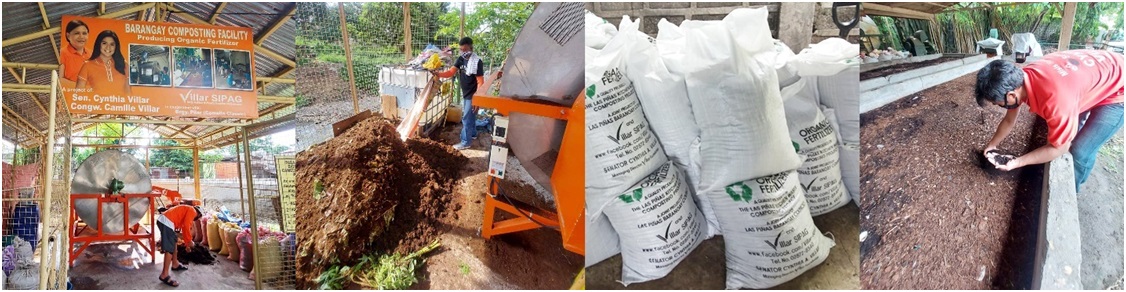
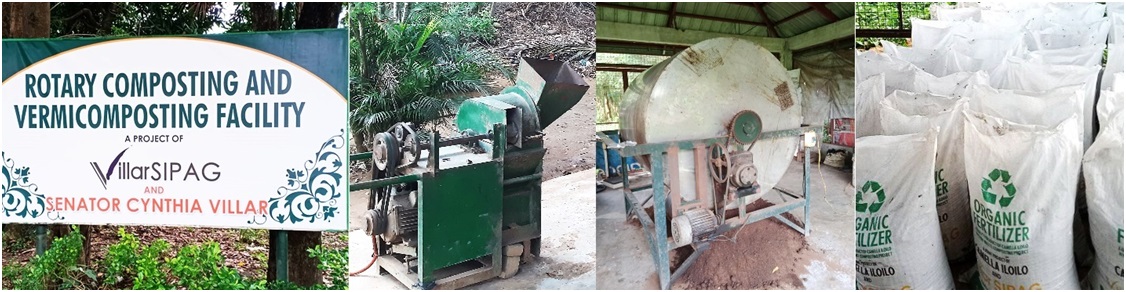
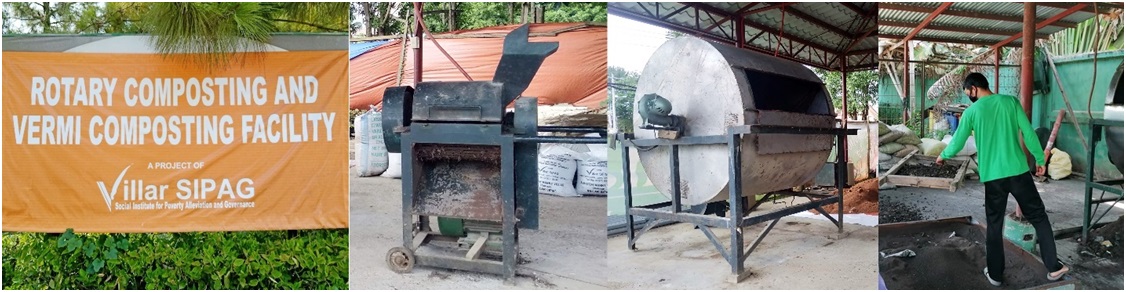
The senator, through the Villar Social Institute for Poverty Alleviation and Governance or Villar SIPAG, established an organic fertilizer facility that uses two methods—rotary composting and vermin composting. Composting centers are set up in barangays where the collected kitchen and garden wastes from households are brought. It now has 80 composters utilized by 80,000 households in Las Pinas City and Bacoor City, where 80 units of composters are stationed in communities or barangays.
Barangay Composting Center – Barangay Ilaya, Las Piñas CityBarangay Composting Centers – Carbaggio, Barangay Talon Dos, Las Piñas CitySpringville Meadows, Barangay Molino IV, Bacoor City, Cavite
“As part of our companies’ corporate social responsibility (CSR) and in support of my advocacy, Vista Land and Camella Homes communities in various parts of the country also have waste management facilities or centres. The wastes are also processed into organic fertilizer,” said Villar.
Vistaland and Camella Communities–Luzon Waste Management Facilities (Rotary & Vermi Composting) Barangay Del Rosario, Camella Homes, Naga City
As of September 2020, the 20 Vista Land and Camella communities in National Capital Region, Regions 3, 4-A, and 5 (for Luzon); Regions 6 and 7 (for Visayas); Regions 10, 11, 12; and CARAGA (for Mindanao) produce over 61,000 kilos of organic fertilizers from kitchen and garden wastes collected from the residents.
Vistaland and Camella Communities–Visayas Waste Management Facilities (Rotary & Vermi Composting) Barangay San Jose, San Miguel, IloiloVistaland and Camella Communities–Mindanao Waste Management Facilities (Rotary & Vermi Composting) Camella Solariega, Barangay Talomo, Davao City
Villar also established vermin composting facilities that produce vermin compost or organic fertilizer, the use of which is environment-friendly since it keeps the soil healthy. According to FAO, composting can divert up to 150 kilograms of food waste per household per year from local collection authorities.
Villar SIPAG’s coconet weaving enterprises also help in solid waste management efforts as well as soil protection. It converts coconut husks that clog rivers and waterways into materials as such as coconets, which are used as riprap materials in construction projects to prevent soil erosion. Vista Land buys the coconets for its housing subdivisions.
The workers extract fiber and coco peat from the coconut husks using a decorticating machine, which can extract fiber from up to 8,000 husks of coconuts daily. The fibers are then made into twines by women workers. Each twine is eight meters long. Another group of workers weave the loom of twines and within two hours they can weave one roll measuring one meter by 50 meters that can earn for them 200 pesos. The coconets cost 2,000 pesos per roll.
The coco peat or dusts extracted by the same machine are mixed with household wastes to make organic fertilizers. All the fertilizers produced are distributed all over the country and given free to farmers and urban gardeners.
Working with BSWM in providing composting facilities to farmers & LGUs
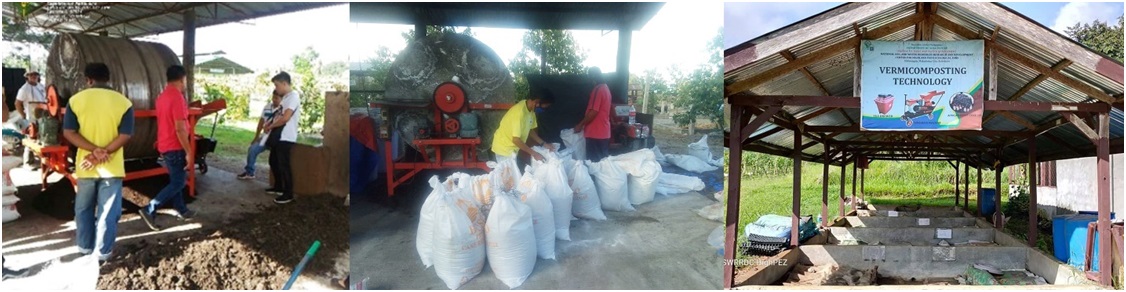
Villar has also worked with the Bureau of Soils and Water Management (BSWM) in providing Small Scale Composting Facilities (SSCFs) for Biodegradable Wastes (CFBWs) to farmer-beneficiaries and LGUs all over the country, so they can produce their own organic fertilizer. Since 2015 until 2019, BSWM has distributed 816 CFBWs nationwide (413 in Luzon, 174 in Visayas and 229 in Mindanao).
Department of Agriculture-Bureau of Soils and Water Management – Sta. Barbara, PangasinanDepartment of Agriculture-Bureau of Soils and Water Management – Municipality of Catigbian, BoholDepartment of Agriculture-Bureau of Soils and Water Management – Municipality of Lebak, Sultan Kudarat
The CFBW units strengthened the institutional capacities of LGUs in terms of sorting, collecting and composting their community wastes and to lessen the dependence of the farmers to commercial fertilizers. A CFBW unit can process one to two tons of biodegradable wastes and can produce 500 kilos of organic fertilizer in a span of two weeks. It is in line with the National Organic Agriculture Program (NOAP) of the government.
Based on data from the National Solid Waste Management Commission, an estimated 46 tons of waste are generated nationwide per day. Thus, there is a need to process wastes and to set up facilities near public markets and in residential areas that will convert those wastes into organic fertilizers or composts.
Biodegradable wastes account for 52% of the total waste composition in Metro Manila, 41% for recyclable wastes, and 7% for residual wastes. According to Villar, by processing wastes, LGUs can save funds that will otherwise be used in paying for garbage collection, disposal and trucking services. On top of that, it will bring LGUs and the country closer in becoming zero-waste as part of the sustainable development goals.
The Solid Waste Management agency of DENR will also follow the lead of the BSWM of DA in giving out composting facilities all over the country to produce organic fertilizer for our farmers and promote proper solid waste management.
“Teaching people how to compost their wastes and providing them with the facilities or equipment to do it resulted to multiple benefits. It’s a win-win situation for agriculture and the environment. It helps farmers save on fertilizer expense and increase their crop production. It keeps the soil healthy, so it is environment-friendly,” said Villar.
Villar SIPAG has also conducted capacity-building trainings on the operations of CFBW. The training program was attended by city agriculturists, municipal agricultural officers and LGU representatives nationwide. It continues to partner with BSWM in providing training and distributing CFBW in communities nationwide.
Senate Bill to make organic certification cheaper
Healthy and chemical or pesticide-free soil is also the first step towards organic farming, which Villar has also been promoting and providing legislative support to. Although there is a National Organic Agriculture Program (NOAP) is in place, organic has not really gained ample ground in the country. Organic farmers sought Villar’s help in bringing down the cost of certification which is really prohibitive.
Villar authored and filed Senate Bill No. 1318 introduced the Participatory Guarantee System (PGS), a more affordable and accessible certification system for organic products. It will amend Republic Act No. 10068 (The Organic Agriculture Act of 2010) and will provide the much-needed impetus to support the growth of organic agriculture in the country. It has been passed on Third Reading in the Senate on June 1.
“We have huge potential in organic agriculture but our local organic farmers are disadvantaged because they cannot have their produce or products labelled as organic due to the prohibitive cost of certification. PGS is the solution to that, it will make them more competitive,” said Villar. Certification ranges from PhP42,000 to PhP150,000 per crop compared to PGS costs only between PhP600 to PhP2,000.
PGS is also widely adhered to and accepted by international organic movements, such as the International Federation of Organic Agriculture Movement (IFOAM). It is also recognized by the Food and Agricultural Organization (FAO) as a pro-farmer alternative to third party certification.
The new organic law will benefit the estimated 165,958 organic farming practitioners in the Philippines, majority of which are smallholder farmers. According to Villar, it is important for small farmers to be able to afford organic certification because they are the major force in the country’s agriculture sector. They are the key to the success of organic farming in our country and they should be well-equipped and adequately supported in order to compete head-on in seizing the opportunities as demand for organic products continue to rise.
FAO: soil degradation threatens food security
Unsustainable agriculture practices contribute to soil degradation. Soil erosion is one of the major causes of soil degradation and biodiversity loss. It removes the very fertile topsoil and exposes the remaining soil layer. On World Soil Day (WSD) on December 5, the importance of healthy soil and its sustainable management is the key message under the theme “Keep soil alive, Protect soil biodiversity”.
According to the Food Agriculture Organization (FAO), the world population is estimated to reach 9 to 10.5 billion by 2050, the health of the soil cannot be ignored if we want to be able to provide food and sustain our soil resources.
FAO also warned about some agricultural practices such as the use of fertilizer and pesticides that damage and deplete soil’s organic matter that leads to loss of soil fertility and crop damage too. On top of that, it also increases the reliance of farmers on “external inputs” to maintain productivity, which is unsustainable over the long term. Here in the Philippines, there is also the issue of fertilizer scam.
“Ordinary farmers basically need three important things to be able to farm—seeds, water (irrigation) and fertilizer. So if they can make their own fertilizer then it would lessen cost and increase their income. That is why I have been encouraging people to compost, which they can use as fertilizer,” cited Villar.
Villar added that the Philippines is an agricultural country, thus soils are a very important resource. “It is in our best interest to protect it to ensure a food-secure future for the next generation of Filipinos,” said Villar.