Home Blog Page 888

Sabotage: Corruption’s counterattack  against every bold reform

STOCK PHOTO | Image by Rawpixel.Com from Freepik

When billions of pesos — or dollars — are at stake, powerful criminal networks don’t just disappear. They adapt, scheme, and fight back. Every bold anti-corruption initiative, no matter how noble, becomes a battlefield against those who thrive in the shadows.

Corruption isn’t static — it is an organism with survival instincts. When reforms rise, sabotage follows. This invisible war pits reformers armed with digital integrity tools against entrenched networks desperate to keep their empires alive.

The sabotage playbook is as sophisticated as it is ruthless.

COMMON SABOTAGE TACTICS
• Disinformation campaigns — fake stories to discredit reforms and erode trust. Spread false narratives to discredit reforms, provoke political backlash, or confuse the public through coordinated social media attacks.

• Political and legal sabotage — bribing officials, blocking budgets, rewriting laws.

• Procurement capture — insert backdoors in contracts, or impose restrictive Non-Disclosure Agreements that block independent oversight.

• Regulatory capture — Embed loyalists — or covert “spies” — inside oversight bodies and project teams to undermine reforms from within. These operatives leak information, stall audits, sanitize reports, or erase incriminating evidence.

• Insider threats — staff and contractors altering records or sabotaging systems.

• Data poisoning — flooding ledgers with false entries to weaken verification.

• Cyberattacks — launch Distributed Denial of Service (DDoS) attacks, destroy backups, or physically damage infrastructure to paralyze operations.

• Weaponized litigation — suits, injunctions, and Freedom of Information requests to delay or intimidate.

• Financial coercion — cutting funding, bribing auditors, threatening sponsors.

• Supply-chain tampering — compromising software, cloud, or hardware providers.

• Social engineering — coercing users to bypass platforms with off-system bribes.

WHY GOVERNANCE MATTERS
Technology without governance is fragile. Blockchain provides transparency, but only strong governance makes them trusted and resilient.

A governance framework unifies defenses by establishing clear accountability lines, effective oversight, and coordinated action. It builds trust by embedding integrity and transparency into every process. And it strengthens resilience by allowing reforms to adapt under attack, grow stronger, and make corruption increasingly harder and costlier to sustain.

The lesson is clear: corruption adapts. But so can we.

Technology alone is not enough. Blockchain, AI, digital IDs, and open data can expose corruption, but without governance, these tools risk being undermined or mistrusted. What makes reform resilient is not just innovation, but the framework that governs it.

A strong governance framework turns fragmented defenses into a unified shield — setting clear rules, accountability lines, and checks that sabotage cannot easily penetrate. It ensures that digital tools are not only powerful, but credible, because integrity is baked into every process. And with governance as the backbone, reforms don’t just survive attacks — they emerge stronger, making corruption costlier, riskier, and ultimately unsustainable.

Criminals will keep fighting back. The real question is whether we will let sabotage succeed — or finish building the shield that finally makes corruption too costly to sustain.

THE CALL TO ACTION
Reform is not about asking if corruption will fight back — it already does. The challenge is ensuring sabotage does not succeed. Only through the combination of innovation and governance frameworks can we finally build the shield that makes corruption unsustainable.

The article reflects the personal opinion of the author and does not reflect the official stand of the Management Association of the Philippines or MAP.


Imelda “Ida” C. Tiongson is chair of the MAP Governance Committee and president of Opal Portfolio Investments (SPV-AMC), Inc.

map@map.org.ph

tiongsonic@yahoo.com

Benign inflation gives BSP policy room to support growth — Nomura

The main office of the Bangko Sentral ng Pilipinas in Manila. — BW FILE PHOTO

THE BANGKO SENTRAL ng Pilipinas (BSP) may deliver a fourth straight 25-basis-point (bp) rate cut on Thursday to give the economy a boost as inflation remains low, Nomura Global Markets Research said.

“We expect BSP to cut its policy rate by another 25 (bps) to 4.75% as the still-benign inflation outlook allows BSP to continue to focus on supporting domestic demand, which is also now facing more significant downside risks than was the case during the Monetary Board (MB) meeting in August,” Nomura China economist Jing Wang said in a report dated Oct. 3.

“We assign a 60% likelihood to our forecast and 40% to BSP leaving the policy rate unchanged, taking into account BSP’s previous ‘Goldilocks’ signal and the possibility that BSP could adopt a wait-and-see approach to assess the downside risks to growth, citing elevated uncertainty,” he said.

The Monetary Board will hold its penultimate meeting for this year on Thursday (Oct. 9), where 10 out of 16 analysts polled by BusinessWorld expect a pause due to emerging inflation risks.

On Aug. 28, the BSP slashed benchmark borrowing costs by 25 bps for a third straight meeting to bring the policy rate to 5%. This brought cumulative cuts since August 2024 to 150 bps.

BSP Governor Eli M. Remolona, Jr. earlier said the policy rate is now at their “Goldilocks” rate or “sweet spot” for both inflation and output, but he left the door open to one more reduction within this year to support the economy if needed, which would likely mark the end of its easing cycle.

Mr. Wang said Philippine headline inflation could have picked up to 1.8% in September from 1.5% in August. If realized, this would still be below the 1.9% seen in the same month a year ago and the BSP’s 2-4% annual target.

“The pickup is mainly due to low base effects: on a sequential basis, we expect a drop to 0.2% (month on month) from 0.5%, helped by lower rice and energy prices, as well as stable core inflation, given limited demand-pull pressures,” he said.

The Philippine Statistics Authority will release September inflation data on Tuesday (Oct. 7).

Mr. Wang said the BSP could also consider the potential economic impact of corruption allegations involving government infrastructure projects in its policy decision.

“At the same time, the ongoing controversy around flood-control projects will likely be assessed by BSP as potentially leading to a slowdown in government capex (capital expenditure) disbursements, therefore posing downside risks to the (gross domestic product) growth outlook at a time when BSP still sees the output gap as negative.”

The economy grew by 5.4% in the first half, slower than 6.2% a year earlier and a tad below the government’s 5.5%-6.5% target.

PAUSE
Meanwhile, Jean O. De Castro, Manulife Investment Management and Trust Corp. head of Fixed Income, said the BSP could opt to pause at this week’s meeting but cut at its last review for the year scheduled on Dec. 11.

“Given the impact of typhoons on food supply, and the peso’s recent breach of 58 (per US dollar), we can expect the MB to adopt a cautious stance and pause at the upcoming October 9 meeting,” she said. “However, with inflation generally contained and liquidity conditions manageable, the BSP could cut policy rate one more time in December, if economic momentum weakens or if the US Federal Reserve eases further.”

The peso sank to the P58 level against the greenback late last month as market sentiment was affected by mixed bets on the Fed’s policy path and the ongoing corruption scandal in the Philippines.

Ms. De Castro said a pause this week would support the yield curve.

“On the other hand, a surprise cut could result in a flattening of the yield curve, encouraging more demand for longer-dated bonds and supporting loan growth, but may also heighten sensitivity to the currency and food price risks,” she said.

“Overall, the MB’s cautious approach reflects a desire to preserve policy flexibility and anchor financial stability amid lingering local and global uncertainties.” — Katherine K. Chan

Toyota Financial Services launches P2-B maiden bond to fund growth, diversify funding

REUTERS

By Beatriz Marie D. Cruz, Reporter

TOYOTA FINANCIAL Services Philippines Corp. (TFSPH), the automotive financing and leasing arm of GT Capital Holdings, Inc., has launched its P2-billion maiden public bond offering to fund asset growth, diversify funding sources, and attract both institutional and individual investors.

The bonds will be issued in two series: two-year Series A Bonds due 2027 at a fixed rate of 5.7725% and three-year Series B Bonds due 2028 at 5.9418%, GT Capital said in a statement on Monday.

The offer period will run from Oct. 6 to 13.

GT Capital said the bonds are exempt securities under Section 9.1.2.1 of the 2015 Implementing Rules of the Securities Regulation Code, as the company is a licensed quasi-bank.

Any future offer or sale of the bonds will remain subject to Securities and Exchange Commission registration unless qualifying as exempt.

First Metro Investment Corp. and ING Bank N.V. Manila Branch are joint lead arrangers and bookrunners. They will also act as selling agents, alongside Metropolitan Bank & Trust Co. and BPI Capital Corp.

Analysts said the bond issuance is likely to support earnings and expand TFSPH’s balance sheet.

“We expect this high-grade fixed-rate bond offering to be well-received by the market,” China Bank Capital Corp. Managing Director Juan Paolo E. Colet said in a Viber message.

“TFSPH is a major domestic quasi-bank, so this fundraising will help expand their balance sheet to support their automotive financing business and push earnings growth.”

For his part, Rizal Commercial Banking Corp. Chief Economist Michael L. Ricafort said: “This is an alternative source of funding other than bank loans that would help fund capex (capital expenditure) and opex (operating expenditure), in terms of new investments/expansion projects that would help grow its capacity and business in terms of higher sales and earnings.”

Philippine Rating Services Corp. (PhilRatings) assigned TFSPH an issuer credit rating of PRS Aaa with a stable outlook, citing strong shareholders, the Toyota brand’s solid franchise, good asset quality, and sustained revenue growth.

In the first quarter of fiscal year 2025, TFSPH reported total revenues of P3.9 billion, up 11% year on year.

Loan receivables rose 9% to P159.4 billion, while net interest income reached P1.6 billion.

TFSPH is 60% owned by Japan-based Toyota Financial Services Corp. and 40% by GT Capital.

GT Capital, a major listed Philippine conglomerate, operates across banking, automotive assembly, importation and dealership, property development, life and general insurance, and infrastructure. Its core subsidiaries include Metropolitan Bank & Trust Co., Toyota Motor Philippines Corp., Federal Land, Inc., AXA Philippines Life and General Insurance Corp., and Metro Pacific Investments Corp.

GT Capital reported a 39% increase in second-quarter attributable net income to P9.28 billion from P6.67 billion in the same period last year.

On Monday, GT Capital shares closed P14.50 lower, or 2.44%, at P579.50 apiece.

Entertainment News (10/07/25)


Apo Hiking Society returns to 19 East

FOR THE NEXT stop of Apo Hiking Society’s Hitting The Bars! Tour, they will be returning to 19 East on Oct. 8. The venue is dear to their hearts as it is where the resurgence of Apo Hiking Society began in 2022, shortly after the passing of original Apo member Danny Javier. The show will start at 8:30 p.m. The entrance fee is P2,500, with seats on a first-come, first-serve basis. The bar, 19 East, is located at the East Service Road in Muntinlupa City.


Hulu to replace Star on Disney+

STARTING Oct. 9, Hulu will be the global General Entertainment brand on Disney+, replacing Star in the Philippines. Filipino viewers will have a new slate of US, Korean, and Japanese original shows arriving soon on the Hulu tile, including Ryan Murphy’s legal drama All’s Fair, featuring an ensemble cast led by Glenn Close, Kim Kardashian, and Niecy Nash; the Korean romantic comedy Would You Marry Me? starring Choi Woo-shik and Jung So-min; the action-packed Korean thriller The Manipulated with Ji Changwook and Doh Kyungsoo; and the coming-of-age Japanese anime Wandance.


More FPJ movies on GMA this October

TIMELESS Filipino classics starring the action legend Fernando Poe, Jr. (FPJ), will be shown on the silver screen this month. As part of the FPJ sa GMA lineup, one of his films will be aired every Sunday at 3:15 p.m. on GMA. To be shown this month is Pagbabalik ng Lawin (1975) on Oct. 12, featuring FPJ’s team-up with Max Alvarado. On Oct. 19, romance and mystery take center stage in Mahal Saan Ka Nanggaling Kagabi (1979), featuring Susan Roces. The program ends on Oct. 26 with Asedillo (1971), where FPJ takes on a story of rebellion and heroism.


Barbie traverses Shibuya Crossing in music video

FILIPINO singer-songwriter Barbie Almalbis has released the music video for her latest single, “All U Wanna Do.” In it, she takes center stage at the iconic Shibuya Crossing, capturing her impassioned performance amid the bustling city life in Tokyo, Japan. The video was directed and conceptualized by photographer and filmmaker Niña Sandejas, the project emerging during Ms. Almalbis’ travels in Japan, where she was invited to perform.


Jal Yoga opens 2nd studio in Makati

AFTER a successful year with its first studio, Jal Yoga Philippines has announced the opening of its second branch in Makati City. It aims to cater to busy professionals and residents, presenting “a serene space to pause, recharge, and find balance.” Its offerings include 30 classes with a wide range of yoga, reformer Pilates, and barre, all led by globally accredited instructors. Jal Yoga Makati is at the 6F Finman Center, 131 Tordesillas St., Salcedo Village, Makati City.


Ateneo Jubilarians to host fun run in November

THE Ateneo High School Batch 2000, together with MNL City Run, will host the “One Beat Fest 2025: One Beat. One Run. One Big Festival” on Nov. 9 at the Ateneo de Manila High School Grounds in Quezon City. The event, set to start at 3 p.m., is a sundown fun run and mini-concert open to all runners, alumni, families, and friends of the Ateneo community. Proceeds from the event will benefit Ateneo scholars and the retirement fund of teachers and staff. For more details on the fun run categories and fees and to register online, visit https://myruntime.com/register/one-beat-fest-fun-run.


Hong Kong Disneyland set for 20th anniversary

AS PART of a year-long celebration marking Hong Kong Disneyland’s 20th anniversary, “A Disney Christmas” will start on Nov. 14 and run up to Jan. 4, 2026. There will be surprises from Mickey and Friends, the Arendelle royals from Frozen, and Judy Hopps and Nick Wilde from Zootopia, to name a few. The celebration also marks the return of the tree lighting ceremony “A Holiday Wish-Come-True,” the limited season Disney Christmas Live in Concert!, and the New Year’s Eve Countdown Party to ring in 2026.

KPop Demon Hunters lead vocalists say they learned a lot from Kendrick Lamar

IMDB

LOS ANGELES — While the lead vocalists in animated film KPop Demon Hunters are largely inspired by the work of other K-Pop artists, EJAE, Rei Ami, and Audrey Nuna said they also admire Black American hip-hop stars like Kendrick Lamar, Missy Elliott, and Doechii.

“I think I discovered West Coast rap in high school, and I learned a lot about storytelling, lyricism and rhythm,” Korean American rapper and singer Rei Ami said.

All three vocalists told Reuters that rapper and record producer Lamar’s music had particularly impacted their musical styles.

“His (Lamar’s) flow is insane, cadence, his way of writing, his way of vocal producing, I learned a lot from that,” Korean American singer and songwriter EJAE said.

KPop Demon Hunters, directed by Maggie Kang and Chris Appelhans and available on Netflix, is trending around the world. Its soundtrack has dominated the charts this summer, boasting more than 3 billion global streams to date, and breakout hit “Golden” reached No. 1 on the Billboard Hot 100 chart, Netflix reported in August.

The streaming platform reported on Tuesday that the movie was currently its most popular English-language film.

A sing-along version of KPop Demon Hunters topped the North American box office during its opening weekend on Aug. 23 and 24, in what appeared to be a historic first for Netflix.

The action-packed movie received 2.1 billion on-demand audio and video streams in the US across all platforms and earned a total of 5.4 billion minutes watched on Netflix in the US by late September, according to Luminate.

Luminate added it was the most-consumed soundtrack in the US so far this year when looking at album sales and streaming equivalents.

FIRST LIVE PERFORMANCE ON SATURDAY NIGHT LIVE
While the first live performance for the lead trio of KPop Demon Hunters was originally going to be Oct. 7 when the singers will perform “Golden” on The Tonight Show, there was a surprise performance on Saturday Night Live (SNL) on Saturday, which marked their official live singing debut together.

EJAE, Rei Ami and Audrey Nuna performed “Golden” during an SNL skit with host, singer Bad Bunny.

“It’s official,” the singers said in unison, talking about the upcoming performance on The Tonight Show.

“These girls, it’s an honor being on stage with them,” Rei Ami said, noting that for her, this history-making moment is “overdue.”

The movie, which came out on June 20, follows a K-pop girl group called HUNTR/X, comprised of Rumi, Mira, and Zoey, who are also a trio of demon hunters that perform K-pop music to impress fans and combat demons.

EJAE provides the singing voice for the lead singer Rumi and cowrote “Golden,” which she performs with Rei Ami, who sings as Zoey, and Audrey Nuna, who’s the vocalist for Mira.

The film was produced by Sony Pictures Animation.

With the musical movie continuing to trend, directors Kang and Appelhans said they are considering what the future may hold.

Both said they are thinking about a potential sequel, but right now, they are just trying to take their busy schedules day by day.

They are also appreciative of the Oscar and Grammy awards buzz they have received.

“It’s an honor to be even recognized, to be potential nominees,” Kang said. — Reuters

Is corruption inborn in democracy?

FREEPIK

(Part One)

No. But…

Said one Filipino senator a couple of weeks ago: “Lahat naman corrupt, tanggapin niyo na lang. (We are all corrupt, just accept it),” slurring all of the Senate, or all politicians. Or maybe all Filipinos carrying on, as he suggests, hypocritically in a so-so democracy.

Most of the time, “culture” is blamed. But in a Philippines where roots stories are not updated with new science, appeals to cultural explanation yield misguided, often ridiculous answers.

One misguided answer is that Filipinos, averse to rules, can’t help flouting them. May we all be averse to stereotypes and hold out for tougher answers. (More on this in future columns.)

For now, this senator’s classic peanut butter smear — spread the gunk all around enough, blame is diffused, no one is accountable — entertains cynics.

What doesn’t entertain anyone is the gut feel that the corruption may be permanent and natural. This unfunny sense of something-the-matter comes out of deeper parts of the Filipino heart than where the manipulative one-liners of politicians impact.

Even the cynics get it that runaway corruption ends in a failed state. Meanwhile, for many Filipinos, life is lived as though in a claustrophobic room with no doors or windows, locking everyone in with the baddest actors — this lived democracy.

Is it democracy though?

WORMS AND WORMS
Democracy corrupted, suggest some. “Corrupt,” the word, used to have great use to call up images of decaying bodies. What happens after death is bodily corruption, the work of worms and bacteria and natural decomposition of organic matter.

This word/image in time took on a double meaning — moral perversion and depravity on one hand, and on the other, betrayal of trust — as modern democracies emerged in the 20th century. Corruption is now the worm that eats the guts of a democratic project. The image today is still wormy in the new usage.

This is the difference between the English “corrupt” that in Tagalog is “bulok” (decayed, decomposed) and the modern translation of the English “corrupt” into the Tagalog “katiwalian” (corruption). The old worm-word of “bulok” remains useful in “katiwalian” but Tagalog needs two separate words.

The old worm lives on in the current voracious ones; maggots decomposing what was at some point a reasonably integrated whole. When that whole turns to rot, and the integrated system that democracy self-maintains stinks something awful, rage breaks out like explosive gas from decomposition chemistry.

The hundreds of thousands of Filipinos who turned up at Luneta, EDSA, and Mendiola on Sept. 21 in a cathartic collective rave against corruption, were whipped up by the stomach-churning visuals of bad actors fatly eating into the internal structures of democracy.

The hundreds of thousands were, also, more than slightly envious of the Gen Z protestors-turned-anarchists in Nepal and Indonesia. Many wished for the directness of arson exercised by outraged youth. Torch the worms. Cauterize away the corrupting.

INSIDE
At the risk of overdoing the worm metaphor here, it is good for another few sentences pointing out the externality of these corrupting agents. They worm in, hence allow for a hope that deteriorated democracy can be restored by keeping them out.

The same sense is pressed by the familiar quote: “Corruption in a democracy usually indicates a deficit of democracy.” In other words, democracy is diminished by corruption, which is outside badness gnawing in.

Hence the question is begged: Is there something inside democracy that facilitates its own corruption?

It is the promise and guarantee of democracy — freedom for all — that itself builds in potential for corruption. This guarantee assures space for some to feel free to wreck it, while building personal fortunes.

With the caveat that there are many variants of governments that are called democratic, and that therefore there are many variants of how the freedom ideal is mangled, it should be possible to say that all the various types of manglings are of titanic scale never before imaginable.

JUGGERNAUT
Over-the-top adjectives seem inadequate, for instance to describe the democratically elected American President Donald Trump as he destroys American liberal democracy. To his mind, his freedom to do so is absolute. Prayers to Constitutionally-set guardrails appear futile for now.

His rush to autocracy is merely the obvious part of a vengeance juggernaut that, on the backside, got him richer by $3.4 billion in only six months in office.

That figure alone exceeds most people’s capacity to grasp. Or gasp. But this month, October, Elon Musk’s net worth hit $500 billion despite the massive dips he sustained from his crazy Right politics.

Musk is on his way to becoming the world’s first trillionaire (which should happen next month), bludgeoning US democracy’s newly discovered fragility. He arrogates the freedom the US affords him, well beyond the dangerous freedoms lived out by Russian plutocrats in Vladimir Putin’s virtual reality of a pseudo democracy.

Trump has re-institutionalized white supremacy, collapsing the provisions for equality and inclusivity that had assured superpower status for the United States in economics and culture. He rides on the principle of inclusivity but only that promised to white men pumped up with self-entitlement and bizarre grievance.

Trump, Musk, and MAGA cohorts were created within American liberal democracy, even if many of them are the outsider bumpkins to elite political and social circles. And never mind that they inherited white privilege — which they squandered.

Their politics of epic whining squeeze together democracy’s universal entitlement to freedom with the exclusivist expectation of privilege. The outcome is monstrous: democracy’s freedoms shrink into absurd shapes. For example: the poor are free to sell their kidneys. For example: the super-rich are free to redefine democracy (buy the kidneys with no moral qualms) for their untroubled gain.

This, too. Grievance as spectacle — variously performed by Trump, the Philippines’ Rodrigo Duterte and Joseph Estrada, and other poseurs who claim to represent the under-represented, suffering demography — folds “the masses” into political theater.

The pathological Duterte, as a good case in point other than Trump, has his minions screaming for his human rights, leader and followers oblivious to the perhaps European notion of the absurd.

SECRETED
Paradox is inadvertently secreted in the folds of the American, Philippine, and other modern Constitutions of the last two centuries and a half.

The provisions for equal representation, legitimate reasons for the imposition of martial rule, equal branches of government, and the Bill of Rights, have each in turn been warped while supposedly exercised in good faith.

There are, of course, foundational principles written against the grain of prevailing cultures. Thomas Jefferson, avatar of equality in American Constitution, was a slave owner, albeit an apparently a benevolent one. Simon Bolivar insisted on a provision for a president-for-life in Bolivia in that country’s 2nd Constitution; he did so thinking stability to be the paramount Constitutional mission for the country named after him.

Strange contradictions abound. The switch in the last two decades to hard Right governments in Jair Bolsonario’s Brazil, Venezuela’s Nicolas Maduro Moros, Turkey Recep Tayyip Erdogan, Victor Orban’s Hungary, in fact Russia’s Vladimir Putin, were all accomplished by performing democratic elections.

Performance in each case worked within assurances of universal suffrage, inclusivity, and equality. They all have Constitutions guaranteeing these rights — yes, including Russia’s (1993, revised 2020), which includes a Bill of Rights. In all cases, these Constitutions were perverted by twisting ideal into opportunist space.

And as soon as electoral wins were secured, obscene wealth can be made within months. And the higher up the food chain the political pervert, the more insanely enormous the political and financial profit. This seems so terribly normal.

CHIMERA?
So: were the framers of all these Constitutions limited people after all? Is democracy a chimera, a utopian seduction that allows self-corruption?

Wrong questions. Each Constitution inscribes a political culture produced by specific histories, at the time of writing in the period language and spirit. Most consolidated ideas prevailed for centuries.

The 1987 Philippine Constitution, for whatever its vulnerabilities to corruption, has survived well all these decades; as did the antecedent principles enshrined in the 1898 Constitution. So has the US Constitution and those of South American nations for more than two centuries.

Then these and all others began to show those vulnerabilities, in the last two decades, to be openings to ecosystems collapse.

What changed? Current Constitutions were formulated way before digital technology commenced altering the nature of human societies and upending entire knowledge and truth systems. The democratic ideals were written down way before the present scale of corruption could even be conceived, as deep social instability is produced by technological change of vast scale.

Democracy will have to catch up. This, of course, is to state the obvious.

(Part 2 will come out in two weeks.)


Marian Pastor Roces is an independent curator and critic of institutions. Her body of work addresses the intersection of culture and politics.


Bifrost cable system ready to go live; Converge expects boost

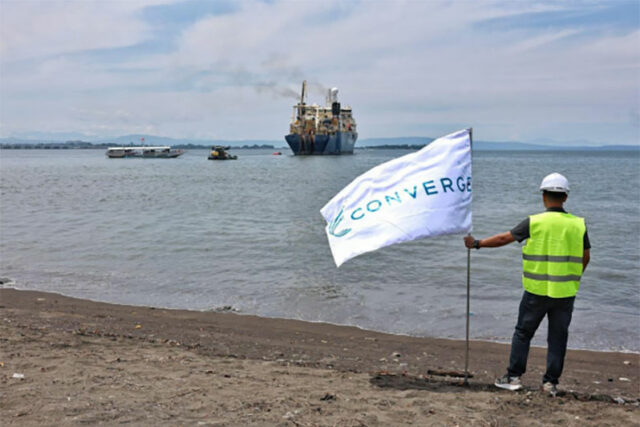
ONVERGE ICT SOLUTIONS, INC.

KEPPEL LTD. (Keppel) is preparing to operate its 20,000-kilometer Bifrost cable system, which will be ready to carry commercial traffic in the coming weeks.

In a media release on Monday, Keppel said the Bifrost cable system has officially achieved ready-for-service status, enabling trans-Pacific connectivity.

The cable system spans 20,000 kilometers and is designed to support artificial intelligence (AI) workloads, cloud-native platforms, and real-time digital services.

Converge ICT Solutions, Inc. will host the landing of the Bifrost cable system in the Philippines, following the cable’s landing in Davao in August. The Bifrost Cable System connects Singapore, Indonesia, the Philippines, and the United States.

“The Philippines is in a prime location being in the center of the region, so this critical digital infrastructure — the Bifrost Cable System — is envisioned to support the booming connectivity needs of the Asia-Pacific region and provide an important direct link with the US,” Converge Chief Executive Officer (CEO) Dennis Anthony H. Uy said.

Mr. Uy added that the cable system will boost the company’s bandwidth capacity and diversify the country’s network infrastructure.

The Bifrost system also provides over 260 terabits per second (Tbps) of additional capacity, Keppel said.

“With Bifrost on track to go live in the coming weeks, the system is expected to play a pivotal role in supporting the next wave of digital transformation, enhancing the resilience of regional digital infrastructure, and strengthening global data exchange,” the company said.

Keppel was allocated five of the 12 fibre pairs in Bifrost through a 40:60 joint venture with co-investors.

Bifrost lands in Singapore, Guam, and California, with branching units extending connectivity to Jakarta, the US, and the Philippines, enabling dynamic traffic routing and robust regional interconnection.

“Keppel is proud to announce that the Bifrost Cable System has achieved Ready for Service status. This landmark project will bolster digital connectivity between Southeast Asia and the USA. The Bifrost Cable System will reinforce Singapore’s position as a leading digital hub in Asia and support the region’s rapidly growing digital economy,” Keppel CEO for connectivity Manjot Singh Mann said.

At the stock exchange on Monday, Converge shares fell by eight centavos, or 0.65%, to close at P12.30 apiece. — Ashley Erika O. Jose

PDIC proposes revised guidelines for reconsideration of denied deposit insurance claims

THE PHILIPPINE Deposit Insurance Corp. (PDIC) is looking to revise the guidelines covering reconsideration requests for denied claims to make the process more efficient.

“The proposed revisions are designed to provide clearer, more consistent, and transparent guidelines for depositors whose deposit insurance claims have been denied, ensuring that the process of seeking reconsideration is both fair and efficient,” PDIC said in a statement on Monday.

“Among the key enhancements are the expanded coverage of the Regulatory Issuance to address a wider range of cases; refined procedures for the filing of requests for reconsideration (RFR) to make the process more accessible and user-friendly; defined timelines within which requests must be resolved, ensuring prompt action on claims; and a standardized RFR form, aligned with data privacy laws to protect sensitive depositor information.”

The deadline for feedback on the exposure draft of the revised regulatory issuance is on Oct. 15.

Under the draft, the PDIC proposed to shorten the decision period for requests for reconsideration of denied claims to 60 days from the current 120 days.

The proposal also specifies the kinds of denied claims that are covered by the reconsideration process guidelines. These are those claims filed but not paid by the PDIC due to the following grounds: account or transaction does not fall within the definition of deposit under the PDIC Charter; account or transaction is excluded from deposit insurance coverage; account is not an outstanding deposit liability, as of bank closure; claimant is not the beneficial owner of the deposit account; claim is filed beyond the prescriptive period in filing claim for deposit insurance; and failure by the claimant to submit the required supporting documents within the period prescribed by the PDIC.

The draft also prescribes a request for reconsideration form that should be used by claimants. These requests are now required to include express consent to process personal information under the Data Privacy Act of 2012 alongside an express waiver of the provisions of the Bank Secrecy Law and the Foreign Currency Deposit Act.

It also specifies several channels where claimants can file their requests for reconsideration. — Aaron Michael C. Sy

Property slowdown seen temporary amid corruption probe — Leechiu

STOCK PHOTO | Image by Aalo Lens from Unsplash

THE CORRUPTION probe involving government officials and contractors is expected to cause only a brief slowdown in high-value property transactions, with overall demand remaining steady, according to property consultancy firm Leechiu Property Consultants (LPC).

“There might be a pullback on transaction volume, but I don’t think prices are going to fall,” LPC Chief Executive Officer David Leechiu told reporters at the company’s third-quarter market briefing on Monday.

Mr. Leechiu said the impact of the corruption scandal will likely be concentrated in large or politically linked deals.

“The business community is largely skeptical that anything meaningful, significant, and honest will happen from all this coverage,” he said.

“So, they are just putting things on standby, thinking that maybe certain people will sell at a distressed level.”

He added that once investigations fade from public focus, “it will return to business as usual.”

Mr. Leechiu warned, however, that investors should be cautious when dealing with politically exposed or high-profile sellers, as such assets could be subject to freezing orders during investigations.

“So, what the government will do is freeze the asset of the seller — the person who’s convicted — plus the accounts of the other person who bought while they’re investigating,” he said.

LPC noted that while market sentiment has softened, the Philippine property sector continues to show resilience, supported by robust office demand and stable residential absorption rates.

In the office segment, demand reached 253,000 square meters (sq.m.) in the third quarter, up 17.67% year on year.

“We’re only at the third quarter, but we’re already close to hitting one million sq.m. of space, or 88% of last year’s demand,” Edward Gador, associate director for commercial leasing at LPC, said during the briefing.

Traditional offices accounted for the bulk of activity at 449,000 sq.m., followed by the information technology-business process management sector (436,000 sq.m.), government tenants (44,000 sq.m.), and Philippine inland gaming operators (37,000 sq.m.).

Vacancy in Metro Manila stood at 18% in the July–September period, with Bonifacio Global City and Makati central business district recording the lowest vacancies at 9% and 10%, respectively.

In the residential market, unsold condominium units in Metro Manila dropped to 79,400 in the third quarter, from 82,000 in the previous quarter. Demand rose 16% quarter on quarter to 7,713 units.

Mr. Leechiu said the bigger risk to the sector is capital flight, as some investors may choose to move funds overseas amid uncertainty. “The billionaires that could have been created here are being created elsewhere,” he said. — Beatriz Marie D. Cruz

Taylor Swift’s Life of a Showgirl presents pop phenomenon at the peak of her power

MUSIC.AMAZON.COM

LOS ANGELES — Superstar Taylor Swift’s 12th studio album, The Life of a Showgirl, arrived on Friday with a promotional blitz including midnight sales at Target stores, a release party at movie theaters around the globe, and pop-up experiences in New York and Los Angeles.

It follows The Tortured Poets Department, which debuted at No. 1 on the Billboard 200 album chart, and sold the equivalent of 8 million albums in the United States, according to Luminate, a firm that tracks music sales.

Ms. Swift’s latest offering is expected to be similarly lapped up by her huge global fan base, even though the music press gave the release a mixed response. It became Spotify’s most-streamed album of the year, hitting that milestone in less than 11 hours.

“With this album it’s exactly where I am at in my life,” Ms. Swift told Britain’s Capital Breakfast radio show, kicking off promotional appearances.

“I am exactly in the same spot as I was when I made this record so it feels very accurate to my life experience right now.”

Ms. Swift once again worked with Swedish producers Max Martin and Shellback on The Life of a Showgirl, the duo also worked on records including her best-selling album, 1989, and Reputation. Many critics praised the upbeat songs and humor on the 12-song album, whose title track features Sabrina Carpenter.

Rolling Stone gave it five stars saying Ms. Swift “shoots into a fresh echelon of superstardom — and hits all her marks,” while Britain’s BBC called it “a triumphant pop victory lap.”

Awarding it two stars, The Financial Times and Guardian newspapers were cooler, with the former saying the album was “charismatic as ever, but lacks sparkle” and the latter describing it as “dull razzle-dazzle from a star who seems frazzled.”

Fans who went to the flagship HMV store in London to buy the album were nonetheless enthusiastic.

“It’s a little bit of a pivot for her,” said Dan Poliak, 62, who lives in Seattle. “But the songs are great … (the album) shows off her songwriting as always, which is her strength. And it’s fun. It’s a fun album.”

‘RARE POSITION’
Ms. Swift has been building anticipation for the album since Aug. 11, when she posted a countdown on her website that kept fans waiting until 12:12 a.m. ET on Aug. 12, when she revealed the new record.

The next day, she appeared on the New Heights podcast hosted by her fiancé, Kansas City Chiefs tight end Travis Kelce, and his brother, retired Philadelphia Eagles lineman Jason Kelce. The Top-10 rated sports and pop-culture podcast provided a friendly platform for Ms. Swift to talk about the album, which she said had been inspired by the joy she felt while performing around the world on her record-setting Eras Tour. The Aug. 13 episode has surpassed 23.4 million views on YouTube.

“She occupies a very rare position in today’s fragmented music landscape: she is an active superstar with a massive and loyal fan base,” said Tatiana Cirisano, vice-president of music strategy for MIDiA Research.

These passionate followers, or “Swifties,” help the artist rise to the top of the charts, said Cirisano.

“So few can get such a massive number of people listening to the same thing at once. So, it would surprise me a lot if the new release did not reach her usual level of success,” she said.

Even before the album was released, the Recording Industry Association of America said Ms. Swift had made history as the first and only female artist to surpass 100 million album sales. Once The Life of a Showgirl dropped, Google reported spikes in searches for lyrics to new songs, including “Opalite,” “Ruin the Friendship,” and “Actually Romantic,” according to Google Trends.

Ms. Swift’s globe-trotting Eras Tour was the highest-grossing tour of all time, surpassing $2 billion in ticket sales by the time it concluded in December 2024, according to Pollstar, a trade publication that tracks the concert industry. That figure does not include the boost to hotel and Airbnb rentals, restaurant tabs, and merchandise sales.

Academics have said Ms. Swift rivals other pop icons, like Elvis or Michael Jackson, in terms of her cultural impact — whether it’s driving tune-in to NFL games or leading voter registration drives.

Business partners have been eager to tap into the phenomenon that’s been dubbed “Swiftonomics.”

AMC Theaters distributed The Official Release Party of a Showgirl, an 89-minute film that features the album’s first music video, “The Fate of Ophelia,” behind-the-scenes footage, and Ms. Swift’s reflections on the album’s songs. It was a limited release, from Friday through Sunday, in more than 50 markets, and was expected to top US and Canadian box office that weekend, bringing in $30 to $50 million in ticket sales, according to Daniel Loria, senior vice-president of The Boxoffice Company, which provides insights to the movie industry.

Retailer Target opened some stores at midnight to sell a limited-edition vinyl pressing of the album with a “gold shimmer,” and three CDs featuring exclusive album and poster art.

“Taylor Swift-related products and merchandise have been a bright spot for Target over the last few years, helping to offset sales weakness elsewhere,” said Michael Baker, senior research analyst for D.A. Davidson, who noted a previous exclusive Swift book and special-edition vinyl record lifted the retailer’s entertainment category. — Reuters

Philippines’ nuclear energy towards industrialization

Last week, on Oct. 2 and 3, I attended the second “Philippines International Nuclear Supply Chain Forum 2025,” organized by the Department of Energy (DoE) and held at Grand Hyatt Manila, BGC, Taguig City. As I expected, it was a very informative forum, with new international data and initiatives laid and discussed.

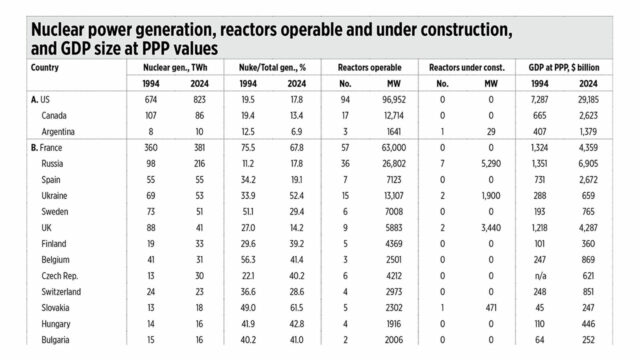
Nuclear power is a powerful and stable source of electricity to energize and sustain many industrialized and industrializing countries in the world. Despite the hysteria by many environmentalist and climate groups, world demand for nuclear power is rising, with nuclear generation rising from 2,226 terawatt-hours (TWh) in 1994 to 2,818 TWh three decades later in 2024, with the expansion led by the US, Russia, China, and South Korea.

But the share of nuclear power in total generation worldwide has declined from 17% in 1994 to 9% in 2024. This is not because the world turned more towards wind-solar power, but towards coal. In 2024 for instance, the total generation share of coal in various countries was: India, 75%; China, 58%; Indonesia and the Philippines, 61%; Vietnam, 50%; Australia, 45%; and Japan and South Korea, 30%.

In terms of capacity of reactors that are currently operating, the US leads the world, followed by France then China (see the table).

But when the reactors currently under construction (37,990 megawatts, MW) plus planned reactors (48,256 MW) and proposed reactors (174,850 MW) in China become operational, China will overtake the US and France combined in a decade or so.

Other Asian nations pursuing more nuclear power are the following: Bangladesh, which has two reactors under construction (2,400 MW), plus two planned reactors (2,400 MW); Saudi Arabia, which has two planned reactors (2,800 MW), Indonesia, also two planned reactors (500 MW); and Vietnam has four in the works (1,000 MW).

The Philippines intends to have nuclear power plants producing 1,200 MW by 2032. On Oct. 2, Energy Secretary Sharon S. Garin issued Department Circular (DC) No.  2025-10-0019, “Framework for the Integration of Nuclear Energy in the Country’s Generation Mix to Implement the Clean Energy Scenario Under the Philippine Energy Plan 2023-2025.” The 10-page document sets five Guiding Principles: energy security, environmental sustainability, grid harmonization and integration, competitive pricing, and public health protection. It set that the pioneer nuclear power plant will be treated as a baseload facility and granted priority dispatch in coordination with the DoE, the Independent Market Operator, and the System Operator regardless of the nuclear technology deployed.

During the opening of the nuclear forum, DoE Director and Technical Secretariat Head of the Nuclear Energy Program Inter-Agency Committee (NEP-IAC) Patrick T. Aquino said that

“The NEP-IAC aims to transition from preparatory activities to implementation-ready frameworks, keeping the Philippines on track to deliver its first nuclear-generated kilowatt-hour by 2032.”

Good moves there, Ms. Garin and Mr. Aquino.

Among the foreign officials I saw at the forum were Eleonore C. Rupprecht, Counsellor and Trade Commissioner of the Canadian Embassy, and Ricardo Luis Bocalandro, Ambassador of Argentina.

Over the coffee break, I talked with two friends who had been with me during the Philippines Nuclear Trade Mission to Canada in March 2024 — Lino Bernardo of Meralco Power Gen (MGEN) and Nicole Yazon of Aboitiz Power (AP). Both are graduates of the UP College of Engineering. I asked them about their respective companies’ preparations for going nuclear.

Mr. Bernardo, who is president and CEO of MThermal, said that MGEN — MThermal’s parent company — is developing their human capacity. “We have sent our engineers to various foreign institutions with nuclear expertise to learn about multiple aspects of nuclear build and operations, particularly in the area of safety. USTDA (the US Trade and Development Agency) recently awarded Meralco with a grant to fund a feasibility study on the potential use of small modular reactors (SMRs) for a clean and secure energy source in the Philippines.”

Ms. Yazon, who is the Senior Assistant Vice-President for Strategy of AP, said that they support the government’s move to nuclear power as “part of a balanced energy portfolio to achieve energy security, grid reliability, and affordability. We are actively working with the NEP-IAC; we need strong government support through long-lasting policies and incentives that can span multiple administrations to mitigate the investment, commercial, technology, and environmental risks inherent to nuclear energy.”

Good.

When it comes to the Philippines’ energy security, I consider AP, MGEN, and SMC as our heroes against blackouts and energy backwardness. This is because they have thermal power plants (coal and gas powered), and soon, nuclear. Only thermal plants can provide 24/7, 365 days a year of baseload supply, the continuous electricity that is needed to power the country’s aspirations for industrialization and sustained high economic growth. I do not look positively on the other energy conglomerates that demonize coal and nuclear power.


Bienvenido S. Oplas, Jr. is the president of Bienvenido S. Oplas, Jr. Research Consultancy Services, and Minimal Government Thinkers. He is an international fellow of the Tholos Foundation.

minimalgovernment@gmail.com

Century Properties unveils Azure North Townvillas in Pampanga

AZURENORTH.COM.PH

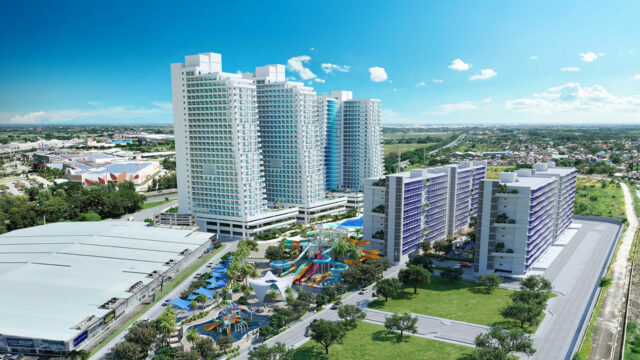
LISTED developer Century Properties Group, Inc. (CPG) has launched the Azure North Townvillas, a premium, low-density house-and-lot enclave spanning 0.8 hectares in San Fernando, Pampanga, following its previous residential project in the same area.

In a statement on Monday, CPG said the move capitalizes on Pampanga’s growth as a key residential investment area in Central Luzon and aims to meet the rising demand for upscale housing in San Fernando.

“It forms a part of our strategy to offer premium horizontal developments, supporting our long term vision of creating value for stakeholders and keeping pace with the evolving needs of Filipino families,” President and Chief Executive Officer Marco R. Antonio said.

CPG said the project has quickly moved inventory since its announcement.

“We are pleased with how the market has responded positively to our pivot in Azure North as 70% of the entire inventory of Azure North Townvillas has been sold,” Senior Vice-President for Sales and Corporate Growth Jennifer Dela Cruz said.

The company said the new phase is expected to generate an additional P1.3 billion in revenue.

CPG said the Townvillas project appeals to investors seeking diversification in growing provincial property markets and families looking for a permanent, resort-style home north of Manila.

The project comprises 49 units of 3- and 4-story homes, with lot sizes ranging from 69 to 133 square meters, and up to five bedrooms. Its design draws inspiration from beach aesthetics, featuring alabaster-colored facades and architectural elements that provide shade and protection from the tropical climate.

Azure North Townvillas also offers full, permanent access to all amenities in Azure North, including the man-made beach lagoon, wave pool, and clubhouse completed in Phase 1.

CPG said Phase 2 will soon introduce the mid-rise Mykonos Tower, along with a Waterpark featuring slides and a Playpark with a basketball court, children’s playground, and pet park.

The estate is located near the North Luzon Expressway (NLEX) and close to economic zones such as Clark and Subic.

At the local bourse on Monday, CPG shares closed flat at P0.67 each. — Alexandria Grace C. Magno