Home Blog Page 887

Gov’t raises ICC review threshold to P5B, expands oversight to PPP projects

PHILIPPINE STAR/MICHAEL VARCAS

THE ECONOMY and Development (ED) Council has overhauled the review and approval process for government programs and infrastructure projects, such as raising the cost threshold and including public-private partnership (PPP) projects.

In a statement, the Department of Economy, Planning, and Development (DEPDev) said the Council, chaired by President Ferdinand R. Marcos, Jr., approved the new guidelines that would be applied to new and ongoing projects that require action from the ED Council or Investment Coordination Committee (ICC).

Under the new guidelines, projects funded by the national budget will now require ICC review if they exceed P5 billion. The previous threshold was at P2.5 billion.

“We have raised the threshold from P2.5 billion to P5 billion already, while at the same time putting safeguards into the various stages of the approval process so that we can spot possible issues or problems that may arise,” DEPDev Secretary and ED Council Vice-Chair Arsenio M. Balisacan said in the Philippine Development Forum on Monday.

The sweeping changes were prompted by a billion-peso flood control scandal that exploited loopholes in government policies to evade scrutiny.

The ICC earlier said that flood control and management projects will now be aggregated by river basin rather than evaluated individually with lower tagged costs.

Under the new guidelines, the ICC’s coverage also includes PPP projects.

The ICC will also conduct a mandatory review of all foreign loan-assisted projects, regardless of loan amount or total cost, except for grant-assisted projects, which are reviewed by DEPDev.

Mr. Balisacan said streamlining the ICC process and clarifying its scope will make project evaluation more rigorous while minimizing delays.

“As we work to ensure that every peso invested by the government delivers maximum value for Filipinos, streamlining the ICC process and clarifying its scope will make project evaluation more rigorous while minimizing delays,” Mr. Balisacan said.

MRT-3 ADJUSTMENTS
Meanwhile, the ED Council also approved “critical” adjustments to the Metro Rail Transit Line 3 (MRT-3) rehabilitation project, including the full replacement of the rails and overhaul of 72 light rail vehicles.

The ED Council said the Department of Transportation (DoTr) requested the approval for these changes in project scope, cost, financing and implementation timeline “to address emerging technical requirements.”

The changes include additional system upgrades, equipment rehabilitation, and facility improvements aimed at enhancing the long-term reliability and safety of the MRT-3 system.

The DoTr had sought the full replacement of main line rails, a general overhaul of 72 CKD-Tatra light rail vehicles, and procurement of bogie frames and assemblies.

The project also involves the integration of the MRT-3 to the MRT Common Station, the deployment of the Dalian trains, and a transition to four-car train operations.

“The MRT-3 is a vital artery in Metro Manila’s transport network. These adjustments are necessary to meet evolving technical demands and ensure that commuters benefit from a safer, more efficient, and more reliable transit system,” Mr. Balisacan said.

Mr. Marcos had also ordered the DoTr to implement safeguards to ensure the operations and maintenance of the MRT-3 in the short and long term, operational sustainability and maintenance of the MRT-3.

The DoTr aims to start the bidding process for the operations and maintenance of MRT-3 within the first half of 2026.

US PROJECTS
Meanwhile, the Council greenlit a $400-million cost increase and an extension for four US-backed projects to ensure continuity after the shutdown of the United States Agency for International Development.

The DEPDev said the request of some government agencies to increase the cost as well as extend the implementation and grant validity period for four US government-assisted development objective agreements.

“The changes are intended to ensure continuity in implementation during the transition of project management from the United States Agency for International Development (USAID) to the US Department of State,” the DepDev said in a statement.

USAID was shuttered in July after the Trump administration dismantled the agency, then froze and cut billions of dollars of foreign aid.

US President Donald J. Trump had wanted to ensure that aid was given only to programs in line with “America First” policies.

“By approving these measures, we are making sure that implementation remains uninterrupted despite the transition in management,” Mr. Balisacan said.

The Council approved a $300-million cost adjustment for the Department of Health’s “Improved Health for Underserved Filipinos” project, raising its budget to $524 million from $224 million.

This aims to sustain better health outcomes among underserved populations and strengthen overall health profile.

The “Enhanced Ecosystem and Community Resilience” project also saw a $100-million increase in funding to $250 million. The project, undertaken by the departments of Agriculture, Energy and Environment and Natural Resources, aims to address the impact of climate change on natural ecosystems.

The Department of Finance’s “Economic Growth and Democratic Governance with Equity’ program and the Department of Education’s ‘Improved Basic Education Outcomes” program were extended until Sept. 30, 2027. — A.R.A.Inosante

Marcos vows ‘no money will go to waste’

President Ferdinand R. Marcos, Jr. attends the Philippine Development Forum 2025 on Oct. 6. Also in photo are Department of Economy, Planning, and Development (DEPDev) Secretary Arsenio M. Balisacan and World Bank Country Manager Zafer Mustafaoglu. — PHILIPPINE STAR/NOEL B PABALATE

PRESIDENT Ferdinand R. Marcos, Jr. vowed to tighten government spending and curb inefficiencies in the use of public funds as he called for faster project implementation and better coordination among agencies on Monday.

Speaking before development partners and senior officials in Mandaluyong City during the Philippine Development Forum 2025, Mr. Marcos said his administration will not tolerate waste or inaction in the execution of government programs.

“We will not tolerate measurement without action, nor will we tolerate the wastage of public funds,” he said in mixed English and Filipino. “No money will go to waste. We will not allow the nation’s coffers to be squandered.”

The President said reforms are underway to accelerate the disbursement of official development assistance (ODA) and ensure foreign-funded projects translate into tangible results.

He also announced the overhaul of Investment Coordination Committee guidelines — the first comprehensive update in a decade, as well as the simplified issuance of Special Authority to shorten approval timelines for ODA-supported programs.

This comes amid a widening probe into allegations of corruption in government infrastructure projects, particularly flood control projects.

Department of Economy, Planning, and Development  Secretary Arsenio M. Balisacan told reporters that he hopes the “corruption issues” will be a temporary thing.

“As I said, we expect to come up with measures that will improve the governance of public spending. And if the short-term cost is compensated by a much-improved environment for the medium term and long term, that’s not bad,” he said.

Mr. Balisacan said the flood control mess is unlikely to affect the Philippines’ credit ratings, adding that the ongoing probe will be viewed positively.

“I’m sure that they know there is some corruption there. But, then again, if I were a credit rating agency, if I see a sense that the government is doing something about it, seriously, then I would, in fact, take that as a positive, and I would not be worried about the future,” he said.

Also, Mr. Balisacan said he is open to publicizing the list of barred contractors amid the billion-peso flood control scandal.

“I think that the public being aware of what is a good partner and a bad partner should be part of the accountability mechanism,” he said.

The World Bank and the Asian Development Bank have a joint agreement to cross-debar contractors found to have violated project guidelines or engaged in questionable conduct.

Meanwhile, World Bank Division Director for the Philippines, Malaysia and Brunei Zafer Mustafaoğlu said the government’s action towards corruption will improve investor appetite and should support long-term growth.

“We also work in the countries, including in the Philippines, to actually enhance transparency, enhance institutional structures to actually deal and reduce corruption,” he said.

In his opening speech, Mr. Mustafaoğlu said that there are opportunities to leverage ODA funding to increase transparency and introduce system improvements for better results and accountability.

“Collectively, the development partners stand ready to extend around $50 billion in support over the next three years, if requested by the government, to accelerate the delivery of better services for Filipino citizens,” he said.

Finance Undersecretary Joven Z. Balbosa said the government can learn from the project cycle and “well-established international process” of development partners. 

“From project preparation, project implementation, execution, and then the monitoring and evaluation, the learnings from it gets to new project proposals and design. Within those cycles, there are missions or what you call intermittent reviews, which looks at the project, ensuring quality of the project delivery and whether they’re on time,” he said. 

For his part, Budget Assistant Secretary Romeo Matthew T. Balanquit ruled out concerns over underspending amid the probe into anomalous flood control projects.

“The worry of underspending is not really there. We still have accounts payable, meaning those projects that were already finished in the previous year and we have to pay them,” he said.

Meanwhile, Gary D. Ador Dionisio, dean of the De La Salle-College of St. Benilde School of Diplomacy and Governance, said the President must implement institutional reforms that enhance financial transparency, strengthen independent oversight and establish comprehensive anti-corruption mechanisms to achieve his administration’s goals. 

These reforms are essential not only to prevent fund misuse but also to ensure that ODA effectively supports infrastructure, social services and inclusive growth, he added.

“There is imperative to strengthen public financial management by fully digitalizing procurement and budgeting processes, enforcing performance-based spending, and ensuring independent audits are transparent and accessible to the public,” he said via Facebook Messenger.

He also noted that oversight bodies like the Commission on Audit and the Office of the Ombudsman should be empowered with greater prosecutorial authority and led by individuals of unquestionable integrity.

Ateneo de Manila University political science lecturer Hansley A. Juliano said Mr. Marcos is working to distance himself from ongoing corruption scandals by projecting an image of impartiality and reform.

This effort, however, is complicated by controversies involving his own family, including former Speaker Ferdinand Martin G. Romualdez and Senator Ma. Imelda Josefa Remedios “Imee” R. Marcos, who is aligned with the rival camp. 

Mr. Marcos’ primary goal, according to Mr. Juliano, appears to be political survival and completing his term to cement a narrative that the Marcoses endured without corruption.

The 17th Philippine President made sweeping anti-corruption statements during his State of the Nation Address last July following a series of rains and flooding in several areas of the country.

He launched a crackdown against anomalous public works projects and established the Independent Commission for Infrastructure to probe such problems. — Chloe Mari A. Hufana and Aubrey Rose A. Inosante

Philippine graft scandal may worsen stocks rout, says PSE president

PSE President and Chief Executive Officer (CEO) Ramon S. Monzon — PRESIDENTIAL PHOTOJOURNALISTS ASSOCIATION (PPA) POOL YUMMIE DINGDING

PHILIPPINE Stock Exchange, Inc. (PSE) President and Chief Executive Officer Ramon S. Monzon has urged a “swift” and “credible” investigation of corruption allegations facing the government, warning they may do further damage to the country’s stock market.

Corruption allegations tied to government spending on flood control projects have triggered mass protests and fueled a broad exit by foreign investors. Global investors have pulled around $684 million from the market this year, according to Bloomberg-compiled data. By Friday, they had been net sellers for six days in a row.

“Until foreign investors see clarity in the results of the investigation, they will continue to price in risks in our market,” Mr. Monzon said in an interview with Bloomberg Television’s David Ingles and Annabelle Droulers on Monday. “A swift, credible and all encompassing” investigation and prosecution are “very important,” he said.

The benchmark Philippine Stock Exchange index was among Asia’s worst performers on Monday, deepening declines for this year to more than 8% in a region where other gauges have zoomed to all-time highs. The Philippine peso also lagged other emerging Asia currencies on Monday, weakening 0.8% against the US dollar.

“Local institutions are following the lead of foreign investors,” Mr. Monzon said. “They’re going to await something significant or meaningful that can come out of these investigations.”

Philippine President Ferdinand R. Marcos, Jr. has created an independent commission to investigate the graft allegations, something that Mr. Monzon said was a bright spot for investors. He also pointed to the upcoming initial public offering of utility firm Maynilad Water Services, Inc. as another positive, saying that it had attracted foreign investors.

The fate of the hearings is uncertain, however, after Senator Panfilo M. Lacson said he would step down as chairman of the Senate committee conducting the probe. Bishops in the predominantly Roman Catholic nation on Monday warned against any whitewash in the investigations.

At a briefing on Monday, Arsenio M. Balisacan — the secretary of the Department of Economy, Planning, and Development — said he hopes corruption issues in the Philippines will be temporary.

“We expect to come up with measures to improve governance of public spending,” he said. “If the short-term cost is compensated by much improved environment in the medium term and long term for investment, that’s not bad.”

The stock market has also been hit by bad weather, a perennial worry for Philippine investors. In September, a super typhoon in the country caused multiple deaths, as well as forcing work suspensions and mass evacuations. — Bloomberg

MPTC eyes P20-B bond offer for tollway projects, debt payment

THE CAVITE-LAGUNA EXPRESSWAY or CALAX is a 4-lane, 44.63-km closed-system tolled expressway connecting CAVITEX and the South Luzon Expressway (SLEX). — MPTC.COM.PH

By Ashley Erika O. Jose, Reporter

METRO PACIFIC Tollways Corp. (MPTC) is targeting to raise up to P20 billion through a bond issuance to fund ongoing tollway projects and refinance existing loan facilities.

In a statement on Monday, the tollways arm of Metro Pacific Investments Corp. (MPIC) said it filed a registration statement with the Securities and Exchange Commission (SEC) for the proposed offering, which will consist of P15 billion in fixed-rate bonds, with an oversubscription option of up to P5 billion.

These will be issued in up to three series with tenors of three, five, and 10 years.

“This bond issuance aims to bolster MPTC’s fiscal position while ensuring capital adequacy to support continued infrastructure investment and operational excellence,” MPTC President and Chief Executive Officer Gilbert F. Santa Maria said.

Net proceeds from the offer will be used to partially finance equity or advances for the Manila-Cavite Expressway (CAVITEX), Cavite-Laguna Expressway (CALAX), and Lapu-Lapu Expressway (LLEX), as well as refinance bridge loan facilities and fund other general corporate purposes.

Net proceeds after fees and expenses are expected to reach around P14.8 billion, or up to P19.7 billion if the oversubscription option is fully exercised, based on the preliminary prospectus.

“We think MPTC’s offering will attract healthy investor demand. They’re a leading infrastructure company with strong debt service capacity, plus there is plenty of liquidity in the local corporate bond market,” China Bank Capital Corp. Managing Director Juan Paolo E. Colet said in a Viber message.

The bonds are intended to be issued at par, with interest computed on a 30/360-day count basis and paid quarterly.

The offer period is targeted to run from Nov. 17 to 21, while the bonds are expected to be issued and listed on the Philippine Dealing and Exchange Corp. (PDEx) on Dec. 2.

BPI Capital Corp. and First Metro Investment Corp. are the joint issue managers for the offer, while BDO Capital & Investment Corp., China Bank Capital Corp., PNB Capital and Investment Corp., and Security Bank Capital Investment Corp. are joint lead underwriters and joint bookrunners.

The bonds have been assigned a credit rating of PRS Aaa with a stable outlook by Philippine Rating Services Corp. (PhilRatings), the highest rating assigned by the credit watcher.

PhilRatings said the rating reflects MPTC’s growing regional footprint and project pipeline, as well as its sustained growth and increasing earnings.

“Obligations rated PRS Aaa are of the highest quality with minimal credit risk. The obligor’s capacity to meet its financial commitment on the obligation is extremely strong,” it said.

MPTC is the tollways unit of MPIC, one of the three key Philippine subsidiaries of Hong Kong-based First Pacific Co. Ltd., along with Philex Mining Corp. and PLDT Inc.

Hastings Holdings, Inc., a unit of the PLDT Beneficial Trust Fund’s MediaQuest Holdings, Inc., has a majority stake in BusinessWorld through the Philippine Star Group, which it controls.

T-bill yields correct higher before inflation data

BW FILE PHOTO

THE GOVERNMENT made a full award of the Treasury bills (T-bills) it offered on Monday even as yields corrected higher amid broad market volatility due to overseas concerns and before the release of September inflation data and the Bangko Sentral ng Pilipinas’ (BSP) policy meeting.

The Bureau of the Treasury (BTr) raised P22 billion as planned from the T-bills it auctioned off as the offering was more than three times oversubscribed, with total bids reaching P74.514 billion. However, this was lower than the P80.475 billion in tenders recorded on Sept. 29.

Broken down, the Treasury borrowed P7.5 billion as planned via the 91-day T-bills as total tenders for the tenor reached P19.925 billion. The three-month paper was quoted at an average rate of 4.983%, increasing by 15.5 basis points (bps) from the 4.828% recorded in the previous auction. Yields accepted were from 4.88% to 5.047%.

The government also raised P7.5 billion as programmed from the 182-day securities as tenders amounted to P30.11 billion. The average rate of the six-month T-bill was at 5.128%, up by 5.3 bps from the 5.075% fetched last week, with accepted rates spanning from 5.08% to 5.175%.

Lastly, the Treasury sold the planned P7 billion in 364-day debt as demand for the tenor totaled P24.479 billion. The average rate of the one-year T-bill rose by 5.7 bps to 5.228% from 5.171% previously. Bids awarded carried yields from 5.18% to 5.265%.

At the secondary market before Monday’s auction, the 91-, 182-, and 364-day T-bills were quoted at 4.9153%, 5.1765%, and 5.3262%, respectively, based on PHP Bloomberg Valuation Service (BVAL) Reference Rates data provided by the Treasury.

T-bill yields corrected slightly higher after 13 straight weeks of decline to track the week-on-week increase seen at the secondary market, Rizal Commercial Banking Corp. Chief Economist Michael L. Ricafort said in a Viber message.

He said this came ahead of the release of the September inflation report on Tuesday (Oct. 7), which is expected to show a faster print from the previous month due to a low base and as prices of some food product may have spiked following the typhoons that hit the country.

A BusinessWorld poll of 12 analysts yielded a median estimate of 1.9% for the September consumer price index (CPI), within the BSP’s 1.5-2.3% forecast for the month. If realized, this would be faster than 1.5% in August but would match the 1.9% clip in September 2024.

Mr. Ricafort added that the market is also awaiting the Monetary Board’s policy meeting on Thursday.

A separate BusinessWorld poll showed that 10 of 16 analysts expect the BSP to pause at this week’s meeting due to emerging inflation risks following three consecutive cuts that brought its policy rate to 5%. The remaining six said the central bank could deliver a fourth straight 25-bp cut to support the economy amid weaker growth prospects.

“The yields noticeably moved higher earlier, likely due to a combination of last Friday’s general uptick in yields (likely due to the US government shutdown), as well as the lack of catalysts until the release of September inflation data as well as the BSP meeting later this week. The decline in demand could also be attributed to the same lack of catalysts,” a trader said in a text message.

The Trump administration will start mass layoffs of federal workers if President Donald J. Trump decides negotiations with congressional Democrats to end a partial government shutdown are “absolutely going nowhere,” a senior White House official said on Sunday, Reuters reported.

As the shutdown entered its fifth day, White House National Economic Council Director Kevin Hassett told CNN’s State of the Union program he still saw a chance that Democrats would back down, averting a costly shutdown and federal employee layoffs that have been threatened by White House budget director Russell Vought.

No tangible signs of negotiations have emerged between congressional leaders since Mr. Trump met with them last week. The shutdown began on Oct. 1, the start of federal fiscal 2026, after Senate Democrats rejected a short-term funding measure that would keep federal agencies open through Nov. 21.

On Tuesday, the government will offer P35 billion in a dual-tenor Treasury bond (T-bond) offering, or P15 billion in reissued seven-year papers with a remaining life of two years and six months, and P20 billion in reissued 10-year debt with a remaining life of nine years and six months.

The BTr is looking to raise P180 billion from the domestic market this month, or P110 billion via T-bills and P70 billion through T-bonds.

The government borrows from local and foreign sources to help fund its budget deficit, which is capped at P1.56 trillion or 5.5% of gross domestic product this year. — Aaron Michael C. Sy with Reuters

To keep true to her vision, Morissette produces own concert

MORISSETTE AMON

Show marks her 15th anniversary in the biz

MORISSETTE AMON, known simply as Morissette, will return to the stage with her self-produced concert Ember at the Smart Araneta Coliseum, Quezon City, on Oct. 28.

Fifteen years since she started her music career, Ms. Amon has cemented her reputation as a powerful voice of her generation. Nicknamed “Asia’s Phoenix,” she has many hits under her belt like “Akin Ka Na Lang” and “Gusto Ko Nang Bumitaw,” both of which had gone viral at some point in her career.

To showcase her vocal brilliance and reflect on her journey, she has decided to perform these hits and more in an arena setting — and for the first time, produce her own show as well.

“For me, one of the reasons I personally wanted to produce the show is that I was afraid other producers wouldn’t believe in my vision of the concert,” Ms. Amon told BusinessWorld before the press conference in Pasay City on Oct. 1. “I wanted to invest in it. I wanted to try and push for it.”

Ember will be her first major solo concert at the Araneta Coliseum since 2018. With Troy Laureta as the musical director, the audience can expect “powerful arrangements with deeply personal storytelling.”

“It’s going to be a vocally tiring show just because all of my hits are there, and none of them are easy to sing!” she said.

The concert will also be a great way to close out the year for Ms. Amon, who starred in her first feature film, the movie musical Song of the Fireflies, and released a rendition of “Golden” for the Netflix animated film KPop Demon Hunters.

TRYING NEW THINGS
This is only the beginning of a new stage for her, however.

“I am trying to break and defy the stereotype that you should only do one type of music throughout your whole career. I’m in the stage of my life where I’m so hungry for growth,” she said.

Drawing from the song “Defying Gravity,” and the character of Elphaba from the musical Wicked, Ms. Amon told BusinessWorld that there is more to her than the high-note belter/diva sound that people expect of her.

“I’ve started writing since the pandemic. These initial releases might not be reaching the same numbers as my hits, but I’m taking baby steps and constantly just wanting to find ways to reinvent myself and grow,” she said.

The concert will also feature the indie-folk band The Ridleys, known for their heartfelt storytelling and devoted following. They will be the opening act and one of the special guests for the concert.

“I’m a fan of their music and I’ve always wanted to showcase them, bring them to a bigger stage and a bigger audience,” Ms. Amon said. “It is actually going to be their first time performing at Araneta!”

Though she refused to spill any more details, she teased that more special guests may possibly join her on stage to mark her 15-year milestone.

Ember on Oct. 28 is presented by Ms. Amon herself and Underdog Music, and co-produced by Gabi Na Naman (GNN) Productions. Tickets are available via Ticketnet online and outlets nationwide and range in price from P999 to P9,499. — Brontë H. Lacsamana

ICTSI units secure 25-year concession extension for Subic terminals

SUBIC BAY International Terminals — ICTSI.COM

INTERNATIONAL CONTAINER Terminal Services, Inc. (ICTSI), through its subsidiaries, secured a 25-year extension of its concession agreements for the management and operation of New Container Terminals (NCT) 1 and 2 in Subic, Zambales, and will invest more than $130 million to upgrade the facilities.

In a stock exchange disclosure on Monday, ICTSI said its units Subic Bay International Terminals Corp. (SBITC) and ICTSI Subic, Inc. (ISI) received the extensions from the Subic Bay Metropolitan Authority (SBMA), allowing them to operate NCT-1 and NCT-2 until 2058.

ICTSI Executive Vice-President Christian R. Gonzalez and SBMA Chairman and Administrator Eduardo Jose L. Aliño signed the agreements on Oct. 3 at ACEA Subic Beach Resort. The signing was witnessed by SBITC Vice-Chairman Juan Miguel Delgado and SBMA Director and Ports Committee Chairman Honorio Allado III.

Under the extended concession, SBITC will invest over $130 million in civil infrastructure and additional equipment.

The upgrades include replacing four existing quay cranes, acquiring one additional crane to bring the total to five, and adding more hybrid rubber-tired gantry cranes.

ICTSI expects these improvements to enhance terminal efficiency and raise the combined annual capacity of NCT-1 and NCT-2 to one million twenty-foot equivalent units (TEUs) from 600,000 TEUs.

“Extending our partnership with SBMA reaffirms ICTSI’s long-term commitment to support trade growth and economic development in Northern and Central Luzon. Our investments will further strengthen Subic Bay International Terminals’ position as a vital gateway, ensuring it remains a competitive and efficient logistics hub well into the future,” Mr. Gonzalez said.

Situated within the Subic Bay Freeport Zone, the terminals provide direct access to major intra-Asia shipping routes and national highways. They serve industries and businesses operating within the Subic and Clark freeports, nearby economic zones, and surrounding provinces including Pampanga, Bataan, Tarlac, and La Union.

Established in 1987, ICTSI operates 33 terminals in 20 countries across six continents.

For the second quarter, the company’s attributable net income rose 15.97% to $244.31 million, driven by sustained earnings across all port operations.

Gross revenues increased 11.8% to $764.63 million from $684.03 million in the same period a year ago, while combined expenses rose 12.4% to $344.68 million from $306.66 million previously.

On Monday, shares of ICTSI closed P4 lower, or down 0.78%, at P508 apiece on the local bourse. — Ashley Erika O. Jose

PHL eyes 10% foreign participation in bond market

US dollar bills are seen at a money exchange office. — REUTERS

THE PHILIPPINES wants to increase foreign participation in the domestic bond market to 10% by next year, with its possible inclusion in JPMorgan Chase & Co.’s emerging market index expected to provide a boost, National Treasurer Sharon P. Almanza said on Monday.

“There’s no target set, but last year it was 10%. Of course, bigger than what we have is better,” Ms. Almanza told reporters on the sidelines of an event. “But since we haven’t really seen before that it’s too high, we want to manage the impact volatility in terms of rates domestically and peso. Ten is a good number. If we reach more than that, let’s see.”

“We’ve reached 6% already and we are not in the index yet, right? We’re still positive. In the early part of the year, [there was] more than P400 billion in foreign participation. It’s now more than P700 billion.”

Bureau of the Treasury data cited in a report by Nomura Global Markets Research released last month showed that the share of foreign holdings in Philippine government securities rose to 6% at end-August, equivalent to P728.8 billion, from just 4.2% in 2024 (P454.1 billion) and around 2% in 2020 to 2023.

Ms. Almanza earlier said the government expects foreign fund inflows to rise by about one percentage point or around P100 billion if the country successfully reenters JPMorgan’s Government Bond Index for Emerging Markets (GBI-EM) series.

The bank last month placed Philippine bonds on “Index Watch Positive,” marking the final review stage for its inclusion. The Philippines would have a weight of about 1% of the GBI-EM Global Diversified Index if included, according to the bank.

She said ongoing concerns about corruption in government projects are unlikely to affect the country’s index reentry bid, noting that similar issues exist across the region.

“We’re talking to some of our custodians and the sell-off, this trend, is not isolated to Philippines. It’s actually thematic, meaning to say even the regional counterparts are experiencing the same,” Ms. Almanza added.

“It’s not because of the corruption issue, but it’s really because of the US. More of external developments than domestic.”

Global markets have seen volatility due to uncertainties over the US Federal Reserve’s policy path due to the ongoing government shutdown and President Donald J. Trump’s policies. — A.R.A. Inosante

Singular voices amidst the noise

CINEMALAYA Shorts A group stills in a collage: (L-R first row: Ascension from the Office Cubicle, Hasang, Radikals; L-R second row: Please Keep This Copy, The Next 24 Hours)

A look at Cinemalaya 2025 Shorts A

By Brontë H. Lacsamana, Reporter

THE short films in Cinemalaya this year, particularly in the Shorts A group, shed light on seemingly small stories that may at first glance seem common and unimportant.

With singular voices that cut through the noise of the world today, all five give life to overlooked struggles. There’s the rebellious queerness of students in an all-boys Catholic school, the misery of an office worker who finds solace in the lottery, the absurd grief process of a young man taking care of his grandmother, the fierce pride of a bizarre chicken-dance group, and the quiet agony of a woman after a sexual assault.

Besides being distinctly Filipino, these five films challenge us to question the simple realities that many people face.

PLEASE KEEP THIS COPY
This set of shorts opens with a film directed by Miguel Lorenzo Peralta, who bares his soul in a barrage of personal archival materials connecting his all-boys Catholic high school experience with the nation’s collective memory.

In just five minutes, he depicts the rowdy dynamic of teenagers without ever showing any of their faces. All we see are scans of old documents, class schedules, test papers, doodles upon doodles, and objects related to the Catholic school experience. All we hear are the boys’ dirty jokes, boisterous laughter, playful singing, and youthful queerness among friends, interspersed with ominous loud noises.

The political milieu circa 2016, when Mr. Peralta was in high school, informs the culture of obedience, violence, and toxic masculinity that restricts them — all of which this film manages to show, not tell. It’s a testament to how the echoes of normalized repression, religious trauma, and abuse of power reverberate in classrooms, and how a group of queer boys navigates the chaos.

Please Keep This Copy is the shortest film of the set, but it makes full use of its experimental documentary format to great effect.

ASCENSION FROM THE OFFICE CUBICLE
This film by Hannah Silvestre is centered on Thelma, a call center agent, and her obsession with the host of the local lottery draw.

It’s a satire of the exploited Filipino working class’ dependence on luck, gambling to feed one’s high hopes. Thelma’s delusional fantasies and parasocial relationship with the lottery host reflect the average person’s urge to escape the bleak humdrum of reality.

The only downside to Ascension is that it rehashes campy depictions of the exploited worker as seen in similar short films before (Sonny Calvento’s Excuse Me, Miss, Miss, Miss and Primetime Mother come to mind). While it brings nothing really new to the table, it is otherwise well-executed, with soft wit and entertaining vibrancy.

What it also does surprisingly well despite the satirical tone is give life to Thelma’s little world in the office cubicle, painting the gloom, doom, and dark humor with a bit of empathy.

HASANG
An absurdist yet heartfelt short is Daniel de la Cruz’s Hasang, which takes us through the waves of grief and filial love that a young man, Boni, feels for his grandmother. The catch is that death in their rural area means the gradual transformation into an animal of choice — hers being the tilapia.

As Boni cares for her and makes her comfortable before she dies, the film neatly ties together the threads of loss and letting go in lovely, absurdist fashion. The pair wear goggles and engage in fish speak (“glug glug glug”) to prepare for her passing.

The final step of the journey, to allow her to breathe freely (supposedly underwater in the river), is foiled due to drastic changes in the natural environment. It’s a clever little tale that might possibly be the beating heart of this set of shorts.

RADIKALS
Those in-the-know when it comes to the local indie scene would be aware that Arvin Belarmino’s Radikals actually debuted in Cannes last year and enjoyed a warm reception there. Here, its bizarre take on a Philippine tradition leaves a strong impact as well, though the audience is likely not as easily impressed as that in Cannes.

This film boasts strong visuals and music and has a fascinating practice at its center — the bakte dance of Cavite — but the cultural relevance of the piece is overshadowed by the urge to make the events absurd. It is fun, amusing, and weird when the cockfighting and dancing group we follow devolve into name-calling, physical fights, and ritualistic behavior, but it only makes you question what the point of it all is.

If anything, the strange version of this Cavite group presented to us pushes us to want to find out more. It may very well be a representation of a culture of violence that muddies our traditions, but style takes too much precedence over substance for that message to come through.

THE NEXT 24 HOURS
Closing the lineup is Carl Joseph Papa’s rotoscope animated short, highly anticipated following his acclaimed full-length Iti Mapukpukaw which was shortlisted for the Oscars the other year.

The Next 24 Hours is just as important despite being a short film. It was put together in the same style, seamlessly, in a more concise manner. We follow Sheila and what she does in the 24 hours after she is sexually assaulted by her date. Her restlessness is conveyed through the tumultuous textures of the rotoscope-style animation, as she navigates the aftermath of a traumatic experience.

The encounter itself is never shown, only her sullen persistence to push forward and try to reckon with the consequences, going to work and then leaving early to visit an OB-GYN. The animated visuals render the details and edges a bit fuzzy, allowing us to put ourselves in her shoes. It truly captures how frightening it is to seek out safe spaces, battling a lot of anxiety and fear along the way.

Like the other short films, it gives voice to a situation that not many would give a second thought to unless they’re challenged to reflect on it. In each work, the filmmakers’ perspectives give unique insights into the chaos of Philippine society, zeroing in on ways of seeing that really shine in the short film format.

Cinemalaya 2025 Shorts A is screening at Shangri-La, Gateway, and Ayala Malls (Manila Bay, Market! Market!, Circuit, and UP Town Center) until Oct. 12.

Five more banks join Maynilad’s P45.8-B IPO underwriting group

MAYNILADWATER.COM.PH

WEST ZONE water concessionaire Maynilad Water Services, Inc. has appointed five additional banks to its underwriting syndicate for its planned P45.8-billion initial public offering (IPO) scheduled next month.

In its preliminary prospectus dated Oct. 3, Maynilad said BDO Capital & Investment Corp., First Metro Investment Corp., and Security Bank Capital Corp. have been appointed as domestic co-lead underwriters, while EastWest Banking Corp. will serve as domestic participating underwriter.

Maybank Securities Pte. Ltd. has been appointed as joint lead underwriter to assist the international underwriters in the institutional offering on a best-efforts basis.

The five banks form part of a nine-member underwriting syndicate that includes BPI Capital Corp. as the domestic lead underwriter.

Foreign banks such as The Hongkong and Shanghai Banking Corp. Ltd., Morgan Stanley Asia (Singapore) Pte., and UBS AG, Singapore Branch will act as joint global coordinators and joint bookrunners.

Maynilad’s IPO, which could be the country’s largest listing this year, has received strong interest from institutional investors including the United Kingdom’s Mobilist, the International Finance Corp. (IFC), and the Asian Development Bank (ADB).

IFC and ADB are considering investments of $100 million and $145 million, respectively.

The cornerstone investment agreements with IFC, ADB, and Mobilist are subject to final execution and the final determination of the offer price, which must not exceed P15 per share.

Other institutional investors expressing interest include Robeco Switzerland Ltd., offering up to $20 million, as well as abrdn Malaysia Sdn. Bhd., Maven Investment Partners Ltd. – Hong Kong Branch, Maybank Asset Management Singapore Pte. Ltd., and QRT Master Fund – Torus Fund SP.

The IPO will include up to 1.66 billion common shares, comprising 24.9 million primary shares and 249.05 million overallotment option shares, priced at up to P20 apiece.

The offer period is scheduled to run from Oct. 23 to 29, with listing on the Philippine Stock Exchange targeted for Nov. 7.

Proceeds from the sale of primary shares will be allocated for capital expenditures and general corporate purposes.

In an advisory on Monday, the Philippine Stock Exchange, Inc. said it had approved Maynilad’s IPO.

Maynilad is the integrated primary provider of sustainable water and wastewater services for the West Zone, covering 11 cities in Metro Manila, three of which have partial coverage, as well as portions of Cavite province.

Metro Pacific Investments Corp., which holds a majority stake in Maynilad, is one of three Philippine units of Hong Kong-based First Pacific Co. Ltd., the others being Philex Mining Corp. and PLDT Inc. — Sheldeen Joy Talavera

PH medicine security gets a boost on assurances of enhanced public-private partnership

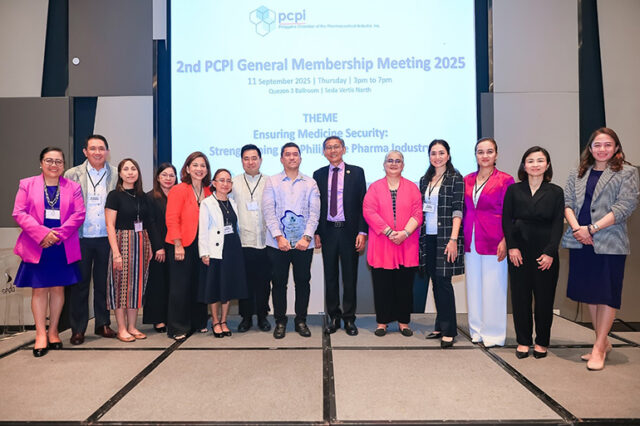
Present during the forum are, among others, (from left to right, in photo) Evangeline Orejola, treasurer of Northfield Lab; Robert Eugenio, Head of External Affairs at Unilab, Inc.; MariKhris Villanueva, director of Pascual Consumer; Zeny Esguerra, director of La Croesus; Marilou Buensuceso, director of EL Lab; Tess Montejo, PRO of Pascual Lab; Dr. Lloyd Balajadia, president of PCPI and Lloyd Lab; Atty. Paolo Teston, director-general of FDA; Congressman Ciriaco B. Gato, Jr., chair of the House of Representatives’ Committee on Health; Corazon Halili-Dichosa, director of DTI-BOI; Rosella Camua, VP for Manufacturing at Am Europharma; Jingle Diola, VP for Marketing at Firmlink Pharma; Grace dela Rosa of IQVIA; and Dr. Charmaine Ann M. Rabago, FDA OIC, Center for Drug Regulation and Research

The Philippines’ post-pandemic vulnerability to medicine shortages is getting targeted attention through concrete commitments from Congress, regulatory agencies, and industry leaders to strengthen domestic pharmaceutical capacity and reduce import dependence.

In a recent public forum hosted by the Philippine Chamber of Pharmaceutical Industries (PCPI) focused on the theme “Ensuring Medicine Security; Strengthening the Philippine Pharma Industry,” key stakeholders outlined specific reforms and partnerships that could reshape the country’s approach to medicine security.

Congressman Ciriaco Gato, chair of the House of Representatives’ Committee on Health, spoke about a whole-of-government and whole-of-society approach to address systemic industry barriers.  “We in Congress are cognizant of the numerous concerns that plague the local pharma industry. Regulatory bottlenecks, the prevalence of counterfeits, the high cost of production, reliance on and apparent bias for imports are among issues that must be addressed in the exercise of Congress’ legislative oversight powers,” Gato said.

“We at the Committee on Health and other relevant committees commit itself to reviewing executive issuances that restrict or even prohibit the local pharma industry from effectively functioning in the delivery of medicines that will satisfy the health needs of the population.”

In the same forum, DTI-Board of Investments Executive Director Corazon Dichosa presented market data highlighting both opportunity and structural imbalance. The local pharmaceutical industry is valued at US$4.5 billion with projected 4.1% annual growth until 2029, yet remains critically dependent on imports with government statistics showing only 46 manufacturers compared to 650 importers. Philippine export of medicines to other countries is virtually nonexistent.

Medicine security became a pressing issue during the COVID pandemic when countries restricted exports to prioritize domestic needs. Despite this wake-up call, significant strides to promote local pharmaceutical manufacturing had been limited until these recent commitments.

For his part, Food and Drug Administration (FDA) Director-General Paolo Teston framed medicine security as both a public health imperative and national resilience strategy, drawing lessons from recent global health crises.

“Medicine security is not only a public health concern but a matter of national resilience. We have learned from recent global health crises that ensuring access to safe, effective and affordable medicines are as critical as safeguarding our food supply or securing our borders,” Teston emphasized.

However, Teston clarified that supply availability must be balanced with quality standards: “For the FDA, it is also about the safety, efficacy and quality of every health product that reaches the Filipino people. We will ensure that every tablet, capsule or vial that reaches the Filipino people have undergone the most rigorous scientific review and uncompromising evaluation.”

Teston vowed to ease regulatory barriers without compromising safety to strengthen the competitiveness of the local pharma industry. Other FDA initiatives include digitalization, reliance mechanisms with strict regulatory authorities, and hiring of additional personnel to help reduce backlog applications.

PCPI President Dr. Lloyd Balajadia assured government officials of the private sector’s support for the reform agenda.

“Only private-public partnership can drive progress and with new leaders coming in, it is possible,” Balajadia stated, positioning industry collaboration as essential for meaningful change.

Balajadia outlined an ambitious vision connecting pharmaceutical development to broader economic diplomacy: “In the same way that Filipino nurses are driving a positive image of the Philippines abroad, the healthcare industry can likewise be an offensive tool for economic growth and diplomacy.”

The PCPI president specifically highlighted mutual recognition agreements (MRAs) as strategic pathways for Philippine pharmaceutical companies to enter foreign markets. These agreements could enable streamlined regulatory approval processes across ASEAN and other regions, potentially transforming the Philippines from an import-dependent market to a regional pharmaceutical hub.

PCPI is the largest association of pharmaceutical firms composed mostly of Filipino-owned companies.


Spotlight is BusinessWorld’s sponsored section that allows advertisers to amplify their brand and connect with BusinessWorld’s audience by publishing their stories on the BusinessWorld Web site. For more information, send an email to online@bworldonline.com.

Join us on Viber at https://bit.ly/3hv6bLA to get more updates and subscribe to BusinessWorld’s titles and get exclusive content through www.bworld-x.com.

Peso plunges to 8-month low on Japan policy bets

BW FILE PHOTO

THE PESO plunged to more than an eight-month low on Monday to track the broad decline of Asian currencies against the dollar due to Japan’s surprise pick for its next prime minister.

The local unit closed at P58.35 versus the greenback, sliding by 47.5 centavos from its P57.875 finish on Friday, Bankers Association of the Philippines data showed.

This was the peso’s worst close in more than eight months or since its P58.66 close on Feb. 3.

The peso opened Monday’s session stronger at P58.05 versus the dollar. Its intraday best was at P58.04, while its worst showing was at P58.365 against the greenback.

Dollars exchanged went down to $1.19 billion on Monday from $1.62 billion on Friday.

The dollar was generally stronger on Monday as the yen fell due to the appointment of Japan’s new prime minister, which reduced expectations of a rate hike by the Bank of Japan, Rizal Commercial Banking Corp. Chief Economist Michael L. Ricafort said in a Viber message.

Politics dominated currency markets on Monday as the Japanese yen weakened by the most against the dollar in five months as Sanae Takaichi looked set to become Japan’s next prime minister, Reuters reported.

Ms. Takaichi is a former economic security and internal affairs minister with an expansionary fiscal agenda for the world’s fourth-largest economy, and won the ruling Liberal Democratic Party’s leadership election at the weekend.

Her victory caused traders to reduce bets that the Bank of Japan will hike interest rates this month and reassess their view on the direction of the yen.

The dollar rose 1.8% to 150.1 yen, its highest since August. If sustained, that would be its biggest daily gain since May 12.

In Asian trade, the euro hit 176.22 yen, its highest ever against the yen, but later pared those gains to be up 1.2% at 175.3 yen.

Long-dated Japanese government bonds sold off, with the 40-year JGB yield jumping 15.2 basis points to 3.538%. The yen swaps market on Monday now indicates a 41% likelihood of a rate hike by December, down from 68% on Friday.

“The peso weakened amid growing investor concerns on the lingering corruption probe in the Philippine Senate,” a trader said in an e-mail.

For Tuesday, the trader said the peso could rebound as likely faster September inflation could cause the Bangko Sentral ng Pilipinas to pause its easing cycle again at this week’s meeting following three straight cuts.

The trader sees the peso moving between P58.20 and P58.45 per dollar on Tuesday, while Mr. Ricafort expects it to range from P58.20 to P58.50. — A.M.C. Sy with Reuters