Home Blog Page 859

Advanced accounting with Intuit’s QuickBooks Online Advanced

Global technology platform Intuit recently held a virtual forum, in partnership with BusinessWorld, last Oct. 2 to tackle recent advancements in the accounting profession and to give a brief preview of QuickBooks Online Advanced. The innovative accounting software aims to move beyond manual processes, streamline workflows, and provide smarter, data-driven financial insights.

In his keynote address, Cheah Chun How, managing director of High Pines Training and Consultancy, presented a brief assessment of the current Philippine accounting landscape, the challenges that it faces, and the need for more advanced systems for better efficiency in processes.

Mr. Chun How first gave a recap of the evolution of accounting from the use of pen and paper to the use of desktop and accounting software to the current utilization of cloud accounting software with automation and integration.

He also revealed the current accounting challenges, such as the increasing workloads in accounting-related work, the shortage of accountants with experience, inadequate knowledge of accounting, and increasingly complex compliance regulations from International Financial Reporting Standards.

Mr. Chun How also noted how artificial intelligence is reshaping accounting by automating manual tasks and driving efficiency across the industry.

“I’ve seen a big growth in artificial intelligence. Many software companies are starting to build AI tools to automate various processes, especially in accounting, where much of the work has traditionally been done manually,” he said.

How digital tools like QuickBooks Online Advanced streamline business operations and simplify accounting processes was also highlighted by Mr. Chun How.

“QuickBooks Online Advanced provides this service to help companies scale up. Even in accounting practices, this is what we commonly do. Instead of printing and signing on paper, why not just click a button on the screen inside QuickBooks Online?” he explained.

Mr. Chun How also stressed that accountants who adopt technology with automation and artificial intelligence will increasingly excel and get work done faster than accountants who insist on the non-adoption of new technologies.

The keynote speech was followed by a panel discussion that delved into practical case applications of QuickBooks Advanced across different industries in the Philippines and the value impact that the app will have on both the client and the accountant.

Members of the panel included Mr. Chun How, TnB Global Outsource Pte. Ltd. Managing Director Lily Tan, and UHY M.L. Aguirre & Co. Founding and Senior Partner Michael Aguirre.

The conversation began with an overview of how QuickBooks Advanced can help accountants go beyond basic bookkeeping and become real advisors to their clients.

Mr. Chun How, in this regard, says the future of accounting lies in analytics and technology, as clients increasingly seek data-driven insights and clear reporting, which the product can provide.

“Accountants should have, first, analytical skills. This is what many business owners look for in an accountant. Second is technology proficiency, especially with the rise of various software and AI tools. It’s an advantage for accountants to master software, data interpretation, and reporting. This is what our clients want — they want reports and analytical insights,” he said.

Efficiency and added value

For her part, Ms. Tan emphasized how automation and cloud-based tools like QuickBooks Online can improve business efficiency as a selling point.

“Without using a cloud-based system, there might be human errors. There are many automation systems, which is why, as accountants, we need to show business owners the benefits of QuickBooks Online — especially its banking system, which functions like a mini-[enterprise resource planning] system,” Ms. Tan said.

Similarly, Mr. Aguirre expounded on how QuickBooks Advanced helps accountants compete with bigger practices and offer more value. He said that tools like artificial intelligence aid in streamlining accounting tasks, making processes faster and more efficient.

“The influx of AI, or agent AI, allows automation in areas such as invoicing and bank reconciliation. I believe QuickBooks Online is moving in that direction. Even if some banks are not yet connected, we can use their ledgers and apply AI to perform reconciliations. You can see a simple workflow that completes the reconciliation in a minute — that’s the beauty of technology today,” Mr. Aguirre said.

Skills to focus on

As for skills that accountants should focus on now in order to be ready for the next wave of technology in accounting, Mr. Chun How brought attention to the growing need for accountants to stay adaptable amid rapid technological change.

“Accountants need to know the compliance requirements to make sure data is protected. They need to continuously learn new technologies. Today we have AI; tomorrow, something else might come along in a short time,” he said.

On the easiest ways QuickBooks Advanced can deliver for new businesses, Ms. Tan mentioned the importance of understanding clients’ business challenges before promoting software solutions.

“We, as accountants, need to start with the client’s pain points, not the software. We don’t talk about how good the software is, because every software has its own strengths. What matters most is tailoring the software to the real business world and addressing the client’s actual challenges,” she added.

Mr. Aguirre also shared how transparency in financial systems helps businesses track transactions accurately and identify opportunities for growth.

“When you have a cloud-based system like this, it’s accessible. You actually get to know the transactions and what’s happening. It’s about the risk of not knowing your transactions versus the advantage of understanding them and seeing how you can improve or grow your business over time,” he noted.

Themed “From Accounting to Advisory: Cutting-Edge Accounting with QuickBooks Online Advanced”, the webinar aligns with the company’s mission to power prosperity around the world. Intuit helps customers and communities overcome their most important financial challenges through its renowned products, such as TurboTax, QuickBooks, Credit Karma, and Mailchimp, which serve millions of customers worldwide.

Watch the recorded session by signing up at https://zurl.co/B65lF.


Spotlight is BusinessWorld’s sponsored section that allows advertisers to amplify their brand and connect with BusinessWorld’s audience by publishing their stories on the BusinessWorld Web site. For more information, send an email to online@bworldonline.com.

Join us on Viber at https://bit.ly/3hv6bLA to get more updates and subscribe to BusinessWorld’s titles and get exclusive content through www.bworld-x.com.

Huawei’s first diving smartwatch now available for pre-order 

HUAWEI

The Huawei Watch Ultimate 2 is now available for pre-order until October 23 at official Huawei Experience Stores and online shops. The Black variant is priced at P44,999 with a Blue variant retailing for P54,999. The Watch Ultimate 2 can go up to a depth of 150 meters and features a sonar-based underwater messaging system.  

Crafted with premium materials such zirconium-based liquid metal, nanocrystal ceramic, and sapphire glass, the Huawei Watch Ultimate 2 comes in a bold octagonal case with a selection of fluoroelastomer rubber and titanium watch bands. The watch has a 1.5-inch LTPO AMOLED screen that’s clear and bright even under direct sunlight. It supports multiple diving modes such as recreational, technical, and freediving. 

On land, the watch supports outdoor sports such as hiking, running, cycling, and golf with support for more than 17,000 course maps.  It can measure the user’s health using the TruSense System by displaying a quick reading of blood oxygen, heart rate, ECG, temperature, sleep, and more. 

Battery life on the smartwatch lasts up to 11 days with support for iOS and Android devices. Other notable features include enhanced NFC, eSIM calling with AI noise cancellation, and GCash Watch Pay support.  

Those who pre-order the watch can get a bundle worth up to P13,000 which includes a Huawei FreeBuds Pro 4 headset, a three-month Huawei Health+ subscription, and a one-year extended warranty with a two-year accidental damage coverage. — Ed G. Geronia Jr. 

SpaceX completes 11th Starship test before debuting upgraded prototype

REUTERS

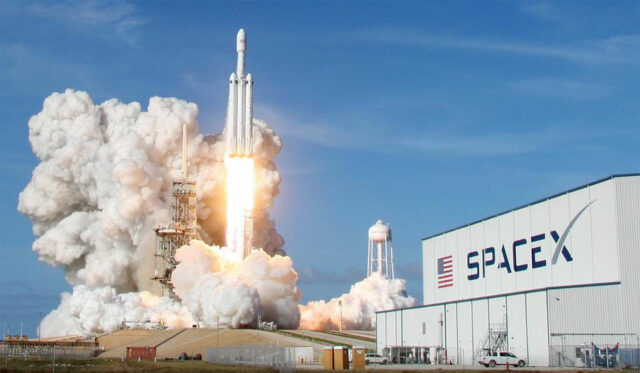
WASHINGTON — Elon Musk’s SpaceX launched its 11th Starship rocket from Texas on Monday and landed it in the Indian Ocean, the last flight before the company begins test-launching a new version of the giant rocket outfitted with more features for moon and Mars missions.

Starship, which includes the Starship upper stage stacked atop its Super Heavy booster, launched at 6:23 p.m. CT (2323 GMT) from SpaceX’s Starbase facilities. After sending the Starship stage to space, Super Heavy returned for a soft water landing in the Gulf of Mexico 7 minutes after liftoff, testing a landing engine configuration before blowing itself up.

Its last mission, in August, ended a streak of testing failures earlier this year. Monday’s flight was similar to the previous one, again deploying a batch of mock Starlink satellites, briefly re-lighting its engines in space and testing new heat shield tiles during its blazing hot return from space before splashing down west of Australia.

Acting NASA Administrator Sean Duffy said on X the mission was “another major step toward landing Americans on the Moon’s south pole.”

SpaceX, in future tests, expects to launch a more advanced Starship prototype tailored with upgrades essential for long-duration missions in space, the company said on Monday.

That includes docking adapters and other hardware changes key to orbital refueling, a complex process involving two Starships docking in orbit to transfer hundreds of tons of super-cooled propellant.

The upgraded prototype “is really the vehicle that could take humans to the Moon and Mars,” SpaceX President Gwynne Shotwell said at a conference in Paris last month. “So that’s really the one we want to get to.”

Shotwell said she expected that iteration of Starship to fly by year’s end or early next year. Musk, SpaceX’s CEO, has said he expects a refueling mission with two Starships to occur next year, a goal NASA in 2024 expected to happen this year.

Refueling is one of many remaining testing objectives required before the rocket carries humans to the lunar surface, which is scheduled for 2027.

Multiple Starship tankers are needed to fill up one Starship with enough fuel for a moon landing under SpaceX’s proposed moonshot plan.

That is part of a more than $3 billion contract SpaceX won in 2021 under NASA’s Artemis program, the US effort to put humans on the moon for the first time since 1972. SpaceX’s award puts it at the center of a race to the moon between the US and China, which is aiming for its own crewed landing in 2030.

A panel of NASA safety advisers warned last month that meager progress in developing elements of the rocket’s lunar lander design risked setting back the U.S. moon effort by years. Sticking a test-landing on the moon’s rough surface is another top priority SpaceX must achieve.

Starship, the most powerful rocket ever launched and many times larger than SpaceX’s workhorse Falcon 9, is also key for launching heavier Starlink satellites essential to the company’s lucrative mobile broadband goals. It is also the centerpiece of Musk’s vision to eventually send humans and cargo to Mars. — Reuters

DOH names primary hospitals in Metro Manila for the ‘Big One’ 

Department of Health Secretary Dr. Teodoro “Ted” J. Herbosa. — EDG ADRIAN A. EVA

The Department of Health (DOH) on Tuesday released the list of DOH hospitals that will serve as the primary healthcare facilities in the event of a destructive earthquake that could hit the country’s capital, also known as the “Big One”.  

Health Secretary Teodoro J. Herbosa said that several DOH hospitals have been designated as the main healthcare access points across the four geographically divided quadrants of Greater Metro Manila in the event of a magnitude 7.2 earthquake.  

“It depends on which hospitals are in a particular geographic area. The hospitals were not designated specifically for earthquakes or disasters,” Mr. Herbosa said in both mixed English and Tagalog during a press conference at Dr. Jose N. Rodriguez Memorial Hospital, noting that some quadrants may have fewer DOH hospitals because their locations are determined by the populations they serve. 

DOH said that the north quadrant covers the cities of Caloocan, Quezon City, Valenzuela, San Juan, and Mandaluyong. 

It has identified the Lung Center of the Philippines, National Kidney and Transplant Institute, East Avenue Medical Center, and the Philippine Heart Center as the primary hospitals that will serve this quadrant. 

The agency likewise tapped the Philippine Children’s Medical Center, Philippine Orthopedic Center, and Dr. Jose N. Rodriguez Memorial Hospital and Sanitarium.  

The eastern quadrant, which lies closest to the West Valley Fault, covers the cities of Marikina, Pasig, Mandaluyong, and parts of Quezon City.  

The DOH designated Amang Rodriguez Memorial Medical Center, Rizal Medical Center, and Quirino Memorial Medical Center to serve the eastern quadrant. 

Meanwhile, the Western Quadrant covers the cities of Manila, Malabon, and Navotas, where the Tondo Medical Center was designated as one of the primary healthcare facilities. 

The Southern Quadrant covers the cities of Las Pinas, Makati, Muntinlupa, Paranaque, Taguig, the municipality of Pateros, and Pasay. The Las Pinas General Hospital and Satellite Trauma Center, and the Research Institute for Tropical Medicine (RITM) have been tapped to serve this quadrant.

Due to the expected surge in patients, the DOH hospitals will implement a 10% surge capacity. 

“That means they will acquire additional beds, monitors, and personnel, some of whom will also be sourced from other hospitals,” Mr. Herbosa said. 

He added that health facilities from Regions 3 and 4A, which are not expected to be largely affected by the “Big One”, will help support Metro Manila.  

The DOH chief also said that the agency has started coordinating with local government-monitored and private hospitals in Metro Manila to support DOH hospitals in case of emergencies. Edg Adrian A. Eva

IMF chief Georgieva says IMF will keep pushing G20 to prioritize debt issues

INTERNATIONAL MONETARY FUND (IMF) Managing Director Kristalina Georgieva attends the China Development Forum 2023, in Beijing, China, March 26, 2023. — REUTERS

WASHINGTON — International Monetary Fund Managing Director Kristalina Georgieva on Monday said the IMF will continue to push the Group of 20 major economies to focus on persistent debt issues burdening developing economies.

Georgieva, speaking at the annual meetings of the IMF and World Bank in Washington, said the impact of US tariffs had been less dramatic than expected, but uncertainty remained high.

“Growth is slow, debt is high and the risks of financial downturn are quite permanent. They are there,” she said, adding that countries needed to be “much, much, much more focused on bringing debt levels down.”

Global public debt is expected to exceed 100% of GDP by 2029, Georgieva said last week.

Georgieva said the IMF was working intensively with the World Bank on helping countries that might not have unsustainable debt levels but faced severe liquidity problems, and would also try to keep debt issues on the radar at the G20.

“You will see us continue to engage with the G20,” she said. “We want this to be high on the attention span … Please, this is a priority.”

South Africa, current president of the G20, has made debt sustainability a key pillar of its year at the helm. The United States, which will take over the G20 presidency in December, has not signaled great interest in the issue thus far.

Georgieva said it was critical to recognize that countries needed to grow out of debt, which highlighted the need for job creation and ensuring access to technology.

Developing countries, already saddled with high debt levels, have faced additional burdens given US President Donald Trump’s sweeping tariffs. The World Bank in April said half of some 150 developing countries are either unable to make debt service payments or at risk of getting there.

Total debt in emerging markets rose by $3.4 trillion in the second quarter to a record of more than $109 trillion, according to recent data from the Institute of International Finance. — Reuters

Philippines, Australia hold drills in Visayas

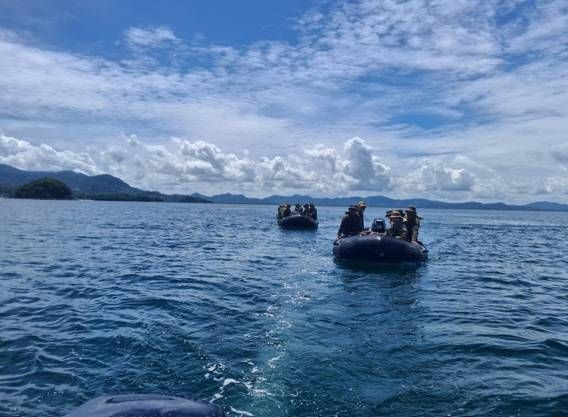
Philippine and Australian army troops train together on coastal defense operations in Camp Jamindan, Capiz on Oct. 13.⁩⁩⁩ PHILIPPINE ARMY

By Kenneth Christiane L. Basilio, reporter

The Philippine and Australian armies held defense drills on Monday aimed at bolstering interoperability between the two nations amid shared security concerns over China’s growing assertiveness in the South China Sea.

About 171 Philippine troops and 90 Australian soldiers participated in exercises held in Capiz province in central Visayas. The drills covered coastal defense, missile survivability and mortar and drone operations, according to the Philippine Army.

The drills are part of the broader Exercise Kasangga — Filipino for ally — traditionally held on Luzon island, which faces the South China Sea to the west and the volatile Taiwan Strait to the north.

“Conducting the said exercise outside of the traditional training areas in Luzon sends a clear message about the army’s commitment to strengthen its operations in areas of strategic importance to regional stability,” the Philippine Army said in a statement.

Australia has been one of the Philippines’ closest allies in the eastern hemisphere, and in 2007, the two countries forged a visiting forces agreement allowing their troops to hold joint exercises in each other’s territories. The pact came into force in 2012.

The Philippines has sought to expand its security ties beyond its traditional ally, the US, engaging with other western countries and regional allies as it faces an increasingly assertive China over disputed features in the South China Sea.

Beijing claims almost all of the strategic waterway via a U-shaped, 1940s nine-dash line map that overlaps with the exclusive waters of the Philippines, resulting in clashes at disputed maritime features, as both the countries uphold their claims in the marine-rich water.

IKEA to open ‘Plan and Order’ store in Ayala Malls TriNoma

IKEA is partnering with Ayala Malls to open its first Plan and Order Shop with the aim of bringing its products closer to northern Metro Manila residents.

Spanning 500 square meters, the small-scale store will allow customers to purchase in-store items and will serve as a free collection point for online orders.

It will be located in Ayala Malls TriNoma in Quezon City.

“I am happy that we are now getting closer to many more Filipinos, especially in the north of Manila,” IKEA Philippines Country Retail Manager Ricardo Pinheiro said at an event on Tuesday.

“This partnership between IKEA and Ayala Malls allows us to create spaces that are accessible, convenient, and inspiring,” he added.

The store will also allow customers to plan out the designs of their home for free, with the help of 14 IKEA employees trained in interior design.

“The new Plan and Order Shop at TriNoma reflects our democratic design philosophy and offers a convenient alternative for those who live in the north of Metro Manila,” he said.

“TriNoma’s strategic location aligns with our sustainable philosophy in the most practical sense—it saved our customers gas, time, and effort while still giving access to IKEA’s well-designed, affordable home solutions,” he added.

The store, which is the second store of IKEA in the country, will go live on Oct. 23. – Justine Irish D. Tabile

Apple iPhone Air hands-on: thin yet power-packed

The iPhone Air is an all-new model launched together with the iPhone 17 series — JAYVEE C. FERNANDEZ

With the midnight launch of the 2025 iPhone series coming this week, there’s much anticipation for the base iPhone 17 model and the iPhone 17 Pro/Pro Max. We don’t hear much about the iPhone Air because it seems like its main selling point is the thin form factor. 

 After using it for an entire afternoon, I am making the case that this phone is an executive-class device not just because of its design but also features made specifically for the C-suite. Bold prediction: we will be seeing more of the iPhone Air in the boardroom. Here’s why: 

 Gone with the Gen Z selfie 
 The Gen Z selfie, also known as “0.5” is a trademark of the current generation’s take with group shots. For the older millennials and Gen X executives, the behavior for selfies with colleagues still tends to gravitate towards the front facing camera – a more traditional selfie. The iPhone Air makes use of the 18-megapixel Center Stage camera to automatically zoom in and out of front-camera portrait shots. 

 The Air mindset 
 The iPhone Air will be attractive to those who have embraced the philosophy of the MacBook Air and the iPad Air. You’re getting a thinner and lighter footprint in your C-suite pocket with the same power as the iPhone 17 Pro. The iPhone Air MagSafe Battery accessory is an optional but highly recommended add-on, as it doesn’t add too much weight, yet extends the battery life by 65%.  

If I were to pick the most innovative iPhone product for 2025, it would be the iPhone Air, but not for the reasons you think. 

Pro-level performance without the bulk  
Apple has marketed this phone as the thinnest iPhone ever made, and this is factually correct. They’ve highlighted design and aesthetics as the two pillars of what this phone is all about. After handling the iPhone Air for about half a day, I have come to the conclusion that this is their version of the “AI Phone” without saying it. Before all this I was a little skeptical of the Air, thinking it was more of a marketing gimmick to have another “thin phone” at 5.6mm like most other smartphone brands. The push to only having one camera felt like a step down, just to get everything thinner. But then if that was the case, why did the iPhone Air come with the same A19 Pro chip as the iPhone 17 Pro? That wouldn’t make sense. I also found out that most of the phone’s hardware is located inside the plateau, the upper 20% of the device. Everything else is battery and screen.  

The A19 Pro chip is the quiet powerhouse behind the iPhone Air — the same silicon that drives Apple’s flagship, now packed in a slimmer frame. The 48MP Fusion Camera brings flagship-level versatility into a single lens, using computational processing to pull in more light, sharpen detail, and simulate optical zoom without the bulk. You get clean 1x low-light shots, 2x optical-quality zoom, and a Center Stage front camera that automatically adjusts for portraits or group calls.  

After moderate use, I was surprised with the heat management, with most of the heating concentrated on the plateau. The battery itself does not heat up. Although the iPhone Air does not need a case, I’m seeing the return of the bumper case from way back and a low profile case is probably the best case to highlight the thin form factor. Jayvee C. Fernandez 

How social media is helping boost China’s ‘cool’ image in Vietnam

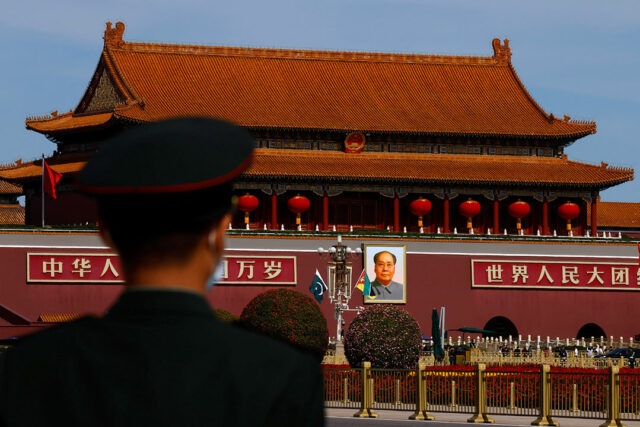
A SOLDIER stands guard at the Great Hall of the People in Beijing, China, Oct. 18, 2023. — REUTERS

HANOI – Dozens of young Vietnamese women lined up for hours last month to catch a glimpse of “cool” troops marching through Hanoi in a huge military parade. But it was not their own soldiers they were looking out for. It was the Chinese contingent.

The scene reflects a shift in attitudes towards China – amid trade tensions with the United States – which has allowed Vietnamese leaders to push forward with sensitive projects, such as high-speed rail links and special economic zones close to China, that may significantly boost bilateral ties.

Only a few years ago, with many Vietnamese wary of a powerful neighbour with which they have fought multiple wars, such projects were seen as too controversial and caused violent protests.

But views are softening, posts on social media, online searches and language learning data show.

Nearly 75% of Vietnamese respondents prefer the United States to China as a partner, but the share favoring China is rising faster than anywhere else in Southeast Asia, bucking the regional trend, according to a poll conducted at the start of the year by the Singapore-based ISEAS-Yusof Ishak Institute.

TIKTOK ROLE

Social media appear to be playing a crucial role in the changing mood in Vietnam – and in particular TikTok, which is popular among the young and last year had 67 million users in Vietnam, the highest number after Facebook META.O, according to the government.

When users of the platform owned by Chinese tech giant ByteDance search for the Vietnamese word for China, they get overwhelmingly positive results, some of them dating back to 2023.

Among popular videos suggested by TikTok are clips of Chinese soldiers performing synchronised dances and video showcasing Chinese cities, with many viewers expressing admiration for China’s rapid development.

TikTok users searching for the Vietnamese name of the South China Sea, a frequent flashpoint between the two Communist countries that have competing claims over the waters, often get clips on tropical storms or tensions between China and the Philippines, which also has claims on parts of the sea, according to tests conducted without user profiles to avoid algorithmic bias.

TikTok’s algorithm is confidential. China has orchestrated online campaigns using fake accounts on platforms including TikTok and Facebook to promote its geopolitical interests in the Philippines.

China’s foreign ministry did not respond to a question about possible online campaigns but said bilateral relations have deepened. Vietnam’s foreign ministry did not reply to a request for comment.

CHINA’S ‘FLAWLESS’ SOLDIERS

In September, crowds gathered in Hanoi to celebrate the 80th anniversary of Vietnam’s declaration of independence from colonial rule.

Tens of thousands lined the streets, many of them to watch Chinese troops march alongside Vietnamese soldiers – an unprecedented sight in the capital of a country that was last invaded by China in the late 1970s and where major streets carry names of anti-Chinese heroes.

“It was worth the wait. So cool. I admire their discipline,” said Le Huyen My, a 22-year-old graduate who travelled from Ho Chi Minh City in the south and camped overnight to secure a spot to watch the Chinese contingent.

One video about the parade reached 3.3 million views on TikTok and drew around 1,400 comments, many praising the Chinese soldiers’ “flawless” marching.

Similar videos on other platforms also drew positive reactions, although Facebook users were more sceptical of both China and the U.S.

“Young Vietnamese online sound less strident about China than before, but that owes more to the state’s increasingly tightening control of nationalism than to fading resentment,” said Nguyen Khac Giang from ISEAS.

Online campaigns against China are still frequent in Vietnam and usually target companies for using Beijing-aligned maps of the South China Sea, but they tend to be short-lived.

That marks a change from 2018 when widespread anti-China protests forced the Vietnamese government to shelve a plan for special economic zones seen as favouring Chinese companies.

Now, Vietnamese state media report frequently on new plans for economic zones at the border with China, stirring no protest.

“Economic interests are prevailing over nationalism,” said Nguyen Hung, a scholar at RMIT University Vietnam, noting the Vietnamese government has promoted a pragmatic approach towards China, especially as trade tensions with Washington escalate.

Chinese companies are now among Vietnam’s top investors, Vietnamese data show, leaders meet frequently and interest in Chinese culture is growing.

China’s President Xi Jinping travelled to Vietnam twice in the past two years and Vietnam’s leader To Lam visited Beijing in his first overseas trip shortly after his appointment as Communist Party chief in 2024.

Online searches in Vietnam for China have surged, focusing on Chinese movies and language, according to Google Trends.

In the first quarter of 2025, Vietnam led global registrations for the HSK Chinese Proficiency Test, China’s official examination for non-native speakers, according to Chinese state media.

But as China has often experienced in centuries of ambivalent relations, Vietnamese pride runs deep.

“The Chinese troops look fascinating, but our soldiers are still the best,” said Nguyen Hue Van, a 21-year-old student who attended the September parade in Hanoi. — Reuters

Boracay, Palawan, Siargao rank among the top islands in Asia

Local and foreign tourists are seen in Puka Beach in Boracay, Aklan, April 6, 2023. — PHILIPPINE STAR/MIGUEL DE GUZMAN

The Department of Tourism (DoT) on Monday said that tourist destinations Boracay, Palawan, and Siargao are part of the top ten islands in Asia in the Condé Nast Traveler’s 2025 Readers’ Choice Awards.

“This recognition by Condé Nast Traveler is a living testament to the beauty, resilience, and stewardship of our island communities,” Tourism Secretary Ma. Esperanza Christina G. Frasco said in a press release.

Ms. Frasco added that the recognition reaffirms the department’s commitment to “preserving natural wonders, advancing sustainable tourism, and ensuring that the prosperity these destinations bring reaches every Filipino.”

The survey by the US-based luxury and lifestyle travel magazine garnered votes from over 700,000 travelers globally.

Boracay ranked fourth in the survey with 90.54 points, followed by Palawan in fifth place with 90.23 points, and Siargao at seventh spot with 85.49 points.

Other world-class destinations included in the list are Phú Quốc in Vietnam, Langkawi in Malaysia, Bali in Indonesia, Andaman Islands in India, and several islands in Thailand, such as Koh Samui, Phuket, and Phi Phi Islands.

In 2024, four islands in the Philippines — Boracay, Palawan, Cebu, and Siargao were recognized by Condé Nast Traveler, making it the only ASEAN country with the most entries.

The DoT noted that the country has also been consistently awarded by the World Travel Awards (WTA) as Asia’s Leading Beach Destination and Asia’s Leading Dive Destination.

“These awards belong to our people, their craft, and the spirit of Love the Philippines that we proudly carry forward,” Ms. Frasco said.

“We invite travelers to help protect these treasures by practicing responsible tourism and supporting local communities. Together, we can ensure that the Philippines’ islands remain vibrant, sustainable, and welcoming for generations to come,” she added.

The Tourism department reported 2,905,363 foreign visitors arrived in the first six months of 2025.

The Bureau of Immigration (BI) also reported that total arrivals in the first half of the year increased by 8%, highlighting 7,840,728 arrivals up from 7,268,465 last year.

The agency added that the US remained the top source of tourists with 753,544 arrivals, followed by South Korea (745,623), Japan (256,776), China (229,915), and Australia (188,082). — Almira Louise S. Martinez

Trump’s tariffs hit home: How US companies and consumers are paying the price

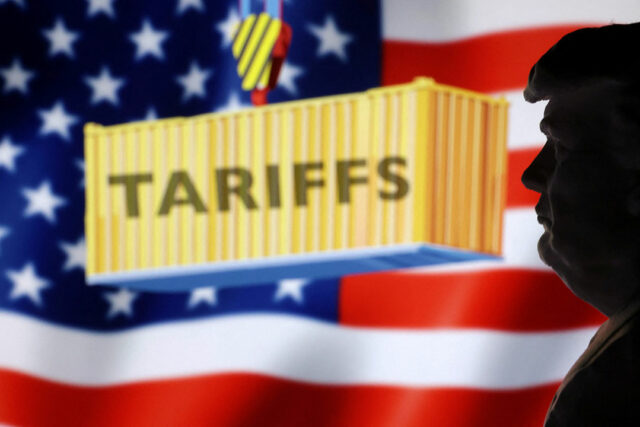
US President Donald J. Trump announced he will impose a 10% baseline tariff on all imports to the United States. — REUTERS

FRANKFURT/WASHINGTON – US companies and consumers are bearing the brunt of the country’s new import tariffs, early indications show, contradicting assertions by President Donald Trump and complicating the Federal Reserve’s fight against inflation.

Trump famously predicted that foreign countries would pay the price of his protectionist policies, wagering that exporters would absorb that cost just to keep a foothold in the world’s largest consumer market.

But academic studies, surveys and comments from businesses show that through the first months of Trump’s new trade regime it is US companies that are footing the bill and passing on some of it to the consumer – with more price hikes likely.

“Most of the cost seems to be borne by US firms,” Harvard University professor Alberto Cavallo said in an interview to discuss his findings. “We have seen a gradual pass-through to consumer prices and there’s a clear upward pressure.”

A White House spokesperson said “Americans may face a transition period from tariffs” but the cost would “ultimately be borne by foreign exporters.” Companies were diversifying supply chains and bringing production to the United States, the spokesperson added.

WHO IS EATING THE TARIFFS?

Cavallo and researchers Paola Llamas and Franco Vazquez have been tracking the price of 359,148 goods, from carpets to coffee, at major online and brick-and-mortar retailers in the United States.

They found that imported goods have become 4% more expensive since Trump started imposing tariffs in early March, while the price of domestic products rose by 2%.

The biggest increases for imports were seen in goods that the United States cannot produce domestically, such as coffee, or that come from highly penalized countries, like Turkey.

These price hikes, while material, have been generally far smaller than the tariff rate on the products in question – implying that sellers were absorbing some of the cost as well.

Yet US import prices, which don’t include tariffs, showed foreign exporters have been raising their prices in dollars and passing on to their US buyers part of the greenback’s depreciation against their currencies.

“This suggests foreign producers are not absorbing much if any of the US tariffs, consistent with prior economic research,” researchers at Yale University’s Budget Lab think-tank said in a blog post.

National indices of export prices paint the same picture. The cost of goods exported by China, Germany, Mexico, Turkey and India have all risen, with Japan the only exception.

FULL IMPACT OF TARIFFS YET TO BE FELT

Adapting to Trump’s tariffs – a still-incomplete set of levies that pushed import taxes from an average of around 2% to an estimated 17% – is still underway. It is seen taking months longer as exporters, importers and consumers jostle over who pays duties worth round $30 billion per month.

“We shouldn’t expect this to be a one-time jump but rather firms are trying to find ways to soften the blow,” and stretch price increases out over time, Cavallo added.

European carmakers have looked – so far – to absorb more of the price impact, but consumer firms including Tide detergent-maker Procter & Gamble, Ray Ban-maker EssilorLuxottica and Swiss watchmaker Swatch have hiked prices.

Around 72% of companies in Europe, the Middle East and Africa tracked by Reuters flagged price hikes since Trump’s trade salvoes started, a Reuters tracker shows. Only 18 companies have warned on profit margins.

Separate Reuters analyses of e-commerce websites Shein and Amazon were already showing robust price increases for Chinese products sold in the United States, ranging from clothing to electronics.

China’s so-called “anti-involution” policy, under which producers are encouraged to scale back competition and even cut capacity in key sectors, could add fuel to the fire by curbing the supply of goods such as solar-power equipment.

That has all set the scene for higher inflation in the United States. The Fed cut its benchmark rate last month on concerns the job market was weakening but policymakers are split over whether or not tariff-driven inflation will likely fade.

The Fed’s newest governor, Stephen Miran, on leave from the Trump administration, argues the tariffs are not inflationary and has brushed off concerns about what he called “relatively small changes in some goods prices.”

A Boston Fed “back of the envelope” calculation projected tariffs would push up core inflation by 75 basis points.

Fed Chair Jerome Powell said tariffs accounted for perhaps 30-40 basis points of the latest core inflation reading of 2.9% but the effect should be “relatively short-lived.”

The Peterson Institute for International Economics estimated that inflation over the next year would be 1 percentage point higher than if tariffs hadn’t been raised but would then fall back.

GLOBAL TRADE SEEN SUFFERING AS TARIFFS BITE

The rest of the world, however, has no reason to celebrate.

As US consumers struggle to keep up with rising prices, demand for exports is likely to slow. An S&P Global survey of purchasing managers at companies all over the world showed new export orders contracting at an increasing pace since June.

European Union exports to the United States fell by 4.4% from the prior year in July, the latest month for which data was available, and in the bloc’s former powerhouse Germany they were down 20.1% in August.

The World Trade Organization, too, slashed its forecast for global merchandise trade volume growth next year to just 0.5%, citing a delayed impact from US tariffs. US shipment data tracked by German think tank the Kiel Institute also showed a clear downtrend.

While that all may partly reflect strong front-loading of orders earlier in the year in anticipation of tariffs, it is also prompting caution about the trade outlook.

Dutch bank ING expected a 17% reduction in EU goods exports to the US over the next two years, costing the bloc 30 basis points of GDP growth.

“The expected impact of US tariffs hasn’t materialized yet,” Ruben Dewitte, an economist at ING, said. “We anticipate these effects will become more visible in the coming months.” — Reuters

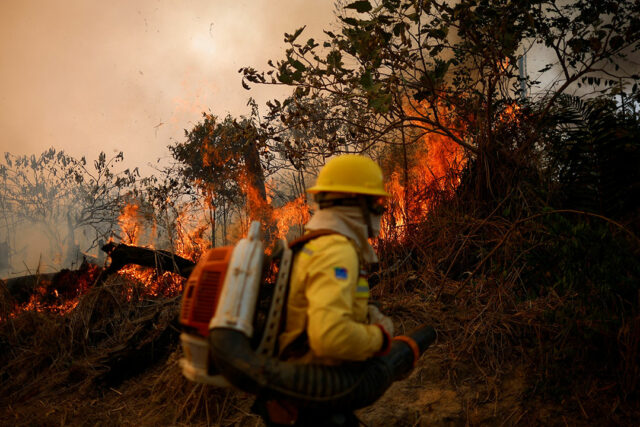
World falling far behind deforestation goals with farms and fires driving loss, report says

A MEMBER of Brazilian Institute of Environment and Renewable Natural Resources (IBAMA) fire brigade works to extinguish a fire rising in Amazon rainforest in Apui, Amazonas state, Brazil, Aug. 8, 2024. — REUTERS

SANTIAGO – The world is falling far behind a global goal to reverse deforestation by 2030, with losses being largely driven by agricultural expansion and forest fires, according to the 2025 Forest Declaration Assessment.

The report said the world permanently lost 8.1 million hectares (20 million acres) of forest, an area about the size of England, in 2024 alone, putting the planet 63% behind the goal set by over 140 countries in the 2021 Glasgow Leaders’ Declaration on Forests and Land Use.

The Forest Declaration Assessment brings together research organizations, think tanks, non-governmental organizations and advocacy groups, and the report was coordinated by advisory company Climate Focus.

Fires were the leading cause of forest loss, accounting for 6.73 million of those hectares around the world, with the Amazon rainforest hit particularly hard, releasing nearly 800 million metric tons of CO2 from fires in 2024.

“Major fire years used to be outliers, but now they’re the norm. And these fires are largely human-made,” said Erin Matson, lead author of the Forest Declaration Assessment. “They’re linked to land clearing, to climate change-induced drought, and to limited law enforcement.”

Earlier reports also found Amazon fires led to unprecedented forest loss, with Brazil leading tropical forest loss and Bolivia’s forest loss surging by 200% in 2024.

This year’s global forest assessment also found that on average, 86% of annual global deforestation over the last decade was caused by permanent agriculture. It also listed gold and coal mining as growing sources of deforestation.

“Demand for commodities like soy, beef, timber, coal, and metals keeps rising, but the tragedy is we don’t actually need to destroy forests to meet that demand,” Matson said, adding over $400 billion in agricultural subsidies are helping drive deforestation.

“The incentives are completely backwards,” she said, noting international public finance for forest protection and restoration averaged just $5.9 billion a year. The report estimates that $117 billion to $299 billion in financing is needed to reach the 2030 goals.

With the COP30, the United Nations climate change conference, set to start in Brazil in November, Matson points to the country’s proposed Tropical Forest Forever Facility, which aims to raise $125 billion in funding for long-term forest finance as a way to help stem forest loss.

The fund, which would be financed by governments and private investors, could disperse $3.4 billion a year with 20% going to indigenous and local communities.

“Looking toward COP30 in Belem, a successful launch of the Tropical Forest Forever Facility, TFFF, could start to channel long-term reliable finance to keeping forests standing,” Matson said. “So looking at the global picture of deforestation, it is dark, but we may be in the darkness before the dawn.” — Reuters

ADVERTISEMENT
ADVERTISEMENT