
Home Blog Page 8241

New old songs

By Michelle Anne P. Soliman, Reporter

Album Review
Fearless (Taylor’s Version)
By Taylor Swift
Republic Records

THE BOXES were stacked, and the CDs had to be stored by genre. Set for storage that day were country/folk albums. This writer, then 17 years-old, loaded the box with dad’s collection first. When it was time for my CDs, the first thing I took out was Taylor Swift’s Fearless (2008). Clutching the album, I recalled when I used to listen to it every night while studying as a high school sophomore. I knew I would want to listen to it again once we moved to our new house. Instead of adding it to the box, I kept it in a duffel bag together with my favorite CDs where they have remained in good condition to this day.

***

The first rush of nostalgia came on Feb. 12 this year when the 11-time Grammy award winning artist released the song “Love Story,” which was specifically called “(Taylor’s version).” The track has its original country-pop sound, but the vocals are brighter. The end of the last note leaves the listener anticipating more.

The reason the song is called “Love Story (Taylor’s version)” is because Taylor lost control over the original versions of her music. So she decided to do them all over again.

When Ms. Swift’s contract with Big Machine Records ended in 2018, she signed with the Universal Music Group which owns Republic Records, the label with whom she recorded her last three albums —  Lover  (2019), folklore (2020), and evermore (2020). In 2019, music executive Scooter Braun bought Big Machine Records — the record label that owns the master recordings of the singer’s first six albums. Swift has said that she had wanted to buy the masters for years, but was unable to. Big Machine then sold the recordings to the private equity company Shamrock Holdings “for a reported $300 million.” 

So, Ms. Swift plans to re-record her first six albums —  beginning with Fearless, which was originally released in 2008 —  and release the new versions, as a way of circumventing the issue.

Last week, the 31-year-old singer released the album Fearless (Taylor’s version) with 26 tracks — the deluxe edition has a 27th track, “Love Story” (Elvira remix) — featuring the original 13 song lineup, seven tracks from its platinum edition, and a bonus of six “From the Vault” songs. Running for almost two hours, the album stays consistent with its original country-pop production throughout.

Listening to the original lineup for the first time in a decade, the lyrics hit differently. Hearing the chorus of “Fifteen” reminded me of the naive and in love teenager that I was.

When it got to the fourth track, “Hey Stephen,” I was surprised to hear Ms. Swift’s laughter at the break after the song’s bridge, just like in the original.

After listening for over an hour, hoping to spot any significant differences, I broke my silence at the 20th song — “Today was a Fairytale” (originally released in 2010 as part of the soundtrack for the film Valentine’s Day) — and sang along to the chorus with matching harmonies.

The addition of never-before released songs called “From the Vault” is a new treasure Ms. Swift offers her fans.

“One thing I’ve been loving about these From The Vault songs is that they’ve never been heard, so I can experiment, play, and even include some of my favorite artists,” Ms. Swift wrote on Twitter and Instagram on March 24.

The six new songs begin with a mellow country ballad, “You All Over Me” (featuring Maren Morris), followed by the slightly upbeat  “Mr. Perfectly Fine.” The album ends with mellow songs with “We Were Happy” and “Bye Bye Baby.” The “From the Vault” tracks showcase Ms. Swift’s storyteller songwriting style, tackling relationships, heartbreaks and slowly recovering from them, and reminiscing about an old flame. The songs would resonate and most likely have been well-loved too had they been released earlier in the singer’s career.

Listening to the re-recorded Fearless album was a comforting treat. This 27-year-old rekindled the enjoyment of listening to the CD while finishing homework. Whether you are a longtime Swiftie or new one, it is worth anticipating what the singer/songwriter has in store in her subsequent re-recordings.

Fearless (Taylor’s Version) is available on music streaming platforms. For more information, visit https://www.taylorswift.com/.

Phoenix asset sale seen to boost investor confidence, bring higher returns

PHOENIXFUELS.PH

PHOENIX Petroleum Philippines, Inc. said on Monday that its planned transfer or sale of assets, if given the go-signal, may improve investor confidence and bring increased returns on invested capital.

In its information statement submitted to the local bourse on Monday, Phoenix Petroleum said the entry of a credible strategic partner could boost confidence in the company.

This may “set the stage for future capital raising activities both in debt and equity markets,” it said.

Details of the proposed asset sale or transfer come around three weeks after it announced that its board had greenlit the move to support its debt management activities. The proposal will be submitted to shareholders for approval during the company’s annual stockholders’ meeting on April 30.

“[Other implications of the proposed actions include] increased returns on invested capital due to enhanced utilization of the assets via sale or transfer; potential gains to the overall bottomline, [and] enhanced credit risk profile and lower borrowing costs… as transaction proceeds are used to pay down debt,” the company said.

At present, the company has not taken up any transaction involving mergers, consolidations, acquisitions and similar matters.

Last month, Phoenix Petroleum’s Senior Vice-President of External Affairs, Business Development and Security Alan Raymond T. Zorrilla said that the firm was exploring how it could maximize the value of assets outside its core business.

The Dennis A. Uy-led listed oil firm previously clarified that like any business, the company or any of its units are “open to consider any investor willing to invest and believes in the operations [of Phoenix Petroleum] and can further add value to its business activities.”

It earlier said that local volume sales slid by 20% in 2020, with fourth-quarter sales cushioning the fall. It closed the year with a P63-million net income, with sales from October to December hitting P158 million, reversing prior losses.

Shares of Phoenix Petroleum in the local bourse shed 0.16% or two centavos to close at P12.28 apiece on Monday. — Angelica Y. Yang

BSP raises P80 billion from short-term securities

THE CENTRAL BANK fully awarded its offer of 28-day bills on Monday as rates slipped following the slower inflation print in March.

The Bangko Sentral ng Pilipinas (BSP) sold P80 billion as planned in short-term securities on Monday, with bids reaching P114.176 billion. The offering was oversubscribed by 1.43 times but tenders were lower compared with the P119.824 billion seen in the previous auction.

The central bank’s auctions of short-term securities are usually held on Fridays, but April 9 was a holiday for the Day of Valor.

Accepted rates for the 28-day securities ranged from 1.85% to 1.9050%, a slightly lower margin versus the 1.87% to 1.9449% seen a week ago.

This caused the 28-day securities’ average rate to drop by 3.61 basis points to 1.8795% from 1.9156% on April 5.

Both the BSP bills and term deposits are used by the central bank to gather excess liquidity and to guide short-term market rates.

“The results of the BSP bill auction support the view that, amid ample liquidity in the system, market participation continues to normalize following the Lenten holidays,” BSP Deputy Governor Francisco G. Dakila, Jr. said in a statement.

“Looking ahead, the BSP’s monetary operations will remain guided by its assessment of the latest liquidity condition and market developments,” Mr. Dakila added.

The lower yields seen in the auction came following the release of March inflation data last week, which showed some signs of easing, Rizal Commercial Banking Corp. Chief Economist Michael L. Ricafort said.

Headline inflation in March slowed to 4.5% from 4.7% in February, the Philippine Statistics Authority reported on Tuesday last week. This was mainly due to the slower increase in food prices.

Despite this, March marked the third straight month that the headline print went beyond the central bank’s 2-4% target as supply issues caused a hike in prices of meat products.

The central bank expects headline inflation to average 4.2% this year before easing to 2.8% in 2022. BSP officials have said the inflation path is likely to ease below the midpoint of the 2-4% target towards the fourth quarter.

BSP Governor Benjamin E. Diokno has said the central bank will remain accommodative to support economic recovery but will continue to watch out for  potential second-round inflation effects, such as wage and transport fee hikes. — L.W.T. Noble

DMCI to launch 4 new QC condominiums

DMCI PROJECT Developers, Inc. (DMCI Homes) is planning to launch four more condominiums in Quezon City within the year, which the company said is a response to higher demand in the area.

DMCI will launch the two-tower The Oriana in Aurora Boulevard this year. The property firm said it is working on permits for three more projects in the city this year.

“Four from the list of projects we are planning to launch this year are in Quezon City. We are eager to help address the big residential demand with our brand of quality and best value condominiums,” DMCI Homes Vice-President for Project Development Dennis O. Yap said in a press release on Sunday.

Most DMCI projects in Metro Manila are in Quezon City, with 14 ongoing and ready for occupancy projects.

The company said that the infrastructure works like the Skyway Stage 3 project, MRT7, and the Metro Manila Subway Project have made the area attractive for homebuyers and investors. — Jenina P. Ibañez

Top Gun sequel delayed in summer movie setback for theaters

TOM CRUISE in Top Gun: Maverick (2021) — IMDB.COM

LOS ANGELES — Paramount Pictures has pushed the release of the Tom Cruise movie Top Gun: Maverick to November from July, the studio said on Friday, a move that deprives theaters of what was expected to be one of the biggest releases of the summer blockbuster season.

The sequel to 1986 hit Top Gun will now debut in theaters on Nov. 19, the day Paramount had planned to release Cruise’s seventh Mission: Impossible movie. That film was moved to May 2022, according to Paramount, a unit of ViacomCBS, Inc.

Movie theater operators including AMC Entertainment, Cineworld Group Plc and Cinemark Holdings, Inc. hope for a summer rebound after a year of closures due to the coronavirus disease 2019 (COVID-19) pandemic.

The ninth installment of the Fast & Furious franchise, from Comcast Corp.’s Universal Pictures, currently remains scheduled to hit cinemas on June 25.

Walt Disney Co.’s Marvel film Black Widow is set to be released in theaters, and for a fee on the Disney+ streaming service, on July 9. — Reuters

Filinvest Development net income dips 29% on pandemic’s impact

FILINVESTGROUP.COM

GOTIANUN-LED Filinvest Development Corp. (FDC) saw its attributable net income fall by 29% to P8.5 billion in 2020 as it was “not spared by the severe impact of the COVID-19 (coronavirus disease 2019) pandemic.”

“Coming from a landmark year in 2019, the COVID-19 pandemic brought an unexpected pause to our 2020 plans,” FDC President and Chief Executive Officer Lourdes Josephine Gotianun-Yap said in a statement on Monday.

However, the company said its mixed portfolio allowed it to finish the year with healthy financial results.

Consolidated net income amounted to P11.5 billion, dipping by 28% from the P15.9 billion seen in 2019.

Banking arm EastWest Banking Corp.’s income contribution amounted to P6.4 billion, net of eliminations, or 46% of FDC’s bottom line. Its share is four percent higher than the P6.2 billion contributed in 2019 due to gains in trading and higher margins from the low interest rate environment.

EastWest’s net interest income went up by 23% to P26.5 billion as the banking business sustained a net interest margin of 8.1%. Non-interest income inched down by five percent to P6.9 billion due to the drop in fees, modified payment schemes, and assistance to customers.

The bank also increased its provisions for losses to P9.8 billion from P4 billion the previous year.

Meanwhile, the company’s real estate business and hospitality segments accounted for P5.3 billion or 38% of FDC’s net earnings.

The combined income contribution of real estate firms Filinvest Land, Inc. (FLI) and Filinvest Alabang, Inc. (FAI) fell by 29% to P6 billion in 2020 from P8.4 billion the previous year.

“The residential segment was affected by lower sales take-up, completion delays and the grace period granted to the homebuyers during the strict lockdown period, which delayed real estate sales recognition,” FDC said.

Sale of lots, condominium, and residential units totaled to P10.5 billion, declining by 51% from the P21.5-billion sales in the previous year.

“The group’s office leasing business was less affected by the restrictions as the Filinvest buildings remained operational throughout the pandemic as against most parts of the malls which were closed for the duration of the strict community quarantines,” the company said.

Rental revenues declined by 11% to P6.7 billion from P7.46 billion. The decline in retail mall revenues offset the growth in office leasing. Filinvest said it waived rental payments for non-operational establishments during the community quarantine periods.

“FLI was able to successfully raise 3-year and 5.5-year P8-billion fixed-rate peso-denominated retail bonds in November 2020 as initial issuance from FLI’s (Securities and Exchange Commission)-approved bond shelf registration for a series of bond issuances of up to an aggregate amount of P30 billion,” the company said.

FLI will also be offering a real estate investment trust this year through subsidiary Cyberzone Properties, Inc.

“FLI’s entry into the REIT (real estate investment trust) market complemented by the steadfast expansion of its residential and recurring income business is seen to contribute to FDC’s overall growth this year,” FDC said.

Hospitality arm Filinvest Hospitality Corp. was “the most affected by the pandemic in the group,” incurring a net loss of P731 million. Revenues decreased by 63.7% to P1.2 billion from P3.31 billion as occupancy rates dropped.

“Five out of the six hotels and resorts under the Filinvest group’s portfolio remained in operation throughout 2020, but on [a] very limited basis due to the travel and mobility restrictions,” the company said.

Meanwhile, power subsidiary FDC Utilities, Inc. posted an income contribution of P1.9 billion or 14%, going down by 23% from P2.5 billion seen in the previous year.

FDC Utilities’ revenues amounted to P8.5 billion, 17% lower than P10.1 billion in 2019 as customer demand fell, especially in the second quarter.

“Amidst the difficult business environment in 2020, we are pleased that we were able to strike a balance in our overall performance. Some businesses took a harder hit, but other businesses continued to deliver solid performances,” Ms. Gotianun-Yap said.

FDC said it is looking at infrastructure and sustainable options such as solar energy, water, and wastewater projects for its portfolio expansion.

On Monday, FDC shares at the exchange rose by 2.24% or P0.19 to close at P8.69 each. — Keren Concepcion G. Valmonte

Rediscount facility left untouched

BANKS DID NOT avail of rediscount loans in March, leaving the central bank’s facility untapped for the first quarter of the year.

“There are no availments under the peso rediscount facility and the Exporters’ Dollar and Yen Rediscount Facility (EDYRF) covering the period January 1 to March 31,” the Bangko Sentral ng Pilipinas (BSP) said in a statement on Monday.

March was the sixth consecutive month that the rediscount window was not used by lenders.

Last year, the rediscount window was only tapped in March, April, August, and September, with loans reaching P26.9 billion, down by 77.7% from the 2019 level. Meanwhile, the EDYRF was left untouched in 2020.

Banks’ decision to not tap the rediscount window shows that liquidity in the financial system remains ample, UnionBank of the Philippines, Inc. Chief Economist Ruben Carlo O. Asuncion said in a Viber message.

“It does tell us that liquidity has been high because of the aggressive monetary policy last year. What would likely prompt banks to return to use BSP’s rediscounting facility again would be the need for more liquidity, which obviously still, at this juncture, is not needed,” Mr. Asuncion said.

The central bank slashed borrowing costs by 200 basis points last year to record lows to provide support to the economy.

For this month, applicable rates for the peso rediscount loans are at 2.5%, regardless of maturity.

Meanwhile, all dollar- and yen-denominated loans are priced at 2.19425% and 1.92983%, respectively. — L.W.T. Noble

RLC Residences start work on 2 Pasig projects

RLC RESIDENCES started construction of two projects in Pasig City in the first quarter.

In a statement, the company said it recently held concrete-pouring ceremonies for Cirrus and SYN.

Cirrus is targeting urban professionals with its “smartly-sized” studio units, while SYNC is aiming to attract startup couples and young professionals.

“These high-rise condominiums have been impressing property investors based both in the Philippines and abroad for its incredible locations, generous unit offerings, structural design, and a superb selection of recreational facilities,” RLC Residences said.

Netflix’s big bet on foreign content and international viewers could upend the global mediascape — and change how people see the world

IMDB.COM
IMDB.COM

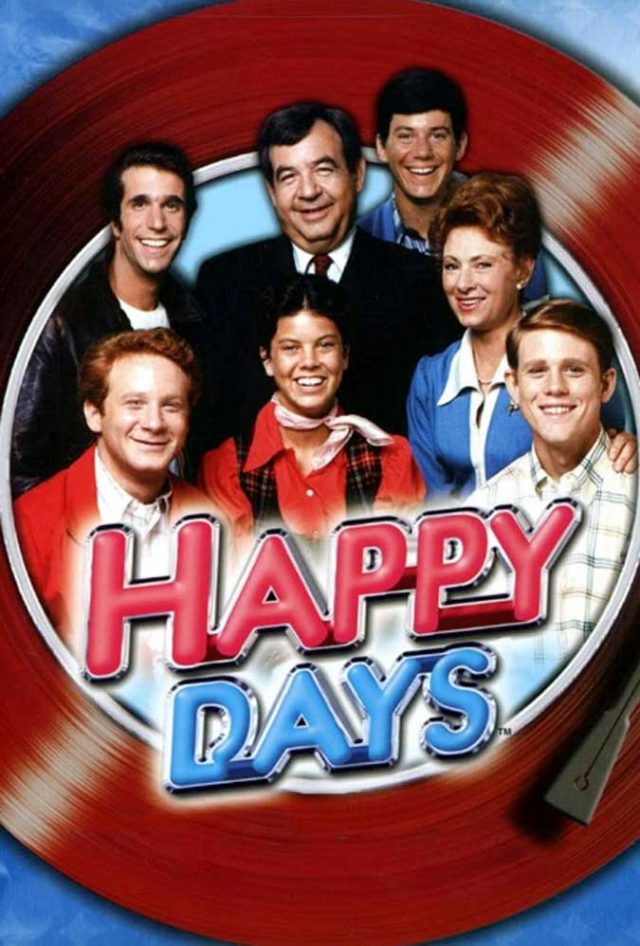
As a kid growing up in Italy, I remember watching the American TV series Happy Days, which chronicled the 1950s-era Midwestern adventures of the Fonz, Richie Cunningham and other local teenagers.

The show, combined with other American entertainment widely available in Italy in the 1970s and 1980s, shaped my perception of the United States long before I ever set foot in the country. Today, I call the US home, and I have developed my own understanding of its complexities. I am able to see Happy Days as a nostalgic revival of an ideal, conflict-free American small town.

Happy Days was a product of Hollywood, which is arguably still the epicenter of the global entertainment industry. So recent news that the streaming service Netflix is opening an Italian office and will begin massively funding original local content with the intent of distributing it globally on its platform — following a strategy already launched in other European countries — struck me.

This could be a potentially game-changing move in global entertainment. And it might even change how the world perceives, well, the world.

I have explored the global media landscape from the privileged vantage point of Los Angeles for the past 15 years.

TV and movies are one way that people, as we go through life, make sense of the world, building on the archive of our personal experiences and opinions of other places.

Absent direct experience with a people or nation, we speculate on what we do not know. This process involves a variety of sources, including reading, Googling and accounts from somebody we trust. But often it is media that exposes people to other cultures, above and beyond our own.

TV and movies fill the knowledge gaps with powerful images and stories that inform the way we think about different cultures. If the media’s messages have consistency over time, we may come to understand these as facts.

But media portrayals may well be inaccurate. Certainly, they are incomplete. That’s because movies and TV series aren’t necessarily meant to depict reality; they are designed for entertainment.

As a result, they can be misleading, if not biased, based on and perpetuating stereotypes.

For example, there is no shortage of Italian and Italian American stereotypes in American entertainment. From the award-winning Godfather saga to the less critically acclaimed Jersey Shore TV series, Italians are often depicted as tasteless, uneducated, linked to organized crime — or all three.

But the way people are exposed to media entertainment is changing. Today streaming platforms like Netflix, Amazon Prime, Apple TV+, and Disney+ collectively have 1 billion subscribers globally.

Being a relative newcomer in producing original content, Netflix cannot rely on a large library of proprietary content to feed its 204 million paid members in over 190 countries, as legacy Hollywood players can. So it is increasingly creating original productions, including a number of non-English language originals from places such as Mexico, France, Italy, Japan, and Brazil.

We might call this an example of “glocalization of entertainment” — a company operating globally, adapting its content to meet the expectations of locally situated audiences across the world.

This is already the modus operandi, for example, of many popular reality TV shows. American Idol is an American adaptation of Europe’s Pop Idol. The X Factor, Big Brother, and Dancing with the Stars have similarly international origins.

Now, however, glocalization comes with a twist: Netflix intends to distribute its localized content internationally, beyond the local markets.

It is not the global reach of Netflix’s platform per se that would break down old stereotypes. French critics panned the American-produced, internationally distributed Netlix series Emily in Paris for its cliched, romanticized portrayal of the city.

Foreign TV executives must create shows for Netflix that both appeal to local audiences and have international potential, while remaining authentic in their portrayal of their country. If Netflix’s Italian team thinks The Godfather is what international audiences expect from Italy, international audiences may tune in — but Italians won’t.

To become truly international, Netflix would also have to foster the development of original local ideas not only in European countries with well-developed cultural industries but also in smaller countries and those with emerging entertainment industries, such as African nations.

A side effect of this strategy could be that Netflix upends the traditional way that media informs our understanding of foreign people and lands by more accurately representing these places.

But that’s a tall order, and it’s not, of course, guaranteed.

Netflix’s transformative potential comes from allowing local creatives to tell stories about their own cultures and then distributing them truly internationally. It will depend on the company’s willingness to implement this strategy in a consistent, sustained, inclusive, and thoughtful fashion.

Over time, widespread exposure to a diverse array of international media content might change the way people in the US and worldwide think and feel about other cultures they have never, and may never, come into direct contact with.

All it takes is one click — one choice to watch, perhaps even unknowingly, a foreign-produced series.

The way Netflix works, using algorithms to suggest content as viewers make selections, can prolong an initial exposure to and interest in foreign content. Artificial intelligence meant to feed us more of what we like may end up a surprising force for change, making us rethink what we thought we knew.


Paolo Sigismondi is a Clinical Professor of Communication, USC Annenberg School for Communication and Journalism.

PSE adds three to list of Shari’ah-compliant firms

THE Philippine Stock Exchange, Inc. (PSE) added three securities to the list of firms compliant with Islamic guidelines on finance for the latest quarter ending March 25.

In a memorandum released on Monday, the PSE added Converge Information and Communications Technology Solutions, Inc., Global Ferronickel Holdings, Inc., and SPC Power Corp. to the list of Shari’ah-compliant securities.

The PSE conducts quarterly screenings on listed securities’ Shari’ah compliance to make investment opportunities in the local bourse inclusive to Muslim investors.

“The exchange engaged the services of IdealRatings, Inc. to screen listed companies in accordance with the standards for Shari’ah compliance as stipulated by the Accounting and Auditing Organization for Islamic Finance Institutions,” the PSE said.

Ideal Ratings specializes in checking securities for their compliance with Shari’ah law.

The screening process involves checking firms on their engagements with businesses in adult entertainment, alcohol, cinema, defense and weapons, financial services, gambling, gold and silver hedging, interest-bearing investments, music, pork, and tobacco.

Income earned by companies from these engagements must be less than five percent.

Firms also undergo a financial ratios screening. Cash or interest-bearing deposits and interest-bearing debt of a company should not go beyond 30% of its market capitalization.

A total of 57 firms passed the criteria, the same number of firms which passed the screening last quarter.

Companies bumped off the list were Concepcion Industrial Corp., Euro-Med Laboratories Phil., Inc., and Xurpas, Inc. — Keren Concepcion G. Valmonte

SquidPay eyes digital bank joint venture with AbaCore subsidiary

FINANCIAL TECHNOLOGY player SquidPay Technology, Inc. is looking to form a joint venture firm with Philstar Development Bank, Inc. to enter the country’s digital banking sector.

Squidpay is looking to invest up to P900 million to buy 60% of shares in the Batangas-based Philstar Development Bank to push the planned joint venture, AbaCore Capital Holdings, Inc., said in a filing with the local bourse on Monday. The firm owns Philippine Regional Investment Development Corp., (PRIDE) the parent firm of Philstar Development Bank.

Once the joint venture is created based on the parties’ memorandum of agreement signed in January, the remaining 40% stake in the Batangas lender will be retained by PRIDE and incumbent stockholders.

“The joint venture will target the ever growing need for cashless payments considering the pandemic and the Bangko Sentral ng Pilipinas’ (BSP) drive for digital banking,” AbaCore said in its filing.

SquidPay’s current business mainly focuses on online and offline payment solutions for automated fare collections, bill payment, e-commerce payments, merchant payment services, and electronic loading.

The fintech player has secured its operator of payment system and electronic money issuer licenses from the central bank.

The BSP released a framework for digital banks in November, making it a separate type of lender from commercial, thrift, rural, and Islamic banks. Entities that aim to set up an online bank in the country need to have a minimum capital of P1 billion.

AbaCore’s shares closed trading at P1.22 apiece on Monday, down by four centavos or 3.17%. — L.W.T. Noble

JLL Philippines named top real estate investment advisory firm

JLL PHILIPPINES has been ranked as the leading investment advisory firm in the country, with 48% market share in 2020, according to data analyzed and published by Real Capital Analytics (RCA).

“To say that 2020 was exceptionally difficult is an understatement, but this fuels JLL Philippines to be even more committed in providing sound investment advice to our clients as they reshape their real estate strategies to thrive in the next normal,” P. Ryan Isip, JLL Philippines’ head of capital markets, said in a statement.

“The pandemic has made way for new real estate dynamics and more sophisticated investors, and so JLL will continue to leverage on our industry expertise and property technology (proptech) to be able to continue providing the most innovative client-centric solutions,” he added.

JLL has operated in the Philippines since 1997, and currently manages about 5.3 million square meters of real estate with a workforce of over 1,300 employees.

RCA study also showed JLL as the leading hotel investment advisory firm in Asia Pacific for the tenth consecutive year. JLL advised on the most transactions, as measured in dollar value, in the Asia Pacific region.

ADVERTISEMENT
ADVERTISEMENT