Home Blog Page 8216

Biden administration eyes potential threat from China’s digital yuan plans

REUTERS

THE BIDEN administration is stepping up scrutiny of China’s plans for a digital yuan, with some officials concerned the move could kick off a long-term bid to topple the dollar as the world’s dominant reserve currency, according to people familiar with the matter.

Now that China’s digital-currency efforts are gathering momentum, officials at the Treasury, State Department, Pentagon and National Security Council are bolstering their efforts to understand the potential implications, the people said.

American officials are less worried about an immediate challenge to the current structure of the global financial system, but are eager to understand how the digital yuan will be distributed, and whether it could also be used to work around US sanctions, the people said on the condition of anonymity.

A Treasury spokeswoman declined to comment. A National Security Council spokeswoman did not reply to a request for comment.

The People’s Bank of China (PBoC) has rolled out trial issuance of a digital yuan in cities across the country, putting it on track to be the first major central bank to issue a virtual currency. A broader roll-out is expected for the Winter Olympics in Beijing next February, giving the effort international exposure.

Many key details of the digital yuan are still in flux, including specifics on how it would be distributed. China’s recent establishment of a joint venture with SWIFT, the messaging nexus through which most cross-border settlements pass through today, suggests it is possible a digital yuan could work within the current financial architecture rather than outside of it.

US officials are reassured that China’s intentions aren’t to use the digital yuan to evade American sanctions, according to people familiar with the matter. The dollar’s current dominance in cross-border transactions gives the US Treasury the power to cut off much of a business or even a country’s access to the global financial system.

China’s officials have said the main intentions of the digital yuan are to replace banknotes and coins, to reduce the incentive to use cryptocurrencies and to complement the current private-sector run electronic payments system — dominated by Ant Group Co.’s Alipay and Tencent Holdings Ltd.’s WeChat Pay. The PBoC has been working for years on the digital yuan, also called the e-CNY, having set up a specialist research team in 2014.

​​“To provide a backup or redundancy for the retail payment system, the central bank has to step up” and provide digital-currency services, Mu Changchun, the director of the PBoC’s digital-currency research institute, said at an event last month.

The PBoC is also examining the potential for using the digital yuan in cross-border payments, launching a project studying the issue with a unit of the Bank for International Settlements along with the United Arab Emirates, Thailand and Hong Kong’s monetary authority.

The Biden administration isn’t currently planning to take any action to counter longer-term threats from China’s digital currency, the people familiar with the discussions said. However, China’s plans have given renewed impetus to efforts to consider the creation of a digital dollar, they said.

Members of Congress have also been increasingly interested in a digital dollar, aware of China’s moves, and asked Federal Reserve Chair Jerome Powell and Treasury Secretary Janet Yellen about the issue in hearings earlier this year.

Mr. Powell said in February the Fed was looking “very carefully” at a digital dollar. “We don’t need to be the first. We need to get it right.”

Ms. Yellen has signaled interest in research into the viability of a digital dollar, a shift from a lack of enthusiasm under her predecessor, Steven Mnuchin.

“It makes sense for central banks to be looking at” issuing sovereign digital currencies, she said at a virtual conference in February. Yellen said a digital version of the dollar could help address hurdles to financial inclusion in the US among low-income households.

A recent report from the US Director of National Intelligence said the extent of the threat of any foreign digital currency to the dollar’s centrality in the global financial system “will depend on the regulatory rules that are established.”

China’s currency makes up little more than 2% of global foreign exchange reserves compared with nearly 60% for the US dollar. Policy decisions, rather than technical developments, will also be necessary to push forward yuan internationalization, as China maintains a strict regime of capital controls.

China’s financial system is too “fragile and weak” to pose a real threat to the dollar’s status as the world’s reserve currency, according to Mark Sobel, US chairman for the Official Monetary and Financial Institutions Forum.

“At the end of the the day the markets have more confidence in the Fed” than China’s central bank, said Sobel, a former senior US Treasury official for international matters. — Bloomberg

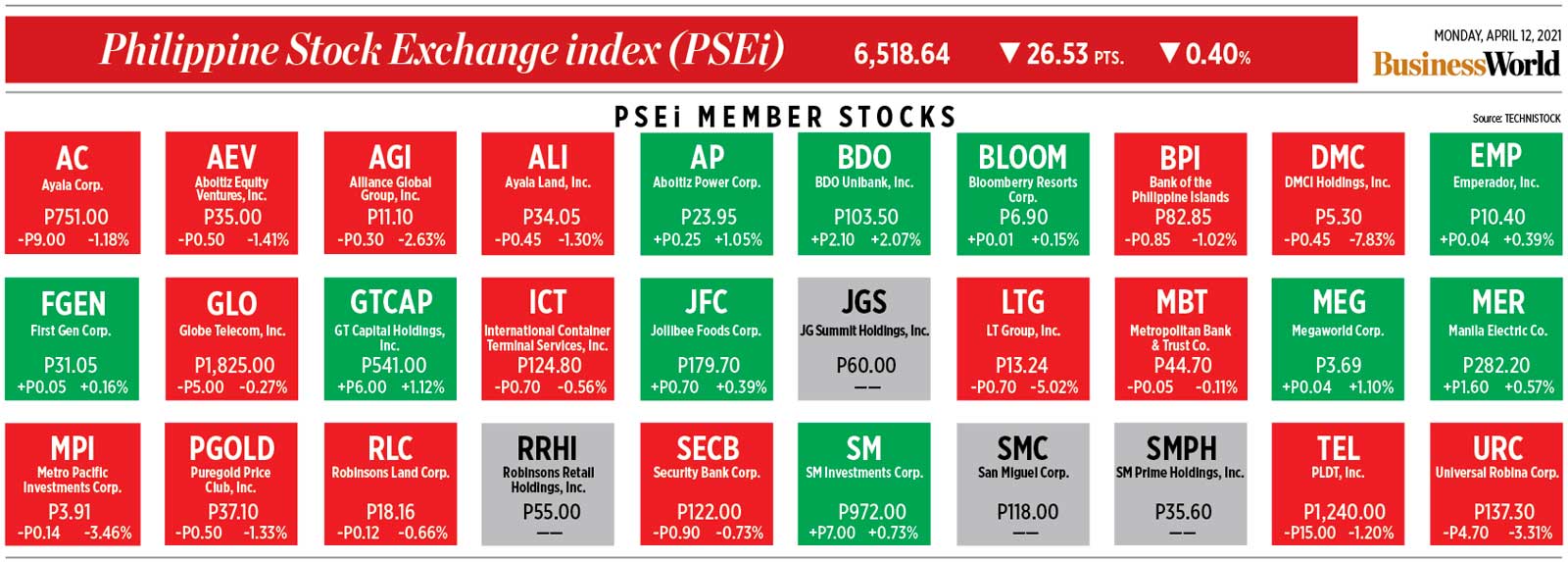
How PSEi member stocks performed — April 12, 2021

Here’s a quick glance at how PSEi stocks fared on Monday, April 12, 2021.


Which economies are at least risk of generating long-term unemployment?

Which economies are at least risk of generating long-term unemployment?

Peso weakens on rising COVID-19 cases, US outlook

THE PESO weakened against the dollar as coronavirus cases in the country continued to rise and with the economic outlook in the United States showing some improvement. — BW FILE PHOTO

THE PESO retreated against the greenback on Monday amid cautious sentiment due to the continued increase in infections and with the dollar becoming more appealing as the US economy moves to reopen.

The local unit closed at P48.56 per dollar on Monday, depreciating by two centavos from its P48.54 finish on Thursday, based on data from the Bankers Association of the Philippines. The market was closed on Friday for the Day of Valor.

The peso opened Monday’s session at P48.56 per dollar. Its weakest showing was at P48.585 while its intraday best was at P48.56 against the greenback.

Dollars exchanged dropped to $373 million from $659.28 million on Thursday.

The peso weakened due to the continued increase in infection cases which dampened market sentiment, Rizal Commercial Banking Corp. Chief Economist Michael L. Ricafort said in a text message.

Coronavirus disease 2019 (COVID-19) cases in the country totaled 11,378 on Monday to bring the tally to 876,225. Active cases reached 157,451.

Meanwhile, a trader in an e-mail said the peso’s depreciation was due to investors’ preference for the dollar after a stronger-than-expected US producer inflation report.

Data from the US Labor department released on Friday showed the producer price index for final demand rose 1% in March, picking up from the 0.5% pace in February, Reuters reported, noting this shows the economy’s reopening amid improved public health environment and substantial fiscal response.

US Federal Reserve Chairman Jerome Powell on Thursday stressed the inflation pickup will be transitory, adding he expects supply chains will adapt and become more efficient.

For today, Mr. Ricafort gave a forecast range of P48.50 to P48.60 per dollar while the trader expects the local unit to move within the P48.45 to P48.65 levels. — L.W.T. Noble

Stocks drop as infection surge clouds outlook

COURTESY OF PHILIPPINE STOCK EXCHANGE, INC.

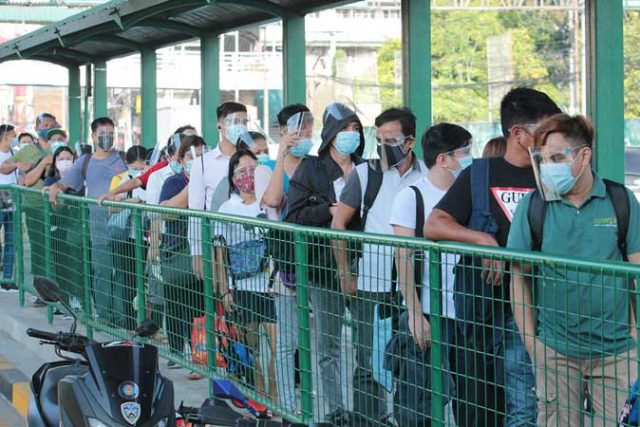
PHILIPPINE shares declined on Monday as investors remained cautious amid the continued surge in coronavirus disease 2019 (COVID-19) cases and as Metro Manila and nearby provinces were placed under a slightly more loose lockdown.

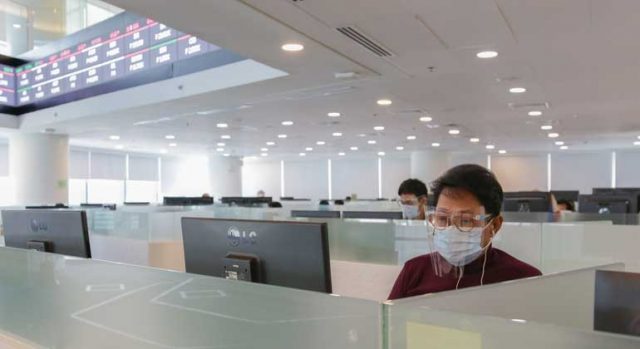
The benchmark Philippine Stock Exchange index (PSEi) declined by 26.53 points or 0.4% to close at 6,518.64 on Monday, while the broader all shares index went down by 10.39 points or 0.26% to 3,988.25.

AAA Southeast Equities, Inc. Research Head Christopher John J. Mangun said continued uncertainty over the pace of economic recovery is a major concern as COVID-19 cases climb further.

“After last week’s surprising positive performance, investors were expecting stronger buying pressure at the beginning of the session,” Mr. Mangun said via e-mail. “However, buyers were not interested, which caused selling pressure to pick up towards the end of the session. Clarity on the guidelines of current MECQ (modified enhanced community quarantine) restrictions may be the reason why investors held back.”

“The surge and threat of [COVID-19], community quarantine and its impact on business continues to drive cautious regard from investors,” COL Financial Group, Inc. Chief Technical Analyst Juanis G. Barredo said in a Viber message.

The country logged 11,681 new COVID-19 cases on Sunday. The government announced that the NCR Plus bubble would be placed under MECQ until April 30.

“The lack of good daily volume, less than P5 billion daily, persists and could also be a contributing factor to the market’s listlessness,” Mr. Barredo added.

Value turnover increased to P5.97 billion on Monday with 2.43 billion shares switching hands from the P5.02 billion on Thursday, with 3.52 billion issues traded.

Majority of sectoral indices declined on Monday, except for financials, which gained 3.56 points or 0.25% to 1,391.03.

Meanwhile, mining and oil fell by 112.20 points or 1.32% to finish at 8,386.11; industrials declined by 56.21 points or 0.63% to 8,834.68; property dropped by 15.34 points or 0.47% to 3,238.33; services inched down by 6.68 points or 0.46% to close at 1,422.66; and holding firms lost 27.40 points or 0.41% to end at 6,604.96.

Decliners outnumbered advancers, 120 against 86, while 48 names closed unchanged.

Net foreign selling went up to P869.25 million on Monday from the P811.97 million seen in the previous trading day.

AB Capital Securities, Inc. Junior Equity Analyst Lance U. Soledad expects the index to trade from 6,400 to 6,700 today. Meanwhile, AAA Southeast Equities’ Mr. Mangun said the index might move towards 6,400, with sideways trading expected until the end of the week.

“The index is experiencing some pressure after recently rallying close to resistance of 6,700-6,800. As long as the index stays below this threshold, it would remain in corrective territory,” COL Financial’s Mr. Barredo said. — Keren Concepcion G. Valmonte

Gov’t eyes virology body for future pandemics

UNSPLASH

By Kyle Aristophere T. Atienza and Vann Marlo M. Villegas, Reporters

THE PHILIPPINES is studying a plan to set up a vaccine development center and may assign production to the private sector under a private-public partnership (PPP) deal, according to the Department of Science and Technology (DoST).

Officials of the agency had met with their counterparts in the Health and Trade departments to fine-tune the proposal that will be submitted to President Rodrigo R. Duterte this week, DoST Secretary Fortunato T. de la Peña told an online news briefing on Monday.

“We studied a number of vaccine development and manufacturing in Asia and we want to study the models adopted by Thailand and India further,” he said in mixed English and Filipino.

DoST will lead vaccine research and development of the proposed virology institute, while the Trade department will take care of the production aspect, he said.

Mass manufacturing might be entrusted to a government-owned and -controlled corporation or given to the private sector under a PPP contract, Mr. de la Peña added.

“Instead of muddling the main issue on the current coronavirus vaccine supply, the government should just focus on ensuring that the vaccines arrive in the soonest time,” InfraWatch PH convenor Terry L. Ridon said in a Facebook Messenger chat.

The former congressman said there is no point in discussing a vaccine institute when the problem now is the lack of coronavirus vaccines to ensure a robust mass vaccination program.

“There is no point for the government to enter into vaccine production if the manufacturing aspect will be undertaken by the private sector anyway,” he said.

“What will the government bring into the table? Will it fund research and development into new coronavirus vaccines, when effective and cheap vaccines are already available in the market?” he asked.

In a related development, Glovax Biotech Corp. is planning to build a vaccine plant at the Clark Economic Zone in Pampanga province, Chief Executive Officer Giovanni Alingog said.

“It’s a complete vaccine plant from the production of antigen to the formulation of the vaccine and it also included animal testing and research and development laboratories,” he told the ABS-CBN News Channel.

The local company, which has partnered with South Korea-based EuBiologics Co. Ltd., will hold combined Phase 2 and 3 clinical trials in the country for the EuCorVac-19 vaccine.

The vaccine has shown more than 90% efficacy after the first two clinical trial phases in Korea, Mr. Alingog said.

‘NATIONAL SECURITY’
Glovax is also looking for support from local companies and government agencies, and Defense Secretary Delfin N. Lorenzana had endorsed it to the National Task Force for COVID-19 because “vaccine has become a national security.”

“The government will need, like now, a lot of vaccines and without a vaccine plant, we could not just wait and beg for excess supply from other countries,” he said.

Military spokesman Arsenio R. Andolong said pandemics and vaccines are a national security concern. Pandemics have been a concern in the country’s 2016 national security plan, he said by telephone.

“Definitely, the availability or non-availability of vaccines is really a national security concern and we want to fix that,” he said in mixed English and Filipino. “We have crafted in broad strokes what needs to be done.”

Mr. Andolong added that they will support plans to create vaccine manufacturing facilities, citing the importance of vaccines.

John Paul R. Rivera, an economist at the Asian Institute Management said any initiative to speed up the production distribution of vaccines would benefit the people and the economy.

“It will definitely boost the business climate and confidence because we are executing concrete ways to contain the pandemic,” he said in a Viber message.

Presidential spokesperson Herminio “Harry” L. Roque, Jr. earlier said the President had ordered the Department of Budget (DBM) to allot funds for the proposed vaccine institute.

A vaccine institute would need substantial funds so the country can make its own vaccines, he told a televised news briefing last month. Mr. Duterte wants that to be one of his legacies, he added.

Vaccine czar Carlito G. Galvez, Jr. had said the President wants to solve the country’s vaccine shortage even after his term.

“It’s better late than never,” Ruben Carlo O. Asuncion, chief economist at UnionBank of the Philippines, Inc. said in a Viber message. “The project will definitely help because this may not be the only pandemic that we will see in our lifetime.”

He said the private sector should play a key role in the program. “Public-private partnerships have borne good fruits in the past,” he said.

George T. Barcelon, chairman of the Philippine Chamber of Commerce and Industry (PCCI), said the private sector should get involved in the project.

The Philippines must also tap its Southeast Asian neighbors because “anything related to the field of medicine is a work in progress that needs cooperation among regions,” he said by telephone.

Mr. Asuncion said the project should be transparent to ensure rule-based competition among potential partners.

Strong mechanisms should be put in place to prevent a sitting administration from changing the rules and imposing unfair conditions, he added.

11,000 more people get COVID-19 virus; 15,149 dead — DoH

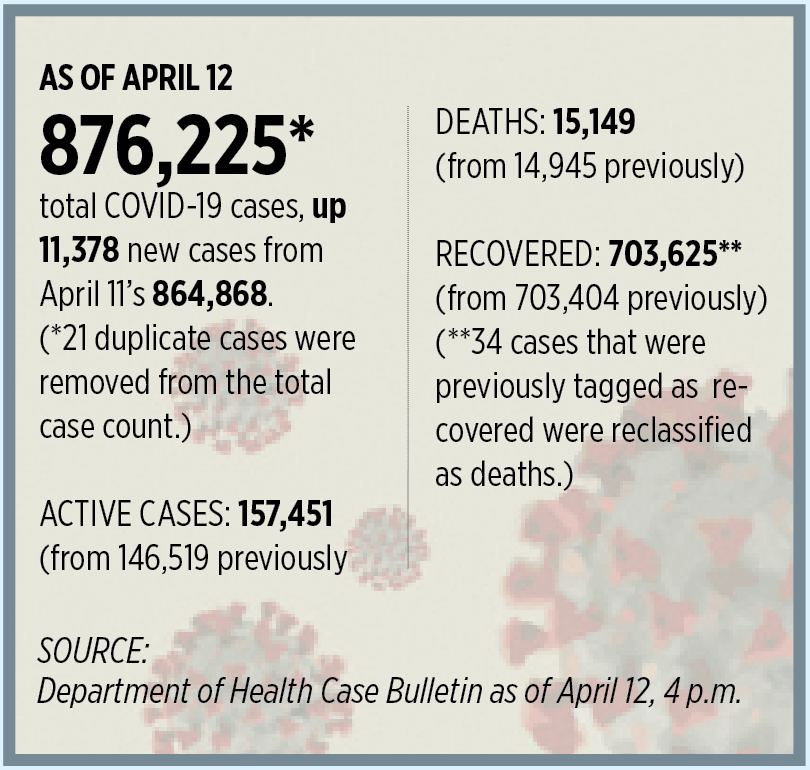
THE DEPARTMENT of Health (DoH) reported 11,378 coronavirus infections on Monday, bringing the total to 876,225.

The death toll rose to 15,149 after 204 more patients died, while recoveries increased by 267 to 703,625, it said in a bulletin.

There were 157,451 active cases, 97% of which were mild, 1.7% did not show symptoms, 0.5% were critical, 0.6% were severe and 0.32% were moderate.

The agency on April 2 reported the highest daily tally of 15,310 cases since the pandemic started last year.

DoH said 21 duplicates had been removed from the tally and 34 recovered cases were reclassified as deaths. Six laboratories failed to submit data on April 11.

About 10.1 million Filipinos have been tested for the coronavirus as of April 10, according to DoH’s tracker website.

The coronavirus has sickened about 136.7 million and killed almost three million people  worldwide, according to the Worldometers website, citing various sources including data from the World Health Organization.

About 110 million people have recovered, it said.

Meanwhile, hospitals in Metro Manila and nearby provinces failed to increase their beds for coronavirus patients due to late payments from the state insurer, DoH said.

The biggest problem of hospitals is the Philippine Health Insurance Corp.’s inability to pay, Health Undersecretary Leopoldo Vega told a televised news briefing on Monday. “It’s difficult to provide extra allocation for beds if you don’t have enough financial resources,” he said in Filipino.

President Rodrigo R. Duterte has ordered the state health insurer to fast-track payments of unsettled claims to hospitals. The agency has created a debit-credit payment method to facilitate the settlement of accounts.

This allowed the agency to secure more than 1,000 private and public hospital beds for coronavirus patients, Mr. Vega said. About 142 ward beds that could be used for patients with severe cases were also secured.

The National Center for Mental Health had been tapped to house as many as 960 coronavirus patients, he added.

The Greater Manila area was placed under an enhanced community quarantine after a fresh spike in coronavirus infections put a strain on the country’s healthcare system.

A number of coronavirus patients reportedly sought treatment outside the capital region after being turned down by hospitals there.

An inter-agency task force earlier proposed to retrofit state-owned concert halls and stadiums into quarantine venues to increase patient capacity. University dorms and classrooms were also tapped as isolation and vaccination sites.

Meanwhile, the government could no longer extend more cash aid to low-income households affected by quarantine restrictions because it had run out of funds, presidential spokesperson Herminio “Harry” L. Roque, Jr. told a televised news briefing.

There are funds for coronavirus-related expenses but not for aid, he said. Congress can pass a third stimulus law if needed, he added.

Mr. Duterte on Sunday lifted the strict lockdown in Metro Manila and the provinces of Bulacan, Rizal, Laguna and Cavite.

The Palace official earlier said the extension of the lockdown would be based on the capacity of the government to subsidize affected residents in the capital region.

He said the National Government would have to ask Congress for supplemental funds if the lockdown were to be extended.

The government released P23 billion in emergency subsidies to local governments on April 6, more than a week after the metro and nearby areas were placed under the strict quarantine. The aid was expected to benefit more than 22 million people.

In a related development, Metro Manila mayors would ask the government to extend the 15-day period for the distribution of the aid, Metropolitan Manila Development Authority Chairman Benjamin Abalos, Jr. said at the same briefing. — Vann Marlo M. Villegas and Kyle Aristophere T. Atienza

Nationwide round-up (04/12/21)

PHILSTAR

Less contact tracers to be hired for longer service period

THE DEPARTMENT of Labor and Employment will hire 5,000 contact tracers instead of the initial plan of 12,000 to allow them to work for a longer period as requested by local governments where they will be deployed. During a virtual briefing on Monday, the department’s Information and Publication Service Director Rolly M. Francia said the decision to cut the target beneficiaries under a temporary employment program known as TUPAD was based on talks with the leaders of local government units (LGUs) in Metro Manila. “This will be around 5,000 only. The reason is not because we do not have the funds. We still have funds. What Secretary (Silvestre) Bello wants to clear up is that the decrease in hiring contract tracers we will be funding… is because of the want of the LGUs to prolong the number of days the contact tracers will work,” Mr. Francia said in Filipino. The Tulong Panghanapbuhay sa Ating Disadvantaged/Displaced Workers (TUPAD) program provides emergency employment for a period of 10 days. For the contact tracers, they will be hired under a 30-day contract.  Around P205 million will be allocated with each contact tracer to be paid P537 per day, the prevailing Metro Manila minimum wage. Meanwhile, Marikina Rep. Stella Luz A. Quimbo said a faster COVID-19 vaccine rollout and localized lockdowns should be prioritized as restrictions are eased in Metro Manila and nearby provinces despite the continued high rate of daily new cases as well as deaths. “The IATF (Inter-Agency Task Force) is lifting the ECQ (enhanced community quarantine) at a time when the number of deaths is at a peak, with 401 deaths reported just last April 9. While I do not disagree with moving to a less stringent quarantine level for NCR+, we must keep in mind that we must do this with a more responsive plan in place,” she said in a statement on Monday. The vaccination program must be swiftly carried out, she said, while targeted lockdowns must be implemented instead of a wide-area quarantine. “Our resources are limited, so let’s be strategic about using them. I propose that instead of a widespread community quarantine, that the IATF shifts instead to a more targeted approach of household lockdowns. Only affected households will be required to adhere to a strict stay-at-home policy, and given the corresponding assurance that necessary ayuda (assistance) is guaranteed and healthcare will be provided, whether at home or in the hospitals as needed,” Ms. Quimbo said. — Gillian M. Cortez

Former OFWs warned vs illegal recruitment scheme

THE BUREAU of Immigration on Monday warned against an illegal recruitment scheme targeting former overseas Filipino workers (OFWs) whose visas and contracts have expired by assuring them that they can leave the country and work overseas again using their old overseas employment certificate records (OECs). “This is an obvious circumvention of the law, and victims are promised that they can depart using their old OECs that are, in fact, invalid already,” Immigration Commissioner Jaime H. Morente said in a press release. “Victims end up working for a different employer, or worse, fly off to a third country like Iraq or Syria,” he added. The scheme was discovered when members of the bureau’s Travel Control and Enforcement Unit at the Clark International Airport stopped the departure of a victim bound for Dubai last April 5 due to inconsistencies in the documents presented. — Bianca Angelica D. Añago

Regional Updates (04/12/21)

2 northbound lanes of Skyway Extension now open and temporarily toll-free

TWO of three lanes of the Skyway Extension project’s northbound section have been opened to motorists, San Miguel Corp. (SMC) announced on Monday. The northbound section that covers four kilometers from Susana Heights to Sucat in Parañaque can now be used by light vehicles like cars and vans with radio-frequency identification or RFID, SMC President and Chief Operating Officer Ramon S. Ang said in an e-mailed statement. “Our long-term solution to addressing traffic particularly on SLEX (South Luzon Expressway) heading to the Alabang area has finally been realized,” Mr. Ang said. The northbound section, which is expected to allow the additional capacity of 4,500 vehicles per hour, provides a direct link to the elevated skyway system for vehicles coming from Laguna, Batangas, and Cavite. “It allows them to bypass the Alabang viaduct, reducing congestion in the area. From SLEX, they can go directly to their destinations like Makati, Manila, Quezon City up to the North Luzon Expressway (NLEX), via SMC’s new Skyway Stage 3,” the company said. According to Mr. Ang, no toll fees will be charged for the four-kilometer segment until further notice. “We are confident that this will further reduce congestion along Edsa and usher growth to provinces in Southern Luzon and beyond,” he said. Once fully completed, the northbound section is expected to reduce travel time to NLEX to 25 to 30 minutes from two to three hours. — Arjay L. Balinbin

Western Visayas travel ban renewed April 13-19

ENTRY to the Western Visayas Region will again be suspended from April 13 to 19 after the national task force on coronavirus response granted the request of local leaders to extend the temporary closure of borders due to rising infections. The travel ban covers all inbound flights, ships, and land transport from Metro Manila, the provinces of Rizal, Bulacan, Laguna and Cavite, and the cities of Cebu and Davao. The border closure does not include cargo and returning overseas Filipino workers. Defense Secretary Delfin N. Lorenzana, chair of the national task force, gave the approval as contained in an April 11 letter addressed to Mayor Jerry P. Treñas of Iloilo City, the regional center. “In light of the foregoing, acknowledging your recent surge in COVID-19 cases; and to give you more breathing space to prevent local transmission and protect your healthcare system from being overwhelmed, the NTF COVID-19 hereby approves your request for a temporary travel suspension,” reads part of the letter. Western Visayas is composed of the provinces of Aklan, Antique, Capiz, Guimaras, Iloilo and Negros Occidental, and the independent cities of Iloilo and Bacolod. As of April 11, Health department data show the region had 3,146 active cases out of the total 29,833 recorded since the start of the pandemic. Negros Occidental had the highest active cases at 1,317, followed by Bacolod with 456, and Antique with 389. — MSJ

Tourism workers in Metro Manila, nearby provinces get cash aid

MORE than 67,000 tourism sector workers in Metro Manila and four neighboring provinces have been given cash aid under a joint program of the Department of Tourism and Department of Labor and Employment. “We are hopeful that this financial assistance will provide some relief to our most affected stakeholders and tourism workers during these difficult times. While it may help in the short term, we believe that the best way to help stakeholders in the long run is to develop a tourism industry that is stronger, more resilient, and more adaptable to change,” said Tourism Secretary Bernadette Romulo-Puyat during Monday’s awarding ceremony for some of the beneficiaries. The 67,347 beneficiaries since last year each received P5,000. The joint program expanded the coverage of those who can avail of the financial assistance to include secondary tourism enterprises, service providers, members of  provider associations, and independent workers such as licensed tour guides. Nationwide, the Tourism department said P1.8 billion has been approved for release to 355,797 workers from establishments and associations as well as 12,321 individual workers. Application for the assistance is still open through the tourism regional offices. — Gillian M. Cortez

Globe building 200 cell sites in Batangas; Smart deploys 5G in Catanduanes

GLOBE Telecom, Inc. said on Monday it is setting up 200 new cell sites and adding 50,000 fiber-to-the-home lines in Batangas this year. “Globe is planning to build 200 new cell sites in Batangas this year as part of the telco’s sustained network builds, the Ayala-led telco said in an e-mailed statement. The province has 361 Globe sites, 85% of which will have additional 4G capacity, the telco added. Meanwhile, Smart Communications, Inc., the wireless arm of PLDT, Inc., announced that it has started deploying 5G technology in Virac, Catanduanes. “Smart has beefed up its 4G/LTE services and started deploying new generation Smart 5G technology in Virac, following the firing up of PLDT’s fiber optic link in the province,” Smart said in an e-mailed statement on April 8. Latest data from Speedtest Global Index by American internet testing and analysis firm Ookla showed  that the country’s fixed broadband continued to improve in March, with an average download speed of 46.25 megabits per second (Mbps), a 20.25% increase from 38.46 Mbps recorded in February. Meanwhile, mobile networks’ overall performance declined in March, with an average download speed of 25.43 Mbps from 26.24 Mbps in February. President Rodrigo R. Duterte in July last year threatened to shut down the country’s two biggest telecommunications companies if they fail to improve services by the end of the year. Hastings Holdings, Inc., a unit of PLDT Beneficial Trust Fund subsidiary MediaQuest Holdings, Inc., has a majority stake in BusinessWorld through the Philippine Star Group, which it controls. — Arjay L. Balinbin

MWSS extends suspension of disconnection activities

THE REGULATORY office of the Metropolitan Waterworks and Sewerage System (MWSS) directed the two Metro Manila water concessionaires to extend the suspension of service disconnection activities until the lifting of the modified enhanced community quarantine status in the nation’s capital region. MWSS Chief Regulator Patrick Lester N. Ty said in a statement on Monday that Manila Water Co., Inc. and Maynilad Water Services, Inc. have been directed to suspend service disconnection activities, whether temporary or permanent, until lockdown measures are further eased. Meanwhile, Mr. Ty appealed to concerned local governments for cooperation and assistance to allow meter readers to continue carrying out their work. In separate mobile phone messages, Manila Water Corporate Strategic Affairs Group Head Nestor Jeric T. Sevilla, Jr. and Maynilad Head of Corporate Communications Jennifer C. Rufo confirmed to BusinessWorld that they will comply with the MWSS’ directive. Metro Pacific Investments Corp., which has a majority stake in Maynilad, is one of three Philippine units of Hong Kong-based First Pacific Co. Ltd., the others being Philex Mining Corp. and PLDT, Inc. Hastings Holdings, Inc., a unit of PLDT Beneficial Trust Fund subsidiary MediaQuest Holdings, Inc., has an interest in BusinessWorld through the Philippine Star Group, which it controls. — Revin Mikhael D. Ochave 

Consular offices in NCR+ area resume partial operations

CONSULAR offices (COs) in the National Capital Region and four surrounding provinces, collectively referred to as the NCR+ area, will work under skeletal workforce until April 30 to attend to urgent cases only, the Department of Foreign Affairs (DFA) said in a statement on Sunday. These offices in Aseana, Parañaque City, Antipolo, Dasmariñas, Malolos, and San Pablo were closed in the past couple of weeks as the NCR+ area was placed under strict quarantine level. Passport applications are being rescheduled and the new appointment dates will be sent via email. “Please be advised that the schedules may still be subject to sudden changes due to unforeseen circumstances or changes in the policies of local governments and small partners which host these COs,” it said. The DDFA Office of the Undersecretary for Migrant Workers’ Affairs will remain closed until 30 April. “This is to allow our COVID-19-positive personnel to simultaneously isolate and work-from-home, and for DFA to avoid another wave of COVID-19 infections involving its staff,” it said, adding that related concerns can be raised through its hotline and Facebook. President Rodrigo R. Duterte on Sunday eased the lockdown in Metro Manila, Bulacan, Laguna, Cavite, and Rizal until April 30, after placing the areas under enhanced community quarantine to slow down the increase in cases. — Vann Marlo M. Villegas

Courts in MECQ areas to operate online

THE SUPREME Court has extended the directive for the physical closure of courts in all areas placed under the modified enhanced community quarantine (MECQ) level, which now includes Santiago City, and the provinces of Abra and Quirino until April 18. “(U)pon approval of Chief Justice Alexander G. Gesmundo, the provisions of Administrative Circular No. 21-2021, dated 10 April 2021, shall extend to and cover the courts in the City of Santiago, and the provinces of Quirino and Abra,” the high court said in its circular released on Sunday. In Administrative Circular No. 21-2021, the filing periods and service of pleadings and motions are extended until the seventh calendar day after the relevant court is physically reopened. Essential judicial offices will still maintain a skeletal staff to attend to urgent matters, while courts will function virtually through telephone and e-mail. Judges are also directed to conduct hearings on pending cases and other matters via videoconferencing without the need for prior permission from the Office of the Court Administrator. — Bianca Angelica D. Añago

House exploring ‘deficit-neutral’ ways to finance third stimulus

PHILSTAR FILE PHOTO

A THIRD ROUND of economic stimulus is likely to be enacted and Congress is currently exploring with economic managers how to fund it without adding to the budget deficit, including withdrawing retained earnings from government corporations, the chairman of the House of Representatives committee on ways and means said.

In a statement Monday, Representative Jose Ma. Clemente S. Salceda said the proposed Bayanihan to Arise as One Act, informally known as Bayanihan III, will be put together without exceeding the caps on deficit spending set by economic managers, with legislators currently in talks with the Department of Finance (DoF).

“In all likelihood, there will be a third Bayanihan measure. It will be deficit-neutral, if my work with Secretary Dominguez succeeds,” he said.

The third Bayanihan bill aims to support the economic recovery with the coronavirus disease 2019 (COVID-19) pandemic remaining uncontained. Bayanihan III follows the Bayanihan to Heal as One Act, which was signed on March 24, 2020, and the Bayanihan to Recover as One Act, which was signed on Sept. 11.

Mr. Salceda said he proposes to temporarily increase the minimum dividend to be paid by government-owned and -controlled corporations (GOCCs) to 75% from 50% via an amendment to Republic Act 7656.

“There are GOCCs that have accumulated more retained earnings over the years than they can deploy, especially now. Authorizing a distribution of excess dividends in favor of the government would allow us to mobilize sleeping money for COVID-19 response without hurting our overall fiscal standing… this is a suggestion I made to the DoF, which will then survey the full list of GOCCs for possible capital withdrawal,” he said.

Mr. Salceda added the need to immediately pass proposed measures to tax online cockfighting, known as e-Sabong, and Philippine Offshore Gaming Operators (POGOs) as these will be possible funding sources for Bayanihan III. Both proposed tax measures have gained support from the DoF.

He said with such funds, the government will be capable of funding more cash aid to households.

“The tug-o-war is between those who want ayuda (cash aid) by increasing our debt, and those who say we cannot borrow more. We need ayuda, so I mediated by providing options that will not increase our deficit, including more GOCC remittances, capital withdrawal from GOCCs, and taxes on POGOs and e-Sabong. That intervention appears to have broken the gridlock,” he said. — Gillian M. Cortez

Easing quarantine not enough to convince some businesses to open

SOME BUSINESSES are choosing to remain closed until the end of April despite the loosening of quarantine restrictions, Trade Secretary Ramon M. Lopez said.

Base sa aming mga nakakausap na mga SMEs (small- and medium-sized enterprises), lalo na sa restaurant industry, sabi nila, marami sa kanila magsasara na lang muna hanggang matapos ang Abril (Our conversations with SMEs, especially restaurants, indicate that many of them plan to stay closed until the end of April),” he told DZBB Monday.

Under rules set by the Department of Trade and Industry (DTI) and other quarantine regulators, restaurants are allowed to run some outdoor dine-in and delivery services during the modified enhanced community quarantine (MECQ) declared in Metro Manila and nearby regions until the end of the month. The areas were previously under the strictest form of lockdown, enhanced community quarantine (ECQ), for two weeks.

Under MECQ, several industries previously banned from operating can do so at 50% capacity, while those that were operating under ECQ are allowed to have full on-site capacity.

Pwede silang (restaurants) mag-operate sana ng take out, delivery. At under MECQ, allowed na sana ‘yung al fresco. Pero ‘yung al fresco, dun sa mga restaurant group na ‘yun, iilan lamang ‘yung merong capacity na may outdoor dine in. Karamihan sa kanila, nasa loob ng mall (Restaurants are allowed to offer take-out and delivery services, and under MECQ, al fresco dining is allowed. But not many restaurants can offer outdoor dining because many of them are in malls),” Mr. Lopez said.

Hindi rin sila maka-operate din kahit MECQ. Kaya sabi nila, magsasara na lang muna. At kawawa lang ‘yung mangagawa doon (Even under MECQ, operating is not viable and they’d rather stay closed. Their workers will be suffering)”

Mr. Lopez said he is hoping coronavirus disease 2019 (COVID-19) cases decline after the strict implementation of health rules and improved contact tracing so that the areas can move back to the more relaxed general community quarantine (GCQ).

“‘Pag GCQ, dun lang sila ulit pwede mag-bukas eh, which is after April, hopefully (In GCQ conditions, which I hope will come after April, that’s when many of them can open),” he said.

The Philippines on Saturday recorded its second-highest daily tally of COVID-19 cases at 12,674.

Sectors like entertainment venues, sports centers, casinos, and personal care services are still not allowed to open under MECQ. — Jenina P. Ibañez

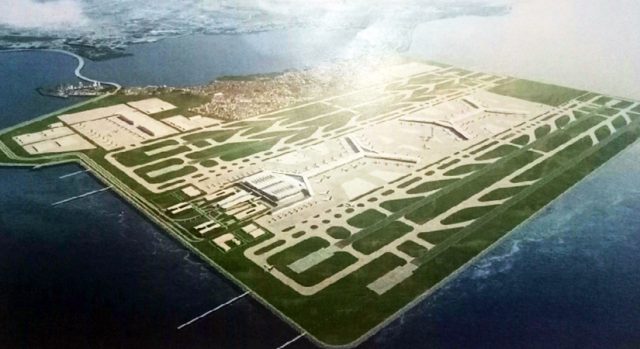
Cavite extends deadline to buy bid documents for Sangley airport plan

THE CAVITE government has extended the deadline for prospective bidders of the Sangley Point International Airport project to buy bid documents due to the quarantine restrictions imposed on the province.

“In response to written requests and in view of the recent ECQ (enhanced community quarantine) status declaration in NCR (National Capital Region) Plus including the province of Cavite, please be advised that the deadline for the registration of Candidate JV (joint venture) Partners and the purchase of the RFP (request for proposals) for the second bidding of the… project has been extended,” Renato A. Abutan, Cavite’s Public-Private Partnership-Selection Committee chairman, said in a notice published April 6.

He said the new deadline is May 14. Interested parties can register as candidate JV partners and purchase the RFP package, which includes details of the project feasibility study including the schedules and updates, the instructions to candidate JV partners, and the draft joint venture and development agreement, up to that date.

The documents were initially available between March 1 and March 30.

Interested parties should submit an intent letter, sign the non-disclosure agreement, and pay the non-refundable participation fee of P1 million or $20,000 before being given copies of the bid documents from the province, which is the implementing agency for the project.

Among the responsibilities of Cavite’s joint venture partner are to provide the necessary equity investment and debt financing.

The selected partner should also secure or perform engineering, procurement, and construction services for the land and airport development components of the 1,500-hectare project.

Cavite’s Public-Private Partnership Selection Committee Legal Officer Jesse R. Grepo recently said “two companies” have expressed interest in the project “as of March 18.”

The province is hoping to sign the joint venture and development agreement by July 1 at the earliest.

At a conference on March 18, Sol Castro, the Cavite government’s consultant for the project, said that the province will allow its future JV partner to co-own portions of commercial land that will be created by land reclamation.

But foreign ownership of land will remain restricted because the province will now require its JV partner to be 51% Filipino-owned or controlled.

“As a result of a policy decision by the province in response to the national security issues that have been raised, it is now required that the JV partner, whether it is a single entity or a consortium, is Filipino-majority owned and controlled,” Mr. Castro said.

Lucio C. Tan’s MacroAsia Corp. only had a 40% stake in the previous consortium that negotiated with the province for the airport project, while its foreign partner China Communications Construction Co. Ltd.  had a 60% stake.

Mr. Castro said that the option to co-own portions of the reclaimed land is “essential” to the project when raising debt financing. — Arjay L. Balinbin