Home Blog Page 8205

Lawyers add voice of support to community pantries

PHILIPPINE STAR/ MICHAEL VARCAS

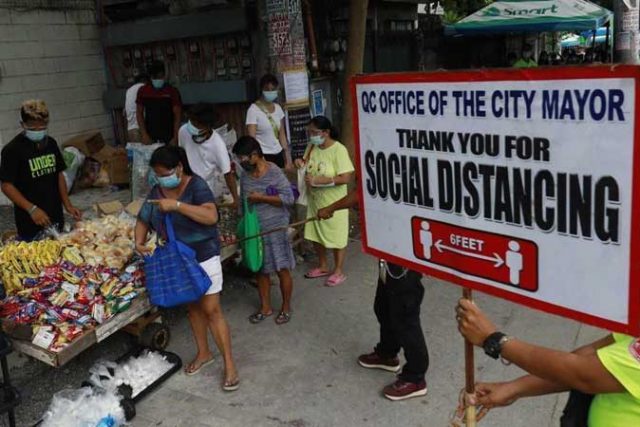
THE organization of all registered lawyers in the county has expressed support to those behind community pantries and asserted that the initiative is not in violation of any law.

“No law is violated when one feeds the hungry and helps the needy survive in this pandemic. Community pantries should be praised, not profiled; replicated, not red-tagged; supported, not stopped,” Integrated Bar of The Philippines President Domingo E. Cayosa  told reporters on Wednesday.

Mr. Cayosa made the statement after the first community pantry in Quezon City halted operations on Tuesday as its organizer, Ana Patricia Non, said they have been tagged as communists by government representatives.

Presidential Spokesperson Herminio “Harry” L. Roque, Jr. has said that community pantries must be “left alone” unless there are violations of health protocols.

Ms. Non’s community pantry, a food aid initiative where people can freely donate and take, has been replicated in numerous parts of the community.

Local government officials and senators are among the sectors that have expressed support to the grassroots projects. — Bianca Angelica D. Añago

33 more hotels, resorts get international safe travel stamp 

MORE hotels and resorts in popular tourist destinations such as Boracay, Palawan, and Cebu have been given the Safe Travels Stamp from the World Travel and Tourism Council (WTTC), marking them as compliant to global standard health protocols.

“Now that the country’s vaccination program is in full swing, we anticipate that parallel initiatives across the globe will hasten the resumption of international travel.  As early as now, we need to prepare our facilities and destinations to be visitor-ready, with health and safety as key concerns,” Tourism Secretary Bernadette Romulo-Puyat said during the virtual awarding ceremony on April 21.

The new batch of 33 Safe Travels-accredited establishments include 16 in Cebu and Bohol, nine in Palawan, three in Boracay, two in Dipolog City, and one each in the cities of Baguio, Zamboanga, and Davao.

Five other establishments in Metro Manila and two in Baguio have earlier been given the stamp.

The Philippines, through the Department of Tourism, received its accreditation from the global council in Sept. 20.   

“In March, we received more than 100 applications coming from the different regions… This surge of interest is reflective of their readiness to adopt to the new normal and desire to be globally recognized as a fun and ‘safe travels’ facility,” Ms. Puyat said.

A full list of the WTTC-marked establishments may be accessed through the Tourism department’s official site, tourism.gov.ph. — MSJ

Bicol’s pili nut industry could secure trademark by 2022

THE pili industry in Bicol could register for intellectual property protection by next year through a collective trademark, the Intellectual Property Office of the Philippines (IPOPHL) said.

IPOPHL has been supporting such collective marks for local enterprises through a partnership with the World Intellectual Property Organization.

The project includes logo design and the standards-setting for producing goods that will use the mark.

The industry spans from raw material farming to value added goods such as butter and handicraft.

“A collective mark serves as a branding tool that increases consumer confidence as it guarantees premium quality, authenticity, craftsmanship, raw materials, safety, sanitary standard or the cultural links of a product,” IPOPHL said in a statement on Wednesday.

Bicol Pili Project Consultant Aldrin R. Mendoza said collective marks would improve product sales through marketing and technology improvements done through economies of scale.

He said industry stakeholders must first create a formal group. “We need only one core organization, federation, cooperative or any structure that will be the owner and filer of the mark,” he said.

“It is the industry stakeholders who must initiate and determine how to group themselves.”

Registered collective marks are protected for at least a decade.

Guimaras Mangoes and Cordillera Heirloom Rice collective marks are registered at the IPOPHL. — Jenina P. Ibañez

Dumanquillas Bay in Zamboanga del Sur now free from red tide 

THE BUREAU of Fisheries and Aquatic Resources (BFAR) announced that Dumanquillas Bay in Zamboanga del Sur is officially free from red tide contamination.

In its 11th shellfish bulletin, BFAR said shellfish sourced from the area are now safe for human consumption after testing negative for red tide toxins.

However, BFAR said red tide warnings are still up in several areas such as Dauis and Tagbilaran City, Bohol; Tambobo Bay, Negros Oriental; Calubian, Leyte; Balite Bay, Davao Oriental; and Lianga Bay and Hinatuan, Surigao del Sur.

All types of shellfish and Acetes sp. or alamang harvested from the red tide affected areas are not safe for human consumption.

However, other marine species can be eaten with proper handling. Red tide occurs as a result of high concentrations of algae in the water.

Human consumption of contaminated shellfish may result in paralytic shellfish poisoning, which affects the nervous system. — Revin Mikhael D. Ochave

Palace asks Senate to give pork tariff EO a chance

REUTERS

PRESIDENT Rodrigo R. Duterte has asked the Senate to give his executive order (EO) lowering tariffs on imported pork a chance to stabilize the supply of pork after the drastic reduction in hog numbers due to the African Swine Fever (ASF) outbreak.

Mr. Duterte is “asking the esteemed members of the Senate to give EO 128 a chance and consider its intended effects, which include addressing the shortage (of pork), stabilizing prices… and minimizing inflation,” the President’s spokesman Herminio L. Roque, Jr. said in a statement Wednesday.

The Senate has adopted a resolution asking the President to revoke his order, which temporarily reduces the tariff rates on imported pork products for one year, arguing that the surge in imports could kill the hog industry.

EO 128 reduces the tariff charged on pork imports within the minimum access volume (MAV) quota to 5% in the first three months. The rate increases to 10% in the subsequent nine months.

Pork imports outside the quota, meanwhile, will be charged 15% for the first three months, rising to 20% in the succeeding nine months.

Mr. Roque urged senators to revisit the order after two months “to assess whether the intended effects have been realized.”

He said the administration as well as the Senate wants to ensure “the recovery of the swine industry and the attainment of sufficient domestic pork production.”

Should Congress pass another bill changing the import duties on pork, “the President may veto any particular item or items in such appropriation, revenue, or tariff bill,” Mr. Roque has said.

The government should have consulted hog raisers extensively in the run-up to the EO, Samahang Industriya ng Agrikultura Executive Director Jayson H. Cainglet said.

Sana bago ‘yung appeal, pinagbigyan din muna ni (Agriculture) Secretary (William D.) Dar ang industry to recover and explain that it’s not necessary to lower pork tariffs (Before appealing to the Senate, I wish the government, through Mr. Dar, had given the industry space to recover),” he told BusinessWorld via Viber.

Mr. Cainglet said the Department of Agriculture has responded poorly to ASF.

Matagal na ang ASF, at matagal na dapat ipatupad ang border controls. Pero mukhang importation talaga ang focus ni Dar (ASF has been around for some time and border controls should have been imposed, but Mr. Dar seems to be focused on imports),” he said.

“We squarely blame Dar for our situation right now,” Mr. Cainglet said.

“The Senate has no choice since the reduced tariff rates and the increased in-quota MAV have already taken effect,” Senator Panfilo M. Lacson said in a statement.

Senator Franklin M. Drilon has said the Congress through a joint resolution was authorized to terminate any order that would “increase, reduce or remove existing rates of import duty,” citing Republic Act No. 10863 or the Customs Modernization and Tariff Act.

Mr. Lacson said senators could have given their input based on their consultations and research had the government conducted a courtesy consultation. He reiterated that the order “is a consequence of a delegated authority granted by Congress to the President.”

He said the economic team’s conclusion that the demand for pork has not changed during the pandemic is “flawed.”

He said the decline in international tourist traffic should have affected pork demand.

“As I had pointed out during the Senate Committee of the Whole hearing, the 50% contraction registered by hotel and restaurant operations should (show up in) demand since the pre-pandemic 8.2 million foreign tourists are now eating pork somewhere else,” he said.

“Thus, at 15 kilograms of pork consumption per capita as estimated would mean 120 million kilograms less pork,” Mr. Lacson said. “That should be substantial enough to consider when they came up with the 350,000,000 kilograms in additional in-quota MAV allocation.”

Mr. Lacson said the Palace appeal should have also been “directed toward the 80,000 backyard hog raisers, their families, farm hands and all others now being affected by the EO, both directly and indirectly.”

Senate Minority Leader Juan Miguel F. Zubiri said Monday that the Senate is willing to negotiate with the President over the recall of his order. — Kyle Aristophere T. Atienza


DoE backs Palace position on disputed waters

PHILSTAR FILE PHOTO

THE DEPARTMENT of Energy (DoE) said it “stands firmly” behind any decision by President Rodrigo R. Duterte on asserting the Philippines’ licensing authority over resources in the West Philippine Sea (WPS).

In a statement Wednesday, the DoE said it “supports the President’s statement regarding the defense of the resources of the Philippine seabed and subsoil, as this is in accordance with the Constitution and our petroleum laws,” Energy Secretary Alfonso G. Cusi said.

Under the law, the government through the DoE can issue licenses to drill within its territory, including islands, internal waters, its territorial sea, exclusive economic zone, and continental shelf.

“Should any foreign state engage in petroleum activities inside the Philippine petroleum jurisdiction, the DoE shall take the necessary steps to protect our licensees and preserve our resources,” Mr. Cusi said.

He added that the department will defer to the President’s prerogative on “any security option,” and conform to decisions made by the foreign affairs department in the negotiation of oil and gas collaboration with China.

Mr. Duterte said Wednesday that the WPS disputes risk escalation, including a resort to the use of force. “But at what cost will that be for the country?… I am addressing myself to the Chinese government. We want to remain friends.”

“I don’t think there’s enough fish really to be worried about but when we start to mine, when we start to get whatever it is in the bowels of the China Sea, sa atin oil, diyan na ako. (The oil is ours)… Pag kinuha na ‘yung oil, kung anong mga nickel diyan and precious stones, (if they get the oil, nickel and precious stones) that would be the time, because that is the time that we should act on it,” he added.

In October, Mr. Duterte approved the DoE’s recommendation to lift the suspension of petroleum exploration activities in the WPS. The department has said it had issued a “resume to work” notice to service contractors exploring the areas under service contracts (SCs) 59, 72, and 75. These activities were suspended due to the WPS dispute.

SCs 59 and 72 are operated by the Philippine National Oil Company-Exploration Corp. and Forum Ltd., respectively. Meanwhile, PXP Energy Corp. operates SC 75.

Mr. Cusi has said the lifting of the moratorium on WPS exploration will help the country’s economic recovery since the “resumption of work will infuse the economy with fresh investment and generate high-skill employment opportunities.” — Angelica Y. Yang

Economic managers to report on economy, infrastructure

South bound of Kamuning EDSA in Quezon City seen almost empty on Maundy Thursday. The holiday and implementation of Enhaced community Quarantine summed the absence of car last April 01, 2021. (Photo by Michael Varcas)
PHILIPPINE STAR/ MICHAEL VARCAS

ECONOMIC MANAGERS will report on the state of the economy and the infrastructure program at an upcoming forum Monday, according to the Department of Finance (DoF).

The DoF said the scheduled economic development and infrastructure clusters forum, “Sulong Pilipinas 2021,” scheduled for Monday, will serve as a pre-State of the Nation Address (SONA) briefing.

“This year’s pre-SONA seeks to address primarily the existing concerns of the public over the lingering pandemic and the government’s programs to contain the quick spread of the lethal coronavirus. We do hope that our citizens will be able to tune in to the forum as the country’s top policy makers discuss our path to a quick and strong recovery from this global health and economic crises,” Finance Assistant Secretary and the agency’s spokesperson Paola Sherina A. Alvarez said in the statement.

Finance Secretary Carlos G. Dominguez III will report on the government’s priority plans on the economy while Public Works and Highways Secretary Mark A. Villar will deliver an update on the infrastructure program.

Meanwhile, Acting Socioeconomic Planning Secretary Karl Kendrick T. Chua will talk about the government’s socioeconomic priorities for 2021-2022.

Central Bank Governor Benjamin E. Diokno will discuss the monetary, external and financial sectors, while the status of the flagship infrastructure projects will be presented by Vivencio B. Dizon, the presidential adviser on flagship projects, and Arthur P. Tugade, Transportation secretary.

Economic managers are currently reviewing their 6.5-7.5% growth target for the year, with the reimposition of lockdown measures in the capital region and adjacent provinces expected to dent the full-year result by 0.8 percentage point.

The Philippine Statistics Authority will report first quarter gross domestic product on May 10.

“The audience can expect Secretary Dominguez to delve deeper into the challenges we’re facing right now, the accomplishments in the previous year that we can build on, the Duterte administration’s four-pillar socioeconomic strategy to beat COVID-19, and the pending legislative proposals endorsed by our economic managers to the Congress,” Ms. Alvarez said.

There will also be an update on the vaccination program, she said. — Beatrice M. Laforga

Business registry booms as pandemic forces turn to entrepreneurship

REUTERS

BUSINESS NAME registrations in the first quarter are well ahead of their year-earlier pace, approaching the halfway mark of the full-year 2020 total, the Department of Trade and Industry said.

Trade Secretary Ramon M. Lopez said that the number of registrations in the first three months totaled 432,962, nearly half of the full-year total posted in pandemic-depressed 2020 of 916,163.

“Due to the economic challenges wrought by the present pandemic, we’ve seen that there is a need to be more innovative in the way we do things. Many of our countrymen have adapted to the challenging times through entrepreneurship,” Mr. Lopez said in an online event Wednesday.

Business registrations in 2019 totaled 637,580.

“We are also seeing a complementing boom in e-commerce adoption,” Mr. Lopez said.

Businesses have turned to online selling after the government imposed the lockdown last year, lowering foot traffic in malls and other commercial centers.

Online business registrations since the start of 2021 have surpassed 9,000.

Last year, online business registrations surged past 80,000 compared to around 6,000 from 2018 to 2019, Mr. Lopez said.

Small businesses however continue to be affected by the pandemic. The number of small businesses applying for loans from the government remained lower than expected as weak business confidence may have dampened interest in taking on loans, Mr. Lopez said earlier this month. — Jenina P. Ibañez

IRR on new mining deals being drafted, MGB says

THE drafting of implementing rules and regulations (IRR) for Executive Order (EO) No. 130, which lifted a moratorium on new mineral agreements, is currently in progress, the Mines and Geosciences Bureau (MGB) said Wednesday.

MGB Director Wilfredo G. Moncano said in a mobile phone message to BusinessWorld that a working group is currently preparing the IRR for EO 130.

“The MGB Working Group is drafting it, to be presented tomorrow (April 22) for comments and inputs. And then next week, other Department of Environment and Natural Resources (DENR) sectors will be asked to comment, suggest and provide their inputs also,” Mr. Moncano said.

“After that, the Department of Finance (DoF) and other stakeholders will be given the chance to sound off on their opinions and suggestions before forwarding it to the Environment Secretary for approval,” he added.

EO 130 was signed by President Rodrigo R. Duterte on April 14, which lifted the nine-year moratorium on new mineral agreements. It amended Section 4 of EO 79 issued by former President Benigno S. C.  Aquino III in 2012. The recent order also paves the way for the review of current mining deals for possible renegotiation.

When asked for a specific date on the release of the IRR, Mr. Moncano did not answer, other than to say that the MGB will push for its immediate approval.

“There are aspects that we (MGB) have no control like at the level of the Secretary. But, we will work hard to have it completed soonest,” Mr. Moncano said.

Environment Undersecretary Jonas R. Leones has said there are 100 mining projects in the pipeline that could potentially generate P21 billion in revenue, which can then be allocated to the coronavirus disease 2019 (COVID-19) containment effort and to provide financial assistance to the poor.

Mr. Leones said the upcoming mining agreements are divided in Phase 1, which includes 35 projects implementable in the near term, and Phase 2 with 65 projects further out in the timeline.

Environment Secretary Roy A. Cimatu said in a statement on Wednesday that all pending applications for mineral agreements will undergo thorough.

“There is no automatic approval even if these mining applicants submit all the requirements,” Mr. Cimatu said.

According to Mr. Cimatu, the final exploration exercise must show that the delineated mineral resources and reserves are sufficient for at least 10 years of commercial extraction for metallic minerals, and seven-years for non-metallics.

The mining feasibility study should detail the cost to develop the mine and demonstrate a capacity to pay for all operating costs, including administrative overhead, milling, environmental, social development, and safety and health costs.

Other requirements that mining companies need to meet include a demonstration of financial capability to pay national and local taxes, royalties, local government fees, other National Government fees, and interest and charges on loans.  

“Applicants should prove that the benefits of the mining operation, which is a national interest, will far outweigh the risks from adverse environmental effects,” Mr. Cimatu said.

According to the DENR, a total of 309 mineral production sharing agreements (MPSAs) across the country have been issued by MGB.

Of the total, 51 MPSAs are in Surigao del Norte, Surigao del Sur, Agusan del Norte, Agusan del Sur, and the Dinagat Islands. Zambales has 40; Calabarzon 36; Central Visayas 32; Bicol Region 26; Samar and Leyte 19; and Davao Region 18.

Last year, the MGB estimated the value of metallic mining output to have risen 1.13% to P132.21 billion, of which nickel ore and its by-products accounted for 51.8% or P68.48 billion; gold 36% or P47.60 billion; copper 11.25% or P14.88 billion; and silver, chromite, and iron P1.26 billion. — Revin Mikhael D. Ochave

TESDA to offer training in operating farm drones

REUTERS

THE Technical Education and Skills Development Authority (TESDA) said it will offer a training program in drone operation for agricultural workers.

TESDA said in a statement Wednesday that the program was finalized after the development of competency standards for agricultural drone operators for use by training institutions. The standards were arrived at in partnership with stakeholders and experts from AgriDom Solutions Corp., an agricultural technology-based solutions provider.

TESDA Director General Isidro S. Lapeña said: “Drones have become an essential part of smart farming, helping farmers to deal with a wide range of challenges and gaining numerous benefits. Specifically, drones can be used for estimating soil condition, planting future crops, fighting infections and pests, agriculture spraying, crop surveillance, livestock monitoring, among others.”

“Graduates of the training program could be employed as ground support, junior drone pilots, and senior drone pilots,” he added.

Mr. Lapeña encouraged all technical and vocational education and training institutions to register their own agricultural drone operation courses.

According to TESDA’s Qualification and Standards Office, the DJI Academy of Davao Region began working on program offerings this month. — Revin Mikhael D. Ochave

Agricultural damage due to Typhoon Bising upgraded to P163.36M

PHILSTAR FILE PHOTO

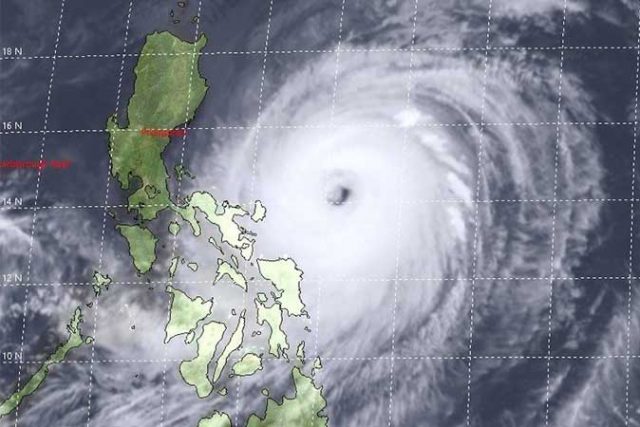
THE CROP damage estimate for Typhoon Bising (international name: Surigae) has been upgraded to P163.36 million from the previous estimate of P45.93 million, the Department of Agriculture (DA) said Wednesday.

The DA said in a bulletin that 9,774 metric tons (MT) of crops were lost across 4,826 hectares, with 3,353 farmers affected.

“Affected commodities include rice, corn, assorted vegetables & fruits, livestock, fisheries produce and facilities, and agri-infrastructure. These values are still subject to validation,” the DA said in the bulletin.

According to the bulletin, rice losses due to the typhoon amounted to 5,449 MT, valued at P93.49 million. A total of 2,996 hectares of farmland was also affected. — Revin Mikhael D. Ochave

The promise of speedy disposition of civil cases

When deciding whether or not to go to court for judicial action or remedy, the main concerns can be summarized as follows: (1) the length of time to finish the case, (2) the chances of winning, and (3) the cost of litigation. In my opinion, the 2019 Amendments to the 1997 Rules of Civil Procedure and the 2020 Guidelines for the Conduct of Court-Annexed Mediation (CAM) and Judicial Dispute Resolution (JDR) in Civil Cases, which took effect on May 1, 2020 and March 1, 2021, respectively, addresses these concerns. The Philippine Judicial Academy (PHILJA) defines CAM as a voluntary process conducted under the auspices of the court, wherein the parties are referred to the Philippine Mediation Center Unit (PMCU) for the settlement of their dispute, assisted by a Mediator accredited by the Supreme Court. JDR, on the other hand, is a process whereby a JDR judge employs conciliation, mediation or early neutral evaluation of the case.

The 2020 Guidelines for CAM and JDR in Civil Cases provides the specific cases covered by the mandatory CAM and those that may be referred to JDR. Generally, these are cases that could be the subject of a compromise and where compromise is not prohibited by law nor contrary to morals, good customs, public order or public policy.

In practice, lawsuits may take years (give or take five years, at the earliest, to over 10 years if appealed up to the Supreme Court) to conclude. Fortunately, based on the mandatory timeline provided under the 2020 Guidelines for CAM and JDR, such cases can be concluded in a matter of months in case of a successful CAM or JDR.

Pursuant to the rules and guidelines, a notice of pre-trial must be issued within five calendar days after the last responsive pleading was served and filed, setting the pre-trial not later than 60 calendar days from the filing of the pleading. For cases covered by Summary Procedure, the preliminary conference must be set not later than 30 calendar days from the filing of the last responsive pleading.

After the pre-trial/preliminary conference, and the issues have been consolidated, the court will refer the parties to a CAM, subject to some exemptions. The mediator has no more than 30 calendar days from the date of the order referring the case to CAM to complete the mediation process without further extension. If a settlement is reached, the PMCU will submit to the referring Judge the Mediator’s Report on the result of the proceedings with the copy of the compromise agreement and any attachments.

The referring Judge will evaluate the agreement and may either approve or disapprove it, or require its amendment. If found acceptable, a judgement will be issued, approving the compromise agreement and stating that the same was rendered through CAM (to distinguish it from judgments based on compromise agreements entered into during JDR).

In case of non-settlement, a Mediator’s Report stating the outcome (i.e., failed CAM or no CAM conducted) will be submitted to the referring Judge. Thereafter, in a hearing set for such purpose, the referring Judge will determine if a settlement is still possible, and if so convinced to be feasible, refers the case to a JDR Judge.

The JDR Judge is to conduct the JDR proceedings immediately upon receipt of the referral order. The proceedings will be conducted within a non-extendible period of 15 calendar days from the receipt of the referral order.

If the case is settled through JDR, the JDR Judge will accomplish a JDR Report and return the case to the referring Judge for appropriate action. If a full settlement is reached, the parties will submit a draft compromise agreement to the referring Judge for judgement upon compromise enforceable by execution. On the other hand, if there has been full compliance with the terms of the compromise agreement, the parties are instead to submit a satisfaction of the claims or a mutual withdrawal of the parties’ respective claims and counterclaims. The referring Judge will then issue an order declaring the case terminated.

If the case is not settled through the JDR process, the case will proceed to trial. On the other hand, if a partial settlement is reached, the parties will submit their terms to the referring Judge for approval and judgement on partial compromise, which may be enforced without waiting for the resolution of the unsettled part.

Cases which are on appeal from the exclusive and original jurisdiction of first-level courts may also be referred to the JDR if the Regional Trial Court (RTC) Judge is convinced that settlement is still possible. In the case of JDR on appeal, the RTC Judge has 15 calendar days to complete the JDR proceedings. This may be extended for another 15 days upon joint motion of the parties on the ground that settlement is likely to be concluded. If settlement is reached, the compromise agreement is to be submitted to the RTC judge for judgment upon compromise. Otherwise, the RTC Judge will declare the failure of the JDR and render a decision within the prescribed period.

The promise of a speedy disposition of civil cases is among the championed objectives of the 2019 Amendments to the 1997 Rules of Civil Procedure and the 2020 Guidelines for the CAM and JDR in Civil Cases. Through effective mediation, a successful CAM or JDR will expedite the disposition of civil cases. It may well be the panacea to our slow justice system. After all, when court dockets are congested, justice delayed is justice denied.

The views or opinions expressed in this article are solely those of the author and do not necessarily represent those of Isla Lipana & Co. or Cabrera & Company. The content is for general information purposes only, and should not be used as a substitute for specific advice.


Maria Ysidra May Y. Kintanar-Lopez is a Manager at the Tax Services Department of Isla Lipana & Co. and a Senior Legal Advisor of Cabrera & Company, member firms of the PwC network.

+63 (2) 8845-2728

may.y.kintanar@pwc.com

ADVERTISEMENT
ADVERTISEMENT