Home Blog Page 8203

Gov’t makes full award of fresh 7-year bonds on robust demand


BW FILE PHOTO
THE BUREAU of the Treasury raised P35 billion as planned from its offering of fresh seven-year papers. — BW FILE PHOTO

THE GOVERNMENT made a full award of the Treasury bonds (T-bonds) it offered on Tuesday and opened its tap facility to borrow more as the auction attracted strong demand.

The Bureau of the Treasury (BTr) borrowed the programmed P35 billion via the fresh seven-year T-bonds auctioned off on Tuesday. It also opened its tap facility to raise P25 billion more from the papers to take advantage of the low rates offered by investors.

Total tenders reached P90.386 billion yesterday, making the T-bond offer 2.6 times oversubscribed.

The seven-year notes fetched a coupon rate of 3.625%, 4.3 basis points lower compared with the 3.668% seen for the tenor at the secondary market before the auction, based on the PHL Bloomberg Valuation Reference Rates published on the Philippine Dealing System’s website.

The last time the Treasury offered the seven-year tenor was on Jan. 21, 2020, when it awarded P27.203 billion in reissued papers out of the P30-billion program. That issuance was quoted at an average rate of 4.322%.

National Treasurer Rosalia V. de Leon said the government opened the tap facility after the auction saw strong demand.

“[We are] taking advantage of liquidity and this is stretching maturity,” Ms. De Leon told reporters via Viber.

A bond trader said the seven-year bonds received robust demand from the market at an “attractive” yield amid a dimmer economic outlook and easing concerns over rising inflation.

Economic managers are currently reviewing their 6.5-7.5% growth target for the year, with the reimposition of strict lockdown measures in the capital and adjacent provinces expected to dent the full-year print by 0.8 percentage point.

Meanwhile, headline inflation slowed to 4.5% in March from the 4.7% in February, driven by a slower increase in food prices.

Inflation averaged at 4.5% for the first quarter, beyond the BSP’s 2-4% target for 2021.

The Bangko Sentral ng Pilipinas (BSP) expects inflation to average 4.2% this year before easing to 2.8% in 2022. Central bank officials have said the inflation path is likely to ease below the midpoint of the 2-4% target towards the fourth quarter.

BSP Governor Benjamin E. Diokno has said the central bank will remain accommodative to support economic recovery but will continue to watch out for  potential second-round inflation effects, such as wage and transport fee hikes.

The Philippine Statistics Authority will report inflation data for April on May 5, while the first-quarter gross domestic product (GDP) report will be out on May 10.

The BTr wants to raise P170 billion from the local debt market this month: P100 billion via weekly offers of Treasury bills and P70 billion from fortnightly auctions of T-bonds.

The government is looking to borrow P3 trillion this year from domestic and external sources to help fund a budget deficit seen to hit 8.9% of gross domestic product.

The Treasury is currently preparing to tap the global debt market for the second time this year with a euro-denominated bond issuance. The offering could have potential tenors of four years, 12 years and/or 20 years, according to a report by Bloomberg.

Fitch Ratings gave a BBB rating to the proposed issuance, S&P Global Ratings  rated it with BBB+, while Moody’s Investors Service had a Baa2 rating.

The last time the government issued euro-denominated bonds was in January 2020, raising €1.2 billion via a dual-tranche offering. — Beatrice M. Laforga


PhilWeb secures regulatory nod to reclassify unissued common shares

PHILWEB Corp. said it had received approval from the Securities and Exchange Commission to reclassify 750 million unissued and unsubscribed common shares to preferred shares.

“The reclassification was approved in order for the company to have flexibility in raising capital,” PhilWeb said in a disclosure to the exchange on Tuesday.

Article 7 of the company’s articles of incorporation was amended to reflect the changes.

PhilWeb has a capital stock of P2.6 billion, which now consists of 1.85 billion common shares with a P1 par value per share and 750 million preferred shares worth P1 apiece.

The dividend rate of the preferred shares will be determined by the board of directors. It may also be converted into common shares.

PhilWeb said there are no subscribers of the preferred shares as of Tuesday.

Stocks of PhilWeb at the local bourse closed unchanged on Tuesday at P2.68 apiece. — Keren Concepcion G. Valmonte

Arts & Culture (04/21/21)

CCP opens memorial site

THE CULTURAL Center of the Philippines (CCP), through the Office of the Artistic Director and the Intertextual Division, pays tribute to the artists, cultural workers, and media practitioners who died during the COVID-19 pandemic through an online memorial site. Launched on April 9 via the CCP Intertextual Division Facebook page, the Hanggang sa Muli: Pagpupugay at Pasasalamat sa mga Pumanaw (Until We Meet Again: Honoring and Thanking Those who Passed) memorial website features obituaries with short biographies and photos of the Filipino artists, cultural workers, CCP employees, patrons of arts and culture, and media personalities who passed away from March 2020 to the present. The site will also serve as a bulletin board to inform the general public about the passing of an artist and/or cultural worker. While it primarily aims to preserve the legacy of the departed artists and cultural workers, it also aims a spotlight on their contributions in the development and preservation of the Philippine arts and culture. Visit the online memorial site at https://hanggangsamuli.culturalcenter.gov.ph/, or the official Facebook page, https://www.facebook.com/hanggangsamuli.ccp.

Instituto Cervantes showcases contemporary filmmakers

INSTITUTO Cervantes de Manila is screening the work of four contemporary Spanish filmmakers this April online. The films are being shown through the Instituto Cervantes channel on the Vimeo platform (vimeo.com/institutocervantes) and are freely accessible for 48 hours from their start date and time. The third filmmaker on focus will be Juanjo Giménez. On April 21 and 22, Instituto Cervantes will offer the free online screening of Rodilla (2009), a short film about the world of soccer, the passions it arouses, and the emotional universe that it means for many people. Meanwhile, Giménez’s feature film Nos hacemos falta (2001), a road-movie that tells the encounter between different antiheroes, will be shown on April 24 and 25.

Ortigas Library releases video on the mythical kapre

THE ORTIGAS Foundation Library has released a new video on its YouTube channel which tells all about the quintessential Filipino mythical beast, the kapre. The Origins of Kapres can be found here The Origin of Kapres-YouTube.

Ayala Museum holds online summer art workshops

THE AYALA Museum will be holding virtual art workshops for children and adults this summer. The virtual art workshops go back to basic art techniques while finding inspiration from the museum’s art and history collection. Each workshop includes consultation sessions with the teachers and is limited to 10 slots for a better learning experience. The children’s workshops (open to eight to 10 year olds) are Basic Drawing: Mythical Creatures with Karla Sajona on April 24 and May 1 (10 a.m.), and Digital iPad Drawing and Composition: Lozano’s Still Life with Mandee Sarinas on May 22 and 29 (10 a.m.). Both workshops are priced at P2,500 (regular), P2,250 (early bird), and P1,785 (PWD). Meanwhile, the adults’ workshops (open to participants 18 years old and above) are Basic Drawing: Lozano’s Still Life with Abe Orobia  on April 24, May 1 and 8 (2 to 4:30 p.m.), and Acrylic Painting: Landscapes of Luna with Benedict Reyna on May 15, 22 and 29 (2 to 4:30 p.m.). Both workshops are priced at P3,500 (regular), P3,150 (early bird), and P2,500 (PWD). To take part in Ayala Museum’s virtual art workshops, register through www.ayalamuseum.org/events or e-mail virtualevents@ayalamuseum.org.

PETA Theater’s online summer workshops

PETA Theater will offer its annual summer workshop programs this year through sessions via Zoom. Opening on May 24, parents may enroll their children (ages seven to 17 years old) in any of the following programs: Children’s Theater (for children ages seven to 12), which will focus on nourishing the creative spirit in children through rhythmic movements, dance, singing, games, painting, and puppetry; Acting for Teens (ages 13 to 17,) which will teach the fundamentals of acting through an intimate online workshop crafted for beginners; Musical Theater for Teens (ages 13 to 17), which will enable teens to develop their musical performance skills; and Writing for Performance — Teens, which is offered to young aspiring writers. This introductory course is aimed at helping teens navigate the challenges of writing performative pieces. To enroll, visit www.bit.ly/PETAOnlineWorkshop or contact Betita at 0929-891-9538 or e-mail betitasarmiento@petatheater.com.

Filipinas Heritage Library’s Summer Playlist

THE FILIPINAS Heritage Library has released “Awit sa Tag-Init: A Summer Playlist” featuring OPM (Original Pilipino Music) music from its Himig Collection, #FilipinianaOnline, on Spotify. The library has several other playlists available, all based on music from its Himig Collection. These include “Sayaw Tayo!,” “Muni Muni Muna,” “Salamat, ‘Cher!,” “Pasasalamat sa Real Life Heroes,” “Maging Magiting,” and “Muni Muni Muli.”

Museum, library open in Tagum City

RESIDENTS of Tagum City in Davao del Norte can now visit the Kagikan Museum and the Tagum City Library and Learning Commons, two of the star facilities inside the Tagum City Historical and Cultural Center as they are now both open to the public. Library services and the guided museum tours started on April 5 and 6, respectively. Interested parties can use the museum’s booking app to schedule a visit as there is a limit of only 20 persons per time slot. A free guided tour can be booked via bit.ly/kagikanmuseumtours. The Kagikan Museum is the first LGU-operated (local government unit) museum that chronicles the development of Tagum from the lens of its tri-people: the Tipanud, the Moro, and the Dayo. Meanwhile, the Tagum City Library and Learning Commons is limited to a maximum of 50 persons, in adherence to protocols set by the local COVID-19 Task Force. A first come, first serve policy will be applied for all library patrons. The entrance fee to the Kagikan Museum and the fee for the annual library card which will be used to avail the amenities and services of the Library are waived for the first two months of operation. Visitors to these facilities can also visit the Sentro Rizal gallery located at the ground floor of the Center. These facilities are open all days of the week, from 8 a.m. to 5 p.m., except for the Kagikan Museum which is closed on Mondays.

UST Architecture student wins silver award

COLLEGE of Architecture student Napoleon Marion Clarke F. Mui won the Silver Award under the Architecture category of the Asia Young Designer Awards (AYDA) 2020 for the Philippines. AYDA is an annual design competition organized for Architecture and Interior Design students by Nippon Paint in 15 Asian countries. With the theme “Forward: Human-centered Design,” the design competition called for a socially driven space to serve the community’s needs. Project proposals were required to have a clear positive impact, especially for the booming population in Asian cities. For his entry, Mr. Mui, who is in his fourth year, proposed a humanistic design solution for the community of Estero de la Reina in Manila, whose problems include waste disposal and water pollution. The community-scale recycling center encourages a sustainable recycling system from the local garbage, which would then be a source of livelihood for the locals. Titled “Estero Recycling Hub,” the project utilizes community participation, innovation, and architecture design to positively impact the locals. Participants of the national competition were from the University of Baguio, Polytechnic University of the Philippines, De La Salle-College of Saint Benilde, and Batangas State University. In the AYDA 2020, the Gold Award in Architecture was won by Paul John Jandoc of the University of Baguio, while the Gold Award in Interior Design went to Maita S. Hagad of the De La Salle-College of Saint Benilde. Lauren Ghenrich L. Khoo of De La Salle-College of Saint Benilde won Silver for the Interior Design category.

BSP crafting policies for Islamic banks

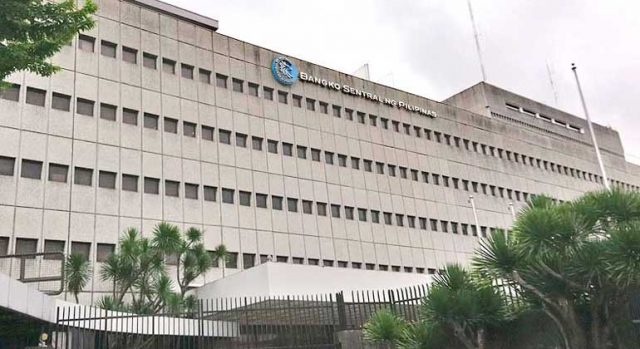
BW FILE PHOTO

THE BANGKO SENTRAL ng Pilipinas (BSP) is looking to develop the regulatory landscape for Islamic banking in the country to make it thrive in the “new normal.”

“The BSP is continuously finding ways of doing things under the new normal and working on more policy issuances which are supportive of the Islamic banking and finance in the Philippines,” BSP Managing Director Arifa A. Ala, said in behalf of Deputy Governor Chuchi G. Fonacier, at a virtual briefing on Tuesday.

Republic Act No. 11439 signed in August 2019 provided for the regulation and organization of Islamic banks in the country. The law mandates the BSP as the regulatory body in charge of authorizing Islamic banks or banking units in the market.

Following the law’s enactment, the central bank in December 2019 issued BSP Circular 1069 which provided the guidelines for the establishment of Islamic banks and banking units, and BSP Circular 1070 that laid down the Shari’ah governance framework.

Ms. Ala said the BSP is working with the Bangsamoro Government, the Department of Finance, and the National Commission on Muslim Filipinos to develop the Shari’ah Supervisory Board in the Bangsamoro region, which they hope to be finalized within the year.

“We now have the much awaited and much needed regulatory framework and supporting environment to usher in a vibrant Islamic finance industry marked by multiplicity of players,” Ms. Ala said.

She added that the general principle of tax neutrality provided by revenue regulations of the Department of Finance and the Bureau of Internal Revenue last year will help promote a level playing field for Islamic banking products and services.

“Previously, the lack of tax neutrality was considered a primary hurdle that must be addressed to ensure a sustainable Islamic finance industry,” she said.

Al-Amanah Islamic Bank is currently the only Islamic bank in the country. It has been under the control of the Development Bank of the Philippines since 2008.

Islamic banks operate under Shari’ah principles, including the non-involvement of “riba” or interest. These lenders can also issue Shari’ah compliant funding instruments such as “sukuk” upon approval by the Monetary Board.

Entities looking to enter the Islamic banking industry in the country should start with offerings that have price ranges close to conventional bank products and services, Shafiq Dhanani, president of microfinance firm MBK Ventura Indonesia, said.

“Pricing should be equivalent or lower than conventional products because people are not familiar with Shari’ah financing and if the pricing is high then it will not attract clients,” Mr. Dhanani said.

Ms. Ala earlier said a number of players have expressed interest in establishing Islamic banks and banking units in the Philippines. However, no applications have been filed yet amid the pandemic. — L.W.T. Noble

Central bank sets rules for lenders’ management of reputational risks

BW FILE PHOTO

THE CENTRAL BANK on Tuesday released guidelines for managing reputational risk to strengthen financial institutions’ guard against events that could impact their financial standing and affect stakeholder confidence.

Circular No. 1114 signed by Bangko Sentral ng Pilipinas (BSP) Governor Benjamin E. Diokno on April 16 sets rules for both banks and nonbank financial institutions, assigning responsibilities to officials and employees in monitoring reputational risks.

The guidelines define reputational risk as those that could affect earnings, capital and liquidity due to negative perception on the financial institution and adversely impact their business relationships and hinder new venture establishments or continuous access for funding

These risks could be caused by customers, shareholders, investors, employees, market analysts, the media, and other stakeholders, including regulators and government agencies.

“A BSP-supervised financial institution is expected to adopt a reputational risk management framework that is commensurate to its size, nature and complexity of operations, overall risk profile, and systemic importance,” the circular said.

The central bank said financial institutions that are part of a group or a conglomerate are prone to getting affected by reputation events involving their parent firms or other members of the conglomerate.

It also stressed that timeliness of response and crisis preparedness could determine the magnitude of the impact of reputational risks.

“Poor or delayed response to a crisis can increase reputational damage than the event itself, and possibly lead to a liquidity crisis/ and or major disruptions to operations,” the BSP said.

“Meanwhile, effective and timely crisis management arrangements, including stakeholders and media communications, could quickly allay stakeholder fears, regain their trust, and even enhance reputation,” it added.

The central bank said financial institutions may be affected by perceptions of stakeholders in the areas of corporate and risk governance, personnel/management ethics and integrity, staff competence, organizational culture, business practices, product and service quality, employee and customer relations, financial soundness or business viability, and legal or regulatory compliance.

“A clear understanding of various sources of reputational risk and how these may impact the institution is crucial in determining the approach to manage reputational risks,” it said.

The regulation assigns banks’ board of directors and trustees with the responsibility to implement adequate oversight in relation to an institution’s strategic direction, key policies, risk appetite, and overall governance framework. They should ensure an independent party periodically assesses and reviews the institution’s reputational risk management tools are operating as intended.

Meanwhile, senior management officials are expected to be in charge of training and communication programs that are in line to preserving and promoting reputational risk management.

Individual business units of financial institutions, as well as departments attending to risk management function, compliance, internal audit, and the crisis management team are likewise expected to carry out their duties to preserve reputation and prevent events from having material impact on the institution’s stability and standing.

Financial institutions are expected to implement mechanisms meant to monitor reputational risks which could be through early warning indicators such as volume of complaints, number of negative news, number of violation of laws or regulations, and codes of conduct with material penalties or sanctions for non-compliance.

The circular also requires BSP-supervised financial institutions to alert the central bank within five calendar days from the date of determination about any reputation event affecting them. They are given a one-year transitory period to fully comply with the circular.

“Results of monitoring activities shall be regularly reported to the board and senior management in a timely manner and in sufficient detail to aid in their decision-making,” the central bank said.

Last week, the BSP released Circular 1112 which requires banks to tighten their know-your-employee process by tightening hiring process and performance management and screening applicants in relation to previous BSP records. — Luz Wendy T. Noble

Holcim records 15% drop in co-processing of waste amid pandemic

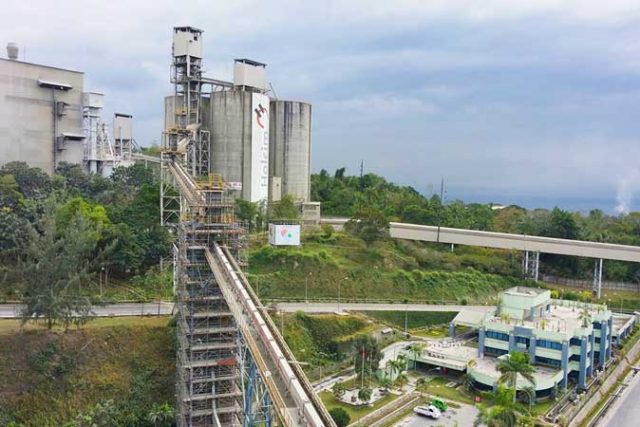
COMPANY HANDOUT

GEOCYCLE, the waste management unit of Holcim Philippines, Inc., has co-processed more than 100,000 tons of waste last year, a 15% drop due to operational challenges caused by the pandemic, the listed firm said.

“The combined volumes of plastics and biomass co-processed as alternative fuels reached over 100,000 tons in 2020, but declined from 2019 levels by 15%,” Holcim told BusinessWorld in an e-mail on Tuesday.

The building solutions provider previously said that in 2019, it had used up over 170,000 tons of waste materials, including non-recyclable plastics, for its co-processing operations. It was able to avoid using coal for 38 days, which led to lower carbon emissions and reduced fuel costs that year.

Co-processing recovers mineral or energy properties of qualified waste materials while simultaneously producing cement, according to the Environment department’s “Guidelines on the Use of Alternative and Raw Materials in Cement Kilns.”

Holcim clarified that the process is different from waste incineration, which is not authorized for use in the country.

“With incineration, the process is meant to destroy waste by combustion, generating bottom ashes and fly ashes which are hazardous waste. Both wastes have to be managed and represent up to 20% of the initial stream,” Holcim said.

“With co-processing, the intent is to reuse suitable wastes from various streams which, after pre-treatment, become alternative fuel or alternative raw material with specific quality ranges [that are] compatible with the manufacturing of cement,” the firm added.

Holcim said that co-processing also allows the firm to reduce carbon dioxide emissions, contribute to the country’s waste management, and save raw materials while producing high-quality building materials.

In a Trade department webinar in March, Geocycle Project Manager Jon Alan M. Cuyno said the unit had reduced the amount of plastic waste that would otherwise end up in landfills, rivers and oceans.

On its website, Geocycle said that it has co-processing facilities located at La Union, Bulacan, Misamis Oriental, and Davao.

Holcim posted a net profit of P1.04 billion in the fourth quarter, lower by 39.4% from a year earlier due to a drop in sales. Its net sales slid by 26.2% to P7.24 billion from October to December.

Holcim shares at the local bourse inched down by 1.58% or nine centavos to close at P5.59 apiece on Tuesday. — Angelica Y. Yang

Christie’s to auction ‘highest-estimated Asian artwork’ in Hong Kong

XU BEIHONG, Slave and Lion — CHRISTIES.COM

HONG KONG — Auction house Christie’s unveiled on Monday what it called “the highest-estimated Asian artwork” to ever go under the hammer, a Xu Beihong painting called Slave and Lion, which it expects to fetch between $45 million and $58 million.

The 1924-dated painting by Mr. Xu, who is regarded as one of the most important figures of Chinese realism, will go on public preview in Beijing and Shanghai this month before being auctioned in Hong Kong on May 24.

The painting was sold in the global financial hub in 2006 at Christie’s for HK$53.9 million ($6.9 million), a record at the time for a Chinese oil painting.

“The market at the very top is very strong; (there is) a lot of demand, extremely driven by rarity, which is exactly what this work is about,” Christie’s Asia Pacific President Francis Belin said.

The story behind the painting is rooted in Roman mythology, according to Christie’s presentation.

A runaway slave was captured and, as punishment, thrown into the Colosseum with a lion. But the animal did not attack the slave, who had earlier removed a thorn stuck in the lion’s paw. The slave and the lion were eventually set free. —  Reuters

To cope with chronic stress, turn to nature (even fake plants will do)

LOOKING AT IMAGES of the great outdoors on your computer monitor, tending a fake plant, and listening to birds chirping through headphones can help deal with chronic stress. “Nature is the cheapest and most effortless thing you can do to improve the stress response,” said Dr. Stanley A. Chua, a certified practitioner of functional medicine.

“Exposure to sunlight is really important, although this is a big problem this pandemic, especially for those who are stuck in condos and aren’t able to go to the common areas,” he added in a stress management webinar organized by BioBalance Wellness Institute.

The good news is that multiple studies have shown that experiencing simulated nature — photos, 3D images, and virtual reality — “induces a more physiological relaxing state.” (See, among others, Jo, Hyunju et al. “Physiological Benefits of Viewing Nature: A Systematic Review of Indoor Experiments.” International Journal of Environmental Research and Public Health vol. 16,23 4739. 27 Nov. 2019, doi:10.3390/ijerph16234739)

Aside from visualizing tranquil scenes, Dr. Chua suggested reducing stress by going for a walk (if possible), adopting an active hobby like gardening, dancing, journaling, expressing gratitude, being creative, spending time with a supportive network, and body scanning meditation.

CHRONIC STRESS
Stress is a normal reaction, even beneficial under the right circumstances. “Stress can be good, as in moderate exercise, or when we’re given new tasks at work because it encourages us to learn,” said Dr. Chua, who advocates personalized care for chronic disease combined with lifestyle and behavioral interventions.

This normal human reaction becomes bad, he continued, when it persists for prolonged periods (as in this pandemic), or when individuals become so overwhelmed they can’t anymore function as usual.

Repeated activation of the stress response takes a toll on the body over time. Chronic stress contributes to high blood pressure, promotes the formation of artery-clogging deposits, and causes brain changes that may contribute to anxiety, depression, and addiction, according to Harvard Health in a July 2020 article.

Signs of poor stress response include reliance on stimulants like coffee, an increased need for sugary or carbohydrate-rich food, alcohol dependence, sleep deprivation, and a lack of enriching social connections.

Chronic stress may contribute to obesity, both through direct mechanisms (causing people to eat more) or indirectly (decreasing sleep and exercise). “Try to eat healthy despite your unhealthy cravings. When you’re stressed, nutrient depletion is accelerated, which snowballs the stress response,” Dr. Chua added. “Eating healthy also helps regulate bowel movement, which in turn helps excrete excess hormones and reduce the toxic burden on the body.”

CALMING AGENTS
Individuals may also opt to take supplements, said Dr. Chua, who mentioned adrenal adaptogens such as ashwagandha (also known as Indian ginseng), nutraceutical support such as vitamin B complex and vitamin C, and calming agents such as chamomile.

“Before using narcotic sedatives, you can try melatonin first — but with the guidance of a healthcare professional,” said Dr. Chua. “If the stressors are always there, however, then these supplements will not work as well as they should.”

Restoring proper stress response is, among other things, a matter of dealing with emotions as needed and not letting these linger. Dr. Chua said that when one’s quality of life is already significantly affected, then it’s time to ask for help.

“If you can’t function at work and if you can’t sleep at night, then it’s time to seek professional help. It’s not wrong to seek help early on,” he added, “although I would reserve the need to use drugs towards the latter part of the treatment, and not as a first step.” — Patricia B. Mirasol

Life insurers’ premium income up 6%

PHILSTAR FILE PHOTO

THE OVERALL premium income of the life insurance industry inched up by 5.9% in 2020 despite the coronavirus pandemic’s impact on overall sales, data from the Insurance Commission (IC) showed.

The industry saw its premium earnings go up to P247.72 billion last year from P233.92 billion in 2019, the IC said in a statement on Tuesday, citing reports from 31 life insurance companies in the country.

The increase mainly came from the 7.7% growth in the premium income from variable life insurance products, which rose to P183.2 billion last year from P170 billion in 2019. Single premiums and renewal premiums went up by 19.72% and 13.58%, respectively.

Meanwhile, premiums written in traditional life policies inched up by 1.09% to P64.48 billion in 2020 from P63.78 billion in 2019, largely from the 13.7% growth in renewal premiums.

“It has been observed by the financial sector leaders that generally the savings of the middle-class sector grew due to restraints in consumer spending because of the pandemic,” Insurance Commissioner Dennis B. Funa said in a statement.

The life insurance industry saw its paid-up capital jump by 7.66% to P25.28 billion in 2020.

The regulator attributed this to higher investments of companies both in traditional and segregated businesses, which grew by 6.5% to P1.48 trillion in 2020 from P1.39 trillion the year prior.

This pushed the sector’s combined assets to hit P1.53 trillion in 2020, up 7.7% from P1.42 trillion in 2019.

Despite higher overall premiums written, however, the industry’s total sales measured through new business annual premium equivalent (NBAPE) still declined last year because of the limited face-to-face selling that agents could do during the coronavirus pandemic.

The IC said life insurers’ NBAPE fell by 19.8% to P46.2 billion last year from P57.6 billion in 2019.

“The industry grappled with the on-and-off quarantine and lock-down measures, and the fact that we were unable to continuously offer insurance agents’ examinations greatly hampered the production of insurance companies,” Mr. Funa said.

The regulator said NBAPE is computed by adding the value of first year premiums from products newly sold in a certain year and 10% of single premiums written.

The regulator said it is expecting that the pandemic’s impact on the industry last year to taper off this year, especially once the government’s mass vaccination program gains traction in the second half.

“It will be interesting to see the impact of the shift from face-to-face selling to remote selling via videoconferencing technologies in the sale of insurance products, which was already institutionalized in the Circular Letters issued by the IC,” Mr. Funa said.

“Also, we also hope to see the impact of the increased awareness of the importance of having life insurance as a way to provide security and peace of mind amid the threats of the COVID-19 pandemic to the lives and health of the Filipino people,” he added. — BML

AboitizPower to use data science for planned energy trading platform

ABOITIZPOWER.COM

LISTED Aboitiz Power Corp. said on Tuesday that it is harnessing data science to develop a new energy trading platform and other tools to improve its processes and services.

In a press release, the firm said that its commercial operations business unit made “significant strides in innovating and adopting data science practices.” The unit is in charge of trading and selling the company’s energy generation capacities.

AboitizPower said the business unit has been “working on a new energy trading platform that uses advanced analytics and trading optimization technologies to support its trading operations, further enhancing data analysis and efficiency wherever possible.”

It said the system will ensure that the company’s generation facilities trade power with high levels of accuracy, comply with stringent market rules, and optimize margins based on data-driven trading strategies.

In a separate e-mail on Tuesday, AboitizPower told BusinessWorld that the project is divided into modules, with some scheduled to be delivered this year. The platform is set to be implemented by 2024. The firm added that this will be an “internal system of AboitizPower.”

The company said its use of data science and platforms has also reduced the turnaround time and negotiation period for its business unit, which serves at the frontlines of customer interactions.

In its media release, AboitizPower said that it recently partnered with UnionBank’s data science and artificial intelligence team to build tools that leverage data science models in a bid to expand the company’s knowledge of its customer base and help build long-term solutions for its business.

AboitizPower Head of Commercial Operations Sandro A. Aboitiz was quoted as saying: “In Commercial Operations, we encourage an innovative mindset within the group in order to come up with unique ideas to give what our customers need even before they ask.”

“We remain committed to our goal of being the partner of choice for the customers we serve, always aiming to go above and beyond our services levels and constantly seeking new ways of serving our customers through data science and other automation tools,” he added.

AboitizPower is the holding firm for the Aboitiz group’s investments in power generation, distribution, and retail electricity services.

In February, the group said that it was embracing digital technology — using data science and artificial intelligence to enhance the productivity of its business units in the banking, power, food, infrastructure and real estate sectors.

Shares of AboitizPower in the local bourse improved 0.43% or 10 centavos to finish at P23.60 apiece on Tuesday. — Angelica Y. Yang

McDonald’s to offer BTS Meal in local restos in June

THE “BTS Meal” of McDonald’s will arrive in the Philippines starting June 18.

POPULAR food chain McDonald’s has partnered with Korean supergroup BTS for a specially designed meal to be offered in participating restaurants nationwide in June.

In an announcement made on Monday night, McDonald’s said its “BTS Meal” will arrive in the Philippines starting June 18, part of a one-of-a-kind menu “tour” for the offering that will have the band’s signature order served in some 50 different countries in the world.

The BTS Meal includes a 10-piece Chicken McNuggets, medium fries, medium Coca-Cola, and sweet chili and Cajun dipping sauces inspired by popular recipes from McDonald’s South Korea.

The burger chain has seen its revenue outside the United States drop during the coronavirus disease 2019 (COVID-19) pandemic. The company is tapping on promotional campaigns through celebrity endorsements and limited-time menu items to get customers back into restaurants as economies reopen with the roll-out of vaccines.

The BTS meal follows similar US-only deals with singers J Balvin and Travis Scott, which McDonald’s says boosted sales in the later half of last year.

The spike in demand during the Travis Scott promotion caused the company to temporarily run short of ingredients to assemble its signature Quarter Pounder burgers at some restaurants.

The BTS Meal, McDonald’s Philippines said, should be a hit in the local market as the band has a large following among Filipinos.

“This band is truly a global phenomenon with a fan base that knows no borders, and we couldn’t be more excited to bring the BTS Meal to our customers in the Philippines starting June,” said Oliver Rabatan, McDonald’s Philippines Marketing & Channels Head, in a release.

For the management of BTS, the partnership is a welcome development since the group finds much affinity with the food chain.

“The band has great memories with McDonald’s. We’re excited about this collaboration and can’t wait to share the BTS Meal with the world,” said BIGHIT MUSIC, label of BTS.

BTS has had a steady presence in the global music scene in the last decade, churning out chart-topping hits like “DNA” (2017), “Boy with Luv” (2019) and “Dynamite” (2020).

For more information on the BTS Meal and other updates, follow McDonald’s social channels McDo.ph on Facebook and McDo_PH on Twitter and Instagram. — Michael Angelo S. Murillo with Reuters 

Who should get the COVID-19 vaccine first?

REUTERS

Public health officials and scientific experts decide who in their country or region will get the vaccines first, and there may be differences in their prioritization. While there are still limited supplies of coronavirus disease 2019 (COVID-19) vaccines, the World Health Organization (WHO) and health authorities have recommended prioritizing the following groups: (1) people who have a higher chance of exposure to the virus; and (2) people who have a higher chance of having severe COVID-19 illness. (“COVID-19 Vaccines FAQs,” International Federation of Pharmaceutical Manufacturers & Associations, March 2021)

In line with these recommendations, the Interim National Immunization Technical Advisory Group for COVID-19 Vaccines has come up with a list of priority population groups. The top three in the list are (A1) frontline workers in health facilities both national and local, private and public, health professionals and non-professionals like students in health and allied professions courses with clinical responsibilities, nursing aides, janitors, barangay health workers, etc.; (A2) senior citizens aged 60 years old and above; and (A3) persons with comorbidities.

A number of local government units have started their vaccination rollout for priority groups, including senior citizens.

HOW WELL DO COVID-19 VACCINES WORK IN OLDER PEOPLE?
During most COVID-19 vaccine clinical trials, people of different ages took part to confirm the vaccines’ safety profile and effectiveness in older age groups, who are most at risk of serious illness and death from COVID-19. Extremely frail older persons and persons above the age of 95 years were not included in clinical trials. Most of these trial results showed high levels of effectiveness in different age groups, including in some cases those over age 65.

When deciding to get vaccinated or not, older adults should remember that they have been disproportionally affected by the COVID-19 pandemic. They have a higher chance of needing hospital care or dying if they get COVID-19 compared to younger adults. The chance of severe illness with COVID-19 goes up with age, with older adults at the highest risk. The greatest risk for severe illness from COVID-19 is among those aged 85 or older.

This is why the WHO has identified older adults as a priority group to get the vaccine. While vaccination is recommended for older persons due to the high risk of severe COVID-19 and death, very frail older persons should be individually assessed. If there are concerns, it is always best to talk to your doctor about whether or not you should get a COVID-19 vaccine.

HOW WELL DO COVID-19 VACCINES WORK IN PEOPLE WITH LONG-TERM ILLNESS OR WEAKENED IMMUNE SYSTEMS?
According to the WHO, people with underlying medical problems like high blood pressure, heart and lung problems, diabetes, obesity, or cancer, are at higher risk of having serious illness from COVID-19.

Clinical trials are designed to assess all races, genders, different ages, as well as people with well-controlled underlying health conditions, such as diabetes or heart disease. However, as with other vaccines, clinical trials for COVID-19 vaccines do not include people with weakened immune systems, such as people who are undergoing chemotherapy or bone marrow treatment. As COVID-19 vaccines are put into widespread use, safety and effectiveness data will continue to be collected, analyzed, and reported for all populations, including people with conditions that suppress their immune response.

While COVID-19 vaccination might provide a lower level of protection in people who are immunocompromised compared with the rest of the population, it is still very important to get vaccinated, as well as continue washing hands, using social distancing, and wearing a mask even after getting a vaccine.

Some types of COVID-19 vaccines may be more suitable than others for people with weakened immune systems. If there are concerns, the advice is to always consult your doctor.

Vaccines are not the only way to stop the virus, but they are one of our best chances of returning to normal. The current COVID-19 pandemic is a global crisis, with devastating health, social, and economic impacts. COVID-19 vaccines are a long-term solution to tackle the virus.

The more people get COVID-19 vaccines, the more successful we will be at: (1) helping to stop the spread of the virus and protecting our communities; (2) lowering the number of COVID-related hospitalizations and deaths and helping to protect our health systems; and (3) allowing people and businesses to get back to normal.

We know from the past that vaccines are very important to public health and provide great value to society. The WHO estimates that vaccines currently save about 2 to 3 million lives each year globally.


Teodoro B. Padilla is the executive director of the Pharmaceutical and Healthcare Association of the Philippines (PHAP). PHAP represents the biopharmaceutical medicines and vaccines industry in the country. Its members are at the forefront of research and development efforts for COVID-19 and other diseases that affect Filipinos.

ADVERTISEMENT
ADVERTISEMENT