Grey chair at desk against white wall with poster in home office with plants on wooden shelves
Working at home has its advantages. However, it can also be difficult at times with so many distractions. How do we stay focused and productive? How can we improve our work routine and separate it from our home life? So, here are ways and tips for optimizing your spaces efficiently and comfortably for remote work especially during summer.
Create a designated working area
Whether it’s in your bedroom or living room, create a designated area as your working zone. Find the perfect spot at home and opt for a stylish yet ergonomic table and chair. You can achieve a beautiful, modern minimalist-looking working area with a Safdie desk and Heim chair without compromising comfort and productivity.
Poor air quality is a big productivity killer. To keep your workspace cool and comfortable this summer, you need to invest in having an air-conditioning unit. Proper ventilation in your working area is a major factor in boosting your productivity levels even at home. Kaze inverter split type air-conditioners are energy-saving, economical, and environment-friendly AC units with low sound technology. It also has superior quality filters that guarantee cleaner air and can keep your room free from air pollutants and other smaller particles.
Make your working space look bigger by installing light-colored tiles. You can let the natural light come into your room and tiles with lighter shades can reflect light, unlike darker tiles that absorb light. Cifre light-colored floor tiles with a subtle wood-like finish can stylishly make your room feel more spacious and attractive.
Better quality lighting can keep you awake and focused. So aside from your general lighting, it’s ideal to have accent lighting in your working area. Alphalux table lamps use LED lights that can help you achieve better visibility, brighter ambiance, and improved work performance, whereas can also help you save energy this summer for it only consumes 20%-25% of energy. It has a life expectancy of up to 15,000 hours.
A clean and organized workspace has a big impact on getting more tasks done easily. Avoid the clutter and make your working desk visually pleasing by keeping your supplies and work accessories in one place with this Interdesign transparent bin. Maximize your empty wall space and place floating shelves from Heim for extra decorative storage.
When you want to stay hydrated while working, you need to have a cup of coffee, tea, or water by your side. This Bubba insulated mug has dual-wall foam insulation that can keep the temperature of your drinks for longer hours. It is a handy partner to keep your cool this summer with its easy-to-carry handle.
Your working space should inspire and motivate you to accomplish your tasks. It’s a must to decorate your home office and add these vibrant and stylish decorative pieces from Heim. Glam up your walls by hanging a gorgeous wall clock and a gallery of tropical-inspired artworks to breathe in an outdoor vibe.
Get rid of all the clutter easily by having an accessible trash bin in your station. You can refrain from standing up to throw out your trash with a trash bin from Kasch that has a step pedal for easy disposal.
Optimize how you work from home efficiently and comfortably with all these home office products and essentials from Wilcon Depot. Shop now for your home improvement and building needs at any Wilcon Depot and Wilcon Home Essentials store nationwide. Visit any of their 65 stores nationwide and explore the limitless product selections that Wilcon offers ranging from Tiles, Sanitarywares, Plumbing, Furniture, Home Interior, Building Materials, Hardware, Electrical, Appliances, and other DIY items.
Adhering to health and safety protocols to fight against COVID-19, Wilcon continuously implements necessary precautionary measures inside all of its stores to ensure their employees and valued customers’ safety, health, and well-being a priority.
You can also browse their Digital Catalogue and shop conveniently while at home through your personal shopper with the Browse, Call, and Collect/Deliver service. BROWSE the items you want to purchase at shop.wilcon.com.ph and www.wilcon.com.ph, CALL/Viber/text the Wilcon branch of your choice, and schedule a COLLECT/DELIVER. For the list of participating stores with their pick-up and delivery contact details, click this link: www.wilcon.com.ph/content/328-bcc-branches.
Another shopping alternative is the Wilcon Virtual Tour. An online shopping option wherein customers can contact the nearest Wilcon store via Facebook Messenger App. Customers can contact the nearest stores, and the Wilcon team will take you on a virtual tour where you can explore the available products inside their physical stores.
Wilcon also provides contactless payment options to its customers like bank transfers, GCash, PayMaya, InstaPay, PesoNet, WeChat, and Alipay for customers’ convenience.
AROUND P83.3 billion in income may be lost during the nearly five weeks of stricter lockdown in Metro Manila and adjacent provinces, Acting Socioeconomic Planning Secretary Karl Kendrick T. Chua said on Monday evening.
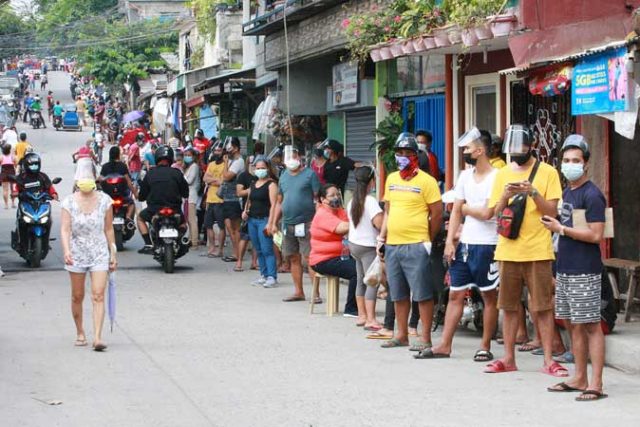
During a televised Cabinet meeting with President Rodrigo R. Duterte, Mr. Chua said about P19.6 billion in workers’ income is sacrificed for every week of enhanced community quarantine (ECQ), while P14.7 billion is lost for every week of modified ECQ (MECQ).
Metro Manila and the provinces of Bulacan, Cavite, Laguna, and Rizal were under a two-week ECQ from March 29 to April 11, in order to curb the spike in coronavirus disease 2019 (COVID-19) infections. Many businesses were ordered to scale down operations or close during the ECQ, while others implemented work-from-home schemes.
Restrictions were slightly loosened as the so-called “National Capital Region Plus” was placed under an MECQ until end-April.
“Dahil two weeks na po ’yong ating ECQ at may madadagdag pa na almost three weeks na MECQ, so total of almost 5 weeks, ang epekto po sa ating tao ay (the effect on the people is) P83.3 billion in foregone wages,” Mr. Chua said.
Mr. Chua noted that prior to the stricter lockdown, the jobs situation in the country was improving as the economy began to reopen. He said 9.3 million jobs were generated in February, although the unemployment rate rose to 8.8% versus 8.7% in the month prior.
“Ang hinahabol natin sana by next year ay bumalik na sa 4-5% unemployment rate (We are targeting to bring down the unemployment rate to 4-5% next year),” he said.
Meanwhile, the number of overseas Filipino workers (OFW) who lost their jobs due to the pandemic reached 647,827, according to Labor Secretary Silvestre H. Bello III. The number represents 19% of the 3.5 million documented OFWs around the world.
Mr. Bello said the government has so far repatriated more than 519,000 of these “displaced” OFWs.
“They were displaced. Meaning, they lost their jobs or even if they did not lose their jobs, they could not earn a living because they were prevented from reporting to work,” he said.
Mr. Bello said about 49,000 OFWs are still in the process of repatriation while more than 79,000, mostly in Italy, United Kingdom, Germany and Spain, have chosen to stay in their host countries.
“They don’t want to go home, because many of them got vaccinated, particularly in the Middle East. So with their vaccination, the opportunity for reemployment was very high, so they opted to stay,” he said.
According to the government, there are 8.74 million Filipinos living and working abroad as of June 2020. Of this, 1.58 million are undocumented and 3.8 million are permanent migrants.
Money sent home by OFWs in February increased by an annual 5.1% to $2.477 billion, data from the central bank showed. Total cash remittance inflows in the first two months of 2021 rose 1.5% to $5.08 billion, as the United States and host countries in the Middle East and Europe reopened their economies. — Kyle Aristophere T. Atienza
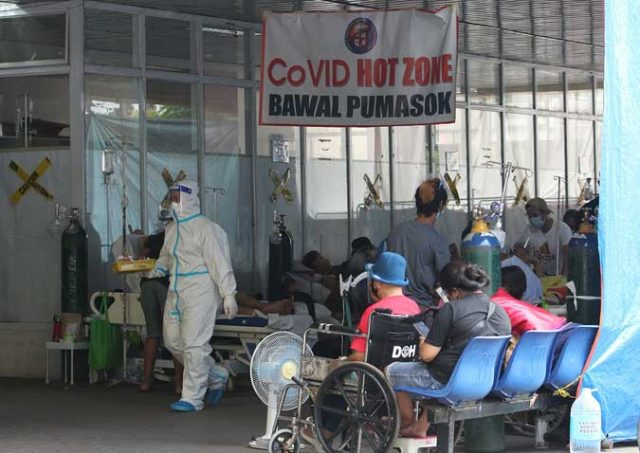
Most hospitals in Metro Manila are now overwhelmed with coronavirus-stricken patients. — PHILIPPINE STAR/ MICHAEL VARCAS
By Norman P. Aquino, Special Reports Editor
and Kyle Aristophere T. Atienza, Reporter
SHERWIN DE LOS REYES, 38, sat in a wheelchair in the corridor of the Las Piñas City District Hospital near the Philippine capital for five days waiting to be treated for the coronavirus disease 2019 (COVID-19). He died shortly after.
“Sherwin never had the chance to fight for his life,” Roy R. Bayona, his business partner and close friend, said by telephone. “He might have recovered and survived had he been admitted and given proper treatment.”
This was in August last year, when more than a million doctors and nurses had warned about losing the COVID-19 battle amid record infections sweeping the Southeast Asian nation.
Nearly a year after, the pandemic is staring the government in the face. Manila and nearby cities are at the heart of a major breakdown of the country’s healthcare system that critics had long foretold.
Daily tallies and deaths are at their peak, while highly contagious variants of the COVID-19 virus are sweeping the nation as vaccines remain in short supply.
“What we’re seeing in the Philippines is the culmination of a multilayered and prolonged failure on every single dimension of governance,” said Richard Javad Heydarian, a political analyst and research fellow at the National Chengchi University in Taiwan.
“It’s a concatenation of mismanagement of the crisis on multiple levels,” he said in a Facebook Messenger chat.
The Philippines will lag behind its Asia-Pacific neighbors in terms of economic recovery as coronavirus infections continue to spike and vaccines remain in short supply, Moody’s Analytics said this week.
“The Philippines is the laggard of the entire region as a record-high number of new COVID-19 cases has led to a resumption of strict lockdowns in Metro Manila, and the country faces a severe shortage of vaccines,” Moody’s Analytics Chief APAC Economist Steven Cochrane said in a note on Monday.
Philippine authorities have blamed the surge on more contagious variants of the virus and people ignoring health protocols, but experts disagree.
“The Philippines has the longest lockdown in the world, yet the government has failed not only in saving lives, but in recognizing, admitting and learning from its failures,” said Leonard D. Javier from the Health Alliance for Democracy.
Some hospitals were running at full capacity even before the fresh surge in infections started in March, he said in an e-mail.
“Hospitals are not supposed to be inundated by patients if we contain and prevent the spread at the community level,” Mr. Javier, a doctor, said.
“Now most hospitals in the National Capital Region Plus are overwhelmed, with patients spilling over to nearby provinces,” he added.
Anabel W. Samonte, 61, got tested after experiencing high fever, body pains and other flu-like symptoms on March 27. A few days after, she tested positive for the coronavirus.
“Knowing that the hospitals were full, and with advice from our relatives who were doctors, we tried to manage her at home,” her daughter Gwendolyn Samonte said in a Facebook Messenger chat.
But they had to bring her to a hospital after her symptoms worsened. “We contacted more than 20 public and private hospitals in Metro Manila and nearby provinces but all were full.”
It took days before they found a hospital willing to admit her mother.
Gilbert Enrile, 87, was not as fortunate. He died two days after testing positive for the coronavirus, a situation described by a group of private hospital administrators as a “nightmare.”
“A village health worker advised us to just have my dad stay at home and wait until there’s an isolation facility that could take him in, which was not assured,” his son Ivan Phell said in a Messenger chat.
‘UNMANAGEABLE’ Almost a million people have been infected with the coronavirus in the Philippines, the second-highest in Southeast Asia after Indonesia. More than 16,000 people have died, while almost 800,000 have recovered, according to the Department of Health (DoH).
The agency on April 2 reported the highest daily tally of 15,310 cases since the pandemic started last year.
Active cases breached the 200,000 mark on April 17, according to DoH data, the highest in the region. The number has since gone down to 127,006 cases.
“Compared with many regions like Latin America, North America or Europe, the Philippine numbers are not as bad, but if you look at comparable cases in the region, it has not done very well,” Mr. Heydarian said.
Presidential Spokesperson Herminio “Harry” L. Roque, Jr. said the recent surge is not unique to the country but is happening worldwide.
Mr. Roque, who had tested positive for the coronaviru at least twice, added that criticisms were expected because “critics and the detractors of the administration have always something to say.”
Mr. Roque said 68% of intensive care unit (ICU) beds for coronavirus patients in the country have been used. About 49% of isolation beds have been used and more than 56% of ward beds were already occupied.
More than 80% of ICU beds in Metro Manila have been used. He added that about 63% of isolation beds and 70% of ward beds in the region were already occupied.
The command center responsible for referring patients to hospitals had been receiving an average of 399 calls daily, or almost four times the number last year, the Health department earlier said.
On-the-ground reports showed many have died without seeing a hospital or being treated by a health professional, Vice-President Maria Leonor G. Robredo said in a Facebook post this month.
“Many have already died inside tents outside hospitals, waiting to be admitted to the emergency rooms, in an ambulance while in transit, at home without receiving any medical help,” she said.
Jaime A. Almora, President of the Philippine Hospital Association, said the government had “failed to listen to the cry for help from the private hospitals.”
He said private hospitals in Metro Manila and nearby provinces had not increased their beds for coronavirus patients due to late payments from the state health insurer.
“Private hospitals had not been paid their COVID-19 claims since the start of the pandemic up to now,” he said in an e-mail. “This discouraged many hospitals in participating and expanding their capability to manage COVID-19.”
Gene A. Nisperos, a board member of the Community Medicine Development Foundation, said the state had failed to prepare the country’s healthcare system for possible emergencies such as the coronavirus pandemic.
“Government hospitals were always understaffed, poorly funded and lacked the resources to function optimally even before the pandemic,” he said in an e-mail. “The government did very little to address these issues.”
“The medical community has also learned much about handling COVID-19 patients. Management of severe cases is now more aggressive and unified. However, much needed resources, like medicine, remained in short supply,” he added.
Mr. Javier from the Health Alliance said the government had “neglected measures that matter in halting the spread of the virus: prevention through mass testing, contact tracing, isolation, quarantine and aid to those required to stay home.”
The medical community, along with civic groups, had been calling for broad-based testing since last year.
The country’s testing czar Vivencio B. Dizon has said the government could not test all Filipinos. “Testing is not the only solution to the pandemic,” he said. “We cannot test our way out of this pandemic.”
Health experts had been urging the government to test as many as 100,000 people daily in the capital region and nearby provinces, double the current rate.
“The surge became unmanageable because the fundamentals, like adequate testing and efficient contact tracing, are not even there,” Mr. Nisperos said.
‘HUBRIS’ He said the government was content in whatever it was doing for as long as hospitals were not full, people were complying with minimum health standards and vaccines were becoming available.
“The latest surge was triggered by the government’s hubris and refusal to acknowledge its own shortcomings,” Mr. Nisperos said.
“As much as we condemn vaccine apartheid around the world, Duterte had put all his eggs in Chinese and Russian vaccines,” Mr. Heydarian said. ¨But the Chinese vaccines came in late February but these were not enough,” he said, adding that Russian vaccines have yet to come.
It also did not help that state agencies led by the Health department and Philippine Health Insurance Corp. had been mired in corruption scandals, he added.
Jose Enrique A. Africa, executive director of think-tank Ibon Foundation, said the state overly relied on vaccines, which got delayed due to global supply issues.
“Its practice has evidently been a crude strategy of controlling the populace with restrictions while waiting for vaccines to come,” he said in an e-mail.
The government aims to vaccinate as many as 70 million Filipinos by year-end. It hadtaken delivery of 3 million doses of CoronaVac made by China’s Sinovac Biotech Ltd. and the vaccine developed by AstraZeneca, Plc.
The government relied heavily on non-health personnel, particularly the military and police generals, instead of those in the health sector, Mr. Nisperos said.
“The Duterte government viewed the pandemic as a discipline problem, like a crime. Interventions were therefore militaristic and punitive. These are anathema to a health-based approach,” he said.
Mr. Duterte on April 15 said he could use police power to take over hotels and use their beds for coronavirus patients.
“I can order the authorities to take over the operations of hotels if there are no beds anymore. That is easy,” he said. “When we are pushed to the wall, I can always order the military and police to go there and confiscate the operation of hotels.”
During the implementation of a hard lockdown in Metro Manila, a resident of General Trias in Cavite province died after police forced him to do 300 pushups as a punishment for a curfew violation.
More than 120,000 violators of quarantine protocols have been arrested since Mr. Duterte locked down the entire Luzon island in mid-March last year to contain the pandemic.
The Presidential Palace has blamed health protocol violations for the recent surge, but government officials themselves have violated the rules.
Police Chief Debold M. Sinas reportedly skipped health screening when he visited Calapan City in the southwestern part of Luzon, the same day he announced he had the coronavirus. At the height of the first lockdown last year, he celebrated his birthday with a pre-dawn serenade.
“Public officials have the basic responsibility to be good examples to the public,” said Noreen Sapalo, a college lecturer on culture and politics and a graduate student of anthropology at the University of the Philippines.
“When they fail to do this, it leads to more distrust among Filipinos and fuels the ‘bahala na’ or fatalistic demeanor,” she said in a Messenger chat.
“We can clearly see that populism is not necessarily a recipe for competence especially in times of crisis,” Mr. Heydarian said.
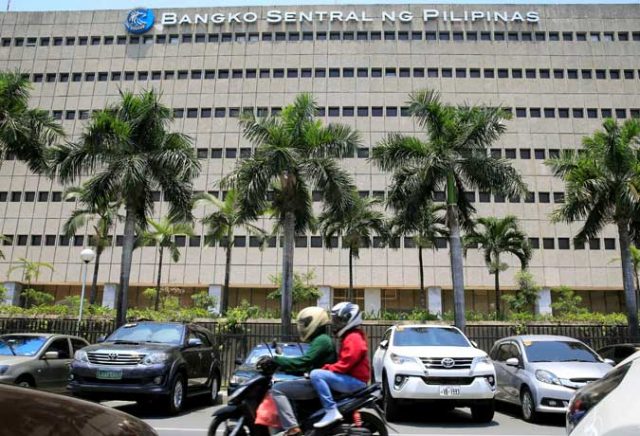
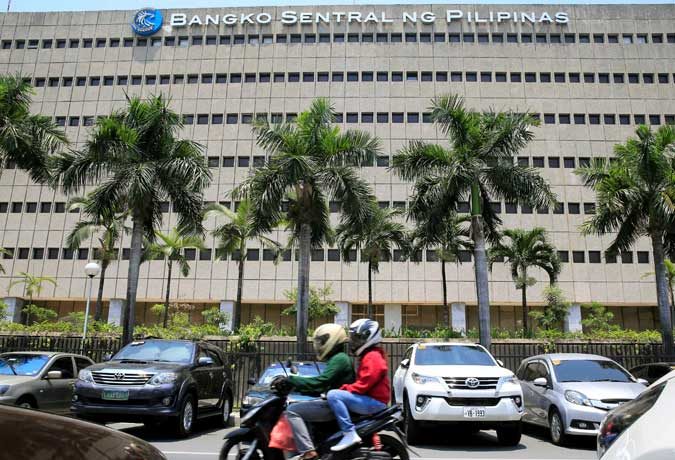
THE Bangko Sentral ng Pilipinas (BSP) is requiring too-big-too-fail banks to submit a separate recovery plan annually starting 2022, a move seen giving the regulator a more focused assessment of a lender’s plans to bounce back from a crisis.
“The Bangko Sentral shall review the recovery plan as part of the overall supervisory process for domestic systemically important banks (D-SIBs), focusing on assessing the recovery plan’s robustness, credibility, and ability to be effectively implemented,” BSP Governor Benjamin E. Diokno said in Circular No. 1113.
Previously, central bank regulations only required D-SIBs to submit an Internal Capital Adequacy Assessment Process (ICAAP) document, which includes the recovery plan, annually every March 31.
“This [circular] merely segregates the recovery plan and to be submitted separately from the ICAAP document,” BSP Deputy Governor Chuchi G. Fonacier said in a text message, saying the move will provide for “more focus” on each requirement.
The central bank does not disclose which particular banks are considered “too big to fail.” However, it noted a lender will fall under a D-SIB category, if in event of its collapse or distress, the impact could spill over to the financial system and the economy.
The separate submission of the ICAAP and the recovery plan will align BSP supervision with international standards, according to BSP Managing Director for Policy and Specialized Supervision Lyn I. Javier.
“These are two different documents that serve distinct purposes. The separation of said documents would also facilitate the BSP’s assessment of the recovery plan especially in times of crisis on an institutional level and across D-SIBs,” Ms. Javier said in a Viber message.
Moving forward, she said the separate recovery plan submission will hold even in normal times.
Starting next year, the central bank will require the submission of the separate ICAAP documents and recovery plans of financial institutions every June 30.
Ms. Javier explained that under the new scheme, the ICAAP will focus on maintaining the continuity of a bank’s operations.
“It should contain the bank’s assessment of the adequacy of its capital considering all material risks to which it is exposed both in business-as-usual and stressed scenarios,” she said.
Meanwhile, the recovery plan is expected to “contain measures that should be taken if the bank’s financial condition deteriorates to bring it to a safe and sound condition again,” Ms Javier said.
Based on the circular, this should include specific initiatives appropriate to the bank’s risk profile such as capital raising activities, streamlining of businesses and restructuring, as well as disposal of assets to improve capital position.
“D-SIBs should also relate their recovery plan not only with ICAAP but also with the liquidity assessment and various contingency plans,” she added.
Bankers Association of the Philippines President Jose Arnulfo “Wick” A. Veloso welcomed the amendments to the existing rules on too-big-too-fail banks.
“The new BSP regulation further recognizes the critical role D-SIBs play in ensuring long-term favorable condition post-COVID-19 pandemic by strengthening its efforts in monitoring and ensuring financial stability of the banking system,” Mr. Veloso said in a statement sent to BusinessWorld.
“The BAP will continue to collaborate with the BSP on efforts that will help our country move towards economic recovery,” he added.
Despite the impact of the pandemic, Ms. Fonacier has said the banking system remains guarded with adequate capital, liquidity buffers and ample loan reserves. She said the industry’s capital adequacy ratios both on solo and consolidated bases are well above the minimum threshold of 10% set by the BSP.
THE Securities and Exchange Commission (SEC) has “considered favorably” the initial public offering (IPO) of food manufacturer Monde Nissin Corp, the corporate regulator said in a statement on Tuesday.
“The commission en banc resolved to render effective the registration statement of Monde Nissin covering 17,968,611,496 common shares to be listed and traded on the Main Board of the Philippine Stock Exchange (PSE), subject to the company’s compliance with certain remaining requirements,” the SEC said.
The company’s public offering is set to run from May 17 to 21, while its listing on the local bourse is slated for the end of May.
Monde Nissin’s registration statement covers 3.6 billion common shares with a maximum price of P17.50 per share. The company may raise as much as P63 billion in total gross proceeds.
The offer comes with an overallotment option of up to 540 million existing common shares, which can bump total gross proceeds up to P72.45 billion if exercised.
The commission said Monde Nissin is expecting the primary offer to net about P60.61 billion.
Monde Nissin will be using around P26.52 billion of the proceeds to fund its capital expenditure. Meanwhile, some P17.31 billion will be allotted for the redemption of a convertible note and P16.78 billion will be used to fund the repayment of loans.
UBS AG Singapore Branch, Citigroup Global Markets Ltd., and JPMorgan Securities PLC have been tapped to serve as global coordinators. Credit Suisse (Singapore) Ltd. is assigned as joint international bookrunner, with co-bookrunners Jefferies Singapore Ltd. and Macquarie Capital Securities (Singapore) Pte. Ltd.
Selected local lead underwriters are BDO Capital & Investment Corp., BPI Capital Corp., and First Metro Investment Corp., while China Bank Capital Corp., PNB Capital and Investment Corp., and SB Capital Investment Corp. are assigned as domestic co-lead underwriters.
Monde Nissin is known for manufacturing Lucky Me! instant noodles, SkyFlakes, Fita, Mama Sita’s, Dutch Mill yogurt milk, and other Nissin biscuits. It also owns Quorn Foods, which makes alternative meat products. — Keren Concepcion G. Valmonte
GLOBE Telecom, Inc. said on Tuesday the number of new cell sites it built from January to March this year increased by 152% to 318 from 126 in the same period last year.
The Ayala-led telco issued the update during its annual stockholders’ meeting yesterday.
Fourth-generation (4G) LTE and fifth-generation (5G) builds reached 7,065 sites in the first three months of 2021, up 245% year on year, Globe said in an e-mailed statement.
Globe also announced that its customers raised P3.4 million in donations as of the first quarter, via Rewards points, as part of the company’s ongoing pandemic response.
The telco is investing P70 billion in network enhancement initiatives this year.
“Substantial capex will be used for the aggressive rollout of fiber-to-the-home network and widen its 5G footprint,” Globe noted.
The company announced in February that its core net income fell 13.04% in 2020, owing to the pandemic’s impact on its businesses except home broadband.
Its core net income for 2020, which excludes the impact of nonrecurring charges, foreign exchange and mark-to-market charges, declined to P19.52 billion from P22.45 billion in 2019.
Full-year service revenues from mobile, home broadband, corporate data, and fixed line voice decreased 1.76% to P146.39 billion in 2020 from P149.01 billion in the previous year.
Globe Telecom shares closed 0.76% higher at P1,864 apiece on Tuesday. — Arjay L. Balinbin
GONE ARE THE DAYS WHEN A WOMAN WAS LIMITED BY SOCIAL NORMS TO BEing responsible for the household, making it difficult to earn a position of leadership in the workplace, and being expected to eventually settle down and put her career on hold or stop entirely. Today, she takes charge of achieving her goals and priorities.
A study by marketing communications agency Wunderman Thompson Philippines titled, “The 2021 Filipina Forward” report found that being financially independent and starting a business are the modern Filipina’s main priorities today.
The report consists of quantitative and qualitative data from an online survey among 500 females, aged 15 to 69 years old, from rural and urban areas across the country. Insights were also gathered from a series of focus group discussions with women from different income status levels.
“This study is an intimate look at how Filipinas are faring in their personal and professional lives and their changing priorities in an evolving world. The pandemic weighs heavily on their feedback this year, but we are proud to see the strides that Filipino women are making based on the roles they play at home and at work, and how they see their personal self,” says Wunderman Thompson Philippines CEO Golda Roldan in a statement.
In 2017, Wunderman Thompson — then J. Walter Thompson (JWT) — initiated the same study which was titled “Filipina Next,” a qualitative study among women of different socioeconomic classes and backgrounds. The study followed J. Walter Thompson’s global research called “Women Next” on women’s consumer behavior.
“Locally, we wanted to have a deeper understanding of women as more than just another market segment confined to traditional roles and responsibilities and see them as important figures in Philippine society with their own achievements and aspirations,” Pamela Pacete Garcia, Executive Strategic Planning Director of Wunderman Thompson Philippines, told BusinessWorld in an e-mail.
2021 report highlights
The study showed that 33% of Filipinas aim to be financially independent while 24% are keen on starting a business.
Forty-two percent pointed to financial independence as the top indicator of success, followed by physical health and fitness at 37% — the results of the 2017 survey ranked “reaching a higher level of spiritual awareness” as women’s top priority at 47%.
According to the 2021 report, the priority given to finance and health reflects the pandemic’s impact —fear of the virus, increased digitization in work and school, and mass unemployment.
The 2021 report also found that 39% of respondents feel more confident to talk about money (an increase from 21% in 2017), while 43% agree that they are able to budget well and plan for the future (an increase from 24% in 2017).
The study’s results are consistent with Frost & Sullivan’s “Global Mega Trends to 2030” research, published in 2020, which indicated that the global labor force will consist of 100 million more women and the majority will be from the Asia Pacific region. The same study reported that global female income will reach over $24 trillion.
The increased involvement in the workforce meant a shift in focus of Filipinas towards building their career. Twenty-seven percent of respondents in the “2021 Filipina Forward” report said that they are willing to delay marriage or having children, compared to 23% in 2017. Likewise, 32% are now defining success based on whether their job or career is aligned with their passion.
REPRESENTING THE EMPOWERED FILIPINA In accordance with Wunderman Thompson’s mission “to inspire growth for ambitious brands,” the findings in the report are aimed at inspiring brands to cater to the Filipina’s evolving needs and advising their clients to broaden the roles Filpinas are represented with.
“We want to push and challenge advertising norms about how the Filipina is portrayed. At the same time, it also means knowing when to advise our clients if ideas at the table will no longer resonate nor represent the Filipina of today,” Ms. Garcia said.
Ms. Garcia gives a projection that in the future Filipinas will continue to look to brands and mentors to help them achieve their priorities of being and staying financially independent, starting a business, making money and growing it, and keeping themselves healthy and fit.
“The pandemic’s disruption forced Filipinas to re-evaluate their life path. While the traditional milestones such as marriage and having children will continue to be aspired for, we think more Filipinas will start to view these milestones with a more practical lens [which means] balancing the emotional (i.e. “romantic” side) and the financial and health aspects that come with these major life decisions,” Ms. Garcia said.
LESSOR and City of Dreams Manila co-licensee Belle Corp. reported a net income of P891.7 million last year, declining nearly 70% from P2.92 billion previously due to pandemic restrictions and the Taal volcano eruption.
“Belle’s positive operating result for 2020 was achieved in spite of economic headwinds caused by the COVID-19 (coronavirus disease 2019) pandemic, as well as by the Taal Volcano eruption in January 2020 that affected its real estate operations in Tagaytay City and Batangas,” the company said in a regulatory filing on Tuesday.
Total revenues also went down by 44% to P4.17 billion from P7.47 billion due to the pandemic.
“All of the business units of the company experienced decline in revenues as a result of the COVID-19 pandemic,” Belle said.
Gaming operations at the City of Dreams Manila were temporarily suspended beginning March 16 to comply with government restrictions and was “substantially limited” for the rest of the year.
Share in gaming revenues of Belle subsidiary Premium Leisure Corp. (PLC) from the resort and casino fell by 79% to P635.2 million from P2.98 billion.
PLC also owns 50.1% of Pacific Online Systems Corp., which is the lessor of online betting equipment to the Philippine Charity Sweepstakes Office. Pacific Online recorded a 67% drop in revenues to P328.4 million from P989.9 million.
Meanwhile, revenues from the real estate operations of Belle fell by 8% to P3.21 billion from P3.50 billion in the previous year. Some P2.66 billion were from the lease of the land and buildings of City of Dreams Manila to Melco Resorts and Entertainment (Philippines) Corp.
Sales and property management activities from Belle’s Tagaytay Highlands complex were affected by the pandemic and the Taal volcano eruption, leading to revenues of P546.5 million in 2020 from P832.3 million in the previous year.
Belle Corp. shares at the stock exchange went down by 0.63% or P0.01 on Tuesday to close at P1.58 apiece. — Keren Concepcion G. Valmonte
JUST because there is a pandemic does not mean that there can’t be an art fair. Art Fair Philippines normally includes exhibition areas that stretch out through four floors of a Makati carpark, with space for workshops and talks, and outdoor spaces for installations —and all of that will be found in the online version of the 9th Art Fair Philippines which is set on May 6 to 15. Not surprisingly, the fair will highlight digital arts.
“When we were debating whether or not we should push through with an online fair this year, we knew that we had to do more than setting up a site where visitors could click on images of art for sale. We had to conceptualize an event that will keep to our mission of widening the audience for the visual arts and expanding the exposure of the fair visitors to various forms of contemporary arts,” Trickie Colayco-Lopa, Art Fair Philippines co-founder, said in a press conference held via Zoom on April 14.
So this year, guests are welcome to visit Art Fair Philippines 2021 atwww.artfairphilippines.com daily for free. It will feature 43 exhibitors — 32 from the Philippines and 11 from abroad —who will showcase artworks in their online viewing rooms and videos.
This year’s exhibitors are: 1335Mabini, A3 Arndt Art Agency, Altro Mondo Gallery, Archivo 1984, Art Agenda S.E.A. (Singapore), Art Cube, Art Elaan, Art Porters Gallery (Singapore), Art Underground, Art Verite Gallery, art/n23, Artery Art Space, Avellana Art Gallery, bio|trans|forms, CANVAS, District Gallery, Gajah Gallery (Singapore), Galeria Mayoral (Spain), Galerie Roberto, Galerie Stephanie, Gallery Kogure (Japan), J Studio, J StudioHQ, Kaida Contemporary, Kobayashi Gallery (Japan), La Lanta Gallery (Thailand), León Gallery, Lotus Asian Art, Metro Gallery, Mono8 Gallery, Orange Project, Pinaglabanan Gallery, Primo Marella Gallery (Italy), Qube Gallery, Salcedo Private View, Secret Fresh, Shutterspace Studios, Silverlens, Tarzeer Pictures, The Crucible Gallery, Thomas Epperson Photographs, Yavuz Gallery (Singapore and Australia), and Ysobel Art Gallery.
The website’s home page will feature banner videos showcasing works from the participating galleries. It’s other features include artwork images with details, information of galleries, and links to messaging services including Messenger, Viber, and WhatsApp.
THE FOCUS ON DIGITAL ARTS Non-Fungible Tokens (NFTs) have been making headlines internationally of late. NFTs are one of a kind digital properties which are bought through crypto-currency. One of its headline-makers is a collage art of images by Beeple (graphic designer Mike Winkelmann) which was sold at a Christie’s auction in March for $69.3 million worth of the crypto-currency Ether.
The art fair will tackle this new digital landscape through a special project section and a number of talks.
The ArtFairPH/Projects section presents “Welcome to the Metaverse,”The NFT 101 Showcase, which will be co-curated with Tropical Futures Institute, a multi-disciplinary think tank and studio based in Cebu, Philippines, and Narra Art Gallery, a Filipino digital art gallery. Both galleries will have their showcases for sale.
Meanwhile, the ArtFairPH/Talks will feature daily discussions presented in partnership with the Ateneo Art Gallery, Museum Foundation of the Philippines, and international publication, Art Review. The talks include: ArtFairPH x Art Review on May 9 which is a panel discussion on NFTs; “Getting to Know the Digital Artists Commissioned by Art Fair Ph x data” on May 12; “How to Become a Crypto Artist” on May 14; and, “What’s Next for NFTs with the Narra Art Gallery” on May 15. There will be no limit on the number of attendees. Pre-registration is accessible through the website’s Events page. The talks will be available on the website after the duration of the 10-day online art fair.
The talks will give audience members the opportunity to understand the crypto basics, what buying an NFT entails, and a chance to meet artists and gallerists that are embedded within the crypto art community.
Rounding up this year’s digital art focus is a special presentation of the six winners of the Julius Baer Next Generation Art Prize — an inaugural competition for Southeast Asian artists, with a focus on the digital image, recognizing it as a medium of the future.
“Art will naturally come out online. That’s the reason why NFTs exist, they’re bound to get better; they’re bound to get more interesting but they are not the only future [in] contemporary arts. All the other art forms will still be there and [NFTs] will not replace that,” Ms. Lopa said.
“It’s just very interesting to know about it (NFTs), because they have become really a disruptor in the art world… It’s interesting to see if that disruption will have a long lasting effect,” Art Fair co-founder Lisa Ongpin-Periquet added.
INTRODUCING THE ART RESIDENCY PROGRAM Art Fair Philippines is also launching a new section, ArtFairPH/Residencies, an artist residency program project in partnership with Bleeding Heart Rum Corp., the makers of Don Papa Rum.
The program is open to all Filipino artists across all disciplines. Five artists will be selected based on their submitted portfolios. The qualifying artists will be paired with art spaces and galleries from different parts of the Philippines —Manila Observatory in Quezon City; Linangan Art Residency in Alfonzo, Cavite; Emerging Islands in San Juan, La Union; The Orange Project in Bacolod, Negros Occidental; and Barrio Butanding in Puerto Princesa, Palawan.
“This will enable artists to leave their environment and move elsewhere to continue their art practice outside their studios or homes,” Art Fair co-founder Geraldine “Dindin” B. Araneta said.
The application period for the residencies runs from May 6 until June 15. The participating artists will be announced on July 15. The artists’ resulting projects will be presented at Art Fair Philippines 2022. More details and updates will be posted on the art fair’s website and social media pages.
FILM, PHOTOGRAPHY, OPEN STUDIOS, VIRTUAL TOURS, AND 10 DAYS OF ART Art Fair Philippines will also debut digital artworks specially commissioned forthe second ArtFairPH/Film. Developed in partnership with Daata, a digital platform that commissions original digital artworks by established and emerging artists, the showcase will feature new media and contemporary artists Jeremy Couillard and Petra Cortright, and Keiken, a collaborative practice co-founded by artists Tanya Cruz, Hana Omori, and Isabel Ramos.
Meanwhile, the fourth edition of ArtFairPH/Photo will highlight six exhibitors including Paris-based Filipino photographer Ding Panganiban. He will bring to the fair his ambrotype collodion process of developing photographs taken with a vintage camera and printed on glass.
Launched last year, the series of workshops called Open Studios goes online with a selection of live demonstrations and recorded instructionals aimed to give fair visitors hands-on experiences in art-making. There will also be two virtual tours: a look at the singular collection of filmmaker and current Baguio resident Moira Lang, and a studio visit with acclaimed artist Alfredo Equillo.
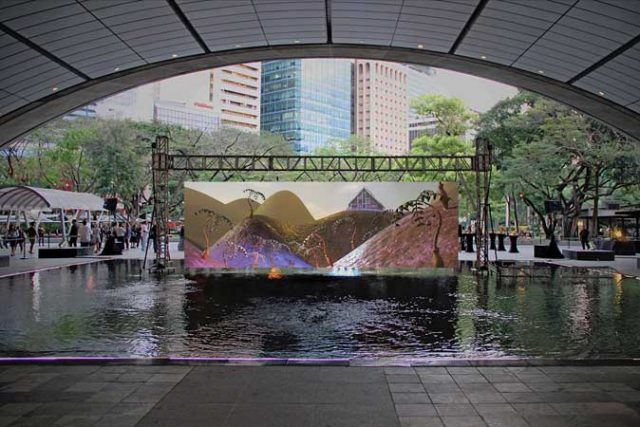
Even with the art fair going online, the 10 Days of Art initiative continues with an installation planned for Ayala Tower One’s fountain area which includes live screenings of the selections of ArtFairPH/Film digital artwork.
“Despite our digital shift, we’re happy to report that plans are set to carry on with some public art projects,” Ms. Lopa said. “There are also plans for a few more public installations but we’re just hoping that circumstances will allow us to mount them.”
After having conducted two online installments of Art in the Park, Ms. Periquet said that the art market continues to thrive even online.
“Artists still want to show their work. They’re dying to show their work because it’s difficult these days. And people also want to buy works of art. They’re still very interested in art and viewing it online doesn’t seem to be so much of a problem, actually,” Ms. Periquet said.
“And then, if you ask me what makes it worth it? For you guys, I’m not sure… We just love it,” she said.
For more information on this year’s program and schedule of activities, visit the Art Fair Philippines websitewww.artfairphilippines.com and follow Art Fair Philippines on Instagram (@artfairph) and Facebook (www.facebook.com/artfairph). — Michelle Anne P. Soliman
PETRON Corp. has completed the issuance of $550-million undated unsubordinated capital securities, the Ramon S. Ang-led oil company said on Tuesday, adding that these will be listed in Singapore.
In a disclosure to the local bourse, Petron said that it expects to list the securities on the Singapore Exchange Securities Trading Ltd. by April 20.
The net proceeds from the issuance, placed at around $547.8 million after the deduction of commissions, will be used by the company to repay debts and for general corporate purposes, it said.
The development comes a week after the company released its final offering circular, which said the perpetual capital securities are in denominations of $200,000 and in integral multiples of $1,000 in excess.
The initial rate of distribution is at 5.95% per annum. Should the company not redeem the securities on the fifth anniversary, the rate of distribution will be reset using then US Treasury rates, the initial credit spread, and a step-up rate of 2.5% per annum.
Petron, the country’s biggest oil firm, said that the securities do not have a fixed redemption rate because they are perpetual. It clarified that these will not be registered under the Securities Act, and may not be offered or sold within the US.
“The Securities may be sold in other jurisdictions (including the United Kingdom, Singapore, Hong Kong, Japan, and the Philippines) only in compliance with applicable laws and regulations,” the company added.
Hongkong and Shanghai Banking Corp. Ltd. acted as the trustee, registrar, principal paying agent, calculation agent and transfer agent for the issuance.
PROJECTED CAPEX Based on its final offer circular, the oil refining and marketing company also gave details about its 2021 projected consolidated capital expenditure (capex) projects, which stands at P11.05 billion or $230 million.
The amount, which will be raised through a combination of internal cash generation and external financing sources, will mainly fund ongoing capex projects, the firm said. The planned capex is based on its management’s estimates and have not been appraised by an independent organization.
It said the budget might change “as projects are reviewed or contracts entered into and are subject to various factors.”
These factors include market conditions, the general state of the Philippine and Malaysian economies, the company’s operating performance and cash flow, and its ability to obtain financing on terms satisfactory to management, it said.
Petron described itself as a leading player in Malaysia, having entered the foreign market in 2012 by buying US-based ExxonMobil’s downstream oil business in the Asian country.
Petron operates the Philippines’ sole oil refinery, which was temporarily placed on an economic shutdown earlier this year to reduce losses due to weak margins.
Earlier, the company reported a net loss of P11.4 billion in 2020, swinging from a net income of P2.3 billion a year earlier as sales dropped due to the global health emergency.
Petron shares at the local bourse inched down by 0.63% or two centavos to close at P3.16 apiece on Tuesday. — Angelica Y. Yang
LIBERTY FLOUR Mills, Inc. posted a net income last year of P192.43 million, surging by 126% from the previous year, on the back of higher sales volume during pandemic lockdown period.
The listed company said in a stock exchange disclosure on Tuesday that its total revenues in 2020 reached P1.35 billion, higher by 42.4% than the P949.05 million it recorded the previous year.
Its sales volume hit P1.09 billion, a 46.6% year-on-year increase from P742.47 million in 2019. Rental income accounted for P262.84 million.
“Demand for flour increased steadily until the fourth quarter of 2020 as this is an essential item for food needed during the continuous community quarantine implemented by the government to prevent spread of coronavirus disease 2019 (COVID-19),” the company said.
As a result of higher sales, Liberty Flour said its total cost of sales and services in 2020 also climbed 46.2% year on year to P1.02 billion from P699.98 million.
Meanwhile, the company said it anticipates to spend around P200 million in about two years for the maintenance and improvement of its manufacturing plant facilities in Mandaluyong City.
“Spending has actually started in 2020 and full spending might be completed by 2021,” the company said.
Based on its website, Liberty Flour manufactures different types of bakery flour and flour-related products. Some of its brands are Maya-All Purpose Flour, El Superior Flour, and Pine Tree Flour.
On Tuesday, shares of Liberty Flour at the stock exchange dropped 1.73% or 55 centavos to close at P31.25 apiece. — Revin Mikhael D. Ochave
I’VE owned this very rare Zorrilla Theater program for many years now and will eventually be donated to the Ortigas Foundation Library.
This program (in Spanish and English) has an anarchy of Art Nouveau fonts used for the advertisers, overshadowing the opera notes of Il Trovatore, performed by the Compania De Opera Italiana in Manila and Iloilo for the 1902-1903 season.
It never ceases to amaze me looking at the variety of fonts used. Fonts can exude a particular mood but for the Filipino typographer of that period, he threw in all the fonts he relishes, like the way we promiscuously heap our plates with every one of the dishes available plus sauces too.
There’s the Gismonda font, the Teutonic, the Columbus, the Della Respira, the Legrand, the Soria and that’s just the first two pages!!! The result is a comical cacophony of visual delights and Il Trovatore, with its diminutive Didot font becoming almost an afterthought.
There’s also delightful illustrations, like a grand Smith Premier Type Writer sold by Erlanger & Galinger in Carriedo. Or a sedate looking eye to let you know of various glasses, including opera glasses, being offered at an Escolta store. All throughout are delicate ornamental strokes, sinuous and graceful adorning and framing the advertisements throughout.
Unfortunately, the dazzling array of Art Nouveau fonts distracts us from the more interesting fact that Filipinos, rich and poor, patronized Italian opera companies traveling and performing in Singapore and Manila. Italian operas, highly emotional, full of jealousies, slights, and adultery, struck a chord with the native populace.
Today’s soaps and anguished pop songs may have replaced the operas we once loved.
John Silva is the executive director of the Ortigas Foundation Library.



 Nearly a year after, the pandemic is staring the government in the face. Manila and nearby cities are at the heart of a major breakdown of the country’s healthcare system that critics had long foretold.