Home Blog Page 8201

Now’s the time to tackle vaccine-hesitant parents
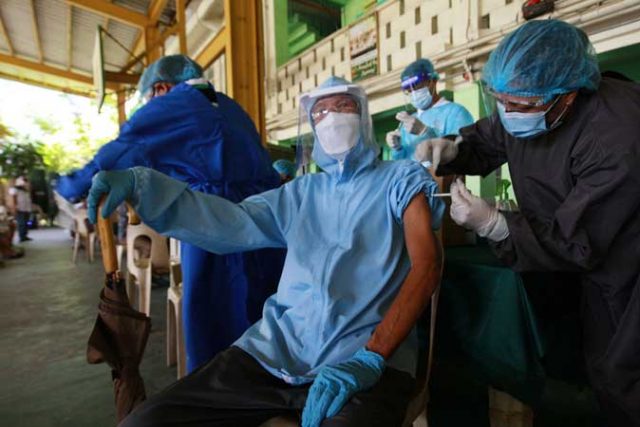
PHILIPPINE STAR/ MICHAEL VARCAS

MORE THAN 910 million COVID-19 vaccine doses have been given and the number is climbing daily. So far, though, the vast majority of those given a shot and targeted by campaigns have one thing in common: They’re adults. That was the right place to start the world’s largest vaccination drive, but it’s not where we should stop.

Children have, it’s true, proven less susceptible to the coronavirus so far. It’s one of the pandemic’s few mercies, even if under-reporting plays a role. But not all have escaped unscathed, and we know infected youngsters have unwittingly passed the illness to others. As with shots for diseases like measles and rubella, COVID-19 vaccinations for kids are about protecting them — and about shielding everyone else. Even if children aren’t “super” spreaders, but merely spreaders, the return to a normality of sorts remains a mirage without them.

Unfortunately, this is a corner of the global vaccination campaign where problems like access and hesitancy will be most sharply felt. Trials involving children are only just beginning and are by necessity slow, given safety concerns, which mean researchers work down the age ranges, and lower infection rates. We’ll need to wait to know which immunizations are safest and best at preventing transmission. The good news is that the gap before rollouts provides a vital few months to tackle head-on the misperception that these shots bring lower rewards.

Children made up about 8% of all COVID-19 cases last year, according to World Health Organization (WHO) figures, though they account for 29% of the global population. Fewer have ended up in intensive care and most have escaped with fever, fatigue, and a cough. Under 0.2% of COVID fatalities were people younger than 20, according to WHO numbers from September.

Crucially, this can change during periods when the disease is running wild. It’s alarming to note that Brazil’s devastating current wave is killing younger people. Pregnant women and children under 10 are falling ill, some of whom have different symptoms and so are misdiagnosed. Kirsty Short, a virologist at the University of Queensland, points out that there is a lot we don’t know around other factors at play, including social behaviors, or how children, in particular, respond to variants. But there are good reasons to be wary — not least because of the rare but potentially lethal multi-system inflammatory syndrome, which shares symptoms with toxic shock and Kawasaki disease, like rashes and vomiting, and appears a few weeks after infection. We also know little about the long-term consequences of COVID-19.

Avoidable deaths and potential after-effects are reason enough to ensure shots get into the arms of the world’s children, but there’s more. For one, figures like Anthony Fauci, President Joe Biden’s medical adviser, point out that it will be tough to reach herd immunity levels — which he estimates requires 70% to 85% of people to be vaccinated or immune — without children, who make up about a quarter of the US population.

And while restrictions remain in place, youngsters suffer the most, bearing the burden of curtailed education, play and sport as advances in health and nutrition go backward. Many who have suffered such disruptions may never return to the classroom.

We’re getting closer to the point where children’s vaccines will become available. Moderna, Inc., for example, began clinical trials with over-12s in December, and said last month that the first children had been dosed in a trial of its vaccine with younger kids. Pfizer, Inc. and partner BioNTech SE want regulators to allow use of their vaccine in 12- to 15-year-olds, after a study found it was 100% effective in preventing illness during a final-stage trial with that age group. We know Israel has already vaccinated some 600 adolescents in at-risk groups with the BioNTech vaccine and saw no significant side effects.

The rub is that while vaccine hesitancy has varied causes and is spread globally, parents in general have more doubts. Pew research in 2017 found that Americans overwhelmingly backed measles, mumps and rubella vaccine requirements for public school pupils, but parents of young children saw lower benefits and higher risks. That’s the case with COVID-19, too. Research carried out by leading US universities published last month found that when it comes to the coronavirus, younger mothers are especially reluctant: Roughly two-fifths are somewhat or extremely unlikely to seek the vaccination for their children. Part of it, in the developed world, is the lingering, damaging legacy of misinformation around vaccines like MMR. In the developing world, there are also competing health priorities — even when shots are available.

Tackling that requires a concerted global effort focused on education, outreach, and, critically, communication around the risks and rewards, especially after blood-clotting incidents that suspended shots of some vaccines. Robust safety data from trials will help, given that most people simply have doubts, usually reasonable ones, and are not unconditionally opposed.

It’s an opportunity to build trust, particularly in communities and among parent groups that have been more vulnerable to COVID-19 but are also skeptical of official pronouncements. Success with these campaigns percolates in a way that mandatory drives do not. Convincing families to protect themselves now may well improve their willingness to get other childhood vaccines. That’s a win, since immunization programs have been battered in much of the world due to the broader disruptions of the past year.

The alternative to vaccinating children is to let COVID linger, as measles has. The highly contagious illness was officially eliminated in 2000 in the United States. But in 2019, a total of 1,282 cases were reported, the most in more than a quarter-century, thanks to unvaccinated people. It’s an unpalatable prospect.

BLOOMBERG OPINION

Will you buy this candidate?

IS THERE a difference between promoting a politician and selling detergent? Of course there is. One of the two cleans dirt better.

Joe McGinnis in 1969 wrote a book on the successful Nixon candidacy of 1968 being handled by Madison Avenue advertising gurus who believed that issues were boring. The candidate has to be sold just like any product — will you buy this one?

So, there is a school of marketing that believes that a political candidate requires the same marketing skills needed for pushing a fast food combo meal or a condo unit. But there are challenges that a brand manager faces in getting market share (or votes) for his candidate (or product).

The shampoo is a fixed product that retains its characteristics until its expiry date. It takes out dandruff without making your hair fall off. It does not suddenly give a wrong answer in an ambush interview (I am not his puppet, even if I look like my strings are being pulled) to make it unstable and no longer the same product in the TV commercial.

A low-cholesterol organic vegetable oil targeting the niche of the fastidious health enthusiasts has a narrow appeal. The candidate needs to connect to the greatest number (the masses) and may need to change brand messages when addressing niche groups, like business. One group may be turned off by an attack on a product no longer on the shelf. Is a rant against incompetence and nonchalance in the handling of the pandemic going to hurt a proxy candidate?

Is the traditional marketing approach for products affected by the ascendancy of online marketing and social media? Selling products from a store is different from engaging the customer.

The digital missionary believes that the world belongs to the “millennials” and that the median age of this country is 23 years old. The youth segment, or the voting population from 18 to 28 years old comprises 70% of eligible voters. The politician is no longer a product on a shelf to be sold to the consumer against the competition but now a unique experience to be posted, shared, and forwarded. Or sniped at and ridiculed.

Can the wizened political handlers sit still in the slide presentations (Can I share my screen?) of a teenage-looking expert promoting a digital approach to campaigning? He promotes using not marketers but bloggers, influencers, and “brand ambassadors,” and letting the messages be defined by the community. (The slide says “crowd-sourcing.”) Digital whiz kids have the nicest graphs, pie-charts, visuals, and data-driven insights. All the campaign committee can do is make a few comments. (Can you flash the last slide again, please?)

The reason the traditional political handlers may balk at the digital approach is its cheekiness and air of certitude — really, you can deliver 15 million votes using this method? Yes, sir, if they will all register and bother to vote. (Are you saying we don’t have to pay them to show up?)

The attributes of the millennial challenges the political exercise. She (There are really more women in the demographic) has a very short attention span (six seconds) before she swipes to the next subject if you don’t engage her. While bloggers present themselves as the new journalists and critics, they are self-appointed and not vetted by any editorial process. Their motives (sometimes their identities too) are unknown. The metric of legitimacy is simply the number of followers, the more the better. And this can also change with the blink of an eye, as when the blog is blocked for promoting fake news.

Already the candidates must be scratching their heads choosing between the old style of selling (and buying) and the experience-sharing approach. The default option of millennials can be seen by their knee-jerk impulse to photograph the food they are eating and posting this for their friends (and followers) to drool over: grilled octopus in Greece is the best. (Those are tentacles, right?) Or a selfie with a special friend with the cryptic but readily understood tag — no-label relationship.

The biggest difference between a product and a candidate is the role of the consumer. In traditional marketing, the consumer has to pay to consume a product. In politics, the seller and buyer can switch roles. And it’s not always clear who bought in or sold out.


Tony Samson is Chairman and CEO, TOUCH xda

ar.samson@yahoo.com

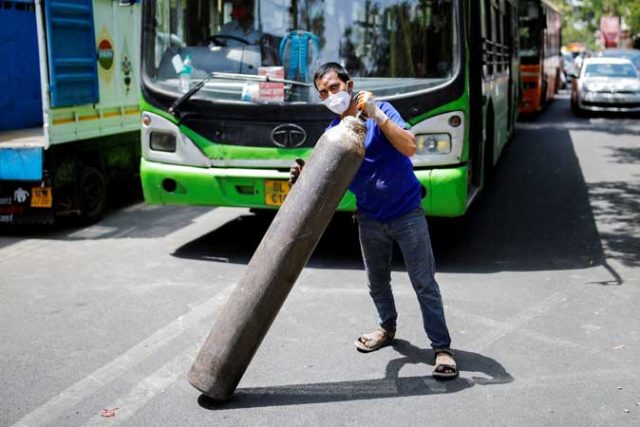
Oxygen supplies run low as India grapples with coronavirus ‘storm’

A man carries a filled oxygen cylinder outside a private refilling station, amid the coronavirus disease outbreak, in New Delhi, India, April 19, 2021. — REUTERS/ADNAN ABIDI/FILE PHOTO

NEW DELHI — Indian authorities scrambled to shore up supplies of medical oxygen to hospitals in the capital, Delhi, on Wednesday as a fast-spreading second wave of coronavirus stretched medical infrastructure to breaking point, officials and doctors said.

India, the world’s second most populous country, is reporting the world’s highest number of new daily cases and approaching a peak of about 297,000 cases in one day that the United States hit in January.

Delhi’s government issued a call for help on social media saying major government hospitals only had enough oxygen to last another eight to 24 hours while some private ones had enough for just four or five hours.

One hospital, the GTB hospital, got some oxygen supplies just before it was going to run out of stocks for its 500 patients, media reported.

“We had almost lost hope. All of us were in tears when we saw the oxygen tanker arrive,” one relieved doctor, speaking on condition of anonymity, told India Today.

The city of 20 million recorded 28,395 new cases and 277 deaths on Tuesday, its highest since the pandemic began. Every third person tested for coronavirus was found positive, the state government said.

Prime Minister Narendra Modi said India faced a coronavirus “storm” overwhelming its health system.

“Oxygen demand has increased. We are working with speed and sensitivity to ensure oxygen to all those who need it. The center, states and private companies, all are working together,” Mr. Modi said in a televised address to the country on Tuesday evening.

Mr. Modi faces criticism that his administration lowered its guard when coronavirus infections fell to a multi-month low in Feb. and allowed religious festivals and political rallies, some of which he addressed to go ahead.

“The situation was manageable until a few weeks ago. The second wave of infections has come like a storm,” Mr. Modi said in his address, urging citizens to stay indoors and not panic amid India’s worst health emergency in memory.

India has launched a vaccination campaign but only a tiny fraction of its population has received shots.

Delhi is under a six-day lockdown to try and stem the transmission. The western state of Maharashtra, home to the financial capital Mumbai, also plans to impose a stringent lockdown this week to try to halt the rise in cases, the cabinet said.

Mr. Modi ordered a tough lockdown of India’s 1.3 billion people when the coronavirus was detected last year but his government has always been wary of the huge economic costs of tough restrictions.

He said on Tuesday a lockdown should only be a last resort. — Reuters

Malaysia starts marketing its first-ever sustainability Sukuk

REUTERS
FLAG BEARERS march past during the 62nd Merdeka Day (Independence Day) celebrations in Putrajaya, Malaysia, Aug. 31, 2019. — REUTERS

MALAYSIA kicked off an offering of its first-ever sustainability Sukuk, adding to a growing number of countries turning to debt financing for environmental projects.

The Southeast Asian nation is marketing dollar-denominated Islamic finance securities in 10-year and 30-year parts, a person familiar with the matter said. It may price the deal as soon as today, according to the person, who asked not to be identified as the details are private.

Sustainable debt issuance rose 29% last year to a record $732 billion, according to figures from BloombergNEF. Indonesia sold green debt that complies with religious principles in 2018, making it the first country in the world to sell such securities, according to a United Nations Development Programme report.

The last time Malaysia tapped the global debt market was in 2019 when it sold yen debt. — Bloomberg

Netflix subscriber growth slows after pandemic boom, shares fall 11%

PIXABAY

Netflix Inc. said slower production of TV shows and movies during the pandemic hurt subscriber growth in the first quarter, sending shares of the world’s largest streaming service down 11% on Tuesday.

Roughly 3.98 million people signed up for Netflix from January through March, below the 6.25 million average projection of analysts surveyed by Refinitiv.

Netflix estimated it will add just 1 million new streaming customers in the second quarter. Analysts had expected a forecast of nearly 4.8 million.

Shares of Netflix sunk 11% in after-hours trading to $489.28, wiping $25 billion off the company’s market capitalization. Its stock has risen 27% over the past 12 months compared with a 63% increase in the tech-heavy Nasdaq Composite Index.

Netflix said it did not believe competition changed materially in the quarter or impacted its new sign-ups “as the over-forecast was across all of our regions.”

The company projected membership growth would accelerate in the second half of the year when it releases new seasons of You, Money Heist, and The Witcher and action movie Red Notice, among other titles.

A year ago, Netflix added a record 15.8 million customers as the pandemic forced people around the world to stay home. The company said on Tuesday the pandemic hindered filming new shows.

“These dynamics are also contributing to a lighter content slate in the first half of 2021, and hence, we believe slower membership growth,” the company said in its quarterly letter to shareholders.

Analysts project people will spend less time streaming from their living rooms as COVID-19 vaccinations spread and more people emerge from their homes.

Rival media companies have declared streaming their priority and are spending billions to compete with Netflix. Walt Disney Co’s Disney+ crossed 100 million subscribers in March. Netflix’s total streaming customers stood at 207.6 million at the end of March.

Netflix said it did not believe competition changed materially in the quarter or impacted its new sign-ups “as the over-forecast was across all of our regions.”

Netflix’s share of new US subscribers fell to 8.5% during the quarter, down from 16.2% the same period a year ago, according to Kantar Media.

During the quarter, Netflix lost one of its most popular titles when workplace comedy “The Office” moved to Comcast Corp streaming service Peacock.

Netflix also raised its monthly rates in Britain, Germany, Argentina and Japan during the quarter.

New customers totaled 1.8 million in Europe, 1.36 million in Asia and 360,000 in Latin America.

“What wasn’t expected was the strength of the slowdown in international markets, where competition is significantly lower,” said eMarketer analyst Eric Haggstrom.

Excluding items, the company earned $3.75 per share in the first quarter, beating analyst estimates of $2.97 per share.

Revenue rose to $7.16 billion from $5.77 billion during the quarter, edging past estimates of $7.13 billion.

Net income rose to $1.71 billion, or $3.75 per share, from $709 million, or $1.57 per share, a year earlier. —  Lisa Richwine and Chavi Mehta/Reuters

J&J to cooperate in study of rare clots linked to COVID-19 vaccine, German scientist says

HAKAN NURAL/UNSPLASH

ZURICH — A German scientist studying extremely rare blood clots linked to AstraZeneca’s COVID-19 vaccine said on Tuesday Johnson & Johnson has agreed to work with him on the research after similar serious side effects emerged in recipients of its shot.

Andreas Greinacher, a transfusion medicine expert at Greifswald University, announced the collaboration after the European Medicines Agency said it would add a label to J&J’s vaccine warning of unusual blood clots with low platelet counts. AstraZeneca’s shot has a similar warning.

As with AstraZeneca, the EMA said benefits of getting J&J’s shot still outweigh the clotting risk, a position Mr. Greinacher backs, too.

Mr. Greinacher, who on Tuesday released a new paper offering a potential explanation for the complications, wants J&J vaccine samples to study in his lab. Since mid-March, his team has been analyzing specimens from people who suffered clots after getting AstraZeneca’s shot.

“We agreed today with (J&J) that we will work together,” Greinacher said during a news conference. “My biggest need, which I’ve expressed to the company, is I would like to get access to the vaccine, because the J&J vaccine is not available in Germany.”

Johnson & Johnson did not immediately respond to a request for comment.

The EMA said on Tuesday it suspects the vaccine may trigger an unwanted immune response, but safety committee chairwoman Sabine Straus said it has not identified specific risk factors.

“It would be very helpful if we know beforehand, whether it might be some kind of genetic disorder, or something else in the blood vessels,” Ms. Straus told reporters.

Mr. Greinacher does not believe such a prognostic test is likely, based on experience with a similar disorder called heparin-induced thrombocytopenia that has defied efforts to identify why some people may be predisposed to the serious condition.

“We even completely gene-sequenced 3,000 of these patients, and we couldn’t find a genetic predisposition,” he said.

In Mr. Greinacher’s new, not yet peer-reviewed, paper he suggests the technology behind AstraZeneca’s shot, some of its ingredients, and the powerful immune reaction it induces, may contribute to a cascade of events that overpowers numerous mechanisms that normally keep the human immune system under control.

Health regulators and scientists are exploring whether the clotting problem may affect the whole class of so-called viral vector vaccines, which EMA’s Ms. Straus said was possible while noting differences in the two shots.

Both the AstraZeneca and J&J vaccines use a common cold virus, albeit different ones, to ferry instructions to cells to produce an immune response. J&J’s shot uses a human adenovirus, while AstraZeneca uses a chimpanzee adenovirus.

“Individuals are different, and only if by coincidence, nine or 10 weaknesses are coming together, then we have a (problem),” Mr. Greinacher said. “Otherwise, our in-built security systems block it, and keep us safe.” — John Miller/Reuters

Australian academics enlist amateur scientists to study microplastics

SYDNEY — Equipped with just a pan and sieve, a group of amateur scientists comb the beach looking for tiny bits of plastic that are near invisible to the naked eye but belie their threat.

“There’s evidence that we are breathing it, ingesting it in our foods. There’s lots of studies showing it’s in our water, it’s in our food products,” said Scott Wilson, research director of the Australian Microplastic Assessment Project (AUSMAP).

“There’s a good chance all of us will have some type of microplastic in our bodies at some stage — the question is what harm is that having?”

The widespread use of inexpensive disposable products has surged in the last 50 years and AUSMAP estimates approximately 12 million metric tonnes of plastic seep into oceans around the world every year.

But since plastic is not biodegradable, it breaks down into smaller pieces over time.

These fragments — known as microplastic — have even been found in some of the most remote of locations, including the Pacific Ocean’s Mariana Trench — the deepest place on Earth — and in ice cores in the Arctic.

Little is known about how harmful microplastics are, Mr. Wilson said. A 2019 study by conservation group WWF International concluded that people could be ingesting the equivalent of a credit card of plastic a week.

A pressing need to establish how widespread and harmful they are prompted dozens of amateur scientists to sign up to help AUSMAP.

“If this is going to help find answers as to how we can prevent it getting it there and maybe cleaning up what’s there, then it’s worth doing. It’s definitely worth doing,” said Sarah Cook, a Sydney resident who is one of the volunteers scanning for microplastic. — James Redmayne/Reuters

China, Myanmar and others criticized in report on rising religious persecution

UNSPLASH
UNSPLASH

ROME — Violations of religious freedom are increasing and persecution takes place in more than 25 countries, with China and Myanmar among those that have the worst records, according to a report by a Vatican-backed charity.

The Religious Freedom in the World Report, covering 20192020 and issued on Tuesday, said that in some countries, such as Niger, Turkey, and Pakistan, prejudices against religious minorities led local residents to blame them for the coronavirus disease 2019 (COVID-19) pandemic and denial of access to medical aid.

The 800-page report was prepared by Aid to the Church in Need International (ACN), a worldwide Catholic charity that studies violations of freedoms of all religions.

The latest report put 26 countries in a “red” category denoting the existence of persecution, compared to 21 countries at the time of the last report two years ago.

It put 36 countries in the “orange” category denoting discrimination, compared to 17 two years ago.

The report describes discrimination as when laws or rules apply to a particular group and not to all, and persecution as when there is an active program to subjugate people based on religion.

“There has been a significant increase in the severity of religiously-motivated persecution and oppression,” the report said.

It was particularly scathing about China and Myanmar.

“The apparatus of repression constructed by the Chinese Communist Party (CCP) in recent years is … fine-tuned, pervasive, and technologically sophisticated,” the report said.

The most egregious violations were against Muslim Uighurs in Xinjiang “where the atrocities have reached such a scale that a growing number of experts describe them as genocide,” it said.

HARASSMENT AND ARREST
In February, the administration of US President Joseph R. Biden, Jr., endorsed a last-minute determination by the Trump administration that China has committed genocide in Xinjiang and has said the United States must be prepared to impose costs on China.

China says the complexes it set up in Xinjiang provide vocational training to help stamp out Islamist extremism and separatism. The Chinese foreign ministry has called allegations of forced labor and human rights violations “groundless rumor and slander.”

The ACN report said Catholic hierarchy in China “continue to suffer harassment and arrest” despite a landmark deal signed in 2018 between Bejing and the Vatican on the appointment of bishops on the mainland.

Reuters reported last year that two nuns who work at the Vatican mission in Hong Kong were arrested when they went home to the mainland for a visit.

China was increasing the use of facial recognition on worshippers of various religions, it said.

In Myanmar, the report said Rohingya Muslims “have been the victims of the most egregious violations of human rights in recent memory.”

Last year, the International Court of Justice ordered Myanmar to take urgent measures to protect Rohingya from genocide. The government has denied accusations of genocide.

The ACN report said the military coup on Feb. 1 was “likely to make things worse for all religious minorities” in Myanmar, where about 8% of the population is Christian.

Africa would be “the next battleground against Islamic militants,” the report said.

Militant groups were causing havoc in countries including Mauritania, Mali, Burkina Faso, Niger, Nigeria, northern Cameroon, Chad, Central African Republic, Democratic Republic of the Congo, Somalia and Mozambique, it said. — Philip Pullella/Reuters

Japan’s foreign residents ponder traveling for vaccines amid slow inoculation push

REUTERS

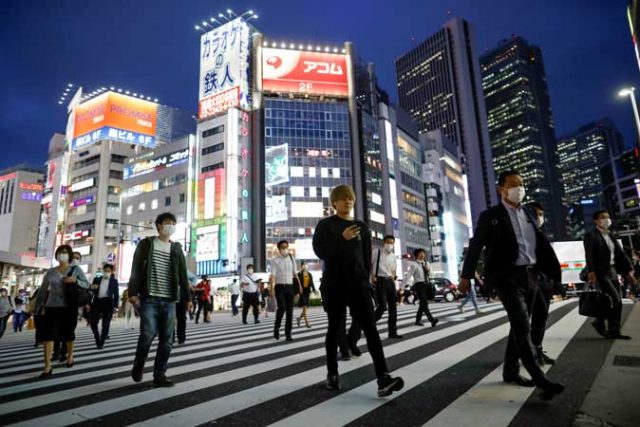
TOKYO — Japan’s glacial coronavirus disease 2019 (COVID-19) inoculation push is prompting some foreign residents to consider flying to other countries to get vaccinated, as the pandemic surges again with no shots in sight for everyday people.

Prime Minister Yoshihide Suga negotiated with the CEO of Pfizer Inc. on Saturday to secure more vaccine doses, now expected to be enough for all residents by September. That’s well after the scheduled start of the Tokyo Olympics and far behind the pace of most major economies.

Japan only started vaccinating its sizable elderly population this month and health experts say it may take till the winter or longer for most of the general populace to get access to the shots.

It’s unclear how many foreigners are flying out of Japan to get shots, but it is a hot topic on social media and in business circles.

“I can confirm having heard of executives going to their home countries for vaccines,” said Michael Mroczek, president of the European Business Council in Japan, adding the number doing so is limited because of the need to quarantine when travelling back to Japan.

Marc Wesseling is one long-term foreign resident who couldn’t wait any longer. The co-founder of an ad agency in Tokyo flew this month to Singapore, where his company has an office, in part to get the shots so he could safely visit his parents in the Netherlands.

“I love the country and I wish them all the best,” Mr. Wesseling said about Japan from his quarantine quarters in Singapore. “They are not the fastest. I think a lot of people are frustrated, especially when you want to have the Olympics and everything. Come on, guys. Make it happen. The whole world is doing it. Why wait?”

Japan has vaccinated about 1% of its population, compared with 2.9% in South Korea, which started later, and at least 40% in both the United States and Britain, according to a Reuters tracker.

The Maldives will soon offer shots to visitors as part of a “visit, vaccinate, and vacation” campaign, the tourism minister of the popular Indian Ocean destination told CNBC last week.

Japan bars tourists from entering the country, and it’s no easy matter for residents to get vaccinated overseas and come back. A two-dose regimen would take at least a couple weeks, often longer, and Japan operates a two-week quarantine for people coming into the country, even if they have been vaccinated.

“If you would like to go back to your home country for inoculation, that’s fine with us,” Japan’s vaccine chief Taro Kono said on Friday. “Some countries have a higher rate of COVID-19, so you could consider which is safer for your health.”

Representatives from Japan’s foreign ministry and immigration service did not immediately respond with comment.

Japan’s top health experts say the COVID-19 pandemic has entered a fourth wave.

Quasi-emergency measures have been imposed in 10 prefectures and the western metropolis of Osaka requested a full emergency declaration on Tuesday amid a rebound in cases driven by mutant variants of the virus. Tokyo may follow later in the week with a similar request, local media said.

Lauren Jubelt thought about going home to Florida to get the shots, but ultimately decided it wasn’t worth the risk of perhaps getting trapped overseas if Japan shut its borders.

“I’m frustrated when I see my family in the US get their vaccine,” said Ms. Jubelt, who works in digital marketing in Osaka.

“We don’t even have a solid date on when we can get it here and the cases are on the rise again.” — Rocky Swift and Daniel Leussink/Reuters

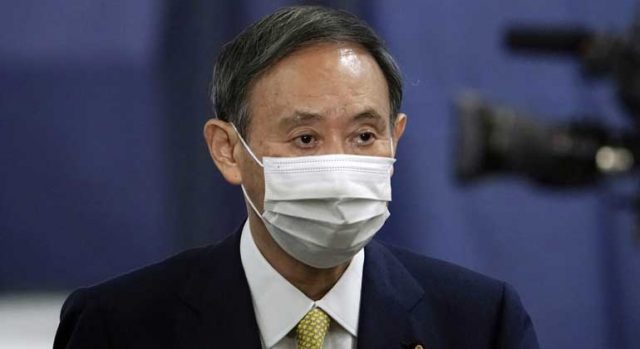
Japan PM to postpone visit to India, Philippines — media

BLOOMBERG

TOKYO — Japanese Prime Minister Yoshihide Suga is postponing plans to visit India and the Philippines on a trip originally set for the end of the month, media said on Wednesday.

Mr. Suga will instead focus on handling a recent surge in coronavirus cases, broadcaster FNN and other media said. — Reuters

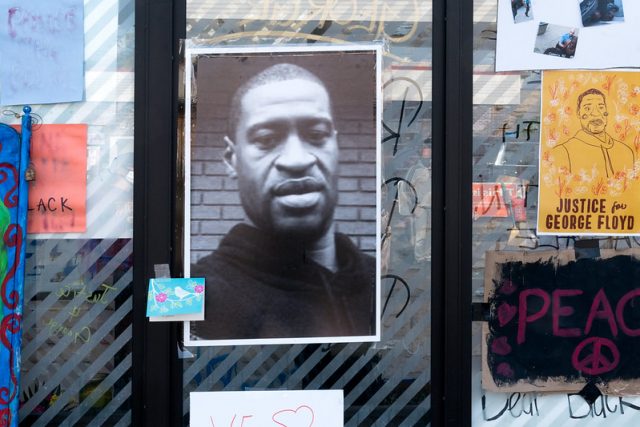
Chauvin convicted of murdering George Floyd in landmark US racial justice case

Image via Lorie Shaull/Flickr/CC BY-SA 2.0

MINNEAPOLIS — Former Minneapolis police officer Derek Chauvin was convicted on Tuesday of murdering George Floyd, a milestone in the fraught racial history of the United States and a rebuke of law enforcement’s treatment of Black Americans.

A 12-member jury found Chauvin, 45, guilty of all three charges of second-degree murder, third-degree murder, and manslaughter after considering three weeks of testimony from 45 witnesses, including bystanders, police officials, and medical experts. Deliberations began on Monday and lasted just over 10 hours.

In a confrontation captured on video, Chauvin, a white veteran of the police force, pushed his knee into the neck of Floyd, a 46-year-old Black man in handcuffs, for more than nine minutes on May 25, 2020. Chauvin and three fellow officers were attempting to arrest Floyd, accused of using a fake $20 bill to buy cigarettes at a grocery store.

The jurors remained still and quiet as the verdict was read. Chauvin, wearing a gray suit with a blue tie as well as a light-blue face mask, nodded and stood quickly when the judge ruled that his bail was revoked. He was taken out of the courtroom in handcuffs and placed in the custody of the Hennepin County sheriff.

The conviction triggered a wave of relief and reflection not only across the United States but in countries around the world.

“It was a murder in the full light of day and it ripped the blinders off for the whole world to see the systemic racism,” President Joseph R. Biden, Jr., said in televised remarks. “This can be a giant step forward in the march toward justice in America.”

Outside the courthouse, a crowd of several hundred people erupted in cheers when the verdict was announced — a scene that unfolded in cities across the country. Car horns honked, demonstrators blocked traffic and chanted: “George Floyd” and “All three counts.”

At George Floyd Square in Minneapolis, the intersection where Floyd was killed and which was later named in his honor, people screamed, applauded and some threw dollar bills in the air in celebration.

While celebrating the verdict, protesters called for justice in the case of Daunte Wright, a Black man who was fatally shot by a police officer after a routine traffic stop on April 11, just a few miles from where Chauvin stood trial. Kimberly Potter, who has turned in her badge, has been charged with manslaughter in that case.

George Floyd’s brother Philonise, speaking at a news conference with several family members, said: “We are able to breathe again” after the verdict, but he added the fight for justice was not over.

“We have to protest because it seems like this is a never-ending cycle,” he said.

FIRST STEP TOWARDS JUSTICE’

Chauvin could now face up to 40 years in prison. While the US criminal justice system and juries have long given leeway and some legal protection to police officers who use violence to subdue civilians, the Minneapolis jurors found that Chauvin had crossed the line and used excessive force.

Chauvin’s defense team did not immediately respond to a request for comment on the verdict but is considered likely to appeal the conviction.

In a trial that opened on March 29, the defense argued that Chauvin behaved as any “reasonable police officer” would have under those circumstances, and sought to raise doubts about the cause of Floyd’s death.

In his comments, Mr. Biden emphasized his support for legislation “to root out unconstitutional policing,” including the George Floyd Justice in Policing Act, which has been passed by the U.S. House of Representatives and seeks to increase accountability for law enforcement misconduct.

The Police Officers Federation of Minneapolis said in a statement published in the Minneapolis Star Tribune that “there are no winners in this case, and we respect the jury’s decision,” adding: “We need to stop the divisive comments, and we all need to do better to create a Minneapolis we all love.”

The intersection of race and law enforcement has long been contentious in the United States, underscored by a series of deadly incidents involving white police officers and Black people in recent years.

Floyd’s death prompted protests against racism and police brutality in many US cities and other countries last summer, even as the world grappled with the coronavirus pandemic.

Mr. Biden and Vice-President Kamala D. Harris watched the verdict being read out along with staff in the White House’s private dining room, the White House said. Mr. Biden, Ms. Harris and first lady Jill Biden all spoke with Philonise Floyd.

“Nothing is going to make it all better but at least … now there’s some justice,” Mr. Biden told the Floyd family, according to a video posted to Twitter.

Suzuki rolls out hot new promos for the month of April

Suzuki Philippines Inc. (SPH), the country’s pioneer compact car distributor, welcomes the month of April with several new promos sure to excite its customers as Suzuki continues to remain dedicated in finding avenues to provide its clientele with the best possible service. Nothing less to be expected as SPH continues to champion the Suzuki Way of Life!

Dzire to Excel

Customers may find it increasingly difficult to resist these irresistible treats! Suzuki is offering massive discounts of up to Php 90,000 in their Dzire to Excel April promo set to run from April 1 to April 30, 2021. For as low as Php 372 a day, customers can find themselves behind the wheel of a brand new Suzuki Dzire. Aside from the low amortization rates for financing schemes, Suzuki is also offering lower down payments and huge discounts for cash transactions. For the entire month of April, cash discounts of as much as Php 90,000 are being offered for the different variants of the Suzuki Dzire.

Ride In Style

Grab the opportunity at an affordable and functionally stylish ride with the Suzuki Ertiga as Suzuki is offering low down payment promos for all variants for the month of April! For as low as Php 499 a day and as low as Php 68,000 down payment, you may find yourself cruising in the metro or in your favorite destinations in a brand new 7-seater MPV. Take a chance this month with the Ride in Style promo until April 30, 2021.

Suzuki Grand Deals

Treat yourself and get a chance to drive your very own Suzuki XL7, Suzuki S-Presso, and/or Suzuki Ciaz – all being offered at incredibly low down payments just for the month of April. The Suzuki Grand Deals promo is applicable to all variants of the Ciaz, S-Presso, and XL7. A whopping Php 200, 000 cash discount is being offered for the Ciaz, while Php 32,000 and Php 65,000 cash discounts are being offered for the S-Presso and XL7 respectively. April Fools may be over, but this is not a joke! Get a chance to boast any of these Suzuki models at these incredibly discounted prices.

Shall We Drive Doraemon

Last, but not the least, fans of the popular Japanese manga and anime series, Doraemon, can rejoice as Suzuki announces the extension of their Shall We Drive Doraemon Promo. Customers who avail of any variant of the Suzuki Dzire, old and new, can now still enjoy a complimentary Doraemon Merchandise Kit up until the 30th of June, 2021. Patrons are entitled to one Doraemon Merchandise Kit for every Suzuki Dzire purchased, which may be claimed at the Authorized Suzuki Auto Dealership where the purchase was made, within 60 days upon the release of the unit. This promo can be used in conjunction with the Dzire to Excel promo. 

All promos are applicable to all Suzuki Auto dealerships nationwide. 

For more information about Suzuki visit http://suzuki.com.ph/auto/, like it on https://twitter.com/SuzukiAutoPH, and follow on Instagram at @suzukiautoph.


ADVERTISEMENT
ADVERTISEMENT