Home Blog Page 8068

Collections from marked fuel nearing P230 billion

PHILIPPINE STAR/KRIZ JOHN ROSALES

DUTIES AND TAXES collected from marked fuel totaled P229.5 billion as of mid-May, the Department of Finance (DoF) said Wednesday.

Around 23.6 billion liters of fuel products were marked between September 2019 and May 15, according to a document released by Finance Secretary Carlos G. Dominguez III via Viber.

Some P201.58 billion was generated by the duties and taxes collected by the Bureau of Customs. The Bureau of Internal Revenue generated P27.92 billion.

Luzon accounted for 73.54% or 17.35 billion liters, Mindanao 21.13% or 4.99 billion liters and the Visayas 5% or over 1.26 billion liters.

Diesel made up 61% or 14.34 billion liters of the total, followed by gasoline with 38% or 7.6 billion liters. Kerosene accounted for 127.92 million liters.

The fuel marking program aims to deter smuggling by injecting the products with a special dye to signify tax compliance. The absence of the dye is deemed prima facie evidence that the fuel was smuggled.

The implementing agencies began collecting in September 2020 the fuel marking fee of P0.06884 per liter, inclusive of value-added tax, charged on all manufactured, refined or imported petroleum products.

The DoF has estimated that revenue foregone due to oil smuggling was between P20 billion and P40 billion a year. — Beatrice M. Laforga

Malampaya depletion expected by 1st quarter of 2027

THE remaining reserves in the Malampaya gas field will be completely depleted by the first quarter of 2027, a senator said Tuesday, citing estimates from the Department of Energy (DoE).

“The Malampaya service contract is set to expire in 2024. Even if the service contract is extended, the DoE projects that the estimated 858,834 million standard cubic feet remaining in the Malampaya field as of Sept. 30, 2020 would be completely exhausted by the first quarter of 2027,” Sen. Sherwin T. Gatchalian said in a speech sponsoring a bill regulating the development of the midstream natural gas industry on Tuesday.

Mr. Gatchalian chairs the senate committee on energy.

The Philippines “could be facing a major energy crisis in less than six years” unless it can find alternative sources for natural gas, and will have little choice but to import, Mr. Gatchalian added.

Located off the coast of Palawan, Malampaya is the country’s sole natural gas field.

In his speech Tuesday in support of the proposed Senate Bill (SB) No. 2203 or the proposed Midstream Natural Gas Industry Development Act, Mr. Gatchalian said energy security “largely depends” on the available supply of natural gas, noting that more than a quarter of Luzon is powered by the fuel.

“Natural gas plants generated 56% of the 2.5-billion-kilowatt-hours purchased by Meralco (Manila Electric Co.) in April 2021, making natural gas the single most impactful electric power source for Metro Manila,” he said.

He said natural gas should complement variable renewable energy sources, as outlined in the National Renewable Energy Plan’s (NREP) latest draft covering 2021 to 2040.

In February, former Chairperson of the National Renewable Energy Board Monalisa C. Dimalanta said that the draft NREP is looking at increasing the share of renewable energy (RE) in the power mix “with higher flexibility in the system coming from natural gas plants all the way to 2030, with a slight decline by 2040.”

The draft NREP has an RE targets of 37.3% by 2030, and 55.8% by 2040.

On Tuesday, Mr. Gatchalian raised SB 2203 to the plenary. — Angelica Y. Yang

Hungary interested in expanding agriculture, technology exports

REUTERS

HUNGARY is looking to expand its exports of agricultural products and technology to the Philippines, the head of its export promotion group said.

“Hungarian exports in your direction are less than your exports in our direction so I think our role is… balance to near (parity),” Hungarian Export Promotion Agency Chief Executive Officer Kristóf Szabó said in an online forum Tuesday.

The agency is a non-profit company that assists Hungarian firms in entering foreign markets.

The agency’s goal, Mr. Szabó said, is to return Hungarian exports to levels prior to the decline seen in the past few years — or to match Philippine exports to Hungary, which outweigh its imports by about six to one.

“Agriculture, technology, metal industry, and electronics could be a robust base for further export activities,” he said.

Mr. Szabó added that food and aircraft firms are negotiations for export facilities.

Trade Undersecretary Ceferino S. Rodolfo at the same event said most Philippine exports to Hungary consist of electronics and eyeglass lenses.

The Philippines and Hungary have identified water management and food as areas for potential cooperation, the trade department said last year after an economic meeting between the two economies.

Philippine exports to the European Union last year declined 17.5% to $6.8 billion, representing 10% of total Philippine exports for 2020. Imports from the region plummeted 33.5% to $6.2 billion, according to the Philippine Statistics Authority. — Jenina P. Ibañez

Senate resolution seeks withdrawal of EO lowering rice tariffs

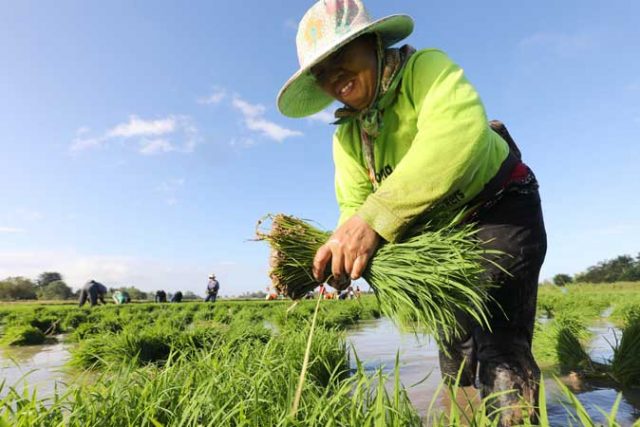
PHILIPPINE STAR/ MICHAEL VARCAS

FIVE SENATORS filed a draft resolution seeking the withdrawal of an executive order lowering the tariff rates on imported rice for one year.

Senators Francis N. Pangilinan, Franklin M. Drilon, Maria Lourdes Nancy S. Binay, Leila M. de Lima, and Risa N. Hontiveros-Baraquel filed Senate Resolution No. 726 urging President Rodrigo R. Duterte to withdraw Executive Order (EO) No. 135.

“There is no reasonable and sufficient basis to reduce the tariff rates on rice and it will only (pose an additional) burden (on) our rice farmers, further increase our import dependency, and cost the government millions in foregone revenue,” according to the resolution.

The President’s spokesman Herminio L. Roque, Jr. said in a statement on Saturday that President Rodrigo R. Duterte signed EO No. 135, cutting the most-favored nation (MFN) tariff to 35% for one year, at par with grain imported from ASEAN. The previous rate for imports from non-ASEAN trading partners was 40% for shipments within the minimum access volume (MAV) quota and 50% beyond the quota.

Mr. Roque said the reduction is “to diversify the country’s market sources, augment rice supply, (keep) prices affordable, and reduce pressure on inflation.”

The government stands to lose at least P60 million in revenue per year if MFN tariffs are reduced to 35%, the senators said in the resolution, citing the Tariff Commission.

They also noted the estimate of the Federation of Free Farmers (FFF) that the tariff reduction could cost the government around P548 million in foregone revenue.

They also noted that the FFF questions the basis for lowering rice tariffs, after the Agriculture Secretary called the rice supply “ample” following a record harvest in 2020. 

The farmers’ group also said that aside from Vietnam and other Southeast Asian nations, the country has been consistently importing from nine other countries, including MFNs like India, Pakistan, and more recently China.

The reduction in tariff will reduce the funding for the Rice Competitiveness Enhancement Fund (RCEF), which assists farmers in modernizing their farms and improving their planting know-how. RCEF receives P10 billion a year from rice import tariffs. — Vann Marlo M. Villegas 

Bangsamoro trust fund seen accelerating peace process

OPAPP/MALACAÑANG PHOTO BUREAU

THE Bangsamoro Normalization Trust Fund (BNTF) launched on Wednesday, is expected to fast-track peace processes in the region and boost the local economy with the help of pooled resources from various development partners.

At its launch on Wednesday, Ndiamé Diop, World Bank Country Director for Brunei, Malaysia, and the Philippines, said the BNTF will play a key role in supporting normalization in the Bangsamoro region.

The World Bank will serve as the administrator of the trust fund, as agreed by the Philippine government and the Moro Islamic Liberation Front (MILF), he said.

“We are committed to play this role professionally and with a strong sense of purpose, within a strong spirit of collaboration,” Mr. Diop said in a speech.

At the same time, he said the fund will also strengthen coordination among international institutions supporting normalization in the region.

The World Bank also assisted a similar initiative, supporting the peace process in Mindanao through the Mindanao Trust Fund launched in 2006, which it also administered. The bank donated $1.5 million out of the $28.88 million of that fund’s total resources. Other partners were the European Union ($17.66 million), Sweden ($4.29 million), Australia ($2.89 million), Canada ($1.6 million), the United States ($750,000) and New Zealand ($200,000).

Mr. Diop said the government of Australia and the EU have pledged their support for the BNTF.

He said among the key objectives of the BNTF is to fund, coordinate and oversee the delivery of assistance from donors for projects that aim to rebuild, rehabilitate and develop Bangsamoro communities, especially those hosting demobilized MILF combatants and poor households.

Proceeds from the fund will also help former MILF combatants and their communities return to peacetime life, and turn six former MILF camps into productive communities.

Other international partners that expressed support for the fund on Wednesday were the United Nations, Japan, New Zealand and Switzerland.  — Beatrice M. Laforga

Senate passes bill amending retail trade law on third reading

THE SENATE approved on third and final reading a measure seeking to ease restrictions for foreign retailers, with minimum paid-up capital levels adjusted to afford a measure of protection for small and some medium-sized domestic retailers.

With 20 affirmative votes and no negatives and abstentions, the Senate approved Senate Bill No 1840, which seeks to amend the Retail Trade Liberalization Act of 2000.

Senator Aquilino L. Pimentel III, chairman of the committee on trade and the measure’s sponsor, adopted an amendment proposed by Senate President Pro Tempore Ralph G. Recto increasing the proposed lower minimum paid-up capital of foreign retailers seeking to enter the market.

The final version of the bill sets the minimum paid-up capital at P50 million or around $1 million, with those with more than one physical store required to invest at least P25 million per store.

“That amount protects small (enterprise), it protects a portion of the medium (-sized companies). That’s acceptable to me,” he said during the period of amendments.

“From the old law of $2.5 million to P50 million pesos, that’s the entry minimum paid-up capital to enter the Philippine retail trade market,” he added.

Mr. Recto said the minimum paid-up capital should not be set too low in order to attract quality investors.

“We are liberalizing it but not too low so that the competition will be at the medium level,” he said.

“You want to attract quality and that’s why we suggested that the paid-up capital should be at least P50 million but then they can put up two stores at P25 million, he added.

Senator Risa N. Hontiveros-Baraquel said she was glad the sponsor accepted the proposed amendment, saying the Philippine Retailers Association only wanted the minimum paid-up capital to be cut by half.

“I’m sure that they will be very glad that something close to it has been proposed by the Senate President Pro Tempore, accepted by the sponsor and supported by the senate,” she said.

In an earlier statement Wednesday, before the amendment was introduced, Ms. Baraquel said that it was “unwise” to open up the retail industry to foreign investment during a downturn, noting the potential damage done to companies already struggling in the wake of the pandemic, including small businesses.

Ms. Baraquel said amending the Retail Trade Liberalization Act “would only put Filipino owners of mom-and-pop shops, sari-sari stores, carinderias, and even public market stalls at a disadvantage.”

“Magiging second class citizens ang sarili nating business sector kapag natuloy ang mga pagbabago sa (Our own business sector will become second-class citizens if we amend the) Retail Trade Liberalization Act. Right now, this not our wisest option. Imbes na makabawi at maka-recover ang ating mga negosyante at manininda, ito ang bubulaga sa kanila (Instead of making up for lost business during the recovery, this measure will disrupt our traders and retailers),” she said.

Ms. Baraquel said she does not oppose foreign investment but noted the position taken by the Philippine Retailers Association that micro, small, and medium enterprises (MSMEs) will lose if minimum capital requirements for foreign investors are lowered.

“These amendments will not help Filipinos,” she said.

She also said it is MSMEs “who are actually keeping the country afloat despite being one of the hardest hit by the economic downturn,” should be supported.

“Sa ngayon, napakarami nating mga manggagawa at maliliit na negosyante ang sakop ng sektor ng MSMEs. Unahin natin sila. Bigyan natin sila ng pagkakataong makabangon (The MSME sector includes many small businesses who should be given priority, given a chance to recover). We should provide them with protective shields in the free market, instead of pitting them against deeper pockets,” she said.

In the committee-approved version of Senate Bill 1840, the minimum paid-up capital for foreign retail investors was set to be lowered to $300,000. The bill also originally required retailers with more than one physical store to invest at least $150,000 per store. The bill only covers foreign retailers whose country of origin allows Filipino retailers.

The current law states that enterprises with a minimum paid-up capital of $7.5 million or more may be wholly owned by foreigners, provided that their investment in each store is at least $830,000. Foreign retailers with minimum paid-up capital of $2.5 million but less than $7.5 million cannot be wholly-owned by foreigners in the first two years under the present law.

The bill removes other qualification requirements such as the $250,000 capital per store for enterprises engaged in high-end or luxury products, the five-year track record in retailing and the required five retailing branches.

Amending the retail trade law is among the three bills seeking to ease foreign investment restrictions certified as urgent by President Rodrigo R. Duterte last month.

It is also among the priority measures identified by the Legislative-Executive Development Advisory Council Executive Committee that were targeted for passage by June 2021. — Vann Marlo M. Villegas

Transparency is the key 

It is common for foreign entrepreneurs to seek the assistance of professionals when establishing their business in the Philippines. Unfortunately, despite such guidance or assistance, there are isolated cases where Filipino business partners become conduits for money laundering, acting as dummies for their foreign counterparts and/or beneficial owners. 

Curbing money laundering has been a decades-long struggle, and through the years, nations have implemented stricter measures to combat this seemingly unsolvable problem. The key to minimize laundering — or eliminate it — is transparency, and this is what the recent Securities and Exchange Commission (SEC) Memorandum Circular (MC) No. 01-2021 is all about.

First, for newly registered corporations, the incorporators are required to disclose to the SEC the person or persons on whose behalf the corporation was registered within 30 days from the issuance of the company’s Certificate of Registration. The same requirement applies to applicants for registration, directors, trustees, or shareholders, who are acting as nominees on behalf of their respective principals or nominators.

For existing corporations, those who serve as nominee shareholders, directors, or trustees before the effective date of MC No. 01-2021 must submit the disclosure to the SEC within 30 days from Jan. 29, 2021. Those who became nominees on or after the MC No. 01-2021 took effect are to submit the disclosure within 30 days from the time they became or assumed the role of, or started acting as nominee directors/trustees or shareholders.

However, if the nominator or principal is a corporation, the registered name of such corporation, its country of registration, the names of its incorporators and directors, its beneficial owner/s, its tax identification number (TIN), if any, must be disclosed. On the other hand, if the nominator or principal is a trust, the name, nationality, country of residence, the TIN or passport number of the trustor/s, trustee/s, and beneficiary/ies of the trust must be disclosed. 

The beneficial ownership details are disclosed through the filing of the Beneficial Ownership Transparency Declaration Form (BOTD Form) together with a Consent Agreement Form and a valid government-issued ID.  The disclosure form must generally be filed within the deadlines mentioned above. However, with the quarantine restrictions and novelty of the requirement, the deadline to submit these documents was extended to May 31, 2021.  Non-compliance may result in a penalty of not less than P5,000 but not more than P2,000,000, suspension or revocation of the certification of incorporation, and/or other penalties that are within the power of the SEC to impose.

The MC No. 01-2021 also reminds corporations that information on the beneficial owner(s) of a corporation must be kept and preserved at its principal office following the three-tiered approach laid down under SEC MC No. 15-2019. Under MC No. 15-2019, beneficial owners are identified through a three-tiered approach based mainly on the natural person’s (a) ultimate ownership, (b) ultimate control, and (c) position in the reporting corporation.

The information required under MC No. 01-2021 is deemed adequate when the complete names, specific residential addresses, dates of birth, nationalities, TINs, if any, and percentage of ownership, if applicable, are provided. The beneficial ownership information, or any changes to it, should promptly be reflected in the company’s internal records as mentioned above within three days from the time the information becomes available, or is reasonably expected to be available to the covered entities through the exercise of due diligence.

Second, in line with Section 64 of the Revised Corporation Code, the MC No. 01-2021 declares that the sale or distribution of bearer shares and bearer share warrants are strictly prohibited. Bearer shares are equity securities issued by a corporation by which ownership and/or entitlement to dividends is made available to one who holds the physical certificate. To distinguish, bearer share warrants are non-equities or “documents certifying that the bearer is entitled to a certain amount of the fully paid shares of the corporation.” The issuance of bearer shares and bearer share warrants hides the ultimate beneficial owners since their identities are not disclosed on the face of the document. Hence, the prohibition on their sale or distribution safeguards against the misuse of corporations for unlawful activities.

Third, in line with the restriction on bearer shares, no dividends may be paid to any shareholder unless the name appears in the corporate records as the owner of the shares of stock to whom dividends are being paid. This policy is a sound mechanism to avoid the inadvertent distribution of dividends to a shareholder-purchaser who is a party to an unregistered transfer.

In complying with the reportorial requirements of MC No. 01-2021 under the first point above, corporations need to consider any potential conflict of laws, most especially on data privacy rules in other jurisdictions, as well as the difference in terminologies. Some countries have specific prohibitions against the disclosure of personal ID numbers, while the definition of corporate terms in the Philippines may differ from those in another jurisdiction. If this is the case, the remedy is for the SEC to address these questions by timely updating the Frequently Asked Questions (FAQs) on its website. Now, more than ever, this task has become obligatory rather than just being advisory.

Moreover, there may be questions on how the personal information of the declarant should be handled to prevent leakage and potential violation of data privacy laws. Towards this end, the Information and Communications Technology Department of the SEC shall acknowledge receipt of the entities’ submission and maintain them in a database not freely accessible for public viewing, to be held in strict confidence. The information must nonetheless be made readily available upon request of competent authorities for law enforcement and other lawful purposes, as may be necessary for carrying out their functions.

If the state intends to step up its game against terrorist financing and laundering of illegally obtained money, it must establish efficient processes to unveil the fruits of such crimes. SEC MC No. 01-2021 is a welcome measure towards this end. Through disclosure and reporting of beneficial owners of corporations, a transparent and safe business environment is created. As a vital step in stamping out the social menace of money laundering, transparency is the key.

The views or opinions expressed in this article are solely those of the author and do not necessarily represent those of Isla Lipana & Co. The content is for general information purposes only and should not be used as a substitute for specific advice.


Carl Angelo Cabusas is a Senior Tax & Risk Management Associate at the Tax Services Department and is also working as a Senior Associate under the Office of the General Counsel  of Isla Lipana & Co., the Philippine member firm of the PwC network.

carl.angelo.cabusas@pwc.com

Migration and financial stability: An introduction

MACROVECTOR/ JANNOON028/ FREEPIK

In the headlines this past week was the fact that March remittances rose by 4.9% year on year for the second straight month, but still disappointed considering what economists were predicting, which was a median estimate of 8.2%. Still, that print highlighted the importance of OFW healthcare workers in particular, but also those in construction and other services — in not only helping their host countries recover from the pandemic, but ultimately in directly aiding the weak consumption domestically. As we think about how dependent we are on those abroad — especially in times of economic downturns — I would like to begin a series on a project I had worked on while living in Paris, examining the financial strategies of OFWs. The title of that project was “Migration and Financial Stability”; its core message is this: Migration is an investment strategy, just like investing in a home, or investing in the stock market — one that is high risk but also high return. But not every migrant achieves their goals because of a host of factors like over-indebtedness, cultural barriers, and lack of financial literacy training. Let us try to dig deeper.

In today’s globalized and increasingly connected world, migrants mainly originating from poorer countries now form a significant percentage of the developed world’s labor force. The number of international migrants in 2020 was around 272 million according to the World Bank. The key motivation of migration is no big surprise. Whether they come in legally or illegally, as skilled professionals, as unskilled laborers, or as refugees escaping war, almost all migrants leave their home countries and move abroad to seek a higher income or a better job and life prospects. Importantly, they seek this not only for themselves, but also often for their family members whom they have left behind. At the heart of it, migration addresses the most basic grand challenge we face: global poverty.

Remittances — the stream of money sent back to the home country by a migrant — feature predominantly in such studies. Global remittances are a substantial driving force for the economic development of such countries. However, to date, remittance flows have been treated in the economics literature as windfall income, similar to winning a lottery and have only been examined at a macroeconomic level. This has been useful in shedding light on the fact of whether migration has an overall positive effect on the aggregate poverty levels in the home country. Yet, we largely miss research on a household level and the mechanisms underlying how people are financially better-off because they have migrated. Understanding the use of remittances at a household level is crucial to having a deeper knowledge of how the poor can achieve financial stability through migration, especially since this is often their main goal. The first step to know this is to explore how such remittances come into being at the source, through the financial behaviors and strategies of the overseas foreign worker (OFW).

All OFWs share one specific quality: the dichotomy of “home”; that is, the feeling of being in one place with a heart left somewhere else; and they face the eternal struggle of having to integrate in the host country while maintaining ties to their roots and the people they have left behind. This struggle tends to characterize the behavior of such people and plays a major role in all the choices that they make in their everyday lives. Digging deeper, it is important to understand how OFWs manage their income transnationally — sustaining a life in their host countries while supporting their families abroad. What are the factors that affect the choices they make in their everyday lives? What are their savings and investment goals?

This series addresses the above questions through a case study of Filipino migrant workers living in Paris. The Philippines is the third largest recipient of remittances in the world. I examined the migrants’ reasons for migration, how they financed their migration and the risks they took, as well as the aftermath and daily lives that contributed to their economic stability and future, whether in their host countries or back home in the Philippines. Using very personal interviews, I was able to uncover three key (and very preliminary) findings that characterize the financial strategies of migrant workers:

I find that migrants, usually coming from low-income households, consider being indebted as a double-edged sword. On the one hand, debt provides the discipline they need in order to achieve their goals, on the other hand, debt is akin to being “jailed” and a new life can only truly begin when they are debt free. This precipitating situation of indebtedness makes them engage in unique financial behaviors. To repay debt, they will sacrifice daily needs and set aside constant payments, even if there are no technical limits to debt repayments as these are typically from family or extended kin. They also join savings groups. The purpose for participation in savings groups changes over time from a debt repayment purpose towards complementary income or social interaction purposes. However, there are hurdles to achieving financial stability despite these strategies, namely: behavioral aspects and unexpected circumstances. I find some early evidence that these hurdles can be counteracted by financial literacy training. I also find that financial stability has other effects apart from simply providing higher income. These are increased confidence for the migrant in their host countries and a general feeling of happiness rather than displacement. Even if the migrant begins with a goal to go home, remaining in the host country for a longer period becomes more and more agreeable. Financial stability is thus key in societal integration. In the succeeding weeks, we will discuss these findings in turn.

*References are available upon request.


Daniela “Danie” Luz Laurel is a business journalist and anchor-producer of BusinessWorld Live on One News, formerly Bloomberg TV Philippines. Prior to this, she was a permanent professor of Finance at IÉSEG School of Management in Paris and maintains teaching affiliations at IÉSEG and the Ateneo School of Government. She has also worked as an investment banker in The Netherlands. Ms. Laurel holds a Ph.D. in Management Engineering with concentrations in Finance and Accounting from the Politecnico di Milano in Italy and an MBA from the Universidad Carlos III de Madrid.

Disposal, the problem of the future

FREEPIK

A recent item on the Wonderful Engineering website discusses a scientific breakthrough in battery technology that solves a “40-year-old problem.” A team at Harvard University’s School of Engineering and Applied Science (SEAS) is developing a battery using “lithium-metal,” which can store more energy and charge at a fraction of the time compared to “lithium-ion” batteries.

Xin Li, an associate professor at SEAS, noted, “A lithium-metal battery is considered the holy grail for battery chemistry because of its high capacity and energy density. But the stability of these batteries has always been poor… By studying their fundamental thermodynamics, we can unlock superior performance and harness their abundant opportunities.

“This proof-of-concept design shows that lithium-metal solid-state batteries could be competitive with commercial lithium-ion batteries. And the flexibility and versatility of our multilayer design makes it potentially compatible with mass production procedures in the battery industry,” he added.

I believe it is only a matter of time before the Harvard team’s research leads to commercial production of better batteries. More and more the world is relying on non-fossil fuel energy sources, to support the increasing demand, particularly for portable computers and mobile devices, as well as electric vehicles.

The thing is, as battery technology improves and battery use ramps up, who is currently looking into battery disposal? Or, more important, battery recycling? As I had tackled in previous columns, the shift to non-fossil fuel energy will eventually lead to a crisis in disposal unless we also start working on new systems and technologies for disposal.

In a report, BBC Technology of Business reporter Emma Woollacott noted that by 2030, the EU hopes to have 30 million electric cars on European roads. Of course, electric cars run on batteries. And these power sources eventually get spent. Over time, they degrade and require replacement. But, for every replacement, there will be an issue of disposal.

“The rate at which we’re growing the [European electric vehicle] industry is absolutely scary,” Woollacott quotes Paul Anderson of the University of Birmingham, also co-director of the Birmingham Center for Strategic Elements and Critical Materials. “It’s something that’s never really been done before at that rate of growth for a completely new product.”

He adds, “In 10 to 15 years when there are large numbers coming to the end of their life, it’s going to be very important that we have a recycling industry.” Woollacott notes in her report that while traditional lead-acid batteries are widely recycled, the same cannot be said for the lithium-ion versions used in electric cars. The same may be the case for lithium-metal batteries.

“Currently, globally, it’s very hard to get detailed figures for what percentage of lithium-ion batteries are recycled, but the value everyone quotes is about 5%,” according to Anderson. “In some parts of the world it’s considerably less.” It can be assumed that in most cases, old batteries are simply dumped.

With the introduction of electric and hybrid vehicles in the Philippines, I wonder if regulators and policymakers have considered regulations — or legislation — to manage the disposal of batteries from electric vehicles. Or, for that matter, disposal of solar panels from solar farms and solar homes, and used turbines from wind farms. Over time, all these materials degrade and are replaced.

The BBC notes that Nissan is now reusing old batteries from its Leaf cars in the automated guided vehicles that deliver parts to workers in its factories. Volkswagen is said to be doing the same, but has opened its first recycling plant, in Salzgitter, Germany, that can recycle up to 3,600 battery systems per year during the pilot phase. Renault is also recycling all its electric car batteries.

Perhaps for major car manufacturers, recycling EV batteries is not that difficult. But, what about the thousands of electric bikes, scooters, tricycles, and other electric personal mobility devices or transportation now on our roads? At some point, their batteries will run down. How do we currently regulate the disposal of their used batteries?

In a previous column, I cited a report in Bloomberg Green by Chris Martin on how wind turbine blades from wind energy farms all over the world couldn’t be recycled and were now piling up in landfills, and that companies were now searching for ways to deal with the tens of thousands of blades that have reached the end of their lives.

For wind turbines, disposal doesn’t happen often, but it does happen. And large-scale recycling is still not an option at this point. So, those used giant fiberglass blades eventually end up in landfills and add to solid waste pollution. And, if they degrade over time, maybe some toxic waste will also go into the soil.

The disposal “problem” affects the solar energy industry as well. The International Renewable Energy Agency estimates that by 2050, up to 78 million metric tons of solar panels will have reached the end of their life, and this will result in about six million metric tons of new solar e-waste annually. And, just like wind turbine blades, these used solar panels will also mostly end up in landfills. And with solar panels, when they break down, toxic waste does go into the soil.

The proper disposal of EV batteries, wind turbines, solar panels, and electronic devices will be the big problem of the future. In this line, energy and technology policies cannot be short-sighted. Companies in renewable energy and EVs should also consider technologies and facilities to recycle their own waste, either on their own or through partners.

We require industries and businesses to clean their air emissions and their water discharge or general effluents. Then, shouldn’t we require EV companies to recycle their own batteries; wind farms to recycle their own turbines; solar farms to recycle their own panels; and, computer makers and mobile phone makers to recycle their own waste? Their waste shouldn’t end up in landfills.

As I had noted in a previous column, the very things we are doing now, like shifting to renewable energy and other non-fossil fuel sources to save the environment, are the very things that will become the source of environmental challenges in the future. That is, if we don’t plan things better. “Clean up” should always be part of the development agenda.


Marvin Tort is a former managing editor of BusinessWorld, and a former chairman of the Philippine Press Council

matort@yahoo.com

The challenge of education quality is being addressed

BW FILE PHOTO

Last week, Mr. Andrew J. Masigan in his column, “Plummeting education standards: A national emergency,” wrote about our poor results in the 2018 cycle of the Programme for International Student Assessment, or PISA. PISA looks into the learners’ ability to apply in various settings the knowledge they have gained in formal education, covering three foundational domains: Reading Literacy, Mathematical Literacy, and Scientific Literacy.

As a Department led by an academic in Secretary Leonor Magtolis Briones, we foster a culture of critical thinking, and so we welcome the skepticism and criticism required by this culture. Mr. Masigan reiterates what DepEd had emphasized in its report: our PISA results reflect the urgency to decisively address the challenge of quality in basic education. However, in his analysis of the causes and response to this issue, we find that he made arguments that are misinformed and misleading.

The thesis of Mr. Masigan’s column is that education standards are “plummeting.” To plummet is to fall straight down at a high speed, or to drop sharply and abruptly. By juxtaposing our PISA performance with the word “plummeting,” he creates an impression that education standards have taken a precipitous fall under the present administration, without establishing a reference origin.

The Philippines participated in PISA for the first time in 2018 since it was first administered in 2000. It was not imposed on us, but was the deliberate decision of Secretary Briones to signal DepEd’s determination to confront the challenge of quality, to benchmark against global standards, and to take advantage of an independent assessment designed by education experts. The results are available not only to DepEd, but also to other organizations like the Philippine Institute for Development Studies and the World Bank, as well to academics, for study and recommendation.

The 2018 PISA results confirmed what we already knew and were prepared to address about the quality of basic education, and jolted everyone to the urgency of addressing education quality. Ironically, it is now being used by Mr. Masigan to support his claim that education standards are plummeting due to “the government’s lack of urgency and lackadaisical attitude towards uplifting our education standards.” He adds that education “was never high on the Duterte’s government’s list of priorities.”

From a budget standpoint, DepEd got P568.4 billion in 2017, a 31.1% increase from 2016, higher than at any other year from the previous administration. The budget dipped in 2019 to P531.6 billion to contribute to free tertiary education. While DepEd contributed P8.2 billion to Bayanihan 1, it was a net recipient of P4.3 billion in Bayanihan 2. Mr. Masigan in fact contradicts himself in the same column when he noted that “the DepEd, under the leadership of Secretary Leonor Briones, has secured the lion’s share of the national budget amounting to more than P600 billion per year.”

From a focus standpoint, Secretary Briones flagged quality as a key challenge for the education sector from the beginning of her term, based on the historically poor results in the National Achievement Test. The first section of her vision and agenda document, “Quality, Accessible, Relevant, and Liberating Basic Education for All” talked about “Our foremost task: Raise the quality of education.” She acknowledged that “the K to 12 basic education program rolled out by the preceding term led by Br. Armin Luistro should be seen in the light of the challenge of raising the quality of education,” and gave her commitment to its full implementation.

Mr. Masigan makes a sweeping dismissal of the DepEd’s thrusts as “a basket of motherhood statements.” The thrusts he refers to are the four components of DepEd’s program Sulong EduKalidad, namely, the review and updating of the K to 12 curriculum, the continuous improvement of the learning environment, the upskilling of teachers and school leaders through a transformed professional development program, and the engagement of stakeholders for support and collaboration.

Without looking into the work that has gone into them, it may be easy to dismiss these as vague platitudes, but had Mr. Masigan taken time to check, he would have learned about the progress of DepEd’s various programs under Sulong EduKalidad. For example: the recently completed K to 12 review report through a technical assistance from the Assessment Curriculum and Technology Research Center; investments like the 213,736 new teaching items created (and 93% filled), more than 125,000 new classrooms, and over 62,000 ICT packages delivered, among others; the National Educators’ Academy of the Philippines transformation program, with 73 new plantilla items secured, guidelines for the recognition of professional development programs finalized, and a customized graduate program developed by the Philippine Normal University; initiatives in pre-service education of teachers through the legislative route led by Senator Sherwin Gatchalian and Representative Roman Romulo; and, the convening of the Educ Forum as a platform for consultation, collaboration and high level advice.

I agree with Mr. Masigan that education should be approached holistically. COVID-19 compels us to broaden our perspective on education, learning space and learning processes. The disruption of in-school learning delivery has necessitated that we reach out to households and communities as active partners in the learning process. We need to acknowledge that aside from teachers, our neighbors, the media, scientists, and our leaders all have an effect on learning.

There are no quick fixes to quality. Meeting the challenge will take time. It will require that we work together in a manner that is informed, deliberative, and responsible.

* Access the full version of the response here: NMalaluan – Response on Educ Quality – full version.pdf

Signed,

Undersecretary

Nepomuceno A. Malaluan

Department of Education

Our lowered expectations

PCH.VECTOR/FREEPIK

LOWERING EXPECTATIONS is supposed to be an antidote against disappointment, and a way to be content. The more modest the goals, the easier to surpass them — that’s the belief. It’s the key to happiness.

The practice of intentionally lowering the expectation of others is also called “sandbagging.” It compels companies, especially those listed in the stock exchange, to give low guidance numbers for future revenues and profits. Sometimes, the numbers they disclose to investors and analysts have already been achieved but are not yet reflected in the financial statements. This allows the companies to then exceed expectations when the actual numbers are reflected, thus being rewarded with a higher price for the stock.

There was a popular OPM song by rapper Andrew E in the ’90s that advocated lowered expectations in romantic relationships. “Humanap ka ng Pangit” advises one not to be too picky and just settle for an ugly (even repulsive) mate in order to be happy. There are less chances of being spurned and having your heart broken if you lower your standards. Anyway, she can be kind and forgiving. The rich DOM fits the bill too.

Have we lowered our expectations when it comes to our country? Maybe brought them too low? Here are some effects of settling for less than we deserve.

We accept the lack of civility in political discourse. The leader, when he pops up for some announcement, deals with criticisms and perceived shortcomings (like failing to feed the hungry) with personal attacks and street-level insults, laced with challenges to brawls… or debates to squeeze away from afterwards. (What if he loses?)

Uncivil and bleeped-for-TV language has become so routine that we have learned to shrug it off and just consider it part of the evening news. Invectives and profane language in public are not to be imitated. These are prerogatives allowed only to the leader. And that’s the official word of the spokesman.

The news on our country being the tail-ender in the region in terms of economic growth (or contraction) and the worst performing in the handling of the pandemic… except maybe for India which is announced with a misplaced sense of complacency.

Even this early, in our selection of the best candidates for next year’s election, we automatically dismiss people who are too bright, too honest, or too respectful of the law as simply “unwinnable” with no appeal to the masses. Thus do we gravitate to the mediocre, but popular, possibilities. This attitude of settling for the least qualified would be laughable in a corporate setting. Would a law firm reject a bar topnotcher because he does not relate well to the filing clerks and messengers?

Absences from the work of inspiring the nation, providing leadership, and charting the way forward? That’s okay. As long as the others do the work. There’s a committee on it. Not showing up for long stretches is an extreme case of working under the mosquito net. Indeed, the job is too stressful.

All these effects of lowered expectations are justified with a shrug — it is what it is. But should it be so? Can we not raise our expectations a bit? Doesn’t our country deserve higher standards and more ambitious goals? Can it not aim higher in its choice of its leaders including for local government and the legislature? Lowered expectations have not served the country well.

The election process has already started. Yes, a year before the actual polling. We need to do our part in voter education, advocacy of the right candidates, and being active participants in the country’s recovery efforts. People Power was not just a celebration of a single historical event. It was an example of active citizenship at work through many months leading to an election, and the people in the streets asserting the choices they made.

Ordinary people are being called to be part of a country raising its own expectations. We can no longer settle for the ugly and the mediocre. We need to raise the bar. No more settling for consolation prizes, like Miss Congeniality. Let’s go for the crown. We’ve done it before. We can do it again.

Raising expectations will make us work harder to achieve more ambitious goals. Disappointment is a small price to pay if we fall short. The country is worth the effort.


Tony Samson is Chairman and CEO of TOUCH xda

ar.samson@yahoo.com

PFF rues naturalization setback of Marañon but remains hopeful

SPANISH striker Bienvenido Marañon is still waiting for his Filipino naturalization to be made official. — PHILIPPINES FOOTBALL LEAGUE

By Michael Angelo S. Murillo, Senior Reporter

THE Philippine Football Federation (PFF) expressed disappointment over the delay in the Filipino naturalization of Spanish striker Bienvenido Marañon, but it remains hopeful of it eventually getting the nod.

In a statement released on Tuesday night, PFF President Mariano Araneta said it was unfortunate that the papers of Mr. Marañon did not progress as hoped just as they were looking forward to adding the player to the national team in time for a key continental tournament next month.

The PFF statement came on the heels of the naturalization of Ivorian basketball player Angelo Kouame being signed into law by President Rodrigo R. Duterte on Monday and announced a day later.

The papers of Mr. Kouame were filed around the same time as Mr. Marañon’s but while the former’s bid progressed, the latter’s papers were yet to be transmitted to Malacañang pending amendments to the bill granting him Filipino citizenship.

The naturalization of Mr. Marañon was discussed in the plenary of the House of Representatives on Tuesday with Congress concurring with Senate amendments on the bill.

The PFF could only surmise that the current challenges with the pandemic might have caused the delay, but it still could not help but rue what happened.

“We understand the challenges of the COVID-19 pandemic in the process which may have stalled Bienve’s papers in Congress. [But] It is unfortunate that Bienve wasn’t able to get his naturalization on the same day as Angelo as both of them went through the process together,” said Mr. Araneta.

The PFF head went on to say that admittedly, the snag has a direct effect on their push to assemble a formidable team for the joint continental qualifiers in early June.

“We have been facing challenges in preparing the men’s national team for the remaining matches of the joint FIFA World Cup and AFC Asian Cup qualifiers in China starting June 3. We were hoping that the urgency of our situation would have made the process of Bienve’s naturalization faster. But with the current situation, we are facing the prospect of not having Bienve in the team for the remaining matches, considering the numerous requirements he has to comply with before he can suit up for the country.”

Just the same, Mr. Araneta said they in the PFF “remain patient and hopeful that Bienvenido Marañon can join the national team in the future.”

Mr. Marañon has been a steady fixture in the Philippines Football League as a member of Ceres-Negros FC, and, now, United City Football Club, where he is the top scorer.

ADVERTISEMENT
ADVERTISEMENT