Home Blog Page 8051

Yields on gov’t securities end mixed on GDP, Fed

YIELDS on government securities (GS) ended mixed last week after the country’s economic managers trimmed the government’s growth target and following the release of the hawkish minutes of the US Federal Reserve’s April meeting.

GS yields fell by 1.36 basis points (bps) on average week on week, based on the PHP Bloomberg Valuation (BVAL) Service Reference Rates as of May 21 from the Philippine Dealing System’s website.

Yields went down last week after the government downgraded its economic growth target, First Metro Asset Management, Inc. (FAMI) said in an e-mail interview last Friday.

“However, sentiment was reversed later in the week following the release of April FOMC (Federal Open Market Committee) minutes which hinted hawkish remarks from the Fed,” FAMI said.

For his part, Security Bank Corp. Chief Investment Officer for Trust and Asset Management Group Noel S. Reyes said “listless trading” prevailed last week as the government cut its growth outlook due to recent lockdowns that could fuel higher inflation expectations in the second half of the year.

“This confirmed that the economy has not achieved its desired growth and that monetary stimulus of the BSP (Bangko Sentral ng Pilipinas) needs to be kept longer,” Mr. Reyes said in an e-mail on Friday.

“However, higher inflation expectation in the [second] half of the year runs against this view and resulted in the near static move of the yield curve” he added.

The Development Budget Coordination Committee on Tuesday slashed its economic growth target to 6-7% from the 6.5-7.5% projected in its December meeting as new variants of the coronavirus disease 2019 emerged and stricter lockdowns in Metro Manila and surrounding areas were imposed in the second quarter.

However, economic managers hope to see the country bouncing back by 2022, expecting a gross domestic product (GDP) growth of 7-9%, lower than the previous target of 8-10%. The pace of expansion is seen to ease to 6-7% in 2023 and 2024.

The economy remained in a recession in the first quarter after contracting by 4.2%. This marked the fifth consecutive quarter of GDP decline due to the coronavirus pandemic.

The government has gradually eased the strict lockdown measures reimposed in Metro Manila and its nearby provinces from March to May to curb the virus surge.

Meanwhile, minutes of the April meeting of the US Federal Reserve’s policy-making body FOMC showed a “number” of Fed officials appeared to be open to adjust the pace of asset purchases, Reuters reported.

“A number of participants suggested that if the economy continued to make rapid progress toward the (policy-setting) Committee’s goals, it might be appropriate at some point in upcoming meetings to begin discussing a plan for adjusting the pace of asset purchases,” the minutes said in the most overt reference yet to a possible taper of the Fed’s crisis-fighting bond purchases.

But that view may have suffered a blow this month with the release of data showing job growth was anemic in April. Though inflation ticked higher, also a concern cited in the minutes, the addition of just 266,000 jobs last month provided little further progress towards the Fed’s efforts to nurse the economy back to full employment.

Fed officials have pledged to keep their ultra-loose, crisis-fighting policies in place, betting that the unexpected surge in consumer prices last month stems from temporary forces that will ease on their own, and that the US jobs market needs far more time to get people back to work.

But the minutes of the April 27-28 meeting showed the Fed beginning to wrestle with the emerging difficulties of getting the $20-trillion US economy fully reopened after the disruptions caused by the coronavirus pandemic.

At the end of trading on Friday, the 91-day Treasury bills (T-bills) inched up by 0.05 bp to yield 1.3045%. Meanwhile, the rates of the 182- and 364-day T-bills fell by 0.11 bp and 1.19 bps, respectively, to 1.5436% and 1.8385%.

At the belly of the curve, yields on Treasury bonds (T-bonds) mostly fell.

Rates of the two-, three, four-, and five-year T-bonds went down by 6.82 bps, 7.74 bps, 6.52 bps, and 3.9 bps, respectively, to 2.1658%, 2.5160%, 2.8304%, and 3.1219%.

Meanwhile, the seven-year papers increased by 1.01 bps to 3.6097%.

At the long end of the curve, yields on the 10-, 20-, and 25-year bonds rose by 0.16 bp (to 4.1237%), 5.08 bps (4.8514%), and 5.05 bps (4.8398%).

For this week, Security Bank’s Mr. Reyes expects yields to stay within range, with rates of the shorter-dated papers to “drift slightly lower,” amid a lack of leads at home.

For FAMI, bond yields will take their cue from developments in global markets.

“We expect trading volume to be light and for yields to trade sideways with an upward bias [this week]. Longer than [seven-year] tenors will be more susceptible for a correction should US 10-year bond fail to stabilize near 1.65%,” FAMI said. — A.O.A. Tirona with Reuters


Geely PHL continues to grow dealer network

PHOTO FROM GEELY PHILIPPINES

AT THE BEGINNING of 2020, Sojitz G Auto Philippines (SGAP) announced that it was targeting to open 15 dealerships that year and 15 more in 2021. The COVID-19 pandemic initially scuttled efforts and, said SGAP in a release, “Dealership expansion plans were either pushed back or canceled.”

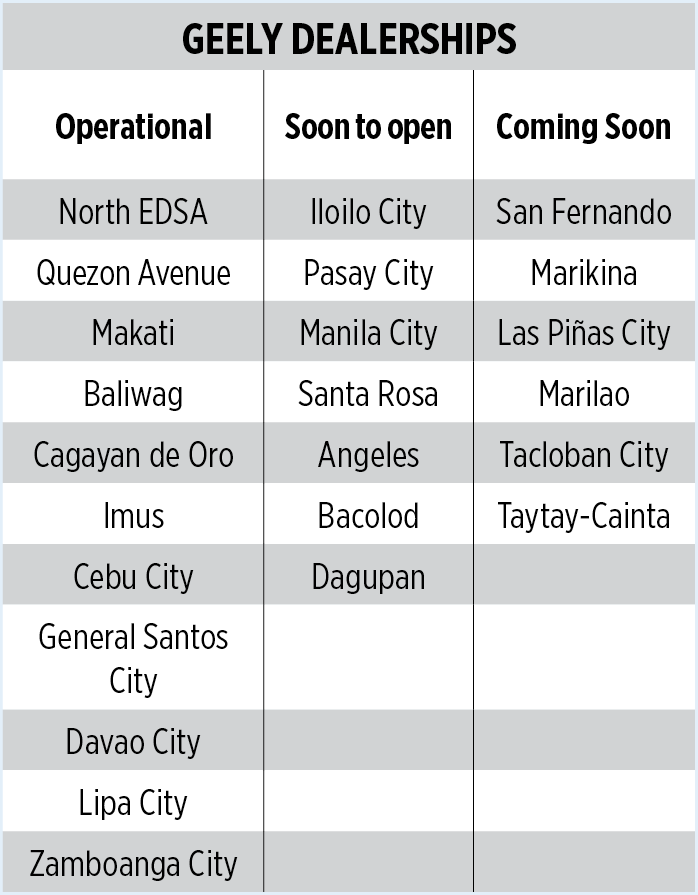
Nonetheless, the company said it “continues to sail through pandemic challenges as it beefs up its efforts not only to attain sales targets but also to rapidly expand the dealer network to be able to cater to more customers all over the country.” SGAP currently has 11 Geely dealerships nationwide; another 13 are slated to open soon. The company reported that it recently appointed new Geely dealers in Bacolod, Dagupan, Marilao, Bacolor, and Sumulong.

According to SGAP President and CEO Yosuke Nishi, “We are taking a more aggressive approach in reaching out to more customers in the country this year as we keep up with our target network expansion schedules which were stalled by the long-standing global crisis.”

Geely has emerged as one of the strong contenders in the country — performing above expectations last year in areas of product quality to sales volume.

“As the crisis is seen to take longer, this year will definitely be another tough year to battle for many businesses. On the brighter side of things, I would like to believe that Geely was introduced in the Philippines at the right time, at a point where buyers are now demanding for more high-tech and safety features in cars they wish to purchase yet still reasonably priced,” Mr. Nishi continued.

PSEi may dip on MSCI rebalancing, virus concerns

THE Philippine stock market is expected to decline this week ahead of the rebalancing of the Morgan Stanley Capital International’s (MSCI) world index and amid lingering concerns over the coronavirus disease 2019 (COVID-19) situation in the country.

The Philippine Stock Exchange index (PSEi) climbed by 1.61 points or 0.02% to close at 6,199.25 on Friday, while the all shares index went up by 2.42 points or 0.06% to end at 3,842.73. Week on week, the PSEi shed 70.11 points from its 6269.36 close on May 14.

“The index ended lower [last] week as investors chose to remain on the sidelines while assessing the recently released various economic reports both locally and abroad, to look for clues on how the economy and inflation levels will unfold in the coming quarters,” Timson Securities, Inc. Trader Darren Blaine T. Pangan said in a Viber message.

“Another thing that affected market sentiment [last] week was the entry of certain COVID-19 variants into the country,” Mr. Pangan added.

The government slashed its growth target for this year and the next, as the renewed spike in COVID-19 cases and strict lockdown curbs hobble the economy’s recovery.

In its 179th meeting on Tuesday, the Development Budget Coordination Committee downgraded its gross domestic product (GDP) growth target to 6-7% from 6.5-7.5% penciled in last December 2020.

Economic managers expect the economy to return to its pre-crisis level by next year. Next year’s GDP is expected to grow by 7-9%, lower than the previous target of 8-10%. The economy’s growth is seen to slow to 6-7% in 2023 and 2024.

The Bangko Sentral ng Pilipinas also lowered its inflation outlook this year to 3.9%, from a previous estimate of 4.2%. This will put inflation back within its 2-4% annual target range. On the other hand, the forecast for 2022 was raised to 3% from 2.8% previously.

Meanwhile, the Health department last week reported new COVID-19 cases of the B.1.617.2 variant first found in India, the B.1.1.7 variant first detected in the United Kingdom, and B.1.351 variant found in South Africa.

On the other hand, data from the US Labor department showed the consumer price index rose by 0.8% in April, quicker than the 0.6% in March and marking the fastest pace since June 2009, Reuters reported. The quicker inflation was attributed to the low supply amid the recovering demand as the economy recovers.

For this week, the MSCI rebalancing is expected to affect the local market.

“MSCI Global Indices rebalancing implementation [this] week could push the market lower, but mining and oil sector could prove resilient in light of surging global base and precious metal prices,” First Metro Investment Corp. Head of Research Cristina S. Ulang said in a Viber message.

“[This] week, we’ll have to see if the PSEi holds at immediate support at 6,100, otherwise nearest resistance may be found at the 6,390 level,” Timson Securities’ Mr. Pangan said. — K.C.G. Valmonte with Reuters

Style (05/24/21)

Penshoppe’s new collection

LISA Manoban of the K-pop group BLACKPINK and actor Cha Eun-Woo are the faces of Penshoppe’s new  #PENSHOPPEeverywear Collection. The #PENSHOPPEeverywear Collection promises comfort and style through everyday fashion pieces that can be mixed and matched. The collection includes caps, bucket hats, graphic tees, statement polos,  skirts, a wide range of cozy shorts, classic jeans, track pants, slip-ons and shoes, and accessories. The #PENSHOPPEeverywear styles worn by Ms. Manoban and Cha Eun-Woo are now exclusively available on penshoppe.com. The rest of the collection is available in Penshoppe stores nationwide and on official Penshoppe stores on Shopee, Lazada, and Zalora.

Montblanc introduces its re-invented Sartorial Collection

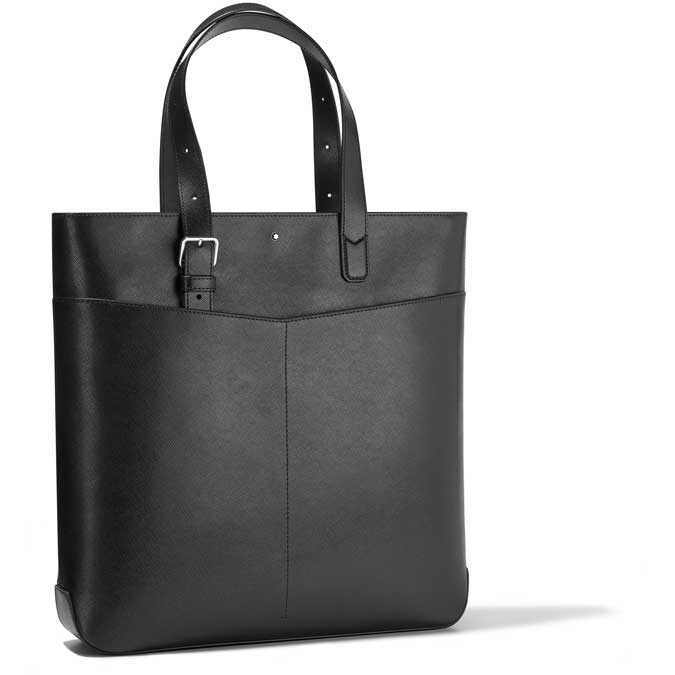
WHILE trends come and go, some designs stand the test of time. The Montblanc Sartorial Collection of bags is a hybrid between timeless classic design and bold contemporary style, an ever- evolving collection of leather pieces that strike a balance between heritage and modernity. Central to the aesthetics of the collection is the reinvention of an icon — the Montblanc “M” — re-engineered as an M-shaped front pocket. Crafted in black, deep blue, or bold graphite leather, the bags also feature new functionalities so the leather pieces can be used or worn in multiple ways. The collection includes: a document case (large, medium, or ultra slim) with zip compartments for storing laptops and tablets, and documents; a backpack (large, medium, small), featuring the signature M-shape pocket on the front of the bag; totes in vertical or horizontal orientations, that strike a balance between relaxed informal style and formal classic elegance; a messenger bag, envelope or mini envelope; portfolio, notepad holder, notebook holder, clutch and small pouch; and small accessories like wallets, pen sleeve, business card holders, passport holders and key fobs. Montblanc Sartorial Collection is available at Montblanc boutiques worldwide and online. Montblanc is available at Rustan’s Makati, Rustan’s Shangri-La, Rustan’s Cebu, Greenbelt 5, City of Dreams and Resorts World.

Nivea products for stressful times

WITH stressors like UV damage and the daily struggles that come with adapting to our current situation, using an ordinary body lotion may not be enough to combat skin stress such as dryness and uneven skin tone. Nivea suggests switching to its Extra White Lotion, powered by Camu Camu and Acerola Cherry that it claims works 50 times harder to brighten dull and stressed skin. As for protection from the sun, it also has advanced UVA/B filters to protect from daily sun damage. In a summer this hot, one needs a deodorant that can keep up. While other deodorants can stop sweat, they also leave underarms dark and damaged. On the flip side, some promise to whiten and help repair skin damage, but fail to keep body odor and sweat stains away. NIVEA Extra White Deodorant offers a balance of repair and protection. It provides 48-hours protection from sweat and body odor, and is enriched with licorice, vitamins, and other nutrients to help reverse underarm damage. Seeing more blemishes and skin dullness these days? That may be caused by all the stress your skin is going through. When skin is stressed, it slows down skin repair, so one needs a gentle cleanser like NIVEA Extra White MicellAIR Cleanser, an all-around caring cleanser that has Oxygen Boost to repair skin damage, and 0% alcohol, paraben, silicone, colorants and fragrance for clean, healthy, and fresh skin. The products are available at drugstores, groceries, and department stores, and at online e-commerce platforms Shopee, Lazada, and BeautyMNL.

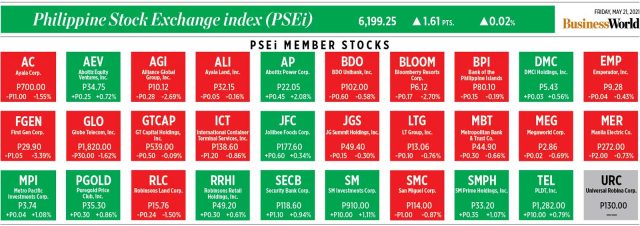
How PSEi member stocks performed — May 21, 2021

Here’s a quick glance at how PSEi stocks fared on Friday, May 21, 2021.


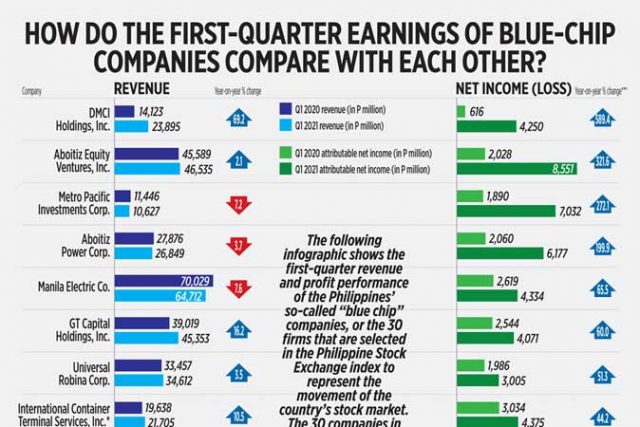
How do the first-quarter earnings of blue-chip companies compare with each other?

PHILIPPINE COMPANIES are watching the government’s vaccination drive against the coronavirus to guide their investment decisions for the rest of the year, analysts said. full story.

How do the first-quarter earnings of blue-chip companies compare with each other?

Population agency’s data tool points to COVID high-risk villages 

PHILIPPINE STAR/MIGUEL DE GUZMAN

A NEW data tracking system has been released for coronavirus cases at village level, which is seen to help local governments improve the response measures and plan for location-based vaccination priorities, the Commission on Population and Development (POPCOM) said on Sunday.

In a statement, the agency said the recently released version of its demographic vulnerabilities tool contains latest figures in barangays along with the effects of the pandemic on residents.

The agency said it has identified 1,272 villages nationwide with the highest number of cases, averaging 137 cases daily from Sept. 2020 to April 2021.

POPCOM noted that 15,252 barangays remained “COVID-free” at that time.

Communities with the highest cases are mostly high-population density areas, with 201 to 999 people per hectare.

Low-population density areas, meanwhile, face different risks due to poor access to medical facilities and services, according to POPCOM Undersecretary Juan Antonio A. Perez III.

“Even LDs (low-population density) have higher-than-expected death rates not commensurate with the number of cases. This is because of the lack of access of residents to health-care facilities which are mostly located in cities or municipalities,” he said

POPCOM recommended that the Department of Health (DoH) and local government units mobilize teams in communities reporting high cases and deaths as well as plan for unimpaired access to hospital care in low density areas that were reporting deaths.

Mr. Perez also said the tool provides information that could serve as basis for planning the vaccination rollout with priority on high-risk areas.

Meanwhile, the DoH reported 3,083 new coronavirus infections on Sunday, bringing the total to 1.18 million.

The death toll rose by 38 to 19,951, while recoveries increased by 6,756 to 1.11 million, it said in a bulletin.

There were 50,635 active cases, 1.5% of which were critical, 93.1% were mild, 2.1% did not show symptoms, 2% were severe and 1.35% were moderate.

The Health department said lower cases were recorded due to the simultaneous updates being made in the COVIDKaya digital platform for information management. Some case data were not yet included in the platform.

“This issue is currently being investigated and addressed by the COVIDKaya technical team,” the DoH said.

It said 10 duplicates had been removed from the tally, eight of which were tagged as recoveries. It said that 1,478 cases were deactivated after being tagged by local epidemiology and surveillance units as duplicates.

Twenty-five recoveries were reclassified as deaths. Three laboratories failed to submit data on May 21.

About 12.2 million Filipinos have been tested for the coronavirus as of May 21, according to DoH’s tracker website. — Vann Marlo M. Villegas

Congressman wants domestic workers on vaccine priority list

OFFICIALGAZETTE.GOV.PH

A LAWMAKER on Sunday pushed for the inclusion of domestic workers, or kasambahay, under the economic frontline workers group that is next in line for priority vaccination against coronavirus disease 2019 (COVID-19).

In a statement on Sunday, Probinsyano Ako Partylist Rep. Jose C. Singson, Jr. said household helpers need “immediate protection” and called on the national task force managing the COVID-19 response to consider their addition in the A4 vaccination category.

“I can’t see any valid justification to exclude kasambahays in the vaccine priority list.  If we want families that do not go outside their homes safe from the virus, we should also have our kasambahays inoculated the soonest possible time like all other workers tagged as essential or frontline,” he said.

Mr. Singson cited that Republic Act No. 10361 or the Domestic Workers Act mandates employers to safeguard the health and security of the household helper.

There are about 1.4 million kasambahays in the country as of Oct. 2020, based on data from the Labor department and the Philippine Statistics Authority. — Gillian M. Cortez

Billions of pesos spent for Marawi recovery but wounds fester with residents in quandary

DEPARTMENT of Human Settlements and Urban Development (DHSUD) Secretary Eduardo D. Del Rosario, joined by other national and local officials, break ground on May 22 for the Sarimanok Sports Stadium and the Marawi Convention Center which are part of the Marawi rehabilitation program. “These modern infrastructures… are touted to boost tourism and peace-building sports activities,” DHSUD said in its photo release. — DHSUD

OVER P18.69 billion in national government funds — which does not include billions more in donor commitments and money from the regional budget — were spent in the past four years for the recovery of battle-ravaged Marawi City, according to a study by policy research and advocacy center INCITEGov., but deep-rooted wounds linger as displaced residents continue to face uncertainty.

“The first issue has to do with the framework, right now the reality is the only way the people are looking at Marawi is the physical infrastructure when we know that it goes beyond that,” said Maria Carmen Fernandez, researcher of the report Ilang Taong Bakwit: Towards a review of post-Marawi crisis rehabilitation & reconstruction 2017-2020 which will be released in June.

“You have to go beyond physical form and into the different contexts of the crisis,” she said during a forum last Friday hosted by the Foreign Correspondents Association of the Philippines.

The report, intended to provide a systematic assessment of the rehabilitation program, was undertaken with a network of civil society organizations (CSOs) in Marawi. 

On the other hand, the government’s task force handling Marawi’s reconstruction also cite CSOs as saying that the achievements of the program are “reason to celebrate” on the fourth-year anniversary of the months-long siege that broke out on May 23, 2017.

That day, government forces were poised to arrest a leader of the criminal group Abu Sayyaf that has pledged ties with the extremist Islamic State. The local terror group laid siege on what is known as the only Islamic City in the Philippines, and the heavy gun battle with government troops stretched to almost five months, leaving the central and outlying areas in ruins.

“We would like to reaffirm that the rehabilitation is doing well,” Faduman Paporo, one of the leaders of CSO Convergence that is monitoring the task force, said in a statement released Friday by the Department of Human Settlements and Urban Development (DHSUD).

The secretary of DHSUD, retired Army general Eduardo D. del Rosario, heads the Marawi task force.     

The statement cites ongoing rebuilding projects within the devastated Marawi “ground zero” such as  mosques, commercial centers, cultural center and museum, a peace memorial, schools, and health facilities. 

The Marawi Advocacy Accompaniment, another network of 21 CSOs in the city and other parts of Mindanao, said reconstruction is not simply about seemingly infrastructure showpieces.

“Rebuilding Marawi should go beyond building large-scale public infrastructures. Rebuilding Marawi is about rebuilding our lives. Rebuilding Marawi should mean rebuilding homes and livelihood necessary for the safe and dignified return of the IDPs (internally displaced persons) to their beloved city,” said the group in a statement after holding a briefing Saturday.

They called on government to prioritize legislation that will address the other aspects of rehabilitation, such as the compensation bill for those whose homes and other properties were destroyed during the 2017 battle.

Housing projects are being rolled out by the government, but  Zyza Nadine Suzara, executive director of think tank iLEAD said government reports do not clearly indicate the details of where these are and the resettlement status.

The Institute for Leadership, Empowerment, and Democracy (iLEAD) is part of the team making the INCITEGov report.

Ms. Fernandez said available government data do not reflect the reality on the ground, and that the system does not account for the fact that up to “95% of IDPs” are actually not in evacuation or temporary shelters but are house-based elsewhere.

“How are you going to make moving decisions on the lives of people if the data is not set,” she said.

A wide spectrum of other factors weigh on the rehabilitation program of a city that sits within a historically restive region: clan feuds, land ownership dispute, extremism, underground economy of illicit goods including drugs, a new Bangsamoro government in transition, and the coronavirus pandemic.

“Even the place where the military is going to set up a camp in the middle of Marawi has at least 15 different people claiming ownership… this is the sign of the looming conflicts,” Francisco Lara, senior adviser for International Alert, said in the same forum.

Marawi’s rehabilitation, largely commanded by the national task force, is targeted for completion by December this year, before the campaign and election periods kick in for the national and local polls in May 2022.

Bangsamoro Parliament Member Anna Tarhata S. Basman, one of the vice-chairs of the special committee on Marawi, said extending the transition period for the regional government — not necessarily the incumbent officials — would help provide some stability to what will be the continuing rebuilding and healing of Marawi.

“I agree… that the focus has been on the physical reconstruction and overlooking what the needs and sense of ownership of the IDPs in the entire rehabilitation effort,” she said. — Marifi S. Jara

DENR shuts down all open dumpsites nationwide

DENR

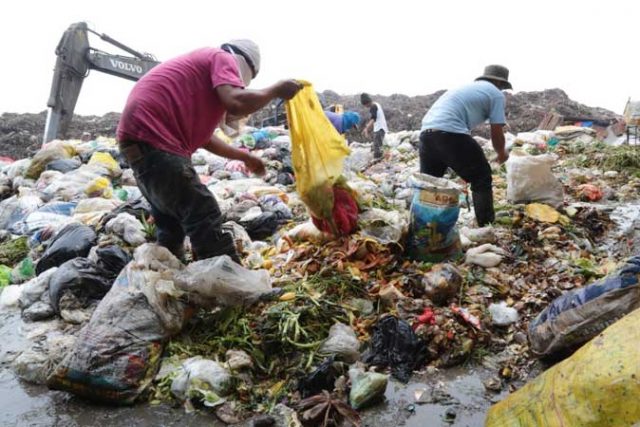
THE DEPARTMENT of Environment and Natural Resources (DENR) said over the weekend that it has achieved its full target of closing down 335 open dumpsites across the country.

Open dumps are places where solid waste is deposited without further planning or consideration for environment or health standards. Under the Ecological Solid Waste Management Act of 2000, these are considered illegal and should have been phased out by Feb. 2006.

“This is a victory for the environment and the DENR. Despite the limitations brought about by the pandemic, our people never wavered in their sworn duty as public servants to get the job done,” DENR Secretary Roy A. Cimatu said in a statement on Sunday.

Benny D. Antiporda, DENR undersecretary for Solid Waste Management and Local Government Units, said the closure of all open dumps sends the message that “the public that they cannot escape the long arm of the law.”

Mr. Antiporda, who also served as the alternate chair of the National Solid Waste Management Commission, said local governments can ask the DENR’s Environment Management Bureau for technical assistance on following the “safe closure and rehabilitation plan” for their respective dumpsites.

With the closure of the dumpsites, local governments must now dispose of their wastes in sanitary landfills or residual containment areas.

There are some 237 sanitary landfills operating nationwide, and 11 more are under construction, based on DENR data.

Earlier this year, Mr. Cimatu ordered the department’s regional offices to shut down all open dumps by the end of March. — Angelica Y. Yang

Bill filed on better pay for village health workers

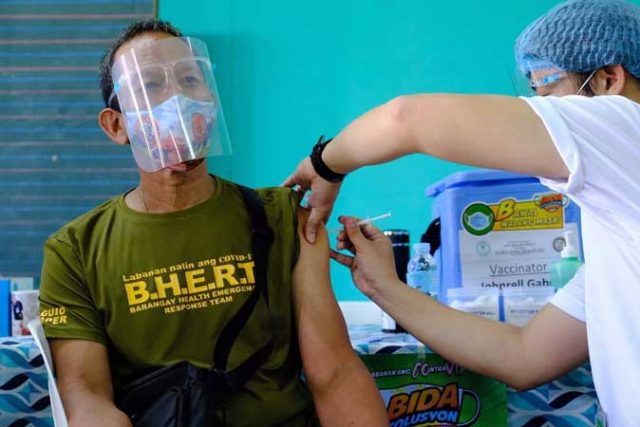
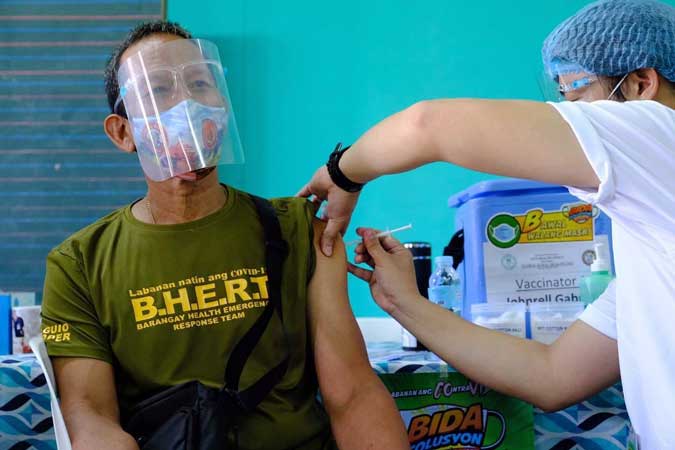
A health emergency response team member in Davao City gets inoculated against the coronavirus in this April 2021 photo. — DAVAO CIO
DAVAO CIO

A SENATOR filed a bill to provide more benefits and allowances for barangay health workers (BHWs), who are assigned at community-level facilities and serve as first line responders in emergencies.   

Senator Ralph G. Recto filed Senate Bill No. 2151 early this month, citing that Barangay Health Emergency Response Teams, consisting mainly of barangay health workers, have been the first line responders in managing coronavirus-related concerns in communities.

They are also part of monitoring cases and some are members of contact tracing teams. “And yet, despite the immense task imposed on them, our BHWs are still considered voluntary workers and they rank the lowest, among all civil servants, in terms of incentives, benefits, and privileges enjoyed and received,” the senator said in his explanatory note.

The proposed law will expand Republic Act 7883 or the Barangay Health Workers’ Benefits and Incentives Act of 1995.

“This bill is filed in recognition of the invaluable contribution of our BHWs in the delivery of much needed health care services at the grassroots,” he added.

The proposed additional benefits include monthly honoraria of P3,000; hazard allowance of 10% of their monthly honoraria for those who render service in areas under state of calamity and emergency; monthly transportation allowance of at least P1,000, and emergency assistance of P5,000, among others.

The fund for the implementation of the measure will be sourced from the share of local governments from national taxes collected by the Bureau of Customs — Vann Marlo M. Villegas

SC reverses anti-graft court’s conviction of former PADF exec

BW FILE PHOTO

THE SUPREME Court has reversed the decision of anti-graft court Sandiganbayan convicting a former vice president of the Philippine Aerospace Development Corp. (PADC).

In the High Court’s decision on May 19, Antonio M. Suba, former acting vice president for the PADC’s maintenance unit, was acquitted for failure of the prosecution to “prove beyond reasonable doubt all the elements of Section 3(e) of Republic Act No. 3019 (or the Anti-Graft and Corrupt Practices Act) under which Petitioner was charged.”

PADC was an attached agency of the then-Department of Transportation and Communications (DoTC).

On Sept. 22, 2017, the Sandiganbayan found Mr. Suba “guilty beyond reasonable doubt” of graft and corruption for attending a conference in Beijing, China on Oct. 10 to 14, 2006 using government funds worth over P241,000 despite the disapproval by then-DoTC Assistant Secretary Emmanuel A. Cruz  of the authority to travel

On Sept. 12, 2014, Mr. Suba paid the Commission on Audit the full cost of their travel upon the agency’s request, but the graft case proceeded.

Mr. Suba was sentenced to six years and one month to 10 years in jail.

He appealed the case before the Supreme Court by claiming that his travel companion and superior, the late Roberto R. Navida, then-PADC president, had said that they already had a travel authority.

The High Court ruled that no conclusive evidence was given that Mr. Suba knew of the lack of travel authority.

It said “there is no such thing as presumption of bad faith in cases involving violations of the Anti-Graft and Corrupt Practices Act. On the contrary, the law presumes the accused innocent, until proven guilty.” — Bianca Angelica D. Añago

ADVERTISEMENT
ADVERTISEMENT