Home Blog Page 8039

PHL debt service bill seen as manageable even if rates rise

REUTERS

EMERGING MARKETS including the Philippines are expected to be “quite resilient” in the event interest rates rise, with many countries weighting their government debt in favor of local-currency issues, according to S&P Global Ratings.

A stress-test scenario of a 300-basis points rate hike indicated that emerging markets are likely to incur a 1 percentage point increase in interest expenses relative to gross domestic product (GDP) by 2023.

“Emerging-market borrowers — Brazil, China, India, South Korea, the Philippines, and South Africa — finance themselves almost exclusively in local currency, giving them greater control over their cost of funding,” it said in a note Monday.

S&P expects the Philippines to incur interest expenses equivalent to about 1.9% of GDP between 2021 and 2023. This remains largely the same in a scenario where a 100- and 300-basis points rate hike shock is applied.

The Philippine debt stock was P10.774 trillion at the end of March, up 27% from a year earlier and up 3.5% from a month earlier, according to the Bureau of the Treasury. The Philippine debt mix is 72% local.

“Several emerging-market sovereigns (Hungary, India, Indonesia, the Philippines, Poland, South Africa, and Turkey) have already launched asset purchase programs targeting domestic government securities, either in the primary or secondary market, although the expansion of their central banks’ balance sheets has been more restrained than for developed-market peers,” S&P said.

In January, the Bangko Sentral ng Pilipinas (BSP) granted a fresh P540 billion to the National Government. The central bank has also been active in purchasing government securities in the secondary market.

S&P said emerging markets that are most vulnerable to higher refinancing costs include Egypt, South Africa, Ghana, and Kenya.

It also noted that Colombia, Egypt, Ghana, Kenya, Turkey, and Ukraine have sizeable foreign currency-denominated government debt, which will complicate their ability to control their cost of funding.

“If rates rise quickly to reflect rapid employment gains and buoyant GDP growth, against the backdrop of steady increases in productivity, the higher cost of debt servicing will almost certainly be offset by improving state revenue and more rapid consolidation of the primary (non-interest) government accounts,” S&P said.

On the other hand, in a scenario where higher rates are due to a delayed response from a central bank to inflation “caused by stagnating post-pandemic productivity”, S&P warned rate shocks could result in weaker exchange rates and risks the credit fundamentals of sovereigns.

The BSP maintained its key policy rate at 2% earlier this month to continue its support for the recovery. Officials have said they will act immediately if needed to respond to second-round effects of higher inflation including wage and transport fare hikes. — Luz Wendy T. Noble  

BPO industry touts expedited-vaccination deal with QC as model for other LGUs

REUTERS

THE Business Process Outsourcing (BPO) industry has signed an agreement with Quezon City to speed up the vaccination of 67,000 outsourcing workers based there.

Twenty-nine companies have registered their employees for access to coronavirus vaccines under a program offered by the Quezon City government.

“The local government unit (LGU) will facilitate and expedite the inoculation of qualified IT-BPM employees who report to offices located in Quezon City,” the Information Technology and Business Process Association of the Philippines (IBPAP) said in a statement Monday.

Healthcare workers from the participating firms could also volunteer to help inoculate colleagues.

“We hope that this will serve as a template for our ongoing efforts with other LGUs. Early access to the vaccine is really top-of-mind for our sector,” IBPAP President and Chief Executive Officer Rey E. Untal said.

Participating business groups include IBPAP, the Contact Center Association of the Philippines, and the Healthcare Information Management Association of the Philippines.

The industry is procuring over a million doses of the AstraZeneca, Moderna, and Novovax vaccines for employees and their dependents. The vaccines will arrive in the latter part of the second quarter, IBPAP said.

BPO workers have also been placed in the A4 vaccination category on the priority list for publicly-procured vaccines.

Workers group BPO Industry Employees Network campaigned for the inclusion of outsourcing workers in the A4 priority list due to health risks taken by those working on site. — Jenina P. Ibañez

House plenary passes e-cigarette bill amid claims of weaker health safeguards, youth protections

REUTERS

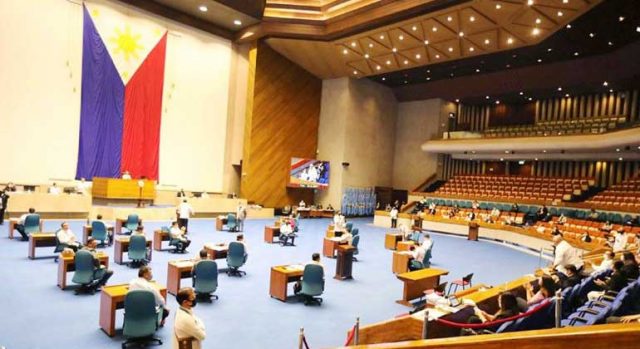
THE HOUSE of Representatives has approved on third and final reading a bill that proposes to regulate e-cigarettes and heated tobacco products, in the face of opposition from some legislators over the deletion of health safeguards.

Voting 192 to 34 with four abstentions, legislators approved House Bill 9007, or the proposed Non- Combustible Nicotine Delivery Systems Regulation Act. The bill sets regulations for the manufacture, use, sale, packaging, distribution, advertisement, and promotion of electronic nicotine and non-nicotine delivery systems (ENDS/ENNDS) and heated tobacco products (HTPs).

If signed, the bill will also set product standards for ENDS/ENNDS which will be determined by the Department of Trade and Industry in consultation with the Food and Drug Administration (FDA). It will also outline standards for HTPs as identified by the DTI in consultation with the Inter-Agency Committee on Tobacco.

Penalties for noncompliance are capped at P500,000 for a first offense and P750,000 for a second offense. Third offenses warrant a fine of more than P1 million or imprisonment of up to five years.

The bill will also lower the minimum age for persons allowed to purchase from 21 years to 18 years.

The bill will allow the online sale and advertisement of ENDS/ENNDS and HTPs as long as the website or e-commerce platform restricts sales to those under 18.

The head of the House health committee opposed the passage of HB 9007, claiming that the health safeguards are too lax.

Quezon Rep. Angelina DL Tan said in explaining her No vote that “I cannot in any manner support House Bill No. 9007… as it pretends to be a health measure for all when if in fact gives primordial consideration to trade and commercial interests of the few.”

She added that the bill runs afoul of various health laws since it does not require warnings on the possible hazards of ENDS/ENDDS and HTP use.

Muntinlupa Rep. Rozzano Rufino B. Biazon said in explaining his No vote that HB 9007 has put some distance on its original intent as a health measure and lacks teeth in denying young people access to such products.

“This bill has turned into a trade and industry measure rather than a health measure as we started out. This bill does not protect the youth from the harm of END/ENNDS abuse addiction and as well as the vapes and HTPs because of the permissiveness of the online trading and advertising rules, which IT experts said cannot guarantee the protection of the youth from access,” he said.

Agusan del Norte Rep. Lawrence H. Fortun said that the bill also deleted crucial provisions such as designating the FDA as the regulatory agency for e-cigarettes and prohibition of advertising methods attractive to children. — Gillian M. Cortez

Pressed for time, House adopts Senate tax amnesty extension bill

PHILSTAR

THE proposed extension for availing of the estate tax amnesty will head to Malacañang directly without the need to go through the bicameral conference committee stage after the House of Representatives moved to adopt the Senate’s version of the measure.

Late Monday, House legislators approved a motion to concur with the Senate’s version of the measure, adopting Senate Bill (SB) 2208. The bill’s House counterpart is House Bill (HB) 7068, which proposes to extend the estate tax amnesty by another two years.

“We have been informed that the Committee on Ways and Means, sponsor of House Bill No. 7068, as well as the authors thereof, are in concurrence with the provisions of Senate Bill No. 2208. In accordance with our rules, I move to adopt Senate Bill No. 2208 as an amendment to House Bill No. 7068,” Iloilo City Rep. Lorenz R. Defensor said at the plenary session Monday.

With the House adopting the measure, there will be no need for a bicameral meeting on the bill and the bill will be transmitted to the President, skipping a potentially time-consuming stage before Congress adjourns on June 4.

The Senate approved SB 2208 on third and final reading on Monday afternoon. HB 7058 was approved in September.

If signed, the proposed law will amend Republic Act (RA) No. 11213 or the Tax Amnesty Act of 2019, which was set to expire on June 15.

The bill amends the expiration provision to “four years from the effectivity of the Implementing Rules and Regulations of this Act” from the original two years provided for in RA 11213. This will move the expiration date for amnesty applications to June 14, 2023. — Gillian M. Cortez

DPWH, CCP, Navy found violating rules on release of wastewater into Manila Bay

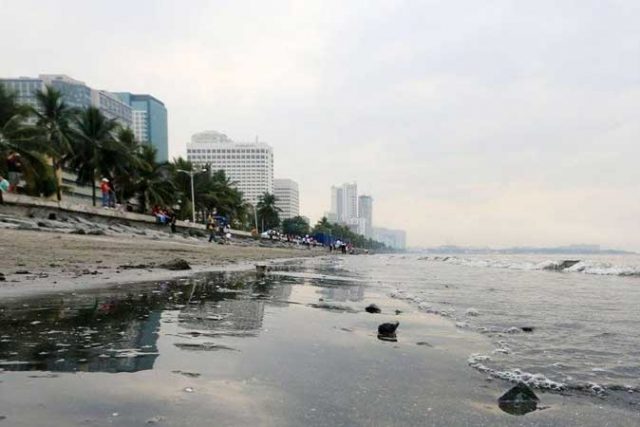
THE DEPARTMENT of Environment and Natural Resources (DENR), via its Laguna Lake Development Authority (LLDA) unit, has issued cease and desist orders to the Department of Public Works and Highways (DPWH), the Cultural Center of the Philippines (CCP) and the Philippine Navy for releasing wastewater into Manila Bay.

According to documents provided by DENR Undersecretary Jonas R. Leones, the DPWH, CCP and Philippine Navy failed to meet the department’s effluent standards following water inspections in various outlets to the bay managed by the three agencies.

The failures were described as non-compliance with the standard for Class SB water, in terms of total suspended solids, and biochemical oxygen demand, among others. Class SB water is deemed suitable for bathing, swimming, skin diving, and other forms of contact recreation.

Water discharges by the three institutions were higher than the standard 200 most probable number (MPN) of contaminants per 100 mL, with some exceeding 160,000 MPN/100 mL.

“The discharged wastewater coming from the respondent(s)… is an immediate threat to life, public health, safety and welfare to animals and plant life,” the LLDA said.

The orders were in effect immediately and will remain until the institutions are compliant, or until a temporary stay is issued. The DPWH, CCP and Navy are required to pay fines and other penalties for the violations, the DENR said.

The orders were signed by LLDA General Manager Jaime C. Medina.

On Tuesday, the CCP said that it does not object to the halting of its wastewater discharge.

“(We are) still awaiting the completion of the CCP’s Sewage Treatment Plant, which was delayed due to the current pandemic. It is targeted to begin operations by July 2021,” the CCP said in a issued by its corporate communications division.

It added that it has ramped up the siphoning and hauling of generated sewage, and has asked water concessionaire Maynilad to help in draining the center’s septic tanks.

BusinessWorld asked the DPWH and the Navy for comment, but they had not replied at the deadline. — Angelica Y. Yang

Senator cites threat strategic firms will fall into Chinese hands if restrictions on foreign ownership are relaxed

BW FILE PHOTO

SENATOR Risa N. Hontiveros-Baraquel said Tuesday that easing the curbs on foreign investment in the Public Service Act will allow full foreign ownership in some public utilities and raised the prospect of Chinese control of strategic companies.

In a statement, she said China may also use its ownership of key companies as leverage in its territorial disputes with the Philippines.

Hindi na nga tumitigil ang Tsina sa pag-aarangkada sa West Philippine Sea, tapos bibigyan pa natin siya ng daan para bilhin ang mga imprastaktura sa loob mismo ng ating bansa? (China is proceeding without restraint in the West Philippine Sea, so why should we give it a path to acquiring our infrastructure?)” she said.

Kinukuha na ang ating mga likas-yaman sa ating karagatan, huwag naman nating hayaang pati sariling industriya natin sa lupa Tsina narin ang naghahari-harian. Ano na ang matitira sa Pilipinas? (It is grabbing our natural resources in the West Philippine Sea. We must not allow it to acquire our key companies. What will be left for the Philippines?)” she added.

Ms. Baraquel, who voted No on the approval of China-backed Dito Telecommunity’s franchise, said improving the country’s services should not “come at the expense of national security.”

“We have vital national security interests that should never be compromised,” she said.

Sa panahon pang tinataboy ang ating mga mangingisda sa ating mga teritoryo, paano tayo makakasiguro na hindi rin itataboy ng Tsina ang mga Pilipinong manggagawa sa mga industriyang gusto niyang pasukan? (At a time when China is turning away our fishermen from our own territory, how sure are we that China won’t bar Filipino workers from industries it wants to enter?) We should heighten restrictions on foreign ownership as China’s encroachment in the WPS escalates; not make it easier for her to establish a stronghold in our own land,” she added.

She said that the proposed amendments will allow 100% foreign ownership in some sectors including telecommunications and transportation.

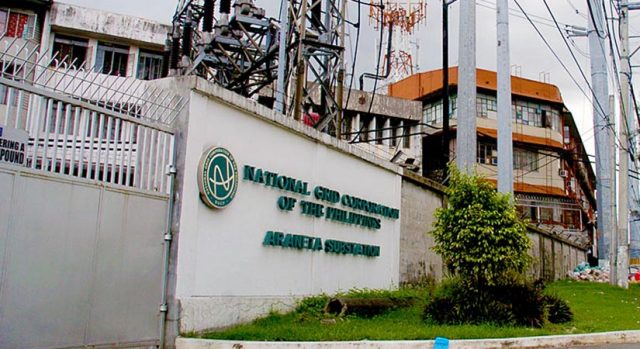
Ms. Baraquel also said that there were still unresolved national security concerns surrounding public utilities in which Chinese entities have a 40% stake, such as in the National Grid Corp. of the Philippines (NGCP) and Dito Telecommunity.

“If we open up our transport sector, for example, does this mean that the so-called Chinese maritime militia can apply for licenses or permits to operate in our domestic waters? We are all for economic development, but never at the expense of our national dignity and sovereignty,” she said.

Ms. Baraquel in 2019 filed a resolution seeking an investigation and a national security audit of the NGCP. She also filed that year a resolution to investigate an Armed Forces of the Philippines deal with Dito, allowing the company to build facilities in military camps. — Vann Marlo M. Villegas

PHL seeking to attract US manufacturing locators amid China trade tensions

REUTERS

THE Philippine special envoy to the US is planning a public-private initiative to invite US companies to relocate to the Philippines from China.

The initiative will target manufacturing and assembly, logistics, and green energy companies.

“More than raising the level of discourse about this investment opportunity for our country, we will endeavor to chart an efficient roadmap for US companies seeking to do business in the country as guided by the Ease of Doing Business Act,” Special Envoy Jose E.B. Antonio said in a statement Tuesday.

The project will start with virtual conferences to discuss ease of doing business in the country, including reforms to business permit processing, the automation of transactions, and anti-corruption policies.

“We have a young and growing population, hard-working and English-speaking people, relatively low wages and cost of living, and a continuously growing infrastructure,” Mr. Antonio said.

“We will have a more compelling story to tell investors and relocating US firms if we can ensure a smooth and efficient entry and operating process for them.”

The Philippines has been touted as a beneficiary of the relocation of firms from China due to US-China trade tensions, but investors have thus far preferred locations like Vietnam and Thailand.

Organizations supporting the initiative include the US-Philippines Society, American Chamber of Commerce of the Philippines, the Semiconductor and Electronics Industry of the Philippines, Inc., Management Association of the Philippines, and the Harvard Business School Club of the Philippines.

The Trade and Energy departments and the Philippine Economic Zone Authority represent the public sector.

Mr. Antonio is the chairman of the Century Properties Group. — Jenina P. Ibañez

Asia-Pacific growth seen dampened by COVID resurgence

REUTERS

A RESURGENCE in coronavirus case counts and slow vaccine rollouts will hinder the recovery of most Asia-Pacific (APAC) economies, including the Philippines, as governments resort to more restrictive measures to contain the pandemic.

“With many APAC economies dependent on imported COVID-19 vaccines, at least in the near-term, their ability to bring their new pandemic waves under control is likely to be built on strategies of a combination of restrictive measures as well as trying to accelerate their vaccination programs,” Rajiv Biswas, APAC economist at IHS Markit said in a note late Monday.

New infections are rising in the Philippines, India, Japan, Malaysia, Thailand, Singapore, Vietnam and Thailand.

Mr. Biswas said new waves have forced governments to tighten quarantines, weakening domestic demand and slowing the pace of recovery.

“The escalating COVID-19 waves evident in many Asian economies are likely to be a significant near-term drag on their economic recovery paths, with considerable uncertainty about when their new COVID waves will come under control,” the report added.

Mr. Biswas said the high case counts in Asian economies may be due to the slow roll out of their vaccination programs.

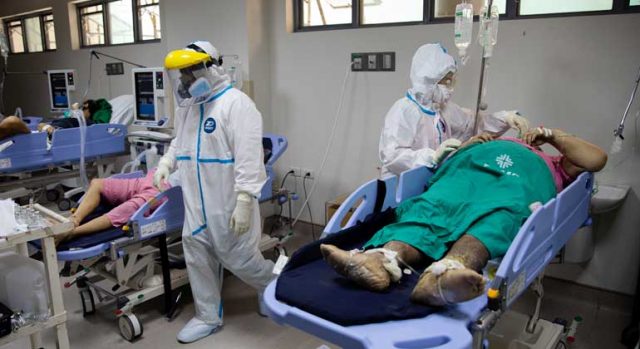
In the Philippines, lockdowns were imposed again in Metro Manila and nearby areas for nearly two months before restrictions were eased on May 15, following a spike in new cases last month. The Health department reported 3,972 new cases Tuesday, bringing the total number of active cases to 48,201.

Around 4.3 million Filipino adults have been vaccinated as of Monday, against the government’s target to inoculate at least 50 million this year.

The stricter measures have dampened economic activity, he said, after the IHS Markit Philippines Manufacturing Purchasing Managers’ Index (PMI) deteriorated in April, indicating a worsening in conditions for manufacturing from a month earlier.

Mr. Biswas said activity in Japan’s services sector deteriorated sharply this month compared with April after stricter measures were put in place, while Singapore’s PMI eased to 51.8 last month from 53.5 after local infections rose once more.

In India, where daily cases remained elevated and the health system overwhelmed, IHS Markit’s services sector indicator experienced a slowdown last month while the manufacturing sector remained hard-hit by the pandemic.

Mr. Biswas said the region’s exports may benefit from the stronger recovery elsewhere.

“The strong global rebound in manufacturing output is helping to drive demand for industrial electronics products, while improving consumer spending is driving demand for consumer electronics,” he said.

“For many Asian developing countries, the path to recovery from the pandemic remains protracted and fraught with significant uncertainties,” he added. — Beatrice M. Laforga

Hog deliveries to Metro Manila top 450,000 

PHILIPPINE STAR/ MICHAEL VARCAS

HOG DELIVERIES to Metro Manila have exceeded 450,000 animals, part of an effort to boost the pork supply following the depletion of hog inventories due to the African Swine Fever (ASF) outbreak, the Department of Agriculture (DA) said.

The DA said in a report that 5,055 hogs arrived in Metro Manila on May 24, bring the total to 452,126 live animals since the implementation of pork price controls via Executive Order No. 124 on Feb. 8.

Some 2,348 hogs were shipped from General Santos City and South Cotabato; 978 from Batangas and Quezon; 630 from Sorsogon and Camarines Sur; and 465 from Bohol.

Other areas that delivered animals were Oriental Mindoro with 212; Bukidnon 162; and Zamboanga del Sur and Northern Samar, both with 130.

Since Feb. 8, the DA said Calabarzon (Cavite, Laguna, Batangas, Rizal, and Quezon) accounted for 40.45% of hog deliveries; followed by Western Visayas at 21.44%; and Mimaropa (Mindoro, Marinduque, Romblon, and Palawan) at 13.39%.

Meanwhile, the DA said an additional 34,188 kilograms of pork in carcass form arrived in Metro Manila on May 24. The shipments brought the total carcass deliveries to Metro Manila to 3.34 million kilograms since Feb. 8, with Central Luzon the top source.

In a separate briefing Tuesday, DA National Livestock Program Director Ruth S. Miclat-Sonaco said the ASF vaccine trials are yielding positive results.

“We hope that the response of the vaccinated animals will continue to be positive such that by next year, the country will have a vaccine that can be used on the hogs,” Ms. Miclat-Sonaco said.

She said the DA’s plan to study the use of anti-parasitic drug Ivermectin and other anti-virals to contain ASF is still in the process of completion.

“The protocols are still being polished in the Food and Drug Administration (FDA) because Ivermectin for animals is used to control parasites. Now, it will be used for another disease which means it should be registered again for that specific application,” Ms. Miclat-Sonaco said.

“The application is already with the FDA. We hope that within the next few weeks it will be approved and then we can go on with the official conduct of research,” she added. — Revin Mikhael D. Ochave

3 more vaccine developers seek trials in PHL

PHILIPPINE STAR/ MICHAEL VARCAS

THREE more coronavirus vaccine developers applied for clinical trials in the Philippines, the Department of Science and Technology said on Tuesday.

In a press briefing, Science and Technology Undersecretary Rowena Cristina L. Guevara said the task group on vaccine evaluation and selection received clinical trial applications from West China Hospital and Sichuan University, Shenzhen Kangtai Biological Products Co., and Eubiologics Co. Ltd.

“Evaluation of the first two new applications are ongoing, while Eubiologics Co. Ltd. are still completing some requirements,” she told an online briefing.

The applications are for phase III clinical trials, she said.

The clinical trial of Janssen and Clover Biopharmaceuticals were ongoing, while the local Food and Drug Administration (FDA) is waiting for Sinovac Biotech Ltd.’s submission of their protocol amendment, according to Ms. Guevara.

Applicants for clinical trial have to secure approval of the Science and Technology department’s vaccine expert panel and ethics committee before going through the application process at the local FDA.

The S&T department is also awaiting the final protocol and list of vaccines from the World Health Organization (WHO) so the Solidarity Trial for vaccines may be applied with the ethics board and the FDA.

Meanwhile, anti-corruption organization Transparency International Global Health and the University of Toronto on Tuesday warned that lack of transparency in coronavirus vaccine trials and secrecy over deals between government and drug firm “risks the success of the global pandemic response.”

In a statement, Transparency International said they studied the development and sale of the Top 20 vaccines globally, which included those developed by AstraZeneca, Pfizer/BioNTech and Moderna.

It said that the analysis of clinical trial data and nearly 200 contracts for vaccine sales up to March 2021 revealed “a pattern of poor transparency and a disturbing trend of governments censoring key details of their orders from drug companies.”

“With recent polling showing that one third of the world’s population — 1.3 billion people — are unwilling to take a coronavirus vaccine, transparency is vital to build confidence,” it said.

Jonathan Cushing, head of Transparency International’s Global Health Programme, said the results “carry important implications not just for the COVID-19 response, but also for future health emergencies.”

COVID-19 TALLY
The Department of Health (DoH) reported 3,972 coronavirus infections on Tuesday, bringing the total to 1.19 billion.

The death toll rose by 36 to 20,019, while recoveries increased by 4,659 to 1.12 million, it said in a bulletin.

There were 48,201 active cases, 1.6% of which were critical, 92.7% were mild, 2.1% did not show symptoms, 2.1% were severe and 1.42% were moderate.

About 12.2 million Filipinos have been tested for the coronavirus as of May 23, according to DoH’s tracker website.

VACCINATION
More than 4.4 million doses of coronavirus vaccines have been given out as of May 24, according to Vivencio B. Dizon, deputy chief implementer of the country’s pandemic response.

He said more than 3.3 million Filipinos already got their first dose, while 986,929 have completed their vaccination.

The Philippine has already received more than 8.2 million vaccine doses since it began its coronavirus immunization program in March.

Mr. Dizon expressed confidence that the government would be able to vaccinate more than half of the population in Metro Manila, the capital region, and nearby cities and provinces by the end of the month.

At the same briefing, Presidential Spokesman Herminio “Harry” L. Roque, Jr. reminded the public that the country’s supply of coronavirus vaccines from the United States is not enough to inoculate the entire Filipino population.

A recent poll by the Social Weather Stations revealed that the US is the preferred source of vaccines by more than half of adult Filipinos.

“We do understand that historically, Filipinos look on with favor to things that are ‘stateside’,” he said in Filipino. “But our message simply is, even if we already have some ‘stateside’ vaccines, these are not enough for everyone.”

Earlier this month, the country took delivery of about 193,000 doses of the vaccine made by the US’s Pfizer, Inc. 

Two more companies expressed interest to start local vaccine manufacturing, bringing the total to eight, according to Ms. Guevara.

One of the companies has ongoing talks with a Taiwanese vaccine developer while the other “expressed interest to participate in the WHO initiative for the establishment of a COVID-19 mRNA vaccine technology transfer hub,” she said. — Vann Marlo M. Villegas and Kyle Aristophere T. Atienza

Manila, Beijing start compensation talks for Filipino fishermen

PHILSTAR

MANILA and Beijing will start talks next month for the compensation of Filipino fishermen who were on board a boat that was rammed, sunk, and abandoned by a Chinese fishing vessel in June 2019 at the West Philippine Sea, according to Justice Secretary Menardo I. Guevarra.

Mr. Guevarra told reporters on Monday that the matter was taken up by the governments of the Philippines and China during their “sixth consultative meeting” last Friday.

The Philippine panel on the compensation talks will be composed of officers of the Department of Justice (DoJ), Department of Foreign Affairs, and Department of Agriculture-Bureau of Fisheries and Aquatic Resources.

The Justice chief said they created the group “to put a close to this festering issue.”

“As far as the Filipino fishermen are concerned, it is important that they recover fully their expenses for the boat repair and the income they lost while the boat was under repair,” he said.

The DoJ’s assessment of damages due to the owners and crew of the fishing vessel F/B Gem-Ver amount to P12 million for repairs, loss of income, wages for six months, and moral damages. 

The Philippine government committed last year to help the Gem-Ver owners and crew, including 22 fishermen, claim compensation.   

The Chinese Yuemaobinyu 42212 vessel’s owner has so far only apologized for the incident. 

A Vietnamese vessel passing near the Recto Bank where the sea mishap took place rescued the Filipino fishermen.

Gem-Ver owners Felix and Fe Dela Torre reported spending about P2.1 million in Nov. 2019 to repair the boat.

Mr. Guevarra said the Philippine panel will meet with their Chinese counterparts on June 2 and 7 to discuss the compensation. — Bianca Angelica D. Añago

Anti-red tape agency to set up Matnog Port single processing shop

@COASTGUARDPH

THE ANTI-RED Tape Authority (ARTA) is planning to open a one-stop processing shop at the Matnog Port in Sorsogon by June after receiving complaints from motorists of congestion and under-the-table transactions to get loading priority.   

The Matnog Port in the southeastern tip of Luzon, ARTA said, is considered as a “funnel” to Mindanao. Most cargo being transported between Luzon and the Visayas and Mindanao pass through Matnog.

Cargo trucks are being asked to pay fees of up to P8,000 for a slot in a priority list to board roll-on, roll-off vessels faster, ARTA said in a press release on Tuesday. 

“The complainant further added that the actual fee is supposed to be more or less P3,000 only and that the amount in excess of the P3,000 goes to the fixers and corrupt officials,” ARTA said.

“The alleged fixers also reportedly ask passengers for money to buy coffee and snacks.”

Officials from at least two shipping lines also alleged that a local government task force has taken over the management of the port, which is under the Philippine Ports Authority. The officials complained that the local government intervention has complicated the flow of port operations, ARTA said.

ARTA Undersecretary Carlos F. Quita said local government units have no jurisdiction over port operations and cargo trucks should not be prevented from boarding vessels if they have the necessary permits.

Local governments charging banned fees on goods transportation may also be investigated under recent guidelines issued by ARTA and other government agencies.

The Philippine Ports Authority, the Philippine Coast Guard, and barge operators will be involved in creating the one-stop shop at Matnog. — Jenina P. Ibañez

ADVERTISEMENT
ADVERTISEMENT