LINE judges will no longer feature at the US Open after the United States Tennis Association (USTA) said on Monday that it was implementing the use of electronic line-calling on all courts at the year’s final Grand Slam.
Electronic line-calling technology was also used at last year’s US Open, apart from at the Arthur Ashe and Louis Armstrong stadiums. The technology was also deployed at the Australian Open.
The USTA said in a statement that seven of the nine ATP and WTA tournaments on the US swing would use the technology on all competition courts in 2021.
“The USTA implemented electronic line-calling for the 2020 Western & Southern Open and US Open on all courts except Arthur Ashe and Louis Armstrong Stadiums,” the governing body added. — Reuters
CLAYTON Kershaw carried a shutout into the seventh inning and Justin Turner provided early support with a two-run home run as the Los Angeles Dodgers extended their winning streak to eight games with a 9-2 interleague win over the host Houston Astros on Tuesday.
Kershaw (7-3) was masterful. He needed just 32 pitches to complete one trip through the Houston batting order and didn’t allow his first base runner until Kyle Tucker slapped a one-out double to right field in the fourth inning.
Kershaw recovered with a pair of ground-ball outs and retired eight of nine batters before entering the seventh with only 65 pitches on his ledger.
Alex Bregman ended Kershaw’s shutout bid by lofting an 0-1 curveball into the Crawford Boxes in left field to lead off the seventh inning. It was his sixth home run this season.
Kershaw allowed a two-out single to Carlos Correa later that inning but escaped with no further damage.
Kershaw went 7-2/3 innings, allowing one run and four hits with six strikeouts. He did not issue a walk. Kershaw threw 81 pitches with a near-even distribution of sliders and fastballs. The Dodgers have won his last four starts and 12 of their last 13 games overall.
Astros right-hander Zack Greinke (4-2) matched zeroes with Kershaw through three innings and needed only 29 pitches to retire the first nine Dodgers he faced.
But his four-pitch walk to Mookie Betts to lead off the fourth turned the tide, with Dodgers third baseman Justin Turner drilling a two-run homer into the home bullpen in right-center. It was Turner’s eighth of the season.
Greinke, who became the 135th pitcher in history to reach 3,000 career innings in the second inning, retired eight consecutive batters following the Turner blast.
However, Turner reached with a two-out single in the sixth, and after consecutive walks to Max Muncy and Will Smith, Chris Taylor dumped a two-run single into shallow center field for a 4-0 lead.
The Dodgers drew three bases-loaded walks in the top of the eighth to extend the lead to 8-1.
Greinke allowed four runs on three hits and three walks with five strikeouts over six innings. The Astros have dropped four consecutive games following a stretch of eight wins in nine games. — Reuters
THE Oklahoma City (OKC) Thunder won a tie-breaker over the Cleveland Cavaliers to secure the fourth pre-lottery position, one of six random drawings the league held on Tuesday that could determine positioning in the July 29 draft.
The Thunder and Cavs both finished 22-50. They both have an 11.5-percent chance of winning the No. 1 overall pick. If no team moves forward in the lottery, OKC will pick at No. 4 with Cleveland selecting one spot later.
IN THE OTHER DRAWINGS: The Chicago Bulls (31-41) won a tie-breaker with the New Orleans Pelicans and Sacramento Kings. Second and third place in the tie-breaker drawings went to Sacramento and New Orleans, respectively. At positions 8-10, they all have a 4.5-percent chance of drawing the top pick.
The Charlotte Hornets (33-39) won a tie-breaker with the San Antonio Spurs for 11th position. The Hornets have a 1.8-percent chance of getting the top pick; the Spurs have a 1.7-percent chance.
The New York Knicks (41-31) won a tie-breaker with the Atlanta Hawks. The Knicks will pick 19th.
The Dallas Mavericks (42-30) won a tie-breaker with the Los Angeles Lakers and Portland Trail Blazers. Second and third place in the tie-breaker drawings went to Los Angeles and Portland, respectively. The Mavs will pick 21st.
The LA Clippers (47-25) won a tie-breaker with the Denver Nuggets and will pick 25th.
The NBA Draft Lottery will be held June 22. Drawings will be conducted to determine the first four picks in the draft. The remainder of the lottery teams will select in position Nos. 5 through 14 in inverse order of their records in the regular season. — Reuters
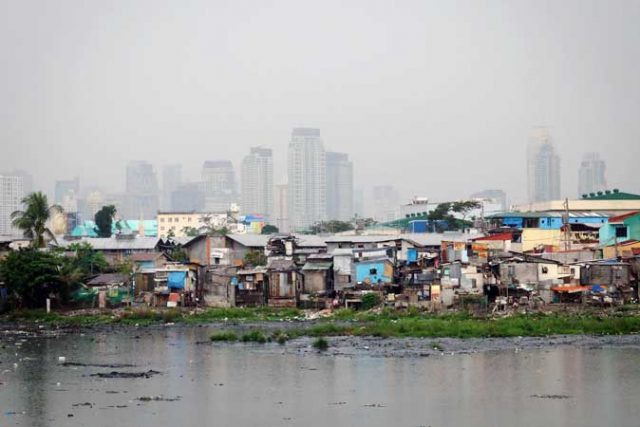
I continue discussing the findings of a research project I conducted on Filipino migrants in Paris, to understand how migration is being used as an investment strategy. This led me to dig deeper into the literature of financial strategies of the poor, which is often the demographic that most migrants come from. I needed to understand in a broader way, why is it that people must migrate? Why is it that they cannot simply invest their wealth at home or become good entrepreneurs, study hard to get better jobs to lift themselves out of poverty? Are they lacking in skillsets when it comes to saving and investing? What is the bottleneck? Finally, why is it that they manage to obtain financial stability elsewhere and what does that say about the financial strategies of the poor?
There is a general idea that for one to have become rich, then she or he would have had to be intelligent with money. And that if one is poor, then it is because of negligence or lack of prudence in money matters. This idea gets extended to — anyone who is rich is smart with money and anyone who is poor is financially illiterate. But this is often not the case. Many rich people simply inherited their wealth and may appear rich when they are actually deeply indebted, whereas many poor people are born into poverty with no way to get out of it no matter how skilled. We make assumptions because we only observe the rich and their success stories.
In addition to a host of socio-economic problems, the poor suffer what authors Collins et al. (2009)* refer to as a “triple whammy”: low incomes, unpredictability in these incomes, and lack of access to good and appropriate financial services. Whereas the first two issues are significantly difficult to deter, the third issue is something that can still be addressed. Financial inclusion is the buzzword for this — it is the delivery of financial services at affordable costs to sections of disadvantaged and low-income segments of society. Financial inclusion is measured through access to financial services, which provides the separation between people who are “bankable” (that is, credit-worthy enough to maintain an account) and those who are “unbankable.”
Understanding the financial strategies of the poor has become more and more possible with the growing research on Microfinance. Further, a ground-breaking project that led to the book Portfolios of the Poor have largely extended these findings by shedding light as to how the “bottom billion” manage their daily lives — looking at cash flow rather than balance sheets. The authors systematically tracked 250 poor households in Bangladesh, India, and South Africa over the course of one year. I reviewed this literature which uncovered that the poor are among some of the best money managers! First, the poor use group lending and borrowing in a way that would make economists proud; second, they leave money-related decision-making to women; third, because they have a diversity of financial needs, they are pushed to create complex portfolios and relationships to manage these. And, finally, and most surprisingly: the poor hate indebtedness and constantly save. Interestingly these are all characteristics that the migrants in my study possessed. Let us discuss the first characteristic today.
Group lending and borrowing is effective for the poor. This method was one of the main innovations microfinance brought to the banking sector. The group lending method consists in self-formed groups of borrowers (generally composed of between three and 10 members) who know each other that assume a joint liability for the repayment of loans given by microfinance institutions (MFIs) to group members. The idea is that because they know each other, they will avoid forming a group with individuals that have higher risk profiles, thus mitigating information asymmetry problems between the MFI and the borrower and resulting in a lower probability of default. The formation of a group also increases peer pressure, which is the substitute for collateral in a situation where they had no physical or monetary assets. Plus, there is a reputation issue — when members participate in meetings, they feel that they must illustrate their trustworthiness. This feature was also important in savings. Being able to save in a group provided more accountability and social pressures and made saving more salient. This illustrates that the poor are able, in their own ways, to replicate even the most sophisticated theories of investment involving moral hazard and adverse selection. Do not discount their sophistication.
(To be continued)
*Collins, D., Morduch, J., Rutherford, S., & Ruthven, O. 2009. Portfolios of the poor: how the world’s poor live on $2 a day: Princeton University Press.
Other References are available upon request.
Daniela “Danie” Luz Laurel is a business journalist and anchor-producer of BusinessWorld Live on One News, formerly Bloomberg TV Philippines. Prior to this, she was a permanent professor of Finance at IÉSEG School of Management in Paris and maintains teaching affiliations at IÉSEG and the Ateneo School of Government. She has also worked as an investment banker in The Netherlands. Ms. Laurel holds a Ph.D. in Management Engineering with concentrations in Finance and Accounting from the Politecnico di Milano in Italy and an MBA from the Universidad Carlos III de Madrid.
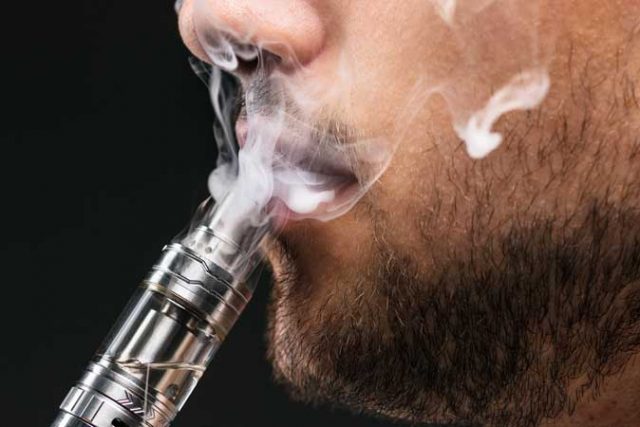
The House of Representatives was reported to have approved on final reading recently House Bill 9007 or the proposed Non-Combustible Nicotine Delivery Systems Regulation Act. The bill covers the manufacture, use, sale, packaging, distribution, advertisement, and promotion of electronic nicotine and non-nicotine delivery systems (ENDS/ENNDS) and heated tobacco products (HTPs).
I note four interesting points in the bill that I believe require further scrutiny:
• The Department of Trade and Industry, in consultation with the Food and Drug Administration (FDA) and/or the Inter-Agency Committee on Tobacco, to set product standards for ENDS/ENNDS and HTPs. But DTI, and not FDA, will regulate the sale and use of ENDS/ENNDS and HTPs
• The minimum age for persons allowed to purchase ENDS/ENNDS and HTPs was lowered to 18 years from 21 years
• Online sale and advertisement of ENDS/ENNDS and HTPs is allowed, as long as the website or e-commerce platform restricts sales to those under 18
• Sale packs will not require graphic warnings on the possible hazards of ENDS/ENDDS and HTP use
House health committee chairman Quezon Rep. Angelina DL Tan reportedly opposed HB 9007 for being too lax in terms of health safeguards. She was quoted as saying, “I cannot in any manner support House Bill No. 9007… as it pretends to be a health measure… it gives primordial consideration to trade and commercial interests of the few.”
Even Muntinlupa Rep. Rozzano Rufino B. Biazon noted that the “bill has turned into a trade and industry measure rather than a health measure as we started out. This bill does not protect the youth from the harm of END/ENNDS abuse addiction and as well as the vapes and HTPs because of the permissiveness of the online trading and advertising rules, which IT experts said cannot guarantee the protection of the youth from access.”
Personally, I prefer that government completely ban all forms or manner of smoking, which I believe does not have any redeeming value. Smoking has no known public benefits other than being a source of government revenue. However, a complete ban is wishful thinking. So, I support the tobacco and e-cigarette industry only in terms of the jobs and taxes it generates.
But Congress should at least limit smoking and electronic cigarette use to those 21 years and above. All sales packs, like cigarettes, should carry graphic warnings on the ills of smoking, and all forms of sponsorship and advertising should be banned, just like with regular tobacco products. And, the FDA — and not the DTI — should regulate the sale and use of ENDS/ENDDS and HTPs. The same goes for regular cigarettes and tobacco products. They should be under FDA as well.
The ultimate objective of smoking regulation is the protection of public health, and that regulation plus taxation aims to bring down smoking prevalence and promote public health. Reducing smoking prevalence aims to cut down smoking-related illnesses and smoking-related deaths. By doing so, we bring down health insurance costs and public healthcare costs. In the meantime, tobacco and e-cigarette industries generate jobs and taxes.
In this line, I believe that regular and electronic cigarettes should both be regulated and taxed the same way, or at least subjected to the similar regulations and parameters for sale and use, and marketing. They should both be regulated similarly, for their “negative externalities.” Their high tax revenue potential is incidental.
With HB 9007, public health is secondary, it seems. Why else lower the sale age to 18 from 21? Why allow online advertising and sale for ENDS/ENNDS and HTPs? Why do away with graphic warnings on the ills and hazards of smoking for ENDS/ENNDS and HTPs? And why not let the FDA, instead of the DTI, regulate the sale and use of e-cigarettes?
In July 2019, the Department of Health (DoH) issued Administrative Order 2019-0007 to complement President Duterte’s Executive Order No. 26 that imposed a nationwide ban on cigarette and tobacco smoking in public places starting 2017. The AO expanded the coverage of EO 26 to include “vaping,” or the use of electronic nicotine and non-nicotine delivery systems.
At that point, e-cigarettes — whether or not they use nicotine — were put at par with regular cigarettes and were banned in all places where smoking was likewise prohibited: public areas like schools, workplaces, government offices and facilities, churches, hospitals, transport terminals, markets, and parks and resorts, among others. Containers of vaping products must also have graphic health warnings.
But unlike regular cigarettes, DoH also ordered businesses or entities that manufacture, distribute, import and export, as well as sell or trade online all types of vaping products to first secure permits from the FDA. Also, unlike regular cigarettes, a nicotine ban was practically imposed by prohibiting the sale of nicotine “shots” and nicotine “concentrates” used in vaping devices.
By October 2019, Health Undersecretary Eric Domingo was also quoted in a news report as saying that vaping or using e-cigarettes was not a proven nicotine replacement therapy and that it could cause lung illness as well. He also noted that vaping was unsafe and bad for one’s health, and that vaping “products [were] not good alternatives to normal or regular cigarettes.” In short, to the DoH, there is no difference between cigarettes and e-cigarettes.
But with HB 9007, lawmakers seem to believe that there is a distinction and difference between the two, and chooses to “legislate” that distinction by “unlevelling” the playing field, so to speak. HB 9007 seems to give unwarranted or undue advantage to the ENDS/ENNDS and HTPs by allowing online sale and by not requiring graphic warnings.
I used to believe that a distinction must be made as well, thinking that ENDS/ENNDS and HTPs were “better” alternatives to tobacco. The lesser of two evils. At this point, however, given more recent scientific studies indicating also the ills of ENDS/ENNDS and HTPs, I consider both regular cigarettes and e-cigarettes as similar public health hazards.
Tax revenue potential should be secondary to public health. Regulations should not “un-level” the playing field, and thus compromise public health, by giving advantage to the marketing of ENDS/ENNDS and HTPs over regular cigarettes. After all, the tobacco industry is not in direct competition with tobacco alternatives. E-cigarettes and regular cigarettes are just the two hands of the same body. Why treat them differently?
Marvin Tort is a former managing editor of BusinessWorld, and a former chairman of the Philippine Press Council
WHEN EVEN Ray Dalio, the billionaire who runs the world’s biggest hedge fund, says he prefers Bitcoins to bonds, should Wall Street traders think about setting up their own crypto hedge funds and launch into a fabulously profitable career?
Here’s my short answer: No.
The crypto hedge fund industry is still too small. It had just $3.8 billion total assets under management as of 2020, according to a recent survey conducted by PricewaterhouseCoopers LLC in partnership with Elwood Asset Management LLP. That pie is shared among 150 and 200 funds and there isn’t a star performer emerging from the lot. Just a little more than half manage less than $20 million each.
As a result, even though crypto funds can charge their clients a lot — 2% management and 20% performance fees are the norm — many will still find it hard to break even. Consider that a median fund manages only $15 million, which gives it $300,000 in annual revenue. That is the equivalent of a single Wall Street salary! And a fund of that size typically employs six people. Without performance fees, which don’t kick in until the funds hit their high-water mark, managers can’t even pay staff salaries. Forget about keeping yourself in the Wall Street style you’ve grown accustomed to.
Many funds would have done just fine last year. Soaring prices in Bitcoin and Ethereum gave a median fund a 128% return, or $3.8 million earned from performance fees. But what about this year? Bitcoin saw as much as 47% drawdown from its mid-April high.
At issue is the lack of institutional money. High net worth individuals are by far the biggest investors, accounting for over half the money in existing crypto hedge funds; next are family offices with 30%, according to the survey by PwC and Elwood. You won’t find a big California pension fund here. There’s not much contribution from fund of funds, or asset management firms. If anything, even the little that’s already invested may flee. Bitcoin may offer upside because it does seem to rise dramatically. But it also goes down dramatically.Professional money managers will have trouble explaining that to their investors. They might as well hang on to gold.
Can crypto funds justify their hefty fees? Last year, when cryptos got hot, the portfolio returns of these funds fared poorly against their benchmark — the percentage price increase of a Bitcoin, regardless of strategy. The fund managers might explain that the inferior returns were the result of smoothing crypto’s extreme volatility — that is, an accounting method to level out fluctuations. But will that make their rich clients any happier? If Bitcoin spikes to $500,000 — as Cathie Wood believes — investors might not get the full upside.
Money will only get tighter from now on for these crypto hedge funds. Don’t be surprised if some start folding. Yes, Dalio has some Bitcoin — he is a billionaire and can afford to throw some money that way. Or away.But the real question is whether he will start up a crypto fund — or even invest in one. Wall Street trader, don’t quit your day job.
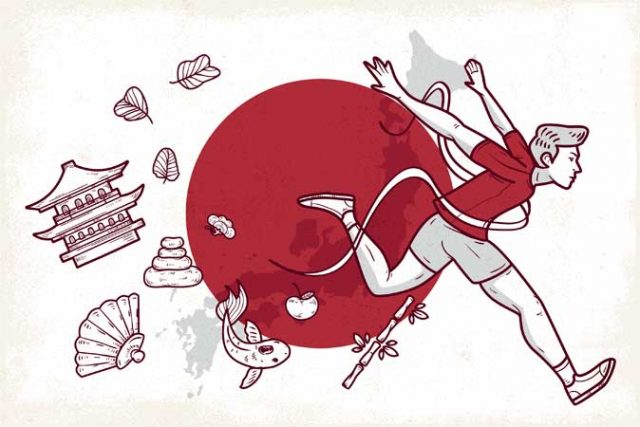
EVERYBODY LOVES the Olympic Games. Except when you’re the host nation in the middle of a pandemic.
Unfortunately for Japan’s government, it’s not really up to them to decide whether the Games of the 32nd Olympiad get cancelled. While Tokyo could theoretically pull the plug right now — two months from the rescheduled start date — the city is contractually obliged to go ahead. With COVID-19 cases once again surging, parts of the nation (including Tokyo) under a state of emergency and vaccine rates in the single digits, it’s unsurprising that 59% of Japanese say the event should be cancelled.
Those voices against proceeding, while vociferous, are largely confined to Japan. Rakuten Group, Inc. Chief Executive Officer Hiroshi Mikitani and SoftBank Group Corp. founder Masayoshi Son are among those vocalizing their opposition.
Meanwhile, Seiko Hashimoto, one of the nation’s most decorated Olympians and now head of the Tokyo 2020 Organizing Committee, noted that although the number of people coming for the event has been cut from 180,000 to 80,000, “There are not a few people who feel uneasy about the fact the games are going to be held where a lot of people are coming from abroad.”
So the most likely way for the games to be halted would be through a negotiated settlement involving Japan, Tokyo, and the IOC.
It’s easy to explain the insistence to push forward as being driven by sponsorship money. That’s certainly a part of it, but not the entirety.
In fact, the committee is composed of 103 people* who are “not their country’s delegate within the IOC.” This isn’t like the United Nations, where each state gets a seat in the General Assembly. If democracy were to be defined as one vote, one nation, then the IOC is certainly not democratic. Some nations have three members on the committee — China, the US, Switzerland, among them — others just one or two, and some none at all (Nigeria, Malaysia).
There’s a lot to be said for this organizational structure. Rather than being run by a cohort of career diplomats, the membership is weighted toward sports officials, with more than a third themselves former Olympians. With the Olympics meant to transcend politics, it may be a good thing that national and international geopolitical issues are separated from the core decision-making of the IOC.
Instead, these 103 guardians of the Olympic Movement are charged with promoting and strengthening the integrity of sport. They also hold the power to grant recognition to the two other components of the Olympics — National Olympic Committees, of which there are 206, and International Federations, which represent 46 different sports at this year’s games.** This supra-political standpoint is evidenced by the fact there are 13 more national members of the Olympic Movement than there are of the UN.
The IOC has cancelled five Games before, three Summer and two Winter, due to war in 1916, 1940, and 1944. I guess it was obvious at the time that nations who were committed on killing each others’ citizens wouldn’t be able to gather together for two weeks of friendly sporting competition. Ironically, it was Tokyo that cancelled its own Games in 1940, announcing in 1938 that it would relinquish it until such time as peace returned to the region. Helsinki was given the gig before it became clear that any running of the event would be impossible.
Instead, what’s likely pushing these Games toward their July 23 start isn’t necessarily some adamant belief in them, but bureaucratic inertia and an executive body determined to get the job done. One of the most vocal proponents is IOC Vice-President John Coates, who said that Japan’s state of emergency alone wouldn’t be enough to halt it.
“It’s now clearer than ever that these Games will be safe for the people participating and safe for the people of Japan,” Coates said May 21, according to Quartz. Four-time medalist and World Athletics President Sebastian Coe told CNN that cancellation of the Games would “discard a generation of athletes who have spent over half their young lives in pursuit of this one moment.”
Muddying the waters is a decision by the US on Monday to raise its travel advisory, warning that Americans should avoid traveling to Japan because of the outbreak there. A Japanese Cabinet official later told reporters that Washington had advised Tokyo the decision wasn’t connected to the Olympics, but based on the projected infection rate.
Indeed, the US has no power to halt the Games. Neither does any other country. Even if they all gathered together and voted on it (an unlikely scenario, to be sure) such a ballot would hold no legal weight. The most Washington could do would be to instruct the US Olympic Committee to pull out — effectively boycotting the event. That would be a drastic and risky move against a key Asian ally amid growing tensions in the region and just six months from rival China hosting the next Winter Games.
In fact, since National Olympic Committees also draw on the Games to gather sponsorship money and underpin their legitimacy, it’s hard to imagine any of them advocating for a cancellation (although North Korea has said it’ll boycott). Likewise, the various International Federations which rely on the world’s biggest event to put their sport in the global spotlight and help promote further participation and membership won’t be keen to sign any petitions.
The IOC has already said that a further delay is impossible. And cutting back the number of sports will cause all sorts of political drama — some nations are stronger in some events than others. Which makes the Olympics a case of all or nothing — and right now, the momentum favors going all in on these pandemic games.
*Plus 45 honorary members, two honor members, and one honorary president.
**This includes different derivations. E.g., road cycling and tracking cycling is two sports.
USUALLY, the words “love” and “money” are not expressed as a pair, except to disparage the inappropriate mixing of the two. Love of money is something else, a bit more acceptable. What’s wrong with materialism? Well, it’s only dubious as an expression of affection.
Relationships are somehow diminished when characterized as mercenary. The adjective after all refers to being motivated only by material gain. As a noun, a mercenary is a soldier for hire serving in foreign armies. Though even regular soldiers under their own flags get a wage (the root literal meaning of mercenary), they are considered patriots. Even if paid, regular soldiers are elevated to a status higher than those fighting merely for money. The difference lies in the latter’s penchant to change allegiances when lured by higher fees. Pirating, in the corporate context of jumping to another company for a bigger car, smacks of mercenary leanings. (Do you need a bigger car when working from home?)
With the rise of outsourcing and the increasingly contractual nature of employment, attachments are being defined by monetary considerations. Company loyalty can now seem quaint and outdated, replaced by the more commercial motivation of a transaction. The gig economy is project based, and paid accordingly. No emotional ties are expected.
The attributes of company loyalty, so nostalgically missed by some, can be lopsided in favor of the employer. Management may require commitment in terms of longer work hours, flawless performance, and an always-on accessibility. Not all companies reward such dedication. Whining about being underpaid for demanding conditions can be dismissed as being too mercenary — is money all you think about? Sometimes, it crosses my mind, Sir.
Should monetary concerns necessarily be viewed as devaluation of dedication to either a job or a relationship?
Even relationships with lifetime partners have a financial dimension. The terms “breadwinner” and “provider” refer to the financial ability of a partner to consistently meet the daily costs of living and afford life’s amenities. Even in a DINK (Double Income, No Kids) family which sometimes includes a dog, the assignment of fiscal responsibility is clear. One paycheck covers utilities and groceries, the other handles travel, car acquisition, home mortgage, club dues, and plumbing repair. Clothes and kicks (sneakers to you) are charged to the appropriate user on separate credit cards.
The more obvious financial strings have to do with transactional relationships. The oldest profession of landscape architecture (not the one you might have been thinking of) involves the exchange of cash for services rendered. This transactional nature of cash-for-service is theoretically bereft of emotional traction. And yet a personal intimacy is possible too, even if unexpected. One can get overly dependent on a landscape gardener, especially when the flowers bloom in wild abandon at the touch of her green thumb. Thus, what starts out as a merely transactional and uninvolved horticultural relationship can lead to the unchartered waters of proprietary possessiveness and an ever-clingier neediness — you have to come here right now and check on my bonsai garden.
Only friendship perhaps is free of financial strings. Except for splitting the bill for lunch or maybe a joint trip abroad, the financially uncomplicated relationship of friends provides a stress-free setting. This is the reason why introducing a financial aspect to the relationship, as in going into business with friends or borrowing money from them (a friend in need is a pest) complicates what was an otherwise comfortable situation.
When a lifelong friend, by some freak of fate like an acquisition or merger, becomes one’s boss, the once easygoing intimacy is redefined. A financial angle is interlaced with a hierarchical strand involving performance rating and budget targets. Such a combination is sure to blur the material and the immaterial — we used to ride the jeepney together from school.
Maybe, financial strings are just realities we choose to ignore. There is some discomfort in putting a relationship in a commercial perspective, even when it is partly in that category.
There are financial strings attached to certain relationships, especially when these are extended. These should be made clear from the start, and brought up without any embarrassment. Ignoring these financial attachments leads to a clash of expectations. Then, the story often has a bad ending… with no sequel in the works.
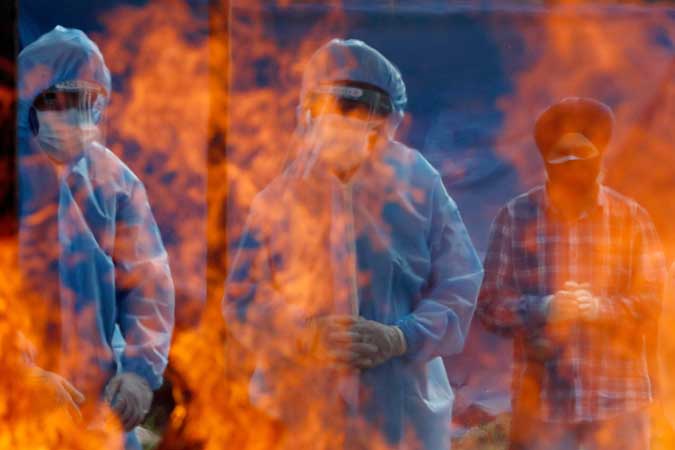
Relatives stand next to the burning pyre of a man who died from the coronavirus disease during his cremation in Srinagar May 25, 2021. — REUTERS/DANISH ISMAIL
EXCESSIVE use of the world’s most potent antibiotics has stoked drug-resistant infections in India for years. Now the country’s COVID crisis has put the calamity into hyperdrive.
A first look at how many patients hospitalized during India’s first coronavirus wave also developed bacterial and fungal infections found that a small but alarming proportion harbor germs that resist multiple drugs.
Doctors battling to save lives amid a dearth of effective treatments are turning to the medicines they have on hand — often antibiotics that aren’t used in other countries for coronavirus disease 2019 (Covid-19). What’s more, the chaos of overrun hospitals means staff can’t always take precautions to ensure infections don’t spread from one patient to the next.
The use of antibiotics — especially some that the World Health Organization recommends reserving for the most difficult-to-treat cases — may be “adding fuel to the fire of the already alarming antimicrobial resistance levels,” Kamini Walia, a microbiologist with the Indian Council of Medical Research, and colleagues said Monday in a study. “Fear of missing a secondary infection and lack of specific therapy for Covid-19 leads to over-prescription of antibiotics.”
The research, published in the journal Infection and Drug Resistance, analyzed data from 17,534 Covid patients admitted to one of 10 hospitals in the council’s surveillance network from June 1 to Aug. 30, 2020. Among these, 640 patients, or 3.6%, had a secondary infection, though the incidence was as high as 28% in some hospitals. Co-infections were caused by multidrug-resistant organisms in about half of the cases.
FATALITY RATE Almost 60% of patients with secondary infections died, compared with about 11% of those who didn’t pick up another bug, according to the study. The majority of those who died had diabetes, hypertension or another underlying health condition known to worsen the severity of COVID-19.
“It shows that if COVID doesn’t kill you, these secondary infections can,” said Ramanan Laxminarayan, director of the Center for Disease Dynamics, Economics & Policy in New Delhi, whose group studies antibiotic-resistance patterns globally.
The data were collected when COVID cases were on the rise, and “the findings suggest that a lot of over-prescribing of antimicrobials happened during that time,” the authors said. Of the almost 27 million virus cases reported in India, 10 million have occurred just in the past month, overwhelming hospitals and leading to shortages of oxygen and other critical supplies.
“Who knows what the mortality rates are now with the chaos in India and access to these heavy-duty antibiotics,” said Sanjaya Senanayake, an infectious diseases physician and associate professor of medicine at the Australian National University in Canberra. “It’s probably a lot worse now.”
Although there is no data to support the use of broad-spectrum antibiotics in Covid patients, the researchers found many are prescribed in India regardless, including carbapenem, the most potent antibacterial, and colistin, a drug of last resort used to treat the most stubborn antibiotic-resistant strains.
‘ALARMING’ High rates of resistance to these important medicines in bacteria such as Klebsiella pneumoniae and Acinetobacter baumannii “is an alarming finding,” the researchers said.
“If those organisms are giving serious infections, then they would be extremely difficult to treat,” said David Livermore, a professor of medical microbiology at the University of East Anglia.
The authors found the bloodstream was the most common site of secondary infections, and cited additional surveillance data that indicated hospitals observed a 2– to 3-fold increase in bloodstream infections from June to Aug. 2020, compared with the previous year.
In hospitals, drips and cannulas inserted directly into patients’ blood vessels are typically the source of bloodstream infections, said Nigel Raymond, an infectious-diseases physician in Wellington and the New Zealand chair of the Australasian Society for Infectious Diseases.
“This emphasizes the likely importance of strengthening infection prevention practices in the placement, maintenance and early removal of these devices,” he said.
The use of steroids that weaken the immune system, invasive procedures such as mechanical ventilation and prolonged hospital stays make Covid patients especially vulnerable to hospital-acquired infections, the researchers said.
Giving steroids to subdue an exaggerated inflammatory response to coronavirus increased significantly during India’s second Covid wave, triggering more than 4,000 cases of a fungal infection known as mucormycosis.
“Early steroid use tends to tamp down the body’s immunity, leaving it more vulnerable to other infections,” Mr. Laxminarayan at the Center for Disease Dynamics, Economics & Policy said. “Overuse of antibiotics and indiscriminate steroid use is going to haunt India in the months to come, and it can be potentially as damaging as COVID itself.”
The researchers pointed to the use of gloves as a risk. Health workers felt the barrier negated the need to wash their hands, which allowed the bugs to remain on the personal protective equipment and move from one patient to another. Doctors in Canada observed a similar risk during a SARS outbreak in 2003.
FEAR The lapse may have been driven by fear within the health care community, study co-author Walia said.
“They were very careful in protecting themselves, but there were slip-ups in infection prevention and control practices toward patients,” she said in an interview Tuesday, adding that staff “were overworked, fatigued” and constrained by the use of personal protective equipment.
Antibiotic resistance is one of the biggest threats to global health, food security, and development, according to the WHO. The problem is especially acute in India, where the misuse and abuse of antibiotics in humans and animals is amplified by inadequate hygiene and sanitation.
“The culture of over-medicating through antibiotics predates the pandemic,” Walia said. She noted a tendency for doctors to prescribe intensive-care patients three or four antibiotics while they wait for lab results that would indicate if the medications are needed. It’s often done “to plug the gaps” in infection control and prevention, she said.
“Antimicrobials are a shield,” Walia said. “And as long as the patient is feeling better, doctors don’t want to de-escalate the antibiotic regimen. And the price for that comes three to six months down the line.” — Bloomberg
HONG KONG (HK) is studying options including donation for unused COVID-19 vaccine doses, some of which are set to expire as soon as August, amid struggles to boost a lackluster local inoculation rate despite high demand for shots around the world.
Authorities will estimate how many excess vaccines they have on hand and discuss how to handle its mRNA shots stockpile with drug manufacturers, including postponing or canceling the delivery of certain batches, the government said in a statement.
Officials are also considering giving doses away to places that are more in need via channels like the World Health Organization’s Covax as local demand for BioNTech SE’s shots has “become sluggish,” it said.
Some 840,000 doses of BioNTech’s vaccines now in storage will expire in mid-August, it said, and another 1.05 million from Chinese maker Sinovac Biotech Ltd. remain unused.
Only a quarter of the daily availability of BioNTech shots are currently being administered, with some 10,000 people making bookings at community centers on a daily average, the government said, compared with a capacity of more than 40,000 doses.
The stockpile is the latest challenge facing Hong Kong’s slower-than-expected vaccine rollout, which has been impeded by a lack of trust in the Beijing-backed government and concerns about rare side effects. The public’s widespread reluctance to get inoculated is making the city a global outlier in the race to achieve herd immunity and be able to fully reopen.
The government has been working to encourage residents to get their shots by providing incentives like reopening bars and shortening the quarantine period for vaccinated people.
Despite being one of a few places in the world to make vaccines available to all adults, just 12.3% of its population of 7.5 million has been fully inoculated, according to Bloomberg’s COVID-19 Vaccine Tracker — far behind other finance centers including London, at 26.3%, and Singapore, at 25.3%.
The government also warned that it wouldn’t be possible to replenish vaccine supply within this year even if public demand were to suddenly surge later on, citing the time needed for production and logistics.
“We call on members of the public not to delay and get vaccinated as soon as possible while the current stock lasts and the service capacity is still sufficient at the community vaccination centers,” it said. — Bloomberg
SEOUL — South Korea on Wednesday said masks will no longer be required outdoors from July for those vaccinated with at least one COVID-19 shot.
The move is a bid to encourage older residents to get vaccinated as South Korea aims to immunize at least 70% of its 52 million people by September, from just 7.7% now.
People given at least one dose also will be allowed to gather in larger numbers starting June, Prime Minister Kim Boo-kyum told a coronavirus response meeting on Wednesday.
He said all quarantine measures would be adjusted in October once more than 70% of residents had received their first dose.
Over 60% of people aged between 60 and 74 had signed up for vaccination, Health Minister Kwon Deok-cheol said.
South Korea will begin vaccinating the general public aged between 65 and 74 from Thursday in over 12,000 clinics.
South Korea reported 707 new confirmed cases of the coronavirus on Tuesday, bringing the total tally to 137,682 infections, with 1,940 deaths. — Reuters
Grab Philippines today launched GrabAcademy, an online platform that provides upskilling opportunities to its driver- and delivery-partners. Developed with Microsoft, the driving training program can be accessed through the Grab app.
“We treat our drivers and riders as business partners,” said Grace Vera Cruz, country head of Grab Philippines, at the academy’s May 26 virtual launch. “As business partners, we want to develop together with them. Nagbabago na mundo natin [Our world is changing]. With this program, we believe our partners can take a step further ahead in digitalization.”
The academy has three learning pillars divided into bite-sized modules: safety, which includes food safety, and harassment and emergency training; Grab smart, which includes platform and product proficiency training; and upskilling, which includes vocational courses like baking, farming, and milk tea-making. A partnership with barbershops is also in the works.
Driver- and delivery-partners will receive certificates of completion upon accomplishing the GrabAcademy courses, which they can register for within their Grab Driver app.
New courses will be offered monthly; in the pipeline are courses on automotive maintenance and handling differently-abled passengers.
A survey by the company showed that a lot of Grab partners are entrepreneurs. “We want to enliven the entrepreneurial spirit by giving them options on how they could thrive online,” said Ms. Vera Cruz.
Through the academy, Grab partners will also be given free access to Microsoft’s Digital Literacy certification program, which includes courses on how to safely browse the internet and how to navigate files. These will be available in English and Filipino. Microsoft certification is awarded upon completing each course.
“These clearly position them for a better future,” said Richard Bon E. Moya, national technology officer of Microsoft Philippines.
Added Andrés Ortola, Microsoft Philippines’ general manager: “The economy is getting more digital every day. We are very focused on bringing that [digital] skillset to the country. … The entrepreneurial spirit has to be fueled with digital literacy.” —Patricia B. Mirasol