Home Blog Page 8016

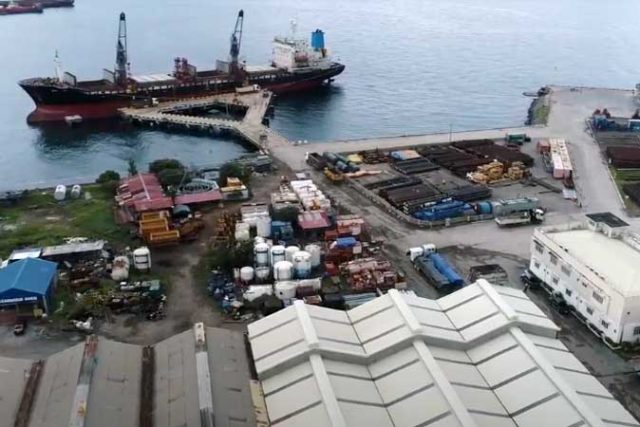
Shell says Malampaya divestment ‘carefully considered’

THE local unit of Dutch oil and energy company Shell Petroleum N.V. has exercised “careful consideration” in deciding to sell 100% of its stake in the offshore Malampaya gas field to a subsidiary of the Uy-led Udenna Corp.

“It has been carefully considered as part of our global portfolio rationalization to simplify and increase the resilience of our business,” its external relations department told BusinessWorld in an e-mail on Thursday.

On May 20, Shell Petroleum said that it had signed with Malampaya Energy XP Pte. Ltd. for the sale of its 100% shareholding in Shell Philippines Exploration B.V. (SPEx), which holds a 45% operating interest in Service Contract (SC 38) that includes the Malampaya gas field.

The deal — valued at a base consideration of $380 million plus additional payments of up to $80 million — is in line with group’s upstream portfolio transition. The transaction’s effective date started on Jan. 1.

The major components of the Malampaya project include subsea wells and flowlines, a 504-kilometer long gas export pipeline on the seabed, an onshore gas plant and pipeline in Batangas City.

“[We wanted to] shift the upstream portfolio to one that is more focused, resilient and competitive and to focus on nine core upstream positions,” Shell Petroleum’s Philippine unit said.

“Shell will continue to pursue opportunities in The Philippines where we can leverage our global expertise in line with our strategy. Such future investment decisions will be made independently of its view to divest SC 38,” it said.

The “core” upstream areas are located in Brazil, Brunei, Gulf of Mexico, Kazakhstan, Malaysia, Nigeria, Oman, Permian and UK North Sea, energy information provider S&P Global Platts previously reported.

Shell Philippines aims to complete the transaction by the end of the year, subject to partner and regulatory consent.

The deal remains a private business transaction between two entities, the Department of Energy previously said in a statement. But it added that it has the power to approve the deal.

Once the SC 38 consortium completes the transaction, the DoE will subsequently evaluate the legal, financial and technical aspects of the deal, as well as its impact on the consortium’s obligations to the government, the department said in a statement last week.

The other companies that hold interest in SC 38 are UC38 LLC, another Udenna Corp. subsidiary, owning 45%, and Philippine National Oil Co. Exploration Corp. with 10%.

The Malampaya project began its commerial operations in 2002, with SPEx holding the technical skills, manpower and technology used in day-to-day operations.

Its remaining reserves are seen to be depleted by the first quarter of 2027, based on projections from the Energy department. — Angelica Y. Yang

5-meter pedestals, an Anna Wintour puppet… COVID-19 changed fashion shows but the runway will survive

IN Oct. 2020, Chanel returned to a live show with an audience to present the ready-to-wear Spring/Summer 2021, but a new COVID lockdown in Paris prevented any further live shows in 2020. — PHOTO FROM CHANEL.COM/US/HAUTE-COUTURE

AUSTRALIAN Fashion Week, which starts this week, is touting itself as one of the first live fashion shows since the coronavirus disease 2019 (COVID-19) pandemic began. Runway shows will feature labels Romance Was Born and Zimmermann as well as younger designers.

For decades, journalists, editors, buyers, celebrities and taste-makers would descend twice a year on Paris, New York, London, and Milan to attend the famous fashion weeks, where global and emerging designers present new collections in runway shows. Tokyo, Shanghai, Seoul, and Moscow have joined these four global fashion centers, along with Australian cities.

Fashion shows began in the early 1900s. Their primary purpose has always been about promoting and selling new product. (The fundamental rule of fashion is endless change and newness.) The pandemic has changed things, forcing them online. But the world of high fashion had already been experimenting with technology on the catwalk — from launching handbags and frocks attached to drones to presenting a digital show beamed to viewers with 3D glasses.

In the early 2000s, runway shows were grand spectacles.

In 2005, Chanel began using Paris’s Grand Palais as a set on which Karl Lagerfeld envisaged grandiose installations recreating microcosms of everyday life. They included a supermarket; an airline desk; a beach, complete with sand and water; and a library.

In 2008-2009, at the height of the financial global crisis, one runway became a giant merry-go-round, carrying oversized pendants, bags, and pearl bracelets. Other luxury brands such as Dior and Dolce & Gabbana organized shows in exotic locations, such as Marrakesh, Mexico City, Capri, and Hong Kong, flying visitors in at great expense.

Then came COVID-19. It has had a huge economic impact, highlighting fashion’s environmental and ethically unsustainable practices. Brands that have survived moved to digital presentations of their collections with the pandemic forcing designers to think in fresh ways.

Valentino’s Pier Paolo Piccioli, for instance, dealt with rules of social distancing by setting 15 models on pedestals up to 5 meters high and creating elongated silhouettes of white couture dresses. Textile patterns and colors were then projected on these silhouettes.

In Sept. 2020 in Milan, Jeremy Scott, Moschino’s designer, created a COVID-safe fashion show that eliminated both models and audience. Forty miniature marionettes, 76 centimeters tall, walked the runway between two rows of puppets replacing the audience.

In the first row, a puppet version of Vogue editor-in-chief and fashion power broker Anna Wintour stood out.

In October, Chanel returned to a live show with an audience to present the ready-to-wear Spring/Summer 2021, but a new COVID lockdown in Paris prevented any further live shows in 2020. Its 2020/21 Haute Couture collection was a digital show streamed from a chateau in the Loire region.

Still, some major global brands had already been presenting digital alongside physical shows, or toying with technology.

In Feb. 2010, Burberry experimented with live streaming its womenswear collection digitally in 3D in five locations. Journalists and celebrities were invited to private screening spaces in Paris, New York, Dubai, Tokyo, and Los Angeles where they watched the show with 3D glasses. The show took inspiration from the popularity of James Cameron’s film Avatar (2009).

In 2014, Fendi sent three drones down the runway to film a show. The move created excitement, but also raised concerns related to hyper-surveillance.

In Feb. 2018, meanwhile, Dolce & Gabbana showed their new bag collection attached to drones. Small drones glided down the runway and over the heads of the audience before vacating the stage for models.

Given models are often also celebrities, embodying the designer’s concept for the collection, or even brand, this was a startling move. Will real models be dispensed of in a near future? Will they be replaced by drones, robots or holograms?

In the same year, in Jeddah, Saudi Arabia, fluttering clothes were sent on the runway attached to drones, producing a ghost-like effect. The show prompted outrage on social media. Organizers explained it was about adding novelty. However, it was the first time a fashion show had been opened to an audience of both men and women, instead of just women. This change may have prompted the use of drones.

Fashion is a major industry commanding 2% of the world’s Gross Domestic Product annually. Runway shows are marketing devices and here to stay.

In-person audiences will be allowed during Paris Fashion Week in July, and in June in Milan, for the menswear collections. The British Fashion Council is also preparing to hold COVID-safe, smaller, in-person events. Still, brands will continue to experiment with technologies in the name of novelty.


Tiziana Ferrero-Regis is a Senior Lecturer, Study Area Coordinator, Fashion, at the Queensland University of Technology.

BSP sets rules for sale of bad loans, assets under FIST Law

BW FILE PHOTO

THE BANGKO SENTRAL ng Pilipinas (BSP) has approved the implementing rules and regulations for the Financial Institutions Strategic Transfer Law, which means financial institutions can now seek regulatory approval if they want to offload their nonperforming assets (NPAs).

BSP Circular No. 1117 Series of 2021 signed by BSP Governor Benjamin E. Diokno on May 27 outlines the process financial institutions need to follow to get the documentary approval needed to sell their NPAs.

“The implementation of the FIST Act reinforces the BSP-supervised financial institutions’ (BSFI) primary role of providing financial services and liquidity to support households, business enterprises and productive sectors of the economy by allowing BSFIs to dispose of their NPAs and increase their liquidity and risk-bearing capacity,” the circular said.

“Sale/transfer transactions of NPAs by BSP-supervised financial institutions for purposes of availing of the tax exemptions and incentives/privileges under the FlST Act shall comply with the provisions under this section,” it added.

The rules require BSP-supervised financial institutions to give prior notice to their borrowers before selling their loans, as well as prudential reporting of the tax and fee privileges availed from transactions.

Based on the circular, banks, as well as institutions with quasi-banking functions and credit granting activities, including but not limited to pawnshops, nonstock savings and loan associations, and nonbank credit card issuers, can apply for a certificate of eligibility (COE) for sell NPAs, subject to approval by the BSP.

Loans that can be offloaded are those that will be classified as nonperforming on or before Dec. 31, 2022.

A COE will be needed for the following transactions: selling NPAs to a FIST corporation; the dation in payment (dacion en pago) — or settling debt through other modes of payment — of nonperforming loans (NPL) or third party on behalf of the borrower to a BSFI; and when selling NPLs or real and other properties acquired (ROPA) from a financial institution to an individual.

Financial institutions are also required to inform borrowers of their loans and credit obligations that are targeted for selling to FIST corporations or other individuals. Borrowers are expected to be given a 30-day period from the receipt of the notice for possible restructuring or renegotiation of their loans.

Once an NPL is sold or transferred, the BSP-supervised financial institution should also inform the borrower regarding the transaction. Failure to do this shall subject the financial institution to appropriate sanctions and penalties.

Financial institutions that will avail of the tax exemptions and privileges under the FIST Law are required to submit a monthly report within 20 calendar days of the reference month.

Based on the law, the transfer of NPAs from banks to FIST corporations are exempted from the payment of documentary stamp tax, capital gains tax, creditable withholding income taxes and value-added tax.

Meanwhile, the circular also allows banks to buy investment unit instruments issued by a FIST corporation as long as they do not have a relationship with the financial institution that sold the instruments to the FIST corporation. The minimum amount for a purchase of an investment unit instrument is P10 million.

BSP Deputy Governor Chuchi G. Fonacier earlier said the central bank will need to respond to an application for a COE within 20 working days.

The central bank expects the FIST Law to help lenders dispose of at least P152 billion in nonperforming assets. It is also seen to bring down the NPL ratio of the banking industry by about 0.63 to 0.73 percentage points.

In March, the banking sector’s bad loan ratio reached 4.21% the highest since the 4.25% in August 2009. This, as NPLs surged by 80% to P448.592 billion from a year earlier. — L.W.T. Noble

Tax court dismisses Cross Country Oil and Petroleum officers’ tax evasion case

CTA.JUDICIARY.GOV.PH

THE Court of Tax Appeals (CTA) has dismissed the criminal case against the former president and the treasurer of Cross Country Oil and Petroleum Corp. for tax evasion for taxable year 2009 amounting to P184.8 million.

The decision dated May 19 dismissed the case against the company’s former president Arturo M. Zapata by reason of his death, and against the company’s treasurer Jacob Valeriano, Jr. for failure of the prosecution to prove his guilt beyond reasonable doubt.

In 2017, the Department of Justice accused the two officers of violating Section 255 in relation to Sections 253(d) and 256 of the National Internal Revenue Code of 1997.

The charge stated that the two officers, “conspiring and confederating with one another, did then and there, willfully, unlawfully and feloniously fail to pay the corporation’s basic deficiency income tax for the taxable year 2009.”

However, the tax appeals court ruled that the defendants were not at fault because the Final Letter of Demand (FLD) and the Final Assessment Notice issued by the Bureau of Internal Revenue are “void for failure to definitely set and fix the amount of the income tax liability.”

The court added that “(i)n the context in which it is used in the NIRC, an assessment is a written notice and demand made by the BIR on the taxpayer for the settlement of a due tax liability that is there definitely set and fixed.”

The FLD states that the “(i)nterest and total amount due shall be adjusted up to actual date of payment.”

The CTA also ruled that “the prosecution failed to prove that the FDDA (Final Decision on Disputed Assessment) was actually received by the accused.” — Bianca Angelica D. Añago

Big, black, and beautiful

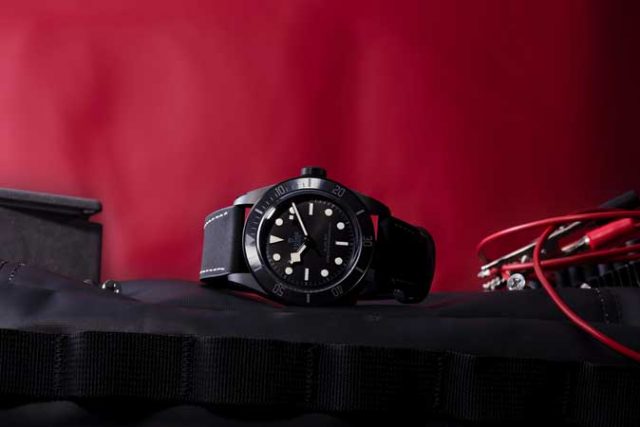
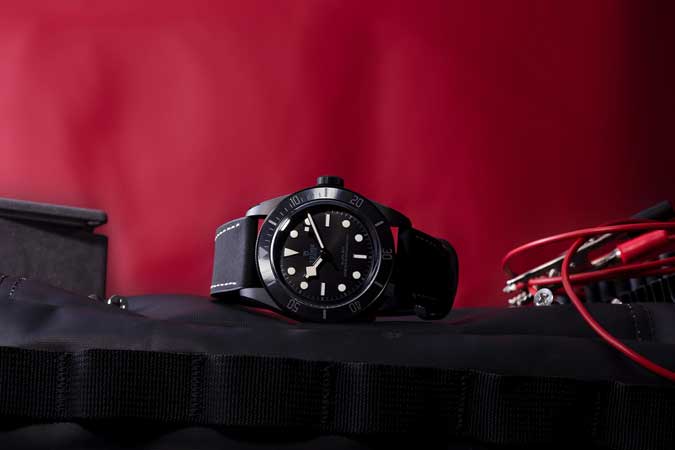
TUDOR BLACK BAY CERAMIC

Tudor’s new Black Ceramic Bay gets METAS certification

BIG, black, beautiful, and very, very, smart: we’re not talking about an ideal mate, but Tudor’s new Black Ceramic Bay.

The watch was unveiled in a press conference last week. On the outside, it displays a 41mm diameter case in matte black ceramic, a domed dial in the same material with applied hour markers, and snowflake hands. The snowflake hands are a signature of Tudor diving watches introduced in 1969. These are coated with luminescent material, making it stand out in the dark with the black matte ceramic material from which the rest of the watch is made.

On the inside, it’s powered with the Manufacture Calibre MT5602-1U. The watch’s dial bears the mark “Master Chronometer,” as certified by Switzerland’s Federal Institute of Metrology (METAS). According to the brand, “This is the first time we submit a watch to one of the most demanding certifications there is, and it passed with flying colors.”

According to a statement, a watch must pass the following criteria to gain the METAS certification: “a watch must be able to function within a five-second range of variation each day (0 +5), that is to say five seconds less than the Swiss Official Chronometer Testing Institute (COSC) (-4 +6) carried out on a single movement and a second less than TUDOR’s internal standard, which is applied to the brand’s models with a Manufacture Calibre (-2 +4). The certification also guarantees the timekeeping accuracy of a watch subjected to magnetic fields of 15,000 gauss. Finally, it also guarantees that the waterproof capability claimed by the manufacturer conforms with the International Organization for Standardization (ISO) standard 22810:2010, as does the power reserve of each Master Chronometer watch.”

The Black Bay Ceramic has passed these requirements. It has a few extra features: precision at two temperatures, in six different positions and at different levels of power reserve: 100% and 33% (with a 70-hour power reserve), and is waterproof up to 200 meters.

A statement says how the new certification on the Black Bay Ceramic will affect the brand: “This certification, which requires a substantial number of changes to the Tudor Manufacture Calibre, will mean that Tudor will be able to offer accreditation by an independent body, confirming the excellent quality of its watches.”

Tudor is a subsidiary of Rolex, first created in 1926 (Rolex itself was founded about two decades earlier) as a more affordable alternative to its parent. — JLG

Treasury bills, bonds may fetch higher rates as BTr adjusts plan

BW FILE PHOTO

THE RATES of government securities on offer this week will likely rise slightly ahead of the release of May inflation data and amid increased bond supply as the Treasury is set to hold more auctions this month.

The Bureau of the Treasury (BTr) is looking to raise P15 billion via its offer of Treasury bills (T-bills) on Monday, broken down into P5 billion in 91-day debt, P5 billion in 182-day papers and another P5 billion in 364-day securities.

On Tuesday, the BTr will offer P35 billion in reissued 25-year Treasury bonds (T-bonds) with a remaining life of 19 years and three months.

Traders said the yields on the government securities on offer this week could move higher as the Treasury’s borrowing program for June showed it plans to issue more debt papers, which could cause investors to adjust their positions.

The government wants to raise P215 billion from the local debt market in June: P75 billion via weekly offers of T-bills and P140 billion from weekly auctions of T-bonds.

This is bigger than the P170-billion program for May, which was broken down into P100 billion from T-bills and P70 billion from T-bonds. The government adjusted the volume of the weekly T-bill offerings to P15 billion from P25 billion previously and scheduled a T-bond auction per week instead of fortnightly.

ATRAM Trust Corp. Head of Fixed Income Jose Miguel B. Liboro said yields on government debt could increase as the Treasury is set to hold four T-bond auctions in June, forcing investors to adjust their positions.

“BTr’s disclosure of next month’s borrowing plan signaled its desire to extend its peso debt maturity and ease debt service pressures. Best to issue long-dated securities soon before the Fed’s (US Federal Reserve) tapering discussions intensify that’s likely to generate upside pressure on US rates,” a trader said.

“Market’s apathy to long-duration will persist amid a heavy data week highlighted by May inflation. Our traders expect last week’s market preference for strong interest in the curve’s belly and below to persist while long duration starting with the [7-year] segment remains vulnerable to selling pressure,” the trader added.

The trader noted that strong demand is expected for the Treasury’s offer of reissued 25-year bonds on Tuesday “given its depleted market supply.”

The May inflation data to be released this week will also affect market sentiment and could affect the rates to be fetched at the Monday and Tuesday auctions.

Inflation likely picked up by the same pace for the third straight month in May as food prices eased while oil and utility costs caused upward pressure, analysts said.

A BusinessWorld poll of 17 analysts last week yielded a median estimate of 4.5% for May headline inflation.

If realized, this would mark the third straight month of steady inflation. However, this is beyond the BSP’s 2-4% target and is quicker than the 2.1% print recorded in the same month last year.

The Philippine Statistics Authority will report official inflation data on Friday, June 4.

The government fully awarded the T-bills it offered last week as demand for safe assets remained high amid ample liquidity in the market.

The BTr borrowed P25 billion as planned via the T-bills as total tenders reached P75.844 billion, making the offer over three times oversubscribed.

Broken down, the government raised the programmed P5 billion from the 91-day debt papers as bids for the tenor reached P16.965 billion. The three-month T-bills fetched an average rate of 1.269%, down by 0.1 basis point (bp) from the 1.27% quoted previously.

The Treasury also made a full P8-billion award of the 182-day securities as it received some P20.288 billion in tenders. The six-month T-bills fetched an average rate of 1.541%, inching up from the 1.54% seen at the previous auction.

Lastly, the government awarded P12 billion as planned in 364-day T-bills from P38.595 billion in tenders. The average yield of the one-year papers slipped by 1.4 bps to 1.796% from the 1.81% quoted at the previous offering.

The Treasury opened its tap facility to raise an additional P5 billion via the one-year tenor to accommodate the strong demand for the papers.

Meanwhile, the BTr first issued the 25-year bonds on offer on Tuesday on Sept. 9, 2015. The bonds carry a coupon of 4.625%.

The last time the government offered 20-year bonds — the closest tenor to the remaining life of the papers on the auction block on Tuesday — was in August 2020, where it rejected all bids as investors sought higher returns, pushing up the rates of the papers.

At the secondary market on Friday, the 91-, 182-, and 364-day T-bills were quoted at 1.3221%, 1.5543%, and 1.8121%, respectively, based on the PHL Bloomberg Valuation Reference Rates published on the Philippine Dealing System’s website.

Meanwhile, the 20-year T-bond fetched a yield of 4.9292% while the 25-year tenor was quoted at 4.9298%.

The government is looking to borrow P3 trillion this year from domestic and external sources to help fund a budget deficit seen to hit 8.9% of gross domestic product.

PNOC’s first-quarter net income slides by 70%

STATE-RUN Philippine National Oil Co. (PNOC) reported a 70% drop in its comprehensive net income to P64.27 million in the first quarter, from P215.53 million in the same period last year, amid lower revenues from its service and businesses.

The double-digit decline in its earnings came after the company recorded a 55% fall in revenues to P169.6 million from P375.33 million, based on an unaudited financial statement shared on its website.

Its first-quarter revenues mainly came from its service and business income, which accounted for over 99% during the period.

The state energy firm owns banked gas reserves in the Malampaya gas field, which Lopez-led First Gen Corp. is interested in buying.

Last week, First Gen said that it was keen to buy the unused Malampaya natural gas, which it plans to fuel its gas-fired power plants in Batangas, adding that it had expressed interest in the reserves since 2016.

Meanwhile, Phoenix Petroleum Philippines, Inc. has denied knowledge of “any manifest interest” from the Uy-led company in the banked reserves.

In 2009, PNOC bought the 108.6 Petajoules of the banked gas from the Department of Energy. It was valued at P14.4 billion.

The corporation has been trying to sell the gas since then, with 4.61 Petajoules bought by Power Sector Assets and Liabilities Management Corp. in 2013 for P937 million and 6.324 Petajoules purchased by Pilipinas Shell Petroleum Corp. in 2015 for P2.5 billion. — Angelica Y. Yang

Hog production falls 25.8% in 1st quarter 

REUTERS

HOG PRODUCTION on a live weight basis fell 25.8% year on year in the first quarter to 421,794 metric tons (MT), the Philippine Statistics Authority (PSA) said.

In a report, the PSA said Central Visayas was the top hog producer during the first quarter with 53,660 MT, followed by Northern Mindanao at 50,830 MT, and Western Visayas 48,931 MT.

“These three regions accounted for 36.4% of the country’s total hog production,” the PSA said.

Central Luzon posted a 75.8% decline to 27,194 MT during the first quarter.

According to the PSA, the total swine inventory as of April 1 was 9.55 million animals, down 22.6% from a year earlier.

“Western Visayas recorded the highest swine population with 1.203 million head. This was followed by Central Visayas with 1.197 million and Northern Mindanao at 1.093 million. These three regions comprised 36.6% of the country’s total swine population,” the PSA said.

During the quarter, the PSA said the average farmgate price of hogs for slaughter on a live weight basis was P153.70 per kilogram, up 47.2% increase from a year earlier.  

Pork Producers Federation of the Philippines, Inc. President-elect Rolando E. Tambago said in a mobile phone message that the lower hog inventory was depleted by the African Swine Fever (ASF) and voluntary culling by hog raisers.

“Majority of swine farmers in Luzon were forced by the situation to temporarily stop operations before ASF hit them,” Mr. Tambago said.

“Production will only increase once the (ASF) vaccine is available as farmers have no confidence to invest without it,” he added.

In a separate report, the PSA said chicken production on a live weight basis for the quarter fell 11.2% year on year to 402,768 MT.

Central Luzon had the highest chicken output at 131,935 MT, followed by Calabarzon (Cavite, Laguna, Batangas, Rizal, and Quezon) with 73,953 MT, and Northern Mindanao 38,334 MT.

“These three regions (accounted for) 60.7% to the country’s total chicken production,” the PSA said.

The Bangsamoro Autonomous Region in Muslim Mindanao posted the sharpest decline in production of 50.6% to 844 MT.

According to PSA, the chicken inventory increased 0.6% to 179.13 million birds as of April 1.

Native chicken accounted for 81.66 million birds, followed by broiler chicken at 54.33 million, and layer chicken 43.14 million.

“The average farmgate price of broiler chicken in commercial farms during the quarter was P111.95 per kilogram, live weight. This was 31.2% higher than the previous year’s same-quarter average price of P85.33 per kilogram, live weight,” the PSA said.

United Broiler Raisers Association President Elias Jose M. Inciong said in a mobile phone message that demand was weak due to quarantine restrictions.

“There is lower demand from hotels, restaurants, and households. People do not have money anymore,” Mr. Inciong said.

The PSA said chicken egg production during the quarter rose 3% year on year to 152,547 MT.

“Those who suffered losses in hogs and broilers transferred to the layer industry. This is due to no imports. It is a more stable industry,” Mr. Inciong said.

Calabarzon was the top chicken egg producing region at 49,352 MT, followed by Central Luzon with 31,749 MT, and Central Visayas 15,400 MT.  The three regions accounted for 63.3% of total production. 

“The average farmgate price of chicken egg in commercial farms during the quarter was quoted as P5.79 per piece. This was 3.5% higher than the average farmgate price of P5.59 per piece in the same period of 2020,” it added.

Cattle production on a live weight basis fell 10.2% year on year to 54,426 MT.

Northern Mindanao was the top producer with 10,619 MT, followed by the Ilocos Region at 6,214 MT, and Western Visayas 4,973 MT.

“These three regions (accounted for) 40% to the country’s total cattle production,” the PSA said.  

The PSA said that as of Jan. 1, the total cattle inventory was 2.63 million head, up 3.3% from a year earlier.

“The average farmgate price of cattle for slaughter during the quarter was quoted at P141.38 per kilogram, live weight. This was 12.4% higher than the average price of P125.78 per kilogram, live weight in the same quarter of 2020,” the PSA said.

On May 10, the PSA said the value of production in the agriculture sector at constant 2018 prices fell 3.3% in the first quarter. Livestock production fell 23.2% while poultry output dropped 7.4%. — Revin Mikhael D. Ochave

Online course on creating your own toys offered

IF YOU have ever dreamed of designing and making your own toys, Benilde is offering a short online course on how to do that.

The one-of-a-kind Toy Development Program, which covers the art and technology of toy-making, from conceptualization, precision component assembly and prototyping to color palette and deco planning, is being offered as a full online certificate course. The course targets artists, enthusiasts, collectors, and professionals.

Students will be guided on different material manipulations, conventional and non-conventional fabrication techniques, as well manual and powered methods in transforming design drawings and sketches into two-dimensional and three-dimensional outputs. Application of finishing touches such as painting and decals will likewise be covered.

Students will be given a set of materials to produce their own toy prototype. Each project will be graded with accuracy, neatness, use of material, build efficiency, and overall fit and finish in mind.

The program will be facilitated by award-winning designer A.B Cruz, a De La Salle-College of Saint Benilde (DLS-CSB) alumnus. He is currently an instructor there, specializing in model-making, prototyping, toy design, and mechanical design.

His team is behind the animatronic puppet for the San Miguel Flavored Beer Proposal ad in 2016 and the various elements in a Globe Telecom ad in 2018 entitled “Enjoy a Day Like No Other.” In addition, his action figure, dubbed as United States of Utopia: A.F.R.S. Type 01 Trashcan, was produced by Toy Notch, which specializes in adult collectibles such as mechs.

The course is offered by the School of Professional and Continuing Education (SPaCE) of the DLS-CSB, and the classes are scheduled on Saturdays, June 5, 12, 19 and 26. The lectures will run for 32 hours, with both synchronous and asynchronous sessions. Online lectures and discussions will be conducted and instructional tools, such as guide videos and online manuals, will be provided. There will be allotted time for progress assessments, troubleshooting consultations, as well as presentations of the final output.

The module fee is P11,895.

For more information on this and other available online courses and their respective industry expert-facilitators, visit benilde.edu.ph/space.html or the official Facebook account at Benilde Continuing Education (@SPaCEBenildeOfficial).

AllGrip, all Vitara

PHOTO FROM SUZUKI PHILIPPINES

Suzuki tacks 4×4 prowess onto its popular SUV

REMEMBER when Suzuki locally launched the new look of its Vitara a few years back? That model made waves for the brand as it offered Filipinos a great-looking compact SUV that drove nicely, felt comfortable, was fuel-efficient, and best of all, was easy on the wallet.

I can certainly remember that it was also consistently among the motoring media’s top picks for crossovers/small SUVs at the time — clearly because of the impressive value that the product offered. As this new-looking Vitara was a very successful product, it served as a good opportunity for the company to strengthen its presence in the very competitive Philippine automotive market.

Now, Suzuki Philippines has more good news to bring, as it very recently launched the latest version of its popular crossover/SUV — the new Vitara AllGrip. The Vitara AllGrip is a 4×4 compact SUV that is only produced in Suzuki’s manufacturing facility in Hungary (Magyar Suzuki Corp.). And as it is being imported to the Philippines from Hungary, we can infer that this vehicle is built to withstand more demanding environmental conditions, and that it is versatile enough to run on varying types of terrain.

“Ever since the new look of the Vitara was launched in the Philippine market, we have seen enormous support for the model,” reported Suzuki Philippines Vice-President and General Manager for the Automobile Division Keiichi Suzuki. Furthering the Vitara is “one of the iconic models of the brand,” the new Vitara AllGrip, with its stylish looks and aura of individuality that “will definitely encourage people to drive and bring more fun into their lives.”

Among the upgrades made to the Vitara AllGrip’s body (on top of its obviously sportier styling) are new front and rear skid plates, a lower bumper garnish in the front, accents of chrome and black grain along the sides, and a more aerodynamic rear edge spoiler.

Inside the cabin is a two-panel panoramic sunroof and a 10-inch infotainment system which can be conveniently linked with a smartphone. Keyless entry, a push-start ignition, automatically dimming rearview mirrors, a rear camera and parking sensors all come with the lot.

When asked about what especially are the competitive advantages of the new Vitara AllGrip over its competitors, Mr. Keiichi replied to “Velocity,” “The new Vitara AllGrip is coming in as the most affordable all-wheel drive compact SUV. Equipped with Suzuki’s AllGrip Select technology, it allows the driver to choose from four driving modes: Auto, Sport, Snow, and Lock. Each driving mode offers help for the driver to tackle any road or off-road conditions, simply with a switch of the knob or a push of the button.”

He continued: “The new Vitara AllGrip is equipped with a clinometer that tells you the vehicle’s position in terms of pitch and roll. It also has an altimeter and barometer for when you are adventuring outside city limits; and a compass that tells you where you are headed.”

Furthermore, Mr. Keiichi emphasized that, with the Vitara AllGrip being a 4WD, the model is also packaged with useful safety features, such as: hill descent control, hill hold control, ESP (electronic stability program), a TECT (Total Effective Control Technology) body, and a six-air bag system (front, side and curtain).

Powering the Vitara AllGrip is an efficient 1.6-liter engine mated to a six-speed automatic transmission. It also offers manual-mode-style shifting and access to paddle shifters. The new Suzuki Vitara AllGrip is now available in the Philippines in two-tone and monotone colors. It is competitively priced at P1,468,000 for the two-tone variant and P1,458,000 for the monotone variant.

FIST Law to cast safety net for banks

FREEPIK

By Luz Wendy T. Noble, Reporter

MONETARY AUTHORITIES have repeatedly said the banking industry still has sufficient resources and buffers, but amid the rising soured loans, it still pays to have a safety net for banks should they be overburdened with these nonperforming assets (NPAs).

Enter the Financial Institutions Strategic Transfer (FIST) Law.

Signed in February, the FIST Law (Republic Act 11523) opens doors for credit-granting institutions to clean their balance sheets by selling their NPAs to asset management companies called FIST corporations (FISTCs) that are registered with the Securities and Exchange Commission (SEC).

Assets that will be recognized as nonperforming until Dec. 31, 2022 will be eligible to be sold under the law to FISTCs.

Before selling their determined NPAs, however, financial institutions need to secure a certificate of eligibility (COE) from the Bangko Sentral ng Pilipinas (BSP) as a documentary approval that their determined assets can be sold to FISTCs. This will also allow them to avail of tax incentives and fee privileges of the transaction.

The BSP approved the implementing rules and regulations (IRR) of the law on May 20, including the procedure for getting the certificate of eligibility for targeted NPAs that banks want to dispose of. As of this writing, the BSP is not yet accepting applications of COEs, said BSP Deputy Governor Chuchi G. Fonacier.

“Once the circular and the memorandum to all BSP-supervised financial institutions are signed and issued, the BSP will start accepting requests on the sale of nonperforming loans (NPLs) and real and other properties acquired (ROPA), collectively known as NPAs,” Ms. Fonacier said in a Viber message.

Circular No. 1117 Series of 2021 signed by Governor Benjamin E. Diokno on May 27 formally opened the opportunity for financial institutions to seek regulatory approval for offloading NPAs through applying for COEs. The circular also requires the need for BSP-supervised financial institutions to give prior notice to borrowers before selling their loans and the prudential reporting for tax and fee privileges availed from transactions.

The central bank took on the learnings from the Special Purpose Vehicle (SPV) Act of 2002, which was the equivalent measure of the FIST Law that addressed the bad loan pile up caused by the Asian Financial Crisis. For one, the turnaround time for the issuance of the COE has been reduced to 20 days from the receipt of the application, much shorter than the 45-day allowance in the SPV, Ms. Fonacier said.

Lending has been in decline since December. In April, outstanding loans by big banks dropped by 4.5%. Central bank officials have attributed the credit slump partly to tighter credit standards by banks to shield against the rise in bad loans.

The industry-wide NPL ratio stood at 4.21% as of end-March, higher than the 2.25% a year earlier. This, as bad loans surged 80% to P448.593 billion in March.

Against this backdrop, the FIST Law is seen to help soothe banks’ worries on NPL buildup, which is still relatively comfortable compared to the peak of 17.6% in 2002 in the aftermath of the Asian Financial Crisis based on BSP data.

The BSP expects the law to help reduce the banking system’s NPL ratio by about 0.63 to 0.73 percentage point as lenders are expected to dispose of at least P152 billion in NPAs.

“[FIST is] just a fallback position. But we don’t see any situation worsening at this time. Even without [it], the banking industry can handle the current crisis,” BSP Governor Benjamin E. Diokno has said in a BusinessWorld One on One.

FIST CORPORATIONS
According to the IRR released on March 29 by the SEC together with the Department of Finance, the BSP, the Bureau of Internal Revenue, and the Land Registration Authority, FISTCs shall be organized as a stock corporation and should be more than a one-person corporation with the primary purpose of investing in or acquiring NPAs of financial institutions.

For a firm to qualify as a FISTC, it must have an authorized capital stock of at least P500 million, with a minimum subscribed capital stock of P125 million and minimum paid-up capital of P31.25 million. If the FISTC will acquire land or that there is foreign equity participation, at least 60% of its outstanding capital shall be owned by Philippine nationals in accordance with the provisions of the Constitution.

Moreover, any qualified or permitted investor may acquire or hold “investment unit instruments” (IUIs) in the corporation with a minimum amount of P10 million. Permitted investors are those considered qualified under the Securities Regulation Code such as banks, insurance firms, registered investment houses, and pension funds or retirement funds maintained by a government agency or a private corporation and managed by an entity authorized by the BSP or SEC, among others.

FISTCs are prohibited to acquire the IUIs of another FISTC. Moreover, the parent, subsidiaries, affiliates or stockholders, directors, officers or any related interest are not allowed to acquire or hold, directly or indirectly, the IUIs of the FISTC that acquired the NPAs of the financial institution.

Applications for the establishment and registration of a FISTC must be filed with the SEC within 36 months from the effectivity of the FIST Law. Firms that were able to register within the two years from the law’s effectivity are granted incentives such as tax exemptions from the documentary stamp tax, capital gains tax imposed on the transfer of land and other capital assets, creditable withholding income taxes on the transfer of land and buildings treated as ordinary assets, and value-added tax on the transfer of NPAs or gross receipts tax, whichever is applicable.

Moreover, eligible FISTCs are also entitled to a 50% discount on applicable mortgage registration and transfer fees of real estate mortgage and chattel mortgage registrations to and from the FISTC, as well as on filing fees for foreclosure initiated by the FISTC in relation to any NPA acquired from a financial institution, and on land registration fees.

FISTCs established on the 25th to the 36th month from the FIST law’s effectivity could not avail of the tax incentives “unless an amendatory law extending the privileges to said FISTCs is passed.”

ARE BANKS INTERESTED?
Financial data on universal and commercial banks compiled by BusinessWorld as of the first quarter on a solo basis (head office plus branches) showed the gross NPL ratio averaging 4.12% as of end-March 2021, coming from 3.68% in the previous quarter and 1.93% in the comparative period last year.

While the formal application for COEs have yet to kick off as of writing, BusinessWorld asked commercial and government banks on whether they are keen to clean their balance sheet through the FIST Law.

Among those interested is Ayala-led Bank of the Philippine Islands (BPI). BPI Chief Financial Officer Maria Theresa Marcial-Javier said they have already been in touch with parties interested to create a FISTC.

“BPI is keen on selling its NPAs via FIST. For the banking industry, we see the FIST Law, with its tax benefits, as an enabler to sell our non-earning assets and free up capital for lending and other growth opportunities,” Ms. Marcial said in an e-mail.

In particular, she said the bank is looking to sell a mix of corporate, SME (small and medium-sized enterprises).

Philippine National Bank (PNB) has also expressed earlier on that they are looking to tap the provisions of the FIST Law. Pressed for updates, the Tan-led lender said they are in the process of identifying eligible NPLs and NPAs that can be transferred to a FISTC.

“We are reviewing the portfolio size and establishing processes to ensure an organized and smooth transfer of identified accounts to [FISTC]. We are considering offloading consumer and business loans which are not susceptible to the normal collection process and those that will take too much time to collect,” PNB said in an e-mailed statement.

Yuchengco-led Rizal Commercial Banking Corp. (RCBC) is likewise not closing its doors and is in the process of looking into the law and its implementing rules and regulation. At the same time, the bank is reviewing its portfolio.

“Yes, RCBC is looking at the FIST Law as an option to unload its NPAs. The FIST Law will help the overall recovery and collection process, given the bank’s limited resources,” the bank said in an e-mailed statement.

“The bank’s asset quality is still weighed down by the effects of the quarantine restrictions due to the COVID pandemic but is managed through its collection and recovery programs including a COVID-19 assistance program,” RCBC said.

On the other hand, there are banks that have hinted at not touching the provisions of the FIST Law. Take the case of BDO Unibank, Inc. the country’s largest bank by asset, which stressed

“We are not keen on selling our NPLs to FIST [corporations], as we have kept the level of our NPLs at manageable levels. Our balance sheet remains solid with more than sufficient provisions and a strong capital base,” BDO said in an e-mail to BusinessWorld.

UnionBank of the Philippines, Inc. welcomes the measure as an option for banks in a worst case scenario, but appears to not be keen to avail of its provisions.

“So far, no interest on selling NPAs because our NPAs are manageable and mostly houses/condominiums. NPLs have gone up, but mostly in mortgages and these will be restructured,” Jose Emmanuel U. Hilado, UnionBank senior executive vice-president and chief financial officer, said in an e-mail.

Likewise, East West Banking Corp. (EastWest Bank) President and Chief Executive Officer Antonio C. Moncupa, Jr. said the Bank does not see the need to offload soured assets through FIST.

“My view is that the banking industry remains resilient and that it does not have that urgency [to offload bad assets as was seen] in 1997. Personally, for EastWest, I’m not very keen on it,” Mr. Moncupa said on a May 4 TV interview with ANC.

Meanwhile, the state-owned Development Bank of the Philippines (DBP) is still gauging the impact of tapping FIST to manage their NPAs.

“The bank is still in the process of conducting a study to determine if transferring the bank’s NPAs to a FISTC is beneficial to the bank rather than managing/disposing it outside the FIST,” DBP President and Chief Executive Officer Emmanuel G. Herbosa said in an e-mail.

Asia United Bank, for its part, recognizes the FIST law’s intention to become another lifeline for banks to manage nonperforming loans as they pile up, but has yet to decide whether they will be tapping on the measure’s provisions.

“We have taken a look at the program discussed its benefits. However, we do not, at this time,have a list of loans that may be sold as we have not looked atspecific accounts. Also, we have to secure board approval to allow us to get into the program,” AUB President Manuel A. Gomez said in an e-mail.

The central bank expects the NPL ratio to hover a little over 5% by the end of this year. S&P Global Ratings analyst Nikita Anand said FIST, in a way, will bode well for banks as it is an assurance that they have a tool to use so that resources are not spent on recovering stressed loans.

“Success in bringing down sector-level stressed loans materially will depend on good execution as well as local banks’ willingness to offload assets, instead of employing their own resolutions and recovery mechanisms,” Ms. Anand said.

With the sector still armed with ample buffers, banks may find the FIST Law to be not so urgent given the economy remains in recession, said Michael Langham, Senior Asia Country Risk Analyst at Fitch Solutions.

“Banks may be reluctant to divest NPLs while the economy is still struggling with the pandemic and asset prices remain depressed,” Mr. Langham said.


Manila Water: Resilient water services needed amid effects of climate change

WATER SERVICES to communities across the country should be resilient amid the effects of climate change, according to an official from east zone water concessionaire Manila Water Co., Inc.

Mark Tom Q. Mulingbayan, Manila Water chief sustainability officer, said during the BusinessWorld Economic Forum on Thursday that part of the company’s sustainability initiative is making its water services in communities across the country resilient against climate change.

Mr. Mulingbayan said one of the company’s sustainability initiatives is to expand water and wastewater services to as many people as possible, adding that the presence of water service is a part of any community.

“This is something that should be done because the Philippines, as you know, is a climate change vulnerable country. We have to be resilient as a community. Water service is a lifeline for those communities which means it should be resilient. That is why we adopted our climate change policy because the key strategy there is climate change adaptation,” Mr. Mulingbayan said.

“We have to ensure that our services have to be resilient enough. We have to continue the service to the customers even in the face of natural disasters,” he added.

Mr. Mulingbayan said another sustainability initiative of Manila Water is focused on protecting the environment, which involves the planting of trees.

“We nurture trees in our watersheds because that’s where the water comes from. We have to ensure that the sources of water are taken care of. Taking care of watersheds and other water sources is part of our sustainability work,” Mr. Mulingbayan said.

Meanwhile, Mr. Mulingbayan said the most important thing for a company when building a sustainability brand is “authenticity.”

He said a company’s sustainability initiative should be done not only for the sake of doing it, but also for its benefits.

“You don’t do it just for the sake of doing it. You should know the value and its benefits to the company and stakeholders. Authenticity also results to public trust which then leads towards the abstract called ‘social license’ to operate,” Mr. Mulingbayan said.

Mr. Mulingbayan added that the sustainability program of a company is not absolute and can change as it goes along.

“Sustainability is not an absolute thing. It is a relative thing. It is a journey. The expectations and initiatives can change from year to year as you go along. You can start with core issues and then address the other issues that come along,” Mr. Mulingbayan said.

Manila Water provides water and wastewater services in the eastern part of Metro Manila, which includes Marikina, Pasig, Taguig, Makati, San Juan, Mandaluyong, and portions of Quezon City and Manila, and Rizal province. — Revin Mikhael D. Ochave

ADVERTISEMENT
ADVERTISEMENT