Home Blog Page 7962

Prime Infra boosts water business with entry in Manila Water

RAZON-LED Prime Infrastructure Holdings Corp. (Prime Infra) said it has strengthened its presence in the local water market after its Trident Water Co. Holdings Inc. recently acquired a controlling stake in east zone water concessionaire Manila Water Co., Inc.

“The acquisition of a controlling stake in Manila Water, a leading player in the water and wastewater industry in the region, is a major milestone in our efforts to grow our company and capture future demand both in the domestic and international markets,” Prime Infra President Guillaume Lucci said in a statement on Wednesday.

The company said the acquisition of control in Manila Water and its Wawa Bulk Water Supply Project in Rodriguez, Rizal, boosts its presence as the leading bulk water supplier and distribution utility operator in the country.

Further, Prime Infra said its management team will partner with existing Manila Water shareholders to find expansion opportunities in the Philippines and other countries.

“Manila Water, in addition to being the largest publicly-listed water company in the Philippines, also has a presence in four countries overseas, namely: Vietnam, Thailand, Indonesia, and the Kingdom of Saudi Arabia,” the company said.

According to Prime Infra Chairman Enrique K. Razon, Jr., the company is part of a dynamic and fast-growing group of companies that have successfully brought the Filipino brand internationally.

“It is then only a logical move for us to take the leap into becoming a global Filipino water company by focusing on strategic and scalable water businesses, leveraging on our group’s vast network, experience and resources,” Mr. Razon said.

On June 3, Mr. Razon was appointed chairman, president, and chief executive officer of Manila Water. His entry was finalized after the completion of Trident Water’s tender offer.

With the entry of Mr. Razon, Trident Water now has 51% voting interest in Manila Water while its economic stake is at 25%.

Meanwhile, Ayala Corp.’s direct and indirect economic interest in the water concessionaire is at 38.6% while its voting interest is at 31.6%.

Manila Water provides water and wastewater services in the eastern part of Metro Manila, which includes Marikina, Pasig, Taguig, Makati, San Juan, Mandaluyong, and portions of Quezon City and Manila, and Rizal province. — Revin Mikhael D. Ochave


How to change the world by eating

WWF.ORG.PH
WWF.ORG.PH

WE often wonder if the small things we do create any impact for something as large as our planet, if our individual choices really matter so much. World Wildlife Fund (WWF) Philippines thinks those choices can change the world, and it starts with one of the most basic human activities: eating.

In a talk on May 28, Sustainable Consumer Specialist for the organization’s Sustainable Diner project Lorayne Roque, along with former Miss Universe and WWF ambassador Pia Wurtzbach, summarized the project’s offerings and offered access to its findings and research. The project has been ongoing since 2017. “We’re working on integrating sustainability principles into food-related national and local policies,” said Ms. Roque. The project’s aims can be distilled into five precepts: conserving energy and water, using local and seasonal produce, reducing the use of single-use plastics, eating more plant-based dishes, and reducing food waste.

In order to do this, Ms. Roque points at four tools: research, policy, business interventions, and education. The findings from the Sustainable Diner project can be accessed through the WWF website’s Publications section (wwf.org.ph). While some of their materials are already out, some will be released by next month.

For example, materials that have already been released include Climate Plate, learning modules that have been developed for primary and secondary teachers so that they may include environmental concepts into their lessons (even those in language). A similar program was developed in partnership with the University of the Philippines Los Banos (UPLB) for college teachers in courses that relate to food (tourism, hotel and restaurant management, culinary arts, and nutrition). “Sustainable dining is the future. It’s so important for universities to be at the forefront of these kinds of movements in order to equip future generations accordingly,” she said.

Meanwhile, on the field of research, the organization’s Life Cycle Assessment is also available, which studied a few participating restaurants and their processes including procurement, storage, preparation, and disposal. These processes were aligned to their carbon footprint, with operations raking in 58% of an establishment’s carbon footprint. This means that the largest factor is the one that can be controlled by business owners. Incidentally, the study also yielded which common Filipino dishes leave the biggest carbon footprint (story here: https://www.bworldonline.com/saving-the-planet-one-dish-at-a-time/).

Meanwhile, a Cost Benefit Analysis balanced the costs, expenses, and long-term benefits of sustainability measures and their environmental impacts. This boiled down to three points: water treatment (buy filters instead of buying bottled water), reducing excess food (either use them as ingredients for other meals or as side dishes or make new dishes out of them), and through soft and residual measures (some of these are as simple as turning off lights in the daytime, repairing leaks, and reducing plastic use). “The small actions really have the bigger impacts,” Ms. Roque said.

The organization has helped craft a food waste reduction policy in Cebu City, where excess food from establishments such as restaurants, supermarkets, and the like, can be segregated. Perfectly acceptable food can be sent to Department of Social Welfare and Development (DSWD) food banks, while food that is no longer acceptable or edible can be composted.

“We are able to divert the food waste from the landfills and then it can still be useful for people and our land,” said Ms. Roque in a mix of English and Filipino. “It’s only a matter of time before we have a national law actually addressing wasted food in the Philippines.” She says that a similar ordinance to the one in Cebu is coming to Quezon City.

They have also released tools for businesses to monitor their own sustainability measures (such as their own materials to conduct their own Cost Benefit Analyses) and training and teaching modules on such topics such as urban gardening, plastic use, food waste and safety, among others.

“We can all be sustainable diners, and remember that collective actions lead to huge impacts.”

To access WWF’s materials, visit wwf.org.ph/resource-center/publications/. JLG

AC Energy converts advances into equity in One Subic Power

ACENERGY.PH

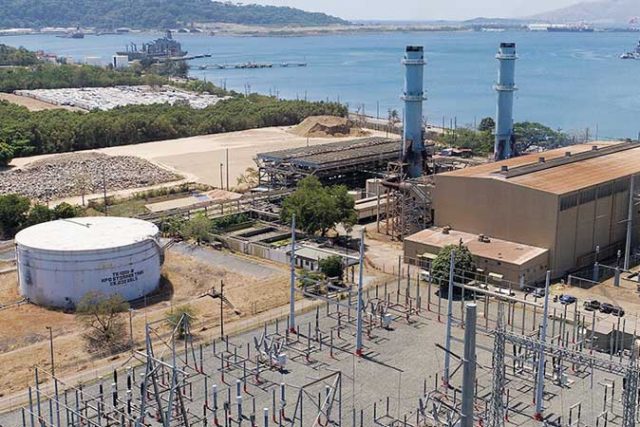
AYALA-LED AC Energy Corp. will subscribe to 33.49 million common shares in its wholly owned One Subic Power Generation Corp. as the listed company’s executive committee cleared the conversion of its advances into equity.

In a disclosure on Wednesday, AC Energy said its executive committee approved the conversion into shares of the P680 million it advanced to the unit. It said the move retains its 100% effective ownership in One Subic Power.

One Subic Power is wholly owned by Bulacan Power Generation Corp., which is 100% owned by AC Energy. The Subic-based firm operates a 116-megawatt (MW) diesel power plant, based on its LinkedIn profile.

Last month, the AC Energy said that it had started the construction of a 160-MW wind farm in Pagudpud, Ilocos Norte, which it described as the country’s largest wind farm to date. It aspires to become the largest listed platform in Southeast Asia as it aims to reach a net attributable capacity of 5,000 MW by 2025.

Shares in AC Energy at the local bourse improved by 4.22% or 32 centavos to finish at P7.91 apiece on Wednesday. — A.Y. Yang

Chocolate-covered cicadas a hit in Maryland

BILL NINO/UNSPLASH

BETHESDA, Md. —  Some might cringe, but at one Maryland chocolate shop, 17-year-old insects are flying off the shelves. Sarah Dwyer, of Chouquette Chocolates in Bethseda, started coating cicadas in chocolate and selling them when the periodical Brood X emerged this spring for the first time since 2004. Now her chocolate shop has a 10-day backlog for cicada orders. They are delicious, she says. “When you combine the chocolate, the cinnamon, and the nuttiness of the bugs, it really gives you that holiday feeling of when you’re walking around a big city and they’re roasting nuts on the sidewalk, that cinnamon smell, it’s really what it tastes like,” Ms. Dwyer said. Ms. Dwyer and her employees gather the cicadas from a copse of trees behind their chocolaterie. The bugs are so numerous, they land right on the employees. The cicadas are then put in a paper bag and placed in the freezer, where the cold temperature puts them to sleep before they die. She then boils the cicadas to clean them, and crisps them in an air fryer. Once the cicadas have been fried, Dwyer sprinkles them with either cinnamon or savory Old Bay seasoning and they are ready to be covered in chocolate. For Ms. Dwyer, this is a chance for consumers to become more familiar with a type of protein she thinks will be a lot more popular by the next time these insects start to sing again. “There’s not enough protein to go around, and I think, I really do think that in 2038, people will not think twice about eating a bug at all,” Ms. Dwyer said. — Reuters

Alibaba Cloud plans to build data center in Manila this year

ALIBABA Group’s digital technology and intelligence backbone Alibaba Cloud is set to build its first data center in the Philippines by the end of 2021.

“With our first data center in the country, we will be able to better support Philippine enterprises in adopting cloud technologies and preparing for a digital-first future,” said Leo Liu, Alibaba Cloud Intelligence general manager for Hong Kong, Macau, and the Philippines, at a virtual briefing on Tuesday.

The company intends to support 50,000 local information technology professionals and help 5,000 Philippine businesses in their digital transformation journey by 2023.

“To achieve this target, we have been working on multiple initiatives such as increasing our local infrastructure cloud investments… and we will introduce more advance cloud products and solutions,” Alibaba Cloud Intelligence Country Manager for the Philippines Allen Guo said.

Alibaba Cloud plans to invest $1 billion in Asia-Pacific over the next three years as it targets to foster one million digital talents, empower 100,000 developers, and accelerate the growth of 100,000 technology startups in the region.

Its new data center in the Philippines will be built in Manila, bringing the company’s total availability zones to 76 spread across 25 regions globally.

“Local businesses across sectors such as financial technology, e-commerce, education and media will be able to adopt and implement cloud technologies more efficiently and better position themselves to capture the emerging opportunities in the country,” the company said.

“To adequately support Philippine businesses’ digitalization, be them conglomerates or one of the country’s vast number of micro, small and medium enterprises, Alibaba cloud has formed partnerships with more than 20 organizations across the retail, healthcare, financial technology, information and communications technology, business process outsourcing, media and education sectors,” it added.

For Mr. Guo, the company’s upcoming data center launch underscores its commitment to equipping Philippine customers with “secure, reliable and scalable cloud solutions.” — Arjay L. Balinbin

EDC’s 29-MW Palayan binary plant breaks ground

A SUBSIDIARY of Lopez-led Energy Development Corp. (EDC) has started the construction of its 29-megawatt (MW) binary power plant which is expected to go online by end-2022 in Bicol, its parent firm said on Wednesday.

In a statement, EDC said it held the groundbreaking ceremony of the Palayan Binary Power Plant (PBPP) in Brgy. Nagotgot in Manito, Albay. The facility will generate 215.8 gigawatt hours of clean energy, and expand the firm’s existing 130-MW Bacon-Manito (BacMan) geothermal facility.

PBPP, which will produce energy from the waste heat of a unit of the BacMan plant, is expected to generate 600 jobs for the community, boosting the local economy. The low-carbon project is estimated to reduce 72,200 tons of carbon emissions per year.

“This project is our additional contribution to that much needed baseload clean, reliable RE (renewable energy) that fully supports the (Department of Energy’s) intent of providing adequate, continuous, and economic supply of energy,” EDC President and Chief Operating Officer Richard B. Tantoco said in a speech delivered during the groundbreaking ceremony on Wednesday.

He also thanked members of the Energy department for recognizing PBPP as an energy project of national significance or a major project entitled to expedited permits in line with the government’s Philippine Energy Plan.

Mr. Tantoco said that the binary project is the firm’s contribution in helping the Philippines reach its target of cutting back on carbon emissions by 75% by 2030, based on the country’s nationally determined contribution.

He added that EDC would invest P7 billion in PBPP.

The company said that the safety of its employees and contractors remained its top priority.

“Safety is part of EDC’s culture more so now that we are working to provide clean, stable, renewable energy to our customers, especially in critical industries, amid the pandemic. As such, all employees and contractors on-site are reminded that they are all safety leaders,” Mr. Tantoco said in the statement.

EDC’s parent firm First Gen Corp. earlier said that it was targeting to invest more in its capital expenditure (capex) projects this year as it plans to allocate $530 million in funding.

Of the capex, some $280 million will cover the drilling activities, investments and binary geothermal projects of its geothermal subsidiary EDC. The figure also covers EDC’s binary growth projects, including PBPP.

Shares in First Gen at the local bourse were unchanged at P30.80 apiece on Wednesday. — Angelica Y. Yang

Hiddleston pleased that Marvel’s Loki addresses gender fluidity

Tom Hiddleston in Loki (2021) — IMDB.COM

LONDON —  Loki actor Tom Hiddleston said he welcomed Marvel Studios’ decision to address the popular villain’s gender fluidity in a new Disney+ streaming series that debuted on Wednesday. At a screening in London on Tuesday, Hiddleston noted that Loki had been portrayed as gender-fluid in Marvel comic books as well as in Norse mythology, where the character originated. On Sunday, Walt Disney Co. released a clip from the new series and briefly showed a prisoner file that listed Loki’s sex as “fluid.” “It’s always been there,” Mr. Hiddleston said in an interview at the screening. “Loki as a character has had such a broad-ranging and wide-ranging identity. He’s always been a character you could never put in a box, you could never pin down.” The British actor added, “I was really pleased we were able to touch on that in the series.” Mr. Hiddleston has played Loki, the god of mischief, since his appearance in the 2010 movie Thor. The new six-episode series takes place after events depicted in the 2019 film Avengers: Endgame. It catches up with Loki just after the Battle of New York when he escapes from Avengers custody and steals a time stone known as the Tesseract. — Reuters

Location-based social media app AppZaloot launched in the Philippines

RECEIVING notifications when not using social media and being required to submit specific information for a personalized feed determined by algorithms may be difficult for users nowadays.

“I can go and search something because I’m interested in that particular thing. And the next minute I go onto social media, and I’m being pushed all these ads about it. So that’s sort of something that really annoyed me,” businessman Max Thomas said.

To avoid this problem, Mr. Thomas founded and developed the social media app AppZaloot in 2016 which uses location-based technology. The app currently available to users in Europe, Southeast Asia, and Asia-Pacific.

“If you went from Manila to Cebu City, as soon as you get off at [Mactan-Cebu International Airport] and turn the app back on, your radius immediately comes up with everything that surrounds you on Mactan Island,” the AppZaloot founder and CEO said as an example, during the online press launch on May 26 held via Google Meet.

APP FEATURES
AppZaloot is equipped with a user-driven “data social responsibility.” According to Mr. Thomas, the app does not collect data without the user’s consent, which will allow them to use the platform without worrying about their privacy being compromised.

“We understand that most people don’t want to have their data used by social media companies, regardless if the data will be used for good intentions such as creating targeted ads and personalizing their feeds to enhance their social media experience,” Mr. Thomas said in a press release.

AppZaloot has three social feeds: the Private Friends’ Feed, Local, and Global. The Private Friends’ Feed allows the user to connect with friends on the app; the Local Feed allows interaction among users within a set radius (up to 25 kilometers) in the community; and the Global Feed allows the user to publish posts and to view posts from around the world. The difference with other social media platforms is that it has no advertisements.

Services such as shops, restaurants, entertainment that appear on the app are those within the radius the user has set. This feature aims “for local businesses to have a platform to promote themselves to people in their local community,” according to a video presentation during the launch.

The app also has an Emergency Alert System for notifications from relevant authorities such as weather updates, public transportation disruptions, and traffic accidents within the area where the user is located.

The app also has a private messaging and join/create group chat feature.

The AppZaloot team said it is preparing to launch its own crypto tokens called Zaloots, the pre-sale of which will be available by the end of June. The Zaloots token will be tradeable on several international decentralized crypto exchanges. It will also be eventually integrated into AppZaloot’s upcoming loyalty program, as well as used on the app for payments and rewards.

“We know we still have a lot to do. And whenever you launch an app like this, you never ever finished developing. You are always going to improve things. You’re going to take feedback from your users, you’re going to adjust things, we’ll be uploading changes all the time,” Mr. Thomas said.

For more information, visit appzaloot.com. — Michelle Anne P. Soliman

Lepanto trims net loss to P63M after rise in metal prices

LEPANTO Consolidated Mining Co. reduced its attributable net loss to P63.11 million in the first quarter after metal prices improved during the period, the listed mining company told the stock exchange on Wednesday.

Its losses during the January-to-March period were 70.6% lower than the P214.35-million attributable net loss it had last year.

Consolidated revenues fell 9.8% to P407.56 million against P451.74 million the year earlier.

“Metal production in the form of bullion consisted of 4,503 ounces of gold and 23,084 ounces of silver. Until March 2020 when copper operations were suspended, metal production in the form of dore and gold-copper concentrate totaled 4,633 ounces of gold; 11,358 ounces of silver; and 618,442 pounds of copper,” the company said in the disclosure.

It added that metal revenue this year went down to P405.94 million from P422.20 million.

According to the company, average gold and silver prices for the period reached $1,778.96 per ounce and $26.18 per ounce, higher than $1,559.43 per ounce and $17.44 per ounce last year, respectively.

Moving forward, Lepanto said it is focusing on gold dore production in its Victoria and Teresa deposits as exploration drilling continues.

“The carbon-in-pulp plant is undergoing rehabilitation to improve gold and silver recoveries and increase production,” the company said.

Lepanto, based in Mankayan, Benguet, has business interests in the exploration and mining of gold, silver, copper, lead, zinc, and all kinds of ores, metals, minerals, oil, gas, and coal and their related by-products.

On Wednesday, Lepanto “A” shares at the stock exchange rose 1.27% or two centavos to end at P0.159 apiece while Lepanto “B” shares improved 6.33% or 10 centavos to finish at P0.168 per share. — Revin Mikhael D. Ochave

Duchess Meghan releases debut children’s book

LONDON —  Meghan, Britain’s Duchess of Sussex, released her debut children’s book on Tuesday, dedicating it to her husband Prince Harry and their two-year-old son Archie. The Bench, which looks at the relationship between father and son through a mother’s eyes, hit bookstands days after the couple welcomed their daughter Lilibet Diana, named after Queen Elizabeth and Harry’s late mother Princess Diana, last week. Duchess Meghan has previously said the book, written with rhyming text, began as a Father’s Day poem she wrote for Harry shortly after Archie was born in 2019. In a handwritten-like note inside the book, Duchess Meghan wrote: “For the man and the boy who make my heart go pump-pump.” Duchess Meghan also narrates an audio version of the book, which features watercolor illustrations by artist Christian Robinson. — Reuters

POPTV to launch VOD service for bus riders

TRUSTPAIR.COM

By Arjay L. Balinbin, Senior Reporter

MASS market video-on-demand (VOD) platform POPTV is set to launch in the third quarter a service intended for bus riders in the Philippines.

“We want people inside buses watching us all the time, so we have created a new technology for that. We are introducing this new tech in the next quarter,” POPTV Co-Founder and Chief Executive Officer Jyotirmoy Saha told BusinessWorld in a recent Zoom interview.

“There are a few bus companies that we are wiring up right now,” he added.

With the new POPTV technology, users will be able to watch any of its content in an unlimited manner for the duration they are inside a bus “without spending one penny on data.”

“All you need to do once you are inside a bus is that you switch on your own phone, and you watch whatever you feel like watching. I think that’s going to be our major differentiator,” the POPTV co-founder said.

He noted there are more than half a billion passenger trips — between provinces or between cities — taken in the Philippines every year.

“Imagine the number of people and the captive audience around that, so we are hoping to tap into that.”

He said offering the service to jeepney riders is also a possibility.

“Theoretically, we can do jeepneys as well, but we also have to take a look at the social behavior inside the jeepney. In the NCR area, there is a safety factor; and, in general, people will never take their phone out and hold it in front of them.”

POPTV, a new company, has approximately 800,000 users. According to Mr. Saha, the company’s new users are increasing at a rate of 8,000 to 10,000 per day, depending on the day of the week.

“Our services are extremely affordable. You can buy our service for P20, P49, or P99. You have the option… Currently, we do want to keep it in that price range,” he added.

Yields on term deposits climb on concerns over US inflation

REUTERS

YIELDS ON THE central bank’s term deposits increased on Wednesday due to concerns over US inflation, which could affect the US central bank’s future policy path, and as the market priced in a possible easing in restriction measures due to the decline in the daily tally of local coronavirus cases.

Demand for the term deposit facility (TDF) of the Bangko Sentral ng Pilipinas (BSP) amounted to P599.126 billion on Wednesday, going beyond the P520 billion on the auction block and the P572.605 billion in bids logged last week.

Broken down, tenders for the seven-day term deposits amounted to P140.165 billion, lower than the P150-billion offer as well as the P158.544 billion in bids seen during the previous auction.

Accepted rates for the tenor ranged from 1.7% to 2.49%, a wider band compared with the 1.7% to 1.73% logged a week ago. This caused the average rate of the one-week papers to rise by 3.82 basis points (bps) to 1.7582% from 1.72% last week.

Meanwhile, demand for the two-week term deposits amounted to P458.961 billion, going beyond the P370 billion auctioned off by the BSP and the P414.061 billion in tenders recorded a week ago.

Banks asked for yields ranging from 1.65% to 1.88%, a slightly wider band versus the 1.6875% to 1.9% logged in the previous auction. With this, the 14-day papers fetched an average rate of 1.795%, inching up by 0.09 bp from the 1.786% quoted on June 2.

For the 33rd straight auction, the BSP did not offer 28-day term deposits to give way to its weekly offerings of bills with the same tenor.

The central bank uses the term deposits and the short-term bills to gather excess liquidity in the financial system and to better guide market rates.

Yields inched up due to market concerns ahead of the release of latest US inflation data, Rizal Commercial Banking Corp. Chief Economist Michael L. Ricafort said in a text message.

The US Labor department will report May consumer price index data this Thursday. In April, US inflation stood at 0.8%, which was its quickest pace since June 2009.

Investors are growing nervous about whether the beginning of the end of enormous monetary stimulus and low interest rates is near as some think the Federal Reserve’s tapering could be hastened if US inflation runs hotter than the 0.4% monthly clip that economists expect.

Mr. Ricafort added that the term deposits fetched higher yields as local coronavirus infections continued to ease, which could strengthen the case for a further reopening of the economy.

Coronavirus disease 2019 cases in the country hit 1.28 million, with 4,777 new cases logged on Tuesday, based on data from the Department of Health.

Government officials have been eyeing a further relaxation of restrictions. Socioeconomic Planning Secretary Karl Kendrick T. Chua has said families should be given leeway to engage in more activities to boost the economy through consumption. — L.W.T. Noble

ADVERTISEMENT
ADVERTISEMENT