Home Blog Page 7948

Toyota opens first car dealership amid pandemic

REUTERS

TOYOTA Motor Philippines Corp. has opened a new car dealership in the middle of the pandemic, its first since 2019, in what its local head described as the carmaker’s “testament of confidence” and optimism that recovery is in sight.

The new dealership in Zamboanga del Norte is the company’s 71st in the country. The 7,200-square-meter service hub in Dipolog City is Toyota Philippines’ second dealership in Zamboanga Peninsula, the company said in a press release on Wednesday.

“The opening of this new dealership in the middle of the pandemic is a testament of confidence in the management capabilities of the group, as well as our optimism in seeing economic recovery with job opportunities generated for the members of the community,” Toyota Philippines President Atsuhiro Okamoto said.

Toyota Philippines last opened a local dealership when it launched its Valenzuela City shop in June 2019.

The new dealership will have a 2,600-square-meter showroom and a service workshop with six bays for general services and eight bays for body and paint services. The workshop will be able to service up to 32 units per day.

The car industry recorded 13,315% sales growth to 17,843 vehicles in April from the extremely low base a year ago when Luzon was placed under the strictest form of lockdown.

April sales, however, were 13.8% lower than March figures, data from the Chamber of Automotive Manufacturers of the Philippines, Inc. (CAMPI) and Truck Manufacturers Association (TMA) showed.

CAMPI called car companies’ performance in April as a record increase since the start of the pandemic last year.

CAMPI President Rommel R. Gutierrez said that he expects the car industry to recover to pre-pandemic sales as late as 2023.

Recovery would be achievable, he said, if there are certainties in the market, consistent government policies, and widespread inoculation against coronavirus disease 2019 (COVID-19).

The best-case scenario for the industry in 2021, he said, is a 30-35% sales growth, but the provisional safeguard duties on imported cars could lower growth to 20-25% compared with last year’s figure. — Jenina P. Ibañez

SEC-flagged entity Togachat operates under new name

FLAGGED entity Togachat Academy Philippines, Inc. was found to be operating under a new name after getting its registration revoked by corporate regulators.

“The Securities and Exchange Commission (SEC) has discovered that Togachat Academy Philippines, Inc. still continues to operate under new company named Eostre Berhad despite the issuance by the commission of an advisory, cease and desist order, and order of revocation against it,” the commission said in an advisory.

Togachat’s registration with the commission was revoked in January last year for violating provisions of the Revised Corporation Code, the Securities Regulation Code and the SEC Reorganization Act. The entity was found offering the public investment opportunities without securing proper licenses.

Togachat is now operating under Eostre Berhad, offering products such as ostre Quantum Disc, Eostre Vitality Pendant, and Eostre Sanare Mattress.

The commission said the products were injected onto the scheme “to lend a semblance of legitimacy to its operations.”

Investors earn through recruiting new members, where they may receive “Eostre Berhad points” (EBP) and Yipps, which may be redeemed through transactions in messaging app Yippi. EBPs may be cashed out or converted into Toga Ltd. shares.

The SEC reiterates that Togachat’s registration as a corporation has already been revoked. It added that Eostre Berhad is not registered with the commission and is also not authorized to collect investments from the public.

In 2019, Toga Capital Ltd.’s registration as issuers of securities was revoked by the US SEC after failing to comply with reportorial requirements. It was also found to be a revoked Nevada corporation located in Malaysia’s Kuala Lumpur.

Meanwhile, the central bank of Malaysia, Bank Negara of Malaysia, included Toga Ltd. and its parent company Toga Capital Sdn. Bhd. in its list of unauthorized entities for its Financial Consumer Alert.

The SEC said those acting under Togachat Academy Philippines or Eostre Berhad may be fined up to P5 million, a maximum 21 years of imprisonment, or both. It added that names of those involved will be reported to the Bureau of Internal Revenue for penalties and other assessments. — Keren Concepcion G. Valmonte

Of mythical creatures, magic, and horror stories

Filipino graphic novel Trese debuts as a Netflix animated series

BUDJETTE Tan and Kajo Baldisimo were busy working mostly overtime in the advertising industry in 2005. It was also the time when Mr. Baldisimo pitched to Mr. Tan via text message the idea of creating a 20-page monthly comic book with him.

“Since we both worked in the hectic and overtime-driven world of advertising, I told him it would be impossible for us to do such a thing. But he convinced me to do one issue. We said we’d do it for the fun of it, to just have fun writing and drawing this comic book, with no expectation if it’ll sell or not,” Mr. Tan said in a statement.

“And after we finished the first issue, Kajo asked me, ‘Okay, what’s the next story?’ And we just kept on going from there,” recalled Mr. Tan, who would write the stories while Mr. Baldisimo would illustrate them.

That is how Trese was born.

Trese — the black and white, English language Philippine graphic novel of urban legends and scary creatures told through the lens of a detective story and a police procedural —  has been made into a Netflix Original Anime series which premiers today.

Trese follows detective Alexandra Trese, who solves supernatural crimes which are often connected with creatures from Philippine folklore. The stories are set in modern-day Manila where these mythical creatures live, hiding amongst humans. Detective Trese finds herself going head-to-head with a criminal underworld — literally.

“We wanted to make something that was uniquely Filipino, and just using Kajo’s style as a springboard just came naturally,” Trese director and showrunner Jay Oliva said during an online press conference on June 8 held via Zoom. “One of the things we wanted to make sure is that all the characters, even down to the incidental characters, all look like Filipinos.”

The biggest challenge, Mr. Oliva said, was figuring out Alexandra Trese’s hairstyle. “We were trying to get it right and we finally settled on that bob look.”

THE COURAGEOUS DETECTIVE
Filipino actress Liza Soberano is the voice Alexandra Trese in the Filipino language version of the series.

“I’ve always wanted to portray someone that is a superhero. Unfortunately, I didn’t get to push through before with Darna. So, when this was offered to me, maybe this is, in a way, kind of like a replacement for what I wasn’t able to do before,” Ms. Soberano said in a separate online press conference on June 3 via Zoom.

“She is a very brave and badass chick,” Ms. Soberano said of her character. “It’s very cool to see a female like that, because most of the times we see male detectives, and we always see these amazing male superheroes. But nowadays, there [is] more representation for women, and good symbols or characters that represent how strong-willed women are, and how courageous we are as well.”

When Ms. Soberano accepted the voice acting role, she prepared by practicing her Filipino, doing research on YouTube on voice acting, and training with a voice coach Rudolf Baldonado, Jr. who is also the series’ Filipino language voice artist director.

“He kind of guided me through the whole process and helped me give life to the character,” she said.

GETTING A GLOBAL PLATFORM
In Trese’s six episodes, the audience will meet mythical creatures such the tikbalang (a shapeshifting giant bipedal horse), the kapre (a giant that lives in trees), the anito/diwata (nature spirits), and the tiyanak (a demon who appears as a newborn baby). They will also encounter the pre-colonial Philippine system of writing called baybayin, and kulam or black magic.

The series’ writer and executive producer Tanya Yuson described the show as noir.

“In this format of a police procedural […] which is a very western kind of structure, this is something that audiences, both in the Philippines and abroad, could probably connect to,” Ms. Yuson said.

Mr. Oliva focuses on themes about family and duty for the animated series.

“This is going to be a separate thing from the comics,” Mr. Oliva said. “It’s going to exist on its own.”

“But at the same time, it’s going to, hopefully, please the fans, bring in new audiences. The main thing is to spread the culture of the Philippines and show the pride of where my family is from,” he added.

Aside from Ms. Soberano, the Filipino voice cast includes Simon dela Cruz (as Crispin and Basilio), Apollo Abraham (Captain Guerrero), Christopher Carlo Caling (Hank), Christian Velarde (Nuno), and Eugene Adalia (Anton Trese). Rudolf Baldonado directed the local voice talents.

Meanwhile, the series’ English language voice cast includes Shay Mitchell (YOU, Pretty Little Liars) as the voice of Alexandra Trese; Darren Criss (The Assassination of Gianni Versace: American Crime Story, Glee), Jon Jon Briones (Ratched), Nicole Scherzinger (Moana), Manny Jacinto (The Good Place), Lou Diamond Phillips (La Bamba), and Dante Basco (Avatar: The Last Airbender).

Filipino band UDD composed the animated series’ official soundtrack, “Paagi,” with lyrics by Armi Millare and Paul Yap.

The comics’ co-creator Mr. Tan is excited for global audiences to discover Philippine folklore and meet the mythical creatures. “I just hope that when they see it, they go, ‘Oh, I’ve never seen that before,’” he said.

“It would be great to reach a point where the animé is so big, someone will come to us and say, This will make a great comic book’,” Mr. Tan joked. Michelle Anne P. Soliman
SEC fines Basic Energy for not updating website, late report

THE corporate regulator has directed Basic Energy Corp. (BEC) to pay P114,000 in fines for not complying with the website template guidelines and for submitting late its 2019 annual corporate governance report (ACGR), the listed firm told the local bourse on Thursday.

In a regulatory filing, Basic Energy said that it received an assessment letter from the Securities and Exchange Commission (SEC) on June 1, which noted the company’s “failure to comply” with the website template for listed companies, as required by a memorandum circular dated 2014. Because of this, the firm was made to pay a penalty of P64,000.

On June 9, Basic Energy received another assessment letter from the corporate regulator directing it to pay P50,000 as penalty for the late filing of its 2019 ACGR, according to a separate disclosure.

“The Company has already established corrective measures for the regular updating of the website and for the timely filing of the annual corporate governance reports,” the firm said in a statement shared with BusinessWorld through text. It added that it will ensure that the penalties are settled before their respective due dates.

Basic Energy said that it was able to submit its 2020 corporate governance report on May 31, around a month earlier than the extended June 30 deadline set by the SEC.

Three months ago, the listed firm received from the Energy department a service contract for its planned 50-megawatt wind project in Mabini, Batangas.

The contract provides for a non-extendible, five-year, pre-development stage and a 25-year development stage, counted from contract signing. Subject to clearance from the department, the development phase may be extended for another 25 years.

Basic Energy, chaired by Oscar C. de Venecia, previously reported a net loss attributable to its parent amounting to P15.1 million in the first quarter, lower than the P34.93-million losses incurred in the same period year on year, amid the global health emergency.

Basic Energy shares at the local bourse shed 1.27% or one centavo to finish at P0.78 apiece on Thursday. — Angelica Y. Yang

Who are the supernatural creatures today?

By Michelle Anne P. Soliman, Reporter

Animated Series Review
Trese
Directed by Jay Oliva
A Netflix Original Animé series
Based on Budjette Tan and Kajo
Baldisimo’s graphic novels

(Warning: narrative and plot twists discussed.)

AFTER days of hyping up the Trese animated series’ Netflix premiere through viral videos which purport to show vandalism of billboards and street advertising by creatures of the night, the story of young detective Alexandra Trese and her clash with denizens of Philippine mythology is being released today.

The black and white, English language Philippine graphic novel created by writer Budjette Tan and artist Kajo Baldisimo has been adapted as a Netflix Original Animé series. This writer was able to watch the series’ six episodes (with a running time of approximately three hours) through Netflix’s media preview access.

Watching Trese come to life felt like reliving the leisurely afternoons I spent as a child reading graphic novels, watching Filipino-dubbed animé, and weekend fantasy shows about Philippine folklore on free-to-air television.

The first episode was an exciting introduction to what the viewers are in for as it features the mystery on the white lady of Balete Drive and the aswang clan. Aside from the enigmatic tone of the story, the characters of the nuno (dwarf), and Crispin and Basilio, Alexandra’s adopted twin brothers and partners in crime, provide some comic relief.

The episodes begin with a prologue scene that cuts to the show’s introduction accompanied by eerie music and faint chants, and red, black, and white graphics with illustrations of the characters and crime scenes in Manila. Then, it proceeds to the story itself.

While the first two were enjoyable, it was not until the third episode’s last scene that I was hooked enough to click “Next Episode” without a break. But I just did not want to watch the full series in one go, so I resumed watching the second half of the series on another day. During my break from watching, I continued thinking of how the story elements would eventually tie together.

Filipino actress Liza Soberano performed well as the voice of Alexandra Trese in the Filipino language version. Her deep voice fits with the lead character’s serious persona and was unrecognizable from her normal higher pitched speaking voice. I preferred and enjoyed watching all episodes in Filipino (it just hits differently in your native language). Non-Filipino speakers have the option of choosing English, Spanish, and Japanese audio, while subtitles are available in English, Filipino, Spanish, and traditional Chinese.

The animated series captures the landscape of Manila in detail. I recognized the city streets, public transportation, landmark buildings, and the heritage house aesthetic. It also includes the details of narrow roads, cable wires, and billboards on building rooftops.

Having read a few of the Trese comics as a college student, watching it as an animated series was a different experience. Trese now made me think of the creatures and monsters in the story as metaphors for people in our society today. It is a different experience from watching old Filipino series with mythical creatures as a kid and learning about them through Filipino literature in school since it was mostly entertainment to me at that time.

Trese is the first Philippine Netflix original animated series, as diverse Filipino stories gain a global platform. After many stories of witches, wizards, elves, orcs, vampires, and werewolves, it is exciting to introduce Philippine folklore and its creatures to a wider audience.

The six episodes were able to establish how Alexandra Trese becomes the detective that she is, and why and how the elements in folklore merge with present day. I recommend Pinoy viewers see the show, and — who knows? —  there may be more creatures to explore.

Stay tuned during the last episode for a teasing, eerie post-credit scene. 

Huawei opens largest cyber security center to address rising risks

CHINESE multinational technology company Huawei Technologies Co., Ltd. unveiled its largest Global Cyber Security and Privacy Protection Transparency Center on Wednesday, aimed at addressing the surge in new cybersecurity risks.

“As an industry, we need to work together, share best practices, and build our collective capabilities in governance, standards, technology, and verification. We need to give both the general public and regulators a reason to trust in the security of the products and services they use on a daily basis,” Huawei Rotating Chairman Ken Hu said at the virtual opening ceremony of the center in Dongguan, China.

At an online briefing on Thursday, Wang Zheng, global cybersecurity and privacy officer at Huawei, was asked if the company also plans to put up smaller transparency centers in the Philippines, India, and Nepal.

“Actually, it doesn’t matter where our data center is situated. What matters is we have a center where we can provide our support and services to local customers wherever they are in India or the Philippines,” he said.

Apart from the Dongguan center, Huawei also has transparency centers in Belgium, Canada, Germany, and the United Kingdom.

“Over the past few years, industry digitalization and new technologies like 5G and AI have made cyberspace more complex than ever, compounded by the fact that people have been spending a greater portion of their lives online throughout the COVID-19 pandemic. These trends have led to a rise in new cybersecurity risks,” Huawei said in a statement.

“Huawei opened the new Global Cyber Security and Privacy Protection Transparency Center in Dongguan to address these issues, providing a platform for industry stakeholders to share expertise in cyber governance and work on technical solutions together,” it added.

The company said the center will be opened to regulators, independent third-party testing organizations, standards organizations, as well as its customers, partners, and suppliers.

Huawei also released on Wednesday its “Product Security Baseline.”

“This is the first time we’ve shared our security baseline framework with the entire industry, not just core suppliers,” said Sean Yang, director of Huawei’s Global Cyber Security and Privacy Protection Office.

“We want to invite all stakeholders, including customers, regulators, standards organizations, technology providers, and testing organizations, to join us in discussing and working on cybersecurity baselines. Together, we can continuously improve product security across the industry,” he added. — Arjay L. Balinbin

Too-big-to-fail banks still stable

BSP Governor Benjamin E. Diokno

TOO-BIG-TO-FAIL banks are in a strong position despite the ongoing coronavirus pandemic, supporting the financial system’s overall stability, Bangko Sentral ng Pilipinas (BSP) Governor Benjamin E. Diokno said on Thursday.

“D-SIBs (domestic systematically important banks) remain on solid footing amid the heath crisis. We see this contributing to the overall soundness of the domestic financial system and the country’s financial stability,” Mr. Diokno said at an online briefing.

The central bank does not disclose the actual number of lenders that are considered as D-SIBs. However, the central bank chief assured they will “continue to work in further deepening the public’s understanding of the nature of a D-SIB in the BSP’s regulatory framework.”

Central bank data showed the capital adequacy ratio of D-SIBS improved to 15.8% at end-2020 from 15.3% the year prior. This was above the 10% minimum requirement by the central bank and the 8% mandated under the Basel III standard.

Assets and deposits of these too-big-to-fail banks also rose by 6.2% and 8.5%, respectively, as of March.

On the other hand, D-SIBs’ loan portfolio shrank by 3.6% as of March. Their nonperforming loan (NPL) ratio stood at 3.3% while NPL coverage ratio was at 99.4%.

The central bank said it is on the lookout for systemic risks at the micro and macro level that could affect the financial system and, consequently, the economy.

In April, the central bank announced it would require too-big-to-fail banks to submit a separate recovery plan annually starting 2022. The BSP previously only required D-SIBs to submit an Internal Capital Adequacy Assessment Process document, which includes the recovery plan, annually every March 31.

“The issuance aims to tightly embed the recovery planning work in the broader crisis preparedness framework, as the importance of crafting a viable and sound recovery plan has been highlighted in this health crisis,” Mr. Diokno said on Thursday.

Last week, the interagency Financial Stability Coordination Council spearheaded by the BSP said most risks to the financial system have been “under control,” but noted borrowers’ impaired ability to pay their debts due to the crisis is among the top risks that could affect the sector.

Meanwhile, the central bank chief also said they will remain vigilant about the impact of the crisis on the country’s labor conditions, which could affect price stability.

“Changes in the labor market outcomes pose significant implications on wage dynamics, thereby affecting the rise in prices and the ability of the economy to recover from the crisis,” Mr. Diokno said.

He noted that the Philippine Statistics Authority’s (PSA) monthly release of the Labor Force Survey versus the previous quarterly schedule also allows the central bank to better monitor the labor market.

Latest PSA data showed the jobless rate stood at 8.7% in April, inching up from the 7.1% in March but still better than the 17.6% seen in April 2020. Analysts attributed the higher jobless rate to the impact of renewed lockdown restrictions in Metro Manila and nearby provinces.

The April unemployment rate represents 4.138 million unemployed Filipinos, up from the 3.441 million in March albeit lower than the 7.228 million in the same month of 2020.

Mr. Diokno has said the central bank will remain accommodative to support the country’s more “stable” bounce back. He said they will also monitor the labor market to assess the pace of economic recovery. — LWTN

URC sees possibility of flexible working beyond pandemic

UNIVERSAL ROBINA Corp. (URC) said the safety measures it undertook for its workers did not hinder the company from reporting a profit during the pandemic year, and added that it is considering extending the arrangements in some form beyond the pandemic.

The company, a unit of the Gokongwei group, makes food, including many consumer items that suffered minimal diminution in demand during the public health crisis. 

Elisa O. Abalajon, URC chief human resources officer, said in a statement Thursday that the company’s employees remained productive over the course of the troubled year.

“This has allowed URC to overcome headwinds caused by the COVID-19 pandemic.  It reported a 15% growth in net income to P11.6 billion last year,” Ms. Abalajon said.

Ms. Abalajon said the company has had health guidelines in place since February 2020, which initially started out as a flexible hours scheme for some employees, that became a five days a week work-from-home arrangement after the government announced a lockdown in March that year.

“In the months since the remote work system was implemented, it’s been proven that URC employees remain highly productive. The company is now considering keeping this arrangement post-pandemic,” Ms. Abalajon said.  

Ms. Abalajon said the company provided temporary lodging to 600 employees that needed to be on site such as machinery operators and technicians. URC also provided free shuttle services to employees who needed to travel daily.  

“Apart from easing the workers’ burden of commuting between their homes and URC’s plants, it also provided them an extra layer of safety as their outside exposure to the virus was minimized,” Ms. Abalajon said.

“Human resources noticed that employees seem to be working even harder than usual during this pandemic,” she added. — Revin Mikhael D. Ochave

Globe partners with Telus, AT&T for 5G roaming in Canada, US

REUTERS

GLOBE Telecom, Inc. announced on Thursday that it is working with Telus Corp. in Canada and AT&T, Inc. in the United States to roll out fifth-generation (5G) roaming services this month.

“The company’s venture to secure North American locations proved successful as they will officially launch the 5G roaming service through Canada-based Telus on June 15 and USA-based AT&T on June 17,” Globe said in an e-mailed statement.

Globe also announced it partnership with Vodafone Group plc, a telecommunications company in Europe.

“Globe roamers in Hungary, Germany, Ireland and Netherlands will get enhanced 5G connectivity experience by July 2021,” the Philippine telco said.

Globe’s 5G roaming is currently available in Finland, Denmark, Sweden, Norway and Estonia through Telia Company; Italy through Telecom Italia; and Hungary, Germany, Ireland, and the Netherlands through Vodafone.

“We will fulfill our commitment to continuously innovate with a purpose so our customers will be prepared to roam the world with 5G technology at their fingertips,” said Coco Domingo, Globe vice-president for Postpaid and International.

Globe’s 5G roaming is also available in Kuwait and Qatar through Ooredoo; Saudi Arabia through STC; Taiwan through Taiwan Mobile; Thailand through AIS Thailand; United Arab Emirates through Du and Etisalat; Hong Kong through CSL; South Korea through SK Telecom; Singapore through Singtel; Turkey through Turkcell; and Oman through Omantel. — Arjay L. Balinbin

Friends

Movie Review
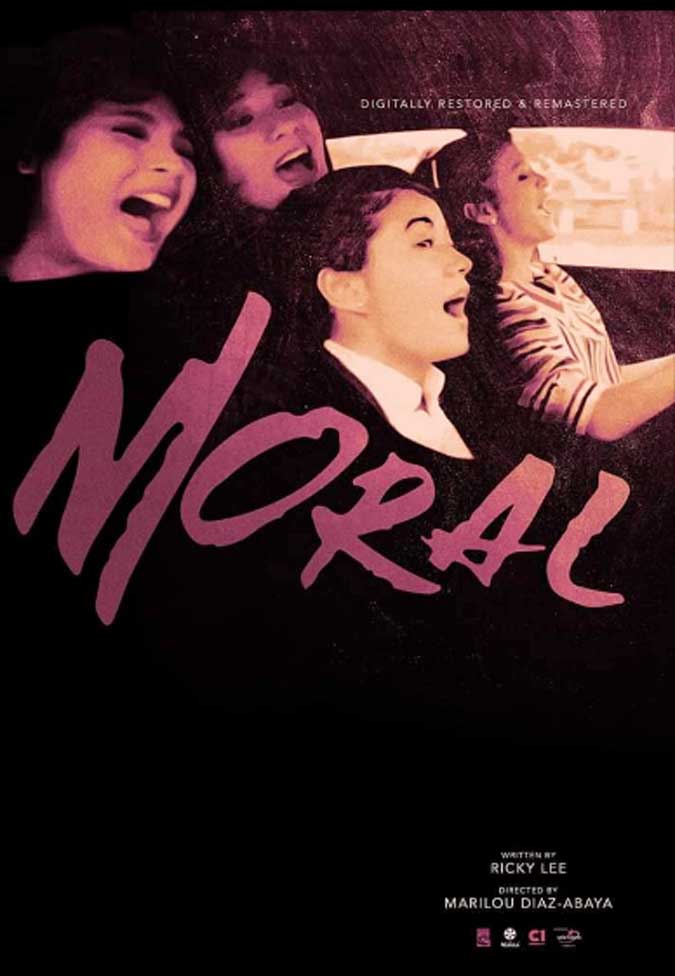
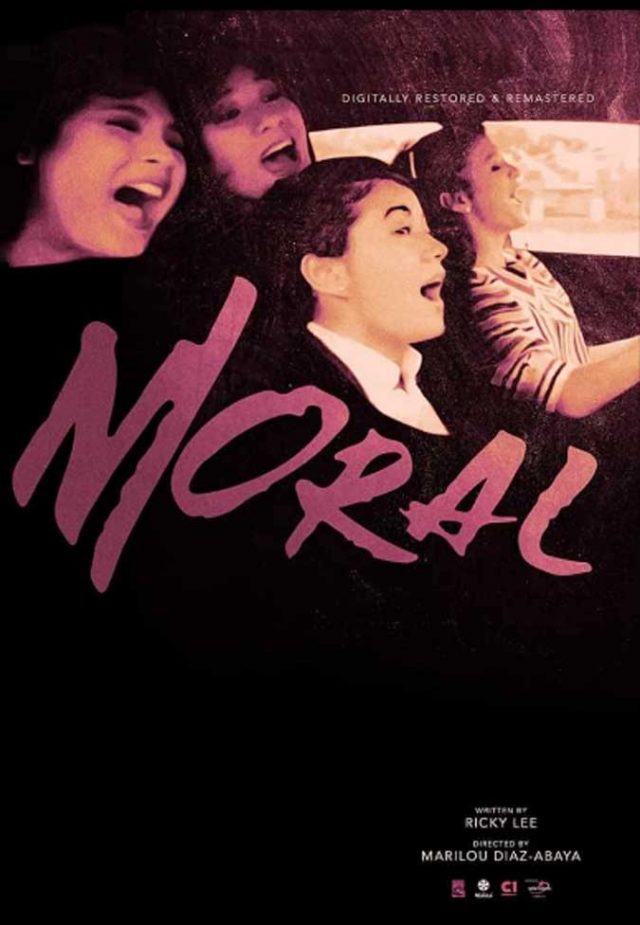
Moral
Directed by Marilou Diaz-Abaya

Available on iTunes and KTX.PH

(Warning: narrative and plot twists discussed in explicit detail)

MARILOU Diaz-Abaya’s Moral (1982) bends stereotypes right from the start, beginning where most comedies and love stories end: with a marriage. Maritess (Anna Marin) is in the process of being wedded to (welded to?) Dodo (Ronald Bregendahl) when Joey (Lorna Tolentino) stumbles late into the church, fumbles her way to a seat, giggles at inappropriate moments; Kathy (Gina Alajar) sings a song, a heartfelt performance but — isn’t she a touch off-key? When the ceremonies end it’s not bride and groom running out from under a shower of tossed rice but bride and friend and friend and friend — Maritess and Joey and Kathy and Sylvia (Sandy Andolong) linked arm to arm, camera retreating before them as they march forth into the world.

We follow Maritess as she settles into the role of wife and mother in a large house (“it’s over 50 years old!”) and even larger family (children and infants crawling in and out of all corners). We learn about her friends — Kathy is an aspiring singer whose ambition outpaces her ability; Sylvia is an education major turned teacher (we see the four graduating from college) separated from her husband; Joey is the wild child that links the four. Joey can never tell where she’ll spend the night, in one of her friends’ spare bedrooms, at her mother’s, or with one of the many men she’s slept with.

Maritess chides Joey on her lifestyle: “Women aren’t supposed to be promiscuous, only men.” That I think is the key statement describing Joey: not that she’s a man with breasts and vagina attached but a woman who never really thought in those distinctions. Ironic twist: she does care about one man — political activist Jerry (Michael Sandico) who’s near-unattainable, committed to the idea of political commitment.

Ms. Diaz-Abaya is the director of this ensemble piece but it’s impossible to discuss the film without mentioning the rest of her ensemble, not just the actors (who are superb) but writer Ricky Lee. I’ve seen my share of Mr. Lee films, some which I’ve liked some which I, alas, haven’t; this may be his best work, and strong evidence to consider Mr. Lee a co-auteur. The writer-director team, coming off of the success of Brutal (one of Lee’s several reworkings of Kurosawa’s Rashomon), wanted to do a second film using the previous feature’s two stars, Gina Alajar and Amy Austria, involving a talented singer and a less talented one. But Austria left the production, and Mr. Lee reworked the script into a story of four friends.

The film’s form is an assumed formlessness but you can see the thinking that went into the script: Kathy’s story satirizes showbiz; Sylvia’s explores homosexuality; Maritess’ deals with the traditional role of women as selfless wife and mother. Joey, I suspect, represents Filipino feminism in the 1980s, a rebel in search for a cause — she’s just not sure what. That’s what attracts her to Jerry: he knows what he wants and is working passionately to achieve it.

That’s the agenda, and Mr. Lee and Ms. Diaz-Abaya work to fudge the outlines of that agenda, distract us from looking closely at the structure. The dialogue helps, the film featuring some of Lee’s funniest lines, including a discourse on underwear (“You can tell a man from the briefs he wears.”). You imagine Ms. Diaz-Abaya, like Fellini, taping a reminder to her camera: “remember this is a comedy.” Ms. Diaz-Abaya takes her cue from Joey as she jumps from one storyline to the next in apparent random order; she cuts (with help from husband Manolo Abaya and Marc Tarnate) with the no-nonsense air of a comic director keeping the pace brisk, the audience off-balanced. Mr. Lee further contributes by throwing the women curveballs: Jerry introduces Joey to his fiance Nita (Mia Gutierrez); Sylvia realizes her husband Robert (Juan Rodrigo) has a boyfriend Celso (Lito Pimentel) who dances in a nightclub; Kathy — well she’s in showbiz and showbiz is nothing but curveballs (that’s why industry folk are so paranoid); Maritess slowly realizes what kind of family she’s married into and what’s expected of her (she’s a factory worker expected to churn out babies).

Helps (again) that Lee’s curveballs themselves are sometimes fascinating. Mr. Pimentel’s Celso is a languid zen hedonist living in an airy apartment: tall grilled-iron windows draped with ribbony curtains, the naked concrete ornamented with carvings and Robert’s paintings; he serves Sylvia brewed coffee (this was before Starbuck’s aggressive worldwide expansion) and mentions a supplier in Batangas (he could almost be talking about quality cocaine). He insists that he and Robert are partners, suggesting a more enlightened arrangement than traditional marriage, though when he breaks down their respective duties — he does the shopping and cooking, Robert does the house repairs and pays the rent — you sense a more exploitative slant. Celso seems to consider himself a performing artist, and lives on his own terms (he loves Robert, but refuses to stay faithful); Sylvia looks on, appearing both enlightened and overwhelmed, and not a little envious.

Then there’s Joey’s mother Maggie (Laurice Guillen) who had been forced to give birth to Joey at 15 and left child and husband not much later. She’s had a tumultuous life to put it mildly and I don’t see anyone sending her a Happy Mother’s Day card anytime soon (for one she used to slap Joey for calling her “mother” instead of “Maggie”). Script and film seem to want to position her as a villain, but Ms. Guillen plays Maggie with defiant dignity; like Celso she may be morally questionable, but quietly insists on her right to exist.

I did mention Moral bends rather than breaks stereotypes; it has its predecessors in structure and subject matter, including Ishmael Bernal’s Aliw (1979) and Manila by Night (1980); Ingmar Bergman’s Cries and Whispers (1972); Kenji Mizoguchi’s Street of Shame (1956); even Gregory la Cava’s Stage Door (1937). What Ms. Diaz-Abaya and Mr. Lee add to a small but diverse library is a royal flush of performances, an understated comic sensibility, and the beautifully silvered yet naturalist glow of 1970s and early ‘80s Filipino cinema (brought about by, again, Manolo Abaya — there’s an argument to be made that he along with Mr. Lee and Ms. Diaz-Abaya are co-auteurs).

There’s predecessors and then there’s politics, and looking back almost 30 years later they seem surprisingly dated — surprising because we remember the film to be such a pioneering landmark. I’ve mentioned Maggie being set up as a villain (and submit Ms. Guillen’s performance mitigates that); Joey in turn is apparently punished for her promiscuity — she’s knocked up (doesn’t know by whom), goes around seeking money for an abortion. Maritess turns her down of course (“what you’re doing is wrong”); Maggie hems and haws (“you’ll only destroy your life”); Joey’s choice is ultimately taken from her —  she has a miscarriage —  and you wonder if Mr. Lee or Ms. Diaz-Abaya made the decision to unceremoniously pull the plug on that subplot. I’m thinking Ms. Diaz-Abaya —  she has both progressive beliefs and a strong Catholic faith and the struggle between the two plays out continuously onscreen.

Take Maritess’ storyline: she’s in over her head, even to the point of sexual assault (she’d refused her husband sex); she leaves him, but in the end relents to seeing her husband to negotiate a more equitable relationship. I can see the point to her capitulation — there’s no divorce in the Philippines, legal separation is obtained with much difficulty, and marital rape was belatedly outlawed in 1997 — but would have liked to have seen more ambivalence, even some bitterness, in Ms. Marin’s performance.

With Gina Alajar’s Kathy, Mr. Lee and Ms. Diaz-Abaya are on more comfortable ground and go for comic gold. Kathy is hilariously clueless; every time she opens her mouth you cringe in anticipation. In an interview she articulates her new Hare Krishna/Catholic mishmash of a faith, responding to the journalist’s pointed questions: “some call me Kathy, some Katherine, still others Kate, and when I was young Tate; if I can have four names why can’t God?” Kathy does have a nicely played scene where she’s in bed with the single most corrupt figure she’s encountered so far (Jess Ramos’ corpulent Mr. Suarez) and asks: do I have talent? Things may be going her way but Kathy, after all is said and done, values truth over showbiz achievement, and the poignancy of the moment is made sharper by all the comedy that came before.

My favorite moment is possibly the conclusion to Joey’s storyline (if anyone’s the protagonist it’s likely her, the Portnoy of Filipino feminism, comically neurotic and sympathetically stubborn). When Jerry suddenly shows up and asks Joey to take in his newly pregnant wife while he joins the rebels, Joey accepts; she’s still that much in love. Joey’s short with Nita at first, but Nita fights back with modesty (“don’t mind me too much”) and an underhanded guilt-trip campaign (“Don’t bother with that! I have someone come in twice a week,” “That’s okay, it gives me something to do”). Joey comes home one day and Nita gets up to fix her supper; in the midst of preparation Nita drops the bomb: “Jerry’s dead.”

It’s a great scene and I suspect Mr. Lee’s (he had once been arrested and enjoyed the full hospitality of Marcos’ enhanced interrogation officers), but Ms. Diaz-Abaya stages the scene with matter-of-fact directness and husband Manolo lights and shoots it with beguiling simplicity. Nita continues to prepare supper, recounting with quiet dignity how Jerry was captured, tortured, killed, the white kitchen tiles suggesting her just-canonized status as both political activist and soon-to-be mother; Joey on the other hand sits on her bed in the opposite corner of the studio apartment, the shadows gathered around suggesting the depths of her despair. The scene is sad of course, but also horrifyingly funny: how can Joey possibly compete? Nita doesn’t just have Jerry’s love, she carries Jerry’s child and is getting ready (has her bag all packed) to continue Jerry’s legacy. Game set match: Joey is left with hugging Nita and her unborn child tight, the only possible way she can bid Jerry farewell.

What else can I say? Moral is flawed yes but fascinatingly so, borne I suspect from the director’s inner contradictions; it’s an ensemble film about an ensemble of friends and while not as radical as we remember it, is still a well-rendered example of the genre. Great film? Thought so, and watching this restored version I’m happy to say still do.

A Minute With: The Queen Bees cast on age and role of older women

QUEENBEESFILM.COM/

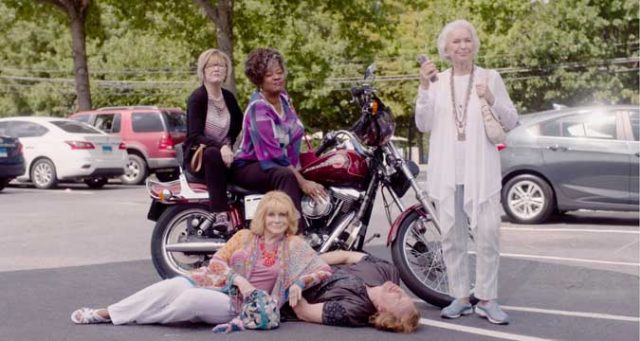
NEW YORK — Oscar winner Ellen Burstyn plays a reluctant new arrival at a retirement home in comedy Queen Bees, where she comes face to face with a gang of “mean girls.”

Despite insisting on a temporary stay while her home is renovated, Ms. Burstyn’s character Helen soon makes friends with the women and finds romance as well.

The 88-year-old, known for her work in Hollywood, television and Broadway, spoke to Reuters about the role alongside co-stars Ann-Margret and Loretta Devine.

Below are excerpts edited for clarity and length.

Q: What made you want to do this film?

Burstyn: It was a different image of a retirement home that I was carrying in my head … We were in a real retirement home and it was beautiful. I was surprised at how many activities there were and the swimming pool and the beautiful dining room and good food and then a lot of love affairs were going on there.

Q: Did you have any hesitation in doing the film?

Ann-Margret: No hesitation at all, no. And it was so much fun having (actor) Christopher Lloyd as my boyfriend. He was so dear and full of life and so endearing.

Burstyn: Writers don’t write very often films for four women in their 70s and I’m in my 80s … it’s a rare thing and it’s a relief for me to see people that I recognize as somebody that I might actually know … and not older people just pictured as doddering old folks on their way out. I like that about it, it’s fun.

Q: Why are films like this important?

Devine: Someone very rich and famous told me to never tell my age … Now everything’s on the internet so, you go, what the hell? This is what it is. And so, what’s the point of hiding, you know?

Q: What are the joys of getting older?

Burstyn: It depends on your mindset … if you think about it as the end of the road and all the fun is gone, it’s not very fun. But if you keep on learning, like I try to keep on learning all the time, it just goes on being better and better. You feel more secure, you feel more confident, and you feel like you know what’s going on.

Devine: You get to say things you never would have had the courage to say when you were younger.

Ann-Margret: I notice people take my arm (and ask) “Are you OK?” It’s very sweet. — Reuters

Free-testing bill for jobseekers filed in Senate

REUTERS

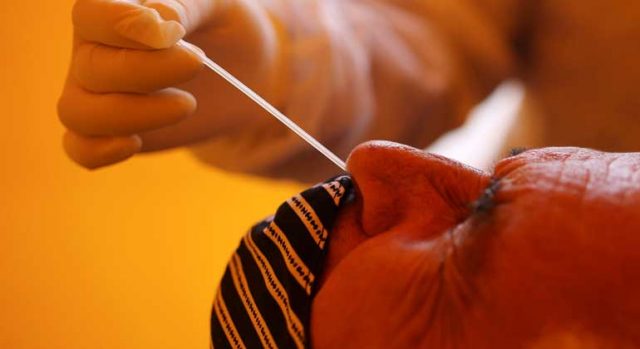
A SENATE BILL is proposing to require free coronavirus testing for all jobseekers.

Senator Juan Edgardo M. Angara filed Senate Bill No. 2291 which will require the government to pay for testing costs of those seeking employment.

“Through this proposed measure, the government by covering the additional pre-employment cost (of) COVID-19 tests, promotes the safety of jobseekers and ensures the sustainability of businesses and jobs by subsidizing the COVID-19 testing especially for the micro, small and medium enterprises,” he said in the bill’s explanatory note.

“Through this policy, we are not only recognizing the importance of ensuring the safety and health of our entire workforce but we are also providing equal employment opportunities for younger cohorts and those who became unemployed during the pandemic to enter the labor market,” he added.

Mr. Angara cited the World Employment and Social Outlook Trends 2021 report by the International Labor Organization released in June which estimated that the pandemic resulted in the loss of 8.8% of total working hours in 2020 or the equivalent of the hours worked in one year by 255 million full-time workers.

Unemployment in the Philippines was 8.7% in April, representing about 4.14 million jobless. The rate rose from 7.1% in March, according to the Philippine Statistics Authority.

The bill will require the Health department, in cooperation with the Department of the Interior and Local Government, the Department of Labor and Employment (DoLE) and the Department of Trade and Industry (DTI) to provide free and accessible coronavirus testing for jobseekers.

The measure covers first-time jobseekers, unemployed persons actively seeking work, and displaced workers who were terminated for various acceptable reasons, including the pandemic.

Testing centers are to allocate a percentage of their daily testing slots for jobseekers covered by the bill.

The DoLE and DTI in a memorandum circular in August clarified that coronavirus testing is not recommended nor required for employees without symptoms who are returning to work.

Mr. Angara also noted that while there is free coronavirus testing offered by the Philippine Health Insurance Corp., it is only limited to at-risk individuals with severe and mild symptoms with travel histories or contact with known victims, healthcare workers, senior citizens, and returning overseas Filipino workers. — Vann Marlo M. Villegas