Home Blog Page 7931

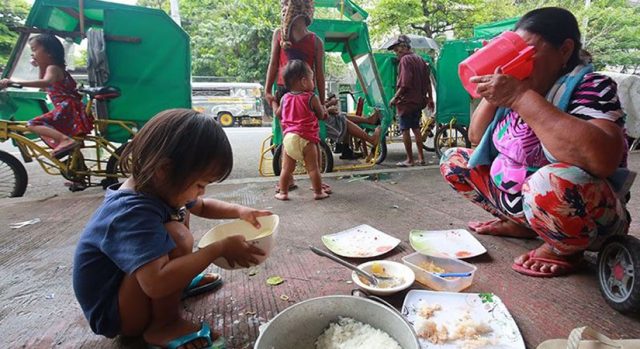
Program delivery at local government unit level seen as key to addressing undernutrition

PHLSTAR FILE PHOTO

IMPLEMENTATION of nutrition policy needs to be improved to address undernutrition among Filipino children, a Zuellig Family Foundation official said.

“We are not lacking in good nutrition laws. We are also not lacking in assessment reports,” he said. “Our challenge really is implementation,” Zuellig Family Foundation Chairman Ernesto D. Garilao said at the launch of a World Bank report on undernutrition.

Local governments are key to implementing such laws, he said, but noted limited understanding of nutrition challenges among public officials.

“Oftentimes, it is reduced to feeding (programs). But the multi-sectoral approach is just not there.”

Mr. Garilao said that the heads of local governments must have targets to address nutritional issues to guide the investment of resources into programs with specific goals. Current programs should also be coordinated, he added.

The World Bank on Tuesday released its report, Undernutrition in the Philippines: Scale, Scope, and Opportunities for Nutrition Policy and Programming.

It found that the coronavirus pandemic has compounded high rates of food insecurity and stunted growth among Filipino children.

“The Philippines has the basic infrastructure to deliver essential nutritional investments to its people. But the delivery mechanisms are fragmented, and gaps may have widened as a consequence of the COVID-19 pandemic,” the World Bank said.

Childhood stunting in the Philippines is at 30%, making it one of the top 10 countries for this particular indicator, it said.

“The country’s rate of stunting is high not only for its level of income but also compared with the rates of most of its neighbors. Other countries with similar levels of income have rates of stunting averaging around 20%.”

The report found that municipalities face common problems when implementing nutrition interventions. Municipalities have insufficient funding for programs and lack full-time nutrition and health staff. Nutrition is rarely a priority for local government units (LGUs) that focus on other infrastructure projects, the World Bank said, leaving non-government organizations to fund nutrition programs.

LGUs also lack reliable information on their nutrition problems and progress.

“Increasing the budget allocation and providing a separate budget for nutrition would demonstrate strong support for the nutrition agenda of the LGUs,” the report said.

“Both executive and legislative bodies in the municipalities need to prioritize and vigorously support nutrition interventions.” — Jenina P. Ibañez

Palace rejects call for drug war probe by ICC

PCOO

By Kyle Aristophere T. Atienza, Reporter

THE PALACE has rejected the recommendation by the International Criminal Court’s (ICC) chief prosecutor to formally open a probe into the alleged crimes against humanity committed in Philippine President Rodrigo R. Duterte’s war against drugs, saying the development is “legally erroneous and politically motivated.”

The move is legally flawed “because the ICC has no jurisdiction over the subject matter of crimes against humanity,” Presidential Spokesperson Herminio L. Roque, Jr. told a televised news

ICC Chief Prosecutor Fatou Bensouda recently asked the Hague-based tribunal’s pre-trial chamber to allow her office to probe the killings relating to the Philippines’ anti-drug campaign.

“I announce that the preliminary examination into the situation in the Republic of the Philippines has concluded and that I have requested judicial authorization to proceed with an investigation,” Ms. Bensouda said in a statement on June 14.

Ms. Bensouda said her office has already been “taking a number of measures to collect and preserve evidence” in anticipation of a possible probe.

Mr. Roque said the President and his government would not cooperate with the ICC on any potential investigation.

He said ICC’s latest move is “barred by the principle of complementarity” and is “not pursuant or in aid of substantial justice.”

The Philippines is no longer a member of the ICC, Mr. Roque said, adding that the international tribunal would not be able to build a case without Manila’s cooperation.

The Philippine Supreme Court in March junked petitions challenging Mr. Duterte’s unilateral decision to withdraw from the ICC, which took effect in 2019 or exactly a year after Manila announced leaving the only permanent war crimes tribunal.

A withdrawal from the ICC shall “take effect one year after the date of receipt of the notification,” according to court rules.

Ms. Bensouda, however, said, “Although the withdrawal of the Philippines from the Rome Statute of the ICC took effect on 17 March 2019, as the Court has previously found in the context of the Burundi situation, the Court retains jurisdiction over crimes that are alleged to have occurred on the territory of that State during the period when it was a State Party to the Rome Statute.”

“Moreover, these crimes are not subject to any statute of limitation,” she said.

Mr. Roque earlier said ICC should only “exercise jurisdiction” if local courts are unwilling or unable to hold people accountable for international crimes.

LAST RESORT
The Department of Foreign Affairs (DFA), in a separate statement, said the ICC is intended as “a court of last resort.”

DFA cited that State Parties to the Rome Statute, which formed the ICC, “envisioned a court with a complementary, not primary, jurisdiction for the prosecution” of the persons responsible for most serious crimes of international concern.

The Statute also requires the Court and the Office of the Prosecutor to respect and defer to the primary criminal jurisdiction of the State party, “while proceedings are ongoing in the latter,” DFA said.

The Philippine Department of Justice has formed a special panel to review cases relating to alleged extra-judicial killings committed during illegal drug operations.

DFA said the government has taken “concrete and progressive steps” to address concerns on the anti-illegal drugs campaign and finalized with the United Nations a Joint Program on Human Rights.

“All these affirms the Philippines’ adherence to human rights norms and its long track record of constructive engagement with international and regional partners in human rights promotion and protection,” it said.

Justice Secretary Menardo I. Guevarra, for his part, said the development at the ICC “has absolutely no effect” on his department’s “ongoing work of the review panel on drug deaths, as well as on the Philippines-(United Nations) joint program on technical cooperation on human rights.”

National Union of Peoples’ Lawyers (NUPL) President Edre U. Olalia, meanwhile, said the potential investigation before the international court “should be a wakeup call to rouse those who are fast asleep while thousands they have silenced are still in mourning.” 

On Monday, hours before the ICC statement was posted, a human rights group assisted by the NUPL submitted a supplemental pleading to the ICC asking for an investigation on the alleged human rights violations in the Philippines and to issue a warrant of arrest for Mr. Duterte while the probe is ongoing.

Mr. Duterte, on the other hand, renewed his threat against those involved in the illegal drug trade.

“Do not destroy my country, I will kill you,” he said in a televised public address on Monday night. “Do not destroy the youth of the land.”

At least 122 children were killed in the government’s deadly drug war between July 2016 and Dec. 2019, according to the World Organization Against Torture.

Government data showed that authorities have killed 6,117 people supposedly involved in the illegal drug trade since Mr. Duterte assumed the presidency in 2016.

Tens of thousands of drug suspects may have been killed in police anti-drug operations, according to the United Nations.

Ms. Bensouda said “any authorized investigation” into the Philippine drug war will fall to her successor, Karim Khan, as her term is set to end this month.

DFA said the move of the prosecutor before she ends her term “preempts the prerogative of her successor” to conduct a full evaluation of cases. with reports from Vann Marlo M. Villegas and Bianca Angelica D. Añago

SC orders Marcos ally to pay P1B + interest over nuclear plant

PHILSTAR

THE SUPREME Court (SC) on Monday ordered businessman Herminio T. Disini, a known associate of the late dictator Ferdinand E. Marcos, to pay the Philippine government P1.1 billion for damages in connection with his role in the awarding of the contract for the mothballed Bataan Nuclear Power Plant (BNPP) project in the 1970s.

The high court’s decision, with a unanimous vote of 12-0 with two inhibitions,  is a modification of the anti-graft court Sandiganbayan’s 2012 decision on the case, which ordered Mr. Disini to pay $50.6 million or P2.4 billion, the supposed value of his commissions in sealing the project contract that was awarded to Westinghouse Electrical Corporation.

The Supreme Court said the Sandiganbayan “erred in relying on a piece of photocopied document which was not substantiated as a secondary evidence, and which purportedly showed that (Mr.) Disini received US$50 Million in commissions.”

Nonetheless, the high court said the testimonial and documentary evidence of the Philippine government through the Presidential Commission on Good Government (PCGG) proved that Mr. Disini unfairly benefited at the expense of the Filipino people and of the Republic of the Philippines.

The new P1.1 billion monetary awards, the court said, “shall earn legal interest at the rate of 6% per annum from the finality of this Decision until its satisfaction.”

The decision was written by Associate Justice Ramon Paul L. Hernando.

Chief Justice Alexander G. Gesmundo and Associate Justice Amy Lazaro-Javier inhibited from the case as they “had lawyered for the PCGG in the past when they were still with the (Office of the Solicitor General),” according to SC spokesman Brian Keith F. Hosaka.

In 1987, the PCGG filed a complaint before the Sandiganbayan “for restitution and damages” against Mr. Disini, the late former president and his wife Imelda Marcos for allegedly receiving a commission of 3% of the contract price for the nuclear power plant project.

The anti-graft Court found Mr. Disini guilty but absolved the Marcos couple. — Bianca Angelica D. Añago

Another P25B needed to vaccinate minors, says Finance chief

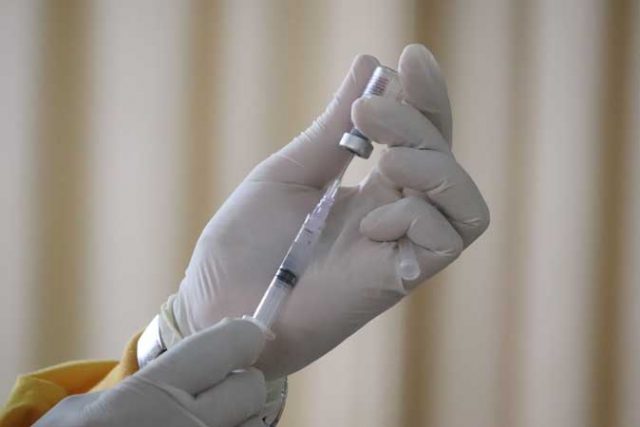
FINANCE Secretary Carlos G. Dominguez III said an additional P25 billion might be needed to buy coronavirus vaccines for minors, or those between 12 to 17 years old.

He told the Senate Committee of the Whole hearing on Tuesday that the country currently has a total budget of P88.6 billion for vaccines, enough to procure about 148 million doses and inoculate 70 million Filipinos or all of the adult population.

“At the moment, we have the money to fully scale up our vaccination program to the end of the current year,” he said.

Mr. Dominguez said they are also preparing for the purchase of booster shots of one dose for around 85 million adults and teenagers which could cost around P60 billion.

“The proposal is to include such supplemental amounts in the 2022 budget,” he said.

Meanwhile, Trade Secretary Ramon M. Lopez said allowing vaccinated minors to leave their homes is now being discussed by the government’s policy makers.

They could be gradually allowed to go outside after they have been vaccinated against coronavirus disease 2019 (COVID-19), Mr. Lopez told Radyo Pilipinas on Tuesday.

“That is already being discussed so that means, perhaps, they can be scheduled for vaccination next,” Mr. Lopez said in Filipino.

Fully-vaccinated senior citizens have recently been allowed to leave their homes, although travel is restricted to areas under the two most relaxed quarantine levels.

The local regulator has approved the use of the Pfizer jab for adolescents in the Philippines. The Health department, however, said the country will still focus on inoculating priority sectors while supplies are low.

VACCINE DELIVERIES
Vaccine czar Carlito G. Galvez, Jr. said during the Senate hearing Tuesday that the country is expecting the delivery of 6.4 million doses of vaccines in the remaining weeks of June.

Mr. Galvez said in his presentation that 1.5 million doses form Sinovac Biotech Ltd. will arrive on June 17 and another one million doses on June 24.

Another 1.5 million doses from Sinovac will also arrive within the month but there is no specific date yet, he said.

A total of 250,000 doses from Moderna will arrive on June 25 and some two million doses from AstraZeneca in the third week of June. Also expected within the month are 150,000 doses of Sputnik V.

“For these coming weeks, we are expecting to receive 6.4 million vaccines,” Mr. Galvez said.

For July, about 11.67 million doses are expected, 4.5 million of which are from Sinovac. Another four million will come from the global initiative for equitable access to vaccines under the World Health Organization or the COVAX facility, one million doses from Moderna, 1.17 million from AstraZeneca, and one million from Sputnik V.

Mr. Galvez said that by the end of the second quarter, the Philippines would have received 30.8 million doses. For the third and fourth quarters, the country is expected to receive an average of 15 to 20 million per month.

The Philippines recently received 2.2 million Pfizer doses from the COVAX global facility.

Japanese Ambassador to the Philippines Kazuhiko Koshikawa tweeted on Tuesday that Japan will donate AstraZeneca vaccines to the country.

“Glad to be the bearer of good news today! Japan will donate AstraZeneca vaccines to the Philippines, and we’ll make sure to deliver them at the soonest possible time so no one gets left behind during this pandemic,” he said in a tweet.

Mr. Dominguez also said in the hearing that Japan Foreign Minister Toshimitsu Motegi announced that they will donate Japan-made AstraZeneca vaccines to some countries including the Philippines, but they have not been informed yet on the number of doses.

CASE TALLY
Meanwhile, the Department of Health reported 5,389 coronavirus infections on Tuesday, bringing the total to 1.3 million.

The death toll rose by 118 to 22,963, while recoveries increased by 6,667 to 1.2 million, it said in a bulletin.

There were 58,063 active cases, 1.3% of which were critical, 91.8% were mild, 3.8% did not show symptoms, 1.8% were severe and 1.30% were moderate.

About 13.3 million Filipinos have been tested for the coronavirus as of June 13, according to the Health department’s tracker website.

Mr. Galvez said more than seven million vaccine doses had been administered as of June 14, with around 1.9 million individuals who had been fully vaccinated. — Vann Marlo M. Villegas with a report from Jenina P. Ibañez

US Embassy welcomes deferment of VFA termination 

PHILIPPINE STAR/KRIZJOHN ROSALES

THE United States Embassy in the Philippines on Tuesday welcomed President Rodrigo R. Duterte’s postponement on the termination of a military agreement between the two countries by another six months.  

“Our alliance continues to contribute not only to the security of our two nations, but also strengthens the rules-based order that benefits all nations in the Indo-Pacific,” it said in a statement.  

Foreign Affairs Secretary Teodoro L. Locsin, Jr. in a video message late Monday said Mr. Duterte decided to extend his order to suspend the termination of the  

visiting forces agreement (VFA), which involves the deployment of troops for joint drills.  

Mr. Duterte in February last year said he would terminate the VFA after the US Embassy cancelled the visa of his ally, Senator Ronald M. de la Rosa. 

He suspended the abrogation for six months in June, citing heightened tensions in the region and that it was a distraction to the countries’ anti-coronavirus efforts. It was suspended anew for another six months in December.  

Philippine Ambassador to the US Jose Manuel G. Romualdez, in a briefing on June 4, said the two nations spent a lot of time to discuss how to improve the pact. He also said that the agreement is “kind of a bigger picture of our relationship, especially in our Mutual Defense Treaty.”  

US Embassy in the Philippines Chargé d’Affaires John Law said in the same briefing that the VFA “has been a fundamental part of helping make the Mutual Defense Treaty successful.” — Vann Marlo M. Villegas 

PHL, other nations should question China’s coast guard law — Carpio  

PHIL COAST GUARD

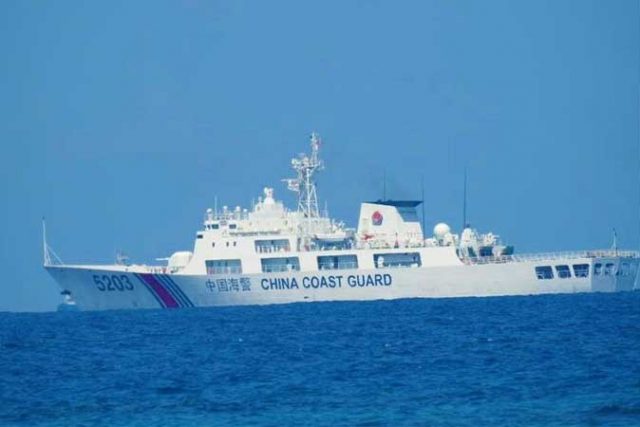
THE PHILIPPINES and other nations should question China’s recent law allowing its maritime forces to fire at foreign vessels in the South China Sea,   including those in disputed waters, according to a retired Supreme Court senior associate justice.   

China’s coast guard law is a “grave threat” to the continuance of the law of the sea and to world peace, retired Senior Associate Justice Antonio T. Carpio said during a webinar of the Center for Strategic and International Studies on Tuesday.  

“The coast guard law violates international law because it allows China to use force in waters beyond its jurisdiction. The world must seek the invalidation of China’s new coast guard law before relevant international tribunals,” Mr. Carpio said.   

Mr. Carpio also cited the declining reserves in the country’s Malampaya gas field situated in Palawan — which accounts for 20% of the country’s total electricity needs — as one of the reasons why actions should be taken against China’s coast guard law.   

He said the Philippines will have to make a move to get the gas reserves in Reed Bank located within the country’s exclusive economic zone (EEZ).  

He cited that neighboring countries such as Vietnam and Malaysia are also looking to explore and exploit gas reserves within their respective EEZs.    

“In the next two to five years, there will be a situation where the Philippines, Vietnam, Malaysia, and Indonesia will be exploring for gas or oil within the nine-dash line claim of China. As a result, China will have to decide whether to enforce its coast guard law or not,” Mr. Carpio said.   

“I think there will be an incident because even in the absence of a coast guard law, we already have standoffs. Before that incident arises, let’s find a way to question the coast guard law of China before an international tribunal to strengthen our position,” he added.    

A ruling in 2016 rejected China’s claim to more than 80% of the South China Sea based on its nine-dash line drawn on a 1940s map. China, however, has refused to recognize the ruling and has intensified presence in disputed areas.   

The Philippines has filed several diplomatic protests against the incursions. — Revin Mikhael D. Ochave   

Senator Gordon calls for eased quarantine rules for vaccinated overseas Filipinos, foreigners

PHILIPPINE STAR/EDD GUMBAN

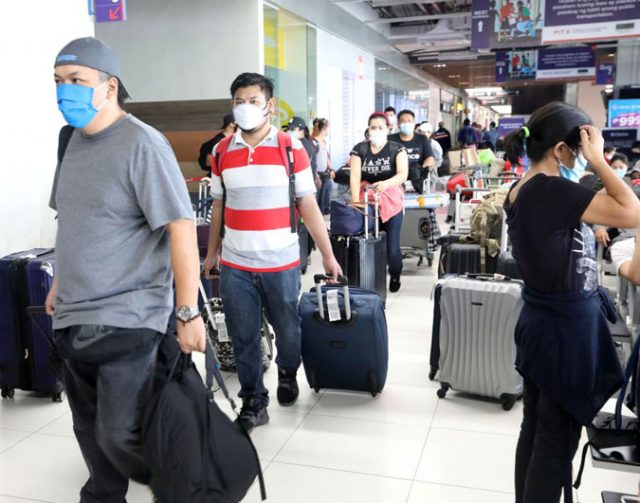
A SENATOR on Tuesday called on the national task force handling the coronavirus response to ease the quarantine protocols for all fully vaccinated overseas Filipinos returning to the country. 

Senator Richard J. Gordon said he sent a letter to Secretary Carlito G. Galvez, Jr., the task force chief implementer, recommending that returning migrants who have been vaccinated either abroad or in the Philippines be allowed to directly go on home quarantine for seven days and be tested for coronavirus within the fifth to seventh day of isolation.  

Mr. Gordon also said that the returning Filipino may only be allowed to interact with their household and community after testing negative for the disease.  

He said requiring returning Filipinos, especially overseas workers, to quarantine for 14 days “will cause a drain on their resources and take away from the time they are planning to spend with their families from whom they have already been separated for years.”  

“I, therefore, urge you to consider the above recommendation in order to help alleviate the financial and emotional expense to our people during these trying times,” he said in the letter.  

Earlier this month, the task force approved the rules cutting the quarantine period of fully vaccinated Filipinos to seven days, but this would only apply to those who got their jabs in the Philippines.   

Returning Filipinos who got vaccinated abroad must still undergo a 10-day quarantine at a facility and four days at home.  

Mr. Gordon also recommended that fully vaccinated foreign tourists and businessmen be allowed to enter the Philippines with a negative swab test result taken within 48 hours before the flight. They will also be required to undergo five days hotel quarantine upon arrival.  

They would also be tested on their third or fifth day of isolation and may be released upon receiving a negative test result, the senator proposed. — Vann Marlo M. Villegas 

Vaccination starts for cops on the frontline

PNA.GOV.PH

THE PHILIPPINE National Police (PNP) on Tuesday started the vaccination of cops on the frontlines of the coronavirus pandemic, starting with those in the capital region.   

“We were given 500 vaccines for today’s vaccination,” said Police chief Guillermo T. Eleazar, who received a CoronaVac shot developed by Sinovac Biotech, Ltd. during the launching ceremony.    

He said the doses used in at least eight vaccination sites in Metro Manila were part of the 53,000 vaccines given to the capital region.  

Mr. Eleazar said members of the PNP Command Group were also injected with their initial vaccine doses to encourage police officers to receive their jabs.  

He noted that more than 92% of police officers are now willing to receive a coronavirus vaccine. Cops who decline to be inoculated would not be penalized, the police chief said.   

As of June 14, PNP data show 25,866 police officers and non-uniformed personnel have tested positive for coronavirus. Of the total, 1,865 are active cases, 23,930 have recovered, while 71 died. — Kyle Aristophere T. Atienza 

Comelec launches mobile app to ease 1st step in voter registration

PHILSTAR

THE COMMISSION on Elections (Comelec) on Tuesday launched a mobile application that digitalizes the first step in voter registration — filling up an application form without the need to print a copy.    

After downloading the app, a QR code will be generated upon accomplishment of the form. The code can then be scanned, using Bluetooth, at the local Comelec office for processing the applicant’s biometrics.  

Under the Comelec’s web-based registration, applicants still need to make a hard copy of the form and submit this to the commission’s local office.   

“The launch of the mobile app is very timely in the face of mobility restrictions brought about by COVID-19 (coronavirus disease 2019) because you will only need a smartphone to accomplish the form. This will save time, effort and money that will otherwise be spent on going to a computer shop to download and print the form, or getting the form at the local Comelec (office) to fill it out manually,” said Comelec Commissioner Marlon S. Casquejo who conceptualized the project.  

However, the mobile app developed in-house by the Comelec is still limited to android phone users within pilot areas across the country.   

Mr. Casquejo, speaking during the launching ceremony held in Tagum City and streamed online, said they are hoping that this additional platform for registration, although still limited, will help boost the number of voters for next year’s national and local elections.   

He added that the Comelec team is working on expanding the availability of the mobile app soon. Voter registration and transfers will be until end-September. MSJ

Palace clarifies policy on reopening of gyms 

PHILSTAR

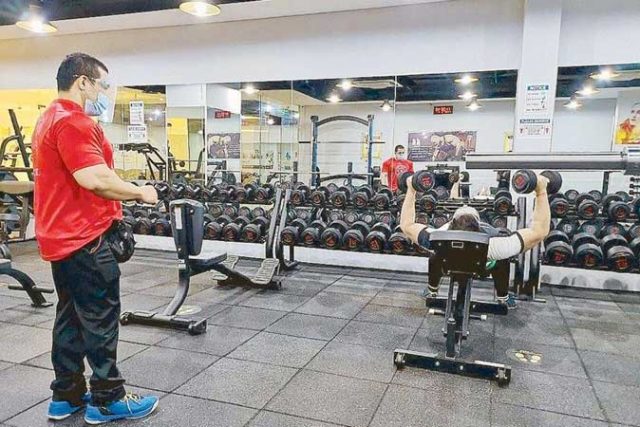
THE PALACE on Tuesday clarified that fitness studios would be allowed to operate in areas under a general community quarantine (GCQ) “with some restrictions” at 20% of venue capacity.   

Presidential Spokesperson Herminio “Harry” L. Roque, Jr. said in a virtual press briefing that those with a safety seal from government would be incentivized with an additional 10% capacity.  

Gyms in areas under GCQ “with heightened restrictions” and modified lockdown are not allowed to operate.  

The Trade department earlier said about 22,000 displaced workers in the fitness industry would be able to regain their jobs with the reopening of gyms.  

President Rodrigo R. Duterte on Monday night placed Metro Manila and Bulacan under a general quarantine with “some restrictions.”   

The provinces of Rizal, Laguna, and Cavite would remain under a general quarantine with tightened rules. 

Indoor dining in Metro Manila and Bulacan would be allowed at 40% venue capacity, according to the matrix of restrictions released by the Palace.   

It said indoor dining would be allowed at 20% venue capacity in areas under GCQ with heightened restrictions. 

Outdoor dining would be allowed at 50% venue capacity in areas under GCQ “with some restrictions” and “heightened restrictions.” 

Restaurants with a safety seal would be given additional 10% venue capacity. — Kyle Aristophere T. Atienza 

Stocks advance as government relaxes lockdown

SHARES climbed further on Tuesday after the government eased quarantine restrictions in some parts of the National Capital Region (NCR) Plus bubble.

The Philippine Stock Exchange index (PSEi) went up by 59.24 points or 0.85% to close at 6,976.73 on Tuesday, while the broader all shares index gained 31.52 points or 0.75% to end at 4,222.88.

“As [the] government continued with its easing of restrictions after June 15, this further [improved] the sentiment among investors, thus further moving the markets upward,” Diversified Securities, Inc. Equity Trader Aniceto K. Pangan said in a text message.

The government on Monday announced that Metro Manila and Bulacan will be placed under general community quarantine (GCQ) status “with some restrictions,” while Cavite, Laguna, and Rizal will remain under GCQ “with heightened restrictions.”

Meanwhile, Philstocks Financial, Inc. Research Associate Claire T. Alviar said the “strong performance” of the S&P 500 and Nasdaq may have also contributed to the local market’s close on Tuesday.

“Overnight, the S&P 500 and the Nasdaq closed at record highs due to the strong performance of the tech shares,” Ms. Alviar said in a Viber message yesterday.

Overnight, the S&P 500 and Nasdaq closed at record highs, helped by tech names, though the Dow Jones Industrial Average fell 0.25%, Reuters reported.

Asian shares rose early on Tuesday, tracking Wall Street higher, though investors looked to a much-anticipated Federal Reserve policy meeting to see if the central bank would signal any change to the US monetary policy outlook.

Back home, majority of sectoral indices posted gains on Tuesday except for financials, which lost 5.25 points or 0.35% to 1,482.83.

Meanwhile, industrials climbed by 196.58 points or 2.09% to 9,568.01; mining and oil went up by 192.30 points or 2.04% to 9,592.38; holding firms improved by 92.47 points or 1.33% to close at 7,027.79; property gained 25.93 points or 0.76% to finish at 3,429.14; and services increased by 2.36 points or 0.15% to 1,562.82.

Value turnover rose to P8.03 billion on Tuesday with 5.13 billion shares switching hands, from the P6.32 billion with 3.93 billion issues traded the previous day.

Advancers narrowly beat decliners, 106 against 101, while 59 names closed unchanged.

Foreigners turned sellers with P58.79 million in net outflows on Tuesday from the P20.36 million in net purchases seen on Monday.

AB Capital Securities, Inc. Junior Equity Analyst Lance U. Soledad said he expects the market to trade between 6,900 to 7,000 on Wednesday.

“We might see some profit taking as what we saw earlier in the session [on Tuesday] given that the index is in overbought levels,” Mr. Soledad said in a Viber message. — K.C.G. Valmonte with Reuters

Peso weakens to P48-a-dollar level

THE PESO sank to the P48-a-dollar level on Tuesday on demand for the greenback as the government moved to reopen the economy further.

The local unit closed at P48.03 versus the dollar on Tuesday, depreciating by 14 centavos from its P47.89 finish on Monday, data from the Bankers Association of the Philippines showed.

The peso opened the session at P47.90 per dollar. Its weakest showing was at P48.077, while its strongest level intraday was at P47.89.

Dollars exchanged rose to $1.158 billion on Tuesday from the $1.001 billion recorded on Monday.

The peso weakened due to an increase in corporate demand for the dollar, which could mean that local firms are gearing up to buy imported components for their production as the economy reopens further, UnionBank of the Philippines, Inc. Chief Economist Ruben Carlo O. Asuncion said in a text message.

President Rodrigo R. Duterte on Monday night said Metro Manila and Bulacan, which are part of the so-called NCR (National Capital Region) Plus bubble will be under with general community quarantine (GCQ) “with some restrictions” for the rest of the month, while, other provinces part of the group such as Rizal, Laguna, and Cavite will remain under GCQ “with heightened restrictions.”

Meanwhile, Rizal Commercial Banking Corp. Chief Economist Michael L. Ricafort said the peso depreciated as the market was cautious ahead of the US Federal Reserve’s policy meeting.

The US central bank’s policy-setting body is set to meet on Tuesday and Wednesday and while it is widely expected to keep borrowing costs steady, it may discuss tapering its massive asset purchases.

For today, Mr. Asuncion gave a forecast range of P47.95 to P48.25 per dollar, while Mr. Ricafort expects the local unit to move within a slimmer band of P47.95 to P48.10. — LWTN

ADVERTISEMENT
ADVERTISEMENT