Home Blog Page 7926

Shares drop as cautiousness linger in market

COURTESY OF PHILIPPINE STOCK EXCHANGE, INC.

STOCKS went down on Wednesday as investors remained concerned over the country’s coronavirus disease 2019 (COVID-19) situation amid the easing of quarantine restrictions in Metro Manila and nearby provinces.

The benchmark Philippine Stock Exchange index (PSEi) declined by 3.38 points or 0.04% to close at 6,973.35 on Wednesday, while the all shares index went down by 1.08 points or 0.02% to 4,221.80.

“The PSEi ended just a few points lower, mainly a flat performance as gains in blue-chip banks offset minor losses in holding firms and other issues that rallied in the previous session,” AAA Southeast Equities, Inc. Research Head Christopher John Mangun said in an e-mail.

“The index fluctuated throughout the day, as investors weighed carefully the decision of the government to ease the quarantine measures currently implemented in the capital region, against the rising COVID-19 cases in other regions of the country,” Darren Blaine T. Pangan, trader at Timson Securities, Inc., said in a Viber message.

Meanwhile, China Bank Securities Corp. Research Associate Zoren Philip A. Musngi said investors were “generally bullish” due to the strong remittances data seen in the month of April and the developments in the country’s vaccination program.

“The day’s rally was led by the financials sector, which is seeing some investor interest after BSP (Bangko Sentral ng Pilipinas) Governor Benjamin E. Diokno recently said that lending is expected to grow by [the third quarter] as confidence recovers due to reopening of economy,” Mr. Musngi said in a separate e-mail.

The central bank reported on Tuesday that cash remittances rose by 12.7% year on year to $2.305 billion in April.

Meanwhile, Mr. Diokno said last week that lending could return to growth next quarter as confidence improves on the back of progress in the government’s vaccination program.

Most sectoral indices closed in the red on Wednesday except for financials, which gained 37.72 points or 2.54% to 1,520.55, and property, which improved by 19.80 points or 0.57% to finish at 3,448.94.

Meanwhile, mining and oil shed 188.61 points or 1.96% to 9,403.77; industrials lost 122.12 points or 1.27% to 9,445.89; services went down by 16.08 points or 1.02% to close at 1,546.74; and holding firms declined by 39.90 points or 0.56% to 6,987.89.

Value turnover increased to P10.71 billion with 5.22 billion issues traded on Wednesday, from the P8.03 billion with 5.13 billion shares switched hands on Tuesday.

Advancers beat decliners, 111 against 96, while 53 names closed unchanged.

Net foreign selling ballooned to P625.17 million on Wednesday from the P58.79 million seen on Tuesday.

Timson Securities’ Mr. Pangan expects the index to trade between 6,760 to 7,090.

“For [Thursday], we expect another attempt to break through the 7,000 resistance level, but ultimately might end up lower as more investors take profit…,” China Bank Securities’ Mr. Musngi said. — Keren Concepcion G. Valmonte


Peso retreats vs dollar on higher oil prices, US central bank meet

BW FILE PHOTO
THE PESO declined versus the dollar on Wednesday due to higher oil prices and as the market waited for the US central bank’s policy decision. — BW FILE PHOTO

THE PESO retreated versus the greenback for the third straight day due to higher oil prices and as the market was waiting for the policy decision of the US Federal Reserve.

The local unit closed at P48.09 per dollar on Wednesday, shedding six centavos from its P48.03 finish on Tuesday, data from the Bankers Association of the Philippines showed.

The peso started the session at P48.08 per dollar. Its weakest showing was at P48.19 while its intraday best was at P48.05 against the greenback.

Dollars exchanged slipped to $1.151 billion on Wednesday from $1.158 billion on Tuesday.

The peso weakened due to higher dollar demand and as higher oil prices could increase the country’s import bill, Rizal Commercial Banking Corp. Chief Economist Michael L. Ricafort said in a text message.

Reuters reported that oil prices continued to increase due to the recovery in demand and a drop in US crude inventories. Brent crude rose 29 cents or 0.4%, at $74.28 a barrel by 0815 GMT on Wednesday, and earlier reached $74.73, the highest since April 2019.

Meanwhile, a trader said the market was risk-off mode due to US data and ahead of the latest monetary policy decision of the Fed.

“The peso depreciated following the stronger-than-expected US producer inflation report and caution ahead of the Fed policy decision,” the trader said in an e-mail.

The US Labor department on Tuesday reported that its producer price index for final demand rose by 0.8% in May after a 0.6% rise in April. In the 12 months through May, the index rose 6.6%, which is the quickest since November 2010.

Meanwhile, the Fed was set to end a two-day policy meeting overnight, where it was expected to keep rates steady and discuss the unwinding of its asset purchase program.

For today, Mr. Ricafort expects the local to move within the P48.03 to P48.18 band, while the trader gave a wider forecast range of P48.00 to P48.20 per dollar. — LWTN with Reuters

COVID-19 deaths top 23,000; two cities flagged

REUTERS

By Kyle Aristophere T. Atienza, Reporter

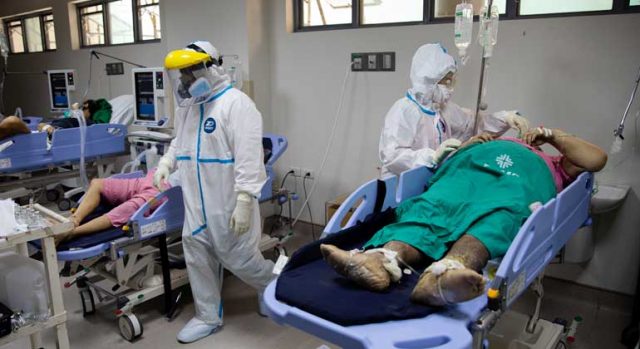
THE HEALTH department on Wednesday flagged hospitals in two cities near the Philippine capital that are near their breaking point, as coronavirus deaths nationwide breached 23,000.

The cities of Makati and Muntinlupa have been overwhelmed by COVID-19 infections despite falling healthcare use rate in the capital region, Health Undersecretary Leopoldo J. Vega told a televised news briefing.

The Department of Health (DoH) reported 5,414 coronavirus infections on Wednesday, bringing the total to 1.33 million.

The death toll rose by 158 to 23,121, while recoveries increased by 7,637 to 1.25 million, it said in a bulletin.

The use rate of hospitals in Makati and Muntinlupa had almost reached a high-risk level, Mr. Vega said.

Mr. Vega said hospitals in Rizal province near the capital region have also been overwhelmed by rising coronavirus infections.

Metro Manila hospitals could still accommodate more coronavirus patients from other provinces because critical care room were still available.

Mr. Vega said the operation of command centers responsible for referring coronavirus patients to hospitals has improved after adding 80 more workers.

The government has set up regional command centers in Southern Tagalog, Central Luzon, Southern Mindanao and the Caraga region, he said.

DoH said there were 56,170 active cases, 1.3% of which were critical, 91.4% were mild, 4% did not show symptoms, 1.9% were severe and 1.36% were moderate.

The agency said 11 duplicates had been removed from the tally, seven of which were tagged as recoveries.

Two patients tagged as recoveries had been removed from the tally after they were found to be negative.

A total of 375 recoveries were reclassified as active cases, while 117 cases tagged as recoveries were reclassified as deaths. Six laboratories failed to submit data on June 14, the agency said.

About 13.3 million Filipinos have been tested for the coronavirus as of June 14, according to DoH’s tracker website.

The coronavirus has sickened about 177.4 million and killed 3.8 million people worldwide, according to the Worldometers website, citing various sources including data from the World Health Organization.

About 161.9 million people have recovered, it said.

Meanwhile, Mindanao won’t be left behind in the state’s vaccination drive, vaccine czar Carlito G. Galvez, Jr. said.

The region, where some cities have been experiencing a surge in infections, would receive more coronavirus vaccines once more supplies arrive this month, he said in a statement.

Cagayan De Oro City Rep. Rufus B. Rodriguez on Monday said his city and other areas faced surging coronavirus infections because pandemic officials have failed to give them enough vaccines.

“The National Task Force against COVID-19 would like to assure our honorable members of Congress that we will not neglect the regions, especially those in Mindanao, in our vaccine deployment,” Mr. Galvez said.

“Following President Rodrigo Duterte’s directive to deploy more vaccines to the regions, we will immediately send more vaccines to Mindanao as soon as the rest of the deliveries arrive this month,” he added.

Presidential spokesman Herminio L. Roque, Jr., on Tuesday blamed the local governments for failing to enforce lockdowns and ignoring health protocols.

“We are getting more vaccines there very soon, and Mindanao will not be left behind,” Mr. Galvez said. “This is my promise to all Mindanaoans.”

Philippine pandemic officials have said about 1.7 million doses of coronavirus vaccines had been given out in Mindanao as of June 14.

Manila has received more than 12 million vaccine doses. About six million more doses from different manufacturers are expected to arrive this month.

President Rodrigo R. Duterte on Monday night further relaxed the lockdown in Metro Manila and Bulacan province amid easing coronavirus infections, and kept the travel ban on India and its neighbors to prevent the entry of a more contagious variant.

The areas were placed under a general community quarantine “with some restrictions” from June 16 to June 30.

The President also extended the travel ban on travelers from India, Pakistan, Bangladesh, Sri Lanka, Nepal, the United Arab Emirates and Oman until the end of the month, his spokesman said in a separate statement. — with Vann Marlo M. Villegas

ICC likely to proceed with drug probe, says opposition lawmaker

SENATE PRIB

THE INTERNATIONAL Criminal Court (ICC) would probably go ahead with its investigation of President Rodrigo for alleged crimes against humanity in connection with his deadly war on drugs despite his noncooperation, according to an opposition senator.

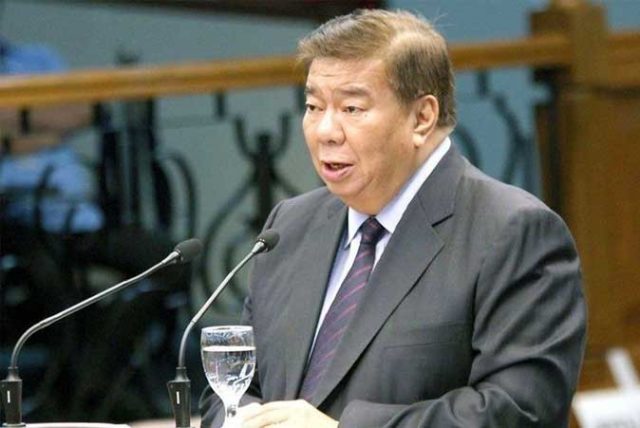
“It’s easy to say ‘I will not recognize [the ICC jurisdiction]’ but when you start to talk about the path that is being undertaken, the nonrecognition will not result in the ICC stopping its investigation,” Senator Franklin M. Drilon told the ABS-CBN News Channel on Wednesday.

He noted that ICC Chief Prosecutor Fatou Bensouda had ruled that the international tribunal could proceed with the probe even after the Philippines withdrew from the ICC.

“The President’s advisers are at a crossroad,” said Mr. Drilon, who is a lawyer. He added that Mr. Duterte could end up failing to defend himself if he fails to cooperate with the investigation.

Ms. Bensouda on June 14 asked the ICC’s pre-trial chamber to allow her office to probe the death of drug suspects in the Philippines.

She said she had finished a preliminary prober and has requested judicial authorization to proceed with an investigation.

Presidential spokesman Herminio L. Roque, Jr. on Tuesday said the move was “legally erroneous and politically motivated,” adding that the ICC does not have the power to hear cases involving crimes against humanity.

He also said the government would not cooperate with any investigation by the ICC, adding that the Philippines is no longer an ICC member.

Ms. Bensouda has said the court could still investigate alleged crimes that Philippine authorities committed when it was still and ICC member. The Philippines withdrew from the Rome Statute, which established the ICC, in 2019.

“These extrajudicial killings, perpetrated across the Philippines, appear to have been committed pursuant to an official state policy of the Philippine government,” Ms. Bensouda said this week.

“Police and other government officials planned, ordered and sometimes directly perpetrated extrajudicial killings,” she said. “They paid police officers and vigilantes bounties for extrajudicial killings. State officials at the highest levels of government also spoke publicly and repeatedly in support of extrajudicial killings, and created a culture of impunity for those who committed them.”

Ms. Bensouda proposed the probe before retiring on June 15. Britain’s Karim Khan took over on June 16 and will take over the case if it prospers.

Tens of thousands of drug suspects have been killed in Mr. Duterte’s drug war. Police have put the number at about 7,000, but human rights groups have said the number could go as high as 27,000. — Vann Marlo M. Villegas

Court rejects plea for bail, house arrest of pork barrel ‘queen’

*This story was corrected after the original carried the photo of Senator Leila M. de Lima. We regret the error.

THE SUPREME Court (SC) has denied a plea for bail or house arrest by a convicted plunderer who masterminded a multi-billion pork barrel scam in the early 2000.

In a Jan. 13 resolution made public on June 11, the high court rejected defendant Janet Lim-Napoles’s motion, as it ruled the law does not allow the release of convicted criminals just because they are at risk of getting a serious illness such as the coronavirus.

The defendant earlier said she is diabetic and is at risk of getting the coronavirus in prison.

“Neither the Nelson Mandela rules, the Bureau of Corrections Act of 2013 nor the worldwide trend to decongest jail facilities due to COVID-19 supports the release of prisoners pending the appeal of their conviction for a capital offense,” the high court said.

“Thus, Napoles failed to allege, much less prove, any source of right under international or domestic laws, to warrant her temporary release.”

The SC said the defendant is not entitled to bail, which is not applied to offenses punishable by death or life imprisonment when the evidence of guilt is strong.

The anti-graft court Sandiganbayan in 2018 found Ms. Napoles guilty of plunder, a capital offense, in connection with the P124 million pork barrel fund scam.

She is detained at the Correctional Institution for Women in Mandaluyong City. — Bianca Angelica D. Añago

PHL a step ahead on domestic workers’ protection law, but gaps persist in benefits, labor conditions   

THE International Labor Organization (ILO) called on governments in the Asia-Pacific region to enhance laws for the protection of household workers, a sector that is seen to grow in the coming years given ageing populations across countries.   

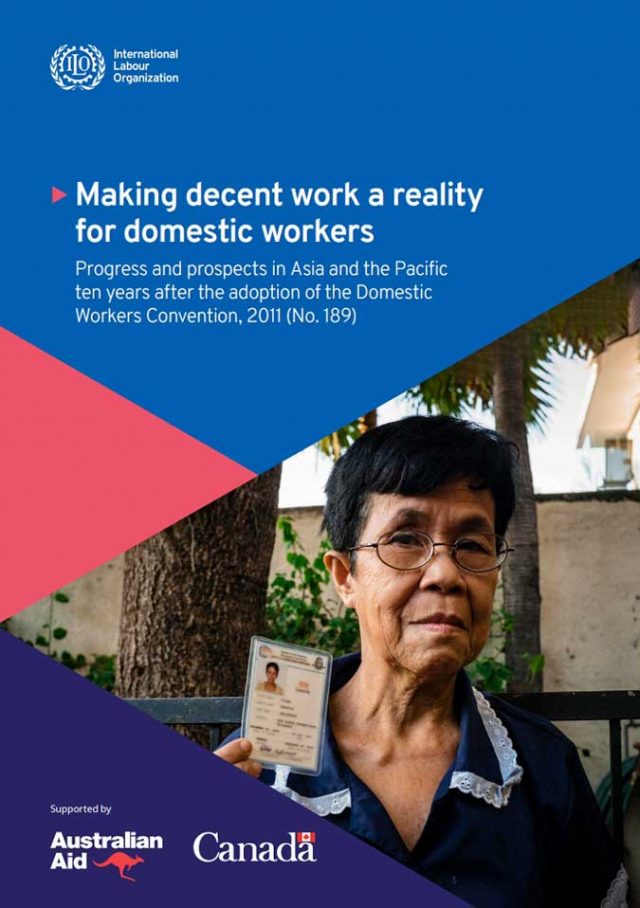
In its new report, titled Making Decent Work a Reality for Domestic Workers: Progress and Prospects in Asia and the Pacific, the ILO said more than half of domestic workers continue to be excluded from labor laws and work under informal conditions.   

The report launched Wednesday showed 61% of domestic workers in the region are not covered by minimum wage and other laws, 71% have no limitation on normal working hours, 64% have no weekly rest days, 63% have no annual rest days, 68% are not entitled to maternity leaves and maternity cash benefits, among other benefits.    

“Although the report clearly shows progress in legal coverage, it also lays bare the large gaps in the implementation of these laws…. Their wages and working hours, on average, are far less favourable than those of other workers,” ILO Director-General Guy Ryder said in the report.   

“Indeed, there remains a long road ahead for many domestic workers in getting access to decent work. Yet domestic work is a sector that is likely to grow in light of ageing populations and their increasing need for long-term care. Closing these existing gaps is therefore even more of a priority,” he said.  

The ILO also recommended the following: removal of administrative barriers; simplification of registration and contribution procedures, including through digital technologies; and the conduct of inspections for occupational safety and health.  

PHILIPPINES
The report noted that the Philippines is the only country in Asia that ratified the Domestic Workers’ Convention in 2011. A year later, it passed Republic Act 10361 or the Kasambahay Law that set a minimum wage, benefits, and improved terms of employment. 

But the reality on the ground shows working hours remain long and benefits are not widely given, according to the Philippines’ Department of Labor and Employment (DoLE).     

Alice Q. Visperas, director of DoLE’s International Labor Affairs Division, said during the online launch of the report that challenges remain in the implementation of the Kasambahay Law. 

She said DoLE’s Kasambahay Rider Survey revealed that live-in domestic workers in the country still work nine to 12 hours a day, and that 83% are still not covered by any social welfare benefit.   

She said the department is looking to “intensify advocacy and improve administrative mechanisms” at both the national and local government levels.   

One key step is the registration of domestic workers at the community level through the barangay, the smallest political unit in the Philippines, to ensure the delivery of social welfare benefits. — Bianca Angelica D. Añago 

Local governments urged to give village frontliners hazard pay 

PHILIPPINE STAR/EDD GUMBAN

A LAWMAKER on Tuesday filed a resolution urging local governments to provide special compensation to village workers on the frontlines of the coronavirus pandemic.

In House Resolution No. 1834, Quezon City Rep. Anthony Peter D. Crisologo said barangay officials and other village workers should receive hazard pay because they have a “crucial role” in the government’s pandemic response.

“Barangays and their workers who serve for the general welfare of their community members are vital in ensuring that all groups, sectors and communities are protected from the pandemic and are reached by the government,” he said.

Mr. Crisologo noted that barangay workers are “not covered by the rules of the Civil Service Commission and are not entitled to the same benefits of regular government employees.”

Citing the Budget department’s Circular No. 2020-1 or the guidelines on the grant of coronavirus disease 2019 (COVID-19) Hazard Pay, the House legislator said all village officials and workers who are identified as “frontliners” should be compensated for risking their safety and personal health in the name of service amid the pandemic.

Mr. Crisologo said there are 42,046 barangays nationwide based on government data. — Kyle Aristophere T. Atienza

Fish hatcheries needed in every province to boost supply — BFAR  

EVERY PROVINCE in the country should have at least one fish hatchery to improve the country’s fish fry supply and boost the local aquaculture sector, the top official of the Bureau of Fisheries and Aquatic Resources (BFAR) said.   

BFAR National Director Eduardo B. Gongona said on Wednesday that investment is needed to set up infrastructure for fry production.    

“We need the infrastructure, especially the hatchery. We also need to establish satellite hatcheries, ponds, and other infrastructure dedicated to fisheries production,” he said during the joint hearing of the Senate Committees on Agriculture, Food, and Agrarian Reform and Finance.   

Mr. Gongona said one multi-species fish hatchery requires P30 million.     

Senator Cynthia A. Villar, however, questioned the suggestion, noting that not all provinces are in coastal areas. 

Ms. Villar said the BFAR should prioritize areas that have potential in the fisheries industry.   

“Not all areas have fishing as their primary industry like Isabela and Nueva Ecija – those are known for their rice industries. BFAR should prioritize areas that have fishing as the main livelihood,” she said.   

BFAR Aquaculture Division OIC Chief Elymi Ar-J S. Tunacao said there are five fish hatcheries that are under construction in the provinces of Surigao del Sur and del Norte, Agusan del Norte, Lanao del Norte, and Quezon.     

Ms. Tunacao said other planned fish hatcheries have problems in terms of site development such as uneven land and road right-of-way.   

Meanwhile, Mr. Gongona committed to finish the five fish hatcheries being constructed and 25 others that have already been approved.  

He said the country is currently able to produce 1.5 billion fry a year.  

“In three to five years, we will improve in terms of hatcheries. We just need the infrastructure,” Mr. Gongona said.    

Based on Philippine Statistics Authority data, local fisheries production fell 0.8% year on year to 978,618 metric tons (MT) in the first quarter of 2021.    

Aquaculture production accounted for 53.7% or 525,321 MT of total production, followed by municipal fisheries at 26.3% or 257,622 MT, and commercial fisheries at 20% or 195,673 MT. — Revin Mikhael D. Ochave   

Bill filed for proper road signages to minimize accidents

A SENATOR on Wednesday filed a measure requiring the government to put up road and public safety signages that follow international standards to lessen accidents.

Senate Bill No. 2293 or the Public Safety Signages Accountability Act, filed by Senator Grace S. Poe-Llamanzares, will mandate the government to provide citizens timely and correct information on traffic instructions, road hazards and other warning signages.

“Articles and images of faulty or questionable signages have been reported throughout the years and such still remain as evident threats to both motorists and pedestrians,” said Ms. Poe, chair of the Senate Committee on Public Services.

She said while there are other factors that contribute to accidents, having visible road signs and ideal distances would protect and save lives.

In the capital region alone, road crashes in 2019 reached 121,771, of which 372 were fatal, Ms. Poe said citing data from the Metropolitan Manila Development Authority (MMDA). In 2020, 65,032 road crashes resulting in 337 deaths were registered despite mobility restrictions due to the coronavirus pandemic.

Under the bill, the Department of Public Works and Highways will be in charge of public safety signs in national roads while the MMDA will oversee national roads in Metro Manila. Local government units will monitor local roads.

The Department of Environment and Natural Resources-Mines and Geosciences Bureau will be tasked to update the geohazard map and identify areas that are susceptible to natural calamities for the installation of appropriate warning signs.

Under the proposed law, government officials may be held liable for deaths or injuries resulting from the lack or absence of proper signages. — Vann Marlo M. Villegas

3 arrested at illegal investment operator’s Panabo office

PANABO City authorities arrested three people working at a local branch of Mer’s Business Center, which has been tagged by the Securities and Exchange Commission (SEC) as an illegal investment operator.

The city government said representatives of its Business Permits and Licensing Section and the police nabbed on June 14 the company’s branch manager and two other workers, who are all from General Santos City.

Panabo police chief Verna L. Cabuhat said the operation against Mer’s Business Center was prompted by a complaint and she called on other “victims” of the illegal scheme, which promises a 3% monthly interest on investment, to come forward for the filing of charges against the company.

The SEC Davao office, meanwhile, lauded the local government’s action saying it was a “big boost” to the agency’s campaign against illegal investment schemes.   

The SEC issued an advisory against Mer’s Business Center last May 6 for solicitations without the appropriate license.

“The Panabo City (local government) and its police are worth emulating for their conscious efforts in running after those who continue to solicit investments without the necessary license,” SEC-Davao said in a statement on Wednesday.

Fishers’ group frowns at coconut palms planted along Manila Baywalk 

THE DEPARTMENT of Environment and Natural Resources (DENR) led the planting of coconut trees along Roxas Boulevard on Wednesday as part of the Manila Bay beautification project, an initiative that was frowned upon by a fishers’ group.

Fisherfolk organization Pamalakaya, in an emailed statement, described the activity as “absurd, trying hard, a waste of public resources, and simply for aesthetics with a meager to no contribution to (the) rehabilitation of Manila Bay.”

Pamalakaya National Chairperson Fernando L. Hicap said, “Just because it’s natural (for coconut palm trees to grow on coastlines) doesn’t mean it is necessary… to restore the bay’s ecosystem. Planting of coconut palm trees along the shores reflects the government’s thrust on Manila Bay rehabilitation which is solely based on external beautification, rather than restoration of its marine and fishery resources.”

The group said the DENR should instead focus on planting mangrove and seagrass, which serve as fish sanctuaries, pollution filters, and can protect communities against flooding.

“Mangrove reforestation and seagrasses restoration are more relevant to the Manila Bay rehabilitation than the costly yet futile beach nourishment project,” Mr. Hicap said.

According to a PTV4 report, the DENR’s artificial white sand beach project along the bay is 80% complete.

The coconut planting project was supported by the Manila City government, Philippine Coconut Authority, and the Metro Manila Development Authority. — Angelica Y. Yang

QC gives Zuellig ultimatum to fix vaccination scheduling system

QUEZON CITY Mayor Maria Josefina G. Belmonte — PHILSTAR

THE QUEZON City government said on Wednesday it is “seriously considering” the termination of its contract with Zuellig Pharma Corporation after glitches in its online system for vaccination scheduling.

“We have issued an ultimatum to Zuellig so they can improve their system quickly and provide all the deliverables. If not, we have no other choice but to find another company that can do the job quickly and efficiently,” Mayor Maria Josefina G. Belmonte said in a statement.

She said they tapped the company’s eZConsult service to supposedly speed up and ease the process for residents in getting a vaccination schedule, complementing efforts to organize the actual vaccination procedures.

“They committed a seamless service but they failed repeatedly,” the mayor said given the series of total or partial technical difficulties in the system.

Ms. Belmonte said the company has until June 18 to deliver its obligations or face contract termination and possible legal action for damages.

ADVERTISEMENT
ADVERTISEMENT