Home Blog Page 7891

Death of former President Benigno S.C. Aquino III mourned online
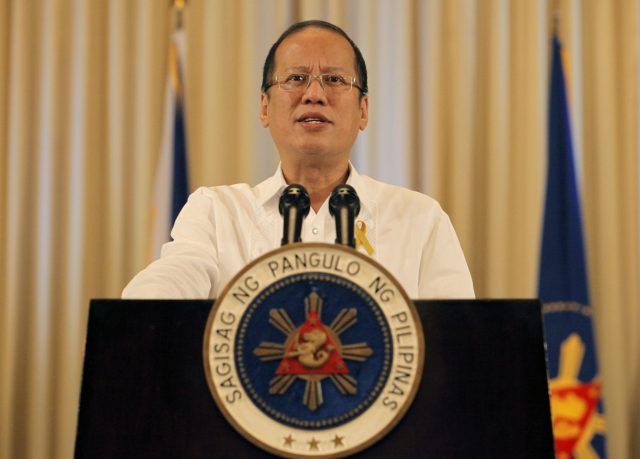
BW FILE PHOTO

Personalities took to social media and their respective platforms to express their grief over the death of former President Benigno S.C. Aquino III on Thursday.Kyle Aristophere T. Atienza

Senator Risa N. Hontiveros-Baraquel 

Like his parents, Ninoy and Cory, Noy dedicated his life to the ideals of democracy and the well-being of Filipinos, giving hope and moral courage when the country needed it most. 

He made the six years of his presidency count. 

He was a champion for clean and honest governance, which was key to sustaining the remarkable economic growth under his watch. 

He was also well-respected as a statesman and fought enormous battles for our national sovereignty. His strong stand led to our historic win at The Hague in 2016, leaving behind a legacy of hope and justice for generations to come. 

His remarkable focus on the hallmarks of democracy and public service are solid foundations that our leaders can build upon. To honor his legacy is to continue the fight against corruption and reaffirm our fundamental freedoms and human rights. 

Former Secretary of Finance Cesar V. Purisima 

President Aquino demonstrated principled leadership in realizing those hopes for our country in the six years he was in office. The turnaround story of the Philippines  from Asia’s sick man to Asia’s bright star  is without doubt one of his greatest legacies. He left office with a Philippines more optimistic about its future, having ended the vicious cycle of doubt and having entered a virtuous cycle of confidence. 

His six years in office was proof of his fundamental thesis: that good governance delivers great economics. 

I recall with pride, how we raced past our peers and even outpaced China at times to post economic growth figures that were among the world’s fastest. Indeed, the six-year growth average of 6.2% during his administration was the Philippines’ highest in four decades. 

Vice-President Maria Leonor G. Robredo

Senate Minority Leader Franklin M. Drilon 

I grieve and mourn the passing of former President Benigno Simeon C. Aquino III. I have lost a dear friend and the nation has lost a gentleman who served his country well  with all honesty and sincerity and with the purest of intentions. I am thankful for the opportunity of having worked with PNoy during his Presidency. He meant well and wanted the best for the country and for all of us. We have lost an honest man. I join the Aquino family in their mourning and offer them my sympathies and prayers. 

Senator Grace S. Poe-Llamanzares 

Sa nagbukas ng pinto ng serbisyo publiko para sa atin, maraming salamat sa iyong legasiya ng pagsisilbi nang buong katapatan at dedikasyon. 

Ipinakita sa atin ni PNoy ang kahalagahan  ng mabuting kalooban sa isang pinuno: walang pag-iimbot sa kapwa, malinis ang intensyon, at walang pagkagahaman sa kapangyarihan. 

Pinapahalagahan namin ang iyong matapat na paglilingkod, PNoy.

House Majority Leader and Leyte Rep. Martin G. Romualdez 

I join the nation in mourning the passing of former President Noynoy Aquino. The news of his death was a shock to all of us. We all grieve for losing him so early — a man of integrity, a Filipino leader who made it his primary mission to institutionalize good governance reforms. 

We extend our condolences to his family and loved ones. May you find peace in knowing that he is now back to the loving embrace of our Father.  

Rest now former President Aquino. Paalam. 

Anakalusugan Rep. Michael T. Defensor 

My heartfelt condolences and prayers to the family of Pres Noynoy Aquino. As a colleague in the 11th congress and as a friend, Pres Noy and I have  shared fond memories. While our lives are enmeshed in politics and there may have been differences at certain periods of time , we have remained good friends throughout the years. He is too young to die and today is a day of mourning. May he rest in peace. 

Davao City Mayor Sarah Duterte-Carpio 

The City Government of Davao is one with the nation in praying for the eternal repose of the soul of former President Benigno Aquino III.  

The Philippine flag in the entire Davao City shall be flown at half-mast until his burial.  

Thank you. 

Senator Juan Edgardo “Sonny” M. Angara 

We join the nation in mourning the passing of our former President Benigno “Noynoy” Aquino III. Continuing the legacy of his esteemed parents Ninoy and Cory, PNoy introduced widespread reforms and espoused a strong anti-corruption policy during his presidency.  

“Walang wang-wang, walang counterflow, walang tong.” “Walang tongpats.” “Kayo ang boss ko.” These are just some of the quotes of PNoy that are forever etched in the hearts and minds of every Filipino and aptly captures his stance against the abuse of power by the people in power. 

President Noy, who was a colleague of mine from 2004 to 2007 at the House of Representatives, played a major role in my entry into the Senate in the 2013 mid-term elections where I was part of the Team PNoy coalition. He truly loved his country and helped so many Filipinos during his time in office. 

Rest well knowing that in time your own legacy will be remembered as it should be, from a perspective that is objective. You have earned your place in the annals of Philippine history. May the Lord bring comfort to PNoy’s siblings and rest of the Aquino clan.” 

13th Vice President of the Philippines Jejomar “Jojo” C. Binay 

Former Congressman Ibarra “Barry” Gutierrez III

Former Secretary of Finance Cesar Antonio Velasquez Purisima 

Governor of Sorsogon Francis Joseph “Chiz” Guevara Escudero 

Former Commission on Elections (Comelec) Commissioner Gregorio “Goyo” Y. Larrazabal 

Manila City Mayor Francisco “Isko Moreno” Domagoso

House Deputy Speaker and Antique Rep. Loren  B. Legarda

Antonio “Sonny” F. Trillanes IV, former senator

Jose Manuel “Chel” I. Diokno, human-rights lawyer 

Curtis S. Chin, United States Ambassador to and member of the Board of Directors of the Asian Development Bank 

Supreme Court Associate Justice Marvic Mario Victor F. Leonen 

Foreign Affairs Secretary Teodoro L. Locsin, Jr. 

Protecting cloud-based collaboration and productivity tools at work with ESET Cloud Office Security

Cloud-based solutions support organizations in terms of collaboration and productivity during the current remote work challenges. As the usage of these tools continues to increase, so does the accelerating need for businesses to optimize security.

ESET, an Internet security provider, reminded the potential weaknesses of cloud services through its report on the Microsoft Exchange server attacks last March. Over 10 different threat actors or groups likely took advantage of this vulnerability chain, as identified by ESET researchers.

Such an incident tells organizations utilizing cloud-based tools to invest in advanced preventive protection from cyber threats. Promisingly, the introduction of ESET Cloud Office Security (ECOS) strengthens the defense for Microsoft 365, including Teams, OneDrive, Exchange Online, and SharePoint Online.

With its advanced preventive measures against malware, spam, and phishing attacks in a company’s work at the aforesaid cloud-based applications, ECOS, therefore, has a fundamental contribution to the teamwork and efficiency within the business.

Organizations rely on e-mails for communication, especially in a remote work setup. Issues like spam, suspicious or malicious attachments, and links to phishing sites can cause some troubles for the business and its employees. ECOS ensures the safety of every email delivered to a user’s Microsoft 365 inbox through an extensive inspection.

ESET’s award-winning antispam technology functions as the first layer that filters out spam messages with nearly absolute accuracy. The second layer is a malware scanner that detects malicious or suspicious attachments. Then the third layer serves as anti-phishing protection.

Aside from e-mails, business users also want a platform for their files that would decrease their cybersecurity concerns, which may also affect their productivity. With ESET’s powerful malware detection engine, all files uploaded to OneDrive, shared via SharePoint, or transferred via Teams are examined. ECOSputs a file in quarantine when identified as dangerous. This file is accessible only by administrators, thus protecting the users.

ECOS also has a simple, well-designed cloud console that can be convenient for administrators in their work. They get an overview of the quarantined items and receive an immediate notification when a detection takes place.

Administrators can glimpse at their company’s state in Microsoft 365 relating to security matters as well, which is viewable over a timescale of 24 hours, seven days, and 30 days.

ECOS provides such security details including license usage; the total number of protected users; the recipients of most spam, malicious, and phishing emails; and the top questionable accounts, groups, or sites on OneDrive, SharePoint, and Teams. It also shows the spam, malware, and phishing traffic charts and the total number of detections.

Along with its role as the shield of organizations against cyberattacks, ECOS is also a scalable solution. It allows administrators to manage the security for 5 or more seats or more with its effective multi-tenant service. And while protection is its prime function, the configuration of ECOS can also match the company size and maturity of IT security staff.

Substantiating ECOS’ valuable capabilities, ESET reported this year that through several dashboards of ECOS, IT administrators and SOC teams spotted significant threat types that evaded the native security of the cloud-based productivity suite. Such threats, among others, include Word documents and emails containing various types of fraudulent content that are designed to steal account credentials or other sensitive information.

As more and more businesses use cloud-based resources like Microsoft 365 to sustain their operations, they must also add further security measures to ensure their business data kept safe. Cyberthreats can greatly impact the collaboration and productivity within organizations when their platforms became compromised.

ECOS functions to ensure that users can interact via Exchange Online, without the infuriating spams and phishing emails, share a clean and safe document to OneDrive, Teams, and SharePoint Online, and a lot more. It is a cost-effective, wide-ranging protective solution for establishments of different sizes. Incorporating layers of security in cloud-based tools can at least bring forth reassurance to the business in its maintenance and success.

To know more about ESET Cloud Office Security, send an e-mail to esetphmarketing@b1g2.io for a free product presentation and demo.


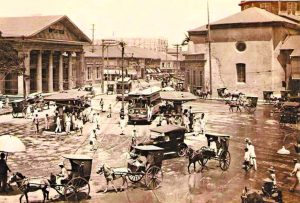
Looking back at the history of Manila

Photo from WIKIMEDIA COMMONS | Vanessa David

Manila is one of the cities that give Filipinos a glimpse of the rich history of the Philippines. From landmarks and structures to narratives and paintings, several accounts can let the people somehow view Manila’s image throughout the years.

Even before the “discovery” of Manila on June 24, 1571, there are already accounts on the look of this historic city.

In 2008, Carmen Guerrero Nakpil recorded the most untold stories on the founding of Manila (referencing also to Tome Pires, Pigafetta, Majul, W.H. Scott, and Gaspar de San Agustin) in her article for Philstar.

As early as the 14th century, the Luzon island natives — composed of traders, investors, mercenaries, seafarers called Luzones — were working in the commerce triangle of Southeast Asia between Canton, Malacca, and Timor. “They owned ships, underwrote large-scale export ventures, and were called “discoverers”, for their sea-faring skills,” Ms. Nakipil wrote.

Manila was the chief city in Luzon. It was ruled by three Muslim kinglets: Ache (or Raha Matanda), a grandson of Sultan Bolkiah of Borneo; Raha Sulayman, Ache’s nephew; and Raha Lakandula of Tondo.

“The town all around this bay was really marvelous. It was tilled and cultivated. The slopes were smooth. So excellent indications have not been seen in this land. The town was situated on the bank of the river, defended by a palisade. Within were many warriors and the shore outside was crowded with many people. Pieces of artillery stood at the gates, guarded by bombardiers, linstock in hand,” stated a Spanish chronicle quoted by O.D. Corpus in The Roots of the Filipino Nation, according to Ms. Nakpil.

After Raha Sulayman routed Martin de Goiti’s attack on Manila in 1570, Spanish conquistador Miguel Lopez de Legazpi, however, arrived and claimed the Spanish sovereignty over Manila in 1571.

Manila then was given “a city charter with municipal councilors, a plan for a plaza, two grand houses and 150 smaller houses, and a project for the distribution of land,” Ms. Nakpil wrote.

That day when Legazpi established a municipal council was recognized now as the foundation day of Manila. Thus, the city commemorated on Araw ng Maynila is the “Spanish Manila.”

In 1952, National Artist for Literature Nick Joaquin put into words an image of Manila of the past, basing on the impression made by an unknown author who traveled in the city around 1860. He said that the watercolors produced by the unknown author have been in the possession of the Zobel family.

“[It is] a Manila of which we have no memory, no knowledge at all. It is terra incognita, newfoundland, a strange unrecognizable place,” Mr. Joaquin, under the pseudonym of Quijano de Manila, wrote in the Philippine Free Press.

“All of us have the same general idea of what is meant by ‘the old Manila, the Spanish Manila.’ We instantly see the sagging balconies of Calle Real, the Gothic spires of Sto. Domingo, the silver Romanesque dome of the Cathedral. Against that unchanging background, we naively pose the conquistadores of the 16th century, the missionaries of the 17th, the grandees of the 18th, and the rebel patriots of the 19th century,” Mr. Joaquin said. 

Plaza Moraga, Old Manila — WIKIMEDIA COMMONS

“But now, confronted with these watercolors, we feel like the archaeologists who, searching for the ‘real’ Troy, found seven different Troys, one beneath the other. And we realize how many, many Manilas have come and gone, unknown to us,” he continued.

“In the Manila of these watercolors, nothing is familiar, everything seems ‘wrong’ — Sto. Domingo is not Gothic nor the Cathedral Romanesque; the Governor’s palace stands in the cathedral square, which has an iron fence running around it; San Agustin has two towers; and the Escolta, with its whitewashed one-story buildings, looks like the main street of a minor Andalusian village,” he described.

Mr. Joaquin further considered that though descriptions from historical chronicles could not give a concrete image of the other, earlier appearances of Manila, the unknown artist somehow managed to keep a glimpse of Manila in 1860.

“From the ruins of that other Manila — the odd city smiling at us from the Zobel watercolors — arose the Manila we remember, the Manila of Rizal and the Revolution, the last great creation of Spain in the Philippines,” Mr. Joaquin said.

The city of Manila certainly underwent many changes since that description written by Nick Joaquin. Nevertheless, Manila at present still preserves some of its important historical sites.

The people of Manila will once again commemorate the city’s history, 450 years after its acknowledged foundation on June 24, currently a special holiday in Manila.

For the Araw ng Maynila this year, as posted on Manila City’s official website, Mayor Francisco “Isko Moreno” Domagoso said that “the activities that we have prepared are meant to unite us and be one as we pave the way towards progress and development.”

“With our celebration’s theme of ‘Maynila, Dalhin Mo Ang Bandila,’ we, Manilenyos should be exemplary role models and charge the path for our city to trailblaze and lead the country as we have been doing in the past 449 years,” he added. — Chelsey Keith P. Ignacio

Manila as a beacon for culture and commerce

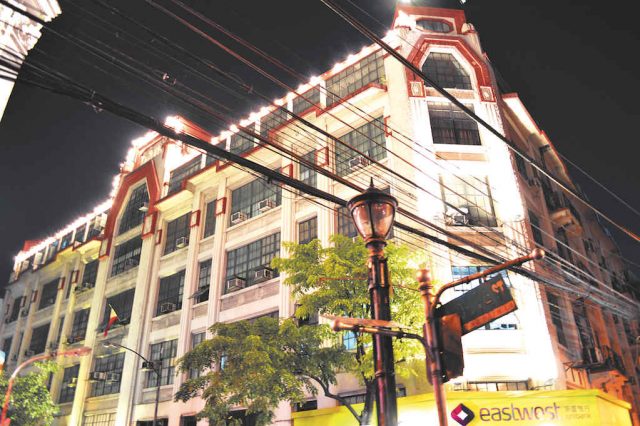
First United Bldg. — PHILIP JAMES F. DAGUN

As one of the most populous urban areas in the world, the City of Manila is a melting pot of culture, and a bustling hub of trade and commerce.

In fact, based on the data gathered by the City of Manila, the district of Sta. Ana has the most heritage sites with 88, followed by the districts of San Nicolas and Malate with 78 and 55, respectively.

The list includes parks, monument, buildings, interiors, and even a vista. Among these are the walls of Intramuros, office buildings in the Binondo and Escolta areas including El Hogar and First United Bldg. (formerly Perez-Samanillo Bldg.), Arroceros Park, Paco Park, churches including Quiapo Church and the Manila Cathedral, the Aristocrat restaurant along Roxas Blvd., the interior of the Playboy Club in the Silahis hotel, and Manila Bay and the Waterfront from Del Pan Bridge to the Cultural Center of the Philippines.

Considered cultural properties under the Philippine Registry of Cultural Property are those that were declared cultural property by the National Commission for Culture and the Arts or National Cultural Agencies (NCAs); that are presumed important cultural property which are currently not declared by the NCCA or NCAs; local cultural property declared by the respective LGUs through executive order, ordinance, or resolution; and registered cultural property which carry significance to local culture and history.

Not only is the city home to a number of other historically-significant monuments, Manila has also been a significant contributor to the country’s economic development.

Most recently, the City of Manila was recognized by the Department of Trade and Industry as the most competitive highly urbanized city in the country in the Cities and Municipalities Competitiveness Index (CMCI) 2020, an annual ranking of the competitiveness of cities and municipalities in the country.

It also won first place in two other categories Most Competitive in Government Efficiency in Highly Urbanized Cities; and Most Competitive in Infrastructure for Highly Urbanized Cities.

The Overall Competitiveness Award was based on four criteria: economic dynamism, government efficiency, infrastructure, and resiliency. The index looks at each city’s implemented programs and how they have improved through the years, with scores on each pillar determined by the National Competitiveness Council (NCC).

Economic dynamism was scored based on the following factors: cost of doing business, cost of living, increase in employment, financial deepening, local economic growth, local economy size, presence of business and professional organizations, productivity, local economic structure, and safety compliant in business.

For the scoring in the infrastructure category, the availability of basic utilities, education, health, accommodation capacity, information technology capacity, financial technology capacity, distance to ports, LGU investment, road network, and transportation vehicles were considered.

Government efficiency was determined according to the city’s compliance to business permits and licensing system standards, efficiency in business registration, health services capacity, compliance to national directives, presence of investment promotion unit, the capacity of school services, performance recognition, the capacity to generate local resource, social protection, and peace and order.

Finally, resiliency was based on the city’s programs to conduct an annual disaster drill, budget for DRRMP, disaster risk reduction plan, emergency infrastructure, employed population, early warning system, land use plan, sanitary system, utilities, and local risk assessments. — Bjorn Biel M. Beltran

Golden MV Holdings, Inc. announces schedule of stockholders’ meeting

Balance of payments back to deficit

By Luz Wendy T. Noble, Reporter

THE Philippines’ overall balance of payments (BoP) position posted a deficit of $1.39 billion in May, as the government repaid some of its foreign debt obligations.

Data from the Bangko Sentral ng Pilipinas (BSP) showed the BoP position in May was a reversal from the $2.43-billion surplus in May 2020 and the $2.614-billion surplus in April.

May’s BoP deficit is also the biggest since the $2.019-billion shortfall in February.

“The BOP deficit in May 2021 was mainly attributed to outflows arising from the foreign currency withdrawals of the National Government (NG) from its deposits with the BSP as the NG settled its foreign currency debt obligations and paid for various expenditures,” the central bank said in a statement.

However, the outflows were partially offset by inflows from the central bank’s foreign exchange operations and external borrowings of the National Government.

The BoP provides a picture of the country’s transactions with the rest of the world. A deficit means more funds left the country, while a surplus show that more money came in.

At its end-May position, the BoP reflects a final gross international reserves level of $107.25 billion, down by 0.42% from the $107.71 billion as of end-April.

The dollar reserves in May are enough to cover 12.2 months’ worth of imports of goods and payments of services and primary income. It is also about 7.9 times the country’s short-term external debt based on original maturity and 5.2 times based on residual maturity.

In the January-May period, the BoP deficit reached $1.627 billion, a reversal of the $4.029-billion surplus during the same period a year ago.

“Based on preliminary data, this cumulative BoP deficit was partly attributed to wider merchandise trade deficit and net outflows of foreign portfolio investments,” the central bank said.

The BSP last week revised its BoP surplus projection to $7.1 billion this year. This is higher than its previous forecast of a $6.2-billion surfeit, but lower than the $16-billion record BoP surplus in 2020.

Analysts said they are keeping an eye on the extent of the economy’s reopening in the coming months, as well as the Federal Reserve’s hints at tightening policy.

“With looser curbs locally, there is a potential for a wider trade deficit as the imports sector rebounds, while a hawkish US monetary policy could mean a persistent financial outflow. Therefore, a BoP deficit and peso depreciation appears more plausible by yearend given the current scenario,” Security Bank Corp. Chief Economist Robert Dan J. Roces said in a Viber message.

UnionBank of the Philippines, Inc. Chief Economist Ruben Carlo O. Asuncion said in a Viber message that he expects upside risks of more net outflows of foreign investments, as investors will likely move to developed country’s markets once the Fed tightens monetary policy.

Mr. Asuncion added the recent current account data may also be indicative that the BoP position will remain at a deficit in the coming months.

The current account includes flows related to trade in goods and services; remittances from overseas Filipino workers; profit from Philippine investments abroad; interest payments to foreign creditors; as well as gifts, grants and donations to and from abroad.

The current account in the first quarter of the year posted a deficit of $614 million, reversing the $225-million surplus a year earlier, the BSP said on Friday. This was supported by continued import growth as the economy gradually reopens.

P2.1-B income lost daily during MECQ, says Chua

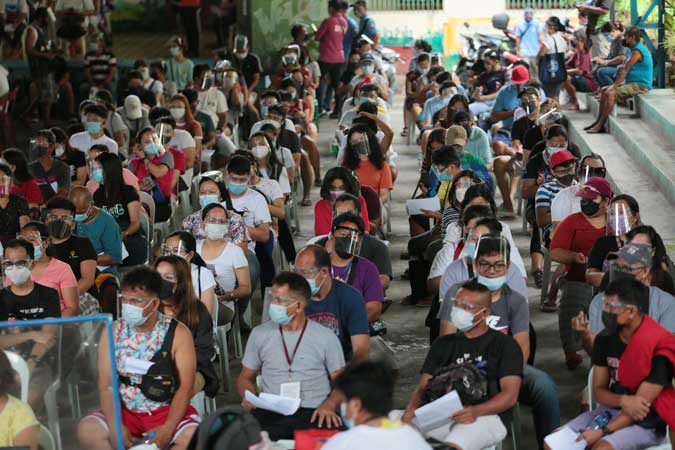
PHILIPPINE STAR/ MICHAEL VARCAS
National Economic and Development Authority (NEDA) Secretary Karl Kendrick T. Chua stressed the need to fast-track the vaccination of workers to allow the economy to reopen. — PHILIPPINE STAR/ MICHAEL VARCAS

AS MUCH as P2.1 billion in income was lost in Metro Manila and nearby provinces for each day of modified enhanced community quarantine (MECQ) in April and May, according to the National Economic and Development Authority (NEDA).

NEDA Secretary Karl Kendrick T. Chua said the looser quarantine restrictions helped temper the losses, which are significantly lower than the P2.8 billion a day or total of P1 trillion in income lost during the longer and stricter lockdowns in 2020.

“That is why this year, we have to think very well the strategy, I think the strategy, which the economic team supports, is not to impose general or widespread levels of quarantine. Our strategy should be addressing only the biggest source of risk for spreading the virus and allowing the rest of the economy to operate,” Mr. Chua said at the forum arranged by the Employers Confederation of the Philippines (ECoP).

The NEDA chief stressed the need to fast-track the vaccination of workers to further reopen the economy.

Mr. Chua said the 6-7% growth target for 2021 and 7-9% next year can be achieved if the economy is reopened, the mass vaccination campaign picks up pace and recovery measures are implemented efficiently.

The government has vaccinated 8.4 million Filipinos so far since the rollout began in February, he said, adding this would help boost consumer confidence.

“Nothing will move if there is no confidence, and that is why we have to work hard on our vaccination program… Hopefully we can vaccinate as many workers as we can in the next few months,” the NEDA chief said.

“If workers are vaccinated, they bring home much less risk to their family members, and I personally can see schools opening, because those that we want to protect, the senior citizens, people with comorbidities and the workers who commute to go to the office, are much more protected,” he added.

Mr. Chua has been proposing to allow children to go out and let schools conduct pilot test of face-to-face classes to help the economy rebound faster.

NEDA estimates showed around 102,000 more Filipinos could join 19.7 million people in poverty if another two-week ECQ will be imposed.

Further, 252,000 more will add to the 4.9 million unemployed Filipinos if restrictions will be tightened anew, according to his presentation.

The Health department reported 4,353 new cases on Wednesday, bringing the country’s total number of active cases to 49,962.

The government extended the general community quarantine status in Metro Manila and nearby areas until the end of the month, as the number of COVID-19 cases have declined from the peak in April. 

More people have also been added to the vaccination priority list, as more COVID-19 vaccine supplies arrive. — Beatrice M. Laforga

PHL firms urged to localize sustainability criteria

PHILIPPINE STAR/ MICHAEL VARCAS

By Jenina P. Ibañez, Reporter

PHILIPPINE COMPANIES must evaluate their sustainability practices based on local needs that can sometimes be distinct from the requirements of developed countries, sustainability practitioners said.

“Make sure that you localize these issues. We’re not a developed country, so I don’t think that we necessarily have to follow standards set by countries that have already stopped growing and are no longer in need of economic growth,” Aboitiz Equity Ventures Senior Vice-President Manuel R. Lozano said in a BusinessWorld Insights forum on Wednesday.

Firms follow a set of environment, social, and corporate governance (ESG) criteria that assesses their performance in protecting the environment, managing relationships with employees and communities, and ensuring transparent governance.

Business representatives at the forum said that these criteria have become more important for stakeholders and investors in recent years.



“If you asked us maybe a year ago, you would have maybe a few meetings where investors ask us about ESG, mainly those from Europe and a little bit from the United States,” PLDT, Inc. Investor Relations and Corporate Sustainability Office Head Melissa V. Vergel de Dios said.

“As the year passed, we’ve seen a lot of fund managers ask more about sustainability and what we’re doing in the areas of ESG, and to varying degrees… I guess it’s becoming important now for fund managers more and more to make sure that the companies that they’re investing in will carry on many years from now.”

ESG criteria should be adapted to issues that are unique to the Philippines, the experts said.

The Philippine environment is distinct, with expansive mangroves and rainforests that need to be protected, Ms. Vergel de Dios said.

“(There are also) activities that may also be present in the Philippines like illegal logging that we can address, in our case using technology,” she said.

European countries set sustainability goals and best practices, BDO Unibank, Inc. Vice-President for Sustainability Marla Garin-Alvarez said.

“The one thing we always think about in the Philippine context is, geographically we are in a very disaster-prone area which impacts anything else that has to do with the environment and social impact to the people,” she said.

Social inequality in the Philippines is also distinct from other countries, she added.

“And then there are also the sources of energy. In Europe, they don’t really have a lot of solar power sources, but that’s what we have in abundance in the Philippines.”

Maria Yolanda “Yoly” C. Crisanto, chief sustainability officer at Globe Telecom, Inc., said that differences in levels of adoption, culture, and enablement lead to a need for strong partnerships between the private and public sectors.

“Government can also include enabling laws, some more incentives in terms of more sustainability-linked businesses,” she said. “There’s a lot of sustainability-linked businesses that are sprouting everywhere, especially in areas like the more advanced countries. That’s something that we can think about.”

SEC drafts arbitration rules for intra-corporate disputes

By Keren Concepcion G. Valmonte

THE SECURITIES and Exchange Commission (SEC) has proposed guidelines on the arbitration of disputes within corporations.

“Section 181 of the Revised Corporation Code (RCC) now allows arbitration,” SEC Commissioner Kelvin Lester K. Lee said in a private message sent via Twitter. “So this is prepared in accordance with that provision and to allow the commission to implement that provision.”

Under Section 181 of Republic Act No. 11232 or the RCC, a domestic corporation can include an arbitration agreement in its articles of incorporation or by-laws, or as a separate document. Once this is in place, any intra-corporate dispute will be referred to arbitration.

This will be used to address disputes among the corporation, its stockholders or members, arising from the implementation of the articles of incorporation or by-laws, or from intra-corporate relations.

However, any intra-corporate dispute that involves criminal offenses and interests of third parties shall be nonarbitrable.

Under the proposed rules, the arbitration agreements must enumerate the number of arbitrators who will form the tribunal and include the name of the independent party who chose them, as well as the appointment procedures.

Arbitrators must be accredited by the Office for Alternative Dispute Resolution or by organizations authorized by the said office or the SEC. Arbitrators must be appointed within a specified timeframe.

“Any arbitrator may be challenged if circumstances exist that give rise to justifiable doubts as to his or her impartiality or independence,” the draft circular said.

Should the period for appointing arbitrators lapse, parties of the dispute may request the commission to appoint members to the tribunal. The draft circular also details the procedures the SEC will undertake, including sending each party the list of its candidates.

“The arbitral tribunal shall have the power to grant interim measures necessary to ensure enforcement of the award, prevent a miscarriage of justice, or otherwise protect the rights of the parties,” the SEC said.

The decision of the tribunal must be carried out within 15 days after parties of the dispute have been notified. It shall only be suspended by the filing of a bond or the issuance by the concerned court of an injunctive writ.

“I personally anticipate, that, moving forward, more corporations will have provisions on arbitration once the rules are approved and implemented, which would in effect help minimize court cases as more corporations will, hopefully, engage in arbitration instead,” Mr. Lee said.

Under the draft rules, regional trial courts should dismiss cases related to an intra-corporate dispute if a company has an arbitration agreement.

“Exceptional cases” may be exempt from the rules, the corporate regulator added.

The SEC is now requesting the public to comment on the draft memorandum.

NCIP issues halt order to 3 Hedcor hydro plants

A REGIONAL office of the National Commission on Indigenous Peoples (NCIP) has issued a halt order to a unit of Aboitiz Power Corp. that operates three hydroelectric power plants in Benguet province for alleged issues in obtaining consent from indigenous tribes.

In a stock exchange disclosure on Wednesday, AboitizPower said a cease-and-desist order was issued by the NCIP Cordillera Administrative Region (CAR) claiming “irregularities” in the free prior informed consent (FPIC) memorandum of agreement (MOA) signed by its unit Hedcor, Inc. and the Bakun Indigenous Tribes Organization on Oct. 15, 2019.

The affected plants in the province’s Bakun town are the 2.4-megawatt (MW) Lower Labay, 3.6-MW Lon-oy, and 5.9-MW FLS hydro facilities, which the NCIP-CAR wants Hedcor to shut down within five days after it receives the order.

Hedcor said it had complied with all the conditions when it sought the FPIC.

“We believe that we have been compliant with all the requirements during the course of the FPIC application process, and have been waiting for the issuance of the Certificate Precondition (CP) since the FPIC-MOA was signed,” Hedcor’s Vice-President for Corporate Services Noreen Marie N. Vicencio said in a statement.

The certificate is issued by the NCIP and signed by its chairperson, affirming the concerned communities’ consent after compliance with requirements.

Hedcor said it was saddened by the order to shut down its hydro operations in Bakun as it had made efforts to come into a dialogue with the indigenous tribes and the NCIP.

“At this time of a red alert situation in the Luzon grid, the continued operation of our plants is very crucial,” Ms. Vivencio said.

Hedcor said it would continue to actively reach out to the community for a customary tongtongan or a dialogue with the tribes, under the NCIP’s guidance.

BusinessWorld reached out to the NCIP’s regional office, which confirmed receipt of the questions via e-mail, but has not yet replied as of press time.

In 2012, the NCIP said that “no concession, license, permit or lease, production-sharing agreement, or other undertakings affecting ancestral domains shall be granted or renewed if they do not go through the process set by the law and the 2012 guidelines on the FPIC and related processes.”

Hedcor manages and operates 21 hydropower plants while supplying the country with 258 MW of renewable energy.

Shares in Hedcor’s parent firm AboitizPower inched down by 1% or 25 centavos to finish at P24.65 apiece on Wednesday in the local bourse. — Angelica Y. Yang

Telus opens Iloilo site, plans to hire 800 employees

OUTSOURCING firm Telus International Philippines has launched its first site outside Metro Manila as it eyes hiring 800 employees at its new Iloilo office.

Carlos Giammattei, Telus Philippines marketing director, said at a virtual launch on Wednesday that the Iloilo City site now has over 350 trainees.

“Very soon, we will be at the 800 mark,” he said.

The company has a local work force of over 18,000 people working on customer experience, digital solutions, and information technology. The Iloilo City office is its seventh local site.

Mr. Giammattei said that the company is open to further expansions outside the capital.

“We are always looking for opportunities. Based on our business, based on our growth, and finding the right place where we wanna go is gonna be very critical in deciding when and where we (will) have our second site out of Metro Manila,” he said.

“We have expansion plans, but it all depends on the flow of business and what type of work is coming in.”

The company is still evaluating how much remote or on-site work it will retain in the long term as it assesses government regulations, customer needs, and employee concerns.

The outsourcing industry was allowed by the government to retain some on-site operations during the strictest part of the lockdown declared to arrest the spread of the coronavirus disease 2019 (COVID-19).

The country’s outsourcing revenue rose just 1.4% to $26.7 billion last year from the 2019 figure, the Information Technology and Business Process Association of the Philippines (IBPAP) said.

To compare, the sector’s revenues jumped 7.1% in 2019, beating industry targets. — Jenina P. Ibañez

Nokia sees PHL making rapid progress toward 5G

FREEPIK

MULTINATIONAL telecommunications company Nokia Corp. said on Wednesday fifth-generation (5G) technology rollouts continue to gain momentum in the Philippines despite the pandemic crisis.

“Even with the socio-economic challenges caused by the ongoing COVID-19 (coronavirus disease 2019) situation, 5G adoption across Southeast Asia continues to gain momentum. This is evidenced by the Philippines as one of Southeast Asia’s first countries to roll out 5G — meaning that the nation’s industries, enterprises and people are especially poised to tap into the growth and innovation prospects that the next generation of connectivity holds,” Carlos Reyes, Nokia’s head in Philippines, said at a virtual briefing.

In his presentation, Mr. Reyes said that some of the major industries that would be highly impacted by 5G are ports, mining, and smart cities.

Philippine telecommunications companies are currently accelerating the rollout of their 5G services across the country.

Nokia has partnered with DITO Telecommunity Corp. for the delivery of 5G services to customers in Mindanao.

It also signed a memorandum of understanding with NOW Corp. to roll out a 5G standalone network and explore new opportunities in industrial and manufacturing use cases.

Nokia said it also has a 5G deal with Globe Telecom, Inc.

5G is set to be a game changer for the Philippines’s industries and enterprises. It represents a significant evolution over current LTE solutions, as this next generation in connectivity will empower organizations to achieve the new levels of reliability, security, multi-user capacity performance, and mobility needed for them to make the best utility out of Industry 4.0 technologies and applications,” Mr. Reyes explained.

“5G also builds on LTE vertical differentiating capabilities — with crucial enhancements specifically relevant for industry — to enable it to unlock unprecedented productivity gains and connect all elements of industries and enterprises,” he added.

Nokia currently has 20 commercial 5G deals in Asia-Pacific and Japan.

It is also working with the Philippines’ Converge ICT Solutions, Inc. for the internet service provider’s “ultra-broadband” services.

“Nokia is also collaborating with mobile operator PLDT and its subsidiary Smart Communications to launch enterprise-specific Internet of Things (IoT) services across the country and the deployment of comprehensive service orchestration and assurance solutions across PLDT’s and Smart Communication’s nationwide network,” the company added. — Arjay L. Balinbin

ADVERTISEMENT
ADVERTISEMENT