Home Blog Page 7820

Films made for Netflix look more like TV shows — here’s the technical reason why

GARY OLDMAN and Amanda Seyfried in the Netflix film Mank. — NETFLIX

THE HISTORY of cinema as an art parallels its history as a technology. Ever wondered why the color in The Wizard of Oz is so saturated? Well, it wasn’t the first technicolor film, but it was the first to effectively advertise MGM’s new three-strip color process to a global audience. Why advertise something at half-mast?

This kind of technological innovation in cinema is, of course, spurred by economic motives. For instance, 3D thrived in three waves in direct response to the economic threats posed by new technologies: in the 1950s, in response to television, in the 1980s, responding to VHS, and in the 21st century in the face of increased online streaming. (Now we have 4DX, a gimmick one suspects won’t take off.)

In this era of digital cinema, with celluloid virtually replaced by video technology, the latest technological battle concerns image resolution.

A digital image is made up of pixels — little shapes (usually boxes) that are the smallest controllable element of the image. Resolution refers to the number of pixels appearing in an image, and is usually measured in pixels per inch. As a rule, the more pixels, the crisper the image — that is, the sharper the edges of the subject appear.

In digital cinema’s resolution wars, you will often hear people speak about 4K — as in, 4,000 — or 8K, or now even 12K resolution. This number refers to the number of horizontal pixels. A typical 4K digital cinema image for instance, has a resolution of 4,096 (horizontal) x 2,160 (vertical) pixels.

Image capture resolution is only one factor in how an image looks — dynamic range, that is, difference between the darkest and lightest parts of the image, is another. But most cinematographers and techies agree the camera’s resolution is crucial to the crispness of the image.

In 2018, Netflix were snubbed by the Cannes Film Festival on the basis Netflix-produced films are not true cinema. This year again, there are no Netflix-produced films in the festival competition due to a rule all films selected to compete must have a local theatrical release.

Cannes is right. Most made-for-Netflix productions don’t look like the cinema we’re used to. Why? There’s a technical answer. Though the company streams some films that are not “Netflix Originals,” it requires narrative feature films made for Netflix be shot on cameras with a “true 4K UHD sensor.”

In other words, the sensor — which detects and conveys the information required to make an image — must be at least 3,840 pixels wide, or “Ultra High Definition.”

This technical specification is strikingly evident in David Fincher’s recent Netflix Original production, Mank, a black and white biopic about Herman J. Mankiewicz’s ghostwriting of Citizen Kane.

An old black and white film, shot on celluloid, has a grainy texture that draws the eye into and around the image. This is partly the result of the degradation of the film print, which occurs over time, but primarily because of the physical processing of the film itself.

All celluloid film has a grainy look. This “grain” is an optical effect related to the small particles of metallic silver that emerge through the film’s chemical processing.

This is not the case with digital cameras. Thus, video images captured by high resolution sensors look different to those shot on celluloid. The images in Mank look flat, depthless, they are too clean and clear.

This is not as much of a problem on a big screen, when the images are huge, but the high resolution is really noticeable when the images are compressed on the kind of domestic TV or computer screens most people use to stream Netflix. The edges look too sharp, the shades too clearly delineated — compared to what we have been used to as cinemagoers.

The absurd thing is companies like CineGrain now sell digital overlays of film stock that can endow video with the grainy film look. (Their company motto is “make digital more cinematic using CineGrain.”) The natural result of the physical process has been superseded by video, but digital cinema makers reintroduce this as one component in achieving a “film look.”

Netflix does allow limited exceptions to its rule, with use of non-approved cameras requiring its explicit approval and a “more flexible” approach to non-fiction productions. According to Y.M. Cinema magazine, 30% of Netflix’s “best movies of 2020” were made on non-approved cameras. Still, in stipulating the use of 4K (or higher) sensor cameras, Netflix radically reduces the aesthetic autonomy of film directors and producers.

If we think of Netflix as a production studio, this is not surprising — all studios (like all major corporations) dictate the nature of their products, including the aesthetics and feel of their films. But this requirement means their productions look similar, and the imagery (to a cinephile, anyway), too clinical.

All film festivals, distributors, and networks request delivery of films conforming to their specifications, but this usually has nothing to do with the source camera behind the delivered file. If it looks and plays well, it looks and plays well.

The film Open Water (2003), for example, which made over $50 million at the box office (from a budget of under $200,000), was shot on mini-DV, a low quality and now obsolete video format, but it perfectly suited the film and thus works.

Netflix, in stipulating 4K camera sensors, reproduces the assumption higher resolution is necessarily better, for all (or even most) films.

But one of the reasons American film noir still looks so good — or the New Hollywood films of the 1960s and 1970s, like Easy Rider and Bonnie and Clyde — is partly because of the celluloid technology itself, in all its glorious granularity. The beauty of these cinematic images has nothing to do with the sharpness of the edges of the photographed subjects.

From where is this assumption that sharper images are better, and more aesthetically effective? Art has always sought to say something in its deviation from its realistic reproduction of the world — that is, in its expression.

As with all technological innovation in a capitalist context, this assumption stems from the competitive impulse to appear to be doing something better than everyone else — the bigger, more expensive, clearer, the better. But when it comes to aesthetics, this is a redundant form of economy.

Ari Mattes is a Lecturer in Communications and Media, University of Notre Dame Australia

SMC lists ‘jumbo’ P30-B first tranche bonds

SANMIGUEL.COM.PH

SAN Miguel Corp. (SMC) listed the P30-billion first tranche of its shelf-registered bonds at the Philippine Dealing & Exchange Corp. (PDEx) on Thursday.

“We are very much delighted to start the second half of 2021 by welcoming back a long-standing frequent issuer, San Miguel Corp., to list this jumbo P30-billion bond,” PDEx President and Chief Executive Officer Antonino A. Nakpil said during the virtual listing ceremony.

San Miguel’s six-year Series I due 2027 with a 3.3832% per annum rate forms part of its P50-billion shelf-registered fixed-rate bonds.

The P30-billion issue is said to be the largest bond issued and listed by a non-financial institution.

“We are also happy to note the breadth of investors that this bond size reached. At 6,097 holders, which — well, not a record in itself — is exceeded only by San Miguel’s own subsidiary, SMC Global Power’s issues that have had 6,836 and 6,307 holders,” Mr. Nakpil added.

The company now has P90-billion worth of PDEx-listed bonds, which is 6.36% of the total outstanding corporate bonds.

Including other business units of San Miguel, Mr. Nakpil further reported that the listed conglomerate has P244.47 billion or 17.21% of total listed issues. The PDEx currently has a total of P1.42-trillion tradable corporate debt instruments issued by 53 companies with 200 securities.

“On behalf of our Vice-Chairman and President Ramon S. Ang, allow me to express our utmost appreciation to everyone who worked with us in achieving this P30-billion issuance out of our P50-billion shelf-registration,” San Miguel’s Senior Vice-President, Chief Finance Officer, and Treasurer Ferdinand K. Constantino said.

San Miguel’s issuance is the 11th listing at the PDEx this year, which brought the year-to-date total to P134.24 billion.

Meanwhile, shares of San Miguel at the stock market rose by 0.26% or 30 centavos to close at P117.30 each on Thursday. — Keren Concepcion G. Valmonte

K-pop artists dominate Twitter Spaces

FREEPIK

TWITTER is already a space for K-pop fans to Twitter to talk about the latest news and trends in the K-pop scene, so it comes as no surprise that K-pop artists are very popular on Twitter Spaces, a space where fans can listen and join K-pop artists’ live audio conversations. As of June 30, three of the Top 5 Twitter Spaces with the most listeners in the world have included K-pop artists.

Fans of artists like NCT (@NCTsmtown), TWICE (@JYPETWICE), BamBam (@BamBam1A), LOONA (@loonatheworld), and MonstaX (@OfficialMonstaX) among many others, have been able to listen to their favorites via live audio.

GOT7 BamBam (@BamBam1A) set the record for the most listened-to Space since launch, with his Space on June 9 (https://twitter.com/BamBam1A/status/1402624948124798976). NCT (@NCTsmtown) was the first K-pop artist to host a Space, and set the record for the most listened-to Space before Spaces even launched to the public (https://twitter.com/NCTsmtown/status/1369945981567922176). TWICE (@JYPETWICE) was the first K-pop girl group to host a Space and connect with their fans, when they led an “After Party” Space of the comeback premiere live-streaming of Taste of Love on June 9 (https://twitter.com/JYPETWICE/status/1400829738793332742).

In addition to the firsts set by the above artists, other firsts include Sandara Park (@krungy21, 2NE1) becoming the first K-pop artist to join a Space as a speaker, and to have an interactive Q&A with fans on March 8. #KCON:TACT (KCON (@KCON_official) became the first series of K-pop talk shows on Spaces, established with two K-pop artists with pairings like ONF (@WM_ONOFF) and ONEUS (@official_ONEUS), SF9 (@SF9official) and P1Harmony (@P1H_official).

K-pop artists also use #TwitterBlueroom to connect with their fans via livestreamed Q&A. ENHYPEN (@ENHYPEN) went live on Spaces immediately before going Live on #TwitterBlueroom, giving fans who were waiting for the Blueroom a to connect with the group. ASTRO (@offclASTRO) used Spaces as an after party, going live on #TwitterBlueroom, then switching to Twitter Spaces after the Blueroom finished.

Even the next wave of K-pop artists can be found on Spaces. As Twitter’s recent research “K-pop Generations Analysis by Twitter Usage”  shows, K-pop artists are now utilizing Twitter even before their public debuts to drive excitement and gain fans, like new K-pop boy group JUST B (@JUSTB_twt), which debuted at the end of June.

Other parts of K-culture have also been using Twitter Spaces. Influential Korean film magazine Cine21 (@cine21_editor) hosted a Space for six prominent movie journalists around the 2021 #Oscars, where the journalists shared their predictions and analysis live, as well as discussed major moments like Minari star Yuh-Jung Youn’s win. In another K-culture Space, before the #TwitterBlueroom live-streaming for the Korean movie The Book of Fish, the film’s actors Seol Gyeong-gu and Byun Yo-han, and film director Lee Joon-ik joined a Twitter Space to drive up excitement. Hip Hop artist Simon Dominic and popular webtoonist Jongbeom Lee are among others that have had conversations with fans on Spaces.

YeonJeong Kim, Head of Global K-pop & K-content Partnerships at Twitter was quoted in a statement as saying, “One of fans’ favorite parts of #KpopTwitter is feeling closer to their favorite artists, and Twitter Spaces bring them even closer than ever before. Spaces is where live audio conversations happen, and it’s just getting started, meaning that fans can look forward to even more of their favorite K-pop, K-movie, and K-drama stars trying new ways to connect using Spaces live.”

CAVITEX C5 Link seen operational next year

PHILIPPINE STAR/EDD GUMBAN

THE Department of Public Works and Highways (DPWH) said on Thursday it expects the CAVITEX C5 Link, a segment of the Manila-Cavite Toll Expressway Project, to be completed next year.

“With the progress we have seen on-site, we are optimistic that the CAVITEX C5 Link Segment will be completed [next year],” DPWH Secretary Mark A. Villar said in a statement.

“We really look forward to the completion of this project because aside from helping decongest EDSA, Sales Road and other major thoroughfares, this expressway will help reduce the travel time of our motorists from CAVITEX to Makati and Taguig and vice versa by 45 minutes,” he added.

The Manila-Cavite Toll Expressway Project is a joint venture project of the Cavitex Infrastructure Corp. (CIC) and the Philippine Reclamation Authority.

CIC said its representatives and officials from the DPWH inspected the progress of CAVITEX C5 Link segments 2 and 3A2 on Wednesday.

Segment 2 is a 1.9-kilometer 2×3 lane portion that will connect CAVITEX R1 to Sucat, bypassing Sucat Road and Quirino Avenue.

Meanwhile, Segment 3A2 is a 1.6-kilometer 2×3 lane portion that will connect Merville to RSG Subdivision in Pasay.

“Together with CIC, we continue to double our efforts, all the while looking after the safety of the workers to ensure we complete Segment 3A2 by the first quarter of 2022 and Segment 2 by the third quarter, also of next year,” Mr. Villar said.

CIC said CAVITEX C5 Link’s operational segment 3A1 from Merville to Taguig currently serves an average of 12,000 motorists per day.

“Upon completion of the whole 7.7-kilometer segment, it will benefit around 50,000 motorists, particularly those coming from Taguig, Makati, Las Piñas, and Pasay,” it noted.

CIC is a subsidiary of the Metro Pacific Tollways Corp., the tollways arm of Metro Pacific Investments Corp., one of the three key Philippine units of Hong Kong-based First Pacific Co. Ltd., the others being Philex Mining Corp. and PLDT, Inc.

Hastings Holdings, Inc., a unit of PLDT Beneficial Trust Fund subsidiary MediaQuest Holdings, Inc., has a majority stake in BusinessWorld through the Philippine Star Group, which it controls. — Arjay L. Balinbin

Tom Jones joins small-gig kick-start for UK live music scene

RAPH_PH /EN.WIKIPEDIA.ORG/

LONDON —  Tom Jones and Rag’n’Bone Man are the star names in a line-up of singers scheduled to give more than 300 concerts at grassroots venues across Britain this summer, helping to kick-start a live music industry shut down during coronavirus disease 2019 (COVID-19).

The National Lottery is contributing 1 million pounds ($1.38 million) towards touring and production costs for the Revive Live Tour, which it launched on Wednesday along with UK charity Music Venue Trust.

“Musicians can record in their bedrooms, but they can’t learn to perform in public without a place to play,” veteran crooner Jones, who will give a one-off show in September at the Cambridge Junction in Cambridge, said. “Without that, there is no way you can communicate directly to people.”

Chart topper Rag’n’Bone Man, singers Mahalia, James Arthur, Frank Turner, and Sam Fender as well as band Fontaines D.C. will also perform one-off shows. Revive Live will also feature more than 20 tours with artists such as The Futureheads, The Magic Gang, Olivia Dean, and Twin Atlantic.

Like elsewhere, live music in public ceased in Britain during its coronavirus lockdowns. According to a Music Venue Trust survey, UK grassroots venues are carrying collective debt of 45 million pounds ($62 million). — Reuters

Digital banking sector to grow amid rise in online transactions

KATEMANGOSTAR /FREEPIK.COM
ONLINE TRANSACTIONS have climbed due to the coronavirus pandemic. — KATEMANGOSTAR /FREEPIK.COM

THE RISE in online transactions has opened opportunities for digital banking as many Filipinos remain unbanked or underbanked, Fitch Solutions Country Risk & Industry Research said, although the country’s underdeveloped digital infrastructure may limit the sector’s growth.

“The Philippines’ large unbanked population, one of the highest in South East Asia, creates a sizeable market on which to leverage fintech services which we believe will offer investors positive returns,” Fitch Solutions said in a note on Thursday.

“Regulatory backing and the country’s demographic environment have created a supportive environment for the uptake of mobile banking services, giving a positive outlook for investors,” it said.

Only 29% of adult Filipinos had accounts with financial institutions as of 2019, leaving some 51.2 million unbanked, based on data from the central bank’s Financial Inclusion Survey that year.

The Bangko Sentral ng Pilipinas (BSP) hopes to bring 70% of adult Filipinos into the banked population by 2023. In that same year, it also wants 50% of transactions, both in terms of volume and value, to be done digitally. The central bank said Filipinos are becoming more comfortable with cashless payments due to the coronavirus pandemic.

Aside from the BSP’s financial inclusion initiatives, Fitch Solutions noted the new framework called CHIP (Connect, Harness, Innovate, and Protect) adopted by the Department of Information and Communications Technology will also be instrumental in the country’s digital transformation. The framework looks to expand the uptake of digital services in mobile payments, telemedicine, and e-commerce.

“Initiatives like CHIP that aim to digitize government services and create a conducive environment for the development of fintech products are vital for their uptake and realizing returns,” Fitch Solutions said.

It noted that government subsidies to about 6 million Filipinos as well as the relatively high mobile penetration rate of 58% in the country will also help boost digital transactions and open up opportunities for fintech players.

On the other hand, Fitch Solutions said interest in the sector could be dampened by “poor” digital infrastructure in the country, which it noted as a laggard in the region. It said this has restrained the potential of e-commerce in the Philippines.

“Fixed broadband is extremely limited across the archipelago and users often experience noticeable latency. Drivers of digital payments uptake like e-commerce use is restricted and often a frustrating experience,” it said.

Because of this, players that are part of telco conglomerates have the competitive advantage, Fitch Solutions said. It noted that Globe Telecom, Inc.’s mobile wallet GCash already has 31 million users, with transactions already surpassing the P1-trillion mark. Meanwhile, PayMaya Philippines, which is owned by PLDT, Inc., had 28 million users and saw the value of transactions coursed through the platform surge by 3.5 times at end-2020 from the prior year.

“Gaining competitive edge in the market will be challenging but Voyager has recently moved into adjacent verticals such as providing business loans and health insurance to augment its offering,” Fitch Solutions said.

Voyager Innovations, where PLDT is the main shareholder, last month raised $167 million for the expansion of PayMaya, including the establishment of a digital bank.

The BSP has granted digital banking licenses to the Overseas Filipino Bank, Tonik Digital Bank, Inc. (Philippines), and UNOBANK. The Monetary Board initially set a cap of five licenses following the establishment of its digital banking framework, but the central bank has said it is open to granting more, depending on demand.

Hastings Holdings, Inc., a unit of PLDT Beneficial Trust Fund subsidiary MediaQuest Holdings, Inc., has a majority stake in BusinessWorld through the Philippine Star Group, which it controls. — L.W.T. Noble

SC defends bar exams after DoLE seeks review of certification tests

PHILIPPINE STAR/KRIZ JOHN ROSALES

CHIEF JUSTICE of the Supreme Court (SC) Alexander G. Gesmundo said the bar examinations are necessary for filtering out unsuitable candidates for the legal profession, after Secretary of the Department of Labor and Employment (DoLE) Silvestre H. Bello III’s remarks about the need to study the certification process of certain professions.

“I respect the view of Secretary Bello, but as far as the practice of law, I think we should maintain the bar examinations so that we can sift those who are competent, considering the nature of the legal profession,” Mr. Gesmundo told reporters Thursday in a chance interview.

He added that he sees no need to abolish the bar examination as it “has been the traditional way of measuring who can join the legal profession.”

He added that “the legal profession is vested with public interest.”

On Wednesday, Mr. Bello appeared to question the need for qualifying examinations for lawyers, engineers, nurses, dentists, and other professions, noting that trained graduates will have gone through multiple exams during their school days.

He said: “Those who topped the bar examinations are not that good in practice, although I am not trying to demean them.”

On Thursday, however, Mr. Bello clarified in an appearance on the ABS-CBN news channel that he is not proposing to do away with all professional examinations, but was only calling on regulators to study the possibility of removing the requirement to be certified in certain professions.

“My proposal is for the Philippine Nurses Association and PRC (Professional Regulation Commission) to study the possibility (of removing the examination requirement), so I did not propose for the scrapping,” he said.

Mr. Bello said he may back a bill to do away with some board examinations should he become a legislator, but added that he does not have final political plans yet for 2022.

The Senator who chairs the chamber’s labor committee weighed in in support of professional certification exams.

“Despite our disappointment with how the PRC has been failing our graduates with the way they’ve postponed and pushed back scheduled board exams since last year, it is very clear to us that the professional certification exams such as the various boards exam must remain,” Senator Emmanuel Joel J. Villanueva said in a statement Thursday.

 Mr. Villanueva filed a resolution in the Senate in March calling on the PRC to find alternative means to conduct board examinations during the pandemic. — Bianca Angelica D. Añago

Emperador considers secondary listing in Singapore

EMPERADOR BRANDY FB PAGE

EMPERADOR, Inc. on Thursday said that its management is looking into listing in Singapore after its “strong operating and financial performance” caught the attention of global institutional investors.

“Emperador, Inc. is on the constant lookout to grow its global presence and a secondary listing in Singapore could be an excellent opportunity to raise the profile of an international company headquartered in the Philippines,” the company clarified in a disclosure to the exchange.

The company issued the clarification after reports citing Bloomberg news agency circulated that Emperador was considering a secondary listing in Singapore, aiming to raise as much as S$1 billion.

It further said Emperador had “leveraged its strong market position in the Philippines,” establishing a global brands portfolio available in over 100 countries across six continents.

“We will submit the required approvals and public disclosures in the appropriate time regarding our efforts in this direction,” Emperador said.

Emperador earmarked P1.5 billion for its capital expenditures this year, 50% higher than last year’s P1-billion budget to cater to the company’s global expansion plans.

Its attributable income to owners went up by 43% in the January-to-March period to P2.1 billion from P1.46 billion year on year, while Emperador’s topline recorded a 13% growth to P12.1 billion from P10.66 billion. The company attributed its “robust performance” to its global business.

On Thursday, shares of Emperador at the local bourse closed unchanged at P12.10 each. — Keren Concepcion G. Valmonte

Rock legend memorabilia in ‘A Century of Music’ up for auction

EDDIE van Halen’s Kramer Stryper guitar is one of the items in the “A Century of Music” auction. — LIVEAUCTIONEERS.COM/

NEW YORK —  Memorabilia from emblematic 20th century musical events and acts such as the Woodstock Festival, the Beatles, Van Halen, and Lynyrd Skynyrd are up for grabs in an online auction next week.

Surprising items include former US President Bill Clinton’s saxophone, and the doors from New York’s Hotel Chelsea where Bob Dylan, Jimi Hendrix, and Jerry Garcia once lived.

Also featured are Benny Goodman’s clarinet, and a guitar used by the late Eddie Van Halen who gave his rock band its name and sound.

“This was a handmade original and so it certainly should bring a six-figure amount, one would think,” said Arlan Ettinger, president of Guernsey’s Auction.

Original photos and slides of the 1969 Woodstock concert taken onstage by the official photographer Barry Levine are up for sale, along with the Leica still camera he used to record the event.

Other items include original works by John Lennon and guitars owned by Eric Clapton and Paul McCartney.

Proceeds from guitars once owned by Jason Becker will go toward the medical costs of the musician’s battle with ALS.

The “A Century of Music” auction takes place online July 14-15. — Reuters

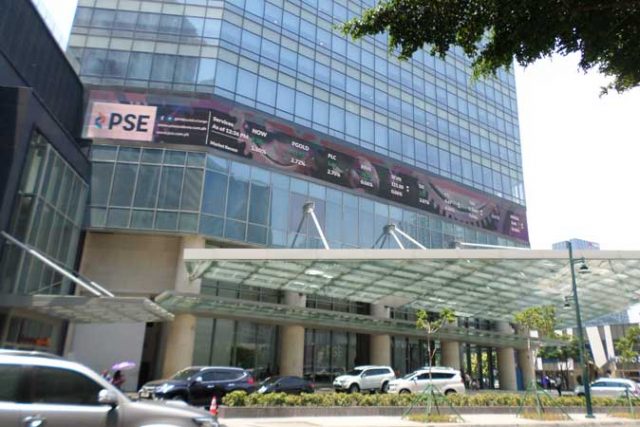
PSE to continue push for short selling

BW FILE PHOTO

THE Philippine Stock Exchange (PSE) will continue pursuing its plans to allow short selling in the local bourse this year, despite experiencing delays in securing regulatory approvals.

“Unfortunately, foreign investors continue their exit from the market and I really believe — and I’ve been trying to impress this upon our regulators — that the passage of these new rules on short selling could help attract the foreign investors back to our market,” PSE President and Chief Executive Officer Ramon S. Monzon said in an interview with Bloomberg Markets on Thursday.

Foreign funds logged net outflows worth P77.8 billion in the first six months of the year. On Thursday, net foreign selling surged to P838.94 million from P211.97 million the previous day.

Short selling happens when investors sell borrowed securities when prices are high. They will then buy these back once prices fall.

“[We want to] give them the ability to hedge their investments instead of having to go out when things don’t look good in the market,” Mr. Monzon said.

The PSE was targeting to allow short selling by the second quarter this year, but Mr. Monzon said the target date for allowing short selling will have to be moved another quarter as they follow up with regulators.

The PSE is currently trying to address “two regulatory hurdles” as it awaits go signals from the Securities and Exchange Commission and the Bureau of Internal Revenue.

“We have been waiting for the final approval of our regulators, both the Securities and Exchange Commission in the accrediting the Philippine Depository Trust as the security lending and borrowing unit and also approving the offshore collateral request of foreign investors,” Mr. Monzon said.

“At the Bureau of Internal Revenue level, we’re waiting for their approval to accept what you call a global master securities lending agreement,” he explained.

Mr. Monzon also said the PSE is eyeing a bigger initial public offering (IPO) target for the second half of the year.

“We hope to hit about $2.6 [billion] or $2.8 billion and I’m not even including yet the IPO of our electric transmission company, which the energy regulator has mandated into an IPO. I have not included that yet and that’s a big one,” Mr. Monzon said. — Keren Concepcion G. Valmonte

UN warns excluding women from top jobs threatens COVID-19 recovery

REUTERS

LONDON — Global efforts to recover from the COVID-19 pandemic are under threat because women are being excluded from critical decision-making roles, the United Nations (UN) said on Thursday.

Only 6% of coronavirus task forces, which are responsible for coordinating government responses to the deadly virus, have equal numbers of men and women, while 11% have no women at all, found the UN Development Programme (UNDP).

“The pivotal decisions being made today will affect the well-being of people and planet for generations to come,” Achim Steiner, UNDP’s administrator, said in a statement.

“Sustainable recovery is only possible when women are able to play a full role in shaping a post-COVID-19 world that works for all of us.” 

New data by the UNDP and the Gender Inequality Research Lab at the University of Pittsburgh found that women hold less than one in three top leadership positions in public administration globally, jeopardizing a green and inclusive recovery.

While 58% of employees in health ministries are women, they only hold 34% of health policy decision-making positions, their research in 170 countries found.

The analysis comes as many countries grapple with the economic and social fallout from COVID-19, which UNDP said could push another 105 million women and girls into poverty by 2030.

UNDP highlighted an “alarming rise in violence against women and girls” and the “large loss of jobs and income, which are threatening to set back progress on gender equality.”

It said that governments are more responsive and accountable and the quality of public services, particularly around health, childcare and violence against women, significantly improves when women take leadership roles in public administration.

“While the findings are disheartening, they are not surprising,” Henriette Kolb, head of the gender and economic inclusion group at the World Bank Group’s International Finance Corporation, told the Thomson Reuters Foundation.

“Women in both the public and private sector are severely underrepresented in leadership positions. However, if we want to create a resilient, equitable, inclusive and growing economy, we need everybody to have a seat at the leadership table.” (Reporting by Sharon Kimathi. Editing by Katy Migiro. Please credit the Thomson Reuters Foundation, the charitable arm of Thomson Reuters, that covers the lives of people around the world who struggle to live freely or fairly. — Thomson Reuters Foundation

FSCC looking to address emerging risks from debt servicing issues

THE FINANCIAL Stability Coordination Council (FSCC) is formulating initiatives to respond to systemic risks stemming from borrowers’ inability to pay their debts due to the coronavirus pandemic, Bangko Sentral ng Pilipinas (BSP) Governor and FSCC Chairman Benjamin E. Diokno said.

“We have to deal with the systemic risk itself, meaning the difficulty of borrowers to service the maturing obligations, rather than be limited as to who is the appropriate authority over non-financial corporations. In this regard, we have a number of initiatives at the late stages of development. I hope to announce this soon in line with authority provided to the council by Executive Order (EO) 144,” Mr. Diokno said at an online briefing.

EO 144 signed by President Rodrigo R. Duterte on July 6 institutionalized the FSCC as an interagency body that will focus on assessing systemic risks to financial stability and formulating policies to address these issues. 

Prior to this, the FSCC was a voluntary initiative. It includes officials from the BSP, the Department of Finance, the Securities and Exchange Commission, the Insurance Commission, and the Philippine Deposit Insurance Corp.

Systemic risks refer to disruptions to any part of the financial system that could affect the rest of the economy.

The FSCC earlier cited debt servicing as a risk to financial stability, but said this is expected to be manageable in the near term.

Gross nonperforming loans climbed 83% to P479.481 billion in May from P262 billion a year earlier, BSP data showed. Analysts attributed this to the pandemic’s impact on the economy.

Mr. Diokno said companies facing problems in repaying their debts are not under the watch of financial authorities, so their situations should be reviewed by the FSCC as a whole.

“The problems that these nonfinancial corporations face is a result of the recession induced by COVID-19 (coronavirus disease 2019) and the measures that had been taken to contain the spread of the virus. The problems, therefore, are not from any reckless behavior on the part of the borrowers…,” the BSP chief added.

Mr. Diokno said they are seeing signs of improvement as the economy gradually reopens. However, the FSCC acknowledges that the pandemic has affected lives and livelihood, and risks should continue to be monitored so appropriate responses can be made, he said.

“We note that the scars may linger [from the pandemic], and that there are changes that run deep. This is why we say that the new economy will be fundamentally different from the pre-COVID market arrangements,” he said.

EGOV PAY TRANSACTIONS RISE
Meanwhile, at the same briefing, Mr. Diokno said EGov Pay, which facilitates online transactions for government agencies, saw increased usage in May due to fees for clearances and tax payments.

Data from the central bank showed EGov Pay transactions surged in terms of both volume (5,000%) and value (2,000%) in May from their year-ago levels.

“Aside from curbing revenue leaks, fostering better audit trail and enhancing transparency, the wider usage of EGov Pay is seen to promote efficiency in the country’s revenue generation efforts under the New Economy,” the BSP chief said.

Mr. Diokno said 387 government billers are already onboard the facility, which represents 90% of the institutions targeted to be included in the facility this year.

EGov Pay was launched in 2019 and is expected to help the BSP reach its target to have 50% of the value and volume of transactions in the country done digitally by 2023. — L.W.T. Noble

ADVERTISEMENT
ADVERTISEMENT