Home Blog Page 7758

Tourism dep’t reminds quarantine hotels: Returning families can share a room

@COASTGUARDPH

THE DEPARTMENT of Tourism (DoT) on Wednesday reminded hotels and resorts accredited as quarantine facilities that room sharing is allowed for travelers from the same household, especially families with minors and persons needing assistance.   

“We have received reports that some DoT-Accredited Accommodation Establishments operating as Quarantine Hotels have been implementing a one-room-one-person policy even for travelers coming from the same household,”  Tourism Secretary Bernadette Romulo-Puyat said in a statement. 

“While the Department is aware of the downturns that the pandemic brought to the tourism industry, particularly the accommodation sector, we would like to reiterate that all DoT-accredited establishments must strictly follow the guidelines released by the Department to avoid confusion among travelers who need to quarantine,” she said. 

The DoT guidelines, contained in Administrative Order No. 2021-004-A, were approved by the national task force managing the coronavirus response, Department of Health, and the Bureau of Quarantine.   

The rules require single occupancy for quarantine guests from different households, while room sharing is encouraged for those belonging to the same household and guests requiring a companion such as minors, persons with disability, or senior citizens.  

“We all share the same struggles but it is imperative that we implement the right policies to help our kababayans who want to return to the country,” the tourism chief said.

Peso up on stock market’s rebound, profit taking

BW FILE PHOTO

THE PESO appreciated versus the greenback on Thursday as local stocks rebounded and as players booked their gains.

The local unit closed at P50.135 per dollar yesterday, gaining 21.5 centavos from its P50.35 finish on Wednesday, data from the Bankers Association of the Philippines showed.

The peso opened Thursday’s session at P50.25 versus the dollar. Its weakest showing was at P50.32, while its intraday best was at P50.11 against the greenback.

Dollars traded declined to $948.95 million on Thursday from $1.007 billion on Wednesday.

The peso climbed as the stock market rebounded after days of decline, Rizal Commercial Banking Corp. Chief Economist Michael L. Ricafort said.

The Philippine Stock Exchange index gained 100.41 points or 1.55% to close at 6,576.62 on Thursday, while the all shares index went up by 43.94 points or 1.09% to finish at 4,074.94.

Meanwhile, a trader attributed the peso’s strength to “profit-taking by market participants from the recent strength of the greenback”.

For today, Mr. Ricafort gave a forecast range of P50 to P50.20 versus the dollar, while the trader expects the local unit to move within P50 to P50.30. — LWTN

PHL stocks climb as investors pick up bargains

COURTESY OF PHILIPPINE STOCK EXCHANGE, INC.

PHILIPPINE shares closed higher on Thursday as investors went bargain hunting after four days of decline, although trading remained lackluster on fears over the spread of the Delta variant of the coronavirus disease 2019 (COVID-19).

The Philippine Stock Exchange index (PSEi) gained 100.41 points or 1.55% to close at 6,576.62 on Thursday, while the all shares index went up by 43.94 points or 1.09% to finish at 4,074.94.

“With Asian markets on the upside after solid US company earnings, local market followed on bargain hunting after four straight days down,” Diversified Securities, Inc. Equity Trader Aniceto K. Pangan said in a text message.

MSCI’s broadest index of Asia-Pacific shares outside Japan followed Wall Street higher and rose 1% with broad gains from Sydney to Seoul and Hong Kong, Reuters reported. Japanese markets are closed until Monday.

“The index took a breather today after plunging from the 6,900 level to the 6,400 level in less than two weeks. However, the rebound was not backed by heavy volume, and foreigners remained net sellers for the 13th consecutive session,” AB Capital Securities, Inc. Junior Equity Analyst Lance U. Soledad said in a Viber message on Thursday.

“The lackluster trading despite the significant decline of the index suggests investors remain very cautious of the downside risks given the presence of the Delta variant,” Mr. Soledad said.

Value turnover declined to P3.69 billion with 1.4 billion issues traded on Thursday, from the P5.9 billion with 1.60 billion issues recorded on Wednesday.

Meanwhile, net foreign selling decreased to P338.64 million on Thursday from the P572.26 million seen on Wednesday.

The Health department yesterday reported 12 new local cases of the Delta variant of COVID-19, bringing total infections to 47. Six of the new cases are from Central Luzon, while Metro Manila recorded three cases of the Delta variant, Calabarzon reported two cases, and one case was logged in Bicol.

All 12 new cases are said to have recovered, but the status is still being validated by regional and local health offices.

There are currently eight active cases of the Delta variant in the country, half of which are in Cagayan de Oro. Authorities from Cagayan de Oro on Thursday said four of the five Delta variant cases there reported last week were traced to a birthday party.

All sectoral indices posted gains on Thursday. Financials climbed by 40.39 points or 2.9% to 1,433.38; holding firms improved by 124.05 points or 1.92% to 6,583.74; mining and oil went up by 146.30 points or 1.54% to close at 9,599.07; industrials rose by 107.46 points or 1.17% to 9,253.26; property added 21.27 points or 0.68% to end at 3,107; and services inched up by 7.43 points or 0.48% to 1,551.10.

Advancers beat decliners, 136 versus 56, while 52 names closed unchanged. — Keren Concepcion G. Valmonte with Reuters

Lawyers’ group seeks protection for families of alleged drug war victims  

A LAWYERS’ group on Thursday said they will file further complaints against President Rodrigo R. Duterte before the International Criminal Court (ICC) if family members of alleged drug war victims are attacked.  

The National Union of Peoples’ Lawyers (NUPL) said in a news release that it “will file corresponding charges in the ICC against Pres. Duterte for any attack against families of the victims and their witnesses” who will be participating in the international tribunal’s probe on alleged human rights violations in the government’s anti-drug campaign. 

NUPL called on the President to make a commitment to ensure the safety of the families.  

“We demand that Pres. Duterte assure the security of the families of the victims and their witnesses so that they can participate in the ICC process which can no longer be stopped by Pres. Duterte,” the group said.  

The Philippine Supreme Court has dismissed the petitions against Mr. Duterte’s withdrawal from the ICC, but it ruled that the government must still cooperate with the ICC’s investigation. 

This High Court decision, NUPL said, means that Mr. Duterte “cannot threaten the ICC Prosecutor and prohibit their entry into the Philippines” as that will violate the government’s earlier obligation under the Roman Statute treaty which created the ICC.  

NUPL noted that Mr. Duterte’s claim of immunity from suit as president means that “victims of his heinous crimes against humanity cannot have any judicial recourse under Philippine laws.”  

As such, the group urged the victims’ families and witnesses to participate and support the ICC’s probe by submitting their positions through the tribunal’s website. — Bianca Angelica D. Añago  

Lingering typhoon expected to exit PHL by Saturday 

FISHERFOLK in the island province of Occidental Mindoro secure a boat on shore as strong winds and heavy rains brought by the typhoon-enhanced southwest monsoon kept them from going out to sea on Thursday. — OCCIDENTAL MINDORO PIO

TYPHOON FABIAN, with international name In-fa, is expected to be out of the Philippine area by Friday evening or early Saturday after lingering for a week and gathering strength over the country’s northern waters, weather bureau PAGASA said on Thursday.   

The typhoon did not make landfall but enhanced the southwest monsoon, bringing heavy rains for days in the north and western parts of the country, triggering floods in some areas including the capital region Metro Manila.   

Typhoon signal #1, the lowest in a 5-level system, was up in the Batanes and Babuyan Islands.   

As of 5 p.m. Thursday, Fabian was located 505 kilometers northeast of Itbayat, Batanes with maximum sustained winds of 150 kms per hour near the center and gustiness of up to 185 kms/h.   

PAGASA said Fabian was forecast to further intensify and reach its peak intensity at up to 165 kms/h on Thursday evening.  

“A weakening trend in its intensity may begin on Sunday as the typhoon makes landfall over mainland China,” it said.   

Power industry warned against flouting gov’t rules on reserves

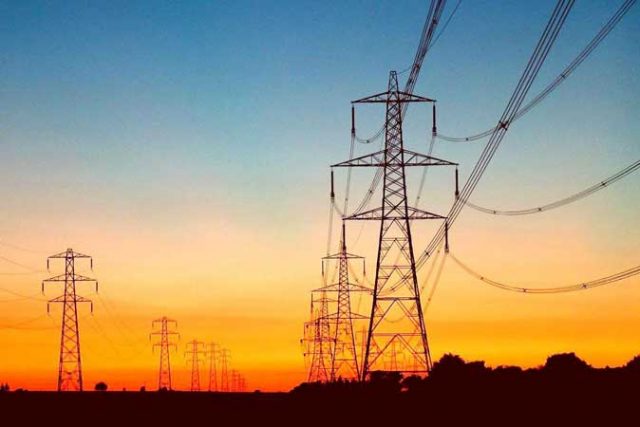
THE ENERGY industry can expect serious consequences if it continues to defy government policy on maintaining adequate reserves and plant shutdowns, the Department of Energy (DoE) said.

“We are recovering from COVID (coronavirus disease 2019) and we have elections next year. We have grave economic and political consequences if these power players do not comply,” Energy Undersecretary Felix William B. Fuentebella said during a virtual meeting of the Cabinet Cluster on climate change adaptation, mitigation, and disaster risk reduction.

“We expect compliance because the President has already acted on this. The Cabinet was informed. Enforcement agencies are on their toes, and we’re not only talking about (them addressing) anti-competitive behavior but also the implementation of penal provisions,” he added.

He said the rules for which compliance is expected include the competitive selection process in power procurement.

He added that the system operator should also adhere to the guidelines on ensuring sufficient reserves, and submitting the grid operating and maintenance program on time.

“Last March… we were seeing our reserves go down but more importantly what triggered (this were) power players that were refusing to follow specific policies laid down by the department,” Mr. Fuentebella said.

Asked to elaborate on the possible consequences, he noted that the DoE had no power to penalize industry members, though complaints may eventually be elevated to Congress in a process outlined in the Electric Power Industry Reform Act of 2001.

“The DoE can only recommend (to Congress) the cancellation or revocation of the franchise,” he said.

Between May 31 to June 2, the grid operator placed the Luzon grid under a series of yellow and red alerts, eventually triggering rotating brownouts amid forced outages, thinning reserves and higher temperatures.

IMPROVING ENERGY SECURITY VIA RENEWABLES
Energy Secretary Alfonso G. Cusi, who was also present at the virtual meeting, detailed his department’s plans for tapping into renewable energy to enhance energy security.

“We need to improve our energy security and to do that, we have to tap the indigenous sources and renewable sources. So what we’re doing is, aside from solar, wind, tidal, we are expanding our hydro and the geothermal (capacities),” he said.

Mr. Cusi cited the opening up of large-scale geothermal projects to foreign investment during the third round of its open and competitive selection process, the upcoming green energy auction, and the moratorium on new coal-fired plants.

The DoE’s recent freeze on building greenfield coal plants is intended to mitigate the impact of climate change, he said.

“The position of the DoE has been (to pursue) climate justice… We are doing our share to contribute on reducing carbon emissions by increasing the share of renewable sources of energy,” Mr. Cusi added.

The Philippines’ first nationally determined contribution (NDC) to meet the goal of reducing greenhouse gas emissions by 75% by 2030, involves developing low carbon and resilient energy projects, he said.

NDCs are key to the Paris Agreement on Climate Change, which hopes to cap the global temperature rise to below 1.5 degrees Celsius. — Angelica Y. Yang

Gov’t urged to pivot from fiscal prudence to stimulating growth

THE GOVERNMENT needs to focus its energies on stimulating growth rather than keeping the deficit under control if it wants to keep its investment-grade sovereign rating, an ING Bank NV economist said.

Fitch Ratings’ decision to revise its outlook on the Philippines to “negative” from “stable” suggests the possibility that ratings agencies have become more concerned with medium-term growth prospects of the Philippines, which had been hailed previously for its “solid fundamentals,” ING’s Manila Senior Economist Nicholas Antonio T. Mapa said in a note. He added that government officials seem to be concerned with maintaining “fiscal prudence” to keep deficits under control.

“Perhaps a revised game plan to chase faster growth can be considered? Faster growth generates revenue streams and generates jobs, and so far, penny-pinching has led to five straight quarters of negative gross domestic product (GDP),” Mr. Mapa said.

Fitch Ratings itself on Thursday noted how Southeast Asian economies have become more vulnerable to deteriorating economic and public finances, citing the case of the Philippines.

“The country has not been as badly affected as some others in the region by the latest infection wave, but its economic contraction in 2020 was particularly deep,” Fitch Ratings said in a note.

“We believe there will be downside risks to medium-term growth prospects as a result of potential scarring effects, as well as possible challenges to unwinding the exceptional policy response to the health crisis and restoring sound public finances as the pandemic recedes,” it added.

Medium-term growth prospects, fiscal policy, and debt levels are key measurables for ratings agencies issuing sovereign ratings. An investment-grade rating grants an economy better access to credit at lower cost and could also help attract investment.

Fitch last week maintained its “BBB” rating for the Philippines, although the “negative” outlook serves as a warning that a rating downgrade could happen within 18 to 24 months.

The debt-to-GDP ratio was at a record low of 39.6% at the end of 2019. This has since risen to 60.4% at the end of March after the government borrowed heavily to fund its pandemic measures.

The economy also contracted by a record 9.6% in 2020, the worst performance in Southeast Asia. It continued to contract by 4.1% in the first quarter, with analysts warning growth this year will be negatively affected by the infection surge in March and April, when a lockdown was imposed in Metro Manila and nearby provinces.

“Despite calls for additional stimulus measures, fiscal authorities have parried suggestions to crank up spending as they carry on (calling for) austerity,” Mr. Mapa said.

“Should this trend not be corrected, we believe we may have the recipe for additional action from ratings agencies, with Moody’s [Investors Service] likely downgrading the country’s outlook followed by S&P [Global Ratings] should the all-important debt to GDP ratio stay above 60% for much longer,” he added.

Government officials on Monday maintained their fiscal deficit projection for 2021 to 9.3% of GDP but trimmed the deficit ceiling to 7.5% of GDP (from 7.7%), 5.9% (from 6.4%), and 4.9% (from 5.4%) of GDP in the 2022-2024 period, respectively.

“This fiscal consolidation strategy will continuously be adopted by the government to ensure fiscal sustainability over the medium-term and to bring back the country’s deficit to pre-pandemic levels,” the Development Budget Coordination Committee said.

The International Monetary Fund’s policy tracker indicates that as of July 1, fiscal support in the Philippines from the two stimulus packages, Bayanihan I and II, was equivalent to 4.4% of GDP in 2020.

Finance Secretary Carlos G. Dominguez III in June signaled that only P173 billion is available for further stimulus funds this year, as anything larger would be “unsustainable.” He added that internal sources of funding are being sought.

Bayanihan III, or the proposed P400-billion stimulus package which allocates P2,000 in cash subsidies for each beneficiary, has passed in House. Socioeconomic Planning Secretary Karl Kendrick T. Chua said earlier this week that the economic team can pursue some items from Bayanihan III if there are savings or additional revenue to fund them.

Mr. Dominguez on Wednesday acknowledged that a credit rating downgrade could be possible, but noted ratings agencies are not accounting for the fact that most economies are struggling with the pandemic. He said there is need to assess sovereigns on a new grading curve with the context of the crisis. — Luz Wendy T. Noble

ARTA preparing new simplified permit rules for laying telco fiber

THE ANTI-RED Tape Authority (ARTA) is considering proposing new rules that would speed up the issuing of permits for telecommunications underground works.

The agency said that a draft joint memorandum circular could streamline permits for the installation of poles, excavation to lay down underground fiber ducts, and the attachment of aerial and underground broadband cables on physical infrastructure.

The draft has been discussed in a meeting with the Department of Information and Communications Technology and the World Bank Group, ARTA said in a statement Wednesday.

The proposed circular will add to the telecommunications permit-streamlining guidelines currently in force. ARTA has been releasing guidelines on streamlining pending and new applications for the construction, repair, and maintenance of telco infrastructure since last year.

Since the original joint circular signed by various government agencies in July 2020, more than 26,000 pending telecommunications permits have been released.

“It has also decreased the number of permits needed from 13 to 8, documentary requirements from 86 to 15, and length of time for processing from 241 days to 16 days,” the agency said.

ARTA plans to meet with local government units to discuss concerns on telecommunications cable-laying and pole installation, and it will also meet with engineering and cable groups.

Meanwhile, ARTA said that it is planning to discuss the anti-competitive practices of developers that limit the internet providers available to subdivision and condominium residents with the Philippine Competition Commission (PCC) and the Department of Human Settlements and Urban Development.

The PCC has been looking into complaints about alleged attempts by development property owners to limit internet access to a single or in-house provider.

The competition regulator in the first abuse of dominance case in the country levied a P27.11-million fine against Urban Deca Homes Manila Condominium Corp. and parent company 8990 Holdings, Inc. in 2019 after the housing developer required unit owners and tenants to sign up with a preferred internet service provider. — Jenina P. Ibañez

Bangus, tilapia, shrimp seen as critical for improving fisheries output

PHILSTAR

IMPROVING the performance of the fisheries sector will hinge on implementing projects to raise the output of aquaculture produce like milkfish (bangus), tilapia and shrimp, the Department of Agriculture (DA) said.

Agriculture Secretary William D. Dar said the Bureau of Fisheries and Aquatic Resources (BFAR) must take the initiative to sustainably develop the aquaculture sector.

He added that seaweed and shellfish also require attention.

 “While the fisheries sector currently contributes about 17% to 18% to the gross domestic product (GDP) in agriculture, it could further increase if programs and projects are efficiently and effectively implemented to unleash the sector’s potential,” Mr. Dar said during the inauguration of BFAR’s new headquarters on July 21.

“It is not just about improving productivity, but to see to it that supply is abundant and properly mobilized during the lean months and closed fishing season to temper fish prices and food inflation,” he added. 

Mr. Dar said the government should encourage the commercial fisheries industry to modernize their operations.

“We have requested the Development Bank of the Philippines and Land Bank of the Philippines to provide commercial fishing operators a credit window that will enable them to replace old vessels and acquire new ones,” Mr. Dar said.

The Philippine Statistics Authority estimates that fisheries production declined 0.8% year on year to 978,618 metric tons in the first quarter due to the weak performance of the commercial and municipal fisheries.

Overall agricultural production for the quarter fell 3.3%. The DA’s target for 2021 is 2.5% growth. — Revin Mikhael D. Ochave

Unexpected challenge to teacher-vaccination rules emerges from DFA’s Locsin

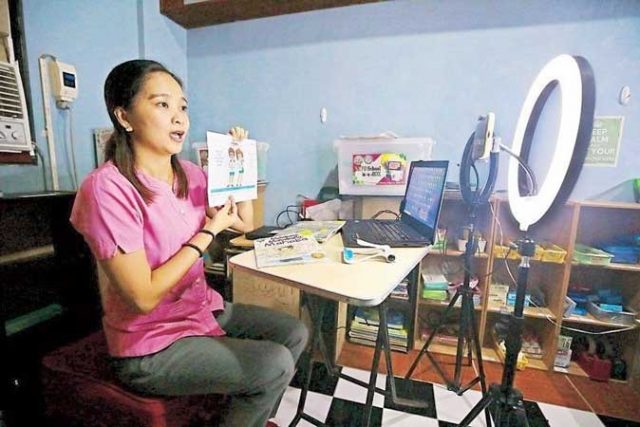
A TEACHER holds an online class in this August 2021 photo. — THE PHILIPPINE STAR/MICHAEL VARCAS

FOREIGN AFFAIRS Secretary Teodoro L. Locsin, Jr. has asked the Justice department about the legality of requiring that teachers be vaccinated against the coronavirus before being allowed to return to face-to-face teaching.

In a social media post Thursday, Mr. Locsin asked the Department of Justice if it is “legal for schools to require teachers to vaccinate before letting them in the classroom when face to face (classes are) allowed?”

Justice Secretary Menardo I. Gevarra messaged reporters Thursday that “tough policy questions like these will most likely be discussed at the cabinet meeting first.”

He added that Mr. Locsin’s question “may have been triggered by (French President Emmanuel) Macron’s statements.”

Mr. Macron announced on July 12 that starting August, French citizens are required to be fully vaccinated before being allowed to enter public places such as restaurants, shopping centers, and public transportation.

Around 1.3 million people booked vaccination appointments on the French medical website Doctolib less than 24 hours after Mr. Macron’s announcement.

In the Philippines, there are no rules yet in place requiring teachers to be inoculated before being allowed to resume limited face-to-face classes, which are now being rolled out for medical classes.

Teachers are included in the A4 priority group for vaccination against COVID-19.

Education Secretary Leonor M. Briones had also encouraged teachers to get inoculations, which “will play a huge role in our bid to return our learners to school,” she said in a post on the Department of Education’s website in April.

President Rodrigo R. Duterte said last month that he cannot allow the full resumption of face-to-face classes until everyone is vaccinated or until the population achieved herd immunity. 

“I’m sorry but, it’s difficult. I cannot gamble on the health of the children,” Mr. Duterte told Ms. Briones in a televised briefing on June 21 in rejecting her request for a return to face-to-face classes. — Bianca Angelica D. Añago

DoST develops new process for preserving fruit, vegetables 

THE DEPARTMENT of Science and Technology’s (DoST) Food and Nutrition Research Institute (FNRI) has created a new process for preserving fruit and vegetables that minimizes the degradation of the foods’ nutritional quality.

The FNRI said in a statement Thursday that its Nutrition and Food Research and Development Division developed a Low Heat and Low Humidity (LH2) Drying System which reduces volume losses during preservation.

It said produce subjected to the new process are shelf-stable for six months in the case of fruit and four months for vegetables.

“The LH2… uses desiccants to reduce drying air’s humidity that enables dehydration at lower temperature, resulting in retained sensory and nutritional properties,” FNRI said.

According to the institute, about 40% of the volume of produce is lost during post-harvest handling and processing. A more efficient method of preservation is expected to offset such losses. 

It said traditional high-temperature drying methods adversely affect the sensory and nutritional qualities of the food.

LH2 products have been evaluated by a food grading panel which returned a rating of 7, which corresponds to “moderate like.” Microbial analyses also showed that the products are fit for human consumption after falling within the acceptable range for microbial load.

It added that users of the LH2-process can tap into the growing demand for healthy food and adding value to produce.

“These dried products can be also included in relief packs distributed as part of emergency response during disasters, calamities, and also during pandemics,” the institute said.  

It said the fabrication of LH2 equipment intended for pilot-scale production is ongoing. Once completed, pilot production and feasibility studies will be conducted.

FNRI Senior Research Specialist Richard L. Alcaraz said by telephone that the pilot tests and feasibility study are expected to be completed within the year, with possible commercialization by 2022. — Revin Mikhael D. Ochave

The Delta factor

FREEPIK

Delta is the fourth letter of the Greek alphabet. In general, it stands for change. In chemistry, delta is the change in energy levels. In business, it compares the change in the price of an asset. Its uppercase “D” denotes discrete change from one point to the other. Its lowercase “d” measures infinitesimal change which is the subject of much of calculus.

True to its name, the Delta variant of SARS-CoV-2 virus strain, B.1.617.2, is quickly changing the face of the world. It is superspreading. It was first detected in India in December 2020 and from there, it surged rapidly to Europe particularly the UK. In the US, the first Delta case was spotted in March 2021 and is now its dominant strain.

The Philippines has its own share of the latest variant of the COVID virus. It was not spared of this health scourge. This is the reason behind OCTA Research fellow Dr. Guido David’s advice to the Inter-Agency Task Force for the Management of Emerging Infectious Diseases (IATF) to prepare for it given the possibility of another infection surge due to its high contagiousness.

This is doubly urgent because for one, our current health protocols allow youngsters to go out of their homes. Based on the UK experience, unvaccinated and young people are highly vulnerable. For another, Filipinos who are younger than 18 years old are not given the jabs. They could be the potential victims. Health Undersecretary Maria Rosario Vergeire was actually behind the news when she said “It’s just a matter of time before it enters.” With actual local cases reported in Metro Manila, Central Luzon, Western Visayas, and Northern Mindanao, the Delta variant is now very much with us. We might have another perfect health storm waiting to happen.

Yale Medicine last week clarified that people who are completely vaccinated against COVID-19 would seem to be protected against the Delta variant. Those without the jabs and not observing the usual health protocols are at risk of being infected.

By this time, Filipinos who are deeply engaged in social media must have a good familiarity with the dynamics of the Delta variant. The Delta variant is “the fastest and fittest,” spreading 50% faster than the Alpha strain, which is itself 50% more transmissible than the original strain of SARS-CoV-2. Its math tells us its velocity is exponential. Yale Medicine says: “Delta is outcompeting everything else and becoming the dominant strain.”

Medical experts warn that if Delta truly moves fast enough as it does, we could have “hyperlocal outbreaks.”

It was good for the Metro Manila mayors to have announced “they would implement strict COVID-19 health and safety measures on the assumption that the more infectious Delta coronavirus variant was already spreading in the National Capital Region (NCR),” based on the Department of Health’s (DoH) report. While they would work for a granular lockdown, we find it difficult to imagine how the National Capital Region (NCR) can do it without a strong pandemic monitoring system. Until today, QR systems vary across the different areas in the NCR and even within each city, not all the establishments are exactly in synch. Granular lockdown means each local government unit (LGU) can precisely target specific barangay, purok, or even building. By faith, let us hope LGUs can go micro.

This cloud of uncertainty over our ability to manage current and future pandemics, courtesy of the Delta variant, explains the recent decision of credit rating agency Fitch to downgrade our country’s credit outlook from stable to negative. Fitch also downgraded the outlook of two government banks, as well as of four commercial banks from stable to negative while keeping their credit ratings due to the perceived weak prospect of the macroeconomy. In turn, this would have a negative impact on their asset quality and financial performance.

Just yesterday, we heard the report that Moody’s Investors Service also slashed its 2021 growth forecast from 7% to 5.8% due to the “acute challenge” of the pandemic.

Therefore, it is not difficult to understand why the Asian Development Bank (ADB) also sounded the alarm against the Delta variant in its supplement to the Asian Development Outlook. The ADB realizes that the new variant poses risks to the Philippine economy’s recovery even as it maintained its growth projections at 4.5% and 5.5% for 2021 and 2022, respectively. We believe those growth forecasts are already way below the official targets of 6-7% for 2021 and 7-9% for 2022, and could accommodate a less than ideal outcome.

The ADB expects the Philippines to sustain its public spending on infrastructure projects and social support to encourage consumption expenditure. The ADB is pleased with the initial improvements in key macroeconomic indicators, gradual easing of quarantine restrictions and continued rollout of the vaccines. It also expects further improvement in business and consumer confidence. The government is now challenged to inoculate around 70 million Filipinos or 70% of the population by yearend. This could be the wild card because so far, DoH has reported that only 4% have been fully vaccinated at the rate of less than 300,000 per day.

The ADB is quite firm on one point. The Delta factor cannot be ignored. Its second revision of the country’s growth prospect is decidedly low enough to also reflect the risk from a Delta upsurge.

We believe the Development Budget Coordination Committee’s (DBCC) consensus to uphold its current growth targets despite this biggest health threat to business activities and market confidence is of a Braveheart effect. We see a Braveheart effect when we choose to be more generous, for instance, with our assessment despite all the odds against a quick economic bounce back, lest we discourage domestic demand and keep the recovery more elusive.

Nobody can challenge the DBCC’s push for “gradual and safe” reopening of the economy, more widespread rollout of the vaccines and expansion of health capacity. These could ward off the potential impact of the Delta factor. Infrastructure must be pursued. This could make growth possible and sustainable. These propositions are critical.

But in effect, the DBCC decision is premised on the success of pandemic mitigation to permit economic and business reopening. Confidence has been reposed on green shoots in job creation, trade, and manufacturing, as well as on personal mobility. Together, they comprise the high scenario.

Two factors could frustrate our optimistic expectation, though. One, our pandemic mitigation has been historically weak and no tipping point has been reached to convince us that this time, our health protocols and inoculation records could change the outcome. We could only hope that the DoH’s four-door strategy at points of origin, entry, care, and epidemic surge would be implemented with great dispatch to produce better results.

And, two, for the next four years, the DBCC decided to maintain its revenue projections despite the budgetary implications of a possible Delta variant on health, education, wage subsidy, and business assistance. We could only hope that the substantial tax relief granted under the CREATE Law to corporates would translate into higher reinvestment and more jobs for our people.

Preparing a low scenario for deciding on public policy is indispensable. Being conservative reflects the usual uncertainty in dealing with the deadly Delta factor. Our past experience in ramping up public spending teaches us we have limited absorptive capacity. Most important, a conservative scenario will challenge Congress and the Palace to deliver decisive and enlightened leadership, and the civil society to demand it.

It is always better to be prepared, to have a foretaste of the potential cost of muddling through another round of health crisis and economic freeze.

As Rolf Dobelli (The Art of Thinking Clearly, 2013) reminds us: “As paradoxical as it sounds, the best way to shield yourself from nasty surprises is to anticipate them.” That is the essence of the Delta factor, that is the essence of a meaningful change.


Diwa C. Guinigundo is the former Deputy Governor for the Monetary and Economics Sector, the Bangko Sentral ng Pilipinas (BSP). He served the BSP for 41 years. In 2001-2003, he was Alternate Executive Director at the International Monetary Fund in Washington, DC. He is the senior pastor of the Fullness of Christ International Ministries in Mandaluyong.


ADVERTISEMENT
ADVERTISEMENT