Home Blog Page 7747

‘No safety nets’: Debts weigh on grieving Indian families

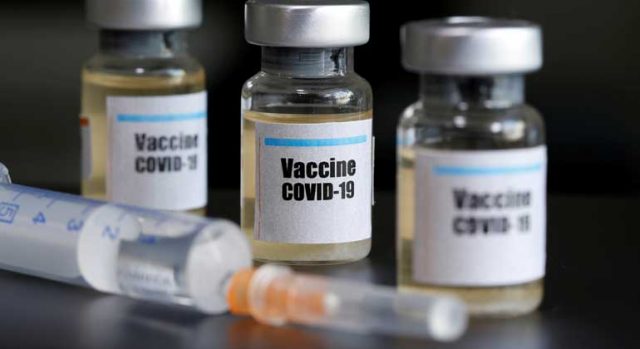
Supply issues to delay Moderna COVID-19 vaccine shipments, S.Korea says

SEOUL – Moderna has pushed back its late-July vaccine shipment schedule for South Korea to August due to supply problems that will affect other countries waiting on its shots, South Korean health officials said on Tuesday.

The shipment delay comes as the government is expanding its inoculation campaign to people in their 50s and workers in its vital computer chip and electronic sector. The disruption has forced authorities to switch to the Pfizer vaccine for some vaccinations.

The supply issue is linked to the vaccine manufacturing process involving Swiss contract drugmaker Lonza and a Spain-based company which does bottling work for the Moderna vaccine, said Jung Eun-young, head of the vaccine procurement team.

“This means the production-related issue does not only affect South Korea. Rather it is a common problem for countries that receive the volume from the manufacturing site,” Jung said during a news conference.

She did not name the Spanish firm, but contract drugmaker Rovi bottles, or “fills and finishes,” Moderna vaccines for markets other than the United States.

Lonza said questions concerning the COVID-19 vaccine should be directed to Moderna, which did not immediately reply to Reuters’ requests for comment. Rovi was not immediately available for comment.

South Korea has a contract for 40 million doses of the Moderna vaccine, of which about 1.1 million have already arrived.

It is currently battling a fourth wave of infections linked to the spread of the more contagious Delta variant and public complacency that has seen daily cases breach the 1,000 mark for the first time since December.

Authorities reported 1,365 new coronavirus cases for Monday.

It was not immediately clear which other countries will be impacted by the disruption of Moderna supplies nor how severe the production issue was.

South Korean officials said the Moderna vaccines scheduled to arrive in August remained on schedule, adding that a detailed shipment plan would be made public once finalised.

Slightly more than 34% of South Korea’s population of 52 million has received at least one vaccine dose while 13.5% are fully vaccinated. – Reuters

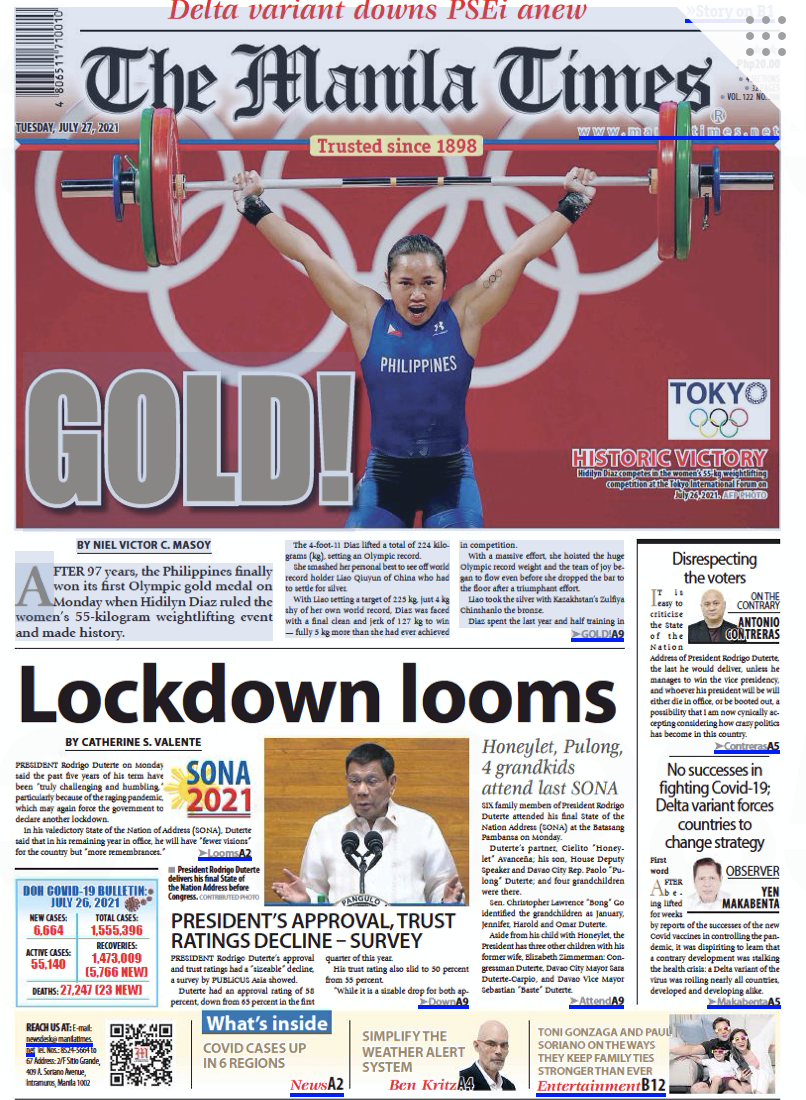
Hidilyn wins page one

Newspaper editors can be an edgy lot. Especially when something big happens when they’ve already put their papers “to bed” and the presses are ready to roll. Pre-pandemic, that would delay the trip to their favorite hangout to unwind. 

Like yesterday. As of TV news primetime, President Duterte’s last State of the Nation Address (SONA) was not yet over. The people at the news desks were still waiting for the verbal gems, or bombs, from the Chief Executive. 

Then, at around 8:30 p.m., when most newspaper printers were doing last-minute checks prior to running the front pages, weightlifter Hidilyn Diaz hoisted 127 kg  more than twice her listed body weight of 55 kg  to win the Philippines’ first gold medal at any Olympic Games and setting a new Games record to boot. 

(Clarification: in 1988, Arianne Cerdeña won a gold at Seoul but because bowling was then a demonstration sport, her achievement was not included in the country’s medal count.) 

Binaklas” or dismantled, Dodo Catacutan quoted an unidentified editor in a sports-oriented website. Most others would say remat, newsroom slang for page reformat or recast. Whatever, it is something editors don’t relish doing after already having devoted so much time to arranging the page. But then again, winning a first Olympic gold justifies trumping a presidential speech. I can picture editors last night redoing page one with an expletive (not a presidential monopoly) but with detectable glee because Diaz nailed it. 

I had always imagined that if a Filipino athlete won an Olympic bronze medal, the story would land on page one, but perhaps below the fold. It did. Above the fold if it was a silver. Boxer Mansueto “Onyok” Velasco enjoyed page-one coverage when he placed second in the 1996 Atlanta Olympics as did Diaz herself in Rio 2016. But a first gold medal would merit an all-caps banner headline with a dominant photo. 

This morning’s front-page roundup is a confirmation of sorts of that imagination. 

ALL-CAPS BANNER HEADLINES

The Manila Bulletin, normally of the staid, formal page one, is screaming GOLD! with the uncharacteristic exclamation point. So is the Manila Times. Technically their identical headlines are not banners but rarely will you see ALL CAPS headlines on page one of Manila’s so-called “broadsheets.” Today, five of them have all-capital letters in their headlines, but still in black ink. Three employ banners, headlines that run across the entire width of the page. 

The BusinessMirror, which caters to a less excitable readership, has an all-caps banner — exclamation point included — and has Diaz’s winning photo above the masthead. 

  • Most of today’s newspapers in Manila are no longer broad. Except for the BusinessMirror, many in recent years have adopted the Berliner midi format, which is 315 millimeters (or 12.4 inches) wide. Traditionally broadsheets were 15 inches across, sometimes 23. Hence the term broadsheet today is a romantic expression in the Philippines to refer to the English-language newspapers catering to higher sections of society. 
  • Tabloids, measuring half of a broadsheet, are often relegated to the masses, using the vernacular for stories usually of crime and scandal. Noticeable on their front pages are ALL-CAPS HEADLINES IN RED. 

Editors normally arrange page-one stories according to the perceived news value given to each one. While the front page is already prime real estate, one can still detect a hierarchy if a story: 

  • appears above the imaginary horizontal fold 
  • has the biggest headline treatment in terms of font size and width 
  • has a deck (subhead) or nut graf 
  • occupies more space than other stories, and/or 
  • has an accompanying photo. 

Having all features would be the equivalent of a royal flush or a home run with loaded bases. In the case of Diaz’s gold, most “broadsheets” in Manila rolled out their red page-one carpets. 

There were exceptions, of course. The Manila Standard gave the top spot  banner headline, photo  to the president but conceded the skybox (the teaser at the top of the page) to Diaz. BusinessWorld devoted more than half of its page one, including a banner and a huge infographic, to the SONA but did not mention the Philippines’ Olympic landmark that one would think it did not merit the attention of the captains of industry. (A BusinessWorld editor confirmed that Diaz’s win came “too late” to change page one.) 

Stop-the-presses situations are rare, and expensive. The 9/11 attacks almost 20 years ago occurred as New Yorkers were punching their office clocks; 13 time zones away in Manila, it was nearly bedtime and almost all newspapers had to change their page one. Today, many events are still scheduled so that they can conveniently fit printed newspapers’ deadlines. 

In case other Filipino athletes are so inspired to win more gold medals in Tokyo  and we have excellent chances in boxing, rowing, the pole vault and gymnastics — expect these achievements to dominate page one in the next few days, barring a bigger story. 

Gary A. Mariano is a retired De La Salle University assistant professor. Forty years ago, he was a sports stringer for the Philippines News Agency, before the Philippines dropped the “s.” 

Free fuel and free flights: Hidilyn Diaz gets perks from private sector for her historic win

Weightlifter Hidilyn Diaz won the Philippines’ first-ever gold medal in the Olympic Games on Monday night in Tokyo, Japan. (Screengrab from Tokyo 2020)

After securing the Philippines’ first-ever Olympic gold medal at the 2020 Tokyo Olympics on Monday, Hidilyn F. Diaz is being rewarded with numerous perks by private companies, including a condominium unit in Eastwood, a house and lot anywhere in Luzon, and a lifetime’s worth of free fuel and free flights.  

“This epic moment is about 97 years in the making, and this is our way of saying thanks to Hidilyn for making us all proud. We believe that it’s just right to give our first-ever Olympic gold medalist a home in our first-ever township, Eastwood City, where she can enjoy the township lifestyle with her family and loved ones,” said Kevin L. Tan, chief strategy officer of property giant Megaworld Corporation, which is awarding the Olympian a condominium worth P14 million. 

PHirst Park Homes, an affordable housing project under Century Properties and Mitsubishi Corporation, has also granted Ms. Diaz her choice of a house-and-lot package worth P4 million in any of PHirst’s eight existing communities in Luzon. 

Adding to the medals and properties under her belt is free fuel for life and another P5 million from Phoenix Petroleum, the third largest oil company in the country. This will be given via Siklab Atleta Pilipinas Sports Foundation, Inc., launched in 2018 as an initiative that helps athletes through sponsorships, one of which was granted to Ms. Diaz herself back in 2019. 

“It’s all the more special for us because she is a Phoenix-athlete whose tough journey has finally given our country its first Olympic gold medal,” said Raymond T. Zorrilla, Phoenix Petroleum’s senior vice-president. “Our hope is that this is only the beginning of a golden era for Philippine sports and that more entities from all sectors extend support so we can have more golds in the future.” 

Ms. Diaz’s mobility in the air will also be guaranteed thanks to Philippine Airlines, which is giving her 80,000 free miles per year, for life; and the AirAsia Group, which is giving the 30-year-old Zamboanga native a lifetime of free flights.  

“We want all ASEAN to believe that they can always make it happen,” said Anthony Francis “Tony” Fernandes, AirAsia Group’s chief executive officer. “Amidst challenges and struggles as we go forth with recovery, Hidilyn reminds us that no matter how heavy the weight we are carrying, inner strength, perseverance and a heart of gold will help us power through.” 

These perks will be given in addition to the P10 million incentive mandated by the Philippine Sports Commission Act, or Republic Act No. 10699. — Brontë H. Lacsamana 

Philippines records six week high in daily COVID-19 cases

MANILA – The Philippines recorded 7,186 new coronavirus cases on Tuesday, the highest single-day increase in more than six weeks, and an additional 72 deaths, the Southeast Asian country’s health ministry reported.

President Rodrigo Duterte warned on Monday of stricter virus curbs if the current outbreak worsens. According to one research group, daily cases could hit 8-10,000 infections a day without stronger countermeasures to contain the more contagious Delta variant. – Reuters

DoST looking into antihypertensive properties of mushrooms and mangoes

WIKIMEDIA COMMONS

The Department of Science and Technology (DoST), through its functional food program, is funding research projects looking into the medicinal properties of mushrooms, berries, and mangoes. 

The crops of interest are Luzon-sourced edible mushrooms that have antihypertensive, antidiabetic, and anti-inflammatory properties; two berries  bignay and lipote  that might have antioxidants and be used as ingredients to fight obesity and other metabolic disorders; and carabao mangoes that might be a possible source of antihypertensive compounds. 

Meanwhile, 17 mushroom-based food products are already in the pipeline, including furikake (a range of dried, mixed seasonings made for sprinkling on top of rice) flakes, instant tea, mushroom tempura, and shing-a-ling (a deep-fried flour snack with the shape of string beans). 

“We have so many wild mushrooms that are interesting,” said Dr. Renato G. Reyes, lead for the mushroom-based project, in the vernacular in a recent webinar organized by DoST. His team discovered 500 mushroom types in Luzon alone. “My wish is for these Filipino products to be recognized internationally,” he added. 

Products from Philippine berries also have the potential to go international, according to Dr. Katherine Anne T. Castillo-Israel and Dr. Liezl M. Atienza. 

“Our berries have more phenolic antioxidants than raspberries and blackberries,” Dr. Israel said, referring to protective chemical compounds that offer resistance to illnesses ranging from cancer to arthritis. Lipote’s ascorbic acid content, she added, offers a seven-fold advantage over kiwi. 

“For development into nutraceuticals, maybe we can use lipote at its unripe stage because [that’s when it] exhibits the highest antioxidant properties,” said Dr. Israel. “I can say our berries have superior antioxidant properties.” 

Dr. Mary Ann O. Torio and her team, meanwhile, found that proteins from carabao mangoes can inhibit hormones that cause hypertension. Carabao mangoes were used, she added, because this was the mango type that was found to have the highest anti-hypertensive activity. 

Functional food, as defined by the International Life Sciences Institute-North America, are those containing physiologically active food components, thus providing health benefits other than basic nutrition. Functional foods also refer to products isolated or purified from foods and generally sold in medicinal form like pills, or products that serve as supplement diets like herbs. 

The DoST’s functional food program has nine priority research commodities: root crops; seaweeds; edible mushrooms; local berries; turmeric; pili; malunggay (moringa); unpolished and pigmented rice; and VCO (virgin coconut oil) and other coconut products. 

DoST also wants to develop medicines aside from food products, similar to what the department did with lagundi and sambong. To this end, a survey gathering traditional knowledge about local produce from communities is being conducted by the DoST-Philippine Council for Health Research and Development (PCHRD). 

“The first step for considering possible functional food is from experience,” said Dr. Jaime C. Montoya, executive director of DoST-PCHRD. “Most of our local communities have knowledge of the use of these foods that we take for granted. — Patricia B. Mirasol  

Be better prepared for the unexpected with Cocolife Protect and Protect Plus

There are unwanted and unavoidable events that you have to prepare for, no matter how large or small they seem. A single slip or fall may happen at the most unexpected times in the most unexpected places, which can possibly bring a huge financial burden to you or your loved ones.

Even so, such events should never disrupt your pursuits for a more secure and comfortable life for you and your family, especially during these trying times. It is crucial now more than ever to have protection from the unforeseen.

Cocolife, the biggest Filipino-owned stock life insurance company, is launching suitable and tailored solutions for such instances: the Cocolife Protect and Protect Plus. These affordable protection plans are designed to provide you and your loved ones financial security in the event of an accident resulting in injury, disability, or death.

Cocolife Protect and Protect Plus provide accidental death benefit with a cash amount equivalent to 100% of the face amount in case the insured encounters a fatal accident. For injuries and disabilities, both protection plans provide a percentage of the face amount in case the insured suffers from a disablement or loss of use of specific body parts due to an accident.

While Cocolife Protect provides burial benefit due to accidental death, the Cocolife Protect Plus comes with a wider coverage beyond accident-caused deaths as this plan provides burial benefit whatever the cause of the insured’s death may be. Burial benefit will be granted to beneficiaries in the event of the insured’s death, provided that the insured is in good health upon inception of the insurance coverage.

The face amounts for both Cocolife Protect and Protect Plus range from P500,000 to P1,000,000 for accidental benefit and from P20,000 to P25,000 for burial benefit offered under 1-year, 2-year, and 3-year terms.

For extra protection, Cocolife also offers an optional rider that is set to provide an additional cover for medical expenses incurred from an accident.

The Accidental Medical Expense Reimbursement, or AMER, is designed to give the insured an additional source to cover customary and necessary medical expenses — especially when treatment by a physician, use of hospital facilities, or employment of a licensed or graduate nurse while at the hospital is required.

Anchored on its belief in the Filipino’s ability and determination to achieve their aspirations in spite of the current challenges we face, Cocolife is adding these insurance choices in their line of comprehensive coverages to give clients more choices in securing and enabling better lives for themselves.

“We assure you that Cocolife will provide you with only the highest quality of service, as we have done for over 40 years,” Cocolife President and Chief Executive Officer Atty. Martin Loon said. “It is a commitment that made us the first ISO-certified life insurance company in the Philippines.”

As the company shares the dreams of its clients to have secure, comfortable, content, and happy lives, Cocolife is keeping its promise to actively help create better lives for them through its newest protection plans.

Find out more about Cocolife Protect and Protect Plus by calling 8810-7888, or by visiting www.cocolife.com.


Join us on Viber to get more updates from BusinessWorld: https://bit.ly/3hv6bLA

Duterte lists bills in chaotic final SONA

SCREENSHOT FROM RADIO TELEVISION MALACAÑANG - FACEBOOK PAGE
President Rodrigo R. Duterte delivers his final State of the Nation Address before a joint session of Congress at the House of Representatives building in Quezon City, July 26. — SCREENSHOT FROM RADIO TELEVISION MALACAÑANG – FACEBOOK PAGE

By Norman P. Aquino, Special Reports Editor

PHILIPPINE President Rodrigo R. Duterte on Monday asked lawmakers to pass bills seeking to ease restrictions on foreign ownership and investments a year before his six-year term ends.

The tough-talking president recited his legislative wishes in the last half hour of his almost three-hour state of the nation address — his last before he steps down on June 30, 2022 — from which he veered away from what’s written on the teleprompter countless times.

Mr. Duterte struggled to read the teleprompter, as he went on and off script during his speech. “It’s either I am talking too fast or too slow, or the operator of this thing here is drowsy. Maybe because I had so many ad-libs along the way,” he said.

Mr. Duterte spent more than two hours talking about how he defeated the Maoist rebellion and expressing disappointment about how he failed to solve the country’s drug problem.

“While we have made strides in ending rebellion and insurgency in various parts of the country, we still have long way in our fight against the proliferation of drugs,” Mr. Duterte said. He was referring to his drug war that has killed thousands and that is being investigated by the United Nations-backed International Criminal Court (ICC).

He also devoted time recounting the accomplishments of his administration in the past five years, such as the construction of several roads and purchase of trains to ease the traffic gridlock in the capital region.

His government increased infrastructure spending to an average of 5% of the country’s economic output, he said. “This is significantly higher than the infrastructure spending of each and past four administrations.”

“It deserves an Olympic gold medal for best recycled speech,” Raymond V. Palatino, secretary-general of Bagong Alyansang Makabayan and a former party-list representative, said in a Facebook Messenger chat.

“It was infuriating to hear him repeat the mantra of ‘Kill, kill, kill’ when what our people needed to hear was the President’s marching orders to survive the Delta surge and overcome the pandemic,” he added.

Mr. Duterte said the country could no longer afford prolonged lockdowns because this would inflict great damage on the economy. He urged Filipinos to get vaccinated to help achieve herd immunity. “We cannot afford any more lockdowns lest our economy bleeds to the point of irreversible damage,” he said. 

In his speech at the House of Representatives building in Quezon City, Mr. Duterte urged Congress to pass changes to the Public Service Act and Foreign Investments Act.

He also said lawmakers should lower the required paid-up capital for foreign retailers by amending the Retail Trade Liberalization Act.

The bill seeking to change the country’s 85-year-old public service law will allow full foreign ownership in the public service sector, including transportation and communications, which is limited to Filipino investors.

The measure amending the foreign Investment law will lower the number of direct local hires required for foreign companies. Both bills, which Mr. Duterte certified as urgent in April, remain pending in the Senate.

The bill seeking to amend the Retail Trade Liberalization Act is pending at the bicameral conference committee of the Senate and House.

“We see this as strong signals that the bills mentioned are being prioritized for passage soon. They will support economic recovery in the years ahead,” Ebb Hinchliff, executive director of the American Chamber of Commerce of the Philippines, said in an e-mailed statement.

Mr. Duterte also asked lawmakers to approve a unified system of separation, retirement and pensions for the military and police. Congress should likewise create a Department of Migrant Workers and Overseas Filipinos, he said.

“We’re very pleased he emphasized passing the priority bills — retail trade, public services and foreign investment,” said Chris Nelson, executive director of the British Chamber of Commerce of the Philippines.

“Clearly, that echoes what we’ve been saying and that’s very good to see,” he said by telephone. Mr. Nelson said they would have wanted to hear the President talk about his government’s infrastructure plans before he steps down.

Mr. Duterte failed to discuss his transportation plan, Employers Confederation of the Philippines President Sergio R. Ortiz-Luis, Jr. said by telephone.

“Traffic in Metro Manila it’s getting worse. Why are we not improving our mass transportation and also why is traffic getting worse?” he asked.

“The State of the Nation Address (SONA) is tone-deaf,” University of the Philippines political science Professor Jean Encinas Franco said. “The people want to know how COVID-19 will be addressed given the Delta variant and the slow pace of vaccine rollout.”

Mr. Duterte’s final address to Congress showed that his government was no longer interested in proper pandemic response, said Cleve V. Arguelles, a political science lecturer at De La Salle University. “Filipinos will be left on their own to recover from the debilitating effects of the pandemic.”

After being in power for more than five years, Mr. Duterte has failed to create a locally resilient economy with a vibrant agriculture and high value-added industrial sector, Emmanuel Leyco, President of the Pamantasan ng Lungsod ng Maynila, said in a Facebook Messenger chat.

“The Duterte administration’s economic legacy would join that of the previous regimes who likewise followed the same economic policies that rode on the back of the overseas remittances with a faint industrial and a low agricultural output but was thrown off the saddle as the economy hit a major COVID-19 hump,” he added. — with Kyle Aristophere T. Atienza and Jenina P. Ibañez

PHL economy faces slower growth after 2022

PHILIPPINE STAR/ MICHAEL VARCAS
THE government placed Metro Manila under general community quarantine “with heightened restrictions” until end-July, in a bid to curb the spread of the Delta variant. — PHILIPPINE STAR/ MICHAEL VARCAS

THE PHILIPPINES is at risk of “long-term economic scarring,” with gross domestic product (GDP) growth expected to slow to around 6% after 2022, Moody’s Investors Service said.

“Pandemic risks have weighed on the Philippines’ economic recovery compared with its more export-oriented peers in the Asia-Pacific, delaying fiscal consolidation and raising the prospects for long-term economic scarring. In particular, the revival of private investment would depend on a sustained restoration of business confidence,” Christian de Guzman, a Moody’s senior vice-president, said in a note on Monday.

The economy shrank by a record 9.6% in 2020 and continued to fall by 4.2% in the first quarter.

Last week, Moody’s lowered its growth forecast for the country to 5.8% this year. It also expects the Philippines’ GDP to grow by 6.5% in 2022.

“Beyond 2022, we expect growth in the Philippines to slow toward a potential of around 6% per annum from the average of around 6.6% in the five-year period preceding the coronavirus outbreak. While this growth is still robust compared with investment-grade peers, the deviation from the preceding trend incorporates a view of limited economic scarring,” he said.

“Economic scarring” may be seen in the country’s labor market and the poverty levels, which had improved prior to the pandemic.

“Weaker economic growth would also make fiscal consolidation more difficult, leaving governments with higher debt burdens for years to come and reducing room to respond to future shocks,” Moody’s said.

Moody’s last affirmed the Philippines’ “Baa2” rating with a stable outlook in July 2020. The stable outlook meant the rating is expected to be kept for the next 12 or 18 months.

“The stable outlook reflects the view that the country’s recovery from the acute pandemic shock will restore rapid economic growth compared with its peers, complemented by the stabilization and eventual reversal of the deterioration in fiscal and debt metrics,” Moody’s said.

But the ratings agency also warned against a scenario where the economy’s potential has been damaged “more significantly” than what it had forecast. It also cautioned against a situation wherein the Philippines’ reforms are not continued which could weaken economic and fiscal strength or both.

In 2019, the debt-to-gross domestic product ratio was at a record low of 39.6%, but this has surged to 60.4% as of end-March.

“[A] greater deterioration in fiscal and government debt metrics relative to peers or an erosion of the country’s external payments position that threatens liquidity conditions could lead to a downgrade,” Moody’s said.

“The reversal of reforms that have supported prior gains in economic and fiscal strength, as well as a substantial deterioration in institutions and governance strength would also be negative,” it added.

PREEMPTIVE MEASURES
Meanwhile, the National Economic and Development Authority (NEDA) stressed the need to roll out preemptive measures amid the elevated economic risks from the more contagious Delta variant of the coronavirus disease 2019 (COVID-19).

“Delta (variant) poses higher risks so we are doing preemptive measures to ensure the health of the people while allowing the economy to function as much as possible,” Socioeconomic Planning Secretary Karl Kendrick T. Chua said in a Viber message on Sunday evening.

With a rise in the local transmission of the Delta variant, there are concerns the government may further tighten lockdown restrictions.

The Health department on Monday reported 6,664 new COVID-19 cases, bringing active cases to 55,140.

NEDA has backed the imposition of localized lockdowns instead of broad quarantine restrictions, citing the need to allow economic activities to continue in areas with low cases of infections.

The government placed Metro Manila and the provinces of Ilocos Norte, Ilocos Sur, Davao de Oro and Davao del Norte under general community quarantine “with heightened restrictions” until end-July, in a bid to curb the spread of the Delta variant.

Think tank Moody’s Analytics said the Philippine economy, similar with India, is facing “considerable downside risks” in the second half and into 2022, largely due to “lengthy economic shutdowns, accompanied by only modest fiscal support provided to SMEs (small and medium enterprises) and low-income households.”

“[This] could lead to very deep and lasting scarring as they struggle to reopen businesses, pay back loans, or find employment as the economy finally recovers,” it said in a note to journalists on Monday.

Philippine economic managers are aiming for a 6-7% growth this year.

The government is expecting 70 million COVID-19 vaccines to be delivered this quarter and 50 million more in the last three months of the year.

Official data showed vaccines administered hit 17.2 million as of Sunday, which included 6.1 million Filipinos already receiving their second dose. — L.W.T. Noble and B.M.Laforga

Gov’t urged to pursue more PPP projects amid growing fiscal burden

PHILIPPINE STAR/ MICHAEL VARCAS
THE GOVERNMENT aims to spend P1.02 trillion for infrastructure projects this year. — PHILIPPINE STAR/ MICHAEL VARCAS

By Beatrice M. Laforga, Reporter

THE PHILIPPINE government should consider more public-private partnership (PPP) infrastructure projects as it faces increasing fiscal constraints due to the pandemic, experts said.

Experts from international organizations, ASEAN+3 Macroeconomic Research Office (AMRO), Asian Development Bank (ADB), and the International Monetary Fund (IMF) acknowledged that well-designed PPPs can accelerate the country’s “Build, Build, Build” program.

“The Philippines has made considerable progress in infrastructure investment in recent years… PPPs play an important role in infrastructure programs. Well-designed and properly implemented PPPs can supplement government-funded projects by mobilizing private capital and bringing in the private sector’s construction and managerial capacity,” IMF Representative to the Philippines Yongzheng Yang said in an e-mail last week.

The Duterte-led government had previously steered clear of PPPs due to allegedly disadvantageous provisions such as subsidies and guarantees.

Mr. Yang said the state needs a sound PPP framework and build enough capacity to manage fiscal costs and risks like contingent liabilities that could emerge from such an approach.

Ernesto M. Pernia, a former socioeconomic planning secretary under the Duterte administration, said the government should tap the private sector to help with its massive infrastructure drive, without adding more pressure on its fiscal standing.

“I have always tended to favor smartly chosen PPP projects… they can ease the burden on the government’s fiscal position, while making sure the costs and benefits are well balanced between public and private sectors such that it’s a win-win arrangement for both. More PPP projects should be encouraged, which is also ADB’s policy stance,” Mr. Pernia said in a text message on Friday.

In an e-mail, Byunghoon Nam, a senior economist at AMRO, said he sees no reason why the Philippines cannot take advantage of PPP-type projects, “as long as proper safeguards are in place to ensure that they are well designed and implemented.”

When the pandemic hit last year and state resources were stretched thin, economic managers last year signaled their willingness to be more open to PPPs as a funding option for its infrastructure push.

Fitch Ratings earlier this month flagged growing fiscal risks faced by the Philippines, as it revised the outlook for the sovereign rating to “negative.”

The credit rater projected the country’s general government debt will rise drastically to 54.5% of gross domestic product (GDP) in 2022 from just 34.1% in 2019 as it increased borrowings for its pandemic response.

Fitch Ratings said it will continue to “monitor the evolution of the fiscal deficit and debt levels, as the balance between fiscal consolidation and ongoing government spending to support economic recovery will be an important consideration for the (credit) rating.”

ADB Philippines Country Director Kelly Bird said the PPP program was “reinvigorated” by the administration of the late President Benigno S.C. Aquino III, allowing the government to pursue more infrastructure projects.

“But because of the scale of the infrastructure gap, private sector and PPPs will be both inadequate and insufficient to fill the funding gap. Public spending is necessary for large, complex projects especially in mass public transportation,” Mr. Bird said.

He emphasized the need for a balanced mix of funding sources to provide sustainable support for the massive pipeline of infrastructure projects.

“Government’s optimal infrastructure financing strategy must include a combination of public financing through the national and LGU (local government unit) budgets, private sector financing, and PPPs. ODA (official development assistance) is also another key support for infrastructure financing,” he added.

The Duterte administration’s priority list of 112 flagship infrastructure projects worth P4.687 trillion includes 20 unsolicited PPPs with a total estimated cost of P1.505 trillion.

This made PPP as the second-biggest funding source, next to foreign loans or ODA, which accounts for 54 projects worth P2.612 trillion.

Other 10 projects worth P336 billion were funded through a mix of PPP and other funding sources like ODA and the state’s coffers.

WTO’s holiday from vaccine equity talks draws calls for action

REUTERS 

AN URGENT global effort to rebalance the inequity between rich, vaccinated nations and poor nations sliding further into pandemic misery is colliding with an immovable calendar conflict: the European summer holiday.

Next week World Trade Organization (WTO) delegates are planning to depart Geneva for their August break and, in doing so, pause their fractious debate over a proposal to waive intellectual-property protections for coronavirus disease 2019 (COVID-19) shots until the second week of September.

Before they leave, members will adopt a report that acknowledges they’ve made scant headway on the proposal aimed at making doses more widely available, which the world’s top health expert says is critical to ending a “moral failure.”

“With so many lives on the line, profits and patents must come second,” World Health Organization Director-General Tedros Adhanom Ghebreyesus said during a virtual summit last week.

WTO Director-General Ngozi Okonjo-Iweala previously urged ambassadors to shorten their usual six-week summer holiday to focus on pressing issues like the waiver. Nevertheless, members aren’t planning to reconsider the matter until the week of Sept. 6, according to officials familiar with the planning.

“August doesn’t matter in Geneva; it doesn’t matter if people are dying around the world,” said Shailly Gupta, a spokesperson at Médecins Sans Frontières. “We hope members will move at a faster pace.”

Disagreement persists on the fundamental question of whether a waiver is the “appropriate and most effective way” to address the shortage of vaccines, according to a draft status report produced by Dagfinn Sørli, the chairman of WTO council on Trade-Related Aspects of Intellectual Property Rights or TRIPS.

That split could sink prospects for an ambitious vaccine waiver because WTO decisions must be taken on the basis of consensus — which means any of the 164 members can veto a final agreement for any reason.

Proponents of the waiver had hoped to conclude their negotiations by the end of July and are now criticizing the European Union and other developed nations for sandbagging the talks.

‘NOT INTERESTED’
The European Commission, which opposes a WTO TRIPS waiver, has proposed a series of measures that it argues will create greater legal certainty for nations to leverage existing trade tools in order to expand their production capacities.

“The EU (European Union)is not interested,” Gupta said. “Switzerland, Norway and the United Kingdom are not engaging. They’re saying: ‘This or that won’t work; the waiver won’t work.’ There is no intention of engaging.”

A spokesman for the EU mission in Geneva declined to comment.

Critics counter that the proposal from Brussels is a distraction to redirect focus from India and South Africa’s earlier waiver proposal and to prevent members from engaging in more detailed negotiations.

“The EU’s actions are incredibly cynical and dangerous,” said Lori Wallach, the founder of Public Citizen’s Global Trade Watch. “They have submitted a paper that basically conflicts with the text-based negotiations by saying ‘We don’t want a waiver.’”

The US, meanwhile, has taken a back seat in the process and enthusiasm about Washington’s engagement on the issue has begun to wane in the three months since Trade Representative Katherine Tai announced American support for a waiver.

Though Ms. Tai’s surprise announcement briefly knocked shares of Moderna, Inc., Pfizer, Inc., and BioNTech SE, the stocks quickly rebounded and all are now trading at or near their highest levels of the year.

“People feel that message from Ambassador Tai is not playing out on the ground or being implemented in a meaningful way,” said Thiru Balasubramaniam a managing director at Knowledge Ecology International in Geneva.

A spokesman for the US Trade Representative’s Office in Washington didn’t respond to a request for comment..

DRAWBACKS
Most nations producing the vaccines oppose a blanket waiver to the WTO’s intellectual property (IP) rules because they say it would harm innovation, do little to expand access to vaccines and may even backfire.

Specifically, opponents to the waiver say it would create a chaotic patchwork of laws, unravel existing industry partnerships, lead to a supply crunch for scarce vaccine inputs and inject even more uncertainty into already complex arrangements.

There’s also the possibility that an IP waiver could result in the production of counterfeit and substandard medicines, which could increase vaccine hesitancy that’s already pervasive in even the world’s wealthiest nations.

“Everybody knows IP isn’t the problem and there is no quick fix to vaccinating the world with the latest technology,” said Robert Grant, a senior director at the US Chamber of Commerce. “Most governments know this but due to the political sensitivities they won’t say it publicly.”

Indeed, the waiver debate is a politically explosive issue for nations with high vaccination rates because they don’t want to be seen as standing in the way of getting life-saving drugs to poor nations whose citizens are suffering at disproportionate rates.

To date, 75% of vaccines have been administered in just 10 countries and only 1% of people in low-income countries have received at least one dose, according to WHO statistics.

Drug manufacturers say they are working every day to address the real bottlenecks and are on track to deliver 11 billion vaccines by yearend — enough to innocluate the world’s entire adult population.

While diplomats go on holiday, the process of getting the vaccines out there hasn’t stopped, said a spokeswoman for the International Federation of Pharmaceutical Manufacturers and Associations. — Bloomberg

New plant boosts Meralco profit

BW FILE PHOTO

MANILA Electric Co. (Meralco) posted a core net income of P11.4 billion in the first half, up by 8% year on year, on the back of higher revenues from its joint venture project San Buenaventura Power Ltd.

“We ended the first half of 2021 with consolidated core net income of P11.4 billion, about 8% better than last year. Our reported net income was close to P10 billion, 45% better than 2020,” Meralco Senior Vice-President and Chief Finance Officer Betty C. Siy-Yap said on Monday during the firm’s virtual briefing on its financial and operating results.

Separately, Meralco said in a regulatory filing that its core net income was higher because of higher volume and contributions from San Buenaventura Power, which has developed a 500-megawatt power plant in Mauban, Quezon.

The firm added that its reported net income, which excludes one-off items, increased in the months ending June since there were previous recorded impairments in equity investments.

“Last year, we recognized a full impairment of the balance of the carrying costs of our investment in PacificLight [Power Pte Ltd.], which amounted to P2.7 billion,” Ms. Siy-Yap said, referring to its unit’s investment in the Singapore-based electricity retailer.

Gross revenues for the first half climbed by 8% to P149.1 billion.

Ferdinand O. Geluz, Meralco first vice-president and chief commercial officer, noted that consolidated energy sales were up by 7% in the first semester.

Residential households accounted for 37% or 8,370 gigawatt-hours (GWh) of the sales mix. Commercial and industrial establishments made up 33% or 7,440 GWh, and 30% or 6,781 GWh, respectively.

Mr. Geluz said during the briefing that Meralco “saw [the] continuing trend of stay-at-home and working-from-home [arrangements] in residential, and the strong optimistic growth in industrial,” which he said was back to pre-pandemic level.

“So, it’s better than our 2019 numbers,” he said.

Meanwhile, Meralco spent P13.1 billion for capital expenditures (capex) during the six-month period.

The company said that of the total networks capex of P7.3 billion in the first half, 65% covered new connections and load growth, 26% went to asset renewals and the balance was spent to support the government’s Build, Build, Build projects and Meralco’s electrification program.

Meralco Chairman Manuel V. Pangilinan said that although he was “quite concerned” about the recent spread of the delta variant of the coronavirus disease, which could lead to more lockdowns, he remains “optimistic” about the firm’s revenues.

“I think we’re quite optimistic that profits will be ahead,” he said during the briefing.

The company earlier announced that it is on track to achieve 100% electrification in its franchise area, adding that it was able to hit its target of powering up more than 530 priority sites.

Meralco said that it had allotted at least P1 billion for its electrification program, with the majority allocated for the southern portion of its coverage area.

The company’s shares inched down by 0.74% or P2 to finish at P267 apiece on Monday.

Meralco’s controlling stakeholder, Beacon Electric Asset Holdings, Inc., is partly owned by PLDT, Inc. Hastings Holdings, Inc., a unit of PLDT Beneficial Trust Fund subsidiary MediaQuest Holdings, Inc., which has interest in BusinessWorld through the Philippine Star Group, which it controls. — Angelica Y. Yang

ADVERTISEMENT
ADVERTISEMENT