Home Blog Page 7598

Shakhtar sinks Monaco to reach Champions League group stage

BELGRADE — Shakhtar Donetsk clinched a berth in the lucrative Champions League (CL) group stage with a dramatic 3-2 aggregate win over Monaco after fighting back from two goals down in their playoff round return leg on Wednesday.

The Ukrainian side joined RB Salzburg as the Austrian champions beat Danes Brøndby 4-2 on aggregate, and Sheriff Tiraspol, who became the first Moldovan side to reach the group stage with a 3-0 overall victory against Dinamo Zagreb.

Trailing 1-0 from the first leg at home, Monaco turned the tide as a Wissam Ben Yedder brace gave them a 2-0 lead on the night in Kharkiv before second-half substitute Marlos leveled the tie with a 74th-minute strike.

With the away goals rule no longer in effect in European club competition as of this season, Shakhtar forced the final twist thanks to a 114th-minute own goal from Monaco captain Ruben Aguilar after the French side missed a string of chances.

Ben Yedder fired a dominant Monaco into an 18th-minute lead on the night and put the visitors in the driving seat in the 39th when he steered home a superb low cross from the left by Caio Henrique.

Ben Yedder then missed a pair of sitters either side of half time and Shakhtar goalkeeper Andriy Pyatov denied Kevin Volland with a superb stoppage-time save after Marlos had given Shakhtar a lifeline with a neat finish inside the near post.

Shakhtar were on the back foot in extra time too, but Monaco were ultimately punished for their misses when Aguilar stuck his foot out to block a pass and the looping clearance sailed over goalkeeper Alexander Nübel into the back of the net.

Salzburg raced into a 2-0 lead in the opening 10 minutes of the return leg against Brondby as Benjamin Sesko struck with a clinical finish and Brenden Aaronson added the second when he slid the ball under goalkeeper Mads Hermansen.

Brøndby defender Andreas Maxsoe pulled one back for the home side from close range in the 62nd minute, but it was scant consolation for the Danish side as Salzburg held out comfortably.

Having stunned Dinamo (3-0) at home in the first leg, Sheriff eased to a goalless draw in Croatia’s capital to defy the odds again after they knocked out 1991 European Cup winners Red Star Belgrade in the previous qualifying round. — Reuters

Venus joins sister Serena, Kenin in missing US Open

VENUS Williams will miss the upcoming US Open due to an injury, becoming the third US female after her sister Serena and Sofia Kenin to announce on Wednesday they would not take part in the final Grand Slam tournament of the year.

Two-time US Open champion and former world number one Venus made the announcement in a video posted on social media.

“Not the best news from Serena and I today,” she said.

“I, too, am unable to play the US Open. It’s super, super, super disappointing, having some issues with my leg all this summer and just couldn’t work through it.”

The 41-year-old Venus, who has seven Grand Slam titles to her name, said she would miss competing at her “favorite slam” and wished all the other players good luck.

Earlier in the day, younger sister Serena withdrew with a torn hamstring, making it the first time since 2003 that neither has appeared at the tournament in Flushing Meadows.

The siblings add their names to a long list of players who will miss the tournament due to injury including Roger Federer, Rafa Nadal and Simona Halep.

Fifth seed and 2020 Australian Open champion Kenin withdrew from the competition with a breakthrough coronavirus disease 2019 (COVID-19) infection.

“I am writing with disappointing news,” Kenin wrote on Twitter.

“Recently, I tested positive for Covid-19. Fortunately, I am vaccinated and thus my symptoms have been fairly mild. However, I have continued to test positive and thus will not be able to compete at the US Open next week.

“I plan to spend the next several weeks getting healthy and preparing to play well this fall. Thank you all for supporting me. I want to wish all the players the best of luck in New York.”

The 22-year-old Kenin, who also goes by Sonya, is one of an impressive crop of young Americans in the game, along with Jennifer Brady, Coco Gauff, Jessica Pegula and Danielle Collins.

US Open main draw matches begin on Monday. — Reuters

Lingering leg injury

It’s a testament to Serena Williams’ accomplishments that she’s ranked 20th in the world despite a pronounced inability to perform with consistency. In the last five years, she has had to deal with a variety of ailments, advancing age, and the demands of motherhood while aiming to remain relevant on the court. For those from the outside looking in, however, it bears noting that she claimed her last two Grand Slam championships early in the period; her Australian Open victory in 2017 is the last of her professional-era-record 23 major titles.

The question, of course, is whether Williams can still add to her total, second only to Hall of Famer Margaret Court’s 24 all time. On surface, the answer would seem obvious; after all, she’s already 40, way beyond rocking chair eligibility by the standards of competitive sports. Needless to say, the detriment is not in the very number, but in its attendant handicaps. Certainly, it makes the body more susceptible to damage, and, just as importantly, less inclined to respond to treatment and recovery measures.

Which, in a nutshell, explains Williams’ withdrawal from the United States Open. As she explained in an Instagram post, her decision stems from a need to “allow my body to heal completely from a torn hamstring.” Tweeted longtime coach Patrick Mouratoglou, “we’ve done everything we could so that she could compete at the @usopen. But her body isn’t ready. It is heartbreaking, but this is the only possible decision.”

Significantly, Williams’ leg injury is a lingering one. When she competed in Wimbledon two months ago, she had heavy strapping on her right thigh and was forced to pull out in the middle of the first round after a slip seemed to aggravate her condition. Convalescence followed, but very slowly, and evidently not enough for her to feel confident trekking to Flushing Meadows. Outside of the risks of a premature comeback, her primary consideration is her to win: Is she healthy enough to make a run for the hardware? At this point, it’s all or nothing for her.

To be sure, Williams has nothing left to prove — at least to everybody else. She’s already the greatest player of all time, Court’s one-major advantage notwithstanding. And given her success and standing even with her racket in storage, she can exit the stage with her head held high. Clearly, though, she loves the game, and to the point where she wants to keep giving back to it until she has nothing left in the tank. As to when that is, she believes only she can tell.


Anthony L. Cuaycong has been writing Courtside since BusinessWorld introduced a Sports section in 1994. He is a consultant on strategic planning, operations and Human Resources management, corporate communications, and business development.

Moderna withholds 1.63M COVID-19 vaccine doses in Japan due to contamination

MODERNA, INC. said on Wednesday it has withheld supply of about 1.63 million doses of its coronavirus disease 2019 (COVID-19) vaccine in Japan after a report of contamination of vials with particulate matter, which it suspects involves a production line in Spain.

Although Moderna said no safety or efficacy issues had been identified, the suspension is a fresh setback for the firm, whose partners had production delays last month that disrupted supplies to countries, including South Korea.

That has prompted some Japanese companies to cancel worker vaccinations planned for Thursday, as most of doses in question have been supplied to mass vaccination sites and workplaces in Japan. “Moderna confirms having been notified of cases of particulate matter being seen in drug product vials of its COVID-19 vaccine,” Moderna said in a statement.

“The company is investigating the reports and remains committed to working expeditiously with its partner, Takeda, and regulators to address this,” it added, referring to Japan’s Takeda Pharmaceutical.

It said the contamination could be due to a manufacturing issue in one of the production lines at its contract manufacturing site in Spain.

It was not immediately clear whether the issue impacted supplies to other countries.

Moderna did not immediately respond to a Reuters’ request for comment. Spain’s Rovi, which bottles or “fills and finishes” Moderna vaccines for markets other than the United States, was not immediately available to comment.

The vaccine lot with complaints had 565,400 doses and Moderna said that “out of an abundance of caution” it had put the lot on hold and two adjacent ones.

Takeda said it conducted an emergency examination after particulate matter was found in a lot of vaccine vials at an inoculation site in Japan.

Japan’s health ministry has decided to withdraw some doses as a precaution after consultation with Takeda but it said it would strive to minimize the impact of the withdrawal on its inoculation plans.

Chief cabinet secretary Katsunobu Kato said there had been no cases reported of health issues related to contaminated shots administrated.

Between Aug. 6 and Aug. 20, vaccines from the lot in question were used at a mass public vaccination center in Osaka, according to the defense ministry, which operates the center. The ministry did not say how many people were affected.

Japan Airlines said it had canceled some COVID-19 vaccinations for its employees on Thursday after receiving Moderna vaccines with particulate matter.

Another Japanese carrier, ANA, also held off on its vaccinations on Thursday according to Kyodo news agency.

Prime Minister Yoshihide Suga said on Wednesday that about 60% of the public will be fully vaccinated by end September and that the country had enough vaccines to provide booster doses if such a decision is taken. — Reuters

Facebook considers forming an election commission

FACEBOOK, INC. has approached academics and policy experts about forming a commission to advise it on issues relating to global elections, the New York Times reported on Wednesday, citing five people with knowledge of the matter.

The proposed body could decide on matters such as political ads and their viability and concerns around election-related misinformation, according to the report.

An announcement on the commission could come this fall in preparation for the 2022 US midterm elections, the report said, cautioning such efforts were preliminary and could still fall apart.

Facebook declined to comment.

Social media companies have grappled in recent years with how to handle world leaders and politicians who violate their guidelines.

The commission, if formed, would not be the first time Facebook has set up external groups to help it make major decisions. In 2018, the company created the Oversight Board, a panel that includes former politicians, academics and policy experts to rule on whether Facebook is right to remove certain content from its platform.

In May, the Oversight Board upheld Facebook’s suspension of former US President Donald Trump, but said the company was wrong to make the ban indefinite. — Reuters

US to work with Big Tech, finance sector on new cybersecurity guidelines

WASHINGTON — The US government on Wednesday said it would work with industry to hammer out new guidelines to improve the security of the technology supply chain, as President Joseph R. Biden, Jr., appealed to private sector executives to “raise the bar on cybersecurity.”  

At White House meetings with Mr. Biden and members of his Cabinet, executives from Big Tech, the finance industry, and infrastructure companies said they would do more about the growing threat of cyber attacks to the US economy.  

“The federal government can’t meet this challenge alone,” Mr. Biden told the masked executives in the East Room, telling them, “You have the power, the capacity and the responsibility, I believe, to raise the bar on cybersecurity.”  

After the meeting, the White House said the National Institute of Standards and Technology (NIST) would work with industry and other partners on new guidelines for building secure technology and assessing the security of technology, including open source software.  

Microsoft, Google, Travelers, and Coalition, a cyber insurance provider, among others, committed to participating in the new NIST-led initiative.  

Cybersecurity has risen to the top of the agenda for the Biden administration after a series of high-profile attacks on network management company SolarWinds Corp, the Colonial Pipeline company, meat processing company JBS and software firm Kaseya. The attacks hurt the United States far beyond just the companies hacked, affecting fuel and food supplies.  

“We have a lot of work to do,” Mr. Biden said, citing both ransomware attacks and his push to get Russian President Vladimir Putin to hold Russian-based cyber gangs responsible, and the need to fill nearly half a million public and private cybersecurity jobs.  

The guest list included Amazon.com Inc. CEO Andy Jassy, Apple Inc. CEO Tim Cook, Microsoft CEO Satya Nadella, Google’s parent Alphabet Inc. CEO Sundar Pichai, and IBM Chief Executive Arvind Krishna.  

After the meeting, Amazon said it would make its cybersecurity training available to the public for free, and it would give multi-factor authentication devices to some cloud computing customers, starting in October.  

Microsoft said it will invest $20 billion over five years, a four-fold increase from current rates, to speed up its cyber security work, and make available $150 million in technical services to help federal, state and local governments to help keep their security systems up to date.  

IBM said it will train more than 150,000 people in cybersecurity skills over three years and will partner with historically black colleges and universities to create a more diverse cyber workforce.  

Google said it was devoting $10 billion to cybersecurity over the next five years, but it was not immediately clear what if any of the figure represented new spending. It also said it would help 100,000 Americans earn industry-recognized digital skills certificates that could lead to high-paying jobs.  

Vishaal Hariprasad, CEO of Resilience Cyber Insurance Solutions, told Reuters his company would work with the government on setting clear standards for cybersecurity, and would require policy holders to meet those standards.  

“So, if a company is willing to adhere to the minimum standards, they’ll have insurance, and if not, they’ll have to identify those gaps so they can get to that baseline,” he said.  

“It’s not just about getting our companies safer, but also ensuring that we’re doing something to address the bad guys.”  

Congress is weighing legislation on data breach notification laws and cybersecurity insurance industry regulation, historically viewed as two of the most consequential policy areas within the field.  

Executives for energy utility firm Southern Co and JPMorgan Chase & Co. also attended the event.  

The event featured top cybersecurity officials from the Biden administration, including National Cybersecurity Director Chris Inglis and Secretary of Homeland Security Alejandro Mayorkas. — Andrea Shalal/Reuters

China criticizes US ‘scapegoating’ over COVID origin report 

REUTERS

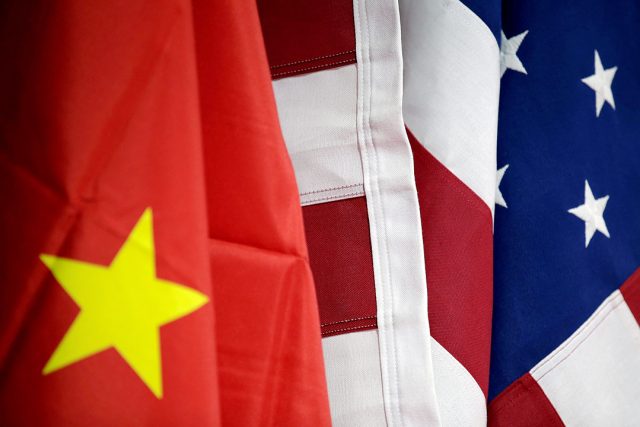
BEIJING/WASHINGTON — China on Wednesday criticized the US “politicization” of efforts to trace the origin of the coronavirus, demanding without any evidence that American labs be investigated, ahead of the release of a US intelligence report on the virus.  

The US report is intended to resolve disputes among intelligence agencies considering different theories about how the coronavirus emerged, including a once-dismissed theory about a Chinese laboratory accident.  

“Scapegoating China cannot whitewash the US,” Fu Cong, director-general of the Ministry of Foreign Affairs’ arms control department, told a briefing.  

US President Joseph R. Biden, Jr., received a copy and was briefed on the classified report on Tuesday, White House press secretary Jen Psaki told reporters on Wednesday.  

The intelligence community has been “working expeditiously” to prepare an unclassified version for the public, Ms. Psaki said without giving a timeline for its release.  

US officials say they do not expect the review to lead to firm conclusions after China stymied earlier international efforts to gather key information on the ground.  

China has said a laboratory leak was highly unlikely, and it has ridiculed a theory that coronavirus escaped from a lab in Wuhan, the city where coronavirus disease 2019 (COVID-19) infections emerged in late 2019, setting off the pandemic.  

Beijing has instead suggested that the virus slipped out of a lab at the US Army’s Fort Detrick base in Maryland in 2019.  

“It is only fair that if the US insists that this is a valid hypothesis, they should do their turn and invite the investigation into their labs,” Mr. Fu said.  

Mr. Fu said China was not engaged in a disinformation campaign.  

The fringe idea once put forward by individual Chinese officials — which lacks any public evidence — has become a Chinese government talking point as it attempts to deflect criticism about its possible role in the origins of the virus.  

On Wednesday, the Chinese embassy in Washington posted the calls for World Health Organization investigations at Fort Detrick and at the University of North Carolina to its website after it said US media had rejected its editorial submissions.  

And on Tuesday, China’s envoy to the United Nations asked the head of the WHO for an investigation into US labs.  

A joint WHO-Chinese team visited the Wuhan Institute of Virology but the United States said it had concerns about the access granted to the investigation.  

“The early days of the pandemic were irrefutably in China, yet China continues to obfuscate and deny the international community the needed access,” a senior US administration official said, adding that if a future pandemic were to originate in the United States, it would insist on a “swift and transparent” evaluation.  

“If there were sound, technically credible reasons for a US investigation, we would of course support it. But there are none,” said the official, who spoke on condition of anonymity.  

Republican Senator Marco Rubio, who has argued a Chinese lab leak was plausible, in a statement urged the Biden administration to immediately declassify the report.  

“The American people deserve to know what our government does and does not know about the origins of COVID-19,” Rubio said.  

A key Congressional panel has been advised it may receive a copy of the classified report on Thursday, according to a Congressional official. — Gabriel Crossley and Michael Martina/Reuters

Coca-Cola and TeaM Energy complete solar energy project in Mindanao

Coca-Cola’s Davao Del Sur plant with close to 4,000 solar panels installed by TeaM Energy

Coca-Cola Beverages Philippines, Inc. (CCBPI)—the bottling arm of Coca-Cola in the country—has partnered with TeaM Philippines Energy Corporation (TPEC), a subsidiary of TeaM Energy Corporation, for a solar panel installation in Coca-Cola’s Davao del Sur plant.

“Our collaboration with TeaM Energy has allowed us to reach yet another sustainability milestone. We remain committed to our energy efficiency goals, a big aspect of which is the integration of more renewable energy into our operations,” says Gareth McGeown, CEO and President of CCBPI. “We follow the highest safety and quality standards for every single bottle of Coke that we make.”

To date, over 65% of Coca-Cola’s total energy consumption is being sourced from renewable and clean sources—including geothermal and solar. Earlier this year, CCBPI announced the complete installation of 14,000 solar panels in three of its sites: Davao del Sur, Misamis Oriental, and Bacolod plants. TeaM Energy’s recently completed rooftop green energy system in Davao del Sur has a peak capacity of 1.5 megawatts (MWp).

“Our solar rooftop project for Coca-Cola Philippines in Davao is now fully operational,” says Gen Takahashi, President of TPEC. “Through this undertaking, we hope to contribute to Coca-Cola’s global sustainability efforts. It is a partnership we deeply value,” adds Takahashi.

Mr. Takahashi explained that construction and installation works were started and completed in the middle of the COVID-19 pandemic with zero incidents, while operation of the system began in March 2021. “We had to work through the various challenges posed by the pandemic, ensuring that all health and safety protocols were met at all stages of development,” says Takahashi.

Tier 1 solar modules and best-in-class solar Photovoltaic (PV) system components were used for the project in the CCBPI facility in Barangay Darong, Davao Del Sur. TPEC’s Engineering Procurement and Construction (EPC) partner for the project was Transnational Uyeno Solar Corporation. From the start of operations in March 2021, the average monthly solar generation is at 180,000 kWh.


Spotlight is BusinessWorld’s sponsored section that allows advertisers to amplify their brand and connect with BusinessWorld’s audience by enabling them to publish their stories directly on the BusinessWorld Web site. For more information, send an email to online@bworldonline.com.

Join us on Viber to get more updates from BusinessWorld: https://bit.ly/3hv6bLA


Filipinos are craving cake, coffee, and carbs — Grab 

UNSPLASH

Filipinos are spending more on breakfast and cake, according to the first food trend report by super app Grab Philippines 

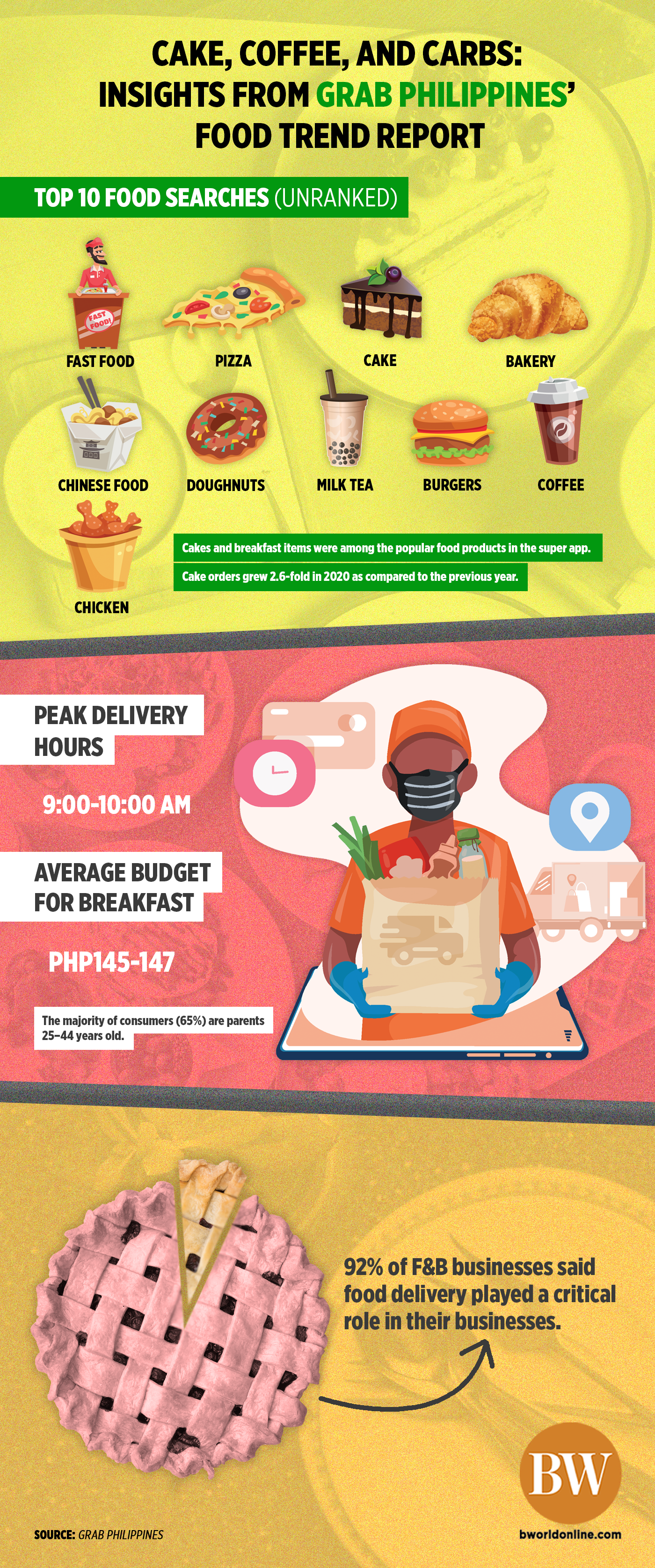
According to the study released Thursday, there was a 60% rise in monthly active food-and-beverage sales (F&B) and a 61% growth in total sales in 2020 as compared to 2019. The majority of consumers (65%) are parents 25–44 years old.  

Cakes and breakfast items were among the popular food products in the super app. Orders for the former grew 2.6-fold in 2020 as compared to the previous year, while the latter saw a 35% growth, also for the same period. The average budget for breakfast was P145–147, with orders trickling in at 7 a.m. and peaking between 9–10 a.m.  

Iced coffee and caramel macchiato are the most popular coffee orders. Other trending items were American breakfast fare, fried food, and carb-loaded meals like spaghetti or fried rice.  

The top 10 food categories searched for are as follows: fast food; pizza; cake; bakery; Chinese; doughnuts; milk tea; burgers; coffee; and chicken.  

“We haven’t surveyed the ‘why’ yet,” said Grab Philippines country head Grace T. Vera-Cruz, about the study’s results. “It’s just the ‘what’ for now. We’ll figure out later the psychology behind the ‘why.’”  

IS BREAKFAST PROFITABLE?
Even without knowing the “why,” however, merchants can use information from Grab’s study to grow their business. “Merchants ask us, ‘Should I be open for breakfast? Is it going to be a profitable segment?’” Ms. Vera-Cruz said, citing the reason for collating key trends into a food trend report. 

“We make all our tools self-service so MSMEs [micro, small and medium enterprises] can do things like change prices on their own,” Ms. Vera-Cruz said. “We give them visibility. We want merchants of all sizes to thrive in our platform.”  

Thai Mango Dessert, one of Grab’s merchant-partners, opened five cloud kitchens between April 2020 and July 2021 because of its partnership with Grab, according to owner Kimberly L. Baquiano.  

“Eighty percent of our business is from Grab,” she said. “It helped us with brand visibility and sales growth. With a cloud kitchen setup, you don’t need a lot of operational expense to put up your business.”   

SulEAT Saver, added Ms. Baquiano, is the marketing solution within the platform that gave her business the best returns thus far.  

“This is the one that worked the most with us,” she told the virtual event audience. “Our investment was P30,000 for a campaign period between July 12–25, and our return on investment was [multiplied by] 43.34.”  

Added Ms. Vera-Cruz: “Our goal is to make it easy for merchant-partners to improve their business processes.”  

New features include the Grab Online Shop, an e-commerce solution focused on F&B businesses, that allows increased flexibility in terms of maximum delivery fees, modes of delivery, and minimum order amounts. Available in six to eight weeks, it will also allow for cashless payments and last-mile delivery solutions within the shop.  

Also in the pipeline is a financial literacy partnership between Grab Merchant Academy and World Bank’s International Finance Group. — Patricia B. Mirasol

J&J says booster dose increased antibodies in early-stage trials

REUTERS

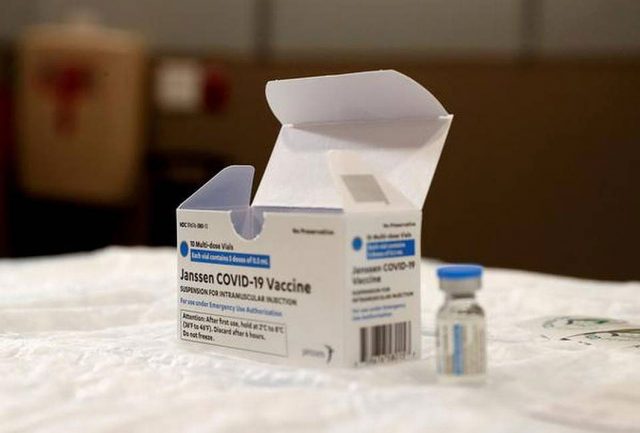
CHICAGO — A booster dose of Johnson & Johnson’s (J&J) coronavirus disease 2019 (COVID-19) vaccine sharply increased levels of antibodies against the coronavirus, according to interim data from two small, early-stage trials, the company said in a press release on Wednesday.  

J&J has been under pressure to produce evidence of whether a booster shot would increase protection from its one-shot vaccine as the US government prepares to roll out a booster campaign next month. The company plans to discuss the data with US regulators as they devise their booster shot regimens.  

The preliminary data announced on Wednesday involved a total of 17 people. It found that a second dose of the J&J vaccine delivered six months after the first resulted in a ninefold increase in binding antibody levels over those seen 28 days after the first dose, the company said.  

The company did not release data on whether a second dose of its vaccine increases levels of neutralizing antibodies, which block the virus from entering cells.  

Those data are still being analyzed, said Dr. Dan Barouch, a Harvard vaccine researcher who helped design J&J’s COVID-19 vaccine, but who was not involved in the J&J booster study.  

Unlike neutralizing antibodies, binding antibodies tag the virus for destruction by other parts of the immune system. Dr. Barouch said increases in binding antibodies typically correlate with increases in neutralizing antibodies.  

Several countries, including the United States, have begun offering booster doses to vulnerable individuals, including the immunocompromised, as the Delta variant has spread and some vaccinated people have become infected with SARS-CoV-2, the virus that causes COVID-19. But those campaigns have excluded the J&J shot because there has been no evidence that a booster helps increase vaccine protection.  

US Centers for Disease Control and Prevention (CDC) advisers in particular have been waiting for word on how to advise immunocompromised individuals who received the J&J vaccine and are already recommended to receive a booster shot.  

According to J&J, the studies released Wednesday showed significant increases in binding antibody responses in participants aged 18–55 and in those 65 years and older who received a lower booster dose.  

The study summaries are being submitted to the preprint server MedRxiv in advance of peer review or publication in a journal.  

The results were released ahead of long-awaited results from J&J’s large, two-dose vaccine trial. A spokesman said those results will be available in the coming weeks.  

In July, J&J published interim Phase 1/2a data in the New England Journal of Medicine that showed neutralizing antibodies generated by its vaccine remained stable eight months after immunization with a single dose.  

“With these new data, we also see that a booster dose of the Johnson & Johnson COVID-19 vaccine further increases antibody responses among study participants who had previously received our vaccine,” Mathai Mammen, head of research and development at J&J’s Janssen pharma division, said in a statement.  

“We look forward to discussing with public health officials a potential strategy for our Johnson & Johnson COVID-19 vaccine, boosting eight months or longer after the primary single-dose vaccination.”  

Several scientists have raised concerns that individuals who got the J&J shot would need boosters. One study by a team from New York University found a “significant fraction” of blood samples from recipients who got the J&J shot had low neutralizing antibodies against Delta and several other coronavirus variants.  

J&J said the company is working with the CDC, the US Food and Drug Administration, the European Medicines Agency, the World Health Organization and other health authorities about delivering a booster shot with the Johnson & Johnson COVID-19 vaccine. — Julie Steenhuysen/Reuters 

Afghanistan’s banks brace for bedlam after Taliban takeover

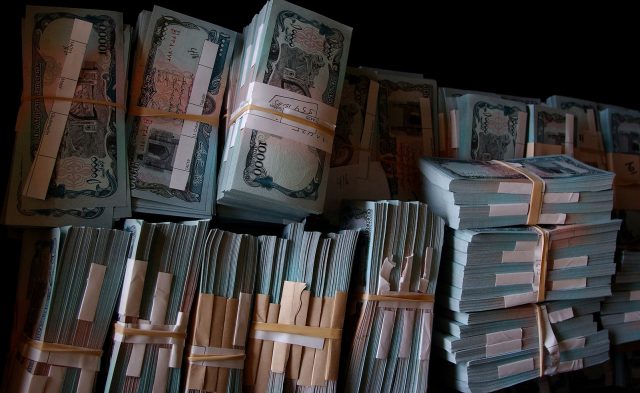
LONDON — Afghanistan’s banks, critical to the country’s recovery from crisis, are facing an uncertain future, say its bankers, with doubts over everything from liquidity to employment of female staff after the Taliban swept to power.  

Banks were expected to reopen imminently, a Taliban spokesman said on Tuesday, after they were closed for some 10 days and the financial system ground to a halt as the Western-backed government collapsed amid the pullout of US and allied troops.  

Yet there has been scant evidence so far of a reopening or of banking services returning to normal, with large crowds thronging the streets outside banks in Kabul on Wednesday.  

“The banks continue to be closed — with no clear signs of reopening, they have run out of money,” said Gazal Gailani, trade and economic adviser at the Afghan embassy in London.  

“Afghanistan’s banking system is now in a state of collapse, and people are running out of money.”  

Many rural areas get by largely without banks. But in the cities, where government worker salaries are often paid into bank accounts, closures are causing hardship in a mostly cash-based economy.  

The outlook for lenders looks precarious, with looming questions about the Taliban’s grasp of finance and its ability to restart an economy shattered by 40 years of war.  

With no significant exports apart from illegal narcotics bringing in cash, one immediate obstacle is liquidity in a country that is heavily dollarized and relies on regular physical dollar-shipments that have been halted, according to former central bank chief Ajmal Ahmady 

The Afghanistan Banks Association (ABA) had reached out to the central bank to coordinate steps on a return to normality, said Syed Moosa Kaleem Al-Falahi, chief executive and president of Islamic Bank of Afghanistan (IBA), one of Afghanistan’s three largest banks.  

Commercial banks had collectively decided to suspend services until the central bank confirmed liquidity and security arrangements, he said.  

“It would be rather difficult to control the rush if banks reopen immediately,” he added.  

Liquidity had already been an issue in the run-up to the bank closures as people scrambled to withdraw cash.  

Da Afghanistan Bank (DAB), the central bank, provided financial support to banks during last week’s cash squeeze, said a banker at one of Afghanistan’s largest lenders, speaking on condition of anonymity.  

But its ability to continue to do so appears uncertain, with DAB’s roughly $9 billion in foreign reserves looking largely out of Taliban reach.  

“Banks will face major liquidity challenges as central bank officials have not had access to reserves yet,” the banker said.  

“They will face foreign currency liquidity issues which will cause huge fluctuations in the exchange rates.”  

SCARCE DOLLARS 
The afghani plunged on the expectation of dollar scarcity and further volatility is expected, with Afghanistan’s import coverage reportedly collapsing from more than 15 months to a couple of days.  

Bankers in Afghanistan are also waiting for clarity from foreign-based correspondent banks, which provide services such as currency exchange and money transfers, on whether ties will continue after the Taliban takeover. Any new sanctions could see many links cut.  

A senior Afghan banker said their bank’s correspondent banks in Turkey, Russia, Spain, United Arab Emirates, Qatar, Pakistan, and India were still showing support.  

Faith in the banking system was severely damaged by the 2010 collapse of Kabul Bank, in one of the biggest corruption scandals of the 20-year Western presence in Afghanistan.  

Banks emerged in generally good health from the COVID-19 pandemic, said DAB in its 2020 report, noticing no liquidity shortfall, while capital positions met regulatory thresholds and assets swelled 4% to 327 billion afghanis ($3.8 billion).  

But the current crisis will further set back confidence in a sector which has struggled to expand services in a thinly banked country.  

According to the International Monetary Fund, only 183 of every 1,000 people hold a deposit account; there are less than two bank branches or cash machines for every 100,000 adults.  

FEMALE STAFF WORRIES 
This week, the Taliban said it had named Haji Mohammad Idris, a loyalist with no formal financial training, as DAB’s acting governor. A senior Taliban leader defended the appointment, saying Idris was respected for his expertise.  

It is so far unclear whether Afghanistan’s less than a dozen banks, all but one of which are conventional, will have to convert to Islamic banking, a lengthy and costly procedure.  

More uncertainty surrounds the future employment of female staff.  

“So far there is no official communication from them (the Taliban) with respect to female staff,” said IBA’s Al-Falahi. “Our female staff will return to work when we reopen.”  

But given the Taliban’s track record, their assurances that women would be allowed to work consistent with Islamic law have been met with skepticism.  

The banker at one of Afghanistan’s largest lenders said their bank had a plan to ensure it could continue operations in the event of it having to dismiss its roughly 20% of female staff.  

“We expect we will face challenges such as losing qualified and high-skilled staff as most of them are planning to flee the country at the first opportunity,” the banker said. — Tom Arnold and Karin Strohecker/Reuters

SM Foundation, Goldilocks bring sweet treats for frontliners

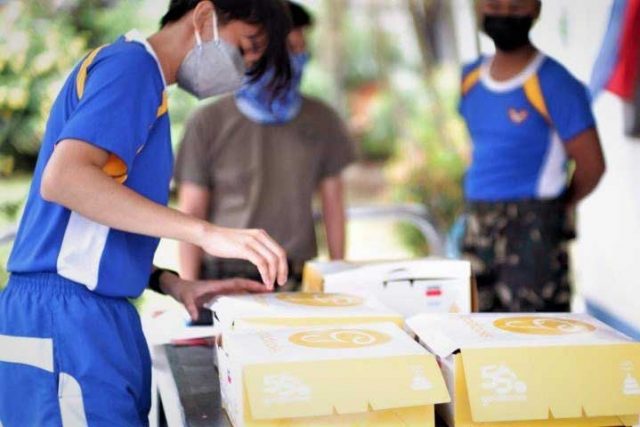
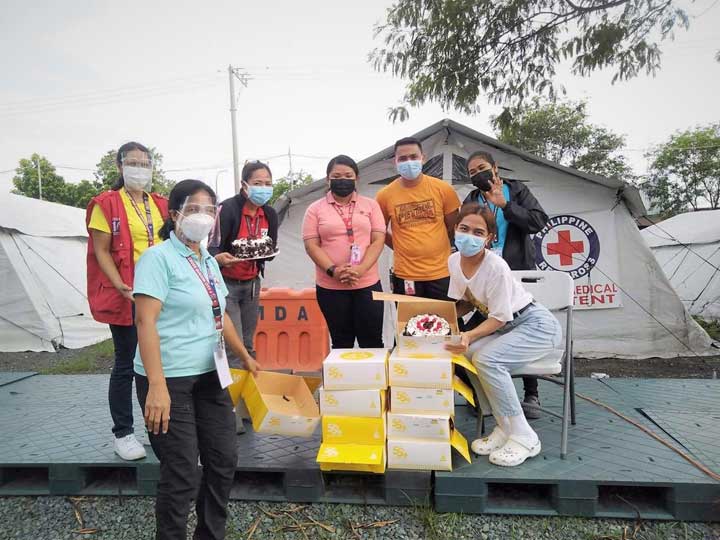
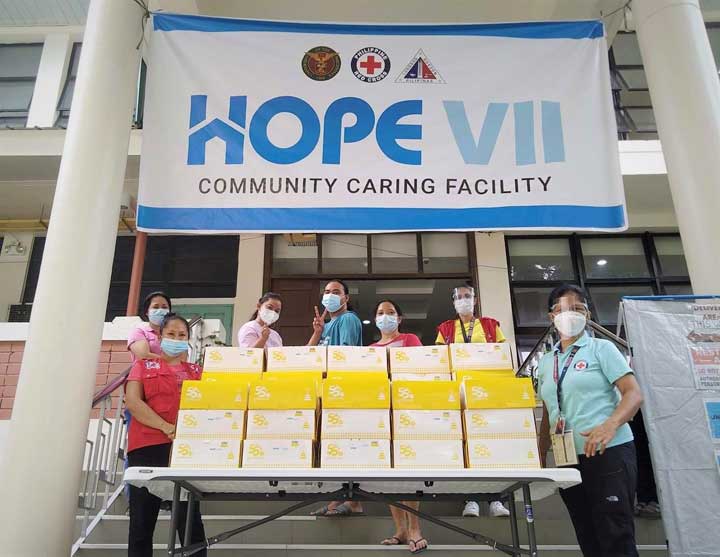
Through a sustained social good collaboration, Goldilocks and SM Foundation recently distributed more than 1,200 cakes for the frontliners in the National Capital Region and CALABARZON. This effort aims to acknowledge the vital and tedious roles of all COVID-19 frontliners and intends to provide them with short relief throughthese sweet and tasty treats.

The recipients were from Camp Nakar Station Hospital in Lucena City, Fernando Air Base Hospital in Batangas, Philippine Red Cross Quarantine Facilities in Quezon City, and Army General Hospital in Taguig City, among others.

Spotlight is BusinessWorld’s sponsored section that allows advertisers to amplify their brand and connect with BusinessWorld’s audience by enabling them to publish their stories directly on the BusinessWorld Web site. For more information, send an email to online@bworldonline.com.

ADVERTISEMENT
ADVERTISEMENT