Home Blog Page 7593

Gov’t to raise P250 billion from local mart in Sept.
BW FILE PHOTO

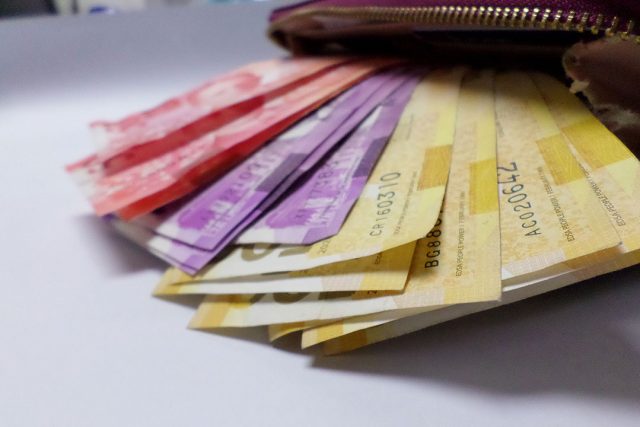
THE GOVERNMENT is looking to raise P250 billion from the local market in September, 25% higher than the P200-billion program this month, as it seeks to take advantage of low rates and market liquidity, the Treasury said.

In an advisory, the Bureau of the Treasury (BTr) said it set a P75-billion borrowing program for Treasury bills (T-bills) in September, while aiming to raise P175 billion via the Treasury bonds (T-bonds).

This is bigger than the P60 billion programmed for the T-bills in August, and the P140-billion borrowing target for T-bonds.

The BTr adopted a larger borrowing plan since more auctions can be held in September which has five weeks, National Treasurer Rosalia V. de Leon said in a Viber message on Thursday.

Broken down, the Treasury will offer T-bills worth P15 billion every Monday, or P5 billion each in 91-, 182- and 364-day debt papers.

It will also auction off T-bonds every Tuesday worth P35 billion each. In particular, the BTr will offer five-year bonds on Aug. 31, seven-year securities on Sept. 7 and 21, and 10-year notes on Sept. 14 and Sept. 28.

The government runs on a budget deficit as it spends more than the revenue it generates to support economic growth. It borrows from both local and foreign lenders to plug this fiscal gap seen to hit 9.3% of gross domestic product this year.

In August, the BTr raised P175 billion from the local market, falling short of the programmed borrowing for the month after rejecting all bids during the 20-year bond auction on Aug. 24 when rates sought by investors soared.

A bond trader said demand for government securities will continue next month since the market is still awash with cash and there is still appetite for safe assets amid the highly uncertain environment due to the coronavirus pandemic.

“The market is still armed with liquidity and at the moment, risk aversion lingers due to the continued spread of the coronavirus. Inflation fears onshore have also dissipated and this should continue to benefit and spur modest demand for local government securities,” the trader said via Viber.

The trader said rates are expected to remain steady in September on expectations that the Bangko Sentral ng Pilipinas (BSP) will keep policy rates at a record low for the rest of the year.

“However, the market is also vigilant on any possible plans of the US Fed to taper its monthly asset purchases, which may cause for yields to adjust slightly higher,” the trader added.

The BSP kept its key policy rate at a record low of 2% for a sixth consecutive meeting early this month citing the need to further support the economy’s recovery.

Offshore, investors are currently waiting for more details on when the US Federal Reserve will start scaling down its bond purchases. 

Minutes of the Fed’s July 27-28 meeting released last week showed the US central bank is expecting to reduce its monthly purchases of $120 billion in US Treasury bonds and mortgage-backed securities later this year, according to a report by Reuters.

The BTr is looking to raise P2.49 trillion from domestic lenders this year, and the remaining P581 billion will be sourced externally.

Gross borrowings hit P1.9 trillion in the first half, up 12% year on year. Of which, P1.648 trillion were from local sources and P284.95 billion were from foreign lenders. — Beatrice M. Laforga


Reforms needed to revive PHL labor market

PHILIPPINE STAR/ MICHAEL VARCAS

THE GOVERNMENT should introduce reforms to revive the labor market, after the Philippines posted the highest increase in unemployment rate and the second-largest decline in labor force participation rate among its peers last year, the Asian Development Bank (ADB) said.

In its Key Indicators for Asia and the Pacific 2021 published on Tuesday, the multilateral bank noted that the Philippines saw a 5.2-percentage-point rise in its jobless rate in 2020, the steepest increase in unemployment among 21 ADB member countries in the study.

The Philippines also reported a 1.77-percentage-point drop in the labor force participation last year from its pre-crisis level in 2019, the second highest among 18 economies with available data, and just below Vietnam’s 2.17-percentage-point decline.

“It is essential to pursue reforms to recover employment that focus on helping vulnerable populations, low-skilled workers, women, and those in the informal sector transiting to better quality jobs, to ensure that the economic recovery is inclusive,” Ayako Inagaki, ADB director for human and social development for Southeast Asia, said in an e-mailed reply to BusinessWorld’s questions.

The Philippines saw its jobless rate hit an all-time high of 10% last year, from the 5.1% rate in 2019, as the pandemic triggered massive layoffs and business closures. As more Filipinos exited the workforce, the labor force participation rate was also trimmed to 59.5% in 2020 from 61.3% the year prior.

The jobless rate eased to 7.7% in June this year amid the improving economic landscape, although still higher than its pre-crisis level.

The government in June issued Executive Order No. 140 creating a National Employment Recovery Strategy task force that will implement plans to restore jobs until 2022.

“Providing greater access to adequate and quality employment remains a challenge for several of the region’s economies,” the ADB said.

The multilateral bank warned that the pandemic continued to threaten the progress of Asia and the Pacific region’s progress in achieving the 17 Sustainable Development Goals (SDGs) set by the United Nations and participating countries, including the Philippines. 

“The COVID-19 pandemic is indeed threatening progress in SDG attainment, including in the Philippines. The pandemic has exacerbated disparities in access to quality and essential health services as well as access to quality education, particularly in remote areas,” Ms. Inagaki said.

This highlighted the need for the government to ramp up health and education reforms, she added.

Under the 2030 SDG agenda, the eight goals mandate countries to promote sustained and inclusive economic growth, as well as provide productive employment and decent work for all.

The Asia and the Pacific is estimated to have lost up to 8% of work hours in 2020 due to the impact of the coronavirus disease 2019 (COVID-19) pandemic, with poorer households hit harder than the rest, the ADB said.

“This corroborates the hypothesis that disruptions caused by managing the pandemic have the potential to exacerbate inequality. It also emphasizes the importance of enhancing the delivery of social protection programs, particularly for those in the informal economy who do not have adequate financial buffers or access to standard employment entitlements,” the ADB said.

The pandemic has also worsened inequalities across developing member economies since less-developed countries have weaker health systems to deal with the COVID-19 outbreaks and have less capacity to deliver social safety nets, it added.

The Gini coefficient, a metric of inequality, will increase by 1.6% from the level under a no-COVID-19 scenario, the ADB said.

Disruptions caused by the COVID-19 pandemic also pushed more households to below the extreme poverty line of $1.9 a day, as the ADB estimated poverty rate increased by two percentage points for the region last year compared with a scenario without the pandemic.

The ADB also noted that malnutrition in the region remained high at 22% in 2020 for children aged five years and below.

“Compared to other regions, developing Asia is faring slightly better in reducing the prevalence of undernourishment. However, progress is uneven and, with high rates of child stunting and malnutrition, much needs to be done to achieve the 2030 target of ending hunger in the region,” it said.

Providing access to quality education should also help the region achieve its goal of ending extreme poverty by 2030. — Beatrice M. Laforga

ERC to grid operator: go public as scheduled

By Angelica Y. Yang, Reporter

THE Energy Regulatory Commission (ERC) will not be moving the deadline for National Grid Corp. of the Philippines (NGCP)’s initial public offering, adding that the privately held firm has to submit all listing requirements on or before Nov. 14.

“The six (6) months period provided in [our previous] order dated March 10, 2021 remains the same, thus, the Nov. 14, 2021 deadline set forth in the said order is maintained,” ERC told NGCP in a recent order, a copy of which was obtained by BusinessWorld.

The new order, dated Aug. 11, was signed by ERC Chairperson and Chief Executive Officer Agnes VST Devanadera.

ERC said it still has to see “actual compliance” from NGCP on its obligation to fulfill its public listing requirement under its franchise.

“NGCP has not yet complied with its primary obligation to list, nor has it submitted proof of listing by any of the companies owning or controlling it,” the commission said.

It issued its latest order in response to NGCP’s earlier petition to the ERC to clarify the regulator’s earlier order that tackled the requirements in the public listing of companies with at least 30% ownership of outstanding shares in NGCP.

“The Commission hereby clarifies that NGCP can undertake public listing or in substitution, submit proof of the listing of any company in the PSE (Philippine Stock Exchange) which owns or controls at least 30% of its outstanding capital stock, as these manners of compliance are expressly provided under R.A. (Republic Act) No. 9511 (NGCP’s franchise),” the ERC said.

In March, Bloomberg reported that NGCP had increased its initial public offering (IPO) size to at least $1.5 billion, and has chosen the Bank of America Corp., JPMorgan Chase & Co., and UBS Group AG to work on the one-time share sale.

Three months ago, the grid operator said it was on schedule to proceed with its planned IPO shortly after the ERC gave it a six-month extension to fulfill its listing requirements.

NGCP, which maintains the country’s electricity transmission assets, is the sole operating asset of listed holdings firm Synergy Grid & Development Phils., Inc.

In a filing with the stock exchange on Thursday, Synergy Grid said its board of directors had greenlit two amendments in the firm’s articles of incorporation, including its term, which was revised to have “perpetual existence.”

Based on its quarterly report, the Henry T. Sy, Jr.-led company said its attributable income to equity holders of the parent firm reached P5.10 billion in the first half, higher by 12% year on year compared with P4.56 billion previously.

AC Energy clears venture with German solar firm’s affiliate

THE management of Ayala-led AC Energy Corp. has given the greenlight for the firm to enter into a joint venture with an affiliate of German solar firm ib vogt GmbH to develop solar projects in the country with an initial 300 megawatts of direct current (MWdc).

“At its meeting held today (Aug. 25), the company’s executive committee (execom) approved the following: … The entry into a joint venture with ib vogt Singapore Pte Ltd. for the development of solar projects in the Philippines with an initial target of 300 MWdc of generating capacity,” AC Energy told the local bourse in a regulatory filing on Thursday.

ib vogt Singapore Pte Ltd. is an affiliate of ib vogt GmbH, a German company which specializes in developing and delivering large-scale turnkey photovoltaic plants.

AC Energy also disclosed that its execom had approved the respective capital expenditure (capex) budgets of the firm’s planned solar project of around 288 MW in Buguey and Lal-lo, Cagayan; and its proposed 275-MW expansion of its Gigasol Palauig solar project in Zambales.

The company provided no further details on the capex figures.

AC Energy, which also has a presence in India, previously announced that it had switched on two of its maiden solar farms with an aggregate capacity of 210 megawatts peak (MWp) in the country.

The two facilities are the 140-MWp Sitara Solar plant in the Jodhpur district of the Rajasthan state, and the 70-MWp Paryapt Solar project in the Amreli district of the Gujarat state.

AC Energy, the Ayala group’s listed energy platform, has about 2,600 MW of attributable capacity in the Philippines, India, Vietnam, Indonesia, and Australia.

The company aspires to become the largest listed renewables platform in Southeast Asia, as it hopes to reach 5,000 MW of renewables capacity by 2025.

Shares in AC Energy at the local bourse inched down 1.18% or 11 centavos to finish at P9.20 apiece on Thursday. — Angelica Y. Yang

Film festival focuses on cultural values

A STILL from the film Salog ning Diklom, directed by Jordan Jose Dela Cruz

LOVE of the self, life and purpose, resilience, happiness, and social values such as good governance, love of country, honesty and integrity are highlighted in the first Sine Halaga Film Festival.

The National Commission for Culture and the Arts (NCCA), in partnership with the Negros Cultural Foundation (NCF), launched the Sine Halaga Film Festival on Aug. 25 to showcase 12 Filipino films highlighting cultural values. The films can be viewed for free at Sine Halaga’s Vimeo on Demand channel (https://vimeo.com/sinehalaga) and the NCCA Learning Resources website.

The film festival will tackle 19 values identified from research spanning two years conducted by the NCCA on what Filipinos value at present.

The 12 films are Bakit Ako Sinusundan ng Buwan, directed by Richard Legaspi; Black Rainbow, directed by Zig Madamba Dulay; Dandansoy, directed by Rod Arden Condez; Hadlok, directed by Ralston Jover; Looking for Rafflesias and other Fleeting Things, directed by James Allen Fajardo; Lorna, directed by Noel Escondo; Masalimuut Ya Tiyagew Ed Dayat, directed by Jan Carlo Natividad; Mina’s Family History, directed by Christopher Gozum; Sa Balay ni Papang, directed by Kurt Steven Soberano; Salog ning Diklom, directed by Jordan Jose Dela Cruz; Ugbos ka Bayabas, directed by Manie Magbanua, Jr.; and 13 Feet, directed by Carlo Obispo.

More than a hundred entries were screened by the Sine Halaga jury during the selection process.

The jury includes Rolando Tolentino, NCCA Committee on Cinema chairperson; film critic and educator Tito Valiente; award-winning Filipino filmmakers Jeffrey Jeturian, Roy Iglesias, and Sari Dalena; the author and lead researcher of the National Study on Filipino Values, Arvin Villalon and his co-author Jose Soliman, Jr.

Dapat makita ng mga guro at mag-aaral yung values sa loob ng pelikula (The teachers and students need to see the values within the film) without the film talking directly about it,” said Mr. Valiente of the selection process, during an online press conference via Zoom on Aug. 24.

“’Yung successful na cinema yung nakakapagbigay ng mensahe na nakatago pa rin sa sining, (Successful films are those that deliver a message hidden within the art form).” Mr. Valiente said.

Sine Halaga also comes with an educational component wherein the films will be used for classroom education. “It’s what makes Sine Halaga unique from other film fests — the films [are] used as a tool to teach Filipino values,” festival director Elvert Bañares said in a statement. “We are organizing a series of webinars and preparing study guides to aid our teachers in discussing the films [with] their students. With the help of our teachers, we can articulate effectively the values that each film conveys.”

The education component involves 12 film discussions with educators, professors, and film critics which will be held every weekend starting September.

“We will see how it will work, and upon evaluation of the effectivity of this tool, it is from there that we will move into the next level of maybe producing a second series,” NCCA Deputy Executive Director Marichu Telano said.

For updates and more information on Sine Halaga, follow @SineHalaga on Facebook, Instagram, YouTube, and Vimeo or send an e-mail to sinehalaga@gmail.com. — Michelle Anne P. Soliman

Toshiba Water bags sewage treatment contract in Rizal

TOSHIBA Water Solutions Private Ltd. (TWS) has secured a contract for the establishment of a sewage treatment plant in Rizal, the India-based company said on Thursday.

In a statement, TWS said that its consortium with Philippine construction firm Frey-Fil Corp. concluded a contract with Manila Water Co., Inc. for the construction of the Hinulugang Taktak Sewage Treatment Plant in Rizal province.

According to TWS, the treatment plant is expected to be finished by 2023 and will have a sewage treatment capacity of 16 million liters per day (MLD).

“TWS will be responsible for design, supply, installation, testing and commissioning of process and electro-mechanical equipment as well as one-year operation & maintenance of the plant,” it said.

The company said the project will comply with wastewater regulations introduced by the Philippines in 2016, which include requirements for biological nutrient removal such as the removal of nitrogen and phosphorus from wastewater.

“This project includes the construction of an advanced treatment plant compliant with these regulations in order to contribute to the improvement of the water environment in Metro Manila led by Manila Water. The process technology of the new plant is ‘Moving Bed Bio-film Reactor (MBBR),’ which has an advantage in space efficiency,” TWS said.

“This contract award is a testimony to Toshiba’s commitment to develop India as an export base for supplying products and services from India to the world,” it added.

TWS, a wholly owned subsidiary of Toshiba Infrastructure Systems & Solutions Corp., has business interests in the provision of turnkey services in water and wastewater collection, treatment, and disposal.

Manila Water provides water and wastewater services in the eastern part of Metro Manila, which includes Marikina, Pasig, Taguig, Makati, San Juan, Mandaluyong, portions of Quezon City and Manila, and Rizal province. — Revin Mikhael D. Ochave

Nirvana album cover baby sues for ‘sexual exploitation’

FACEBOOK.COM/NIRVANA

A MAN who appeared as a naked baby on the cover of Nirvana’s 1991 Nevermind album has filed a lawsuit against the surviving members of the influential band, alleging the image was child sexual exploitation.

In a lawsuit filed in federal court in California, Spencer Elden alleged he has suffered lifelong damage from the image used on the album’s cover, which depicted him swimming naked toward a dollar bill pierced with a fish hook.

Nevermind is one of the best-selling albums of all time, having sold over 30 million copies worldwide.

“Defendants intentionally commercially marketed Spencer’s child pornography and leveraged the shocking nature of his image to promote themselves and their music at his expense,” he alleged in the lawsuit, which was filed on Tuesday.

Mr. Elden, now 30, is asking for $150,000 in compensation from each of several defendants, including Universal Music Group, photographer Kirk Weddle, Nirvana drummer and rock legend Dave Grohl, Nirvana bassist Krist Novoselic and Courtney Love, the widow of Nirvana’s lead singer Kurt Cobain, who died in 1994.

Universal Music Group, Mr. Weddle and a publicist for Ms. Love did not immediately respond to requests for comment.

According to the lawsuit, Mr. Elden’s parents never received any compensation for the image shot by Mr. Weddle, who was a friend of Mr. Elden’s father. The lawsuit alleged Mr. Cobain initially agreed to have a sticker censor Mr. Elden’s genitals on the album cover, but no stickers were used.

Mr. Elden recreated the image as an adult in 2016, and has “Nevermind” tattooed on his chest.

Mr. Weddle told the Guardian in 2019 that he was still in contact with Mr. Elden. Weddle told the publication: “I used to think, ‘Man, when that kid is 16 he’s gonna hate my guts!’ He doesn’t, but he’s conflicted about the picture. He feels that everybody made money off it and he didn’t. I think he deserves something. But it’s always the record labels that make the money.” — Reuters

DPWH road projects still interrupting internet services despite appeals, says Globe

GLOBE Telecom, Inc. on Thursday said road constructions continue to interrupt internet services despite appeals to the Department of Public Works and Highways (DPWH) and its contractors to “exercise diligence.”

“Multiple times, we find people from construction companies assigned by the DPWH who will use a backhoe wantonly and dig up our fiber,” Globe President and Chief Executive Officer Ernest L. Cu said in an e-mailed statement.

“This disrupts the services of thousands, even hundreds of thousands of people. As we aim to serve our customers better, we must take steps to avoid this as much as possible,” he added.

Globe Telecom reiterated its appeal to the department and its contractors to act “responsibly and recognize this recurring issue,” noting that fiber cuts can also affect the delivery of government services, including emergency response.

Other telecommunications companies experience the same problem, which has been raised to the DPWH several times, Globe noted.

“We’ve been lobbying the government for some support in terms of getting these construction companies to be a bit more diligent in looking at build plans, given the fact that the Internet is so important these days and any outage is found to attract a lot of attention from the public given their dependence on connectivity,” Mr. Cu said.

DPWH-Build, Build, Build Committee Chairperson Anna Mae Y. Lamentillo had yet to respond to a request for comment at deadline time. — Arjay L. Balinbin

Despite the pandemic, the cultural show must go on

Dayaw through the years

WHILE the coronavirus disease 2019 (COVID-19) pandemic may have shrunk many people’s world’s down to the walls of their homes, the award-winning documentary series Dayaw continues to work on expanding its viewers appreciation of the Philippines with its 11th season on ANC, the ABS-CBN News Channel.

The ongoing season delves on Filipino games, martial arts, feats of strength, and dance. Previously aired shows can be seen on the ANC Facebook page.

A production of ANC and the National Commission for Culture and the Arts (NCCA), the show has been documenting the lifeways, traditions, practices, and culture of the different Indigenous Peoples groups since 2015.

Dayaw goes beyond documentation. It revives culture. It protects and conserves our tangible and intangible and we provide government assistance from the various programs of culture-based livelihood,” said program host Loren Legarda at an online press conference on Aug. 25 via Zoom. Ms. Legarda, who is also the House deputy speaker and Antique representative, conceptualized the program.

“We see that [the show] is actually appreciated by many of the young, because these are segments of our culture that perhaps they did not grow up with, or they’re only seeing now,” Ms. Legarda added.

The season’s first episode focused on traditional Filipino children’s games such as patintero, sipa, and luksong tinik. The second and third tackled the Punnuk, a show of physical strength that ends the Ifugao harvest season. Filipino martial arts such as arnis, silat, and eskrima are covered in its next two episodes. The season will wrap on Sept. 3 with “Sayawang Pinoy,” an episode highlighting how the grace and fluidity of movements of dance express energy, discipline, and joy.

Work on Dayaw was able to continue despite the pandemic, and season 12 is already in the works. Themed “Kaka-ibang Sigla: Our Vital Energy Part 2,” season 12 will explore love, courtship, marriage, and the cycles of life featuring the Gaddang, Tboli, and Sama Dilaut.

“We are fortunate to have shot a treasure trove of material before the pandemic began. This has enabled us to go on with our mission of telling the stories of our indigenous peoples so that future generations may still be able to appreciate and continue their legacy,” said Nadia Trinidad, ANC chief operating officer, in a statement.

Dayaw Season 11 airs every Thursday at 6 p.m. on ANC on cable and the ANC Facebook page. — MAPS

SEC greenlights D&L’s P5-billion bond offering

THE Securities and Exchange Commission (SEC) has greenlighted D&L Industries, Inc.’s maiden P5-billion, fixed-rate bond offering, subject to remaining requirements.

D&L’s offer consists of P3-billion Series A bonds due in 2024 and Series B bonds due in 2026, with an oversubscription option of up to P2 billion.

According to the company’s latest SEC submission, the bonds are scheduled to be offered on Sept. 1 to 6 and will be listed and traded on the Philippine Dealing & Exchange Corp. by Sept. 10.

The company expects to net up to P4.93 billion from the offer should the oversubscription option be exercised. It plans to use the proceeds to fund the expansion of its Batangas plant and for the partial repayment of bridge loans.

Earlier this month, D&L said the earliest start of commercial operations (SCO) of its Batangas plant was moved to May 2022 after a subsidiary was granted an extension by the Philippine Economic Zone Authority (PEZA).

The plant will be used for the company’s growing export business in the food and oleochemicals segment.

D&L subsidiary D&L Premium Foods Corp. was supposed to start operations by October this year but was granted an SCO extension to January 2023. D&L’s Natura Aeropack Corp. will start operating by May next year and will be the first to operate in the company’s Batangas plant.

The company has spent P4.5 billion for the project so far, with around P3.5 billion remaining in capital expenditures (capex) to be spent for this year and the next. The remaining capex will be funded by the bond offering.

D&L assigned China Bank Capital Corp. as the sole issue manager, lead underwriter, and sole bookrunner for to offer.

On Thursday, D&L shares at the stock market went down by 0.48% or four centavos to close at P8.25 each. — Keren Concepcion G. Valmonte

Korean webtoon on military duty now a Netflix series

A YOUNG army private is assigned to track down military deserters in the Netflix original series D.P. which premieres today.

D.P. follows the story of army private Joon-ho (played by Jung Hae-In), who is called to become a member of the Deserter Pursuit unit to uncover the whereabouts of soldiers that have gone absent without official leave and encounters the realities of confused young soldiers.

With its realistic portrayal of brutality and human rights violations, the webtoon by Kim Bo-Tong, on which the series is based, garnered over 10 million views.

During an online press conference on Aug. 25 held via Zoom, series director Han Jun-Hee said that D.P. is a story that he wanted to tell.

“These young people in their early 20s, they all go serve in the military. I think people could really resonate with them and put themselves in the shoes of these young lads. This could give us some social issues to talk about,” Mr. Han said in statements translated into English from Korean.

Unlike in the webtoon where Joon-Ho is a corporal, the series portrays him as a young enlistee.

“It starts from when he was just enlisted in the Army so you can see how he progresses in his military rank,” actor Jung Hae-In said.

“When I thought of this series, I wanted to make sure that people wanted to resonate with Joon-Ho and the character. So, I wanted [him] to be someone that everyone could think of as a friend who just started in the military. So, I wanted to portray the history of Joon-Ho, first enlisting in the army and how he progresses onwards,” Mr. Han, the director, said.

The series is told from the perspective of the soldiers catching soldiers and sheds light on the mental torment and growth of young people.

“There were some social issues that were incorporated into the series. The webtoon, it’s a little more dark and somewhat deep and in terms of stories, so we wanted to make sure that this was scalable, so it could be brought on to screen,” Mr. Han said of his focus for the series.

“I wanted to make sure that this was a humanistic drama. And I thought a lot about how we could portray writer Kim’s mind and his perspective on screen,” he said.  — Michelle Anne P. Soliman

Cap on digital bank licenses to benefit traditional lenders

THE CENTRAL BANK’S decision to cap new digital banking licenses at seven will prevent “destructive competition” and benefit traditional lenders in the country, Fitch Ratings said.

The debt watcher said while these online lenders are unlikely to have a material rating impact on its covered banks in the country, the Bangko Sentral ng Pilipinas’ (BSP) limit on digital bank entrants will allow traditional lenders to catch up on digitalization.

“Closing the door to new applicants helps to insulate conventional banks from more formidable competitors bearing these characteristics — at least until BSP’s moratorium on applicants is lifted. This also gives banks additional time to put forth digital propositions that are at least as compelling as those of the entrants,” Fitch said in a note sent to reporters late Wednesday.

BSP Governor Benjamin E. Diokno last week said the Monetary Board has capped digital bank licenses at seven, up from five previously, and will close the window for applications for new players and those seeking to convert their licenses on Aug. 31.

Mr. Diokno said the central bank will likely close applications for three years to monitor the development of the digital banking industry and ensure healthy competition among these new players.

The BSP has granted five licenses so far. One was given to the Overseas Filipino Bank, which is a subsidiary of state-owned Land Bank of the Philippines. UnionBank of the Philippines, Inc. also got a permit to operate an online lender which it said will be called Union Digital Bank and is expected to launch by the second quarter of 2022.

The three other licenses were given to Tonik Digital Bank, Inc. (Philippines), UNOBank, and a partnership between the Gokongwei Group and Singapore-headquartered Tyme called GOTyme.

Fitch said the BSP decision to cap its grant of licenses was likely driven by the regulator’s goal to promote financial inclusion “without introducing destructive competition into the sector.”

It noted that the country’s current cap on licenses is comparable to those of neighboring countries such as Singapore, which granted four licenses, while Malaysia said it would approve up to five licenses until the first quarter of 2022.

“Two of the five current licensees are bank-owned digital subsidiaries and we believe that while they may accelerate the groups’ digitalization efforts, they do not materially intensify competition beyond that already posed by their parents,” Fitch said.

“We maintain that the major rated Philippine banks have well-entrenched banking franchises and adequate resources to adapt to the potentially disruptive entry of neobanks,” it added.

Fitch believes the Philippines’ digital banking sector, like Indonesia’s and Vietnam’s, offers various opportunities due to the country’s unbanked population and its huge lending market. It cited findings from the World Bank, which showed just over one-third of Filipino adults are banked and less than 10% have accessed to formal credit, while over 41% has borrowed from family or friends, “indicating significant unfulfilled demand for credit.”

The debt watcher said new digital banking players will likely succeed if they are backed by a corporate sponsor that will help them gain access to a large existing user base and trim customer acquisition costs.

Digital banks should also closely integrate their offerings with other commercial platforms and consumer lifestyle services to boost user adoption and retention, Fitch said. They would also benefit from having backers that can fund heavy capital investments during their breakeven period, it added. — L.W.T. Noble

ADVERTISEMENT
ADVERTISEMENT