Home Blog Page 7536

Globe At Home makes internet access more affordable to bridge the digital divide on e-learning

The global health crisis has exposed the technological gap especially in the education sector as more households still clamor for decent and accessible connectivity to cope with learning from home.  In response to this, Globe At Home continues to pursue an aggressive cell site build and network improvement program, while delivering an evolving product portfolio that prioritizes accessibility and convenience for the Filipino family.

According to a report published by The World Bank late last year¹, most Filipino households are lagging behind digital adoption given that internet connectivity is a luxury for them.

To bridge the digital divide and address the continuously rising need for stable connectivity among the underserved, Globe ramped up its rollout of high-speed broadband lines across the country, reporting over 600,000 Fiber-to-the-Home lines delivered in 1H21 versus FY20 build.

Apart from build improvements, some of Globe At Home current customer offerings and innovations are designed so that they may uplift and be of further service especially to struggling households.

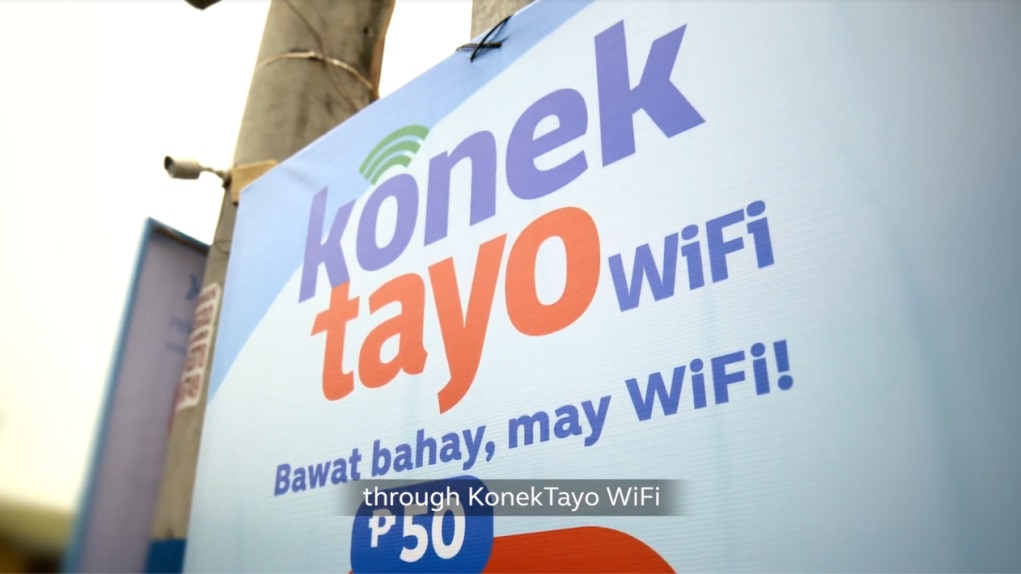
One of which is Globe At Home’s fast and secure community WiFi service, KonekTayo. Ideal for highly-dense communities, the goal of KonekTayo is to uplift low-income families by providing them with an affordable internet connection and enable home-based learning even with the ongoing pandemic. As of July 2021, there are 43 KonekTayoWiFi sites reaching 45,607 households in different areas from Luzon to Visayas.

Globe also has reliable yet affordable WiFi devices that’s useful for both on-the-go or for-the-home.

One is Globe At Home Prepaid WiFi which is Globe’s budget-friendly connectivity option for families seeking reliable yet affordable internet. It offers bigger data allocations that can be shared among family members. For a limited time only, Globe At Home Prepaid WiFi modems will be available for only Php 499 for the until the end of August.

Globe At Home is also offering its lowest most affordable fiber plan for postpaid subscribers with UNLI FIBER UP Plan 1499. The wallet-friendly price comes with up to 35 Mbps internet speed and is reliable enough to support each family members’ connectivity needs, especially the learners.
Globe MyFi, Globe’s pocket device, is currently priced at Php499 at the end of August to make it more accessible to individuals with heavier digital daily needs. Today’s learners can already have a pocket wifi device with free 9GB all-access data good for 7 days. The ultimate companion for today’s e-learners, Globe MyFi is a portable heavy data-lifter that can carry hours of online classes as well as downloading modules for the e-learners.

“We hope to play a role in the struggles of e-learners caused by the health crisis by providing them with an affordable internet connection for their educational needs. This is just one of the many ways that Globe At Home shows its commitment to provide affordable and accessible internet for all, including the masses,” said Barbie Dapul, Vice President for Marketing of Globe At Home.

Globe continues to provide solutions to push affordable and equitable internet for all, in order to bridge the digital divide most especially in the education sector.

This is part of the telco’s larger commitment to carry out its contribution to the United Nations Sustainable Development Goals (UN SDG), one of which is UN SDG No. 4 which aims to provide equitable and quality education to all, especially to those most in need.

To know more about Globe’s sustainability initiatives, visit https://www.globe.com.ph/about-us/sustainability.html

To know more about Globe At Home’s tools to support e-learning, visit: https://www.globe.com.ph/broadband

¹ Harnessing Digital Technologies Can Help Philippines Overcome Impact of Pandemic, Hasten Recovery


Spotlight is BusinessWorld’s sponsored section that allows advertisers to amplify their brand and connect with BusinessWorld’s audience by enabling them to publish their stories directly on the BusinessWorld Web site. For more information, send an email to online@bworldonline.com.
Hong Kong police arrest 4 members of group behind Tiananmen vigil

Activist and barrister Chow Hang Tung in 2017. Image via Wikimedia Commons.

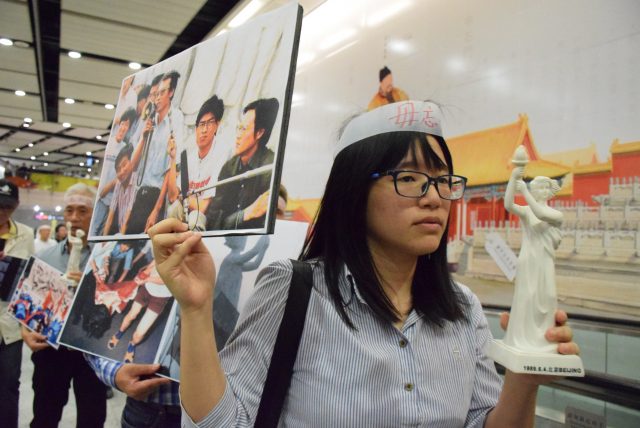
HONG KONG — Hong Kong police on Wednesday arrested four members of a pro-democracy group that organizes the annual June 4 rally to commemorate those who died in the bloody 1989 Tiananmen Square crackdown, in the latest blow to the opposition movement.  

Activist and barrister Chow Hang Tung of the Hong Kong Alliance in Support of Patriotic Democratic Movements in China was arrested along with three others, the group said.  

“I want to tell Hong Kongers that we need to continue to resist, don’t surrender to the unreasonable power quickly and easily,” Ms. Chow told media on Tuesday when she went to police headquarters to tell officers she would not provide information they had requested.  

Police sent a letter to the alliance in August requesting information about its membership, finances and activities by Sept. 7, according to a copy the group sent to reporters.  

The letter accused the alliance of being “an agent of foreign forces.” Failure to provide the information by the deadline could result in a HK$100,000 fine and six months in jail, the letter said.  

The National Security Department said it had arrested three men and one woman, aged 36 to 57, for failing to comply with national security law requirements. It did not identify them.  

The department said investigations were ongoing and it did not rule out further arrests.  

The national security law punishes what authorities broadly refer to as secession, subversion, terrorism, and collusion with foreign forces with up to life in prison.  

Ms. Chow’s arrest came hours before she was due to represent detained opposition politician Gwyneth Ho, who is charged with conspiracy to commit subversion under a Beijing-imposed national security law, at a bail hearing.  

Ms. Ho withdrew her bail application at the High Court after Judge Esther Toh declined her request to lift reporting restrictions for the hearing.  

Alliance leaders Albert Ho and Lee Cheuk-yan are already in jail over their roles in anti-government protests that roiled the city in 2019.  

The group said in July that it had laid off staff members to ensure their safety and that half of its committee members had resigned. — Reuters

Mexico’s top court decriminalizes abortion in ‘watershed moment’

MEXICO CITY — Mexico’s Supreme Court unanimously ruled on Tuesday that penalizing abortion is unconstitutional, a major victory for advocates of women’s health and human rights, just as parts of the United States enact tougher laws against the practice.  

The decision in the world’s second-biggest Roman Catholic country means that courts can no longer prosecute abortion cases, and follows the historic legalization of the right in Argentina, which took effect earlier this year.  

Arturo Zaldivar, president of the Mexican Supreme Court, hailed the decision as “a watershed moment” for all women, especially the most vulnerable.  

The vote by the 10 judges present stemmed from a 2018 case challenging a criminal law on abortion in Coahuila, a northern Mexican state which borders Texas, which has just tightened its laws.  

It also comes as a growing feminist movement has taken to the streets in Mexico to press for change, including calls to end anti-abortion laws on the books in much of the country.  

At a demonstration in Coahuila state capital Saltillo, women wearing green bandanas to symbolize the pro-choice movement embraced and shouted “abortion is no longer a crime!”  

“We’re very happy that abortion has been decriminalized, and now we want it to be legal,” said 26-year-old Karla Cihuatl, one of the demonstrators, who belongs to the feminist organization Frente Feminista in Saltillo.  

“This step has broken the stigma a little. But I believe that we still have to change the social aspect.”  

With some 100 million Catholics, Mexico is the largest predominantly Catholic country after Brazil. The Catholic Church opposes all forms of abortion procedures.  

Hundreds of mostly poor Mexican women have been prosecuted for abortion, while at least several dozen remain jailed.  

Tuesday’s vote establishes a mandatory criteria for all judges in the country, making it no longer possible to prosecute any woman who has an abortion without violating the criteria of the court and the constitution, Mr. Zaldivar said.  

Coahuila’s state government issued a statement saying the ruling would have retroactive effects and that any woman imprisoned for abortion should be released “immediately.”  

A number of US states have moved to restrict access to abortion, particularly Texas, which last week enacted a sweeping ban on the procedure after the first six weeks of pregnancy when the US Supreme Court declined to intervene.  

The Mexican ruling may lead to US women in states such as Texas deciding to travel south of the border to terminate their pregnancies.  

In July, the state of Veracruz became just the fourth of Mexico’s 32 regions to decriminalize abortion.  

Mexico’s leftist President Andres Manuel Lopez Obrador has carefully avoided taking a stand on the matter, as he did again on Tuesday morning in the run-up to the ruling.  

When asked at a news conference for his opinion on abortion, he sidestepped the question, saying it was up to the court.  

“Due my presidential office, I can’t expose myself to wear and tear, so I have to look after myself, and this is quite a controversial issue,” he said.  

During his winning 2018 election campaign, he forged an alliance with a small political party founded by Christian conservatives known for their strong opposition to abortion.  

By contrast, Foreign Minister Marcelo Ebrard, who was mayor of Mexico City when the capital legalized abortion in 2007, breaking new ground for the country, celebrated the court ruling on Twitter as a “great day for the rights of women.”  

“What advances there have been in progressive causes in our country!!!” wrote Mr. Ebrard, one of the leading contenders to succeed Mr. Lopez Obrador when his six-year term ends in 2024. “I’m really delighted!!” — Lizbeth Diaz and Laura Gottesdiener/Reuters

Taliban name new Afghan government, interior minister on US sanctions list

Mullah Hasan Akhund. Image via Wikimedia Commons.

The Taliban drew from its inner high echelons to fill top posts in Afghanistan’s new government on Tuesday, including an associate of the Islamist militant group’s founder as premier and a wanted man on a US terrorism list as interior minister.  

World powers have told the Taliban the key to peace and development is an inclusive government that would back up its pledges of a more conciliatory approach, upholding human rights, after a previous 19962001 period in power marked by bloody vendettas and oppression of women.  

Taliban supreme leader Haibatullah Akhundzada, in his first public statement since the Aug. 15 seizure of the capital Kabul by the insurgents, said the Taliban were committed to all international laws, treaties and commitments not in conflict with Islamic law.  

“In the future, all matters of governance and life in Afghanistan will be regulated by the laws of the Holy Sharia,” he said in a statement, in which he also congratulated Afghans on what he called the country’s liberation from foreign rule.  

The names announced for the new government, three weeks after the Taliban swept to military victory as US-led foreign forces withdrew and the weak Western-backed government collapsed, gave no sign of an olive branch to its opponents.  

The United States said it was concerned by the track records of some of the Cabinet members and noted that no women had been included. “The world is watching closely,” a US State Department spokesperson said.  

Afghans who enjoyed major progress in education and civil liberties over the 20 years of US-backed government remain fearful of Taliban intentions and daily protests have continued since the Taliban takeover, challenging the new rulers.  

On Tuesday, as the new government was being announced, a group of Afghan women in a Kabul street took cover after Taliban gunmen fired into the air to disperse hundreds of protesters.  

The last time the Taliban ruled Afghanistan, girls could not attend school and women were banned from work and education. Religious police would flog anyone breaking the rules and public executions were carried out.  

The Taliban has urged Afghans to be patient and vowed to be more tolerant this time — a commitment many Afghans and foreign powers will be scrutinising as a condition for aid and investment desperately needed in Afghanistan.  

LATE FOUNDER’S LEGACY IN NEW GOVERNMENT 
Mullah Hasan Akhund, named as prime minister, like many in the Taliban leadership derives much of his prestige from his close link to the movement’s reclusive late founder Mullah Omar, who presided over its rule two decades ago.  

Akhund is longtime chief of the Taliban’s powerful decision-making body Rehbari Shura, or leadership council. He was foreign minister and then deputy prime minister when the Taliban were last in power and, like many of the incoming Cabinet, is under UN sanctions for his role in that government.  

Sirajuddin Haqqani, the new interior minister, is the son of the founder of the Haqqani network, classified as a terrorist group by Washington. He is one of the FBI’s most wanted men due to his involvement in suicide attacks and ties with Al Qaeda.  

Mullah Abdul Ghani Baradar, head of the movement’s political office who was given his nom de guerre “brother,” or Baradar, by Mullah Omar, was appointed as Akhund’s deputy, main Taliban spokesman Zabihullah Mujahid told a news conference in Kabul.  

The passing over of Baradar for the top government job came as a surprise to some as he had been responsible for negotiating the US withdrawal at talks in Qatar and presenting the face of the Taliban to the outside world.  

Baradar was previously a senior Taliban commander in the long insurgency against US forces. He was arrested and imprisoned in Pakistan in 2010, becoming head of the Taliban’s political office in Doha after his release in 2018.  

Mullah Mohammad Yaqoob, a son of Mullah Omar, was named as defense minister. All the appointments were in an acting capacity, Mujahid said.  

White House spokeswoman Jen Psaki told reporters on Air Force One, as President Joseph R. Biden, Jr., flew to New York, that there would be no recognition of the Taliban government soon.  

ECONOMIC MELTDOWN 
Taliban spokesman Mujahid, speaking against a backdrop of collapsing public services and economic meltdown amidst the chaos of the tumultuous foreign pullout, said an acting cabinet had been formed to respond to the Afghan people’s primary needs.  

He said some ministries remained to be filled pending a hunt for qualified people.  

The United Nations said earlier on Tuesday that basic services were unravelling in Afghanistan and food and other aid were about to run out. More than half a million people have been displaced internally in Afghanistan this year.  

An international donor conference is scheduled in Geneva on Sept. 13. Western powers say they are prepared to send humanitarian aid, but that broader economic engagement depends on the shape and actions of the Taliban government.  

‘RESISTANCE WILL CONTINUE’ 
On Monday, the Taliban claimed victory in the Panjshir valley, the last province holding out against it.  

Pictures on social media showed Taliban members standing in front of the Panjshir governor’s compound after days of fighting with the National Resistance Front of Afghanistan (NRFA), commanded by Panjshiri leader Ahmad Massoud.  

Massoud denied that his force, consisting of remnants of the Afghan army as well as local militia fighters, was beaten, and tweeted that “our resistance will continue.” — Reuters 

COVID-19 disruption causing many deaths from TB, AIDS in poorest countries, fund says 

A COLORIZED scanning electron micrograph of Mycobacterium tuberculosis, the bacteria that cause TB. — Image via National Institute of Allergy and Infectious Diseases, National Institutes of Health/Flickr

GENEVA — Hundreds of thousands of people will die of tuberculosis left untreated because of disruption to healthcare systems in poor countries caused by the coronavirus disease 2019 (COVID-19) pandemic, a global aid fund said.  

In a few of the world’s poorest countries, excess deaths from AIDS and tuberculosis (TB) could even exceed those from the coronavirus itself, said the head of the Geneva-based aid body, known as the Global Fund.  

The Fund’s annual report for 2020, released on Wednesday, showed that the number of people treated for drug-resistant tuberculosis in countries where it operates fell by 19%. A decline of 11% was reported in HIV prevention programs and services.  

“Essentially, about a million people less were treated for TB in 2020 than in 2019 and I’m afraid that will inevitably mean that hundreds of thousands of people will die,” Executive Director Peter Sands told Reuters.  

While precise death tolls are as yet unknown, Mr. Sands said that for some poor countries, such as parts of the Sahel region in Africa, excess deaths from the setback in the fight against diseases such as TB or AIDS might prove higher than from COVID-19 itself.  

The Geneva-based Global Fund is an alliance of governments, civil society and private sector partners investing more than $4 billion per year to fight tuberculosis, malaria, and AIDS. The United States is its top donor.  

Mr. Sands said services were affected by COVID-19 lockdowns while clinics, staff and diagnostics normally used for TB were instead deployed for COVID-19 in countries such as India and across Africa. He added that he expected further disruptions this year due to the Delta variant.  

He said the decline in treatment for other diseases “underscores the need to look at the total impact of COVID-19 and measure success in combating it not just by the reduction in deaths due to COVID-19 itself but to the knock on impact.”  

Malaria proved to be an exception to the trend in 2020, and prevention activities remained stable or increased compared to 2019, the Global Fund said. — Emma Farge/Reuters

Hospitality sector to hold month-long sale

Shangri-La Boracay

Despite confusion over lockdown restrictions and surging coronavirus cases, the hospitality sector is holding the second iteration of its September Online Sale (SOS), which offers deep discounts on travel packages. 

From Sept. 15 to Oct.15, the Hotel Sales and Marketing Association (HSMA) will showcase overnight, staycation, and out-of-town packages with discounts of up to 70% from 79 hotels and resorts nationwide.  

Participating properties will follow the government’s latest guidelines. HSMA advised hotels to be flexible since restrictions can be tightened at a moment’s notice. Voucher validity may be extended up to a year and a few packages come with RT-PCR testing. Customers are encouraged to get vaccinated. 

HSMA believes it can deliver safe travel experiences during the pandemic as 98% of the employees at member hotels and resorts are fully vaccinated, according to Margie F. Munsayac, HSMA chair.  

The last batch of employees are scheduled to receive their second dose this week. “We may reach 100% by then,” said Ms. Munsayac. 

In August, the Department of Tourism (DoT) reported 95% or over 27,000 of around 29,000 workers in hotels within Metro Manila being fully vaccinated.   

AIMING FOR DOUBLE  

Beyond room accommodation and room packages, this year’s sale includes food and beverage packages, event packages, and other ancillary packages. 

“There are a lot of choices this year and we really expect to surpass last year,” said Benjamin V. Martinez, HSMA president and Bayleaf Hotels area director of sales and marketing, at the SOS press conference.   

The first iteration of the sale in 2020 revealed that the top destinations were Manila/Pasay and Boracay, with the top-selling group being Shangri-La Boracay, according to Amie C. Villena, HSMA secretary and Bellevue Hotel and Resorts Group director for sales and marketing.  

The 2020 sale generated P14 million in revenue from 2,000 vouchers sold by 94 participating hotel and resort groups. 

“We want to surpass the P14 million last year because, back then, we only had SOS for 15 days, and now it’s 30 days. If we can double it, why not?” she said.  

The sale begins Sept. 15 on the HSMA website. For more information and the list of participating properties, visit the HSMA Facebook page— Brontë H. Lacsamana 

US workplaces look to college fights as return to work ‘turning point’ looms

UNSPLASH

A legal battle is brewing over remote work between administrators at US colleges committed to in-person classes and some faculty with disabilities. Experts warn it is a precursor of what awaits employers that order staff back to the office amid the coronavirus disease 2019 (COVID-19) pandemic.  

Employment lawyers said higher education provides a key test of who can work remotely because it is a profession traditionally associated with in-person work.  

But COVID-19 lockdowns proved what disabled teachers have argued for years — that online teaching can be a successful way to accommodate them.  

Working from home during the pandemic allowed teachers with conditions ranging from epilepsy to genetic diseases to eliminate the need for specialized transport, add periods of rest to their day and ensure easy access to medicines.  

As the new academic year begins, many are finding themselves fighting with administrators and having remote work requests denied, an early indication of tension awaiting big companies including Goldman Sachs and JPMorgan Chase & Co that have said they want workers to return to offices.  

Under the law, employers have to comply with the Americans with Disabilities Act (ADA), which prevents discrimination against anyone with a disability, defined as an impairment that substantially limits a major life activity.  

Employees with a disability can request an accommodation, but the employee must still perform what the business decides are the essential job functions, which can change from lockdown to reopening.  

“The key question: Is presence in the workplace an essential function?” said Jeffrey Nolan, an employment lawyer Holland & Knight, which represents businesses.  

Alice Freifeld, a history professor, asked the University of Florida if she could teach remotely last year and was denied because the school said her chronic cough and allergies did not qualify as a disability.  

She planned to take advantage of the school’s proposal for the academic year that just started to allow classes to be taught remotely for the first three weeks before going in person. But just as the school year was about to start, the online proposal was withdrawn and she was told she would have to come into school to teach.  

“I felt powerless. I felt the only answer was to quit,” she said. She retired after 27 years at the university.  

The university said in an e-mail that it does not comment on individual accommodation matters and that it reviews each request on a case-by-case basis.  

Employment law specialists said fear of contracting COVID-19 is not likely to be considered a disability, although the Centers for Disease Control and Prevention has encouraged remote work for those over 65.  

“I have heard from dozens and dozens and dozens of disabled faculty members,” said Lydia Brown, who advocates for disability rights nationally. “And every person, who requested remote work accommodations because of a very real and legitimate fear of an increased risk of transmission and severe illness of COVID, have been denied.”  

Ms. Brown and others said they hope the disputes in academia over remote work find their way to the courts and begin to reshape the law. Legal experts said it will take many months before courts hear the current remote work disputes.  

Court rulings over the past 15 years on remote work often sided with employers without requiring much evidence that telecommuting was unreasonable, said Arlene Kanter, a professor at Syracuse University College of Law. She expects that to change, thanks to the pandemic.  

“What I think we’ll see now is courts will not just defer to the employer’s judgment,” she said. “Employees should have the right to explain how they can perform their job remotely, and how they just did it if they were working remotely during COVID. That’s why I think we’re at a turning point.”  

The Bureau of Labor Statistics estimates about 4% of the workforce is disabled while advocates said the actual number might be many times higher as people often do not disclose an impairment.  

There is limited data on accommodation requests, but Ohio State University told Reuters that requests for disability-related remote work jumped 2.5 times to 510 in the year to June 30 from the prior fiscal year.  

Cornell University said on Aug. 11 that in-person instruction was essential for faculty and said it would not approve disability-related requests for remote work, touching off a wave of criticism.  

The university clarified its policy days later to say it would allow some remote work where it best served faculty and students.  

Many schools such as Widener University require vaccines for employees and students as the school returns to in-person teaching. The president said they have used flexible schedule arrangements to attract and retain staff.  

“We’ve done everything we can to make this work for people,” said Widener’s President Julie Wollman. “But at some point you have to say that’s not a legitimate reason.” —  Tom Hals/Reuters

PFA holds virtual Franchise Expo as industry rises from Covid effects

The Philippine Franchise Association (PFA) opened the three-day virtual Franchise Asia Philippines (FAPHL) 2021 Expo on Wednesday with the goal of spurring the industry’s rise from the effects of the pandemic.

“Because there are still business opportunities out there,” declares PFA Chairman Richard V. Sanz as he announces the staging of Franchise Asia Philippines (FAPHL) 2021 which goes virtual this September and will kick off with the Virtual Expo on September 8 to 11 followed by the Virtual Conference on September 21 to 23.

“We shouldn’t let the pandemic keep us from pursuing our dream of becoming our own boss by starting a business via franchising,” PFA President Sherill R. Quintana adds.

With the theme “Igniting Recovery: The Future of Franchising”, this year’s FAPHL is a testament to the resilience of the country’s franchise industry and its drive to weather the storm of the recent economic downturn. It also seeks to inspire Filipinos to rise up from the current challenges and pivot to where the opportunities lie. And speaking of opportunities, the Virtual Expo is the place to go for the following reasons:

1.    Discover 200+ Top Franchise Brands and Their Latest Franchise Offers

Franchise Asia Philippines Virtual Expo will showcase exhibitors representing 200+ brands and is projected to attract thousands of visitors who will be able to engage with a wide array of franchise brands from the food, service, and retail sectors in a wide range of investment levels starting from Php 300k.

It is the best avenue for aspiring franchisees to gain access to the latest and exclusive franchise packages from the country’s top franchise brands like Potato Corner, The Generics Pharmacy, Shawarma Shack, 7 Eleven, Max’s Restaurant, Phoenix Gas / LPG Station, Mister Donut, LT&G Microlending, SEAOIL, Oryspa, KFC and a whole lot more.

2.    24/7 Access to Digital Booths

Explore the Franchise Asia Philippines Virtual Expo platform on your own time, at your own pace. Explore the different brands you wish to know more of and visit their digital booths to download their latest brochures, watch their current brand videos and more. Moreover, customer contacts and chat rooms will be activated for all your immediate inquiries and it is also equipped with a “Leave a Message” button.

Register to the Franchise Asia Philippines Virtual Expo by visiting their official website here.

3.    FREE Webinars – for Franchisees and Franchisors

Whether you are an aspiring franchisee, looking for a franchise to buy, or a business owner aiming to make your business franchisable, or an entrepreneur trying to adapt to the COVID-19 disruptions, the Franchise Asia Philippines Virtual Expo will run a series of FREE Webinars suited for your needs.

1.    How to Invest in the Right Franchise – for franchise buyers
2.    How to Franchise Your Business – for business owners
3.    5 Ways to Grow Your Profits – for business owners or current franchisees

The event will also stage a Virtual Conference and will feature 20+ relevant sessions and is designed to help the delegates prepare for the future of franchising.

Franchise Asia Philippines 2021 is made possible through the strong support of BPI, PLDT Enterprise, InLife Insular Health Care as diamond partners; 7-Eleven, Seaoil Phils. Inc., Phoenix Petroleum, TGP Pharma as platinum partners; LT&G Credit Line Corp., Francorp as gold partners; Oryspa, Max’s Group, Megaworld, SM Supermalls as silver partners; Bibingkinitan!, Potato Corner, International Workplace Group, Ilaw Atbp, K2 Pharmacy, Jollibee, Pure Nectar, Shawarma Shack, Mister Donut, KFC, Tokyo Tokyo, Meralco, Araneta Center, Robinsons Malls, Vista Mall as bronze partners; Bench, CBRC Vice, Chowking, Greenwich, Living Water, Mang Inasal, Red Ribbon, Shakey’s, Wendy’s, UFranchise, Blooming Ventures, Coolaire Consolidated, Zoom Lab as event partners; Philippine Star, Manila Bulletin and Philippine Daily Inquirer as media partners; and Media Blitz Group as the official PR partner.

For inquiries or more details, please email pfa@pfa.org.ph or visit www.pfa.org.ph 

Learn more about the Franchise Asia Philippines 2021 by visiting their official website here.

Spotlight is BusinessWorld’s sponsored section that allows advertisers to amplify their brand and connect with BusinessWorld’s audience by enabling them to publish their stories directly on the BusinessWorld Web site. For more information, send an email to online@bworldonline.com.

Join us on Viber to get more updates from BusinessWorld: https://bit.ly/3hv6bLA

Singlife Philippines on what it takes to be truly digital

More and more Filipinos are looking into future-proofing their lives during such an uncertain time, and the convenience digital platforms extend is challenging the conventional approach of traditional financial institutions including insurance companies. With only 3.5 million out of the 16 million insurable population owning at least one life insurance policy, Singlife Philippines is leveraging on advanced technologies to make life insurance totally mobile-first.

Speaking at the BusinessWorld Insights series on “Fintech for a Financially Inclusive and Resilient Economy”, Singlife Philippines’ Chief Technology Officer Zayd Tolentino talked about how the company is pushing against the mold for people to get protected on their own terms. This came in response to the need of the undervalued middle-class market for protection products that fit their needs, budget, and are always on hand.

A technology-driven approach to life insurance

Singlife Philippines built its foundations on smart technologies, using microservices that break insurance functions into individual business components. Each one performs an independent task and runs in unison with other services to automatically plan for scale, sustainability, and avoid potential failures. These automated efficiencies free up resources that can otherwise be used to add greater value to customers.

“Think of it as putting together LEGO pieces, but instead of following the building instructions, we got creative and assembled an entirely different model to deliver financial solutions that are new and relevant to customers,” said Tolentino in a follow-up interview.

Singlife Philippines’ unique application of financial and insurance technologies gave birth to what the company calls its microservices portal. This microservices portal houses the company’s protection products and can be integrated in the frontend of any digital platform. A co-habitation setup like this allows a seamless user flow between two platforms without having to switch screens. It also grants customers extended access to services commonly not offered by incumbents within the same environment, such as policy management, claims filings, and claims payment.


The microservices portal solves hurdles of partner integration, including limited resources and tech capabilities needed to get things up to speed. Partnerships use less resources and produce faster turnaround time in all stages of product implementation. Customers are rewarded with a seamless, end-to-end digital experience in getting financially protected.

Singlife Philippines’ partnership with GCash was the first realization of this B2B2C model. Customers were offered coverage for COVID-19 and Dengue medical costs worth up to ₱421,500 or for income loss of up to ₱5,700,000 for as low as ₱100 per month. Fully verified users bought policies, filed claims, and secured payouts all via GInsure on the GCash app.

In the coming months, Singlife Philippines will introduce new products and expand its reach through more digital network partners to further bridge the country’s protection gap. For more information, visit www.singlife.com.ph

Re-watch the episode of BusinessWorld Insights series on “Fintech for a Financially Inclusive and Resilient Economy” below.


Spotlight is BusinessWorld’s sponsored section that allows advertisers to amplify their brand and connect with BusinessWorld’s audience by enabling them to publish their stories directly on the BusinessWorld Web site. For more information, send an email to online@bworldonline.com.

Join us on Viber to get more updates from BusinessWorld: https://bit.ly/3hv6bLA

Alviera Country Club, Inc. sets schedule of annual stockholders’ meeting on September 30


_______________________________________________________________________

Spotlight is BusinessWorld’s sponsored section that allows advertisers to amplify their brand and connect with BusinessWorld’s audience by enabling them to publish their stories directly on the BusinessWorld Web site. For more information, send an email to online@bworldonline.com.

Join us on Viber to get more updates from BusinessWorld: https://bit.ly/3hv6bLA

Aug. inflation fastest in over 2 years

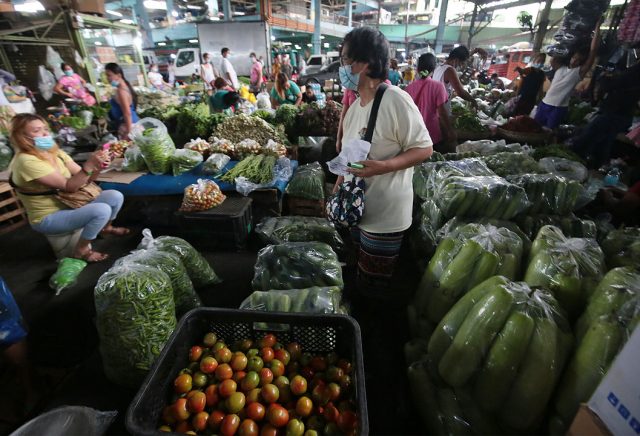
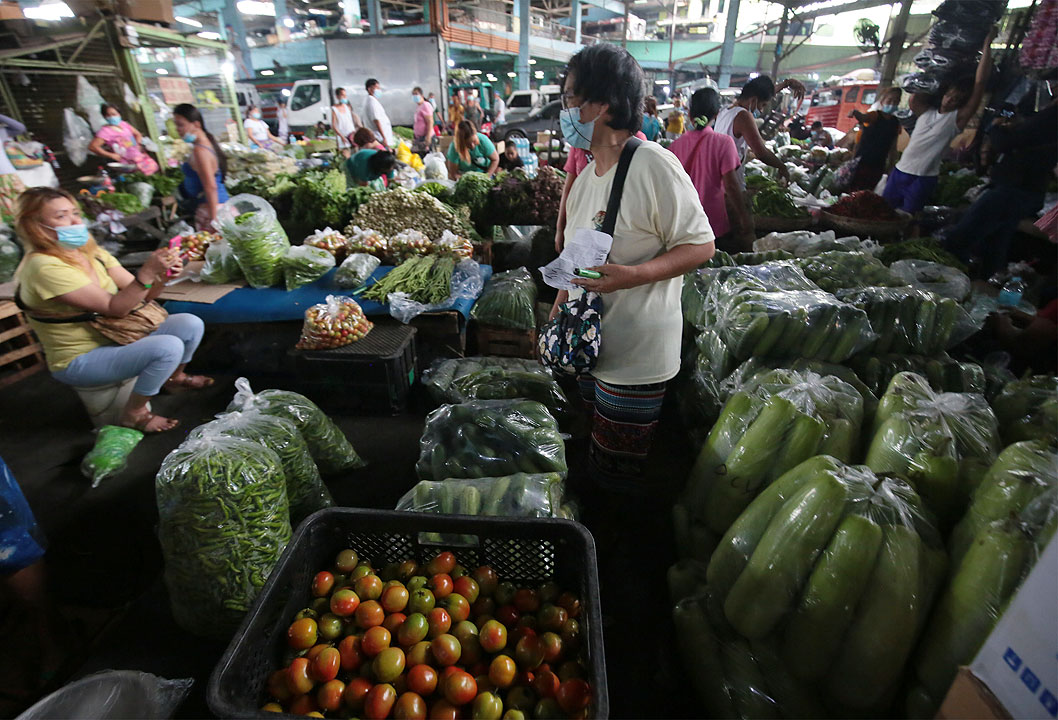
Vendors unpack sacks of vegetables in Balintawak market, Jan. 27, 2021. — PHILIPPINE STAR/ MICHAEL VARCAS
Higher prices of vegetables and fish helped drive August inflation to its fastest pace in 32 months. — PHILIPPINE STAR/ MICHAEL VARCAS

By Lourdes O. Pilar, Researcher

THE OVERALL year-on-year increase in prices of widely used goods accelerated to its fastest pace in 32 months in August, driven by higher food and utility prices amid the stricter lockdown, the statistics agency said on Tuesday.

Preliminary data from the Philippine Statistics Authority (PSA) showed headline inflation at 4.9% in August, picking up from 4% in July.

The August inflation result marked the fastest pace since the 5.1% reading in December 2018.

Headline inflation rates in the Philippines (August 2021)

The latest headline figure is higher than the 4.4% median in a BusinessWorld poll conducted late last week, but falls within the 4.1-4.9% estimate given by the Bangko Sentral ng Pilipinas (BSP) for August.

Year to date, inflation averaged 4.4%, still above the BSP’s 2-4% target range this year and its 4.1% forecast for the entire year.

Core inflation, which discounted volatile prices of food and fuel, stood at 3.3% in August — faster than the previous month’s 2.9% and 3.1% a year earlier. It averaged 3.3% so far this year.

The PSA attributed the faster inflation in August primarily to the higher annual uptick in the heavily weighted food and non-alcoholic beverages at 6.5% from 4.9% in the previous month. These goods account for 38.3% of the average Filipino household’s theoretical basket of goods.

The government also noted faster annual increases in alcoholic beverages and tobacco (10.3% in August from 10.2% in July); transport (7.2% from 7%); restaurant and miscellaneous goods and services (3.8% from 3.6%); housing, water, electricity, gas and other fuels (3.1% from 2.6%); furnishing, household equipment and routine household maintenance (2.5% from 2.3%); and clothing and footwear (1.8% from 1.7%).

Recreation and culture inched up 0.5% in August following annual declines since August 2020.

The food-alone index likewise accelerated to 6.9% in August, from 5.1% in July 2021 and 1.7% last year. This marked food’s fastest year-on-year increase since the 7% in February.

Similarly, the August inflation rate for the bottom 30% of households further picked up to 5.2% from 4.4% in July and 2.7% in August 2020. The inflation rate for this segment was the fastest in five months or since the 5.5% in March. From January to August, the bottom 30% inflation averaged 4.9%.

“[T]he rise in the inflation rate last month can be traced to several factors, namely supply bottlenecks due to restrictions and lockdowns that contributed to higher prices of food and related commodities, higher electricity rates, and the weaker peso which could have raised prices of imported commodities (e.g., crude oil and petroleum products) at a time when international commodity prices are rising due to better demand conditions outside of the country,” said University of Asia and the Pacific Senior Economist Cid L. Terosa in an e-mail.

“Of course, we cannot discount the influence of base effects since inflation for the same month last year was quite low,” he added.

Metro Manila was placed under the strictest form of lockdown for two weeks in August, which meant tighter curbs on mobility.

In a statement, the National Economic and Development Authority (NEDA) attributed the uptick in inflation for fish (12.4% in August from 9.3% in July) and vegetables (15.7% from 5%) to the impact of the southwest monsoon (habagat) and the ongoing rainy season.

“Meat inflation slightly increased to 16.4% in August from 16% in July. However, on a month-on-month basis, meat inflation slowed down to -0.4% suggesting some price stabilization,” NEDA said.

The economic planning agency also cited the decline in retail prices of frozen and fresh pork, as well as a sustained drop in rice inflation.

President Rodrigo R. Duterte signed Executive Order (EO) No. 133 and 134 that increased the quota of pork imports and modified the tariff rates on imported pork products, respectively. Meanwhile, EO 135 lowered the tariff on rice imports to 35% from 40% for a year.

“We are beginning to see the impact of our proactive interventions to ease food prices, especially pork and rice. The government will continue to adjust and strengthen its policies to ensure that the people have access to affordable food amid the pandemic,” Socioeconomic Planning Secretary Karl Kendrick T. Chua was quoted in the NEDA statement as saying.

In a Viber message, Bank of the Philippine Islands (BPI) Lead Economist Emilio S. Neri, Jr. said the inflation uptick so far this year is “only partly transitory.”

“It is clear that there is persistent component in the CPI (consumer price index) rise and is not just about food. Looking at the breakdown of the August [inflation] print, you will see that even if food prices didn’t spike in August, we would still be at 4.3% which is still a substantial breach of the BSP’s target,” Mr. Neri said.

INFLATION TO REMAIN ELEVATED
Mr. Neri said the sustained reopening of the economy along with the peso’s “mild” depreciation and the gradual recovery in demand are expected to keep inflation elevated throughout the rest of the year and the entire 2022.

Meanwhile, Bangko Sentral ng Pilipinas (BSP) Governor Benjamin E. Diokno said in a Viber message to reporters that inflation could “settle close to the high end” of the 2-4% target range in the near term before easing back to within the target range by the end of the year.

“The uptick in international commodity prices due to supply-chain bottlenecks and the recovery in global demand could lend upside pressures on inflation. Meanwhile, the emergence of new coronavirus variants, leading to stricter lockdown measures and delayed reopening of the economy, is seen to pose downside risks to both aggregate demand and inflation,” Mr. Diokno said.

“Looking ahead, the BSP stands ready to maintain its accommodative monetary stance for as long as necessary to support the economy’s sustained recovery to the extent that the inflation outlook would allow,” he added.

The BSP slashed benchmark rates by a cumulative 200 basis points (bps) last year. Borrowing costs have been at record lows since the Monetary Board’s last adjustment, which was a 25-bp cut in November 2020.

The Monetary Board will review the current policy settings on Sept. 23.

Analysts also see the central bank to keep policy settings steady.

In a note, ING Bank N.V. Manila Senior Economist Nicholas Antonio T. Mapa said the BSP will “likely look past” the spike seen in August.

“A BSP rate hike will not likely be able to address the current food price spike nor make imported energy cheaper and thus we fully expect BSP to retain its accommodative stance all the more with the economy still in the midst of a recession,” Mr. Mapa said.

“Furthermore, we doubt that BSP will continue to craft policy that benefits the Philippines and refrain from conducting monetary policy via-proxy that would entail mimicking rate hikes of other nations around the world,” he added.

In an e-mail, Security Bank Corp. Chief Economist Robert Dan J. Roces said the prospect of a gradual economic recovery “will likely keep the central bank accommodative for an extended period.”

“We also think that this latest inflation reading supports the case against any further rate cuts. Gains in oil prices and returning domestic activity could contribute to inflation upside by [the fourth quarter], although base effects should keep the reading in check,” Mr. Roces said.

Alex Holmes, economist at Capital Economics, said a rate cut is still possible.

“While the spike in August inflation in the Philippines makes the [BSP’s] policy decision this month an even closer call, the worsening outlook for the economy means we are sticking with our non-consensus view of a 25-bp cut on [their next meeting on Sept. 23],” he said in a statement.

Unemployment rate eases in July, but job quality remains a concern amid pandemic

PHILIPPINE STAR/ MICHAEL VARCAS
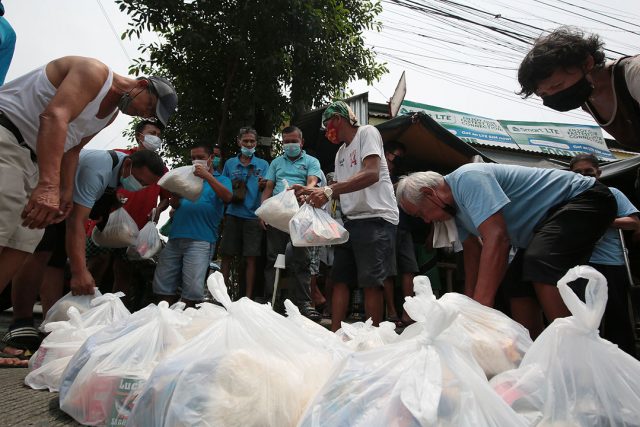
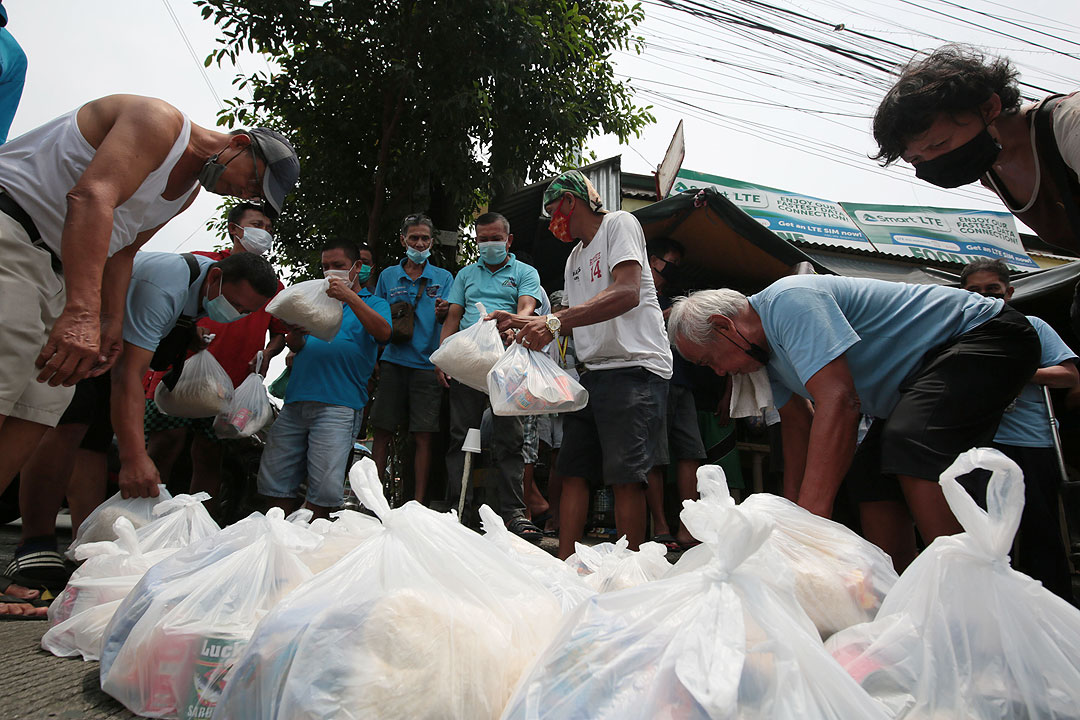
A group of unemployed drivers receive relief packs in this file photo. — PHILIPPINE STAR/ MICHAEL VARCAS

THE NUMBER of jobless Filipinos declined to 3.073 million in July, but job quality remains a concern as more employed Filipinos are still seeking additional work, the Philippine Statistics Authority (PSA) reported on Tuesday.

Preliminary results of PSA’s July 2021 round of the monthly Labor Force Survey (LFS) showed the unemployment rate at 6.9% in July, down from the previous month’s 7.7% which translated to 3.764 million jobless Filipinos. This was also lower than the 10% jobless rate in July 2020, when 4.569 million did not have work.

The July unemployment rate was the lowest since the 5.3% logged in January 2020.

Philippine Labor Force Situation (July 2021)

On the other hand, the underemployment rate — the proportion of those already working, but still looking for more work or longer working hours — worsened to 20.9% in July from 14.2% in June and 17.3% in July 2020.

The underemployment rate in July marked the highest reading since the PSA started releasing the LFS on a monthly basis. Including the quarterly releases, this was the highest since the 21% underemployment rate in July 2015. 

The latest figure translates to 8.692 million underemployed Filipinos, up from 6.409 million the previous month and 7.136 million last year.

The size of the labor force was approximately 44.740 million in July, down from 48.840 million in June. This brought the labor force participation rate to 59.8% of the Philippines’ working-age population in July from 65% the previous month.

“A significant improvement was seen in the National Capital Region (NCR), where the unemployment rate dropped from 14.4% in April 2021 to 9.0% in July 2021 as the quarantine restrictions were eased from modified enhanced community quarantine to variations of the general community quarantine from May 15 to July 31. Moreover, in areas outside NCR, the unemployment rate also improved from 7.9% to 6.5% in the same period,” Socioeconomic Planning Secretary Karl Kendrick T. Chua, Department of Finance Secretary Carlos G. Dominguez III and Department of Budget and Management Officer-in-Charge Tina Rose Marie L. Canda said in a joint statement.

“[D]espite the improved unemployment rate, the reduction in the labor force participation rate… resulted in a net job loss of 3.4 million from June to July, bringing total employment to 0.8 million below pre-pandemic level,” the economic managers said, adding majority of those who left the labor force cited concern over the coronavirus disease 2019 (COVID-19) as the reason for not currently working.

The employment rate went up to 93.1% in July from 92.3% in June. However, this was down in absolute terms with 41.667 million employed Filipinos in July compared with 45.075 million in June, as the decline in employment was offset by the shrinking size of the labor force. 

The service sector made up 57.9% of the total employment in July, slightly up from the 57.6% in June. The industry sector likewise saw its employment rate go up to 20% during the period from 18.1%.   

On the other hand, agriculture had an employment rate of 22.1%, down from 24.3%.

“Around 1.8 million of the month-on-month job loss came from the vulnerable agriculture sector, as Typhoon Fabian hit the country around mid-July, destroyed some P700-million worth of output, and affected multiple regions from Northern Luzon down to Western Visayas,” the economic managers said.

In an e-mail, Bank of the Philippine Islands (BPI) Lead Economist Emilio S. Neri, Jr. said the latest jobs data were “not surprising” as the economy has “clearly lost its recovery momentum from the community quarantines implemented from March to May.”

In a separate e-mail, ING Bank N.V. Manila Senior Economist Nicholas Antonio T. Mapa said latest results indicate that although jobs were created, workers may not have been able to get enough work hours due to lockdown restrictions or muted economic demand.

“Firms may likely be operating on staggered shifts or may have opted to operate in sets or teams to limit the spread of the virus, which in turn capped the number of hours available to workers,” he explained.

CAUTIOUS OUTLOOK
Economists remain cautious on the jobs outlook.

For Asian Institute of Management economist John Paolo R. Rivera, the persistence of the pandemic makes the employment situation “unstable” given the continued restrictions that forced firms to downsize, restructure, or shut down.

“If such a situation continues, no significant improvements in the labor market figures/conditions can be expected,” he said in an e-mail interview. 

ING Bank’s Mr. Mapa was also less optimistic. “NEDA (National Economic and Development Authority) admitted that the labor market will be challenged and unemployment will stay between 7-9% over the next two years. Given how sluggishly the economy is operating, we do not expect jobs to be created fast enough to satisfy demand and we agree that unemployment and underemployment levels will stay quite high in the medium term,” he said, referring to the government’s updated Philippine Development Plan 2017-2022 approved by the NEDA board in early January. 

“We expect the labor market to only completely recover and revert to the pre-COVID average of 5.4% by mid-2023, which should also be the time we can expect the Philippines to return to 2019 GDP (gross domestic product) levels,” he added.

BPI’s Mr. Neri said the economy and labor market are expected to return to pre-pandemic levels “more likely in late-2023, if not early-2024” as demand for jobs in high-contact services remains subdued.

“We think we will see the same [underemployment rate of 6.9%] by the end of the year, but with a higher participation rate and a lower underemployment print. We are assuming here that there will be no more ECQs until end-2021 and that the economy can reopen again as the majority of elderly Filipinos will have already been vaccinated by then,” he said. — Abigail Marie P. Yraola

ADVERTISEMENT
ADVERTISEMENT