Home Blog Page 752

US may ask UN to mandate international force in Gaza for two years, document shows
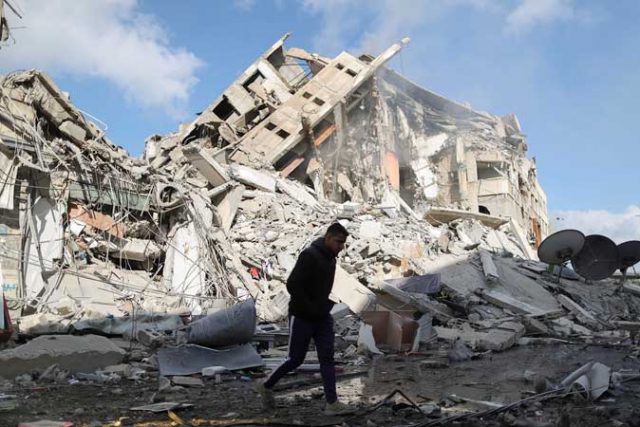
REUTERS FILE PHOTO

UNITED NATIONS — The United States has drafted a United Nations resolution that approves a two-year mandate for a Gaza transitional governance body and an international stabilization force in the Palestinian enclave, according to the text seen by Reuters on Tuesday.

The draft – which is still being developed and could change – was shared with some countries this week, but has not yet been formally circulated to the 15-member Security Council for negotiations, diplomats said. It was not immediately clear when Washington planned to do that.

A State Department spokesperson said discussions with UN Security Council members and other partners on how to implement President Donald Trump’s Gaza plan were ongoing and declined to comment on “allegedly leaked documents.”

The two-page text would authorize a so-called Board of Peace transitional governance administration to establish a temporary International Stabilization Force (ISF) in Gaza that could “use all necessary measures” – code for force – to carry out its mandate.

The ISF would be authorized to protect civilians and humanitarian aid operations, work to secure border areas with Israel, Egypt and a “newly trained and vetted Palestinian police force, which the ISF will be responsible for training and supporting.

The ISF would stabilize security in Gaza, “including through the demilitarization of non-state armed groups and the permanent decommissioning of weapons, as necessary.”

SECOND PHASE OF TRUMP PLAN

Israel and Palestinian militants Hamas agreed a month ago to the first phase of Trump’s 20-point plan for Gaza, a ceasefire in their two year war and hostage release deal.

The next phase of the plan, which the draft UN resolution would endorse, is to establish the Board of Peace and the ISF.

The Trump plan also ends Hamas governance of Gaza and says the enclave would be demilitarized. Hamas has not said whether it will agree to disarm and demilitarize Gaza — something the militants have rejected before.

The ISF would deploy under a unified command agreed by the Board of Peace and in close consultation with Egypt and Israel after detailed status of mission and forces agreements have been reached, according to the resolution.

While the Trump administration has ruled out sending US soldiers into the Gaza Strip, it has been speaking to Indonesia, the United Arab Emirates, Egypt, Qatar, Turkey and Azerbaijan to contribute to the multinational force.

It remains unclear whether Arab and other states will be ready to commit troops to the international force and Israel has repeatedly objected to the deployment of Turkish troops.

The draft UN resolution calls on the World Bank and other financial institutions to facilitate and provide financial resources to support the reconstruction and development of Gaza, “including through the establishment of a dedicated trust fund for this purpose and governed by donors.”

It was not immediately clear when the United States could put a draft resolution to a vote in the Security Council. A resolution needs at least nine votes in favor and no vetoes by the US, Britain, France, Russia or China to be adopted.

The draft resolution was first reported by Axios. — Reuters
Flexible rice tariff adjustments OKd

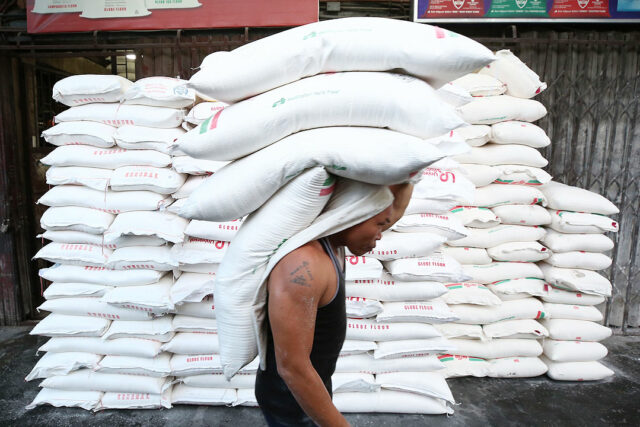
Workers load sacks of flour in a delivery truck in Manila, July 11, 2022. — PHILIPPINE STAR/ MIGUEL DE GUZMAN

THE Economy and Development (ED) Council has approved the recommendation to allow a more flexible rice tariff scheme starting in 2026, the Department of Economy, Planning, and Development (DEPDev) said.

“Starting Jan. 1, 2026, a more gradual and flexible tariff adjustment shall be adopted, with adjustments by 5 percentage points per 5% change in international prices, subject to a minimum rate of 15% and a maximum rate of 35%,” DEPDev said in a statement on Tuesday. 

This was the recommendation presented by the Tariff and Related Matters Committee (TRMC).

However, this fell short of farmer groups’ demand to restore the 35% rice tariff, slamming the lower rate for flooding the market with cheap imports and gutting farmgate prices.

The ED Council also approved the TRMC recommendation to maintain the current Most Favored Nation tariff rate on rice imports at 15% until Dec. 31, for both in-quota and out-quota imports. 

President Ferdinand R. Marcos, Jr. had issued Executive Order (EO) No. 102 extending the rice import freeze until Dec. 31, in line with the Department of Agriculture recommendation.

However, DEPDev Secretary and ED Council Vice Chairperson Arsenio M. Balisacan said Mr. Marcos’ order makes tariffs “redundant,” and will not affect local prices.

“The TRMC’s recommendation is part of a broader government strategy to ensure stable rice prices and protect both farmers and consumers, while safeguarding macroeconomic stability,” DEPDev said.

Meanwhile, the Council also tweaked scope and implementation arrangements of the Jalaur River Multipurpose Project-Stage II to facilitate the completion of the remaining project works and ensure delivery of irrigation water to farmer beneficiaries.

It also approved new rules for formulation, prioritization and monitoring of Infrastructure Flagship Projects (IFP) amid a corruption crackdown on flood control projects.

This seeks to streamline the IFP list, tighten agency accountability, and lock projects into the government’s planning and budgeting pipeline.

ODA LOANS
At the same meeting, the ED Council greenlit two official development assistance (ODA) loans from the World Bank amounting to P53.25 billion.

This includes the Department of Education’s P38.27-billion Project for Learning Upgrade Support and Decentralization (PLUS-D) that aims to bolster learning outcomes, education management and delivery systems in the country.

PLUS-D is set for implementation from 2026 to 2032 and will introduce system-level interventions, provide targeted support to schools, and establish monitoring and evaluation mechanisms, DEPDev said.

The program, with public schools as the primary beneficiaries, focuses on raising literacy and numeracy among Kindergarten to Grade 6 learners.

It also approved the P14.98-billion Accelerated Water and Sanitation Project in Selected Areas (AWSPSA) project. This is targeted to improve access to safe water supply and sanitation services in underserved communities.

The project will be implemented in the Loboc Cluster (Bohol), Siargao Island (Surigao del Norte), and Jolo (Sulu).

The ED Council also endorsed an EO that facilitates voluntary Social Security System, Philippine Health Insurance Corp., Pag-IBIG Fund contributions for contract of service and job order personnel in National Government agencies. 

“The proposed EO seeks to close gaps in social protection coverage by making it easier for non-regular government workers to maintain contributions through a voluntary, payroll-based mechanism,” it said. — Aubrey Rose A. Inosante

Inflation to pick up until early 2026

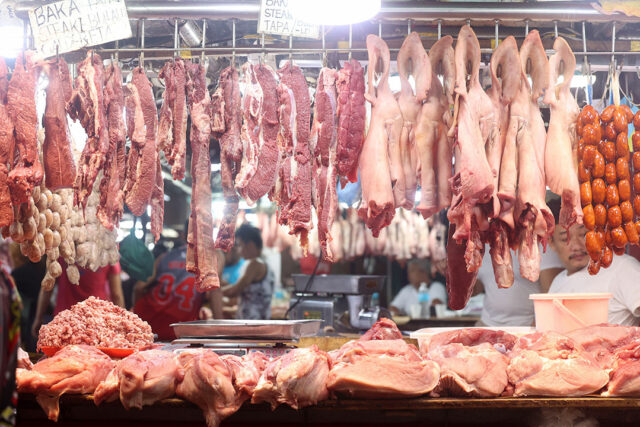
Fresh meat products are displayed at a market in Quezon City, June 22. — PHILIPPINE STAR/MIGUEL DE GUZMAN

PHILIPPINE INFLATION is projected to accelerate until the first semester of 2026 but will likely remain within the 2-4% target, the Bangko Sentral ng Pilipinas (BSP) said.

“That increase in the fourth quarter of 2025 and also the first half of 2026 is driven or could be driven mainly by statistical effects, as well as some of the anticipated adjustments of some of the utilities that we have seen,” BSP Deputy Governor Zeno Ronald R. Abenoja said during the BSP-ADB (Asian Development Bank) ASEAN (Association of Southeast Asian Nations) Economic Outlook seminar on Tuesday.

However, he said inflation may moderate from the second half of 2026 as global oil prices are projected to stabilize.

“After that, we think that the relatively stable oil prices in the international markets would help contain inflation pressures moving forward,” he added.

The BSP forecasts inflation to average 1.7% this year, before picking up to 3.1% in 2026. It sees inflation easing to 2.8% in 2027.

The ADB projects Philippine inflation to settle at 1.8% in 2025 and 3.2% in 2026.

“Overall, inflation continued to be relatively muted. And it’s not within the target; it’s below the target range so far for 2025,” Mr. Abenoja said.

For the first nine months, headline inflation averaged 1.7%. A BusinessWorld poll of 17 analysts yielded a median estimate of 1.8% for the consumer price index in October, within the central bank’s 1.4-2.2% forecast. The October inflation data will be released on Wednesday, Nov. 5.

Mr. Abenoja noted that the BSP’s inflation forecasts account for the monetary policy decisions aimed at managing inflation pressures.

Since August 2024, the central bank has lowered borrowing costs by a total of 175 basis points, bringing the policy rate to 4.75%.

“Although headline inflation could be up because of some supply-side shocks, the underlying pressures have started to come down, and that has been one of the factors that was considered in shifting to a more accommodative stance,” Mr. Abenoja said.

BSP Governor Eli M. Remolona, Jr. has remained dovish, signaling at least two more rate cuts until next year as they now see the nominal rate closer to 4%.

The Monetary Board will hold its last policy-setting meeting this year on Dec. 11.

ECONOMIC GROWTH
On the other hand, ADB Regional Lead Economist James P. Villafuerte said the National Government’s higher budget allocation for infrastructure could help drive economic growth.

“In the Philippines, our main instrument for stimulus is actually the increased national budget of around 5% allocated for infrastructure,” he said.

The 2026 Budget of Expenditures and Sources showed that the government’s infrastructure spending program for next year is set at P1.51 trillion or 5.3% of the gross domestic product (GDP).

“Social services in the Philippines have also received substantial support, such as funding for education, healthcare, and social programs like the 4Ps (Pantawid Pamilyang Pilipino Program) and also the new Walang Gutom food voucher initiative by President Marcos,” Mr. Villafuerte added.

The ADB projects Philippine GDP growth at 5.6% this year, within the government’s 5.5-6.5% goal. This also positions the Philippines to be the second-fastest economy in the region, after Vietnam which is projected to grow by 6.7% this year.

Mr. Villafuerte said Vietnam and the Philippines are the “industrial and trade powerhouses” in ASEAN.

For 2026, the ABD expects the Philippine economy to grow by 5.7%, lower than the government’s 6-7% target. Still, the Philippines is likely to be the second-fastest in the region behind Vietnam’s 6%.

Meanwhile, the BSP said the Philippine banking system’s solid performance remains one of the economy’s buffers against global trade woes and financial market volatility. 

“The banking system, if you look at the balance sheet, [banks] continue to be solid, they continue to expand… Overall, the Philippine banking system continues to be effective and they’re supportive of domestic economic activity,” Mr. Abenoja said.

However, he noted that the government still has to employ the proper policy mix to manage emerging domestic and global headwinds. 

“The environment continues to be challenging. The sand dunes continued to shift if you look around in our policy environment,” Mr. Abenoja said. “And at this time, we have to rely on robust policy frameworks to make sure that we remain vigilant and agile (and that) we are well informed.” — Katherine K. Chan

Philippines jumps to 56th in digital competitiveness index

A teacher works on a computer at a school in this file photo. — PHILIPPINE STAR/EDD GUMBAN

By Beatriz Marie D. Cruz, Reporter

THE PHILIPPINES improved five spots in the World Digital Competitiveness Ranking by the International Institute for Management Development (IMD), but remained a laggard in the Asia-Pacific region.

The country ranked 56th out of 69 economies, with an overall score of 50.87 (out of 100), in the 2025 World Digital Competitiveness Ranking of the IMD World Competitiveness Center.

This was an improvement from last year when the Philippines ranked 61st, its worst ranking since the report was launched in 2017.

Philippines rises five spots in IMD’s digital competitiveness ranking

Among 14 Asia-Pacific economies, the country ranked 13th, ahead only of Mongolia (67th).

Switzerland ranked first in the global digital competitiveness index with a score of 100, followed by the United States (99.29), Singapore, (99.18), Hong Kong (97.79), and Denmark (97.23).

The ranking measures a country’s readiness to adopt and explore digital technologies to transform government practices, business models, and society overall.

The index measures a country’s capacity based on three key factors: knowledge or the quality of human capital, excellence of technological infrastructure, and future readiness.

The Philippines ranked 65th in the knowledge factor, 52nd in future readiness and 54th in technology.

According to IMD, the country showed weakness in the ease of starting a business (66th), enforcing contracts (66th), communications technology (66th), and secure internet servers (63rd).

However, the Philippines ranked high in investments in high-tech exports (3rd) and telecommunications (9th).

The country also slipped one spot in the knowledge factor, amid low rankings in talent (56th), training & education (62nd) and scientific concentration (63rd).

According to IMD, the Philippines inched up by two spots in the technology factor, ranking 46th in capital and 47th in technological framework. However, it ranked 67th for regulatory framework.

For future readiness, IMD said the country improved by six spots due to its performance in adaptive attitudes (40th), business agility (50th), and IT integration (57th).

IMD noted that the Philippines’ business process outsourcing (BPO) sector, which serves foreign clients across North America, Europe and Asia, is vulnerable to trade barriers.

“Trade-related barriers (e.g., remote work taxes, licensing hurdles, and data flow restrictions) make it harder or firms to maintain contracts and retain talent, especially in smaller BPO centers with limited shock absorption capacity,” according to the report.

Globally, countries’ digital competitiveness is challenged by increased volatility in trade relations, IMD said.

It also cited the growing difference among countries and regions on how they regulate, develop, and adopt technologies.

“Trade conflicts were once thought to be confined to disputes over tariffs or quotas, but are now clearly extending deep into the intangible roots of the digital economy: intellectual property, data flows, technical standards, and strategic technologies,” José Caballero, a senior economist at the IMD World Competitiveness Center, said.

John Paolo R. Rivera, a senior research fellow at the Philippine Institute for Development Studies, said the Philippines’ low ranking in the digital competitiveness index highlights the need to address structural bottlenecks like digital infrastructure quality, broadband affordability, and skill readiness.

“While connectivity has improved, it remains uneven and costly outside major cities. Moreover, the shortage of highly skilled digital talent and slow technology adoption among micro, small, and medium enterprises limit how fast digital transformation spreads across the economy,” he said in a Viber message.

Higher production costs and slow trade activity could delay technology upgrading and job creation among high-value sectors, Mr. Rivera added.

“To stay competitive, the Philippines must double down on digital infrastructure investment, talent development, and innovation incentives, while pursuing trade diversification and stronger regional digital partnerships to cushion external shocks,” he added.

Rizal Commercial Banking Corp. Chief Economist Michael L. Ricafort said the growth in online transactions and digital payment systems provide an opportunity to boost the country’s digital competitiveness.

The IMD report was published in partnership with IMD’s local partner institute, Asian Institute of Management’s Rizalino S. Navarro Policy Center for Competitiveness.

PHL external debt service bill dips to $7.5 billion at end-July

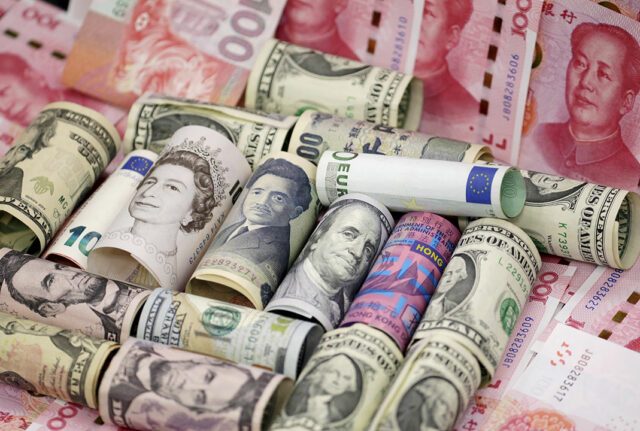
Euro, Hong Kong dollar, US dollar, Japanese yen, pound and Chinese yuan banknotes are seen in this picture illustration in Beijing, China. — REUTERS

THE PHILIPPINES’ external debt service burden declined by 5% at end-July as less foreign loans matured, preliminary data from the Bangko Sentral ng Pilipinas (BSP) showed.

Debt servicing on external borrowings slipped to $7.53 billion in the first seven months from $7.935 billion in the same period last year.

Broken down, principal payments dropped by 12.2% to $2.894 billion from $3.296 billion a year earlier.

Interest payments inched down by 0.1% to $4.636 billion from $4.639 billion the previous year.

“The slight year-on-year decline in the external debt servicing bill could largely be attributed to lower share of foreign borrowings in the (National Government’s) total borrowing mix in recent years to better manage or minimize risk of forex (foreign exchange) losses entailed in foreign borrowings,” Rizal Commercial Banking Corp. Chief Economist Michael L. Ricafort said in a Viber message.

Based on its fiscal program, the National Government (NG) plans to source 81% or P2.11 trillion of its P2.6-trillion financing from local lenders this year, while the rest will be from foreign lenders. Domestic borrowings were slightly higher in this year’s borrowing mix versus the 75:25 borrowing mix in 2024.

“Furthermore, lower foreign debt maturities in recent months also reduced external debt servicing,” Mr. Ricafort added.

The debt service burden represents principal and interest payments after rescheduling, according to the BSP.

This includes principal and interest payments on fixed medium- and long-term credits, including International Monetary Fund credits, loans covered by the Paris Club and commercial bank rescheduling, and new money facilities. It also covers interest payments on fixed and revolving short-term liabilities of banks and nonbanks.

However, the debt service data exclude prepayments on future years’ maturities of foreign loans and principal payments on fixed and revolving short-term liabilities of banks and nonbanks.

In the seven months to July, the debt service burden as a share of gross domestic product (GDP) stood at 2.9%, slightly lower than  3.2% a year ago.

Based on the latest BSP data, the country’s outstanding external debt stood at a record $148.87 billion in the April-June period.

This brought the external debt-to-GDP ratio to 31.2% at end-June, higher than 28.9% seen a year ago.

Mr. Ricafort said less foreign debt and lower borrowing costs of other central banks such as the US Federal Reserve could partly reduce the foreign debt service bill for the rest of the year.

“For the coming months, lower share of foreign borrowings in the NG total borrowing mix and any further reduction in Fed rates and other global interest rates could somewhat help reduce or at least temper future external debt servicing bills,” he said.

For the next three years, the NG’s programmed financing mix consists of 77% domestic borrowings and 23% foreign.

“However, this would also be a function of future NG budget deficit that would lead to additional NG borrowings, including external debt,” Mr. Ricafort added.

The latest government data showed that the country’s budget deficit widened by 15.15% year on year to P1.117 trillion as of September. This was 71.6% of the government’s P1.56-trillion ceiling for 2025.

The BSP’s external debt data cover borrowings of Philippine residents from nonresident creditors, regardless of sector, maturity, creditor type, debt instruments or currency denomination.

The central bank gathers data on external debt through reports submitted by borrowers, banks, and major foreign creditors. — Katherine K. Chan

First Gen eyes Agus-Pulangi hydro complex rehab to boost RE portfolio

PHILSTAR FILE PHOTO

FIRST GEN CORP. is exploring participation in the planned rehabilitation of the Agus-Pulangi hydroelectric power complex in Mindanao, as part of its push to expand its hydro portfolio and strengthen its renewable energy (RE) mix.

“We will look into it,” Jay Joel Soriano, First Gen vice-president and head of strategy and planning, told reporters last week. “We will consider it as, ‘Is there room to upgrade? Is there room to make something really good, even better?’ That’s always a healthy perspective to take.”

The Agus-Pulangi complex consists of seven run-of-river hydro plants with a combined installed capacity of about 1,000 megawatts (MW), though only 600-700 MW are operational due to aging equipment.

The Power Sector Assets and Liabilities Management Corp. (PSALM) is pursuing a rehabilitation plan to extend the facilities’ life and restore full dependable capacity.

Implementation of the concession is expected between 2027 and 2030, after which the government may opt to privatize the complex.

PSALM President and Chief Executive Officer Dennis Edward Dela Serna earlier said the project could yield as much as P90 billion in revenues once completed.

Under the Electric Power Industry Reform Act of 2001, PSALM must privatize government-owned power assets and use the proceeds to pay down National Power Corp. liabilities. The Agus-Pulangi complex and the decommissioned Mindanao coal plant remain among PSALM’s last power holdings.

Next year, PSALM is set to turn over the Caliraya-Botocan-Kalayaan hydro complex to the Thunder Consortium — composed of Aboitiz Renewables, Sumitomo Corp. and Electric Power Development Co. — which offered P36.27 billion, outbidding the FGKW Consortium of First Gen Prime Energy and Korea Water Resources Corp., which submitted P19.62 billion.

Last year, the government also transferred the 165-MW Casecnan hydro plant to Fresh River Lakes Corp., a First Gen unit, for $526 million.

Mr. Soriano said First Gen continues to pursue hydropower opportunities, calling the technology a “nice complement” to its geothermal, solar and wind assets.

“We need the right mix of technologies,” he said. “To support all the solar that’s coming up, we need balancing technologies — and hydro is a great balancing technology.”

First Gen, among the country’s biggest renewable developers, operates with about 1,600 MW of clean energy capacity. — Sheldeen Joy Talavera

Robinsons and Ayala Land officials make it to Forbes Asia list

Ayala Land’s Mariana Beatriz E. Zobel de Ayala

TWO FILIPINAS have been named to Forbes Asia’s 2025 Power Businesswomen list, which recognizes 20 female leaders reshaping the region’s corporate landscape.

Ayala Corp. Managing Director Mariana Beatriz E. Zobel de Ayala, an eighth-generation member of one of the Philippines’ oldest business families, was cited for her leadership in the leasing and hospitality units of Ayala Land, Inc. She also serves as president of Ayala Malls, one of the country’s largest retail chains.

Forbes Asia noted that Ms. Zobel de Ayala is leading the company’s pipeline to redevelop and build new malls, a move expected to increase its gross leasable area to 2.9 million square meters by 2028.

She was also cited for steering Ayala Land’s $500-million (P29.3 billion) investment to double its hotel room inventory to 7,500 by 2030.

Joining her on the list is Mybelle V. Aragon-GoBio, president and chief executive officer (CEO) of Robinsons Land Corp. She is the first woman and nonfamily executive to head the Gokongwei-led property arm of JG Summit Holdings, Inc.

Ms. Aragon-GoBio is steering Robinsons’ P125-billion expansion over the next five years, including a push to “premiumize” its brands.

“The women on this year’s Forbes Asia’s Power Businesswomen list are not just adapting to change but actively shaping the future of the region’s business landscape,” Forbes Asia Editorial Director Rana Wehbe Watson said in a statement.

“Some are forging paths in hot sectors like data centers, semiconductors and rare earths, while others are guiding their family businesses to new heights,” she added.

Forbes Asia said more than half of the women named have a track record in banking, consumer goods and transportation. Three are first-generation entrepreneurs, it added.

Other female leaders included in the list are HSBC Hong Kong CEO Maggie Ng and Shangri-La Asia CEO Kuok Hui Kwong of Hong Kong and Sunway Executive Deputy Chairperson Sarena Cheah of Malaysia.

Forbes Asia also named South Korea’s Shinsegae, Inc. Chairperson Chung Yoo-Kyung, CIMB Group Country Head and Bank CIMB Niaga President Director and CEO Lani Darmawan from Indonesia and Lynas Rare Earths Managing Director and CEO Amanda Lacaze from Australia.

It also cited three leaders from India — Hindustan Unilever CEO Priya Nair, OfBusiness co-founder Ruchi Kalra and Toyota Kirloskar Motor Vice-Chairperson Manasi Kirloskar Tata.

From Singapore, leaders cited were DayOne Data Centers CEO Jamie Khoo and Temasek Singapore incoming President Png Chin Yee.

Also on the list are Kasikornbank CEO Kattiya Indaravijaya of Thailand, Trip.com Group CEO Jane Wiwynn, Chairperson and Chief Strategy Officer Emily Hong and Marketech International Chairperson and CEO Margaret Kao of Taiwan. — Beatriz Marie D. Cruz

Megaworld Q3 profit edges higher on strong leasing and hotel growth

MEGAWORLDCORP.COM

By Ashley Erika O. Jose, Reporter

MEGAWORLD CORP. posted a modest rise in third-quarter earnings as its office, mall and hotel businesses continued to deliver steady gains, offsetting higher costs and softer residential margins.

Attributable net income climbed 1.16% to P5.23 billion in the July-to-September period, while consolidated revenues rose 4.34% to P19.96 billion, the listed property developer said in a stock exchange filing on Tuesday.

“Our year-to-date performance continues to reflect the strength of our recurring income portfolio and the sustained demand across our residential and hotel offerings,” President Lourdes Gutierrez-Alfonso said.

Real estate sales, which make up the bulk of Megaworld’s business, inched up 0.84% to P13.13 billion, while rental income increased to P5.51 billion and hotel operations contributed P1.32 billion. Total expenses rose 1.62% to P12.54 billion.

For the first nine months, attributable net income jumped 16% to P15.93 billion, driven by a strong recurring income base. Revenues for the period climbed 8.91% to P60.61 billion, supported by real estate sales worth P40.24 billion, rental income worth P16.24 billion and hotel revenue worth P4.13 billion.

The company said growth in its office leasing segment was buoyed by sustained rental escalations and new take-ups from business process outsourcing and multinational firms. It has closed almost 140,000 square meters in new leases and 120,000 square meters in renewals this year, underscoring continued demand for spaces within its integrated townships.

Megaworld Lifestyle Malls booked P5.1 billion in leasing revenue, lifted by rising foot traffic and consumer spending across its major developments.

“This performance was supported by sustained momentum in retail activities and continued tenant expansion, particularly in food, fashion and home categories,” the company said.

Toby Allan Arce, Globalinks Securities head of sales trading, in a Viber message said Megaworld’s fourth-quarter growth would hinge on leasing strength, holiday-driven mall and hotel activity and project completions that drive residential revenue.

Elevated interest rates and inflationary pressures may temper housing demand, he said in a Viber message. “Even so, recurring income growth, particularly from offices and retail, should remain the primary growth driver into 2025, helping the company maintain stable profitability and cash generation,” he added.

Megaworld operates 36 township developments nationwide covering about 7,000 hectares. It plans to launch another township outside Metro Manila by year-end and aims to expand its office gross leasable area (GLA) to 2 million square meters and retail GLA by a million square meters by 2030.

Megaworld stocks rose 0.5% to P2 each.

ACEN starts Stubbo Solar in NS Wales

ACEN

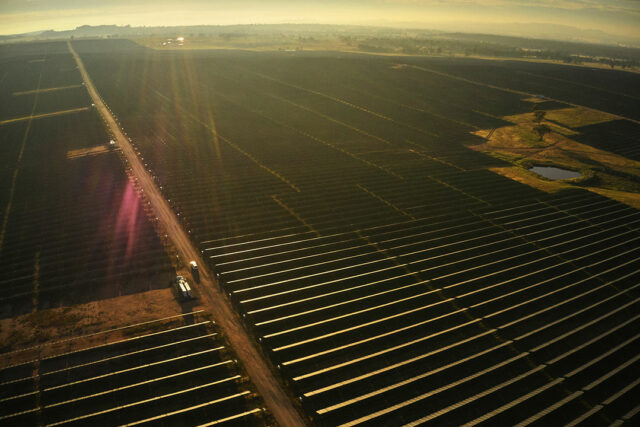
ACEN Australia Pty. Ltd. has begun full commercial operations of its A$760-million (P28.9 billion) Stubbo Solar project in New South (NS) Wales, marking a major step in the state’s shift toward renewable energy.

The 400-megawatt (MW) solar farm — one of Australia’s biggest — spans 1,250 hectares in the Central West region and can generate enough clean power for 185,000 households, ACEN said in a statement on Tuesday.

The facility is also designed to accommodate a future 200-MW/800-megawatt-hour battery energy storage system, which will let it dispatch power during peak demand and support grid stability.

“As the market evolves, costs are rising, delivery conditions are changing rapidly and market dynamics are shifting,” ACEN Australia Managing Director David Pollington said. “These pressures are real, and they reinforce the importance of partnership between government and industry to ensure policy settings remain responsive, effective and investment-ready.”

PCL Constructors, Inc. served as the project’s engineering, procurement and construction contractor, while Lumea Pty. Ltd., the commercial arm of Transgrid, partnered with ACEN on grid connection facilities.

During construction, the company injected A$85 million into the New South Wales economy, including contracts and jobs for local businesses in the Mid-Western Regional Council area, it said.

It also invested A$3.2 million with First Nations enterprises and A$400,000 in community development through its social investment program.

Stubbo Solar secured a 20-year energy service agreement in 2023 through New South Wales’ first renewable energy and storage auction.

ACEN Executive Chairman Jose Maria Zabaleta said the company aims to develop more than 2 gigawatts (GW) of renewable energy projects in Australia within three years.

“This positions ACEN to help achieve Australia’s energy transition objectives and reflects our long-term goals and commitments,” he said.

ACEN Australia is a unit of ACEN Corp., the Ayala-led listed energy platform that holds a portfolio of 7 GW of attributable renewable capacity across the Philippines, Australia, Vietnam, India, Indonesia, Laos and the US.

ACEN shares rose 0.86% to close at P2.35 apiece. — Sheldeen Joy Talavera

AirAsia parent picks Bahrain as ME hub for expansion

NEWSROOM.AIRASIA.COM

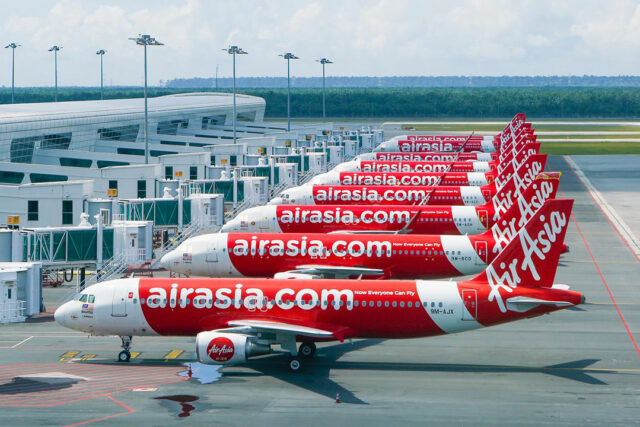
CAPITAL A Bhd., which operates Malaysian budget airline AirAsia, is setting up Bahrain as its Middle East (ME) hub, part of a five-year plan to open new long-haul routes from Southeast Asia, including the Philippines.

“This partnership is a game-changer,” Capital A Chief Executive Officer Tony Fernandes said in a statement on Tuesday. “With our aviation restructuring soon to be complete, both Capital A and AirAsia are stepping into another bold and disruptive chapter of global growth, and Bahrain will be a powerful launchpad for us in the Middle East.”

Capital A signed a letter of intent with Bahrain’s Ministry of Transportation and Telecommunications to explore creating a base for AirAsia in the Gulf nation. The deal marks the start of a long-term partnership aimed at linking Southeast Asia and the Middle East.

The deal includes cooperation in areas such as aviation operations, cargo and logistics, aircraft maintenance and talent development. It will also study potential routes connecting Bahrain with the Philippines, Malaysia, Thailand and Cambodia, expanding access to Europe and the US.

The group is considering a Bahrain-based airline operating narrowbody aircraft to key destinations across the Middle East, Central Asia, Africa and Europe. By 2030, AirAsia expects to operate more than 25 daily flights through Bahrain, targeting more than 20 million passengers in five years.

“AirAsia has been built on innovation, and we continue to redefine the low-cost aviation model,” Mr. Fernandes said. “We pioneered the establishment of airlines beyond our home base in Malaysia, expanding successfully into our ASEAN strongholds across Thailand, Indonesia, the Philippines and Cambodia.”

The Bahrain expansion follows Capital A’s broader fleet growth strategy. In July, AirAsia said it plans to acquire 150 new aircraft, with as many as 20 slated for its Philippine unit, Philippines AirAsia, Inc., over the next five years.

AirAsia Philippines earlier said it was evaluating potential new hubs outside Manila, including Bohol, Clark and Cebu. The carrier expects to fly more than seven million passengers this year after carrying more than three million in the first half. — Ashley Erika O. Jose

Egypt hopes vast new museum near the Pyramids will accelerate tourism revival

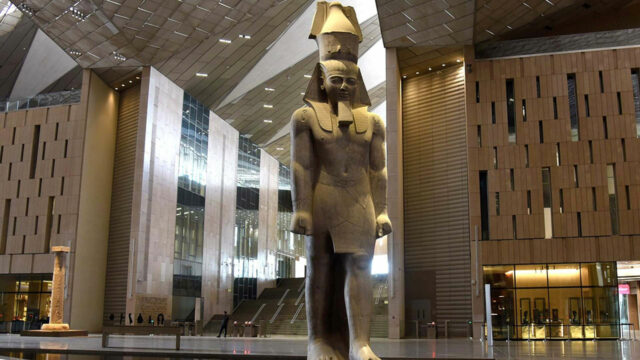
INTERIOR of the Grand Egyptian Museum — GEM.EG

CAIRO — Egyptian officials are hoping the inauguration of a vast new museum last Saturday will accelerate the revival of a tourism industry hampered for more than a decade by internal upheaval, a pandemic, and regional conflicts.

Officials believe the Grand Egyptian Museum, or GEM, alone could draw as many as 7 million additional visitors annually after it opens, helping boost total visitors to around 30 million by 2030.

Overlooking the Giza Pyramids, the 500,000-square-meter edifice will house tens of thousands of artifacts, including what is billed as the complete collection of the treasures of the boy-king Tutankhamun, many displayed for the first time.

The new space includes immersive exhibits and virtual-reality devices, in contrast to cluttered, old-fashioned displays in the older Egyptian Museum in downtown Cairo.

Egypt, which has needed repeated bailouts to stabilize its economy, uses the foreign currency it collects from tourism to pay for crucial imports such as fuel and wheat.

CULTURAL TOURISM HOPES
Last year the country drew 15.7 million visitors who spent a record $15 billion, according to official figures. Tourism had collapsed to a low of $3.8 billion in 2015/16, the victim of extended political turmoil after Egypt’s 2011 uprising.

However, factors including fraying infrastructure, poor planning, and security restrictions have held back the tourism sector’s potential. Even with the recent recovery, Egypt trails regional rival Turkey, which said it had more than 50 million international visitors last year, bringing in over $60 billion.

Ghada Abdelmoaty, an associate professor at the Higher Institute of Tourism and Hotels in Alexandria, said visitor targets were realistic.

“The museum accommodates a huge collection that was previously kept in storage due to lack of display space,” she said.

Popular with many travelers for its Red Sea resorts, Egypt hopes the GEM’s opening will also draw an increasing proportion of cultural tourists.

Such tourists typically stay longer and spend more than those who come mainly for beaches, analysts say.

Official figures don’t say how many tourists come for cultural reasons, but a 2021 study of GEM’s possible impact estimated they made up less than a quarter of the total.

Ms. Abdelmoaty put the number of cultural tourists at only 10-15% of all international travelers.

Remon Naguib, chief commercial officer at Orient Hospitality Group, said his company was working to integrate the new museum into “joint programs” designed to attract visitors to experience both.

Tourists could “come and visit the museum, then spend three nights in a Red Sea destination, including Ain Sukhna, which is just one hour from Cairo,” he said.

ROADS GIVEN FACELIFT, PYRAMIDS ENTRANCE MOVED
Tourism revenues became even more important over the last two years as attacks on Red Sea shipping chased shipping away from the Suez Canal, another major foreign currency earner.

Tourism itself has proven vulnerable to shocks including political violence in the 1990s and 2000s, the COVID-19 pandemic, and Russia’s 2022 invasion of Ukraine — two countries which accounted for nearly a third of tourist arrivals in 2021. Tourism has also been hurt by the war in Gaza.

To fully capitalize on the GEM’s opening, the museum “has to be complemented by very high-quality tourist infrastructure — hotels, transport, and beyond,” said Ragui Assaad, professor of international economic policy at the University of Minnesota.

That means addressing issues like transport in Cairo, a megacity with an estimated population of 23 million. Roads leading to the new museum have been given a facelift, while a new airport has been built about 25 kilometers from the GEM to circumvent clogged streets.

Entrance to the Giza Pyramids has been relocated to the back side to reduce crowding and keep visitors away from the area’s famously aggressive tourist touts.

Tourism Minister Sherif Fathy said last month Egypt had added 5,000 hotel rooms to its existing 235,000 and hoped to add yet another 9,000 before the year ends. — Reuters

Yields on reissued bonds drop amid strong investor demand

BW FILE PHOTO

THE GOVERNMENT fully awarded the dual-tenor Treasury bonds (T-bonds) it auctioned off on Tuesday as strong demand helped pull down rates.

The Bureau of the Treasury (BTr) raised a combined P35 billion as planned from its dual-tranche offering of T-bonds as demand reached P138.118 billion or nearly four times the amount placed on the auction block.

Broken down, the government borrowed the programmed P20 billion via reissued seven-year bonds that have a remaining life of four years and eight months as total bids were at P71.687 billion or over thrice the offer volume.

The bonds were awarded at an average rate of 5.649%, with accepted bid yields ranging from 5.635% to 5.658%. This was 12.3 basis points (bps) lower than the 5.772% fetched for the series’ last award on Sept. 9 and was also 72.6 bps below the 6.375% coupon for the issue.

The average yield was likewise 5.6 bps lower than the 5.705% quoted for the five-year bond, or the benchmark tenor closest to the remaining life of the papers on offer, and 1.3 bps below the 5.662% fetched for the same bond series at the secondary market before Tuesday’s auction, based on PHP Bloomberg Valuation Service (BVAL) Reference Rates data provided by the BTr.

Meanwhile, the BTr also sold P15 billion as planned in reissued 10-year bonds that have a remaining life of nine years and five months as the offering drew tenders worth P66.431 billion or more than four times the amount auctioned off.

The notes were awarded at an average yield of 5.894%, with accepted tenders carrying rates of 5.889% to 5.898%. This was 19.4 bps below the 6.043% quoted for the same bond series when they were last sold on Oct. 7 and 48.1 bps lower than the 6.375% coupon for the issuance.

The average yield was also 5 bps lower than the 5.944% quoted for the 10-year debt and 2.9 bps below the 5.923% fetched for the same bond issue at the secondary market before the auction, BVAL Reference Rates data showed.

The government fully awarded both T-bond tenors as strong demand for the offering led to lower average yields, Michael L. Ricafort, chief economist at Rizal Commercial Banking Corp., said in a Viber message.

This came amid bets of further monetary easing by the Bangko Sentral ng Pilipinas (BSP) amid expectations of within-target inflation and weak economic growth, he said.

Last month, the Monetary Board cut benchmark borrowing costs by 25 bps for a fourth straight meeting, bringing the policy rate to 4.75%.

It was now trimmed rates by 175 bps since its easing cycle began in August 2024.

BSP Governor Eli M. Remolona, Jr. has said that more cuts are possible until next year as they want to support the economy amid weakening growth prospects as a graft scandal involving state flood control and infrastructure projects has dented investor confidence.

Last week, Monetary Board member Benjamin E. Diokno said in a Bloomberg Television interview that a 25-bp cut is likely at their Dec. 11 meeting, with further reductions possible as the economic fallout from the corruption mess may last until end-2026.

Mr. Ricafort added that broad market volatility due to both domestic and external concerns has benefited safer assets like government securities.

The Philippine Stock Exchange index has closed below the 6,000 mark for the past seven sessions. On Tuesday, it ended at 5,867.04, down by 10.14% or 661.75 points from its end-2024 close of 6,528.79.

The BTr wants to raise P158 billion from the domestic market this month, or P88 billion via Treasury bills and P70 billion through T-bonds.

The government borrows from local and foreign sources to finance its budget deficit, capped at P1.56 trillion or 5.5% of gross domestic product this year. — BVR with a report from K.K. Chan

ADVERTISEMENT
ADVERTISEMENT