Home Blog Page 752

China’s Xi seeks to boost investment, expand economic ties with Russia

WIKIMEDIA/MIL.RU

BEIJING — China’s President Xi Jinping on Tuesday sought to expand mutual investment with Russia and affirmed Beijing’s commitment to advance ties despite “turbulent” external conditions, Chinese state media reported.

Mr. Xi met Russian Prime Minister Mikhail Mishustin in Beijing at the Great Hall of the People, a day after Chinese Premier Li Qiang held a meeting with Mr. Mishustin in Hangzhou, where Mr. Li said China wanted to strengthen cooperation with Russia and defend shared security interests.

The Kremlin has highlighted the significance of Mr. Mishustin’s visit at a time when Russia is under major Western sanctions over its war in Ukraine and looking to stem a recent slowdown in trade with China.

“China-Russia relations have stayed the course toward higher-level and higher-quality development, advancing steadily despite a turbulent external environment,” Mr. Xi told Mr. Mishustin, according to state broadcaster CCTV.

“Safeguarding, consolidating and developing China-Russia relations is a strategic choice for both sides,” Mr. Xi said.

He highlighted industries such as energy, agriculture, aerospace, digital economy and green development where the two countries could advance cooperation and foster new engines of growth.

Mr. Mishustin said it was important for both sides to continue creating favorable conditions for attracting mutual investment and supporting joint projects, according to Russia’s TASS news agency.

Mr. Xi and Russian President Vladimir Putin signed a “no-limits” partnership in February 2022 days before Mr. Putin sent tens of thousands of troops into Ukraine.

Since then, Russia has turned to China to blunt the impact of sanctions, highlighting record trade, increased settlements in yuan and deepening energy cooperation.

Bilateral commerce has, however, declined in recent months as China faces mounting US pressure over trade and technology.

Chinese state oil majors suspended purchases of seaborne Russian oil following US sanctions on Rosneft and Lukoil, Moscow’s two biggest oil companies, Reuters reported last month.

In a joint communique published on the Russian government website on Tuesday, both countries agreed to “strengthen cooperation in all spheres and respond appropriately to external challenges.”

Russia also reaffirmed its adherence to the “one-China” principle and opposition to “Taiwan independence.”

China regards democratically ruled Taiwan as part of its territory. Taiwan’s government rejects Beijing’s claim and says only the island’s people can decide their future. — Reuters

South Korea’s President Lee says economy has turned a corner

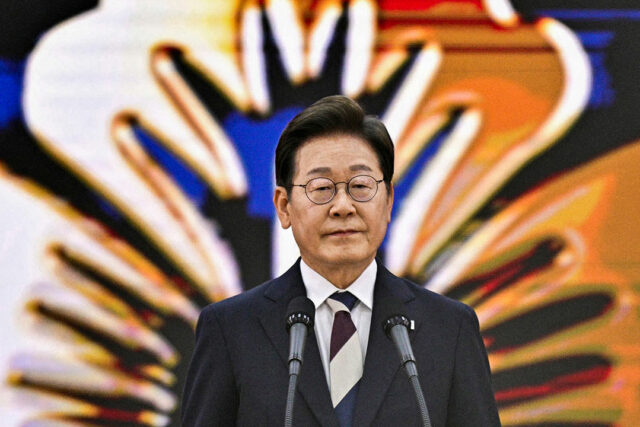
SOUTH KOREA’S President Lee Jae-myung delivers a speech after taking his oath during his inauguration ceremony at the National Assembly in Seoul on June 4, 2025. — REUTERS

SEOUL — South Korean President Lee Jae Myung said on Tuesday the economy has turned a corner as risks related to geopolitics and corporate governance have been easing, which has boosted the local Kospi stock index beyond the 4,000 mark.

“Consumer sentiment is improving, and economic growth in the third quarter has rebounded to a six-quarter high of 1.2% from a contraction in the first quarter,” Mr. Lee said in his annual budget speech at the National Assembly.

“We are now out of crisis status, having taken steps with some extraordinary determination the past five months to cope with a severe economic crisis caused by the illegal martial law.”

Asia’s fourth-biggest economy expanded by 1.2% in the third quarter, as exports have generally held up despite uncertainties related to US tariffs.

Domestic demand has also been improving, underpinned by the Lee government’s extra budget of more than $20 billion, which included two rounds of cash handouts that boosted spending at restaurants and in the retail sector.

For 2026, Mr. Lee proposed an 8.1% increase in spending from this year’s government budget to 728 trillion won ($512.14 billion), more than triple the 2.5% expansion of the 2025 budget.

He said the government planned to channel support into artificial intelligence, Korean cultural and entertainment content, shipbuilding and semiconductors to spur an “economic transformation.” ($1 = 1,421.4800 won). — Reuters

Australia to offer three hours free solar per day to millions

STOCK PHOTO | Image by Adriano from Unsplash

PERTH — Australia will offer at least three hours of free solar power every day to households including those without solar panels under an energy-saving program that is expected to go live in 2026, energy minister Chris Bowen said on Tuesday.

The Solar Sharer program will begin in the states of New South Wales and South Australia as well as southeast Queensland before it is expanded elsewhere.

Users will get free solar power when generation capacity is highest in the middle of the day.

“People who are able to move electricity use into the zero-cost power period will benefit directly, whether they have solar panels or not and whether they own or rent, and the more people take up the offer and move their use, the greater the system benefits that lower costs for all electricity users will be,” Mr. Bowen said.

The share prices of two of Australia’s largest electricity suppliers AGL and Origin Energy fell 3% by late afternoon.

About four million households in Australia have rooftop solar panels on their homes and peak time sunny afternoons can supply so much power that electricity prices swing into the negative, while peak demand is often several hours later, putting strain on the grid.

Households, including apartment dwellers, will be able to access the program even without their own solar panels.

In 2022, Mr. Bowen set a target of 82% renewable electricity by 2030 in addition to the legislated target of a 43% reduction in emissions over the levels in 2005.

Customers who choose the deal must have a smart meter and will only benefit if they shift their peak usage to the middle of day and run appliances and charge vehicles then. — Reuters

Hegseth says US-South Korea alliance focused on North Korea but ‘flexibility’ needed

STOCK PHOTO | Image by Vitamin from Pixabay

SEOUL — The United States will look at “flexibility” for US troops stationed in South Korea to operate against regional threats, but the core of the alliance with Seoul will remain focused on deterring North Korea, US Defense Secretary Pete Hegseth said on Tuesday.

He spoke alongside his South Korean counterpart during a visit to South Korea that earlier included a trip to the Demilitarized Zone on the border with North Korea.

When asked whether the 28,500 American troops stationed in South Korea might be used in any conflicts beyond the peninsula, including with China, Mr. Hegseth told a briefing that protecting against nuclear-armed North Korea is the goal of the alliance.

“But there’s no doubt that flexibility for regional contingency is something we would take a look at,” he said.

Mr. Hegseth said the two sides were still working on a joint communique expected to address talks about defense costs and other issues, adding they had discussed South Korea making greater military investments.

The allies had also agreed to have South Korea maintain and repair US ships, allowing them to stay in the area and be ready if needed, Mr. Hegseth said. — Reuters

Death toll from Typhoon Kalmaegi rises to four in the Philippines

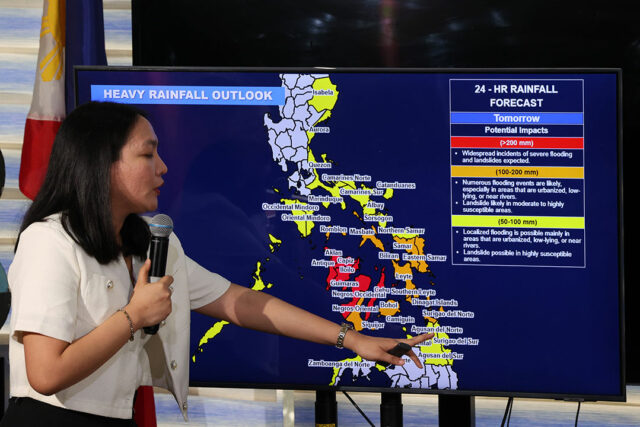
PAGASA press briefing on Typhoon Tino. — PHILIPPINE STAR/MIGUEL DE GUZMAN

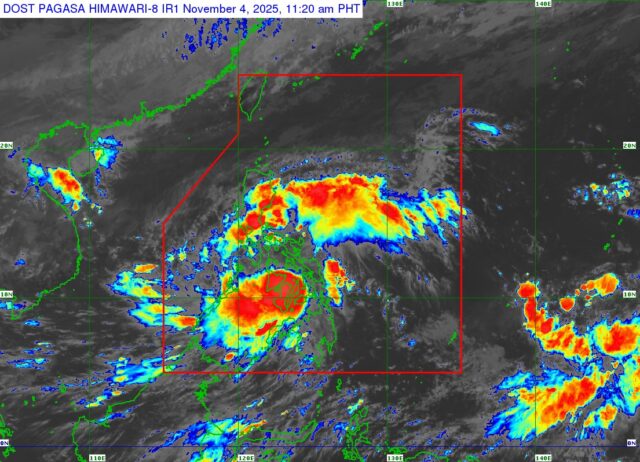
MANILA — The death toll from Typhoon Kalmaegi has climbed to four, disaster officials said on Tuesday, as the powerful storm unleashed heavy rains and floods across the central Philippines, submerging homes and forcing thousands to evacuate.

Although Kalmaegi, locally named Tino, has weakened since making landfall early on Tuesday, it continued to lash the country with winds of 130 kilometers per hour (kph) and gusts of 180 kph as it swept across the Visayas islands and northern Palawan towards the South China Sea.

Three people were confirmed dead and at least one person was reported missing in the central province of Cebu, provincial information officer Ainjeliz Orong said. Two more deaths were still being verified.

“We weren’t expecting this much flooding,” Ms. Orong said by phone.

In neighboring Bohol province, one person was killed after being struck by a falling tree, disaster official Anthony Damalerio told DZMM radio.

Tens of thousands of residents were evacuated across the Visayas region, including parts of southern Luzon and northern Mindanao, the national disaster agency reported.

Photos and videos from the Philippine Red Cross showed rescue workers wading through knee-deep floodwaters in Cebu City, using boats to reach stranded residents. In Liloan town, on the northern outskirts of the city, homes were submerged, with only rooftops and top floors visible.

Similar scenes from other parts of Cebu City, with vehicles and streets under water, circulated on social media.

State weather agency PAGASA said the combination of Kalmaegi and a shear line had brought heavy rains and strong winds across the Visayas and nearby areas.

More than 180 flights to and from the affected areas were cancelled on Tuesday, while those at sea were advised to head to the nearest safe harbor immediately and to stay in port.

PAGASA warned of a high risk of “life-threatening and damaging storm surges” that could reach more than 3 meters high along coastal and low-lying communities in the central Philippines, including parts of Mindanao.

The Vietnamese government also said on Tuesday that it was preparing for the worst-case scenario as it braced for the impact of Kalmaegi.

The typhoon is forecast to make landfall on Thursday night in Vietnam’s central regions, which have already suffered heavy floods that killed at least 40 people and left six others missing over the past week.

“This is a very strong typhoon, which continues to strengthen after entering the East Sea,” the government said in a statement, referring to the South China Sea.

Kalmaegi comes as the Philippines, which is hit by an average of 20 tropical storms each year, recovers from a run of disasters including earthquakes and severe weather events in recent months.

In September, Super Typhoon Ragasa swept across northern Luzon, forcing government work and classes to shut down as it brought fierce winds and torrential rain. — Reuters

China accuses Netherlands of not working to fix Nexperia dispute

Semiconductor chips are seen on a circuit board of a computer in this illustration picture taken on Feb. 25, 2022. — REUTERS

BEIJING/AMSTERDAM — China’s commerce ministry on Tuesday accused the Netherlands of not working with Beijing to resolve the dispute surrounding the Dutch government’s seizure of chipmaker Nexperia and warned of further supply chain disruptions as a result.

The Dutch government took control of Nexperia on September 30 due to concerns about its Chinese parent Wingtech.

The Chinese commerce ministry’s accusation of continued Dutch inaction on the dispute underscores the difficulty of the Netherlands and China agreeing to a long-term solution for the ownership of Nexperia, which makes large volumes of basic chips used in cars.

“The Dutch side continues to act unilaterally without taking concrete steps to resolve the issue, which will inevitably exacerbate the adverse impact on the global semiconductor supply chain,” China’s commerce ministry said in a statement published on its official website.

“This is something neither China nor the global industry wishes to see.”

A spokesperson for the Dutch economic affairs ministry, which intervened in Nexperia’s governance, told Reuters that talks between both governments were still underway.

“We remain in contact with the Chinese authorities and our international partners to work toward a constructive solution that is good for Nexperia and our economies,” the spokesperson said on Tuesday.

Beijing’s warning of further disruptions comes as European automotive suppliers rush for exemptions to Chinese export restrictions on Nexperia products made in China that were imposed days after the Dutch government’s seizure.

While most of Nexperia’s chips are produced in Europe, around 70% are packaged in China before distribution.

The resulting chip shortages have threatened to halt assembly lines and lead to worker furloughs in Europe.

Industries dependent on Nexperia’s chips are waiting for a political solution to the trade dispute after the White House announced last week, following talks between US President Donald Trump and Chinese President Xi Jinping, that Beijing “would take appropriate measures to ensure the resumption of trade from Nexperia’s facilities in China.”

EU trade chief Maros Sefcovic said on Monday that there had been “progress” in talks on Nexperia involving the Dutch and Chinese governments, without elaborating further.— Reuters

China’s military build-up demands response, Australia defense minister says

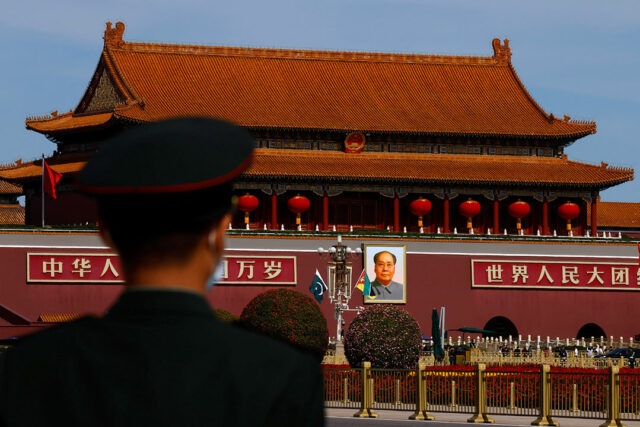
A SOLDIER stands guard at the Great Hall of the People in Beijing, China, Oct. 18, 2023. — REUTERS

SYDNEY — Australia’s defense force operations to protect its sea trade routes, including through the South China Sea, are becoming more risky as Beijing undertakes the “biggest military build-up in the world today”, Australia’s defence minister said on Tuesday.

Open sea lanes, including trade routes that go through the South China Sea and East China Sea, are at the core of Australia’s national interest, Richard Marles said in an opening speech at a navy conference in Sydney.

“That work is challenging and in truth it is becoming increasingly risky. The biggest military build-up in the world today is China,” he told the Indo-Pacific conference.

“That it is happening without strategic reassurance means that for Australia and so many countries a response is demanded.”

About 100 protesters, including pro-Palestinian groups, gathered outside the conference centre in Darling Harbour in Sydney. New South Wales state police said 10 people were arrested and pepper spray was used after clashes with officers.

Several Israeli companies are exhibiting at the defense conference.

Marles said Australia was increasing its military spending to build a “more capable, lethal, long-range navy”.

This included acquiring frigates from Japan, developing submarine drones with U.S. company Anduril, and expanding its naval shipyards facing the Indian Ocean.

Australia raised concerns with Beijing last month after a Chinese fighter jet dropped flares near an Australian maritime patrol plane carrying out surveillance in the South China Sea, the latest in a series of such incidents that Australia has labelled “unsafe and unprofessional”.

Dozens of navy and coast guard chiefs, including from the United States, Japan, the Philippines, Singapore and Pacific Islands, are attending the conference in Sydney, which comes as Australia prepares to build a nuclear-powered submarine fleet with the US and Britain through the AUKUS partnership. — Reuters

State-run bank rolls out lending program to Philippine agricultural communities

The state-run LANDBANK has rolled out its Agriculture Growth and Resource Integration through Strategic and Enhanced Delivery of Support and Opportunities (AGRISENSO) Plus lending program, which aims to provide credit assistance to players in the agricultural value chain.

The program’s interest rate for small farmers, fishers, and ARBs is 3% per annum.

“We can also fund the requirements of businesses in the agri-value chain,” said Danilo D. Crobalde, LANDBANK’s assistant vice president and head of the Program Management Department 1. “We will provide the requirements for all stakeholders – from farmers to SMEs [small and medium enterprises] to corporates to new graduates.”

“Our fund for the program is P12 billion total,” he told BusinessWorld in the sidelines of the Department of Science and Technology’s Regional Agri-Aqua Innovation System Enhancement Summit 2025. “If kinulang na siya, then I believe management will provide additional funding.”

Interview by Patricia Mirasol
Video editing by Jayson Mariñas

G20 taskforce calls for global panel to tackle ‘inequality emergency’

Homes of informal settlers are seen in Baseco, Tondo, Manila. — PHILIPPINE STAR/JOHN RYAN BALDEMOR

JOHANNESBURG – A G20 taskforce established by South African President Cyril Ramaphosa has called for the creation of an international panel to tackle inequality, warning that extreme wealth disparities disrupt democracy and cause economic instability.

“The world understands that we have a climate emergency; it’s time we recognize that we face an inequality emergency too,” said Joseph Stiglitz, who heads the Extraordinary Committee of Independent Experts on Global Inequality.

The committee’s report – commissioned as part of South Africa’s G20 presidency – found that the richest 1% of the global population captured 41% of new wealth since the year 2000.

By contrast, the poorest 50% increased their wealth by only 1%, according to data from the World Inequality Lab.

“It isn’t just unfair and undermining societal cohesion – it’s a problem for our economy and our politics too,” added Stiglitz, a Nobel prize-winning economist.

The taskforce said in a statement that a new panel on inequality should be modelled after the Intergovernmental Panel on Climate Change (IPCC). It would be responsible for monitoring the causes and impacts of inequality, and providing insights to governments and policymakers.

Its report also warned that 83% of all countries, accounting for 90% of the world’s population, meet the World Bank’s definition of inequality and that countries with high inequality are more likely to experience democratic decline.

The authors cited a “perfect storm” of global shocks such as COVID-19, the war in Ukraine and trade disputes, for worsening poverty and inequality. They noted that one in four people in the world regularly skip meals and that billionaire wealth has hit the highest level in history.

The inequality taskforce was a first for the G20 and is expected to present its findings to G20 leaders convening in Johannesburg in November.

The United States is set to take over the rotating G20 presidency at the end of this year. — Reuters

One dead, over 75,000 evacuated as typhoon Tino batters Visayas

DOST-PAGASA FB PAGE

One death and thousands of evacuees were reported as Typhoon Kalmaegi, locally known as Tino, continues to batter large parts of the Visayas, according to the National Disaster Risk Reduction and Management Council (NDRRMC).

The reported death was a barangay tanod (barangay public safety officer) from Barangay Danao in Panglao, Bohol, who was struck by a falling coconut tree while trying to cut it down for safety. The incident was confirmed by Diego A. Mariano, deputy spokesperson of the Office of Civil Defense (OCD), the operating arm of the NDRRMC.

Meanwhile, more than 75,000 individuals were pre-emptively evacuated in anticipation of the effects of typhoon Kalmaegi, NDRRMC said in a 6:00 a.m. situational report.

The evacuees were mainly from Regions VI, VII, VIII, MIMAROPA, and CARAGA.

The typhoon, which made its first landfall over Silago, Southern Leyte, has already affected nearly 60,000 individuals, or more than 17,000 families, the report also said.

Of the affected individuals, about 32,000 are being served inside 362 evacuation centers, while more than 10,600 are being assisted outside.

To provide relief, the NDRRMC report said that more than P6 million worth of food and non-food items have been distributed by the Department of Social Welfare and Development (DSWD) and various local government units.

The NDRRMC has not confirmed any estimated cost of damage to both agriculture and infrastructure. — Edg Adrian A. Eva

Zobel de Ayala, Aragon-GoBio among Forbes Asia’s 2025 Power Businesswomen

Photo Credit | BPI.COM

Two Filipinas have been named to Forbes Asia’s 2025 Power Businesswomen list, which recognizes 20 female leaders reshaping the region’s corporate landscape.

Ayala Corp. Managing Director Mariana Beatriz E. Zobel de Ayala, an eighth-generation member of one of the Philippines’ oldest business families, was cited for her leadership in the leasing and hospitality units of Ayala Land, Inc. She also serves as president of Ayala Malls, one of the country’s largest retail chains.

Joining her on the list is Mybelle V. Aragon-GoBio, president and chief executive officer of Robinsons Land Corp. She is the first woman and nonfamily executive to head the Gokongwei-led property arm of JG Summit Holdings, Inc.

Ms. Aragon-GoBio is steering Robinsons’ P125-billion expansion over the next five years, including a push to “premiumize” its brands.

“The women on this year’s Forbes Asia’s Power Businesswomen list are not just adapting to change but actively shaping the future of the region’s business landscape,” Forbes Asia Editorial Director Rana Wehbe Watson said in a statement.

“Some are forging paths in hot sectors like data centers, semiconductors and rare earths, while others are guiding their family businesses to new heights,” she added. — Beatriz Marie D. Cruz

US manufacturing mired in weakness as tariff gloom spreads

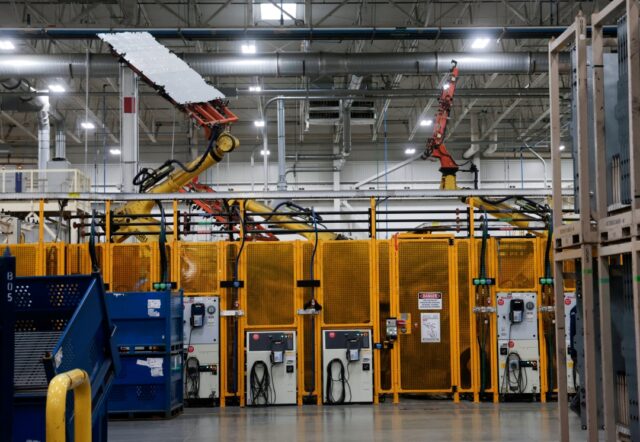
Robotic arms move material through the assembly process at the Magna Electric Vehicle Structures Facility, the manufacturing facility that builds battery enclosures for electric (EV) vehicles, in St. Clair, Michigan, US, March 31, 2025. REUTERS /REBECCA COOK

WASHINGTON – US manufacturing contracted for an eighth straight month in October as new orders remained subdued, and suppliers were taking longer to deliver materials to factories against the backdrop of tariffs on imported goods.

Accounts from manufacturers in the Institute for Supply Management survey on Monday painted a dire picture of the factory sector, which ironically President Donald Trump’s sweeping duties are intended to stimulate. Economists have long argued it was impossible to restore manufacturing to its former glory because of structural issues, including worker shortages.

Some makers of computer and electronic products agreed, and noted last month that “the cost to import in many cases is still more attractive than sourcing within the US” The ISM added to the gloom from other advanced nations’ factory surveys.

“Tariffs have been roiling the sector for much of this year,” said Stephen Stanley, chief US economist at Santander US Capital Markets. “The comments from individual respondents suggest that firms are exhausted by all of the back and forth on tariffs since the beginning of April and are suffering mightily as their customers have pulled back significantly.”

The ISM said its manufacturing PMI fell to 48.7 last month from 49.1 in September. A reading below 50 indicates contraction in manufacturing, which accounts for 10.1% of the economy.

The PMI remained above 42.3, a level that the ISM said over time was consistent with an expansion of the overall economy.

Economists polled by Reuters had forecast the PMI rising to 49.5. Six industries including primary metals, transportation equipment and fabricated metal products reported growth. Among the 12 industries that contracted were textile mills, wood and chemical products as well as electrical equipment, appliances and components, machinery, and computer and electronic products.

Some makers of chemical products said business remained “difficult as customers are cancelling and reducing orders due to uncertainty in the global economic environment and regarding the ever-changing tariff landscape.” Others said “wonder has turned to concern regarding how the tariff threats are affecting our business,” adding that “orders are down across most divisions.”

Machinery manufacturers complained about tariffs, noting “the products we import are not readily manufactured in the US, so attempts to reshore have been unsuccessful.”

Others said the Trump administration’s trade war had hurt agricultural exports, and impacted farmers’ finances and their ability to buy new equipment.

China stopped buying American soybeans amid Washington’s trade war with Beijing. Last week, Treasury Secretary Scott Bessent said China had committed to purchase 12 million metric tons during the current season through January, down from 22.5 million tons in the prior season.

TARIFFS ARE CONSTRAINING PRODUCTION AT FACTORIES
The US Supreme Court on Wednesday will hear arguments on the legality of Trump’s import duties. Trump has defended the tariffs as necessary to protect domestic manufacturing.

The ISM survey’s forward-looking new orders sub-index rose to a still-depressed 49.4 last month from 48.9 in September. This measure has contracted in eight of the last nine months.

“For every positive comment about new orders, there were 1.7 comments expressing concern about near-term demand, driven primarily by tariff costs and uncertainty,” said Susan Spence, chair of the ISM manufacturing business survey committee.

A month-long shutdown of the US government is making it difficult to get a good read of the economy. The shutdown, on track to be the longest on record, has caused a government economic data blackout.

Prior to the shutdown, the economy appeared to be on solid footing for much of the third quarter, spurred by consumer spending and to some extent business investment in artificial intelligence. But the shutdown could undercut consumer spending as food aid for nearly 42 million people lapsed on Saturday.

Consumer spending is mostly being driven by high-income households, who are the biggest beneficiaries of a stock market rally, economists said.

Backlog orders remained subdued last month as did export orders. Production was weak after briefly rebounding in September. Tariffs are gumming up supply chains, resulting in longer delivery times to factories. The ISM survey’s supplier deliveries index increased to 54.2 from 52.6 in September. A reading above 50 indicates slower deliveries.

Manufacturers of transportation equipment said “US trade policy and reciprocal actions by China in the form of export controls on rare earths and semiconductors, as well as ocean freight carrier restrictions, have once again caused a lot of stress in supply lines.”

Factories continued to pay more for inputs, though the pace of price increases moderated. The survey’s prices paid measure eased to a still-high 58.0 from 61.9 in the prior month. That would support some economists’ views that the hit to inflation from tariffs could be a one-time boost to the price level.

Factory employment remained weak, with the ISM noting that manufacturers continued to lay off workers and leave open positions unfilled to manage headcount.

“There have been a lot of deals made with countries committing hundreds of billions of investment in the US, but these plants can take several years to get set up,” said Christopher Rupkey, chief economist at FWDBONDS. “Workers will have to wait a while longer to join the assembly line, because there are no good jobs out there yet.” — Reuters


ADVERTISEMENT
ADVERTISEMENT