Home Blog Page 7518

Mazda CX-8: As luxe would have it
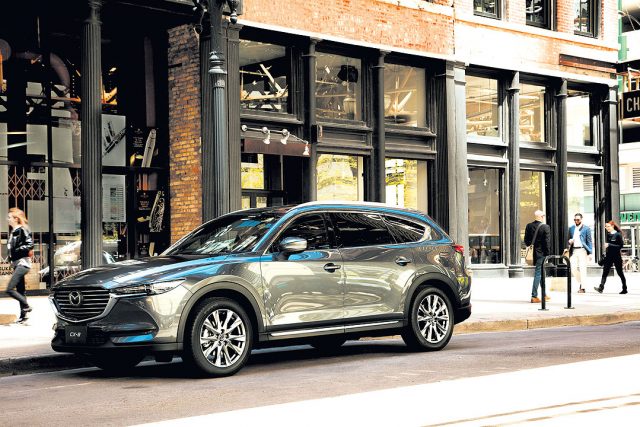
If you need a three-row crossover but don’t want to sacrifice driving pleasure, the CX-8 won’t disappoint. — PHOTO FROM MAZDA PHILIPPINES

Why this Mazda is the ultimate executive crossover

IT SEEMS only yesterday when midsize sedans were the go-to cars of high-flying corporate executives and professionals. Executive rides like the Toyota Camry, Honda Accord, Subaru Legacy, and Mazda6 were veritable status symbols that took pride of place in country club parking lots.

And then the Toyota Fortuner happened.

Of course, the Fortuner didn’t singlehandedly effect the sea change. Other midsize pickup-based seven-seaters like the Mitsubishi Montero Sport and Ford Everest did their own share of the gobbling up of the midsize sedan pie.

The result: Today, the market size for midsize sedans is literally a niche within a niche. The transition to SUVs and crossovers is complete and all-encompassing.

This makes me wonder why so many former owners of those plush-riding executive sedans are tolerating the stiff and hard rides of pickup-based SUVs. Don’t be fooled by sweet-talking sales persons or press releases. Even the so-called “improved comfort-riding” suspensions of the newest SUVs will never hold a candle to the sheer plushness and smoothness of an executive sedan.

So, what do you do if you miss the stress-busting comfy ride of a Camry or Accord but want the high ride height and cabin versatility of an SUV?

For me — a father of three kids in their 20s — I’ve found the perfect one.

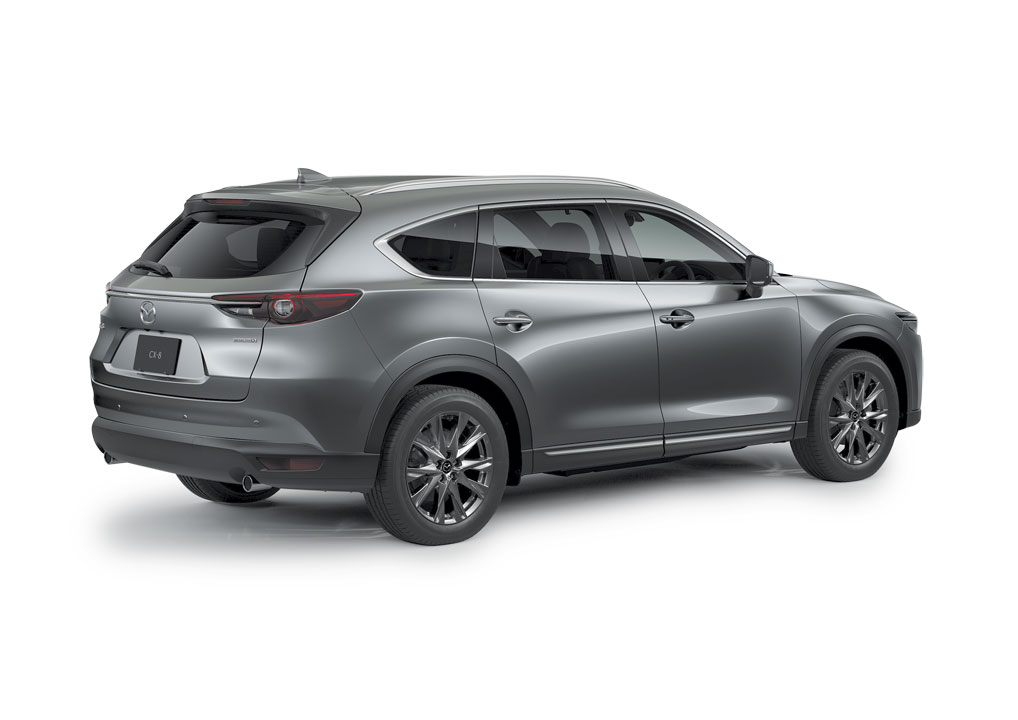
It’s the Mazda CX-8 — the perfect crossover between a midsize executive sedan and a 4×4. Slotting in between the compact CX-5 and midsize seven-seater CX-9, size-wise, the CX-8 is Mazda’s unique three-row SUV. Unique because unlike most three-row crossovers, the CX-8 comes in two seating configurations — as a traditional front-wheel drive seven-seater (the P2.29-million Signature) or a more luxurious all-wheel drive six-seater (the P2.45-million Exclusive).

Both variants are powered by a normally aspirated 2.5-liter high-compression ratio (13:1) Skyactiv-G engine mated to a six-speed automatic. Developing an energetic 190hp at 6,000rpm and 252Nm of torque at 4,000rpm, this cutting-edge powertrain is every bit as smooth and quiet as those found in true luxury cars, while still offering rev-happy yet fuel-efficient performance that’s the hallmark of the brand from Hiroshima.

Sharing the flagship CX-9’s platform (including its 2,930mm wheelbase), the CX-8 is roughly seven inches shorter, five inches narrower, and just under an inch lower — making it that little bit easier to weave through tight places or slower traffic. It generally shares the CX-9’s strut/multi-link suspension but is tweaked for a little more responsiveness. If you need a three-row crossover but don’t want to sacrifice driving pleasure, go for the CX-8. It won’t disappoint.

It doesn’t have the Miata-like tossability of the diminutive CX-3 or the outright visual sexiness of the CX-30, but the CX-8 is the logical progression of those two fun-to-drive subcompact crossovers as they (and presumably their family-oriented owner) graduate to a bigger and more luxurious (but still fun to drive) ride. The only thing I miss on the CX-8 are paddle shifters, which would let Dad play F1 driver flicking through the gears as he carves up apexes going to Tagaytay or Baguio. At least it’s got a manumatic Sport Mode so you can row the gearshift lever through the car’s six speeds — plus Mazda’s superb G-Vectoring Control for that extra confidence boost when you find your rhythm through the switchbacks.

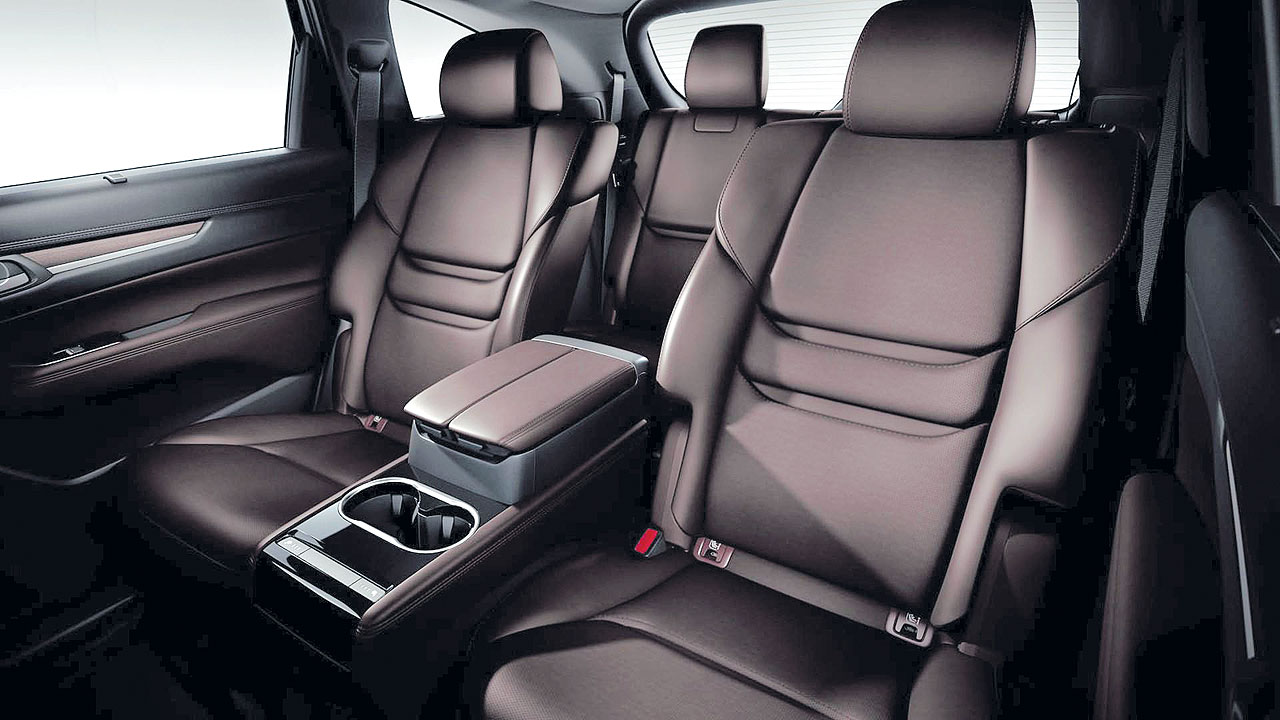
So far, I’ve been talking about the CX-8 as a family man. My day job, however (at least before the pandemic), includes regular attendance of media events all over the metro. The last two years before COVID-19 struck had me riding at the back seat chasing deadlines on my laptop as my driver wove his way through traffic. The CX-8’s individual rear seats would make a chauffer-driven ride absolutely magical. The middle row can be adjusted fore and aft so if you push it way back and move the front passenger seat all the way to the front, you’ll have legroom befitting a business-class passenger on an Emirates A380 flight — easily more than what you’d get in the back of any of the midsize German luxury sedans. The only cars where you could get these individual back seats cost millions more. And you still have a reasonably spacious third-row seat for extra passengers (or for those bring-your-child-to-work days). How’s that for versatility? Oh, and the seats are made of real Nappa leather in beautiful Deep Red, not the all-too-common faux black leather found in a growing number of cars.

More versatility and flexibility can be enjoyed by the middle and last rows of seats that can be folded flat to create a load floor roughly six-feet long. Yes, the CX-8 can load stuff you’d otherwise need a pickup truck for. If that doesn’t make the CX-8 the ideal car for the do-everything dad, I don’t know what will.

The CX-8’s lengthy list of features include adaptive LED headlights, LED foglights and taillights, 19-inch wheels wrapped with smooth-riding 225/55R19 Toyo Proxes tires, power tailgate, and rain-sensing wipers, power adjustment for the front occupants (10-way with memory for the driver, six-way for the passenger), tri-zone automatic climate control, windshield-projected heads-up display, power sunroof, and an eight-inch Mazda Connect infotainment system with a superb 10-speaker Bose sound system.

For safety, both CX-8 variants come with six air bags, ABS with EBD, front and rear parking sensors, a 360-degree camera, Blind Spot Monitoring with Rear Cross Traffic Alert, and Lane Departure Warning with Lane Keep Assist. The AWD Exclusive adds i-Activ Sense, which bundles radar-based Adaptive Cruise Control, Smart Brake Support, and Driver-Attention Alert.

Luxury brand considerations aside, the Mazda CX-8 is the spiritual equivalent of the BMW X5 — a spacious and luxurious family SUV that’s equally rewarding, whether you’re behind the wheel or in the back seat. For this father of three, I can’t ask for anything more.

Rates of Treasury bills, bonds seen mixed on inflation data

BW FILE PHOTO

YIELDS on government securities on offer this week will likely end mixed as the market prices in faster-than-expected inflation in August.

The Bureau of the Treasury (BTr) will offer P15 billion in Treasury bills (T-bills) on Monday, broken down into P5 billion each in 91-, 182- and 364-day debt papers.

On Tuesday, the BTr will auction off P35 billion in reissued 10-year Treasury bonds (T-bonds) with a remaining life of nine years and 10 months.

Two bond traders said T-bill rates will continue to move sideways on ample demand as investors prefer safe assets like government debt due to a prolonged coronavirus pandemic.

“Rates of the bills will only move sideways since there is really a need to park the excess liquidity while the pandemic is ongoing,” the first trader said on Friday.

Meanwhile, the first trader sees the average rate of the 10-year T-bonds inching up to the 4.15%-4.25% range on Tuesday, while a second trader said the yield may be at around 4%.

“The average yield may rise, tracking the rate in the secondary market,” the first trader said.

The first trader said the faster-than-expected August inflation print will continue to drive yields at this week’s auctions.

The Philippine Statistics Authority reported on Tuesday that headline inflation quickened to 4.9% in August from 4% in July, its fastest pace in 32 months or since the 5.2% seen in December 2018. It was also higher than the 4.4% median estimate of analysts in a BusinessWorld poll.

This brought the eight-month average to 4.4%, above the central bank’s target of 2-4% and forecast of 4.1% for the year.

The BTr made a full P15-billion award of the T-bills it offered last week as rates moved sideways. Tenders for the offer reached P56.91 billion.

Broken down, the government raised P5 billion as planned via the 91-day T-bills at an average rate of 1.078%, a tad higher than the 1.077% seen on Aug. 30.

The Treasury also borrowed the programmed P5 billion from the 182-day T-bills as its average rate was unchanged at 1.405%.

Lastly, it made a full P5-billion award of the 364-day securities at an average rate of 1.609%, inching down from the 1.616% fetched for the tenor the week prior.

Meanwhile, the last time the BTr offered the 10-year notes for the auction block on Tuesday was on Aug. 3, where it raised P35 billion as planned via the reissued debt papers from P70.733 billion in bids.

The average yield on the 10-year bonds was at 3.914%. This was lower than its coupon rate 4% quoted when the notes were first offered on July 21.

At the secondary market on Friday, the 91-, 182- and 364-day T-bills were quoted at 1.145%, 1.409% and 1.639%, respectively, while the 10-year tenor fetched 4.135%, according to the PHP Bloomberg Valuation Service Reference Rates published on the Philippine Dealing System website.

The Treasury is looking to raise P250 billion from the local market this month: P75 billion via weekly offers of T-bills and P175 billion from weekly auctions of T-bonds.

The government wants to borrow P3 trillion from domestic and external sources this year to help fund a budget deficit seen to hit 9.3% of gross domestic product. — B.M. Laforga

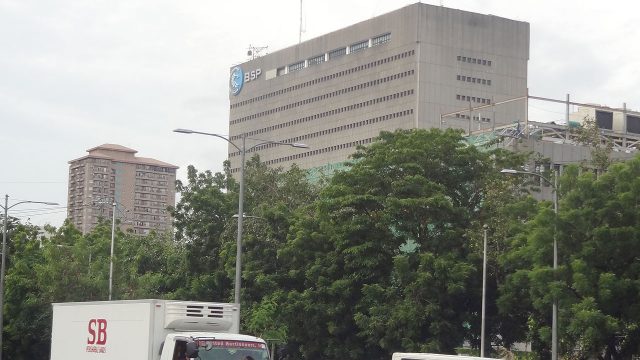
BSP looking to set rules on joint accounts

BW FILE PHOTO

THE BANGKO SENTRAL ng Pilipinas (BSP) is looking to set detailed rules on joint deposit accounts, which include allowing electronic signatures and the national ID as the sole proof of identity for account opening.

Under the draft circular, electronic signatures will be allowed for opening a joint account or proving the identity of depositors in accordance with Republic Act 8792 or the Electronic Commerce Act of 2000. It requires banks to get a minimum of three specimen signatures from concerned account holders.

The draft rules also said banks should allow account holders to submit their national IDs as their sole proof of identity, as provided by Republic Act 11055 or the Philippine Identification System Act and BSP Memorandum No. M-2021-035 issued in June, which said financial institutions could be subject to penalties if they refuse to recognize a national ID as proof of identity for their Know-Your-Customer processes.

“It (national ID) shall be accepted as official and sufficient proof of identity, subject to the appropriate authentication methods, without the need to present other forms of identification,” it said.

The draft rules recognize two types of joint accounts: those using “or,” where depositors are allowed to make transactions independent of the other; and those using “and,” where withdrawals need to be authorized by all depositors.

Regardless of the account type, those owning joint accounts are allowed to deposit money without the consent of their fellow account owners, the proposed circular said.

The proposed rules also said banks may conduct due diligence for joint depositors with all-online transactions.

“For accounts used purely for digital or electronic payments or transactions, banks may define appropriate due diligence procedures provided that money laundering/terrorism financing risks are effectively managed,” the circular said.

If approved by the Monetary Board, the rules will be part of Section 276 of the Manual of Regulations for Banks, which currently does not have specific guidelines for joint accounts.

Stakeholders are given until Sept. 24 to give their feedback on the circular to the relevant BSP offices. — LWTN

Ilijan gas plant to run on diesel during Malampaya field’s temporary closure 

By Angelica Y. Yang, Reporter

THE 1,200-megawatt (MW) Ilijan combined-cycle natural gas plant will run on diesel oil during the Malampaya gas field’s scheduled maintenance shutdown from October 2 to 22, according to sources from the public and private sectors.

“During the Malampaya shutdown and due to gas unavailability, the Ilijan plant will be operating using diesel fuel,” KEPCO Ilijan Corp. (KEILCO) told BusinessWorld through its legal and external affairs department over e-mail last week.

The consortium that operates and maintains the Batangas-based plant said the facility holds three storage tanks containing diesel oil which will be used as a backup fuel source in case of an unavailability of natural gas from the offshore field.

“The available inventory in the three tanks will be used to operate the plant during the shutdown and any additional fuel needed to continue operations depending upon the plant’s load dispatch,” KEILCO said.

While diesel is more expensive than natural gas, it said that it is not in the position to discuss the impacts of diesel oil costs on electric power bills since “electricity prices may only be determined at the time of wholesale power spot market operations and are also contingent on IPPs’ (independent power producers’) power supply agreements with their contracted distribution utilities.”

The facility’s IPP administrator is South Premiere Power Corp., a subsidiary of SMC Global Power Holdings Corp. KEILCO, meanwhile, is in charge of the plant’s operation and maintenance, while state-run Power Sector Assets and Liabilities Management Corp. (PSALM) supplies its fuel requirements.

The government agency separately confirmed that the 1,200-MW natural gas plant will be able to operate during the 20-day shutdown in October.

“During the Malampaya turnaround, there will be no natural gas to be supplied by the SC (Service Contract) 38 Consortium, hence the only alternative fuel for Ilijan power plant is industrial diesel oil,” PSALM told BusinessWorld through its Corporate Communications office in an e-mail last week.

The entity said it cannot give an estimate on the effect of the plant’s diesel usage on Luzon consumers’ power bills since “there are other factors other than fuel prices which affect the price of electricity.”

The Ilijan plant is the largest natural gas facility in the country. It sources its power from the Philippines’ only indigenous gas field.

The Malampaya project accounts for 30% of Luzon’s power generation and serves 20% of national demand.

The Independent Electricity Market Operator of the Philippines previously said that the Luzon and Visayas grids will have an average supply margin of 3,875 MW during the October billing month, based on its latest forecast.

Average supply in October is projected to reach 15,038 MW, while average demand will hit 11,162 MW, the market operator said in a briefing on Aug. 20.

Electric now or never

IMAGE FROM LIVEABLE CITIES CHALLENGE PHILIPPINES

The EV benefits are many, but incentives have to keep pace

TO BE HONEST, there’s now more than just a whiff of inevitability when it comes to the adoption — never mind the arrival, as they’re already here — of electric vehicles (EVs).

The Liveable Cities Challenge (LCC) and Dassault Systèmes, in partnership with the League of Cities of the Philippines and Globe Telecom, and with the support of the French Chamber of Commerce and Industry in the Philippines, staged another webinar that aimed to “equip cities with knowledge and insights for designing better solutions for their communities through the sharing of best practices.”

Already the eighth installment of a series this year, the most recent one last Wednesday was dubbed “Mobility: Building an E-vehicle Ecosystem,” which zeroed in on “the potential and benefits of e-vehicles as an alternative mode of transport in cities.”

Featured speakers in the online event included AC Industrials and Integrated Microelectronics, Inc. CEO Art Tan; Global Electric Transport CEO (and former Taguig City Mayor) Freddie Tinga; Electric Vehicle Association of the Philippines Executive Director Manny Biona; Dassault Systèmes Business Consultant for Transportation and Mobility Industry Alan Pilz; and Department of Trade and Industry-Board of Investments Executive Director of Industry Development Services Ma. Corazon Halili-Dichosa.

Ahead of the webinar, LCC-Philippines Chairman and Philippine Disaster Resilience Foundation Chief Resilience Officer Bill Luz said in a release, “There are obvious benefits such as less dependence on oil products, better air quality in cities, and the ability to be powered by renewable energy. But there are plenty of challenges as well like charging infrastructure, battery exchanges, local policies, and cost.”

In his presentation, Art Tan maintained that the “era of the EV has begun,” adding that projections suggest total EV units on the road will grow globally from four million units in 2021 to 35 million by 2030. This represents a compound annual growth rate (CAGR) of 27%. He also cited a study of the EY Mobility Lens Consumer Index which revealed that “41% of those who say they intend to purchase a new car are considering an EV — 66% of them in the next 12 months.”

Interestingly, half of the EVs sold last year went to China. Replying to a question from “Velocity,” Mr. Tan said, “China early on wanted to be a major player in the mobility industry. They deemed that catching up to the western world in ICE-based vehicles was not realistic and also legacy only. They then focused on EVs and carbon neutrality. Now, China is the largest EV market and also one of the drivers of EV-based manufacturing — leapfrogging the west and all the established OEMs.”

Mr. Tan also revealed that he was part of the initial discussions leading to the crafting of the government’s Comprehensive Automotive Resurgence Strategy (CARS) — signed by the late President Benigno S. Aquino III in 2015 — which was initiated in hopes of attracting new investments, and promoting the country as a regional automotive manufacturing hub. He said he had broached the idea of making the country a battery supplier for the then burgeoning electric vehicle industry, but the idea was nixed because it meant bringing in materials the government wasn’t “comfortable” to bring in. We could surmise that these were hazardous materials essential to battery production.

Having said that, the executive hopes to one day realize the country’s greater involvement in EV manufacturing — particularly in the area of electronic components production which he believes we have the capability and skill in. “We can also leapfrog Thailand in the region by adopting quickly to the EV infrastructure, including vehicle manufacturing. The supply chain is very different and we can do this,” Mr. Tan added.

For his part, Freddie Tinga noted that the switch to EVs will also lead to the improved health of the population. Internal combustion engine (ICE)-powered vehicles are said to account for 50% to 70% of the pollution in cities — translating to seven million deaths a year. In the Philippines, there are some 200,000 jeepneys nationwide, with 80,000 in Metro Manila alone — accounting for 40% of public transport and 30% of total pollution.

Of course, it must be said that the pandemic has effectively throttled many of these polluting PUV tailpipes, but there needs to be a sustainable, realistic solution. Part of the answer is being addressed by the government’s Public Utility Vehicle Modernization Program but, by and large, there remains a hefty price of admission for EVs.

Dr. Manuel Biona of the Electric Vehicle Association of the Philippines opined that while acquisition costs may still be a little uncomfortable, the operational, maintenance, and related expenses over years of service will swing things in favor of electric vehicles — while helping save the environment.

Three issues will be addressed by increased EV adoption in the Philippines, according to Alan Pilz. It is expected to reverse our reliance on imported fuel, reduce vehicle emissions (90% of which come from Metro Manila), and put us on track for the 1.5°C climate change target.

Ma. Corazon Halili-Dichosa, however, reminded that the market cannot be forced to adopt EVs. “We’re still a developing country. We have to work on the cost and need to have someone to champion it and trailblaze for us.” For her part she said that the government is “trying to work on policy” to give the sector a leg up, and expressed support for legislative efforts to extend relief to the EV sector.

Underscored Mr. Pilz, “You have to incentivize the public to make the shift.”

All told, it appears we will be best served by adopting a mindset that has long been purveyed by champions of EVs: It’s not a matter of if but when. If we embrace this inevitability, surely we’ll do all we can to get from here to there.

PHL rice inventory falls 11.6% to 1.58 million MT 

PHILSTAR FILE PHOTO

THE RICE inventory as of Aug. 1 fell 11.6% year on year to 1.58 million metric tons (MT), the Philippine Statistics Authority (PSA) said. 

According to its rice and corn stocks report, the PSA said the rice inventory as of Aug. 1 is also down 27.5% from the previous month.

Rice held by households fell 11.9% year on year to 751,070 MT while commercial warehouse holdings fell 11.2% year on year to 648,400 MT.

National Food Authority (NFA) stocks fell 12.3% year on year to 178,840 MT.

Month on month, the PSA said rice held by households, commercial warehouses, and the NFA fell 23.8%, 34.3%, and 13.1%, respectively.  

The PSA said the corn inventory as of Aug. 1 declined 3.4% year on year to 707,650 MT. The month-on-month decline was 23.4%.  

Corn held by households rose 12% year on year to 108,130 MT while inventory in commercial warehouses fell 5.7% to 599,530 MT.  

Month on month, the PSA said corn held by households rose 9.8% while stocks in commercial warehouses fell 27.4%. — Revin Mikhael D. Ochave

September’s the month to check out a new vehicle

THE RX is said to be the very first luxury crossover SUV to proudly wear the Lexus badge. When it debuted in 1998, it “laid the foundation for what would be a highly successful nameplate.” In the Philippine market, the RX remains the brand’s most popular model.

LEXUS

“The RX fits right into an active lifestyle with a sophisticated blend of the comfort of a luxury car and the driving pleasure and added convenience of a high-riding SUV. It asserts its presence on a variety of roads and diverse driving conditions,” declared Lexus Philippines in a release. This month, Lexus offers zero interest deals on RX models, payable over 36 months.

The RX 350 (P4.438 million) blends the comfort of a luxury car with the driving pleasure and added convenience of a high-riding SUV. Powered by a 3.5-liter V6 direct-injection engine mated to an eight-speed automatic transmission, it gets Adaptive Variable Suspension which continually adjusts shock absorber damping rates in real time.

The RX 350 F Sport (P4.998 million) shares the spirit of the LFA supercar. This model gets F Sport dials with full-length illuminated needles. The cabin is decked out in dimpled leather with an exclusive perforated finish on the steering wheel and shift knob. It also receives aluminum pedals exclusive to F Sport models.

The RX 450h (P5.238 million) features Lexus Hybrid Drive which draws power from both electric and petrol motors, resulting in instant torque and rapid acceleration. An EV drive mode at slow speeds promises a silent and emission-free drive. A self-charging full hybrid system features a 3.5-liter direct injection V6 gas engine, and boasts a total system output of 308hp. Key components and control systems in the Lexus Hybrid Drive System were improved and re-engineered to deliver class-leading fuel economy, minimal emissions, and excellent on-road performance.

The RX 350L (P4.918 million) is the seven-seater version of the RX. The third row has an automatic slide function and can be easily adjusted to achieve the optimal legroom. Third-row passengers also have the luxury of their own climate controls.

For more information, visit the Lexus website at lexus.com.ph or the @lexusmanila social media pages on Facebook and Instagram. To arrange a consultation with a personal sales consultant, visit the Lexus Remote page.

SUZUKI

SUZUKI PHILIPPINES, Inc. (SPH) announces the holding of its “Four the Win” promotion this month. Running until Sept. 30, the campaign involves four of the brand’s popular models: the Swift, Celerio, Ciaz, and Vitara AllGrip — each offered via low down payment options and with generous discounts.

“Now more than ever is the time for us in Suzuki Philippines to show that our customers play an integral part in all our achievements as a company,” said SPH Vice-President and General Manager for Automobile Keiichi Suzuki. “Owning a car is a winning moment in a person’s life, that’s why we remain committed in assuring that our products are made accessible to meet every lifestyle for the modern-day Filipino. We are truly excited and optimistic that with the promos we offer, we may be able to help uplift the quality of life on the roads for our countrymen.”

Offering generous interior space and heightened comfort, the Suzuki Celerio features a high seating position and expanded visibility. The hatchback is highlighted by best-in-class luggage capacity. SPH is accepting a down payment as low as P29,000 for the Celerio CVT, and also offers a discount of up to P60,000.

The iconic Suzuki Swift, on the other hand, bears a sporty look to go with its spirited performance. It has a racecar-like D-shaped steering wheel, front seats that firmly hold, and a center console angled toward the driver. Customers may bring this home with a down payment as low as P29,000, and enjoy cash discounts of up to P80,000.

The Ciaz sedan, updated recently, gets LED headlamps and a stylish front grille. Powered by a 1.4-liter petrol Engine, the sedan can be had for as low as P49,000 down payment and with a P70,000 cash discount. Finally, the Suzuki Vitara AllGrip SUV, which banners a “superior interior and refined, advanced features,” is offered for a low down payment of P90,000. A cash discount of up to P70,000 is also extended to buyers.

For more information, visit any of the 71 authorized Suzuki Auto dealerships nationwide or visit http://suzuki.com.ph/auto/. For daily updates on Suzuki, like the Suzuki Auto Philippines Facebook page at https://www.facebook.com/SuzukiAutoPh, and follow the company on Twitter at https://twitter.com/SuzukiAutoPh and Instagram at @suzukiautoph.

MITSUBISHI

MITSUBISHI MOTORS Philippines Corp. (MMPC) said it is giving customers an advance Christmas gift with its September Blowout Promo. Until Sept. 30, the company is serving up low down payment deals on the Mitsubishi Mirage, Xpander, Strada, Montero Sport, and L300.

The Mitsubishi Mirage subcompact, powered by a frugal yet adequate 1.2-liter engine, can comfortably seat five adults and has a flexible folding second row that allows the carrying of uneven-sized cargo. The Mirage is available with a low all-in P28,000 down payment.

Offering “practicality without sacrificing flair,” the Mitsubishi Xpander Cross is among the most stylish and sporty MPVs available in the market. The Xpander nameplate has won numerous local and international awards as its overall package ticks all the needs and wants of its customer. With a spacious interior that can accommodate up to seven passengers, it also boasts a flexible seating configuration to accommodate various payload. A 255mm ground clearance enables the vehicle to negotiate uneven terrain. The vehicle is available for P78,000 all-in down payment.

For those who love outdoor adventures, the Mitsubishi Strada is a tough and versatile truck. Equipped with a 2.4-liter in-line DOHC with VGT and MIVEC engine, the Strada delivers 181hp and 430nm of torque, perfect for heavy hauling or towing. The Strada is available for P88,000 all-in down payment.

The high-tech safety and convenience features and impressive driving performance of the Montero Sport SUV, on the other hand, is available for P168,000 all-in down payment; and the Filipino-made L300, the leading utility van in the market known for its “dependable power, durability and easy maintenance,” is offered at P88,000 low down payment.

For more information about the Mitsubishi September Blowout promo, visit www.mitsubishi-motors.com.ph or contact a preferred dealer.

TOYOTA

TOYOTA MOTOR Philippines (TMP) is rolling out deals this September on new vehicle purchases with free maintenance services and other perks.

For starters, the Toyota Wigo is available at P5,970 per month for the 1.0 E MT variant, with 50% down payment and with 60 months to pay. The Toyota Innova goes P12,372 for the 2.8 J Diesel MT variant, or with the all-in package rate of P192,750 for the 2.8 E Diesel MT — with a 15% down payment and free Insurance on the first year, free three-year LTO registration, and more. TMP said in a release that it is offering up to P45,000 worth of savings for select models when choosing an outright cash transaction.

The Toyota Fortuner can be had with a light monthly payment of P16,992 for the 4×2 G AT variant. Buyers can get up P65,000 in savings when choosing an outright cash purchase. Meanwhile, the Hiace Commuter Deluxe is available for P17,155 monthly — with 50% down payment and 60 months to pay. Toyota Vios G, E, and XLE variants are eligible for a warranty coverage of five years or 150,000 kilometers, whichever comes first.

TMP said that participating brand-new models are entitled to free PMS up to 20,000 kilometers. Select Vios, Corolla Altis, Rush, Innova, Fortuner, Hilux, and Hiace variants are eligible for basic periodic maintenance parts and job items that use Toyota Genuine Motor Oil. Toyota service experts recommend booking and availing services on a calendar schedule for simpler tracking and monitoring rather than basing it on mileage.

This September, all Toyota customers are entitled to a free safety inspection at Toyota dealerships nationwide. Featured brakes and clutch parts are also entitled to a 15% discount, with another 15% off on labor. Customers can also get a 10% discount on a Toyota Genuine Battery during the promotion period.

For more information, visit https://www.toyota.com.ph/promos/everymoment or contact any Toyota dealership. Follow TMP’s official pages — Toyota Motor Philippines on Facebook and Instagram, toyota.com.ph, Twitter (ToyotaMotorPH), and Viber (Toyota PH) — for regular updates on products and services, dealer operations, announcements, and events. Toyota models may also be viewed and inquired about through toyota.com.ph/showroom. TMP also recommends to download the myTOYOTA PH app for Android and iOS for all Toyota needs, from car selection, to car care, maintenance and upgrades.

SMC installs first batch of train sets for MRT-7

SAN Miguel Corp. (SMC) announced on Sunday that the first train set of the Metro Rail Transit-7 (MRT-7) project in Quezon City had been installed.

The second train set was also scheduled to arrive and be installed on Sunday.

“The two train sets, consisting of three cars each,… were dispatched to the MRT-7 tracks between University Avenue and Tandang Sora, after clearing customs at the Port of Manila,” SMC said in an e-mailed statement.

The train sets were ordered from South Korea’s Hyundai Rotem.

“The train sets arrived recently at the Manila Port and are the first of six train sets the company expects to arrive by end of the year,” it noted.

MRT-7 is a 22-kilometer mass transit system that connects to MRT-3 and Light Rail Transit Line 1 and runs from North Avenue in Quezon City to San Jose del Monte, Bulacan. 

“We are working round-the-clock to meet the first test run by next year,” SMC President Ramon S. Ang said.

SMC said the project is now 55.3% complete, a slight improvement from the 54.87% completion rate in April.

“Workers have already completed the installation of bored piles, girders, and other foundational works,” the company said.

Mr. Ang said on Sept. 1 that the delay is caused by a number of factors, including the pandemic restrictions and the right-of-way issues.

The P63-billion project is expected to accommodate up to 850,000 passengers daily and cut travel time between Quezon City and Bulacan from four hours to 35 minutes. — Arjay L. Balinbin

SC dismisses cases against BankWise officers 

THE SUPREME COURT (SC) has granted the petition of two officers of BankWise, Inc. to dismiss cases filed against them by the Bangko Sentral ng Pilipinas (BSP) at the Department of Justice (DoJ) due to an “inordinate delay” in the proceedings.  

In the high court’s decision dated July 12 and publicized on Aug. 25, it said the “inordinate delay had indeed attended the DoJ investigation and that petitioners’ right to speedy disposition of their cases had been violated by reason thereof.”  

The SC’s decision reversed the ruling of the Makati City Regional Trial Court (RTC), which denied the motion of the two officers to dismiss the case against them for the same reason cited by the high court. 

The two petitioners filed a motion to dismiss the case, saying the ruling violated their right to a speedy disposition of cases under Section 16, Article 3 of the 1987 Philippine Constitution.  

The Makati RTC had said the delay of 10 years and five months was “neither vexatious, capricious, nor oppressive.”  

The SC however said the Rules on Criminal Procedure and the Manual for Prosecutors state that investigating officers and the prosecuting agency are given “a maximum of 60 days from (the) date of assignment to conclude preliminary investigations.”  

The BSP filed a complaint against the two petitioners and five other officers of BankWise in September 2007 before the DoJ for issuing unfunded manager’s checks and failing to provide supporting documents of the bank’s disbursements in acquiring assets, a violation of Monetary Board Resolution 1460.  

In February 2019, more than 10 years after the case was filed, the DoJ held the officers liable for the offenses charged against them and filed 16 informations against the two petitioners at the Makati City RTC. — B.A.D. Añago 

New York Fashion Week: Michael Kors, Cowan, Carolina Herrera celebrate the return of the live runway

NEW YORK — Designer Michael Kors took over New York City’s landmark Tavern on the Green in Central Park on Friday, his first live runway show since the pandemic began.

Although coronavirus disease 2019 (COVID-19) protocols restricted his guest list, Mr. Kors said it gave those in attendance an intimate experience. “To be able to put on a live show to me is thrilling. I love people to be able to experience live fashion,” said Mr. Kors.

The brand required all guests to be double vaccinated, while staff, crews and press were given on-site testing before being admitted into the venue. “Lots and lots of checking boxes and being so unbelievably strict with the protocols,” he said.

This season Mr. Kors decided to look at romance through a streamlined and urban lens. The New York native said his inspiration was not just romantic love, but love of friends, family, city, seeing people and more.

He said he created a collection that will help celebrate those moments that we’ve all been craving.

Models including Gigi Hadid and Kendall Jenner paraded through an outdoor garden, while Broadway star Ariana DeBose performed live.

Mr. Kors said the collection was filled with charm.

“Lots of black and white in the collection,” the designer explained. “A lot of gingham, which just puts a smile on my face, I’m not a picnic kind of guy, but I can have the fantasy. A lot of white embroidery, a lot of white laces and eyelet and things like that.”

CHRISTIAN COWAN
Sparkly and shiny fabrics were on full display as designer Christian Cowan presented his Spring/Summer 2022 collection, inspired by the return to New York nightlife after more than a year of stay-at-home restrictions.

Models for Cowan’s collection struck bold, dramatic poses on the runway and interacted with guests at Friday night’s show during New York Fashion Week.

“I think what the pandemic did is it kind of dismantled the structure we normally operate within of the cycles of fashion weeks and all this stuff, and it just allowed us to see that we can do stuff that’s more direct to our customer,” said British-born Mr. Cowan.

“And while we give kind of walk-throughs of the collection to editors, I wanted to give that to everyone at home, and so this was kind of our way of doing that.”

Mr. Cowan says he partnered with Yahoo to incorporate QR code technology into this year’s show.

“I thought it would be a fun nod to the fact that we’ve been spending the past year-and-a-half doing digital things,” said Mr. Cowan.

“So, I incorporated QR codes in some prints and so on and it just kind of brings it to life. I don’t want to ruin it, but basically you can scan garments and things happen.”

LAQUAN SMITH, CAROLINA HERRERA
Fashion floated high above New York City on Thursday night as designer LaQuan Smith presented his collection on the observation deck of the Empire State Building as part of the New York Fashion Week show.

With a lit up Big Apple around them, models presented sparkly bodysuits, mini dresses as well as frocks and trousers with cutouts. Printed strapless tops were matched with mini skirts and there were lace dresses for the evening.

“… (It) is just really a preview of the transition from comfort zone to glam zone,” Mr. Smith told Reuters. “I’ve taken into the consideration that we are getting back out there again. And so, there’s sort of a spectrum.”

Mr. Smith said he used plenty of suede, printed leathers, terry cloth and Chantilly lace for the line, opting for a color palette of white, camel, black, burgundy and blue.

After two seasons of digital events due to the COVID-19 pandemic, New York Fashion Week has seen a return to in-person shows. Mr. Smith’s was the first to be staged inside the Empire State Building, which marks its 90th anniversary this year.

At Carolina Herrera, creative director Wes Gordon presented voluminous gowns and satin dresses, sparkly checked outfits and jackets and tops with elaborate sleeves.

He paired bralettes with trousers while dresses bore floral and letter prints, sparkling embroidery or came strapless or layered. Colors were mainly black and white, pink, peach and red.

The fashion house, which celebrates its 40th anniversary this year, held its show in a gallery in Manhattan’s Upper East Side, where Ms. Herrera first launched her brand.

“This season obviously because of COVID, we did a much more intimate presentation,” Mr. Gordon said.

“That allowed us to choose a venue that was different from the normal ones we’ve used in the past. We’re in a historic townhouse that’s now an art gallery. And for me, it was really an opportunity to acknowledge where we’ve been, where we are and where we’re going.”

BADGLEY MISCHKA, TADASHI SHOJI, CHRISTIAN SIRIANO
Fashion designers Badgley Mischka and Tadashi Shoji presented vibrant colorful outfits on the first day of New York Fashion Week on Wednesday, offering plenty of eye-catching hues and florals for women’s spring wardrobes.

While the event is seeing a return to physical shows this season, both brands opted for pre-recorded digital video releases to present their spring-summer 2022 womenswear lines.

Designers Mark Badgley and James Mischka chose lime, orange, lemon and blue as well as softer neutrals for their collection, inspired by Bette Davis in Now, Voyager as well as Italy.

Against a recording of lapping waves in the background, models wore designs in an array of prints — floral, butterfly and salamander.

There were sparkly trouser suits and sleek evening gowns, some belted at the waist, others adorned with sparkly embellishments including butterflies on the shoulders of one dress. Frocks were pleated, tasseled, sequined, off-the-shoulder or strapless.

“It’s about color and print … James and I sketched these really pretty butterfly prints and we have a crocodile print. We have a salamander print. We have a turtle print,” Mr. Badgley told Reuters.

“Her coming of that cocoon, out of being so sheltered and so sequestered for her entire life and all of a sudden blossoming on this cruise,” Mr. Mischka added of the line’s main theme.

Mr. Shoji looked back to the Roaring Twenties for his collection, presenting modern takes on the decade’s styles with an array of colorful dresses adorned with intricate shoulder cut-outs, lace trimmings and sequined fringes.

Frocks were floaty, cinched at the waist or embroidered and came in dusty or bold pink, greens and blues. Mr. Shoji also presented a wedding dress made up of a lace top and tulle skirt.

“(The) desire for the joyful life, normal life … Let’s do roaring ’20s — this is the theme,” Mr. Shoji told Reuters.

Designer Christian Siriano kicked things off early with a catwalk show on Tuesday night in front of an audience including actress Katie Holmes and rapper Lil’ Kim. Mr. Siriano presented 59 looks including colorful asymmetric suits, oversized coats, voluminous gowns and dresses with cutouts.

“A lot of looks, because we haven’t done this in a while,” Mr. Siriano told Reuters. “I felt like if people are going to come out for a show, they need to see a show.”

New York Fashion Week runs until Sept. 12. — Reuters

Peso may climb versus dollar on remittance data

PHILIPPINE STAR/KRIZ JOHN ROSALES

THE PESO may appreciate versus the dollar this week on expectations of strong remittance data and amid cautious sentiment due to the surge in coronavirus infections.

The local unit closed at P49.865 per dollar on Friday, appreciating by 5.5 centavos from its P49.92 finish on Thursday, based on data from the Bankers Association of the Philippines. However, it shed 2.5 centavos from its P49.84-per-dollar close on Sept. 3.

The peso strengthened from its Thursday finish following the release of data showing higher foreign direct investments (FDIs) in June, Rizal Commercial Banking Corp. Chief Economist Michael L. Ricafort said.

Data released by the central bank on Friday showed FDI net inflows climbed 60.4% to $833 million in June from $519 million a year ago. This brought FDI inflows in the first semester to $4.298 billion, higher by 40.7% from the $3.055 billion logged in the same period of 2020.

Inflation data also affected peso-dollar trading last week, UnionBank of the Philippines, Inc. Chief Economist Ruben Carlo O. Asuncion said.

The consumer price index rose 4.9% in August from the 4% in July, the Philippine Statistics Authority reported on Tuesday.

Last month’s inflation print was quicker than the 4.4% median in a BusinessWorld poll and was the fastest in more than two years or since the 5.1% print in December 2018. It also breached the central bank’s 2-4% target.

For this week, Mr. Ricafort said remittance data scheduled to be released by the Bangko Sentral ng Pilipinas (BSP) on Wednesday could affect peso-dollar trading this week.

Cash remittances increased 7% year on year to $2.638 billion in June from $2.465 billion, latest BSP data showed. This was the biggest inflow since the $2.89 billion in December.

For the first semester, remittance inflows rose 6.4% to $14.918 billion from $14.019 billion in the same period of 2020. The BSP expects remittances to grow by 4% this year.

Meanwhile, Mr. Asuncion said negative sentiment due to the surge in coronavirus infections could also affect the peso.

Data from the Department of Health showed infections rose by a new record high of 26,303 on Saturday, bringing the total active cases to 185,706.

For this week, Mr. Ricafort gave a forecast range of P49.65 to P50.10 per dollar, while Mr. Asuncion expects the local unit to move within P49.70 to P50.20. — L.W.T. Noble

Michelin will transform yogurt cups and PET bottles into tires

The Michelin Man gathers recyclables in Germany.

AT THE 2021 IAA Mobility Event in Munich, Germany, global tire maker Michelin highlighted its plans to make sustainable tires. Six Michelin teams of German Michelin employees roamed through downtown Munich during the event, encouraging people to recycle plastic waste.

They were joined by the familiar Michelin Man to raise awareness “that today’s discarded container will become a valuable resource for tomorrow’s tires.”

Michelin is looking to roll out tires made from recycled yogurt cups and PET bottles as early as 2024, “with the potential for around four billion PET bottles to be recycled every year as raw material for tires,” the Clermont-Ferrand, France-headquartered brand said in a release. The aforementioned teams at the IAA hoped to collect enough plastic for the first 100 tires.

Shared Michelin Europe North CEO Anish K. Taneja, “In one tire, we can process up to 143 yogurt cups and around 12.5 PET bottles with the high-tech recycling processes. We want to address society’s plastic problem and offer solutions.”

At the Michelin booth in Munich’s Königsplatz, visitors found out about the rest of the recycling journey through the Michelin REGEN’Lab, which explained the recycling processes and demonstrated how raw materials for new tires are obtained from wood, PET plastic or packaging waste.

Michelin is aiming to manufacture its premium tires using 40% sustainable materials by 2030 – up to 100% by 2050. These materials may be natural rubber or sunflower oil.

In Munich, the brand also exhibited its vision of the future for recycled tires through its Michelin Vision Concept. This is made of 100% recyclable sustainable material, 3D-printed and puncture-resistant. An electric vehicle running on prototype Michelin Uptis tires (set for production in 2024) also made an appearance at the IAA.

ADVERTISEMENT
ADVERTISEMENT