Home Blog Page 7515

PLDT expects domestic network capacity to more than triple by yearend

BW FILE PHOTO

PLDT, Inc. on Wednesday said it expects its domestic network capacity to more than triple to 92 Terabits per second (Tbps) by the end of 2021 from the previous year’s 30 Tbps, which means better internet experience for its subscribers.

“PLDT is expanding its domestic network capacity to 92 Terabits per second (Tbps) by the end of the year, ensuring the seamless delivery of more data-driven services in the country ahead of demand,” PLDT said in an e-mailed statement.

“PLDT will almost double its existing total capacity of 55 Tbps to 92 Tbps by yearend, or more than triple its capacity from 30 Tbps last year,” it added.

The company saw a 17% increase in mobile traffic to 1,579 Petabytes in the first six months of the year, compared to the same period a year ago.

“Monthly data usage in the second quarter averaged 267 Petabytes, an 11% increase from last year’s monthly average consumed data on mobile,” PLDT noted.

As for the PLDT Home segment, the company said it expects to connect one million new users this year.

“PLDT Home led the market in the second quarter with net adds for fiber subscriptions at 267,000, ahead by 54% versus the nearest competitor,” it said.

The company said it expanded its fiber footprint to more than 524,000 kilometers as of June and grown the number of homes passed to over 11 million.

PLDT’s second-half attributable net income grew 4.8% to P12.9 billion from P12.3 billion previously. Its service revenues increased 9.7% to P91.6 billion from P83.5 billion a year ago.

“Sustained demand for data and broadband reinforced total service revenues across the company’s three customer segments,” the company said in a disclosure to the stock exchange.

Hastings Holdings, Inc., a unit of PLDT Beneficial Trust Fund subsidiary MediaQuest Holdings, Inc., has a majority stake in BusinessWorld through the Philippine Star Group, which it controls. — Arjay L. Balinbin

Ex-host Mike Richards out as executive producer of Jeopardy!

LOS ANGELES —  Mike Richards, who earlier this month stepped down as the new host of Jeopardy! after a backlash over past offensive comments, will no longer serve as executive producer of the long-running quiz show, Sony Pictures Television said on Tuesday. Mr. Richards also has given up producing duties at game show Wheel of Fortune, Sony Executive Vice-President Suzanne Prete said in a memo released by the company.

“We had hoped that when Mike stepped down from the host position at Jeopardy! it would have minimized the disruption and internal difficulties we have all experienced these last few weeks,” Ms. Prete said. “That clearly has not happened.” Mr. Richards had been appointed to replace legendary host Alex Trebek, who died in 2020 after more than three decades on the show. He stepped down from that role after online publication The Ringer reported on disparaging and sexist comments he made on a podcast. Mr. Richards apologized at the time for the negative attention brought to Jeopardy!.

Michael Davies, executive producer of game show Who Wants to Be a Millionaire?, has stepped in as interim producer of Jeopardy!, Ms. Prete said in her memo.

The Big Bang Theory star Mayim Bialik is serving as guest host of daily Jeopardy! while Sony searches for a permanent replacement. She also was tapped to host Jeopardy! special events including its college tournament. — Reuters

Yields on term deposits mixed on lockdowns, Powell remarks

BW FILE PHOTO

YIELDS ON THE central bank’s term deposits were mixed on Wednesday as the government proposed to put parts of the country under granular lockdowns and following dovish comments from the US Federal Reserve chief last week.

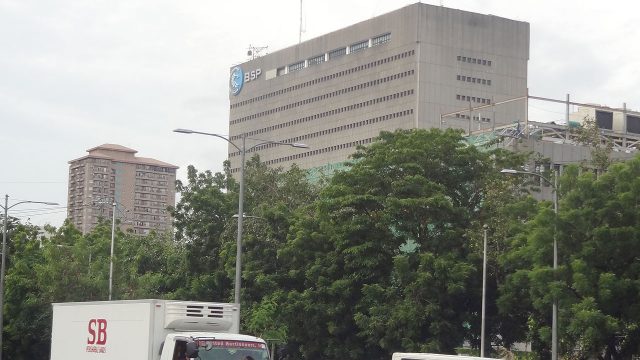
Total bids for the term deposit facility (TDF) of the Bangko Sentral ng Pilipinas (BSP) amounted to P618.294 billion on Wednesday, above the P570 billion on offer as well as the P593.589 billion in tenders recorded at last week’s auction.

Broken down, demand for the seven-day term deposits reached P232.835 billion, higher than the P150 billion auctioned off by the BSP and also beating the P169.137 billion in tenders last week.

Accepted rates for the tenor ranged from 1.675% to 1.7393%, slimmer than the 1.675% to 2.012% band in the previous week’s auction. This caused the average rate of the paper to slip by 0.86 basis point (bp) to 1.7121% from 1.7207% previously.

Meanwhile, the 14-day deposits fetched bids amounting to P385.459 billion, below the P420 billion on the auction block as well as the P424.452 billion in tenders logged in the previous week’s offering.

Lenders asked for yields ranging from 1.7% to 2.21%, picking up from the 1.6995% to 1.75% margin seen last week. With this, the average rate of the two-week deposits inched up by 2.14 bps to 1.7381% from 1.7167% in the previous auction.

The BSP did not offer 28-day term deposits for the 45th consecutive auction to give way to its weekly offerings of bills with the same tenor.

The term deposits and the 28-day bills are used by the BSP to gather excess liquidity in the financial system and to better guide market rates.

Yields on the term deposits were mixed on Wednesday as the government said it could impose granular lockdowns instead of city- and province-wide quarantine measures amid the continued surge in coronavirus disease 2019 (COVID-19) infections, Rizal Commercial Banking Corp. Chief Economist Michael L. Ricafort said.

Interior Undersecretary Jonathan E. Malaya told a televised briefing on Wednesday that the shift to two-week granular lockdowns in high-risk areas is up “for final approval” of the government’s interagency task force for the pandemic. These lockdowns will be limited to a building, street or barangay that record rising cases, officials earlier said.

Local government officials of Antipolo and Muntinlupa have already imposed granular lockdowns in their areas to curb the spread of the virus. Meanwhile, Metro Manila is under modified enhanced community quarantine until Sept. 7.

The highly infectious Delta variant is now the dominant variant of COVID-19 in the country, the World Health Organization said on Tuesday.

COVID-19 infections rose by 13,827 on Tuesday to bring active cases to 145,562.

Meanwhile, Mr. Ricafort added that dovish signals from the Fed during its Jackson Hole symposium last week also continued to affect market sentiment.

Fed Chairman Jerome Powell on Friday signaled that they are not in a hurry to hike interest rates. He also did not hint on a specific timing for their plan to taper asset purchases, although he said they could start by this year. — L.W.T. Noble

New Apple Watch with larger screen suffers production snags

WWW.APPLE.COM

APPLE, Inc.’s upcoming smartwatch is suffering production snags as manufacturers adjust to a new design, likely leading to supply constraints or shipment delays, according to a person familiar with the situation.

The device is expected to have a larger screen, alongside a faster processor, Bloomberg has reported. The upgrade has brought manufacturing challenges, according to the person, who asked not to be identified because the situation isn’t public.

The company is expected to unveil the new line — known as the Apple Watch Series 7 — in the coming weeks. It’s part of a flurry of new products from the technology giant, including updated iPhones, iPads, AirPods and Macs.

It wouldn’t be the first time an Apple Watch has hit snags coming out of the factory. The first version was delayed in 2015 due to production problems. But since Apple hasn’t yet announced the release date for the Apple Watch Series 7, it has options. The company could just give a later date or ship a smaller number of units.

Nikkei reported earlier that production of the device has been delayed due to the complexity of the new watch. Manufacturers of the product began small-scale production last week but didn’t get satisfactory output, Nikkei said.

An Apple spokeswoman declined to comment.

The new watches also have screen technology that brings that display closer to the cover glass using a different lamination technique, Bloomberg previously reported. That display layer may be causing some of the production woes, the person said.

Shares of Apple were little changed on Tuesday, trading at $152.23 as of 1:40 p.m. in New York. They have gained 15% this year.

Apple is counting on the new line to broaden the appeal of smartwatches and continue fueling a product category that’s been one of its fastest growing. The Cupertino, California-based company got more than 11% of its revenue from wearables, home products and accessories in the last fiscal year, up from about 4% in 2015.

This year’s watches will come in 41-millimeter and 45-millimeter sizes, up from 40 and 44 millimeters, Bloomberg has reported. The company is expected to offer multiple new watch faces that take advantage of the bigger screen, including an updated Infograph Modular face. This will be the second time that the company has increased the display size, following the Apple Watch Series 4 three years ago.

Coronavirus disease 2019 (COVID-19) disruptions have contributed to production challenges, according to Nikkei, which cited unidentified people with knowledge of the situation. — Bloomberg

ECPay targets 70,000 general trade retailers

GLOBE Telecom, Inc. said on Wednesday its multi-payment platform Electronic Commerce Payments Inc. (ECPay) is aiming to onboard more general trade retailers this year, increasing the number to 70,000.

“ECPay is targeting to onboard 70,000 general trade retailers by the end of the year from the current 22,000,” Globe said in an e-mailed statement.

Globe acquired 77% equity interest in the multi-payment platform for about P1.54 billion in October 2019.

When the pandemic started last year, ECPay saw a significant increase in digital merchant partners, biller portfolio, and customer reach, according to Globe.

“ECPay [had] recorded an 18% increase in digital merchant partners in April to July (2020), resulting in a 114% hike in the number of customers reached via mobile apps for eMoney, banking, lending as well as payment vending machines,” Globe said on its website.

Aiming to go beyond telco, Globe expanded its services to include fintech, healthtech, adtech, and e-commerce, among others.

“Although telco remains to be our core business, we continue to build businesses that leverage our reach as a telco, our capital, and everything else that we do,” Globe President and Chief Executive Officer Ernest L. Cu said in a statement on Wednesday. — Arjay L. Balinbin

Britney Spears’ lawyer wants father out immediately as conservator

LOS ANGELES —  The father of Britney Spears should step down immediately and without conditions from his role as conservator of her estate, the singer’s lawyer said in court documents.

Mathew Rosengart, the pop star’s lawyer, accused Jamie Spears of trying to link his departure from his 13-year-long role with payment of some $2 million in fees to his attorneys and for experts handling the media.

“Britney Spears will not be extorted,” Mr. Rosengart said in documents filed with Los Angeles Superior Court on Monday. “Mr. Spears blatant attempt to barter (his) suspension and removal in exchange for approximately $2 million in payments, on top of the millions already reaped from Ms. Spears’s estate by Mr. Spears and his associates, is a non-starter,” Mr. Rosengart said.

Jamie Spears said for the first time earlier this month that he would relinquish control of his daughter’s $60 million estate because he did not believe that a public battle would be in her best interests. But he gave no date for his departure and said he first wanted to get the latest bills for work by his attorneys approved by the court. Under conservatorship rules, Britney Spears pays for all costs incurred by her and others.

“Having finally acknowledged that his time as conservator should end, Mr. Spears is obligated to step down without condition and without seeking to extract anything further from his daughter. Indeed, Mr. Spears should resign now and if he does not, this Court must suspend him on Sept. 29th,” Mr. Rosengart said in the filing.

The next court hearing in the increasingly contentious case is set for Sept. 29. —Reuters

Gov’t fully awards five-year bonds as rate declines on strong demand

BW FILE PHOTO

THE GOVERNMENT made a full award of the reissued Treasury bonds (T-bonds) it offered on Wednesday as its average rate fell on the back of robust demand.

The Bureau of the Treasury (BTr) raised P35 billion as planned via the reissued five-year T-bonds, which have a remaining life of four years and seven months.

The notes attracted total tenders worth P76.167 billion on Wednesday or more than twice as much as the initial offer and slightly higher than the P75.72 billion in bids seen when the bond series was last offered on May 6.

The reissued five-year bonds fetched an average rate of 2.746%, dropping by 54.9 basis points from the 3.295% logged in the previous auction.

This was also lower than the 2.951% quoted for the tenor at the secondary market prior to the auction.

To accommodate excess demand and take advantage of the low rate fetched on Wednesday, the Treasury opened its tap facility to raise another P5 billion via the five-year bonds.

National Treasurer Rosalia V. de Leon said clearer signals from the US central bank on their plan to cut asset purchases helped pull down local bond yields.

“[Federal Reserve Chairman Jerome H.] Powell’s remarks during the Jackson Hole provided guidance that taper will be decoupled from rate liftoff,” Ms. De Leon told reporters in a Viber message on Wednesday.

Mr. Powell acknowledged in his speech at the Jackson Hole conference that tapering could begin this year, but added the central bank is in no hurry to raise interest rates, Reuters reported.

“The timing and pace of the coming reduction in asset purchases will not be intended to carry a direct signal regarding the timing of interest rate liftoff,” Mr. Powell said in his speech posted on the Fed’s website.

Meanwhile, a bond trader said the five-year bond auction received strong demand from the local market “due to a lack of supply in this space for the past month.”

The Treasury is looking to raise P250 billion from the local market this month: P75 billion via weekly offers of T-bills and P175 billion from weekly auctions of T-bonds.

The government wants to borrow P3 trillion from domestic and external sources this year to help fund a budget deficit seen to hit 9.3% of gross domestic product. — B.M. Laforga with Reuters

Opensignal: DITO’s entry ‘evolutionary, not revolutionary’ 

TRUSTPAIR.COM

DITO Telecommunity Corp.’s user download experience scores were just around or below the all-operator average in its first few months of service in areas where it has higher levels of adoption, such as Central Metro Cebu, Davao City, and Metro Manila, Opensignal said. 

“[S]o far, DITO’s entry into the Filipino mobile market is evolutionary, not revolutionary, for mobile experience because DITO’s scores were mostly similar to — or below — the overall scores of all operators, with the exception of upload speed experience in both Central Metro Cebu and Metro Manila,” mobile analytics company Opensignal said in its latest analysis released on Aug. 30. 

Opensignal’s analysis was based on data collected from March 8 to Aug. 4 in Davao City and Central Metro Cebu, and from May 17 to Aug. 14 in Metro Manila.  

DITO users’ download speed experience score in Davao City was higher than the all-operator average in its first month of service, with 16 Megabits per second (Mbps) versus the average of 12 Mbps. 

DITO went below the all-operator average speed in the following 30 days at 9.5 Mbps versus the average of 12.4 Mbps from April 7 to May 6, 11.1 Mbps versus the average of 12.9 Mbps from May 7 to June 5, 9.4 Mbps versus 13.5 Mbps from June 6 to July 5, and 10.7 Mbps versus 13.7 Mbps from July 6 to Aug. 4. 

In Central Metro Cebu — composed of Cebu City, Consolacion, Cordoba, Lapu-Lapu City, Mandaue City, and Talisay City — DITO’s download speed experience score was also higher than the all-operator average in its first month of commercial operations, with 16.2 Mbps versus the all-operator average of 13 Mbps. However, it declined to 10.6 Mbps versus the average of 13.1 Mbps from April 7 to May 6, 11.4 Mbps versus 13.8 Mbps from May 7 to June 5, 13.5 Mbps versus 14.9 Mbps from June 6 to July 5, and 11.3 Mbps versus 12.9 Mbps from July 6 to Aug. 4. 

In Metro Manila, DITO’s download speed experience score was slightly lower in its first month of service (May 17 to Jun 15) with 20.4 Mbps versus the all-operator average of 20.6 Mbps. It decreased to 17.3 Mbps versus the average of 20.6 Mbps from June 16 to July 15 and 17.5 Mbps versus 20.8 Mbps from July 16 to Aug. 14. 

“The initial declines in the average speeds seen by our DITO users are not surprising. It’s common for initial network launches to lead to a volatile network experience. On the one hand, operators will be working to solve early teething issues with the network and be adding base stations and capacity which should boost experience,” Opensignal said. 

“But equally, the network will be gaining customers and data consumption will be rising which may act as a drag on network experience. So, early analysis is an important indicator, but it’s essential to continue to analyze how mobile experience changes over time,” it added. 

DITO’s upload speed experience scores were better than the all-operator average scores in Metro Manila and Central Metro Cebu. 

From July 6 to Aug. 4, for instance, DITO’s upload speed experience score in Metro Cebu was 5.6 Mbps versus the average of 4 Mbps. In Metro Manila, users experienced an upload speed of 7.2 Mbps versus the average of 5 Mbps from July 16 to Aug. 14. Upload speed experience scores were lowest in Davao City, with 3.1 Mbps versus the average of 3.5 Mbps from June 6 to July 5 and 3.1 Mbps versus the average of 3.6 Mbps from July 6 to Aug. 4. 

“Given that DITO’s competitors — Globe and Smart — have had far longer to roll out their own 4G (fourth-generation) networks, these initial results are impressive and bode well for the market’s long-term competitiveness — particularly if DITO can increase capacity to keep up with the influx of new users… as it grows,” Opensignal said. 

Asked to comment, DITO Chief Administrative Officer Adel A. Tamano said in a statement: “We at DITO Telecommunity would wish to defer to the official audit results to be released by the independent auditor chosen by the National Telecommunications Commission likely within the month.” 

“As the number of DITO subscribers that currently stands at nearly three million continues to grow, and as we further optimize our network, we wish to assure everyone that DITO Telecommunity will continue to work even harder to deliver on our promise of better service, affordable, fast, and world class connectivity that Filipinos truly deserve,” he added. — Arjay L. Balinbin 

Premiere Horizon to invest P600M for 40% stake in Philstar bank

PREMIERE Horizon Alliance Corp. (PHA) will be pouring in P600 million to own a 40% stake in Philstar Development Bank, Inc., according to the listed investment holdings firm’s regulatory filing on Wednesday.

The move comes after fintech company Squidpay Technology, Inc. transferred to PHA 40% of the 60% share that it planned to acquire in the bank, based on a deed of assignment which Squidpay and PHA entered into on Aug. 31.

“Following the deed of assignment, PHA will invest P600 million for a 40% stake, while Squidpay will continue to hold its investment of P300 million for a 20% stake,” PHA said in a disclosure.

Philippine Regional Investment Development Corp. (PRIDE) and the current stockholders in the bank will retain at least 40%

Squidpay had initially moved to hold a 60% share in Philstar bank, according to a previous memorandum of agreement (MoA) signed on April 8.

PHA said that under the MoA, Squidpay will infuse up to P900 million for a 60% stake in Philstar bank, subject to certain conditions and subsequent implementing agreements. It added that the assignment of shares by Squidpay would formally make PHA a party to the agreement.

“The joint venture will target the ever-growing need for cashless payments considering the pandemic and the Bangko Sentral ng Pilipinas’ drive for digital banking,” PHA said, adding that it is aligned with the company’s vision of countryside development and financial inclusivity.

In a separate disclosure on Wednesday, AbaCore Capital Holdings, Inc., which fully owns PRIDE, said it had received a copy of the signed counterpart deed of assignment on Aug. 31.

On Wednesday, AbaCore shares improved by 4.85% or five centavos to close at P1.08 apiece at the stock exchange. Shares in PHA were last traded on Aug. 31, closing at P1.11 each. — Angelica Y. Yang

Woman testifies about R. Kelly prodding her to have sex

SINGER R. Kelly attends Brooklyn’s Federal District Court during the start of his trial in New York, US, Aug. 18, 2021 in a courtroom sketch. — REUTERS/JANE ROSENBERG

NEW YORK —  A woman testifying against R. Kelly at the R&B singer’s racketeering trial said on Tuesday he pressured her to have sexual relations with him not long after they met, even though she was not ready.

The woman, who identified herself as Faith, said the May 2017 encounter occurred after a concert in Westbury, New York, that a Kelly assistant had arranged, two months after Faith first met the singer backstage at a concert in San Antonio.

Faith, who was 19 when she first met Mr. Kelly and not a fan — she attended the San Antonio concert with her older sister, who was a fan — said the 50-year-old Mr. Kelly at first seemed “friendly” and “down to earth,” even as he asked her to call him “Daddy.”

She said that after waking up at her hotel the morning after the Westbury concert, Mr. Kelly stopped by and invited her to take off some of her clothes and “rub on Daddy.” Faith said she wasn’t ready for sex, and that Mr. Kelly replied: “I’m at my best when wanted.”

The testimony came on the ninth day of Mr. Kelly’s trial for running what prosecutors call the now-54-year-old Kelly’s decades-long targeting of women and girls for sex, with the help of employees and assistants.

Several accusers and former employees have testified for the government, saying Mr. Kelly demanded they obediently follow “Rob’s rules” even as he preyed on victims, including former fans and people who hoped Mr. Kelly could jump-start their own music careers.

Earlier Tuesday, former Kelly assistant Suzette Mayweather testified that her former boss threatened to “fine” her for speaking with his girlfriends, and once ordered her to fetch him sweet potato pie at 1 or 2 a.m. as punishment for doing so.

Ms. Mayweather also said one girlfriend named Dominique once told her about wanting to be a writer, and that when Mr. Kelly learned they had spoken lied to protect her by saying she, not Dominique, had initiated the conversation. “It was the first time I had ever seen Rob this upset,” Ms. Mayweather said. “It was the look in his eyes.” —Reuters

Four lending apps removed from Google Play Store over privacy risk

TRUSTPAIR.COM

FOUR online lending applications flagged for alleged privacy violations have been removed from the Google Play Store.

The National Privacy Commission (NPC) has ordered the immediate takedown of four online lending apps that have been the subject of complaints for alleged unauthorized use of personal data.

Borrowers complained that online lending apps (OLAs) JuanHand, Pesopop, CashJeep, and Lemon Loan have been using users’ personal data to shame and harass them to collect debt.

The NPC in a press release on Wednesday said it sent copies of the order to Google LLC to remove the apps from the mobile application store, noting the apps pose privacy risks to people who download them.

Before their removal, the four apps had been downloaded for a total of over 2.1 million times from the Google Play Store.

The NPC recently linked with Google’s regional office for the immediate execution of the commission’s orders.

Privacy Commissioner Raymund Enriquez Liboro said online lending apps should use lawful and reasonable methods of processing data.

“For other OLAs, the NPC strongly urges you to employ know-your-customer (KYC) and debt collection practices that are aligned with NPC Circular No. 20-01, where we laid out guidelines,” he said.

The commission in four separate orders directed Wefund Lending Corp., Joywin Lending Investor, Inc., Cash8 Lending Corp., and Populus Lending Corp. — operators of JuanHand, Lemon Loan, CashJeep, and Pesopop, respectively — to stop processing their borrowers’ personal data. The companies operating the apps are being investigated for violations of the Data Privacy Act.

The NPC is investigating more than 200 online lending apps available for download. — Jenina P. Ibañez

UBX bullish on expansion of PHL embedded insurance market

UBX PHILIPPINES Corp. is bullish on the growth prospects of embedded insurance in the country as the market remains under-penetrated.

The fintech arm of UnionBank of the Philippines, Inc. said the increased use of digital channels will help attract more consumers to avail of embedded insurance, UBX Philippines President and Chief Executive Officer John Januszczak said at an online forum on Wednesday.

“Digital natives engage with companies in new and different ways. With the emergence of subscription models — like Netflix and Spotify, the sharing economy, like Airbnb and Grab, cryptocurrency — insurance likewise needs to be digitally native,” Mr. Januszczak said.

Embedded insurance works by making it an add-on to another product or service accessed by a consumer.

UBX has an embedded insurance platform called Assured. UBX, through its payments channel i2i, offers consumers paying bills via the platform access to a personal accident insurance underwritten by Chubb.

Mr. Januszczak said they want to offer embedded insurance to Filipinos through e-commerce.

“The Philippines’ e-commerce market for consumers grew to P200 billion and with this comes the risk of mishaps in delivery. Imagine protection for lost or damaged items, extendable returns and failed delivery takes directly into the online shopping experience,” he said.

Another sector that could benefit from embedded insurance are micro-, small- and medium-sized enterprises (MSMEs) struggling during the crisis, he added.

“We aim to introduce MSMEs to insurance with coverage that is relevant, seamlessly integrated into the activities that truly matter to them, like managing their inventory, buying products and paying staff,” Mr. Januszczak said.

The official said he believes Filipinos will appreciate how embedded insurance will give them protection broken down into “simple, bite-size products.”

Meanwhile, Coherent CEO and co-founder John Brisco said with younger Filipinos becoming more comfortable with online transactions, prospects for the embedded insurance market are bright. Coherent, an insurtech firm, partnered with UBX for Assured.

“Embedded insurance in the next 10 years is going to be a trillion-dollar market. This is an opportunity from the population of younger adults who wanted a different experience of how they acquire insurance,” Mr. Brisco said. — LWTN