Home Blog Page 7499

2021 viewership declined, but organizers remain hopeful

THE 2021 CINEMALAYA Independent Film Festival sold 3,800 online tickets (worth P800,000) during its four-week run from Aug. 6 to Sept. 5 — a considerable decline from the 8,000 online tickets (worth P2 million) sold during last year’s festival which ran for just two weeks.   

“I must admit that this year’s edition was faced with a lot of challenges. And these challenges have weighed heavily on our viewership. It has also greatly affected the production schedules of our filmmakers,” Cinemalaya festival director Chris B. Millado said during the film festival’s online closing ceremony on Sept. 5 via Facebook Live.

Cinemalaya 17: Navigating Currents featured 37 full-length and short feature films, including the 13 titles in the main competition of short films.

The film festival streamed for four weeks through ktx.ph this year while in 2020 it was done through Vimeo package bundles. It was during the film festival’s final two week’s that all main competition films were also made available to stream via Vimeo.

“The partnership with KTX aimed to address ease of access and payment portal related issues that would make it easier for the Cinemalaya viewer. KTX also mobilized its marketing arm to broaden the online presence of Cinemalaya especially among the mainstream audiences,” Mr. Millado told BusinessWorld in an e-mail.   

“It is important for the festival to develop its own ‘one-stop-shop’ online distribution platform where cineastes could experience and access all the Cinemalaya offerings including exhibition films, workshops, exhibits without juggling numerous links and registration procedures,” Mr. Millado added.

“The characteristic of multi-activities experienced at the various venues of the CCP (Cultural Center of the Philippines) in its ‘live’ version before the pandemic should find a suitable online and customized platform that allows Cinemalaya followers to easily navigate between the various aspects of the festival,” he said.

To address the audience’s yearning to view films on the big screen, the CCP was set to launch Cinema Under the Stars — a drive in, walk in, outdoor screening space at Liwasang Ulalim. However, the screenings were postponed due to the surges in coronavirus disease 2019 (COVID-19) cases and the sporadic lockdowns. Outdoor screenings may yet push through once protocols are relaxed.

“As we always say to each other during these turbulent times, kapit lang (hold on),” said Mr. Millado as he ended his remarks at the online closing ceremony.

WHAT TO EXPECT FOR 2022?
So, what is in store for the film festival in 2022? An extensive entry of full-length films.

“We have decided that the [full-length] films meant for the years 2020 and 2021 will be the ones to be shown in 2022,” said Jose Javier Reyes, film director and Cinemalaya Main Competition and Monitoring Chairperson, during the online closing ceremony. 

The film festival in August 2022 is expected to showcase 17 full-length feature films in the main competition.

These films are:

Ang Halimaw by Emmanuel Quindo Palo   

Angkas by Rainerio Cervantes Yamson II

Bakit ‘Di Mo Sabihin by Real Florido   

Bula sa Langit by Sheenly Gener

Kaluskos by Roman Perez, Jr.   

Kargo by TM Manoles

Kathoey by Joris Fernandez and Paolo Martin Valconcha

Parole by Brilliant Juan   

Separate/Separate by David R. Corpuz

The Baseball Player by Carlo Obispo

12 Weeks by Anna Isabelle Matutina

Batsoy by Ronald Espinosa Batallones

Blue Room by Ma-an L. Asuncion Dagñalan   

Ginhawa by Christian Lat   

Guerra by Derick Cabrido

L&B Forever by John Carlo Pacala

Retirado by Milo Alto Paz and Cynthia Cruz-Paz

For the first Cinemalaya Film Lab, 20 entries have been narrowed down from 230 submissions. The 10 finalists for the 2023 film festival will be announced at a later date.

Mr. Millado, who is the Vice-President and Artistic Director of the CCP, said that the cultural center will celebrate its 52nd anniversary this month and is preparing for an early holiday program. Upcoming projects include new music, theater, and dance videos produced for online distribution, a binaural recording of the Philippine Madrigal Singers, as well as new 360 virtual reality tours of the CCP venues.  Michelle Anne P. Soliman

Converge targets up to P26-B revenue this year

By Arjay L. Balinbin, Senior Reporter

LISTED fiber broadband provider Converge ICT Solutions, Inc. is expecting to hit P25 billion to P26 billion in gross revenue by the end of the year, up from P15.7 billion last year, as high demand continues.

“[In terms of] gross revenue, I think we might hit close to P25 to P26 billion,” Dennis Anthony H. Uy, chief executive officer and co-founder of Converge, told BusinessWorld at the fourth episode of its Crisis Insights from Philippine Tycoons series.

Mr. Uy said Converge has a “very strong” third quarter.

“Even this month, we are shocked that… individual homes need a minimum of 500 GB (gigabytes),” he noted.


“I think, other technologies can’t deliver that except for fiber at this moment… This month and even last month, we’ve encountered the biggest demand in terms of installations and applications.”

Converge saw its net income after tax for the first half of the year grow 78.6% to P2.25 billion from P1.26 billion, according to the company’s quarterly report.

“If you double that, easily we can get P6.5 to P7 billion this year,” Mr. Uy noted.

Converge recorded 32% nationwide household coverage as of June this year. Homes passed reached 8.3 million, more than double from June 2020.

The company is targeting 55% nationwide household coverage, or 15 million homes passed, by 2025.

“We have reached 400 areas (cities and municipalities) throughout the country,” Mr. Uy said.

“In the coming six months, we will partially open up little by little in the major cities of Visayas and Mindanao. But we will go deep in the next coming years, because you cannot do this overnight,” he noted.

“We are operating already in Cebu, and we are happy with the high [demand], which is a sign that people are really hungry for better [connectivity],” he continued.

“We already have some in Mindanao…, [especially] Davao.”

Converge had 1.4 million subscribers as of June this year. Mr. Uy expects this number to reach 1.7 million by the end of the year.

“In fact, you can see our customer base is not really big. But we are a high-growth company, with our customer base doubling every year,” Mr. Uy noted.

Converge does not expect its growth rate to normalize soon, as connectivity in the country still has so much room for improvement.

“The Philippines is still lagging behind its Asian neighbors such as Thailand and Vietnam. Thailand is close to 55% in terms of home penetration while Vietnam is close to 60%,” Mr. Uy said.

“We are not hitting 20% yet in terms of household penetration, so imagine it’s a very big market,” he added.

The company is preparing to serve remote communities through low-orbit satellites. 

“We are hoping that by… 2022, we could deliver this satellite platform to [areas] not reachable by the infrastructure,” Mr. Uy said.

Emperador files Singapore listing papers

EMPERADOR, Inc. said it submitted on Wednesday the requirements for its secondary listing at the main board of the Singapore Exchange (SGX), a move that the Philippine Stock Exchange (PSE) described as “timely” as it pursues a trading initiative with the bourse.

“This is a significant momentous event for Emperador. Singapore, one of the world’s major financial hubs, will provide a broader audience and greater access to international investors,” Emperador Chief Executive Officer Winston S. Co said in a statement on Thursday. 

“The eventual listing in Asia’s leading exchange will also provide a platform to showcase Emperador as a global spirits company,” he added.

Emperador’s application is now subject to the review and approval of the SGX.

When the company sought comment from PSE Chairman Jose T. Pardo on Thursday, he said its dual listing is “timely” as the PSE is pursuing an initiative with the SGX.

“This dual listing bodes well, and is in fact timely since SGX and PSE have started to work on a joint initiative to establish a PSE-SGX Connect whereby index stocks of PSE can be traded in SGX and vice versa,” Mr. Pardo said.

In a disclosure made on Aug. 18, Emperador said it hopes its secondary listing “will serve as a catalyst to enhance the strategic collaboration” between the PSE and the SGX.

Emperador Chairman and Founder Andrew L. Tan also expressed excitement over “the prospect of becoming the first-ever” company with a primary listing at the local bourse to pursue a secondary listing at the SGX.

Emperador’s brandy and whiskey products are available in over 100 countries.

For the first half of the year, it generated a 53% growth in net profit to owners to P5.1 billion from last year’s P3.33 billion driven by the gradual easing of lockdown restrictions across the world. Its topline, meanwhile, went up by 18% to P25.3 billion from P21.54 billion.

On Thursday, shares of Emperador at the stock exchange went up by 6.13% or P1.04 to close at P18 each. — Keren Concepcion G. Valmonte

How 9/11 changed cinema

THE DARK KNIGHT (2008)

ONE of the most common responses to the events of Sept. 11, 2001, both among witnesses on the scene and more distant commentators, was that the destruction of the World Trade Center was like something only seen in the movies. This famously prompted veteran director Robert Altman to declare that 9/11 was an instance of life imitating art: “The movies set the pattern, and these people have copied the movies.”

If the terrorist attacks had appeared like a movie, then the immediate response of Hollywood was that films released in the aftermath of the event should not be too much like 9/11. Representations of the World Trade Center became taboo. The original teaser trailer for Spider-Man (2001) showing the Twin Towers was withdrawn, while the climactic final scene of Men in Black II (2002) had to be reshot. For various other releases, the Twin Towers were erased in post-production.

Later on, the towers would be digitally restored for the 2006 US docudrama disaster film, World Trade Center, directed by Oliver Stone. The film reconstructs events from the point of view of policemen getting caught in the North Tower when the South Tower collapses. Like Paul Greengrass’s United 93, released the same year, Stone’s film celebrates resilience in the face of terrorism while giving viewers access to events previously unseen.

Other cinematic forms offered more oblique evocations of the terrorist attacks. Steven Spielberg’s 2005 adaptation of War of the Worlds transplants H.G. Wells’s late-Victorian story to post-9/11 New Jersey and Boston. The tagline of the film, “they’re already here,” echoes fears of sleeper cells, suggesting that the enemy is already in the US — undetectable and waiting to be activated. After the alien tripods have emerged from below the ground to wreak havoc on innocent bystanders, the protagonist’s daughter asks her ash-covered father: “Is it the terrorists?”

Imagery reminiscent of 9/11 also abounds in The Dark Knight (2008), the second installment of Christopher Nolan’s celebrated Batman trilogy. Casting Joker as a terrorist, the film sheds an ambivalent light on Batman’s pursuit of counter-terrorist justice.

The Dark Knight played a crucial part in the boom of superhero films that continues to dominate mainstream cinema. It’s perhaps no coincidence that this ongoing boom roughly coincides with the so-called “war on terror,” and particularly the ill-fated invasion of Iraq.

In a time of increasingly complex geopolitical entanglements and moral failings, these films articulate a yearning for unsullied heroism, effective leadership and appropriate responses to crises.

The invasions of Afghanistan in 2001 and Iraq in 2003 initially found widespread support in the US. In October 2001, a poll found that 88% of those in the US backed a military response to the terrorist attacks. Yet as the wars continued, support declined significantly. The realist dramas of Kathryn Bigelow, in both The Hurt Locker (2008) and Zero Dark Thirty (2012), reflect the moral ambiguity of the US position in the Middle East.

Films like Eye in the Sky (2015), meanwhile, capture the impersonal nature of long-range drone warfare. On TV, the hugely popular series Homeland (2011-2020) tracks the entanglements of Americans and Iraqis in the sphere of counter-terrorism and radicalization.

Many of these narratives center on the figure of the white Western woman, perhaps as a way to “soften” the US image abroad. This movement away from blockbuster thrillers to more personal dramas is in line with Mr. Obama’s stated shift towards a form of “humane warfare,” a move some have called “the humanization of interminable conflict.”

The figure of the terrorist has also evolved in post-9/11 cinema. In the 1980s and 1990s, terrorists that were coded as Muslim or Arabic in films like True Lies existed alongside the Germanic villains of Die Hard or the IRA man found in films like The Devil’s Own and The Crying Game. Yet after 9/11, terrorism is mainly equated with jihadism in Hollywood films, where terrorists are often denied any deep characterization and contrasted with US heroes.

Clint Eastwood’s American Sniper (2014) is a prime example of this. Telling the story of Chris Kyle, one of the most lethal snipers in US military history, the film split critics, with the left-wing press describing it as Republican propaganda, while the right-leaning National Review praising the movie for capturing “the true nature of the enemy” — the Iraqis that the central character calls “savages.”

But filmmakers from around the world have also sought to capture the ongoing ramifications of the event and the subsequent “war on terror.” Indian-American director Mira Nair’s film The Reluctant Fundamentalist (2012), based on Mohsin Hamid’s Booker-nominated novel of the same title, takes on the racial and ethnic stereotyping found in films like American Sniper. Riz Ahmed plays Changez, a young Pakistani in the US who goes from ruthless corporate climber to disillusioned and excluded immigrant throughout the film.

The attack on the World Trade Center is one of the most significant events of the 21st century. So much so that it is used as a generational marker, distinguishing millennials from Generation Z in terms of whether or not one remembers the event directly.

Perhaps it’s appropriate, then, that even the Marvel Cinematic Universe, with its predominantly youthful viewership, has allegorically hinted at the failures of the “war on terror.” Its most recent television spin-off, Loki (2021), appears to question the validity of some of the language that surrounded 9/11 and what started out as “Operation Enduring Freedom.” On the afternoon of 9/11, George W. Bush stated that “freedom itself was attacked this morning” — Loki challenges the very notion of liberation, saying “the first and most oppressive lie ever uttered was the song of freedom.”

And now as the world witnesses the takeover of Afghanistan by the Taliban within days of the US and British troop withdrawal, it remains to be seen how Hollywood will treat not only 9/11, but its ongoing ramifications — which even the Hollywood dream machine may struggle to spin into a spectacle of freedom and victory.


Maria Flood is a Lecturer in Film Studies at the University of Liverpool while Michael C. Frank is a Professor of English-Language Literatures of the 19th and 20th centuries at the University of Zurich.

A Brown unit secures perks for E-Beam

A BROWN Co., Inc.’s wholly owned unit Irradiation Solutions, Inc. (ISI) is now registered by the Board of Investments (BoI) as a new operator of essential services in relation to its Tanay Multipurpose Irradiation Facility project, A Brown said in a disclosure to the exchange on Thursday.

ISI is developing what is said to be the first commercial E-Beam (electron beam) irradiation facility in the country to serve the medical and food industries.

“The E-Beam technology is used in more than 60 countries and is considered the most economical alternative among available commercial sterilization methods,” A Brown said.

Now BoI-registered, ISI will be eligible to avail certain incentives under the Corporate Recovery and Tax Enterprises Act and the Omnibus Investments Code of 1987 as long as it will observe by the provisions of both laws.

A Brown told BusinessWorld last month that the Tanay Commercial E-Beam Facility is expected to be completed by 2023. It may accommodate a volume of up to 20,000 tons yearly.

The P600-million facility will be used to sterilize medical masks, dressings, syringes, surgical staplers, and other single-use medical devices. It will also provide commercial irradiation services to agricultural and fishery products to improve their quality.

“This will enable local products, fruits, and seafood to be of export quality and gain wider access to international markets,” the company said.

A Brown said some 10 agricultural and medical companies have already expressed interest in the facility.

On Thursday, A Brown shares at the stock exchange went up by 2.41% or two centavos to close at 85 centavos apiece. — Keren Concepcion G. Valmonte

Intramuros sites, Rizal Park reopen

BECAUSE of the new quarantine levels, Rizal Park and the Intramuros sites Fort Santiago, Baluarte de San Diego, and Plaza San Luis have been opened to the public albeit with limits on capacity and with shortened operating hours. Rizal Park will be open from 5 a.m. to 9 a.m. with a maximum capacity of 500 visitors at any given time. Park goers are advised to download the StaySafe app for faster entry into the park premises, although manual contact tracing forms will still be available at entrances for those without access to mobile phones. Fort Santiago will be open from 9 a.m. to 7:30 p.m., Mondays to Fridays, and from 9 a.m. to 8:30 p.m. on Saturdays and Sundays with a maximum capacity of 150 visitors at any given time. Baluarte de San Diego will be open daily from 8 a.m. to 5 p.m. and will accommodate a maximum of 80 people at a time. Entrance fees for both sides remain at P75 for regular visitors, and P50 for discounted eligible visitors such as seniors, students, and PWDs. Meanwhile, Plaza San Luis will charge no entrance fee and is open from 8 a.m. to 9 p.m. daily. Only those aged 18 to 65 are allowed in both Rizal Park and the Intramuros sites. To encourage more National Capital Region residents to get their COVID-19 jabs, the Department of Tourism, through the Intramuros Administration, will set up an express lane for fully vaccinated individuals who wish to visit Fort Santiago and Baluarte San Diego. By using the express lane, fully vaccinated visitors are allowed to accomplish the mandatory contact tracing form when inside the sites and will only need to present it to security personnel before they exit. Regardless of vaccination status, all visitors shall undergo mandatory temperature checks at the sites’ entrance and are required to adhere to the minimum health standards such as wearing of masks and face shields, proper physical distancing, and frequent washing or disinfection of hands.

PSALM names two possible bidders for Pampanga property

STATE-RUN Power Sector Assets and Liabilities Management Corp. (PSALM) has identified power firm Panasia Energy, Inc. and service contractor Toplis Solutions, Inc. as the prospective bidders for its 50,447 square-meter property in Mexico, Pampanga.

In an e-mailed statement on Thursday, PSALM said that the two firms participated in a pre-bid conference, which allowed interested buyers to raise questions and concerns on the terms and conditions of the bidding.

Panasia owns and operates the 540-megawatt oil-fired Bataan combined cycle power plant in Limay, Bataan. Meanwhile, Toplis is a local firm engaged in service contracting.

PSALM’s Mexico property, which is up for sale, is comprised of a lot in Brgy. Lagundi, Pampanga, along Jose Abad Santos Ave. It is said to be suited for residential and commercial real estate development.

The state-led entity’s board of directors set its minimum offer price to P741.33 million.

The deadline of bid submissions for the asset is on Oct. 20, and the opening and evaluation of bids will immediately follow.

The bidding package may be downloaded from PSALM’s website until Oct. 18. Only firms that have paid the participation fee and have submitted a form of acceptance of the bidding procedures can participate in the auction.

Proceeds from the sale will help PSALM settle its outstanding debt assumed from the National Power Corp. (Napocor).

Under Republic Act No. 9136 or the Electric Power Industry Reform Act of 2001, PSALM is required to manage the orderly sale, disposition and privatization of Napocor’s assets, including real estate, so it can liquidate all of the latter’s financial obligations in an optimal manner.

Earlier this week, PSALM President and Chief Executive Officer Irene Joy J. Besido-Garcia said that the entity’s financial obligations stood at P368 billion as of June 2021. — Angelica Y. Yang

BSP receives P41.3-M grant from French gov’t for inclusion initiatives

THE BANGKO SENTRAL ng Pilipinas (BSP) has received a €700,000 (P41.3-million) grant from the French government for programs meant to bring more Filipinos into the financial system.

The BSP said in a statement on Thursday that it signed a grant facility agreement with the Agence Française de Développement (AFD) or the French Development Agency.

This grant complements the Inclusive Finance Development Program, a program which AFD has been supporting since 2019 alongside the Asian Development Bank (ADB), through a €100-million sovereign policy-based loan to the Philippines.

“The technical assistance program aims to enhance the regulation and supervision of inclusive digital finance; promote digital financial literacy; and contribute to the public policy dialogue on agricultural insurance,” BSP Governor Benjamin E. Diokno said at an online briefing on Thursday.

Mr. Diokno said the grant has an indicative five-year timeline, which starts with the procurement process starting from the fourth quarter of this year to the second quarter of 2022. Project implementation will be from the third quarter of 2022 to the fourth quarter of 2025, and the grant’s wrap-up is expected by 2026.

Three activities were approved by the AFD for funding with the grant, with the first to focus on crafting the central bank’s supervisory technology (suptech) program to optimize data and analytics for financial supervision.

It will also fund a digital financial literacy program for rural clients, low-income women, and microentrepreneurs, while the third component is focused on assessing agricultural insurance to help mitigate climate risks.

“The BSP, as beneficiary and implementing agency, will be responsible for the overall project implementation, including management of the grant funds and the procurement of the project consultants,” Mr. Diokno said.

Central bank data showed only 29% of Filipinos had accounts with financial institutions as of 2019, leaving behind 51.2 million adults still unbanked.

Mr. Diokno said financial inclusion improved last year on the back of a rise of digital transactions due to the coronavirus pandemic.

Basic deposit accounts rose 65% in 2020 to 6.6 million from 4 million in 2019, he said. Meanwhile, e-money accounts grew 94% to 34.7 million from 17.9 a year earlier.

About 5.3 million individuals who were previously unbanked also opened accounts with the Land Bank of the Philippines as the lender was co-located in national ID registration centers.

“We use the basic deposit accounts and e-money accounts as proxy indicators, given that these types of accounts are typically opened by those who were previously unbanked,” Mr. Diokno said.

The central bank chief said he is optimistic that their target to have 70% of the adult population banked by 2023 is reachable amid the rise in digital transactions and the national ID initiative. — LWTN

TV5’s Sing Galing returns with celebrity guests

“IT’S SO nice to be happy. Everybody should be happy,” comedian Donita Nose (a.k.a. Rodello Juntos Solano) referring to the song “Happy” by Italian singer Alexia as she described the new season of TV5’s karaoke singing competition Sing Galing. After the success of its comeback in April 2021, for this edition the show will have guest celebrities sing and play and win for their chosen beneficiaries or “bida-ficiaries” in Sing Galing: Sing-lebrity Edition.

The show also has a new roster of judges or “jukebosses” — singer Dingdong Avanzado, comedians Ethel Booba and Allan K, and singer-songwriter Rey Valera.

“It’s not just a contest. It is entertainment personified, because you witness the personality of each ‘sing-lebrity.’ It adds dynamics to the show,” Mr. Avanzado said in a mix of English and Filipino during an online press conference on Sept. 13.

Current “sing masters” Randy Santiago, K Brosas, and Donita Nose will reprise their roles as hosts and will be joined by social media personalities or “singtokers” Billy King and Queenay (a.k.a. Queenee Mercado). Meanwhile, singer and TikTok personality Zendee will host the allied digital show Now Zending Zikat where the audience can participate in other Sing Galing activities online.

“We see another side of the celebrities. They not only excel in acting but also in singing,” Ms. Solano said in Filipino.

The three celebrity guests will compete through three rounds to determine the “Bida-oke Sing-lebrity of the Night.” The winner will bag a cash prize and will become part of the “Celebri-Team Galing,” the pool of “BidaOke Sing-lebrities” who will advance to the semifinals. Every Saturday, the “sing-lebrities” will compete in the following rounds: “Random-I-Sing: Kantarantahan,” “Hula-Oke Ka Lang D’yan?” and the final round, “Duelo-Oke Extreme.”   

Some of the celebrities competing in the show are Kris Bernal, Joseph, Samantha Bernardo, Paolo Pangilinan, Jayson Gainza, and Baby Boobsie.  

Sing Galing: Sing-lebrity Edition premieres on Sept. 18, 6 p.m. on TV5 with new episodes airing every Saturday. — Michelle Anne P. Soliman

Sia tells SMEs: Focus on ‘goals of progress’

MERRYMART FB PAGE
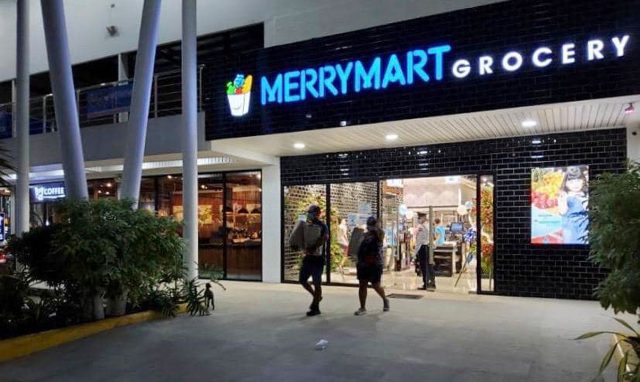
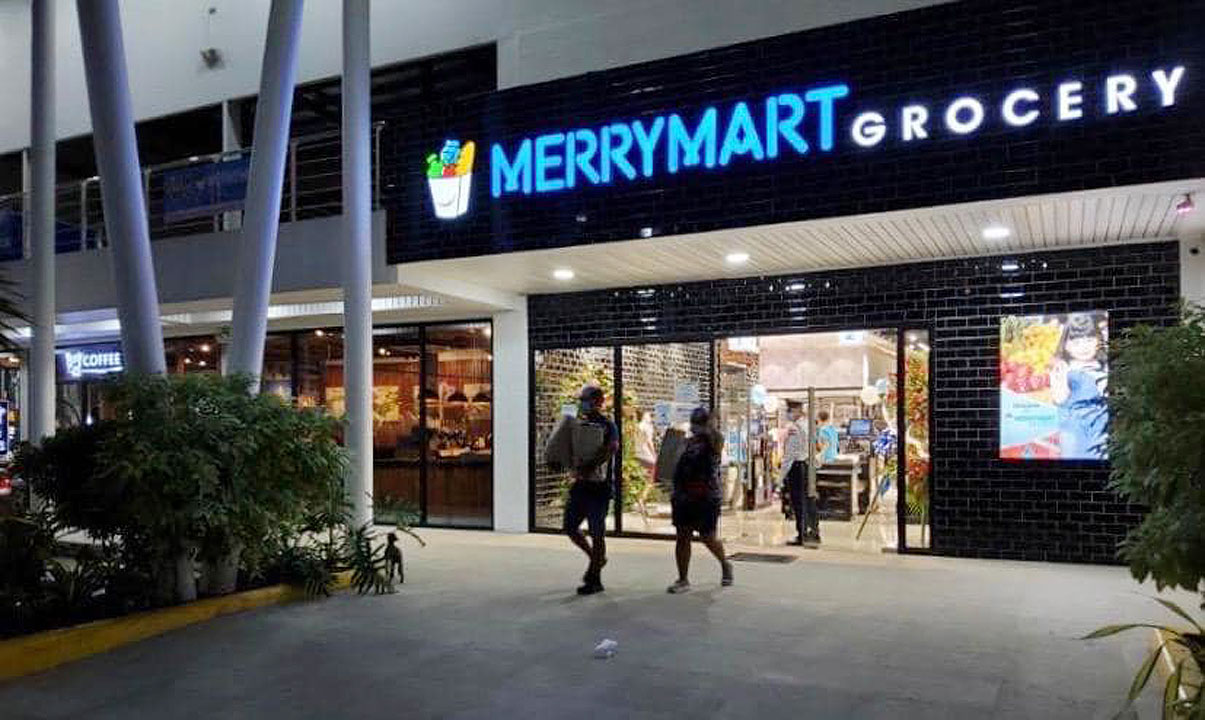
MERRYMART is working on creating a new subsidiary and expanding. — MERRYMART FB PAGE

SMALL and medium enterprises (SME) must keep their focus on attaining their business goals should they decide to tap the capital markets for greater opportunities.

This was the message of Edgar “Injap” J. Sia II, chairman of three listed companies, at the virtual Road to IPO Forum led by the Philippine Stock Exchange (PSE).

“The key is really on keeping your fundamental goals of progress no matter what,” he said.

He said as long as businesses have their fundamentals and growth plans intact, the rest will follow, even if they first list at the local bourse’s SME board.

Mr. Sia’s DoubleDragon Properties Corp. made its PSE debut at the SME board in 2014 with an equity close to P600 million. The company is now setting its eyes on reaching a P120-billion equity by 2030.

“Today, as of June 30, the total equity now stands at P60.3 billion, which already grew more than 102 times versus seven years ago,” he said.

Mr. Sia also chairs MerryMart Consumer Corp., which was the first to list at the stock exchange last year at the SME board, and the real estate investment trust (REIT) sponsored by DoubleDragon, DDMP REIT, Inc., which was the first REIT listing this year.

“IPO (initial public offering) listing is more for growth, and REIT listing is more for yield and long-term capital preservation and acquisition,” Mr. Sia said.

MerryMart is working on creating a new subsidiary and expanding through building household essential retail branches, a new wholesale channel, and the acquisition of grocery and pharmacy retailers.

On Thursday, shares of MerryMart went up by 1.24% or five centavos to close at P4.07 each.

Meanwhile, DoubleDragon shares went down by 0.2% or two centavos to finish at P10.12 apiece, while DDMPR declined by 1.64% or three centavos to P1.80 each. — Keren Concepcion G. Valmonte

The SME finance gap during the pandemic

The DTI MSME Development Plan accomplishment report has very revealing data on MSME access to credit from formal financial institutions. Recall that in 2008, Republic Act No. 9501 prescribes that banks must set aside 8% of their total loanable funds for micro and small firms while 2% should be allocated for medium-sized companies.

The law has lapsed on 16 June 2018 but BSP continues to monitor the exposure of the banking industry to MSMEs. Clearly, the allocation has been on a major downward dive, with the following data: a) 2017: 3.32% micro and small enterprises (MSEs) and 5.03% medium enterprises (MEs); b) 2018: 3.12% MSEs and 4.55% MEs; c) 2019: 2.8% MSEs and 4.3% MEs and d) Q12020:2.09% MSEs and 3.31% MEs.

Even before the 2020 pandemic, the share of MSME loans in the total banking portfolio has been on a major decline. Mandatory credit alone was already not working to push this initiative and it is even getting worse without the mandate. The pandemic with its lockdown is hitting hardest the small and medium firms which suffered from the lack of economic activity and people mobility.

Nationwide lockdowns have disrupted economic activities and slowed down overall growth. Companies, in general, are finding it difficult to repay loan dues to losses and bleak outlooks. This has translated to slower loan growth of the banking sector as the banks have to be more risk averse and discerning in the grant of credit. And when the banks slow down in credit, the first set of clients disenfranchised are those deemed small, vulnerable and with very little lifelines by way of equity capital backing.

This author has monitored the mandatory compliance history of the banking sector in his previous positions, and historically, the compliance mandate has helped MSMEs in its early implementation.

In 1991, the law required banks to set aside 5% of their net loan portfolio for small enterprises. This was revised in 1997 to 6% for small enterprises and 2% for medium enterprises. By 2002, the compliance rate was a high 30%, 17.40% for small and 12.60% for medium. While it tapered off, it was still 8.46% for MSMEs and 7.94% for MEs by 2010.

Let me digress a bit by categorically stating that in this writer’s opinion, the mandatory law worked for SMEs because there is a ready market that can be serviced. The same cannot be said, however, of the agri-agra 25% compliance law which is unrealistic and not commensurate to the number of potential clients. This is especially true of the agrarian part of the law with its untenable requirements as it is obvious that there are not enough ready borrowers in proportion to the overall demand for credit. Mandatory compliance laws must be rational, reasonable, proportionate and implementable. It cannot be based on a pipe dream.

Having made this position clear, one must do an extensive study of what happened in the past 10 years or so for the MSME clientele to have been disfavored by the banking sector in the credit allocation decision. Considering that statistically the large enterprises count of all Philippine business represents 0.49% of the total, is it asking too much to request a mandatory allocation for the rest of the 99.51%? The 2020 Philippine Statistics Authority (PSA) survey recorded a total of 957,620 business enterprises operating in the country. Of these, 952,969 are MSMEs. And the latest tally of bank loans to them is a mere total of 5.4%.

A March 2021 study by the Asian Development Bank Institute of Southeast Asian countries revealed that one-fourth to one-half of the sample MSMEs experienced temporary lockdowns and one-third to two-thirds faced cash shortage. The impact of the pandemic on the employment and the sustainability of businesses was quite severe. MSMEs are prone to using up liquid assets and to cutting employment.

From a banker’s perspective, it is understandable that such firms will be de-prioritized. Thus, the recent downtrend is not a surprise. However, note that this decline has been happening even prior to the pandemic. We cannot therefore use the present circumstances as an excuse, although it is now a major contributor.

Policy makers must study why the mandatory allocation policy worked between 1991 to 2010, and what contributed to its inefficacy over the past 10 years. Among the issues worth exploring are the following: One, what monitoring mechanism was employed? Is the identification of the MSME market correctly done? Two, was the penalty structure commensurate enough to motivate attention to the sector? Could it be that paying penalty is an easier way out? Three, what supporting regulations have been promulgated in support of the sector? Could there have been contrary policies in place? Four, were the agencies assigned to monitor compliance provided with enough power and authority to review real compliance? And finally, did the MSME sector get representation in the development of guidelines and regulations so that their interest is safeguarded?

MSMEs will be the key to the Philippine recovery once we are able to evolve into the new normal. Their financing needs must somehow be addressed in this march to reviving our economy if they are indeed the Philippine’s economic backbone.

The views expressed herein are his own and does not necessarily reflect the opinion of his office as well as FINEX.


Benel Dela Paz Lagua was previously Executive Vice-President and Chief Development Officer at the Development Bank of the Philippines.  He is an active FINEX member and an advocate of risk-based lending for SMEs.

The Bodyguard movie gets a Hollywood remake

LOS ANGELES The Bodyguard, the 1992 movie that launched the acting career of the late Whitney Houston and featured her most famous song, is getting a reboot. Hollywood movie studio Warner Bros. said on Wednesday that a reimagining of the romantic thriller is in development with a script penned by American playwright Matthew Lopez. Mr. Lopez is the playwright behind the award-winning The Inheritance, a two-part drama about gay men in New York a generation after the 1980s AIDS epidemic, that opened on Broadway in 2019. No details of casting, plot or a potential release date were given but Warner Bros. said that Lawrence Kasdan, the writer and producer of the 1992 film, will co-produce the new version. Ms. Houston made her movie debut in The Bodyguard, playing a singer who is protected from an unknown stalker by a former secret service agent played by Kevin Costner. Despite being panned by critics at the time, it went on to become the second biggest film at the worldwide box office in 1992, and Ms. Houston’s rendition of Dolly Parton’s ballad “I Will Always Love You” became a classic. The Bodyguard would join a string of Hollywood movies to get a reboot. Lady Gaga and Bradley Cooper starred in a 2018 remake of A Star is Born, and new versions of sci-fi classic Dune and musical West Side Story are due for release later this year. Reuters

ADVERTISEMENT
ADVERTISEMENT