Home Blog Page 7490

Price growth of building materials in NCR picks up in July

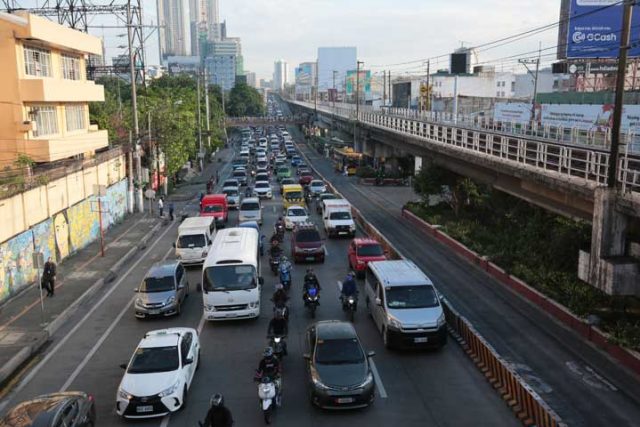
THE WHOLESALE and retail price growth of construction materials in Metro Manila picked up in July as lockdowns eased, data released by the Philippine Statistics Authority (PSA) on Friday showed. 

The construction materials wholesale price index (CMWPI) in the National Capital Region (NCR) grew 2.3% year on year in July, a tad faster than the 2.2% expansion in June and 1.8% in July 2020.   

Similarly, growth in the construction materials retail price index (CMRPI) picked up to 1.4% in July from 1.2% the previous month and 1.1% last year. It was also fastest in eight months or since the 1.7% year-on-year expansion in November 2020 and matched December 2020’s 1.4%. 

Wholesale prices reflect bulk purchases by building firms participating in major projects like infrastructure works. Retail prices reflect activity in smaller segments. 

The acceleration in the CMWPI was driven by higher annual increments in the following materials: electrical works (4.1% in July from 3.9% in June); reinforcing and structural steel (3.6% from 2.1%); PVC pipes (3.5% from 1.0%); tileworks (2.8% from 2.4%); galvanized iron sheets (2.3% from 0.7%); hardware (2.2% from 2.0%); painting works (1.7% from 1.4%); plywood (1.9% from 1.2%); and doors, jambs, and steel casement (1.9% from 1.8%). 

Plumbing fixtures and accessories/waterworks continued to decline, albeit at a slower pace at -0.9% from -1.0% in the previous month.   

The annual drop in the index of plumbing fixtures and accessories/waterworks was lower in July at -0.9 percent from -1.0 percent in the previous month.   

Slower price pickups were recorded in lumber (2.0% from 2.3%) and fuels and lubricants (18% from 21.2%). 

Meanwhile, the price growth of glass and glass products was unchanged at 14.4%, while that for asphalt and machinery and equipment rental was flat. 

At the retail level, the CMRPI was driven by faster increases in the following commodity groups: tinsmithry materials (2.2% from 1.8%), miscellaneous construction materials (1.6% from 1.5%), electrical materials (1.0% from 0.8%), and plumbing materials (0.8% from 0.6%).   

On the other hand, masonry materials saw its price growth ease to 1.0% from 1.1% the month before.   

The following commodity groups saw their respective price growth steady in July: carpentry materials (1.5%) and painting materials and related compounds (1.1%).   

“The pickup in some construction activity parallels with easing lockdowns in July and may have pushed prices slightly higher, although base effects may have also contributed to the uptick even though it remains below pre-pandemic levels,” said Security Bank Corp. Chief Economist Robert Dan J. Roces in an e-mail. 

Metro Manila and the surrounding areas were placed under general community quarantine from May 15 to Aug. 5, albeit with varying restrictions. This was elevated to a stricter enhanced community quarantine (ECQ) from Aug. 6 to 20 in order to curb the spread of the more infectious Delta coronavirus disease 2019 (COVID-19) variant, and later eased to modified ECQ.   

Since Thursday, the government implemented a pilot program of localized lockdowns in Metro Manila. Under the new guidelines, lockdowns will be localized at city level depending on the case transmission rates and healthcare utilization rates. The new alert system will consist of five levels, with level 5 equivalent to ECQ.   

“August’s construction activity may have been hampered by the return to ECQ that month, although we may see only a modest pullback in construction efforts with the imposition of a granular form of lockdown by September, while base effects may still lift prices in the months ahead when more projects resume,” Mr. Roces said.   

“In addition, capital expansion via loan growth has been observed in the construction sector with January-July growth printing a decent 2.0% while employment growth for the same period was at 7%, so activity in the sector is expected to continue to contribute to upticks in the CWMPI,” he added. — Bernadette Therese M. Gadon 
Average retail prices for rice go down

PHILSTAR

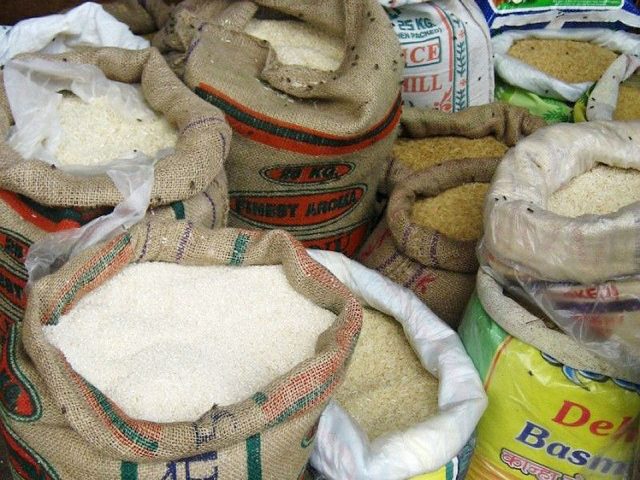
THE AVERAGE retail price of regular-milled rice fell in six regional trading centers at around mid-August, according to the Philippine Statistics Authority (PSA). 

In a report on Friday, the PSA said the average retail price of regular-milled rice decreased by P4.56 to P34.44 per kilogram (/kg) in Iloilo City, P3.72 to P32.44/kg in Calapan City, P1.21 to P35.48/kg in Kidapawan City, 75 centavos to P34.25/kg in Cabanatuan City, 40 centavos to P36.50/kg in Butuan City, and 12 centavos to P35.69/kg in Legazpi City. 

The price sampling period was from Aug. 15 to 17. Prices were compared to those recorded from Aug. 1 to 5. 

The average retail price of regular-milled rice climbed P1.05 to P35.65/kg in Baguio City, P1.01 to P42.55/kg in Digos City, 47 centavos to P32.47/kg in Pagadian City, 12 centavos to P40.27/kg in Tacloban City, ten centavos to P43.24/kg in Cebu City, and three centavos to P38.18/kg in the National Capital Region (NCR). 

The PSA said the average retail price for a kilo of pork in bones dropped by P5.42 to P35.31 in four regional centers. 

Tacloban City registered the steepest drop at P35.31 to P247.19/kg, followed by Baguio City with P8.48 to P280/kg, Pagadian City at P7.84 to P212.16/kg and Cebu City at P5.42 to P184.17/kg. 

On the other hand, San Fernando City recorded the largest increase at P25 to P310/kg. Cabanatuan and Legazpi cities also saw a rise in average retail prices for pork with bones at P10 to P345/kg and at P5.64 to P340.36/kg, respectively. 

Meanwhile, average retail prices for galunggong (round scad) declined in six regional centers. Legazpi City recorded the largest decline at P38.67 to P154.67/kg, followed by Pagadian City at P35 to P105/kg, P6.23 to P162.08/kg in Iloilo City, P3.11 to P226.44/kg in NCR, and P2.43 to P167.57/kg in Baguio City. 

Butuan City, on the other hand, saw an increase of P43.37 to P239.68/kg of galunggong. Cabanatuan City posted an increase of P40 to P220/kg, Cagayan de Oro City at P10 to P190/kg, and Kidapawan City at P3.72 to P156.28/kg. 

The PSA also reported that the average retail price of red onion increased in five centers. Butuan City posted the largest increase at P18.50 to P138.50/kg, followed by Legazpi City with P11.16 to P136.74/kg, Kidapawan City at P7.02 to P107.02/kg, Tacloban City at P4.07 to P120/kg and NCR at P0.44 to P110.44/kg. 

Meanwhile, its average price fell by P15.74 to P104.26 in Pagadian City, P10 to P90/kg in Cabanatuan City, P5 to P132.50/kg in Cagayan de Oro City, and P1.96 to P105.88/kg in Baguio City. — Angelica Y. Yang 

DA announces temporary ban on cattle meat from Brazil

THE Department of Agriculture (DA) has announced a temporary halt on the issuance of permits for the importation of live cattle and its meat products from Brazil amid reports of a mad cow disease outbreak in the country earlier this month, according to a memorandum order. 

In the memo posted on the department’s website on Thursday, DA Secretary William D. Dar ordered a “temporary suspension of the processing, evaluation of application, and issuance of sanitary and phytosanitary (SPS) import clearances for meat and by-products from cattle, including live cattle imports” from Brazil. 

The order took effect on Sept. 16. 

An SPS import clearance ensures that the product meets health standards and guarantees it is safe for consumption and is free of pests and disease. 

According to the order, cattle shipments will still be accepted as long as the slaughter and production happened on or before Aug. 31. 

“[But] all [products with] previously approved SPS import clearance which were not yet in transit, loaded, or accepted unto port after official communication of this order to Brazilian authorities are hereby revoked,” Mr. Dar said. 

The DA also said it will conduct more rigorous inspections of all Brazilian cattle meat arrivals in ports of entry. 

In a separate statement on Friday, the Philippine Association of Meat Processors, Inc. (PAMPI) said the ban will force meat processors to use higher-priced beef sourced from suppliers in Australia, Ireland and the United States. 

“The increased cost of beef raw material for processed meats will be passed on to consumers in terms of higher prices while the ban on Brazilian beef is in effect,” it said. 

PAMPI said the Philippines is the only country that has imposed a ban on Brazilian meat imports. Brazil supplies 40% of the Philippines’ requirements, with local meat processors getting as much as 70% of their needs from the country, according to PAMPI. 

It added that Brazilian beef is cheaply priced compared to similar products from other countries. 

“As the only Southeast Asian country banning Brazil beef, we expose ourselves to trade retaliation which will make our food production situation more difficult as it already is under the pandemic,” it said. — A.Y. Yang 

DTI flags digital gap among businesses

A TRADE department official has flagged a potentially worsening digital gap among enterprises in the Philippines, pointing to the need for policies that address the divide. 

Philippine firms that have adopted high-level technologies in their operations are usually large enterprises, exporters, and firms with foreign direct investment, Trade Undersecretary Rafaelita M. Aldaba said at a virtual event on Friday. 

Most of these firms are also concentrated in Metro Manila, Central Luzon and CALABARZON (Cavite-Laguna-Batangas-Rizal-Quezon).  

“I am highlighting this because this is something I think that we really should pay attention to, because if our policies won’t take these things into account — the adoption of these new technologies — (it) could lead to the worsening of the digital divide,” she said. 

“It’s really important that policies and programs are conscious of all these current operating systems, current situation and conditions that our companies are faced with.” 

She added that most companies that were able to adopt high-level technologies before the pandemic booked profits or minimized losses during the health crisis because of their existing digital systems. 

Limited access to digital resources set back smaller exporters despite government policies that allowed the sector to continue operations throughout the pandemic, Philexport said in June. 

Trade Secretary Ramon M. Lopez said at the same event that technologies most likely to be adopted by 2025 include cloud computing, big data analytics, Internet of Things (IoT), encryption and cyber-security, and artificial intelligence. 

The Philippines fell to 18th in the list of top 50 digital nations from the Tholons Global Innovation Index in 2021 from fifth place in 2020 after a score slump in the indicator on talent pool available for re-skilling to serve cross industries in services, along with changes to the index parameters. — Jenina P. Ibañez 

Imported car sales slide amid tighter lockdown

PHILIPPINE STAR/ MICHAEL VARCAS

Imported car sales declined 18% year-on-year in August as passenger car sales plummeted amid renewed lockdown restrictions in Metro Manila. 

In a report on Friday, the Association of Vehicle Importers and Distributors, Inc. (AVID) said that vehicle sales of its 21 members carrying 26 global brands in August fell to 3,919 units from 4,753 in the same month last year.  

August sales also fell 19% month on month from the 4,862 units sold in July.  

“The entire industry hit a pot hole in August due to the necessary health restrictions. Despite this, we at AVID choose to be optimistic as we approach the final stretch of the year,” AVID President Ma. Fe Perez-Agudo said.  

Metro Manila was again placed under the strictest form of lockdown for two weeks in August amid a surge in coronavirus disease 2019 (COVID-19) cases. 

Despite the slump, sales in the first eight months increased 33% to 39,011 units compared to 29,363 in the same period a year earlier. 

Among vehicle categories, passenger car sales in August slumped 44% to 1,052 units, with Suzuki Philippines, Inc. leading sales. The category’s sales in the first eight months inched up 4% to 10,164. 

Light commercial vehicle sales slipped 1% to 2,829 units, with a bulk of sales going to Ford Group Philippines, Inc. Year to date sales jumped 44% to 27,956.   

Commercial vehicle sales dropped 3% as Hyundai Asia Resources, Inc. sold 36 in August. Year to date sales surged 362% to 39,011.  

The Chamber of Automotive Manufacturers of the Philippines, Inc. (CAMPI) and Truck Manufacturers Association (TMA) in August sold 15,847 units, or 11.5% lower than from 17,906 units sold the same month a year ago. — Jenina P. Ibañez 

Ayala returns to global bond market

Ayala Corp. (AC) returned to the international bond market on Friday with the issuance of $400 million worth of senior fixed-for-life perpetual notes. 

In a statement, AC said the notes, which are issued by subsidiary AYC Finance Ltd., carried a fixed annual coupon of 3.9% — “the lowest yielding unrated perpetual fixed-for-life notes ever and the third lowest perpetual fixed-for-life notes in Asia.” 

“The notes were priced at par with a re-offer yield of 3.90%, which represents a 40-basis points compression from the initial price guidance of 4.30% and demonstrates the strong investor confidence in the Ayala name,” the conglomerate said, adding the notes are “unconditionally” guaranteed by AC.  

The final order book was over $1.75 billion or 4.4 times oversubscribed, “supported by a wide range of high-quality investors.” 

“As we reposition our portfolio to adapt to the rapidly changing environment, the success of this issuance strengthens further our financial position that enables us to scale investments in critical sectors and do our part in helping reinvigorate the Philippine economy”, said Ayala President and Chief Executive Officer Fernando Zobel de Ayala. 

The issuance of the US dollar-denominated notes marked AC’s return to the global bond market after its second perpetual fixed-for-life issue in 2019. 

Net proceeds from the securities will go to refinancing AYC Finance’s dollar-denominated outstanding notes, and other obligations. 

“This capital markets issuance and liability management exercise will further strengthen our balance sheet and provide additional flexibility as we reposition ourselves for a post-pandemic economic recovery,” AC Chief Finance Officer Alberto M. de Larrazabal. 

BPI Capital Corp., Citigroup Global Markets Singapore Pte. Ltd., Credit Suisse (Singapore) Limited, J.P. Morgan (S.E.A.) Limited, Mizuho Securities (Singapore) Pte. Ltd. and UBS AG Singapore Branch served as the joint lead managers and joint bookrunners of the transaction. 

Shares of Ayala Corp. in the local bourse inched up by 0.31% or P2.5 to P811.50 apiece on Friday. — A.Y.Yang  


Construction tycoon Wenceslao dies at 77

Delfin J. Wenceslao, Jr. -- DMWAI website

Construction tycoon Delfin J. Wenceslao, Jr. has passed away, D.M. Wenceslao & Associates, Inc. (DMWAI) announced on Friday. He was 77. 

Mr. Wenceslao was president and chairman of the listed property development and construction firm at the time of his death. 

“It is with great sadness that the board of directors and management of [the company] announce that today, it was informed of the death of its President and Chairman of the Board, Mr. Delfin J. Wenceslao, Jr.,” DMWAI said in a disclosure to the exchange.   

No other details were given.  

Forbes listed Mr. Wenceslao as the 37th richest man in the Philippines with a net worth of $385 million. 

A licensed real estate broker, Mr. Wenceslao co-founded the listed property company and has held his posts since April 1965.   

He holds a bachelor’s degree in economics from Ateneo de Manila University. He pursued graduate studies at the Pamantasan ng Lungsod ng Maynila, graduating with a Master of Business Administration degree and later on earning a Doctorate in Business Administration.  

Mr. Wenceslao was formerly the president of the Philippine Constructors Association, a board member at the International Federation of Asian and Western Pacific Contractors’ Associations, and a Chamber of Real Estate & Builders’ Associations, Inc. member.  — Keren Concepcion G. Valmonte  

SEC approves shelf registration of Jollibee’s P20-B preferred shares

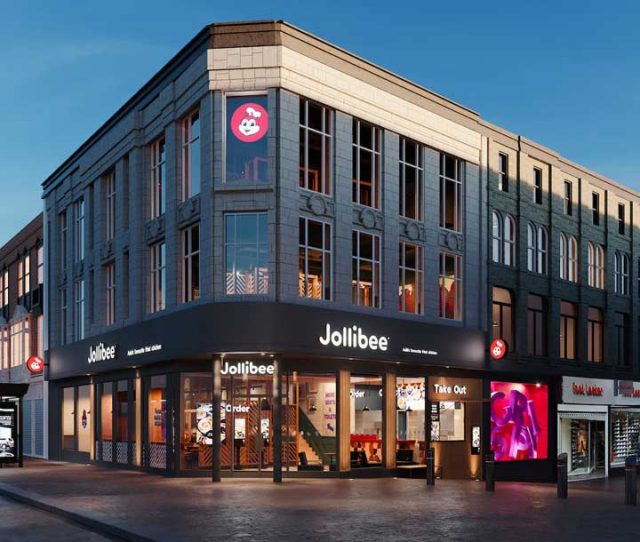
Jollibee Foods Corp. has ramped up its global expansion, opening stores in the United Kingdom. -- Company handout

The Securities and Exchange Commission (SEC) approved Jollibee Foods Corp.’s shelf registration of P20-billion perpetual preferred shares subject to remaining requirements, the regulator said in a statement on Friday.  

Jollibee earlier said that the issuance of the shares forms part of its plans to “strengthen” its balance sheet.    

The approved shares comprise 20 million cumulative, non-voting, non-participating, non-convertible and redeemable perpetual preferred shares priced at P1,000 each, which may be issued in tranches within three years.   

The shares will be listed and traded on the main board of the Philippine Stock Exchange.  

For its initial issuance, Jollibee will offer P8 billion worth of preferred shares with an overallotment option of up to P4 billion. Its public offering is slated for Sept. 28 to Oct. 4.  

The company may net up to P11.9 billion in proceeds from the first tranche, which will be used to partially finance the redemption of its senior perpetual securities and to fund its commissary and store expansion. 

Jollibee is planning to open new stores in the country, majority of which will be in Luzon, while its wholly owned unit Zenith Foods Corp. eyes building a new commissary in Cebu that would cater to its needs in the Visayas and Mindanao region.   

BPI Capital Corp. was assigned to be the transaction’s issue manager. It will be joined by BDO Capital & Investment Corp., China Bank Capital Corp., and SB Capital Investment Corp. as joint lead underwriters and bookrunners.   

As of end-May, the Jollibee Group has 3,209 stores in the Philippines. Globally, it has 5,815 branches under 17 brands in 33 countries.  

The company aims to open 450 stores this year, the majority of which will be abroad, and at least 500 new stores yearly in the following years.   

On Friday, JFC shares at the stock exchange closed lower by 3.43% to end at P197 each. — Keren Concepcion G. Valmonte   

RCR secures highest issuer credit rating

By Keren Concepcion G. Valmonte, Reporter  

RL Commercial REIT, Inc. (RCR) on Thursday said it has secured the highest issuer credit rating from Philippine Rating Services Corp. (PhilRatings), which allows it to raise its borrowing limit.  

In a statement, RCR said it received a credit rating of PRS Aaa (corp.) with a stable outlook from PhilRatings.  

“The investment-grade issuer credit rating allows RCR to increase its leverage limit from 35% to 70% of the total value of its deposited property, according to the REIT Implementing Rules and Regulations,” the Gokongwei-led company said.   

“This gives RCR greater financial flexibility to support its organic and inorganic growth for long-term sustainability,” it added.  

Under the country’s REIT IRR, companies are only allowed to have financial obligations or borrowings worth 35% of the value of assets included in their portfolio unless it has a publicly disclosed investment-grade credit rating by an accredited rating agency.  

The PRS Aaa rating is the highest rating assigned by the domestic credit rating agency, which means it has a “very strong capacity” to meet financial commitments compared to other corporates in the country.   

A stable outlook means the company is expected to keep the same rating within the next 12 months.   

Rizal Commercial Banking Corp. Chief Economist Michael L. Ricafort said the rating would allow RCR to borrow more to fund its investments or expansion projects.   

“These also allow it to borrow at lower interest rates and also at better terms,” Mr. Ricafort said in a Viber message on Friday.  

RCR is the real estate investment trust (REIT) sponsored by Robinsons Land, Corp. (RLC). It is the largest REIT in the Philippines with a market capitalization of P64.2 billion, a property valuation of P73.9 billion, and an initial portfolio consisting of 14 assets with a combined 425,315 square meters (sq.m.).  

“The rating likewise considered the properties’ strong financial track record and proven resilience amidst the COVID-19 pandemic, as well as the Company’s zero-debt status which gives RCR significant headroom to lever up to fund its future expansion,” RCR said.  

Subject to market conditions and regulatory approval, Robinsons Land is expected to infuse one or two assets every year into RCR. RCR said the rating was also achieved because of its management team and because of “solid backing” from its sponsor firm, RLC.  

“We are also very much open to acquiring property from unrelated third parties. We are also looking into redeveloping existing assets to optimize land use and achieve higher valuations,” RCR President and Chief Executive Officer Jericho P. Go told BusinessWorld in an Aug. 13 e-mail interview.   

RCR shares at the stock exchange went up by 0.16% or one centavo on Thursday to close at P6.45 each.  

PXP Energy settles dispute with Australia’s Karoon

Listed upstream oil and gas firm PXP Energy Corp. said on Friday that its units have entered into a settlement with Australia’s Karoon Energy Ltd., which is required to pay $9.6 million in cash over an exploration dispute in offshore Peru. 

PXP Energy owns majority or 53% of Pitkin Petroleum Ltd. (PPL), which has a 25% participating interest in Peru Block Z-38 through its wholly-owned subsidiary, Pitkin Peru. Meanwhile, KEI (Peru Z-38) Pty Ltd. Sucursal del Peru (KEI Peru), a wholly-owned unit of Karoon Energy, is the operator of the Peru block. 

Pitkin Peru previously determined that KEI Peru will not take any action to extend the license contract for the exploration of hydrocarbons in Block Z-38 located in offshore Peru, and this includes going into the “fourth exploration phase.” Because of this, the Peru government terminated the license.  

Pitkin Peru also claimed that KEI Peru did not fulfill its obligations when it did not give notice on or before June 27 whether it would enter into the fourth exploration phase, embark on activities required in drilling a second exploratory well, and shoulder all of Pitkin Peru’s expenses in the drilling works. 

In its latest regulatory filing to the local bourse on Friday, PXP Energy said that KEI (Peru Z-38) Pty Ltd. (KEI), which fully owns KEI Peru, is due to pay a settlement fee of $9.6 million or approximately P479.29 million. 

“Under the deed, KEI has agreed to pay US$9.6 million in cash to PPL in full and final settlement of all claims by Pitkin Peru and its associates in connection with Block Z-38. The said deed will be effective upon the receipt of the settlement sum by PPL within 3 business days upon signing of the deed,” PXP Energy said in a disclosure on Friday. 

Shares of PXP Energy in the local bourse shed 2.41% or 15 centavos to finish at P6.06 apiece on Friday.  

PXP Energy is a unit of Philex Mining Corp., which in turn is one of the Philippine units of Hong Kong-based First Pacific Co. Ltd, the others being Metro Pacific Investments Corp. and PLDT Inc. 

Hastings Holdings, Inc., a unit of PLDT Beneficial Trust Fund subsidiary MediaQuest Holdings, Inc., has interest in BusinessWorld through the Philippine Star Group, which it controls.  — Angelica Y. Yang  

SM says 94% of employees vaccinated so far

PHILIPPINE STAR/ MICHAEL VARCAS

SM Investments Corp. (SMIC) said on Friday that its coronavirus disease 2019 (COVID-19) vaccination program has covered 94% of its employees so far.   

The program is a joint effort of SMIC, SM Prime Holdings, Inc., SM Retail, Inc., BDO Unibank, Inc., and China Banking Corp. as well as 2GO Group, Inc., Atlas Mining & Development Corp., and Goldilocks Bakeshop.  

“Our goal is to support broad vaccination efforts and not just to focus on our own people or those connected with our business,” SMIC President and Chief Executive Officer Frederic C. DyBuncio said in a statement.    

“We made our assets accessible to all, both to the public and private sectors, and enabled our partners to secure much-needed vaccination,” he added.   

The company said over 3.3 million COVID-19 jabs have been administered in its malls, which were used as make-shift vaccination sites by local government units. SM Development Corp. also conducted vaccination drives in 12 locations across properties in Mandaluyong, Parañaque, Pasig, and Quezon City.   

Meanwhile, its 2GO vessels on dock also served as vaccination venues for ship crew members.   

SM also worked with Go Negosyo’s “A Dose of Hope” program as it launched shared vaccination sites via its malls for nearly 300 micro, small, and medium enterprises (MSME) to inoculate over 170,000 of their employees.  

SM also offered its other work sites, such as in Toledo City of Cebu, to vaccinate other employees of MSME partners and government stakeholders.  — Keren Concepcion G. Valmonte  

600 thousand doses of AstraZeneca arrive

REUTERS

The Philippines on Friday took delivery of 661,200 more doses of the coronavirus vaccine made by AstraZeneca, Plc. This as the health department announced in its daily bulletin that there are 20,336 new coronavirus cases.

The shipment was paid for by local government units and the private sector, vaccine czar Carlito G. Galvez, Jr. said in an interview with the state-run People’s Television Network.

Mr. Galvez said 80% of the new batch of vaccines will be given to local government units, while the remaining 20% will go to the private sector.

Meanwhile, Mr. Galvez said 190,000 doses of Russia’s Sputnik V (Component 2) may arrive in the country this weekend or early next week.

“This shipment of Sputnik V vaccines shall be used for the second dose,” he said separately in a statement.

The Philippines is also set to take delivery of about one million doses of the single-shot Sputnik V Light, Mr. Galvez said.

More than 14.89 million doses of coronavirus vaccines are expected to arrive in the country in the coming weeks.

The Philippines has received more than 58 million vaccine doses since February.

Authorities on Thursday said more than 40 million coronavirus vaccines had been given as of Sept. 15. About 17.7 million people or 22.91% of the country’s adult population had been fully vaccinated against coronavirus diseases 2019 (COVID-19), they said.

NEW CASES

Meanwhile, health authorities on Friday reported 20,336 new coronavirus cases, bringing to 2.32 million the total number of cases since the pandemic started.

The country’s coronavirus death toll rose to 36,328 after 310 more patients died, while recoveries increased by 10,028 to 2.1 million, the Department of Health (DoH) said in a bulletin.

There were 188,108 active cases, 87.6% of which were mild, 8.1% were asymptomatic, 1.3% were severe, 2.49% were moderate, and 0.6% were critical.

The DoH said 53 duplicates were removed from the tally, 41 of which were reclassified as recoveries. It added that 176 recoveries were reclassified as deaths. Four laboratories failed to submit data on Sept. 15.

IVERMECTIN

Meanwhile, Health Undersecretary Maria Rosario S. Vergeire maintained that there is still not enough evidence to prove that the anti-parasitic drug ivermectin can treat COVID-19 or prevent deaths from the illness.

This, after the British Ivermectin Recommendation Development Group asked the Philippine government to adopt the use of ivermectin for COVID-19 patients.

“We reiterated the PSMID (Philippine Society for Microbiology and Infectious Diseases, Inc.) guidelines which states that based on the current evidence from randomized controlled trials, we do not recommend the use of ivermectin for the treatment of COVID-19,” Ms. Vergeire said in a virtual news briefing, noting that the anti-parasitic drug has not been proven to “significantly reduce mortality nor to improve other clinical outcomes.” — Kyle Aristophere Ateinza

ADVERTISEMENT
ADVERTISEMENT