Home Blog Page 7489

Streamlining local government data systems

STUDIES-FREEPIK

The new mantra of local governments units (LGUs) is to promote the strategic use of information for effective decision making as they focus to improve the delivery of economic and social services.

Local governments often face challenges inherited from analogue models. To name some: analogue models and outdated data infrastructure, data silos, skill gaps, regulatory barriers, lack of leadership and accountability, and a culture which undervalues digital innovation and change.

These problems require specific technical and political solutions. Take, for example, the problems of depending on old data infrastructure and having data silos. They can be solved by establishing the integrated economic data system and a common and flexible data sharing platform for both the local and national agencies.

Recognizing the need, the Western Visayas Regional Development Council Economic Development Committee (EDC) formed a Technical Working Group (TWG) composed of National Government agencies (NGAs), the academe, and the private sector towards the creation of an integrated economic data system.

Guided by the Development Entrepreneurship model advocated by Asia Foundation, which, among other things, emphasizes doing diagnostics to situate the main bottlenecks and determine appropriate solutions, the TWG conducted a “Data Gaps” exercise. The initial review showed that LGUs are required to prepare at least 33 plans by the NGAs, using 600 or more indicators. This task of gathering and analyzing data for 600 indicators is overwhelming. In addition, there is no common template for data gathering and processing. Thus, it is difficult to measure progress or to aggregate data in a way that gives an accurate assessment of the performance of LGUs.

To surmount the above challenge, the TWG has identified, rationalized, and weighted the common economic data issues and the set of indicators that have practical value for LGUs.

The LGUs are tasked to deliver basic services to their constituents and are responsible for ensuring that their programs and projects are well-planned, budgeted, and fulfilled. In this regard, the TWG recognizes the imperative of having the data sets that will guide local executives in implementing economic programs for recovery and sustainability. These data sets will enable a better understanding of the changing contexts of the local economy.

Data initiatives at the regional and local level often miss the understanding and appreciation of the data needs of the stakeholders and how data affect them. Many LGUs and NGAs do not appreciate why data is needed for change to take place. This problem is pronounced when an LGU is not particularly inclined towards technical thinking and when such change takes them out of their comfort zone.

At a more technical level, fragmentation happens when accountability mechanisms are weak. This, for instance, is manifested in not knowing who is responsible for generating and controlling the data. Fragmentation also arises when sharing and accessing the data are severely constrained by specific legal arrangements. Fragmentation leads to siloed policy and technical solutions, making it harder to build integrated and connected local governments.

The role of the academe in the coalition (or the TWG) to have integrated data systems is exemplified by the Iloilo Science and Technology University (ISTU). ISTU sees the value of data interoperability. To realize data interoperability, a team of faculty experts, with the assistance of the Department of Science and Technology, will spearhead the development of the prototype for a portal. The portal should be completed and operational by end of 2021. We are expecting more NGAs and LGUs to be part of this economic data platform.

The work-together data platform will help ensure that the policy of decentralization as enshrined in the Constitution, the Local Government Code, and the Mandanas-Garcia ruling of the Supreme Court will be carried out with smoothness, transparency, and accountability.

Hopefully, this initiative will allow for more collaboration and for more in-depth discussions among stakeholders to strengthen leadership and accountability. Hopefully, too, the initiative can achieve productivity and effectiveness in planning for local economic recovery.

In today’s uncertain and volatile environment, data fuel growth and development. Collecting large amounts of data and analyzing them have become essential tasks of how local governments and organizations track their progress and develop growth strategies.

The power of data opens new possibilities for the future of economic governance in this part of the country, Western Visayas. We, too, hope we can learn from colleagues in other regions in the same way that they can learn from Western Visayas.

This column is part of a series on data-driven development.


Francis Gentoral is Executive Director of the Iloilo Economic Development Foundation, Inc. and works with government, as well as with non-government organizations, private sector associations and organizations on local economic development and governance, program design, and impact evaluation.

The future of malls

PHILIPPINE STAR/ MICHAEL VARCAS

Is there a place for malls in the post-COVID world? This question is relevant not only for the hundreds of mall operators across the country but more so for the thousands of merchants who conduct business inside malls.

My regular readers know that one of my businesses is a restaurant group for which many of our stores are inside malls. My management team has had long discussions on whether we should continue expanding in malls given the changes in consumer behavior triggered by COVID-19. No doubt, the same discussions are taking place in other boardrooms across the country.

I got some insights from Gino Borromeo, the Vice-President of Strategy for the SM Group. Gino delivered what is SM’s appraisal on the future of malls in a recently concluded conference organized by the Philippine Retailers Association.

As we are painfully aware, COVID-19 has permanently changed the way we live and the way we consume goods and services. Working from home has substantially decreased the number of people roaming in commercial centers. Remote working has allowed people to leave cities and move to the countryside where they can enjoy a better quality of life for less cost. Germaphobia persists, and will continue to do so, as is an aversion for crowded places. On top of it all, e-commerce is now in the mainstream.

E-commerce will soon touch every aspect of our lives. It is already pervasive for our groceries, fashion, food, wellness, hardware and electronics needs. It will soon be our source for insurance, airline tickets, healthcare services, real estate, cars and even banking services. A survey conducted by Colliers International last year revealed that 91% of consumers in Luzon and the Visayas have already experienced online shopping. Of this number, 84% still prefer in-store shopping while 16% said they preferred shopping over the internet. While Filipinos still enjoy the physical shopping experience, experts are certain that the Filipino will see more value in online shopping. It is only a matter of time before e-commerce surpasses the collective sales volumes of brick-and-mortar stores as it has in the US and China.

Globalization and the affordability of travel have also exposed Filipinos to new products, new brands, and new forms of services. This has made the Filipino consumer more discriminating.

With e-commerce, rapidly shifting preferences, and COVID-induced lifestyle changes, are malls still relevant in our lives? The short answer is yes, according to Borromeo. See, malls have benefitted from government’s lack of investment in parks, open spaces, and public venues. There will always be a need for venues where people can converge, socialize, and engage in leisure activities. That said, malls will continue to play a role in society since they serve as community centers.

While malls will remain relevant, they must evolve in step with societal and cultural changes. This will be most evident in what malls have to offer, their tenancy mix and amenities.

Filipinos will continue to shop not just for functional purposes but more so for emotional upliftment and leisure. Whereas in the past, the majority flocked to malls to purchase fashion products, food essentials, gifts, toys, hardware, appliances, and office supplies, COVID has given rise to what is called the “new essentials.” These include domestic hobbies, health and wellbeing products, products that provide home experiences, products that enhance home productivity, functional fashion, and comfort food.

All these mean that there will be a shift in the merchant mix of malls. We will see a bias in favor of stores that offer these new essentials and brands born offline (not established online brands). There will be an equal split between established brands and new generation brands as well local and foreign marques.

Consumers are also reassessing their loyalties towards their favorite brands. Unless old-timer brands evolve to the beat of changing customer preferences, they will likely fall out of preference and lose their customers base, says Borromeo. On the flip side, opportunities to grab market share await new and innovative brands. Studies show that 36% of all Filipinos ventured out of their usual brands to patronize a new brand last year. This was most evident among the Millennials and Generation Z. It was evident too among GenXers, although to a lesser extent. The shifting taste of consumers can be viewed as a great equalizer for retailers.

As in the US, retailers will still maintain a few brick-and-mortar stores to complement their online store. However, the purpose of the brick-and-mortar stores will change. Whereas in the pre-COVID era, a physical store was built solely to drive sales, in the post-COVID world, it will play multiple roles. Not only is it a sales generator, it will also serve as a venue for customers to discover more dimensions about the brand. It will serve as a “stage” where customers can experience the brand’s attributes. It will serve as fodder for social media content. In short, physical stores will play more of a branding role to enhance online sales. With this, we can expect better curated and more interactive brick-and-mortar stores in the future.

And since customers are now more accustomed to the convenience of online shopping where all forms of payment and home delivery are provided, brick-and-mortar stores must offer the same to be competitive.

Malls will offer unique experiences that cannot be had online. Movies are no longer an attraction since streaming apps like Netflix have overcome them. What will come to the fore are kid’s playgrounds, pet parks, themed parks, sports facilities, experiential dining, and group activities like trade expositions, workout camps, and the like.

Nothing beats physical contact with products and people. This is the advantage of malls over online shopping.

So, is there a place for malls in the world of tomorrow? The answer is yes. However, they will no longer be of the colossal size they are today. Neither will they be as numerous. And since they will no longer be the primary driver of retail sales for merchants, malls can no longer charge the heady lease rates and take a percentage of merchant sales. Lease rates will have to be rationalized to a level that makes sense for the merchants.

Indeed, COVID-19 has not accelerated the evolution of malls, it has in fact changed it completely.


Andrew J. Masigan is an economist

andrew_rs6@yahoo.com

Facebook@AndrewJ. Masigan

Twitter @aj_masigan

An introduction to Confucius, his ideas, and their lasting relevance

DENISE BOSSARTE-UNSPLASH

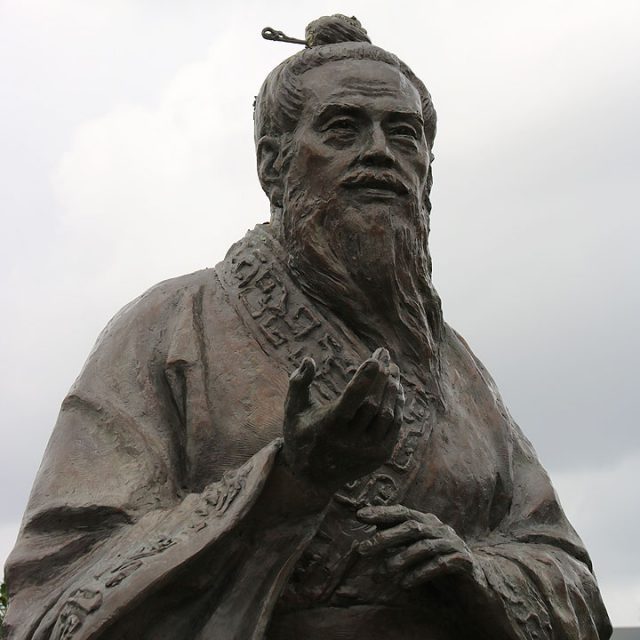
The man widely known in the English language as Confucius was born around 551 BCE in today’s southern Shandong Province. Confucius is the phonic translation of the Chinese word Kong fuzi , in which Kong was his surname and fuzi is an honorific for learned men.

Widely credited for creating the system of thought we now call Confucianism, this learned man insisted he was “not a maker but a transmitter,” merely “believing in and loving the ancients.” In this, Confucius could be seen as acting modestly and humbly, virtues he thought of highly.

Or, as Kang Youwei — a leading reformer in modern China has argued — Confucius tactically framed his revolutionary ideas as lost ancient virtues so his arguments would be met with fewer criticisms and less hostility.

Confucius looked nothing like the great sage in his own time as he is widely known in ours. To his contemporaries, he was perhaps foremost an unemployed political adviser who wandered around different fiefdoms for some years, attempting to sell his political ideas to different rulers — but never able to strike a deal.

It seems Confucius would have preferred to live half a millennium earlier, when China — according to him — was united under benevolent, competent, and virtuous rulers at the dawn of the Zhou dynasty. By his own time, China had become a divided land with hundreds of small fiefdoms, often ruled by greedy, cruel, or mediocre lords frequently at war.

But this frustrated scholar’s ideas have profoundly shaped politics and ethics in and beyond China ever since his death in 479 BCE. The greatest and the most influential Chinese thinker, his concept of filial piety remains highly valued among young people in China despite rapid changes in the country’s demography.

Despite some doubts as to whether many Chinese people take his ideas seriously, the ideas of Confucius remain directly and closely relevant to contemporary China.

This situation perhaps is comparable to Christianity in Australia. Although institutional participation is in constant decline, Christian values and narratives remain influential on Australian politics and vital social matters.

The danger today is in Confucianism being considered the single reason behind China’s success or failure. The British author Martin Jacques, for example, recently asserted Confucianism was the “biggest single reason” for East Asia’s success in the handling of the COVID-19 pandemic, without giving any explanation or justification.

If Confucius were alive, he would probably not hesitate to call out this solitary root of triumph or disaster as being lazy, incorrect, and unwise.

Confucius wanted to restore good political order by persuading rulers to reestablish moral standards, exemplify appropriate social relations, perform time-honored rituals, and provide social welfare.

He worked hard to promote his ideas but won few supporters. Almost every ruler saw punishment and military force as shortcuts to greater power.

It was not until 350 years later, during the reign of the Emperor Wu of Han, that Confucianism was installed as China’s state ideology.

But this state-sanctioned version of Confucianism was not an honest revitalization of Confucius’ ideas. Instead, it absorbed many elements from rival schools of thought, notably legalism, which emerged in the latter half of China’s Warring States period (453–221 BCE). Legalism argued efficient governance relies on impersonal laws and regulations — rather than moral principles and rites.

Like most great thinkers of the Axial Age between the 8th and 3rd century BCE, Confucius did not believe everyone was created equal.

Similar to Plato (born over 100 years later), Confucius believed the ideal society followed a hierarchy. When asked by Duke Jing of Qi about government, Confucius famously replied: let the ruler be a ruler; the minister, a minister; the father, a father; the son, a son.

However, it would be a superficial reading of Confucius to believe he called for unconditional obedience to rulers or superiors. Confucius advised a disciple “not to deceive the ruler but to stand up to them.”

Confucius believed the legitimacy of a regime fundamentally relies on the confidence of the people. A ruler should tirelessly work hard and “lead by example.”

Like in a family, a good son listens to his father, and a good father wins respect not by imposing force or seniority but by offering heartfelt love, support, guidance, and care.

In other words, Confucius saw a mutual relationship between the ruler and the ruled.

To Confucius, the appropriate relations between family members are not merely metaphors for ideal political orders, but the basic fabrics of a harmonious society.

An essential family value in Confucius’ ideas is xiao , or filial piety, a concept explained in at least 15 different ways in the Analects, a collection of the words from Confucius and his followers.

Depending on the context, Confucius defined filial piety as respecting parents, as “never diverging” from parents, as not letting parents feel unnecessary anxiety, as serving parents with etiquette when they are alive, and as burying and commemorating parents with propriety after they pass away.

Confucius expected rulers to exemplify good family values. When Ji Kang Zi, the powerful prime minister of Confucius’ home state of Lu asked for advice on keeping people loyal to the realm, Confucius responded by asking the ruler to demonstrate filial piety and benignity (ci ).

Confucius viewed moral and ethical principles not merely as personal matters, but as social assets. He profoundly believed social harmony ultimately relies on virtuous citizens rather than sophisticated institutions.

In the ideas of Confucius, the most important moral principle is ren , a concept that can hardly be translated into English without losing some of its meaning.
Like filial piety, ren is manifested in the love and respect one has for others. But ren is not restricted among family members and does not rely on blood or kinship. Ren guides people to follow their conscience. People with ren have strong compassion and empathy towards others.

Translators arguing for a single English equivalent for ren have attempted to interpret the concept as “benevolence,” “humanity,” “humanness,” and “goodness,” none of which quite capture the full significance of the term.

The challenge in translating ren is not a linguistic one. Although the concept appears more than 100 times in the Analects, Confucius did not give one neat definition. Instead, he explained the term in many different ways.

As summarized by China historian Daniel Gardner, Confucius defined ren as: to love others, to subdue the self and return to ritual propriety, to be respectful, tolerant, trustworthy, diligent, and kind, to be possessed of courage, to be free from worry, or to be resolute and firm.

Instead of searching for an explicit definition of ren, it is perhaps wise to view the concept as an ideal type of the highest and ultimate virtue Confucius believed good people should pursue.

Confucius’ thinking has had a profound impact on almost every great Chinese thinker since. Based upon his ideas, Mencius (372–289 BCE) and Xunzi (c310–c235 BCE) developed different schools of thought within the system of Confucianism.

Arguing against these ideas, Mohism (4th century BCE), Daoism (4th century BCE), Legalism (3rd century BCE) and many other influential systems of thought emerged in the 400 years after Confucius’ time, going on to shape many aspects of the Chinese civilization in the last two millennia.

Modern China has a complicated relationship with Confucius and his ideas.

Since the early 20th century, many intellectuals influenced by western thought started denouncing Confucianism as the reason for China’s national humiliations since the first Opium War (1839-42).

Confucius received fierce criticism from both liberals and Marxists.

Hu Shih, a leader of China’s New Culture Movement in the 1910s and 1920s and an alumnus of Columbia University, advocated overthrowing the “House of Confucius.”

Mao Zedong, the founder of the People’s Republic of China, also repeatedly denounced Confucius and Confucianism. Between 1973 and 1975, Mao devoted the last political campaign in his life against Confucianism.

Despite these fierce criticisms and harsh persecutions, Confucius’ ideas remain in the minds and hearts of many Chinese people, both in and outside China.

One prominent example is PC Chang, another Chinese alumnus of Columbia University, who was instrumental in drafting the Universal Declaration of Human Rights, proclaimed by the United Nations General Assembly in Paris on Dec. 10, 1948. Thanks to Chang’s efforts, the spirit of some most essential Confucian ideas, such as ren, was deeply embedded in the Declaration.

Today, many Chinese parents, as well as the Chinese state, are keen children be provided a more Confucian education.

In 2004, the Chinese government named its initiative of promoting language and culture overseas after Confucius, and its leadership has been enthusiastically embracing Confucius’ lessons to consolidate their legitimacy and ruling in the 21st century.


Yu Tao is a Senior Lecturer in Chinese Studies at The University of Western Australia.

Australia says it was ‘upfront’ with France over submarine deal

REUTERS
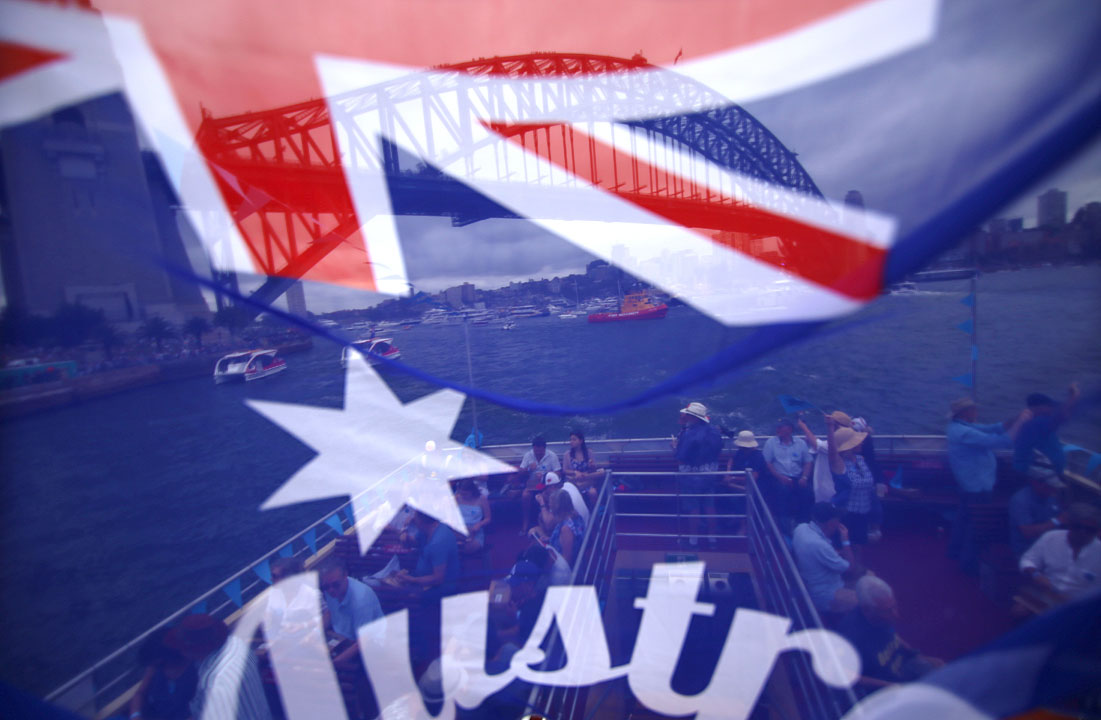
PASSENGERS aboard a ferry are seen in Sydney, Australia, Jan. 26, 2018. — REUTERS

MELBOURNE — Australia was “upfront, open and honest” with France about its concerns over a deal for French submarines, its defense minister said on Sunday, as a new deal with the United States and Britain continued to fuel a multinational diplomatic crisis.

Australia ditched the 2016 deal with France’s Naval Group to build a fleet of conventional submarines, announcing on Thursday a plan to build at least eight nuclear-powered ones with US and British technology in a trilateral security partnership.

The move infuriated France, a NATO ally of the United States and Britain, prompting it to recall its ambassadors from Washington and Canberra, and riled China, the major rising power in the Indo-Pacific region.

The deal has put Washington in an unprecedented diplomatic crisis with France that analysts say could do lasting damage to the US alliance with France and Europe, throwing also into doubt the united front that the Biden administration has been seeking to forge against China’s growing power.

Paris has called the cancellation a stab in the back, with Foreign Minister Jean-Yves Le Drian saying relations with the United States and Australia were in a “crisis.”

But Defense Minister Peter Dutton said on Sunday that Australia had been raising concerns with France over the order — valued at $40 billion in 2016 and reckoned to cost much more today — for a couple of years.

“Suggestions that the concerns hadn’t been flagged by the Australian government, just defy, frankly, what’s on the public record and certainly what they’ve said publicly over a long period of time,” Mr. Dutton told Sky News.

Prime Minister Scott Morrison said on Friday he had expressed “very significant concerns” about the deal to French President Emmanuel Macron in June and made clear Australia “would need to make a decision on in our national interest”.

Finance Minister Simon Birmingham said Australia had informed France of the deal but acknowledged on Sunday the negotiations had been secret, given the “enormous sensitivities.”

Mr. Dutton and Mr. Birmingham declined to reveal costs of the new pact, although Mr. Dutton said “it’s not going to be a cheap project.” — Reuters

Pandemic in focus at UN general assembly

REUTERS/MIKE SEGAR/FILE PHOTO
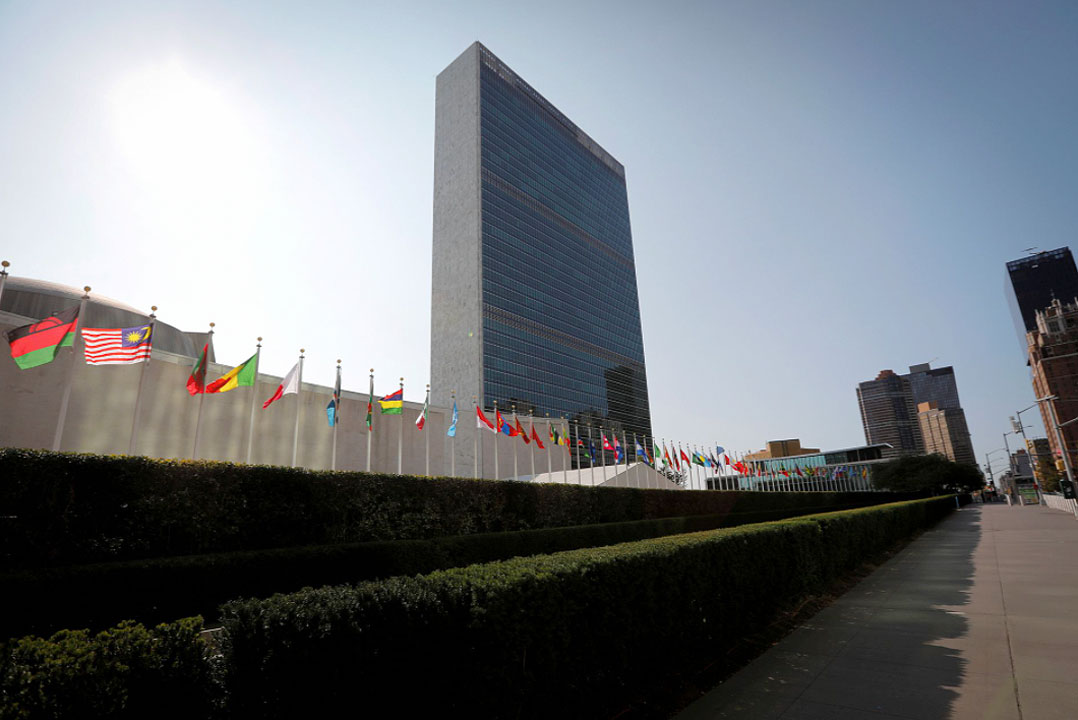
The United Nations headquarters is seen during the 75th annual U.N. General Assembly high-level debate, which is being held mostly virtually due to the coronavirus disease pandemic in New York, US, Sept. 21, 2020. — REUTERS/MIKE SEGAR/FILE PHOTO

UNITED NATIONS — World leaders are returning to the United Nations in New York this week with a focus on boosting efforts to fight both climate change and the COVID-19 pandemic, which last year forced them to send video statements for the annual gathering.

As the coronavirus still rages amid an inequitable vaccine rollout, about a third of the 193 U.N. states are planning to again send videos, but presidents, prime ministers and foreign ministers for the remainder are due to travel to the United States.

The United States tried to dissuade leaders from coming to New York in a bid to stop the U.N. General Assembly from becoming a “super-spreader event,” although President Joseph R. Biden will address the assembly in person, his first U.N. visit since taking office. A so-called U.N. honor system means that anyone entering the assembly hall effectively declares they are vaccinated, but they do not have to show proof.

This system will be broken when the first country speaks — Brazil. Brazilian President Jair Bolsonaro is a vaccine skeptic, who last week declared that he does not need the shot because he is already immune after being infected with COVID-19 (coronavirus disease 2019).

Should he change his mind, New York City has set up a van outside the United Nations for the week to supply free testing and free shots of the single-dose Johnson & Johnson vaccine.

U.N. Secretary-General Antonio Guterres told Reuters that the discussions around how many traveling diplomats might have been immunized illustrated “how dramatic the inequality is today in relation to vaccination.” He is pushing for a global plan to vaccinate 70% of the world by the first half of next year.

Out of 5.7 billion doses of coronavirus vaccines administered around the world, only 2% have been in Africa. Mr. Biden will host a virtual meeting from Washington with leaders and chief executives on Wednesday that aims to boost the distribution of vaccines globally.

Demonstrating US COVID-19 concerns about the U.N. gathering, Mr. Biden will be in New York only for about 24 hours, meeting with Mr. Guterres on Monday and making his first U.N. address on Tuesday, directly after Mr. Bolsonaro.

His U.N. envoy, Linda Thomas-Greenfield, said Mr. Biden would “speak to our top priorities: ending the COVID-19 pandemic; combating climate change … and defending human rights, democracy, and the international rules-based order.”

Due to the pandemic, U.N. delegations are restricted to much smaller numbers and most events on the sidelines will be virtual or a hybrid of virtual and in-person. Among other topics that ministers are expected to discuss during the week are Afghanistan and Iran.

But before the annual speeches begin, Mr. Guterres and British Prime Minister Boris Johnson will start the week with a summit on Monday to try and save a U.N. summit — that kicks off in Glasgow, Scotland, on Oct. 31 — from failure.

As scientists warn that global warming is dangerously close to spiraling out of control, the U.N. COP26 conference aims to wring much more ambitious climate action and the money to go with it from participants around the globe.

“It’s time to read the alarm bell,” Mr. Guterres told Reuters last week. “We are on the verge of the abyss.” — Reuters

Philippines divers clear plastic waste from corals for World Cleanup Day

PIXABAY

MANILA – Divers in the Philippines pulled plastic bags, drinks bottles and fishing nets from a coral reef on Saturday, joining an annual cleanup that aims to highlight the impact of garbage on the world’s oceans.

About a dozen divers cleared rubbish from the reef and nearby beaches as they marked World Cleanup Day in Batangas province, a popular spot for snorkelling and diving south of the capital, Manila.

“For every fishing line or net that you remove, you could actually prevent a turtle from dying or getting caught in it or eating a plastic bag,” organiser Carmela Sevilla told Reuters, holding up a mesh bag full of garbage.

The Philippines, an archipelago of more than 7,600 islands with nearly 36,300 km (22,555 miles) of coastline, is one of the world’s most marine resource-rich countries.

But campaigners say its marine resources are threatened by the neglect of local authorities and lax implementation of environmental laws.

Another of the clean-up participants, Haley Osbourne, 35, a Canadian who has lived in the Philippines five years, said all divers should do their bit by picking up any rubbish they come across while underwater.

Most of the plastic trash blighting the world’s oceans comes from rivers and coastlines.

Of the total, 81% percent is estimated to come from Asia, with a third of the Asian plastic originating in the Philippines, according to a 2021 report by Our World in Data, a scientific online publication.

World Cleanup Day is held annually on the third Saturday of September. — Reuters

Bad for business: World Bank’s China rigging scandal rattles investors

REUTERS

LONDON – Some investors and campaigners expressed dismay on Friday at revelations that World Bank leaders pressured staff to boost China’s score in an influential report that ranks countries on how easy it is to do business there.

They also said the World Bank’s subsequent discontinuation of the “Doing Business” series of annual reports could make it harder for investors to assess where to put their money.

“The more I think about this, the worse it looks,” said Tim Ash at BlueBay Asset Management, adding that the reports published since 2003 had become important for banks and businesses around the world.

“Any quantitative model of country risk has built this into ratings. Money and investments are allocated on the back of this series.”

An investigation by law firm WilmerHale, at the request of the World Bank’s ethics committee, found that World Bank chiefs including Kristalina Georgieva – now head of the International Monetary Fund – had applied “undue pressure” to boost China’s scores in the “Doing Business 2018” report.

At the time, the Washington-based multilateral lender was seeking China’s support for a big capital increase.

Georgieva said she disagreed “fundamentally with the findings and interpretations” of the report, which was released on Thursday, and had briefed the IMF’s executive board.

Advocacy group Tax Justice Network welcomed the investigation by the ethics committee.

“The bigger question is how, if it is even possible, the Bank can eliminate the apparent corruption of the institution,” the British-based group’s CEO Alex Cobham said on Twitter.

KREMLIN: RATINGS JUST A YARDSTICK
Economists said such reports – by the World Bank and others – were useful but had long been vulnerable to manipulation.

They said some governments, especially in emerging market countries who want to demonstrate progress and attract investment, could become obsessed with their position in the reports, which assess everything from ease of paying taxes to legal rights.

The United Arab Emirates, 16th in the latest 2020 report, had targeted topping the ranking in 2021, while Russia surged up the rankings to 28th in 2020 from a dismal 120th in 2011. President Vladimir Putin set a challenge for the country to break into the top 20 by the end of the last decade.

When asked to comment on the World Bank ditching the ratings, Kremlin spokesperson Dmitry Peskov said on Friday: “The task of improving the business climate is not linked to the existence of any ratings. Ratings are just a yardstick.”

Past research by the World Bank nonetheless suggested that foreign direct investment flows were higher for economies performing better in its reports.

‘DIVERGENCE WITH CORRUPTION SCORES’
But Charles Robertson, chief economist at Renaissance Capital, said ease of doing business scores had been losing credibility for years. Some countries employ investment firms, including his own, and even former government leaders to advise them on how to improve their rankings.

“There have been wide divergences between some countries corruption ranking(s) and the ease of doing business scores, which implies that these were only face-value improvements rather than reflecting underlying economic change,” he said.

“As an economist, though, it would a real shame if we lose access to the underlying data. It is really interesting, for example, to know that it takes a company in Brazil 900 hours to process taxes, whereas for somewhere else it take only 70,” Robertson added.

Emerging markets-focused investment manager Ashmore Group engaged a third-party data provider that used the Doing Business findings as one of their sources, but ultimately relied upon its own research for investment decisions, said Gustavo Medeiros, Ashmore’s deputy head of research at the investment firm.

“When companies are looking to do foreign direct investment, the report is a useful roadmap to understand where the potential problems may be and then they can go and do the due diligence,” he added. — Reuters

BSP lowers balance of payments projections

The Bangko Sentral ng Pilipinas (BSP) lowered the country’s balance of payments (BoP) surplus projection for this year, reflecting the lower current account surplus and the risks arising from the spread of the more infectious coronavirus variant and delays in the vaccine rollout. 

The Monetary Board on Thursday approved the revised BoP projections for 2021 and 2022. 

The BoP is now projected to yield a surplus of $4.1 billion or equivalent to 1.1% of gross domestic product (GDP), significantly lower than the previous forecast of a $7.1 billion surplus (1.8% of GDP). 

The BoP gives a glimpse of the country’s transactions with the rest of the world at a given time. A deficit reflects more funds fleeing the country than what went in, while a surplus means more money entered the economy.  

In a statement, the BSP said the current BOP assessment takes a “more guarded view” of economic developments at home and abroad in the last few months of the year. 

“The lingering uncertainty continues to cast a shadow on external sector prospects over the near term as the direction and duration of the pandemic remains little known,” it said.  

The BSP cited key risks from the Delta-driven surge in coronavirus cases that prompted stricter lockdowns, as well as supply and logistical issues hounding the vaccine rollout. 

“The narrower BOP surplus reflects the expected lower current account surplus of US$3.5 billion (0.9 percent of GDP) from the previous projection of US$10.0 billion (2.5 percent of GDP) amid the expected widening of the trade-in-goods deficit,” the central bank said.  

Latest data from the BSP showed the country’s BoP position stood at a deficit of $1.3 billion in the first seven months of 2021, a reversal from the $4.117-billion surplus a year ago. 

For 2022, the BOP surplus is seen further narrowing to $1.7 billion (0.4% of GDP), lower than the previous forecast of $2.7 billion (0.6% of GDP), on the back of an anticipated reversal of the current account to a $1.4-billion deficit (-0.3% of GDP). 

BSP Department of Economic Research Senior Director Zeno R. Abenoja said in an online briefing that imports are expected to be “reinvigorated” as more business activities resume and the government ramps up its infrastructure projects. 

Steady inflows from both overseas Filipino remittances and outsourcing revenues as well as some recovery in travel receipts lend support to the current account next year, the BSP said. 

The BSP expects cash remittances to grow at a faster 6% this year from the previous 4% growth estimate. By 2022, the central bank sees these inflows rising by 4%, unchanged from previous projection. 

Cash remittances in the first seven months jumped by 5.8% to $17.771 billion.  

“We have also observed increased global demand for foreign workers, as host economies start rebooting their economies. And finally, the rise in access to digital financial services could also facilitate remittance transfers, and that would be reflected in our former BoP numbers,” Mr. Abenoja said. 

On the other hand, the central bank expects foreign direct investment inflows of $7 billion and $7.5 billion for 2021 and 2022, both lower than the $7.5 billion and $8.5 billion previous projections. 

The BSP expects hot money to yield net inflow worth $4.3 billion (from $5.5 billion) this year and $5.7 billion (from $7.4 billion) next year. Both are lower than previous estimates. 

Meanwhile, gross international reserves projection has been trimmed to $114 billion (from $115 billion) and $115 billion (from $117 billion) for 2021 and 2022, respectively. 

“Although it is slightly lower than the previous projections, we take into account the outflows from the foreign currency withdrawals of the national government from its deposits with the BSP to pay its obligations and fund various expenditures,” Mr. Abenoja said. 

The dollar buffers reached a seven-month high of $108.046 billion as of end-August, boosted by fresh special drawing rights from the International Monetary Fund. — LWTN 

SEC wants over 800 companies listed at the stock exchange by 2024

The Securities and Exchange Commission (SEC) is encouraging more companies to tap the capital markets, in hopes that there would be over 800 companies listed at the Philippine Stock Exchange (PSE) by 2024.   

“We challenge ourselves that by the time we celebrate our 88th year anniversary on November 11, 2024, there are at least 888 companies that would have tapped the capital market for their capital raising activities,” SEC Chairperson Emilio B. Aquino said at the second day of the PSE’s Road to IPO (initial public offering) for small and medium enterprises (SME) on Friday.  

To achieve this goal, the SEC wants more SME firms to consider listing at the PSE. There are currently 272 companies listed at the local bourse, only seven of which are part of the SME board.  

“We would be more than happy to see more SMEs undertaking IPOs. It is part of our mission to provide the necessary assistance to achieve this commitment,” Mr. Aquino said.  

In line with this, the regulator said it is creating the Office for the Advancement of Strategic Investments in SMEs or the so-called (OASIS), which will be working with other government agencies and the private sector to help SMEs tap the capital market via developmental and regulatory programs. 

The new office aims to “simplify the capital raising products” and streamline the registration process for the SMEs. It also aims to encourage investment houses and financial institutions to have “SME-friendly” underwriting and/or advisory programs.  

“[It will also] engage multilateral agencies such as ADB (Asian Development Bank) and [the] IFC (International Finance Corp.) in launching SME-focused investment funds,” said Mr. Aquino.  

However, the SEC reiterated that market-based financing should not be considered as a substitute for business funding.   

“Capital market-based financing should complement and supplement the traditional source of financing for SMEs. Bank financing and capital market financing, we believe, can co-exist,” said Vicente Graciano P. Felizmenio, Jr., director of the SEC’s Markets and Securities Regulation Department.  — Keren Concepcion G. Valmonte  

BPOs allowed to continue WFH scheme until March

BW FILE PHOTO

Outsourcing firms operating in economic zones are allowed to implement remote work arrangements until March 2022 as the pandemic continues, the Finance department said in a statement. 

The Fiscal Incentives Review Board (FIRB) has issued Resolution No. 19-21 which allows Information Technology and Business Process Management (IT-BPM) firms in ecozones to adopt up to 90% work-from-home scheme until  

Jan. 1, 2022, after which a 75% ceiling will be in place until March 31, 2022. 

However, the FIRB said if the state of calamity will be extended after Jan. 1, the 90% ceiling will be maintained until end-March.  

The 90% WFH setup was supposed to have ended this month, as the national state of calamity was scheduled to have ended.  

President Rodrigo Duterte has extended the state of calamity in the country until September 2022. 

“The policy was set by the FIRB to address the work constraints brought about by the pandemic in accordance with the provision in the implementing rules and regulations of the Corporate Recovery and Tax Incentives for Enterprises (CREATE) Act, which gives an investment promotion agency (IPA) the authority to implement temporary measures as long as these are approved by the FIRB to help registered business enterprises recover from a pandemic, national emergencies, or major disasters,” the Department of Finance said. 

Under the resolution, IT-BPM firms were required to submit information to their respective IPAs by Sept. 30 if they want to continue with WFH arrangements. These include the number of employees and those who are working from home, as well as equipment and assets brought out of the ecozones.  

The IT-BPM firms should also include the acquisition costs, book value, and bond amount to cover 150% of the taxes for resources that were brought outside ecozones. 

“Bonds shall be posted for all equipment (e.g. desktops and laptops) deployed by the RBE (registered business entity) to their employees’ homes, to ensure payment of taxes and duties if any such equipment is not returned to the site of the RBE after the WFH arrangement,” the memo stated. 

IT-BPM companies should also submit updated information to the IPAs within five days after the end of each month. 

Firms are given until Sept. 30 to submit to their IPAs a certification that the export requirement and the number of employees will be maintained. 

Businesses that fail to comply with the requirements may face suspension, withdrawal or removal of tax incentives.  — Luz Wendy T. Noble 

Metro Manila retail price growth slowest in five months in July

The growth in retail prices of general goods slowed in July. -- PHILIPPINE STAR/ MICHAEL VARCAS

RETAIL PRICE growth of general goods in the National Capital Region eased to its slowest pace in five months in July, the Philippine Statistics Authority (PSA) reported on Friday. 

The general retail price index (GPRI) registered a 1.8% growth in July, decelerating from the 2% rise in June but faster than the 1.5% a year ago. 

The July performance marked the slowest in five months or since the 1.6% annual growth recorded in February.  

Metro Manila’s retail price growth averaged 1.9% so far this year, faster than the 1.2% average in 2020’s comparable seven months. 

The PSA attributed the downtrend mainly to the lower year-on-year growth in the prices of beverages and tobacco at 6.9% in July versus 9% in June. 

The GRPI also posted slowdowns in the subindices of food (1.7% in July from 1.9% in June); mineral fuels, lubricants and related materials (13% from 13.6%); chemicals, including animal and vegetable oils and fats (0.8% from 0.9%); machinery and transport equipment (0.3% from 0.4%); and miscellaneous manufactured articles (0.3% from 0.4%). 

Price growth in crude materials, inedible except fuels; and manufactured goods classified chiefly by materials retained their previous month’s annual growth rates of 1.6% and 1.0%, respectively. 

“The drop in GRPI is to be expected with economic activity on the downtrend…,” ING Bank N.V. Manila Senior Economist Nicholas Antonio T. Mapa said in an e-mail interview. 

Mr. Mapa said the deceleration of GRPI is in stark contrast with the pickup in the CPI (consumer price index) basket, which can be traced to the composition of the two baskets. 

“The most common item in both baskets are food and beverage which both comprise the lion’s share of the GRPI and CPI baskets and these items have seen a stark pickup in price pressures of late, driving overall headline print close to 5%.  Thus, we can surmise that despite the stark pickup in food inflation, the GRPI remains much slower than CPI inflation as the price of all other items (crude materials, chemicals, manufactured goods, machinery and miscellaneous articles) are all on the downtrend,” Mr. Mapa explained. 

“This decline in price pressure for these other items can be traced directly to the economic recession that the Philippines continues to endure.  With the Philippines not likely to exit from recession soon, we could see GRPI and CPI diverge for the balance of the year,” he added

WHOLESALE PRICES ALSO DOWN 

In a separate report by the PSA, the general wholesale price index (GWPI) posted a 2.2% growth in June — the slowest since the 2.1% growth rate posted in January.  

Driving the June outcome were moderating price increases in food (0.5% from 2.2% in May); beverages and tobacco (4.1% from 6.3%); crude materials, inedible except fuels (39.2% from 44.9%); mineral fuels, lubricants, and related materials (15.9% from 18.7%); chemicals including animal and vegetable oils and fat (5.7% from 5.9%); and manufactured goods classified chiefly by material (0.8% from 0.9%). 

In contrast, the subindices of machinery and transport equipment and miscellaneous manufactured articles picked up to 0.9% and 3.0%, respectively, from 0.8% and 0.7% in May.  

Of the three major island groups, only Mindanao saw a pickup in general prices as its GWPI rose by 4.8% from 4.2% the month before. 

Meanwhile, wholesale prices in Luzon and the Visayas eased by 2.1% (from 3.0%) and 0.4% (from 0.8%), respectively. — Abigail Marie P. Yraola 

Exporters call for changes to PHL shipping rules

The Philippines’ trade in merchandise goods continued to rebound in May. -- Reuters

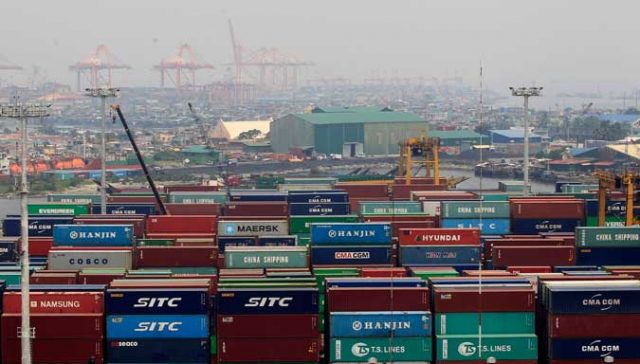
Exporters and logistics groups are proposing longer-term changes to Philippine shipping rules to allow domestic ships to carry out international trade.  

Royal Cargo, Inc. subsidiary Iris Logistics, Inc. will soon transport containers carrying export products to the United States amid a global container shortage that has led exporters to flag logistics delays and higher freight costs. 

Local exporters have not been able to book slots on international container lines, leading them to tap domestic ships. 

Philippine Exporters Confederation, Inc. (Philexport) in a statement Friday said that the industry group has been working with the Networking Committee on Transportation and Logistics of the Export Development Council and Royal Cargo to address the capacity issues. 

“As part of the intervention, the three groups agreed to propose to government to allow domestic shipping lines to operate beyond domestic waters. Royal Cargo agreed to help by providing its ships to transport export cargoes to their ports of destination,” Philexport said. 

For the long term, the groups are supporting the passage of the Philippine Ship Registry Act, which would incentivize ship registry, to enable Philippine flag vessels to transport goods internationally. 

They are also campaigning for regulation changes, asking to remove the distinction between “coastwise license” and “international license” among Philippine flag ships and for changes to a Maritime Industry Authority circular to recognize Philippine-registered vessels doing both domestic and international trade. 

The groups also want Philippine flag ships to be able to carry government cargo imports. 

“Issues with supply chain disruptions, not just in the Philippines but around the world, have been intensifying, the result of factors such as a surge in global demand, the early resumption of manufacturing in China, port congestion, and the reduction of capacity by carriers in response to lockdowns,” Philexport said. 

Philexport in July said that 80 out of nearly a hundred member-companies that responded to a survey said they were not able to ship goods because of the shortage.  

The industry group expects shipment delays to stretch into the Christmas season. — Jenina P. Ibañez 

ADVERTISEMENT
ADVERTISEMENT