Home Blog Page 7487

Transport workers say relief needed to make up for caps on vehicle occupancy
By Russell Louis C. Ku

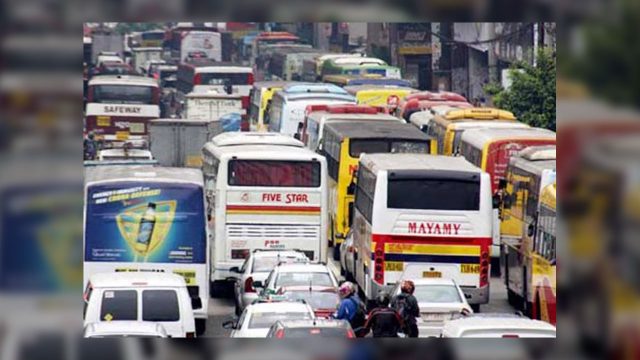
TRANSPORTATION BUDGETS need to provide for service contracting in order to offer relief for public utility vehicle (PUV) drivers, a transport organization said.

On Friday, the Move as One Coalition noted the lack of funding for road transportation in the budget of the Department of Transportation (DoTr) next year, and warned that transport workers will struggle to earn a living without service contracting.

“We should have a better balance (in funding)… If you invest in road transport now, the effects will be immediate,” Move as One Coalition member Reycel Hyacenth Bendaña said.

The DoTr said at a House budget hearing on Wednesday that it initially proposed P10 billion for a service contracting program which did not make it into the DoTr’s spending plan in the 2022 National Expenditure Program.

As initially proposed, the service contracting program was to pay PUV drivers a fixed income based on kilometers traveled instead of the number of passengers, along with a one-time incentive payout of P4,000.

The program was part of the Bayanihan II stimulus package, with P5.58 billion allotted to the DoTr. It was suspended on July 1, with the DoTr only having released P1.5 billion, after the validity period of the law expired. It resumed on Sept. 10 after P3 million was allotted for service contracting under the 2021 General Appropriations Act.

Ms. Bendaña said that the slashed budget for service contracting in next year’s transport budget will lead to hardship for both drivers and commuters as operations continue to be limited to 50% of passenger capacity because of physical distancing rules.

“We see commuters still struggling to find transport services because there is a lack of (PUVs) operating. We see transport workers who lack money to give to their families because there are limited to no passengers (on the road),” she said.

Ms. Bendaña said that while legislators like Samar Rep. Edgar Mary S. Sarmiento have recommended to restore the program’s budget to at least P3 billion for next year, she was batting for much more funding.

In a study for the 2022 National Budget released on March, the Move as One Coalition recommended P75.84 billion for service contracting to cover as many routes and drivers nationwide.

The DoTr’s proposed budget for next year is P150.76 billion, up 72%, with rail transport getting P110.93 billion.

The Move as One Coalition has said in a separate study that even if the current rail projects are built on schedule, it estimates a shortage of around 2.8 million trips daily in the National Capital Region by 2030.

“It goes to show that our current methods are not working and if we continue the current ratio of investment to relieve congestion and make movement and mobility better, it’s not going to work,” Ms. Bendaña said.

DELAYED PAYMENTS
Land Transportation Franchising and Regulatory Board Chairman Martin B. Delgra III said via Viber Friday that it has sent credit advice to the Land Bank of the Philippines (LANDBANK) of P1.037 billion for payments to qualified PUV drivers under the service contracting program.

He said earlier during the House hearing Wednesday that President Rodrigo R. Duterte has also approved the release of P3.38 billion worth of unused Bayanihan II funds for drivers hired under the service contracting program, and hopes to release the payments within the next two or three days.

“We received the checks late Tuesday evening (and) started on giving credit advice to LANDBANK (Wednesday) to crediting the accounts of the payees out of the P3.38 billion that we received,” he said.

Payments will be made through operators’ LANDBANK accounts and other outlets via InstaPay or PESONet.

However, Ms. Bendaña doubts that the P3.38 billion will be released promptly as extra steps are needed to verify the eligibility of operators and drivers in the case of the P1.5 billion allotted before the Bayanihan II funds initially expired.

“Instead of slashing the budget, we should challenge transport agencies like the LTFRB to do better. Why do the commuters and transport workers have to suffer (when) agencies are not delivering effectively,” she said.


Exporters advised to expect new post-Brexit UK tariffs

EXPORTERS have been advised to expect new UK tariffs with the launch of a separate British preferential trade access scheme after it exited the European Union, the UK ambassador-designate said.

The UK’s trade preferences scheme, due next year, will be known as the Developing Countries Trading Scheme. It replaces the EU scheme it had maintained since its formal departure from the European Union.

The Philippines enjoys duty-free entry for more than 6,000 products to the EU under the Generalized Scheme of Preferences plus (GSP+).

“We’re now looking at making improvements to that scheme such as lowering tariffs or simplifying rules of origin requirements,” British Ambassador-Designate to the Philippines Laure Beaufils said at a virtual event last week.

“We’ll be putting in place our own system in the year to come, which should hopefully support greater trade between our businesses in the UK and the Philippines.” 

The Department of Trade and Industry (DTI) recently called on Philippine exporters to participate in public consultations on the new UK scheme, which include discussions on the possible trigger events that could lead to the suspension of preferences and rules of origin requirements.

Ms. Beaufils said that a free trade agreement (FTA) between the UK and the Philippines in the near future is not likely.

“It’s not really a priority right now,” she said. “The priority right now is on thinking about what is going to replace what has been called GSP+, which we rolled over when we left the European Union.”

“And I think that will provide some new opportunities to work differently and deepen our trade relationship.”

She said there is no talk of a bilateral trade agreement because “from the British government perspective, there are only so many such FTAs that we can do at a time” given the long negotiation process.

Philippine exports to the UK are valued at about $450 million a year, led by tuna, desiccated coconut, abaca fiber, spectacle lenses, and semiconductors, the DTI said. — Jenina P. Ibañez

DoLE pressing to amend ILO seafarer protection rules

LABOR Secretary Silvestre H. Bello III said seafarers need to be better protected and proposed amendments to the 15-year-old maritime convention of the International Labour Organization (ILO).

In a statement Sunday, Mr. Bello said the convention does not ensure fair treatment and protection for seafarers as it “only encourages the member-states to cooperate to facilitate the investigation of serious marine casualties.”

In a virtual meeting with maritime and seafaring industry leaders and advocates last week, Mr. Bello said the pandemic has greatly altered the global landscape for maritime labor, making the need to modify the Maritime Labour Convention, also known as the seafarers’ bill of rights, more urgent.

“We must chart strategic and appropriate measures to continuously protect our seafarers in dealing with fresh opportunities as the world faces a new normal,” he said.

The Philippines is one of the biggest suppliers of seafarers, deploying about half a million every year. As such, Mr. Bello said the fair treatment of seafarers is one of the country’s top priorities.

He said seafarers are considered essential workers in the Philippines, and are “among the priority recipients in the government’s national COVID-19 vaccination rollout.”

A measure is also pending in Congress to exempt seafarers from movement and travel restrictions to facilitate their ability to obtain travel and work documents. — Bianca Angelica D. Añago

How will the auditing profession look in the future?

The pandemic has accelerated new ways of working across various industries, including the auditing profession. However, new ways of operating for audit firms and the companies they audit, including the sudden shift to flexible and remote working, are expected to outlast the immediate effects of the pandemic. According to the EY article, How the auditing profession is transforming to meet future challenges, this adds new dimensions to the existing challenges that audit professionals face in adapting audit to a rapidly evolving corporate world now and especially after the pandemic.

With digital transformation driving companies to adopt more complex business models, the audit profession has the opportunity to transform itself by adopting an agile mindset capable of embracing disruption, further exploring the flexible working shift with hybrid working models and operating effectively in diverse, more technologically aware teams.

EMBRACING DISRUPTION AND MULTIPLE DISCIPLINES
As the audit process becomes increasingly dependent on digital technology and data analysis, audit firms will require a more diverse skill set from their people. Though firms traditionally recruit auditors with business backgrounds with an emphasis on personal integrity and professional skepticism, all auditors will need to possess an increased level of technological understanding and an agile mindset that embraces disruption.

As business models grow in complexity, firms will require professionals with the ability to leverage a wider specialist expertise across multiple areas of business. By directly accessing technical expertise through the multidisciplinary model and the resources of a broader firm, auditors can leverage knowledge such as cybersecurity, fraud, sustainability, and corporate finance expertise to provide high-quality audit services.

While the article cites this as a necessary trend moving forward from the pandemic, it is interesting to note that we in SGV have been doing this kind of multidisciplinary talent development for a long time, with our professionals not only gaining strong audit competencies, but also acquiring related skills in business transformation, sustainability reporting, law, forensics, corporate governance, IT security, data analytics, business strategy development, digital transformation, workforce services, and many others.

EXPLORING FLEXIBLE WORKING AND HYBRID MODELS
The pandemic has also proved that when the situation demands it, audit firms are capable of making rapid and significant changes to how they operate, particularly given the inherent challenges in mobility, interaction and collaboration due to quarantine and other restrictions. This shift has brought with it the reality that flexible, remote working has become the current norm for audit professionals who have both successfully adapted to using digital technology to perform audit work away from a client’s business premises, and learned to collaborate and support each other virtually.

The sudden changes forced by COVID-19 not only helped accelerate cultural change in organizations — they also made them more open to different ways of working. This increased flexibility also brings with it other significant benefits, such as audit firms placing more emphasis on performance in terms of output and productivity.

It should be noted, however, that such a rapid shift to flexible working also produced challenges that audit firms will need to address. Practical issues in remote working include audit teams having to hold their discussions over chat rooms or less personal virtual meetings, rapidly developing proficiency in using specialized digital platforms, and others. Moreover, there are also challenges with conducting sensitive conversations remotely, as well as helping new colleagues understand the firm’s organizational culture and receive proper coaching and mentoring. Building remote trust and rapport may be one of the new challenges for audit professionals in addition to needing to manage expectations from audited companies regarding onsite attendance.

Firms can address these issues by shifting to a hybrid working model based on the requirements of the audit firm, its teams, and the companies they audit. This setting will involve determining the ideal proportion between flexible, remote and onsite working, and will depend on circumstances such as the need to build professional relationships. For example, teams will need to consider when they need to meet to increase team cohesion, receive training, or travel onsite to meet company management and establish trust and gather evidence. Auditors can also explore further applications of technology, such as the use of blockchain and drones to enhance audits, which professional firms like EY have been developing since even before the pandemic. As a member firm of EY, SGV has been able to leverage a number of technological applications that have enabled our audit teams to conduct remote audit.

FOSTERING TEAM DIVERSITY
The move towards remote working further necessitates the need to build strong audit teams. The ideal audit team will have people who possess a wide range of personal and technical skills, diverse experiences, and viewpoints. This will mean recruiting people from wider backgrounds as well as providing opportunities for them to broaden their horizons to accommodate various interests and aspirations. The traditional linear and hierarchal career progression will not necessarily suit everyone, and it will be important to offer alternatives to those who do not want to go down this path. Promotions must also focus on skill instead of tenure, with career progression occurring once the individual is ready versus waiting for them to reach a certain number of years.

However, fostering diversity will only be effective if the firm can create an appropriate environment where people can contribute and add value. Supporting a more diverse workforce that needs to operate in a rapidly evolving business environment will require continuous training, but with the new ways of working, such training will likely need to adopt a hybrid model based on the needs discussed previously. Long-term models will combine classroom-based and virtual setups to deliver training even beyond the pandemic.

WORKING IN TRANSITION
The working models brought about by the pandemic accelerated the transition towards a more flexible, diverse and technologically aware auditing profession. Auditors work in a continuously evolving space, with digital tools and data playing an increasingly significant role in the audit of tomorrow. While this process will pose an inevitable challenge for some, others will welcome it. If audit firms can navigate this change effectively, it gives audit professionals the opportunity to flourish.

Digital transformation and the resulting new environment can give auditors not just more effective ways to perform their work, but a more purposeful profession that can better serve the public interest.

This article is for general information only and is not a substitute for professional advice where the facts and circumstances warrant. The views and opinions expressed above are those of the author and do not necessarily represent the views of SGV & Co.


Martin C. Guantes is the Assurance Leader of SGV & Co.

OCTA says coronavirus cases may have peaked

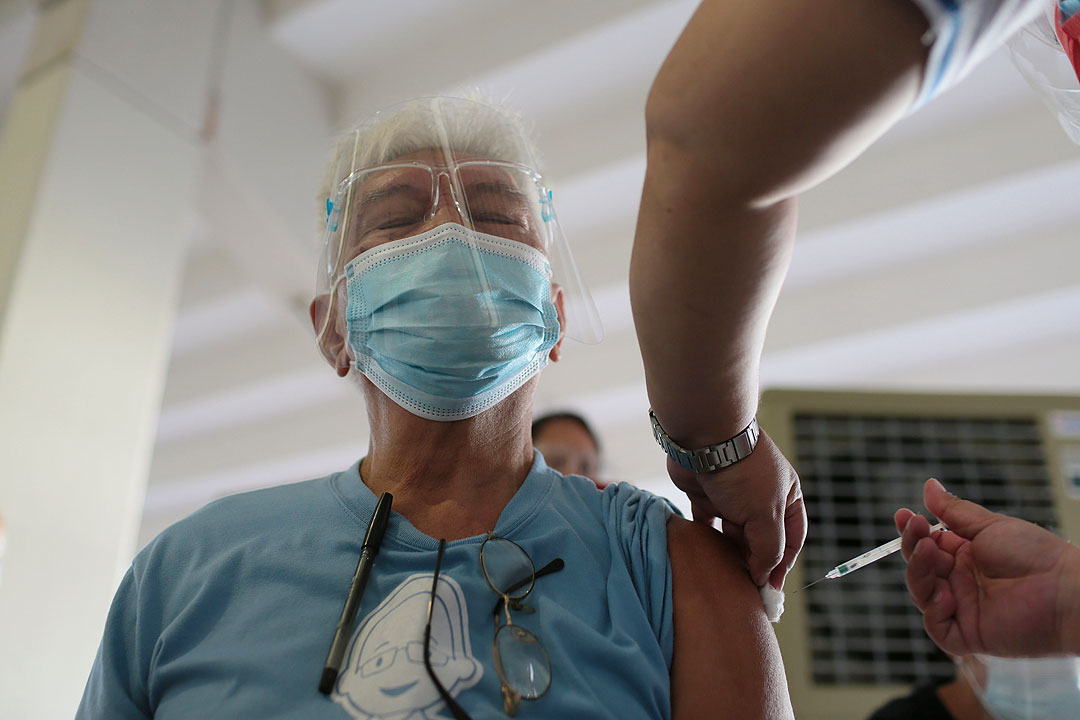
A SENIOR citizen got injected with his first dose of the Sinovac vaccine at the Mega vaccination facility at the Marikina Sports Complex on June 15. — PHILIPPINE STAR/ MICHAEL VARCAS
SENIOR citizens get inoculated with their first dose of the Sinovac vaccine at the Marikina Sports Complex. — PHILIPPINE STAR/ MICHAEL VARCAS

THE PHILIPPINES might have reached the peak of its coronavirus surge after posting a weekly decline in infections for the first time since May, according to researchers from the country’s premier university.

OCTA Research fellow Fredegusto P. David on Sunday tweeted that a consistent decline in cases “is usually a sign that the peak in daily cases had been reached.”

The latest projection by OCTA, whose estimates have been doubted by some lawmakers, contradicted the Department of Health (DoH), which on Saturday said COVID-19 (coronavirus disease 2019) cases in the country have yet to show signs of slowing.

Health Undersecretary Maria Rosario S. Vergeire told lawmakers last week 94 areas remained in the highest virus alert level, while infections in the National Capital Region were still growing.

The capital region and at least three other provinces had posted a decline in coronavirus cases in the past days, Mr. David separately told ABS-CBN TeleRadyo.

He earlier said the capital region had a seven-day average of 5,260 cases from Sept. 12 to 18, a tenth lower than a week earlier.

DAILY TALLY
DoH reported 19,271 coronavirus infections on Sunday, bringing the total to 2.37 million.

The death toll rose to 36,788 after 205 patients died, while recoveries increased by 25,037 to 2.15 million, it said in a bulletin.

There were 178,196 active cases, 92.3% of which were mild, 3.1% did not show symptoms, 1.4% were severe, 2.60% were moderate and 0.6% were critical.

The agency said 72 duplicates had been removed from the tally, 57 of which were reclassified as recoveries, while 94 recoveries were reclassified as deaths. Two laboratories failed to submit data on Sept. 17.

The coronavirus has infected 229 million and killed 4.7 million people worldwide, according to the Wordometer website, citing various sources including data from the World Health Organization.

The United States had the biggest number of cases at 42.9 million and 691,562 deaths, followed by India with 33.4 million infections and 444,869 deaths.

Brazil had the most deaths at 590,547 though it had fewer cases at 21.2 million, according to the website.

The Philippines posted 23,134 COVID-19 infections at the weekend, its second-highest tally since the pandemic started last year. The country reported record infections of 26,303 on Sept. 11.

Mr. David noted that Saturday’s tally was lower than the week earlier. But the trend could easily be reversed if people are not careful, he said.

The country’s virus reproduction rate was 1.16%, and Metro Manila’s was 1.18%, Mr. David said.

The decline in the country’s infection rate was still slow, with regions such as Western Visayas and Ilocos still posting an increase in infections, Mr. David said.

He traced the weekly decline to the modified enhanced community quarantine imposed by the government, adding that the effect of interventions has a lag.

Almost 18 million Filipinos have been fully vaccinated against the coronavirus as of Sept. 16, or about 23% of the government’s target to achieve herd immunity.

Congressmen this month grilled the OCTA Research Group, questioning its methods in releasing projections on the local COVID-19 situation.

Lawmakers cited discrepancies in its projections of COVID-19 cases in the country. They also said the group had a larger error margin of than what it had claimed in its statements.

Critics have blamed OCTA for projections and recommendations that have led to lockdowns in the Philippines. The group has called it unfair to be blamed of community quarantines imposed by the government. — K.A.T. Atienza

Soliman, ex-DSWD secretary who quit in protest of Arroyo rule, dies at age 68

PHILSTAR

CORAZON “Dinky” N. Soliman, the Social Welfare secretary and civic leader who quit amid allegations of vote cheating by then President Gloria Macapagal Arroyo, died on Sunday. She was 68.

“Her passing was sad news,” Vice-President Maria Leonor “Leni” G. Robredo said in Filipino in her weekly radio program on Sunday. “She was a good person.”

Ms. Soliman, who tested positive for coronavirus disease 2019 (COVID-19) and survived in August, died due to complications from renal and heart failure, according to media reports.

“Rest in peace, my dear friend,” Former Finance Secretary Cesar Antonio V. Purisima said in a Facebook post. “We will miss you.”

Ms. Soliman, who later served as Social Welfare secretary in the government of the late Benigno S.C. Aquino III, oversaw the expansion of the state’s flagship poverty alleviation program.

She also headed the Aquino government’s Cabinet cluster on human development and poverty reduction.

Ms. Soliman headed the Department of Social Welfare and Development (DSWD) under Ms. Arroyo, who became President in 2001 after a street uprising that toppled Joseph E. Estrada.

She and at least nine other Cabinet secretaries and agency heads quit their jobs in 2005 in protest of Ms. Arroyo’s alleged rigging of the 2004 presidential elections.

Ms. Soliman had also criticized President Rodrigo R. Duterte’s deadly drug war that has killed thousands of drug suspects. She was part of a coalition of former government officials and civic leaders who opposed the Duterte government.

“Her stature as a civil society leader will be missed and will forever inspire future public servants,” Senator Risa Hontiveros-Baraquel said in a statement.

Ms. Soliman, who hails from Tarlac province in northern Philippines, was born on Jan. 27, 1953.

She got her B.S. and master’s degrees in Social Work degrees from the University of the Philippines Diliman. She got her master’s degree in Public Administration at the John F. Kennedy School of Government at Harvard University.

Ms. Soliman is survived by her husband Hector and their two children. — Kyle Aristophere T. Atienza

Boxing star Pacquiao nominated bet for president next year

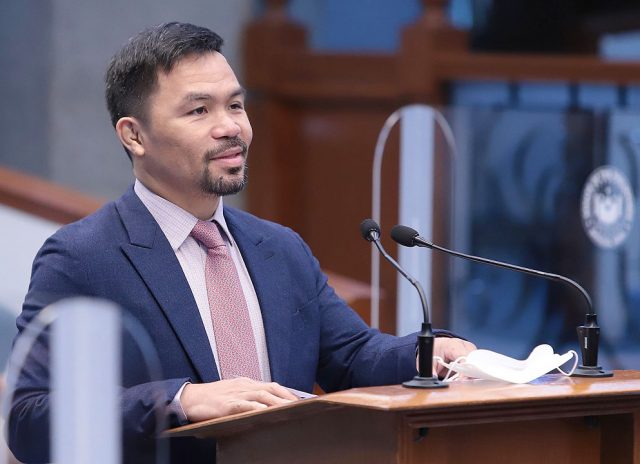
SENATOR MANNY PACQUIAO FB PAGE

A FACTION of the Philippines’ ruling political party on Sunday nominated boxing champion and Senator Emmanuel “Manny” D. Pacquiao as its presidential candidate for the 2022 elections.

The boxing legend accepted his nomination during a national assembly of the Partido Demokratiko Pilipino–Lakas ng Bayan (PDP-Laban) streamed live on Sunday. Officials claimed 99% of its base and partners attended the meeting that was largely held online.

During the meeting, Senator Aquilino “Koko” L. Pimentel III, PDP-Laban chairman, called the rival faction led by Energy Secretary Alfonso G. Cusi hijackers.

“Today, we will formally fight back against the hijackers,” he said. “We will formally declare as correct what we have been doing all along.”

Last week, the Cusi wing nominated President Rodrigo R. Duterte as its choice for vice-president and his long-time aide Senator Christopher Lawrence T. Go as the party’s presidential bet. Mr. Cusi on Sept. 8 asked the Commission on Elections to declare the Pacquiao-led faction illegal.

Mr. Pimentel called the rival faction greedy, while members of the Pacquiao wing called themselves “the real PDP-Laban.”

“There is a good chance that we will win the coming election,” the senator said. “The real PDP-Laban will run our government.” — A.N.O. Tan

Baguio ban on leisure travelers extended to Sept. 26 

BAGUIO CITY PIO

BAGUIO’S BAN on non-essential travelers has been extended to Sept.26, the local government announced over the weekend, as cases continue to increase in the popular mountain city tourist destination.    

“There is a need to continue implementing these restrictions on activities and movements to address the prevailing coronavirus disease 2019 (COVID-19) situation in the city,” Mayor Benjamin B. Magalong said in a statement.   

On Sept. 18, the city health office recorded 411 new cases, the second highest daily tally after 289 on Sept. 11, 2021.  

Mr. Magalong, however, said the high count could be attributed to “dumping of results” after an accumulation due to high volume of samples lined up for testing.   

The city has started requiring RT-PCR testing for all close contacts of positive patients.  

“In the past seven days, our average number of cases per day is 240, and our number of barangays with positive cases has gone up to 119 or 92.25%,” the mayor said.  

The city had 21,309 total COVID-19 cases since the start of the pandemic, with 425 deaths and 17,919 recoveries. There were 2,965 active cases.  

The city, currently under the lowest lockdown level, has a pending request with the national COVID-19 task force to shift to the general community quarantine with heightened restrictions.  

Last week, the city’s border control teams reported a total of 456 travelers who were banned entry during the period Sept. 1 to 12 for lack of documents proving essential purpose, according to the city government. — MSJ  

Farm damage from typhoon Kiko increases to P19.21M  

NDRRMC.GOV.PH

AGRICULTURAL losses brought by typhoon Kiko (international name: Chanthu) went up to P19.21 million versus the P18.20 million previously estimated, the Department of Agriculture (DA) said.    

The DA said in its latest bulletin dated Sept. 16 afternoon that the typhoon affected 954 farmers and fishers together with 1,060 hectares of farm areas across the Cordillera Administrative Region (CAR), Cagayan Valley and Central Luzon.  

However, the DA noted that there is a reduction in the total affected farm area, which was previously estimated at 1,172 hectares, as a result of validation done in Central Luzon.    

The onslaught of Kiko also resulted in 723 metric tons (MT) of lost production volume.    

“Affected commodities include rice, corn, high value crops, and fisheries. These values are still subject to validation,” the DA said in the bulletin.    

Losses to rice were valued at P9.85 million. A total of 498 MT of production volume were lost while 901 hectares of agricultural areas were affected.    

Damage to fisheries amounted to P4.02 million. Recorded losses were fisheries produce and fishing boats and gears.    

For high-value crops, losses reached P3.63 million. Around eight hectares of agricultural areas were affected while 58 MT of production volume were lost.    

Corn damage reached P1.71 million. A total of 167 MT of production volume were lost while 152 hectares of farm areas were affected.   

“The DA, through its regional field offices, is conducting further validation of damage and losses brought by Typhoon Kiko in the agri-fisheries sector,” the bulletin said. — Revin Mikhael D. Ochave   

Senator files resolution for Kaliwa Dam project suspension 

EIA.EMB.GOV.PH

OPPOSITION SENATOR Leila M. de Lima called for a suspension of all construction activities on the China-funded Kaliwa Dam project, citing the Commission on Audit (CoA) report and Senate investigations indicating irregularities in implementation.   

Ms. De Lima filed Resolution No. 909 on Thursday saying all legal prerequisites and issues must first be settled before the project proceeds.  

“Government remains hell-bent to push forward with the project, despite credible claims that the social, cultural, environmental, and economic costs of the Kaliwa Dam Project outweigh its purported benefits,” said Ms. De Lima in a statement on Sunday.  

“There is a need to determine once and for all the viability of the Kaliwa Dam Project and the impacts it will have on its primary stakeholders, particularly the local indigenous population,” she added.  

She cited a Senate Committee on Cultural Communities report saying that “laws protecting indigenous peoples’ rights were not complied within the course of implementing the project.”  

CoA, in its 2020 audit report, said the Metropolitan Waterworks and Sewerage System (MWSS) has been proceeding with the project without proper documentation such as a memorandum of agreement with local government units for the project’s social development program, a copy of the approved reforestation program, and the creation of an environmental unit upon receipt of the environmental compliance certificate.  

In a statement on Sept. 16, MWSS said they are continuously working on the environmental requirements and actual construction has yet to begin for the P12.2-billion project that will serve as a water supply source to the capital Metro Manila.   

“With the controversies surrounding the Kaliwa Dam project, there is also a need to explore alternatives to address water security, so that we may not only protect the rights of ICCs (indigenous cultural communities) or IPs (indigenous people) to their ancestral lands but also maintain the beauty and biodiversity of our forests and mountainous regions,” she said.   

In June this year, MWSS said tunnel excavation work on the dam is expected to start by December with the arrival in July of a boring machine. — Alyssa Nicole O. Tan 

SC orders Hagonoy Water District employees, directors to return rice allowance  

PADALUYANGTUBIGHAGONOY.GOV.PH

THE SUPREME Court (SC) has dismissed the petition of Hagonoy Water District (HWD), a government-owned and controlled corporation, to allow its disbursement of rice allowances to employees and directors in 2012 amounting to P558,000.   

In the High Court’s decision dated March 2 and made public on Sept. 17, it held that the board members of HWD who approved the release of the bonuses “fell short of the standard of good faith and diligence required in the discharge of their duties” as they relied merely on the basis of a 1992 board resolution.   

The water district’s board of directors released Resolution 16 in 1992 to give rice allowances to its employees, but the high court held that under Republic Act 6758 that took effect July 1, 1989, “all allowances of government officials and employees, including those in the GOCCs, are deemed included in the standardized salary rates.”   

The Supreme Court invalidated the claim of HWD officers that the grant of rice allowances “had long been an established practice in HWD,” and asserted that a “practice, no matter how long continued, cannot give rise to any vested right if it is contrary to law.”   

As such, the SC affirmed with modification the decision of the Commission on Audit (CoA) in 2014 to disallow the rice allowances totaling P408,000 to employees hired after July 1, 1989 and the additional allowances awarded to HWD’s board of directors totaling P150,000.   

The SC explained that under Republic Act 9286, additional allowances to board directors must first be approved by the Local Water Utilities Administration before disbursement, which the HWD directors failed to do.  

The CoA earlier held the HWD directors solely liable to refund the disallowed amounts, but the SC ruled that the employees must also return what they received.  

The CoA’s 2014 ruling also disallowed the excess disbursement of anniversary bonuses to employees totaling P174,000. It held that Administrative Order 263 limits the amount of anniversary bonuses to only P3,000 per employee, but HWD disbursed P5,000. — Bianca Angelica D. Añago  

Diokno needs stronger support to win his second try for the Senate 

CHEL DIOKNO FB PAGE

STRONGER SUPPORT from various sectors would be needed for opposition candidates such as human rights lawyer Jose Manuel “Chel” I. Diokno to win a Senate seat in the 2022 national elections, according to a political scientist.   

“In 2019, compared with other Otso Diretso candidates, he has made some headway with some millennials through social media. He needs to have a stronger civil society and youth voters’ support this time,” said Maria Ela L. Atienza, a political science professor at the University of the Philippines.    

Mr. Diokno confirmed his 2022 senatorial run as an independent candidate in an interview with One News’ The Chiefs on Sept. 14, saying that the political landscape has changed since his first run in the 2019 midterm elections with other opposition candidates as part of the Otso Diretso team.  

Mr. Diokno currently serves as chair of the Free Legal Assistance Group, an organization of human rights lawyers that represent activists, urban poor, and journalists, among others.    

“If the genuine opposition can field a complete ticket… that balances principles and stronger presence with more resources and grassroots support, Mr. Diokno will have higher chances,” Ms. Atienza said in a Viber message.  

She added that the effect of the coronavirus pandemic on national politics along with conflict between factions of the ruling Partido Demokratiko Pilipino–Lakas ng Bayan (PDP-LABAN) party could open up an opportunity for Mr. Diokno.  

However, Michael Henry Ll. Yusingco, a senior research fellow at the Ateneo de Manila University Policy Center, said that Mr. Diokno will have to differentiate himself from a “crowded” field of re-electionists and traditional politicians running next year.  

He also said that voters can still “tune out candidates who offer nothing but criticism” despite Filipinos being more vocal about their opinions on the government. “I think he should run on a simple and coherent legislative agenda, one that can be easily understood by voters,” Mr. Yusingco said.  

Mr. Diokno said that his platform will not only focus on strengthening the justice system but also addressing immediate matters on the government’s pandemic response such as delivery of health services, assisting badly-hit small to medium enterprises, and the right to accessible education. — Russell Louis C. Ku 

ADVERTISEMENT
ADVERTISEMENT